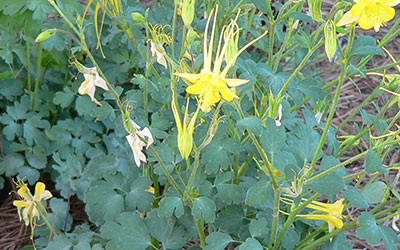
Golden Columbine, Aquilegia chrysantha

Golden Columbine, Aquilegia chrysantha

 Full Shade Medium Water Mature Size: 2’X 2’ Blooming Season: Spring Flower Color: Yellow Golden Columbine is the most heat tolerant of any high mountain Columbines allowing it to bloom longer in the season. Even after the last flowers fade, its lacy blue-green leaves...
Commercial Xeriscape Conversions Save Millions of Gallons

Commercial Xeriscape Conversions Save Millions of Gallons

The Water Authority’s xeriscape rebate program, and predecessor programs run by the city of Albuquerque, have seen about 12 million square feet of turf replaced over the past 25 or so years. Since 2009, the top five years for program participation were:

This has contributed to a reduction in daily per capita water consumption from 250+ gallons in the mid-1990s to about 124 today. Replacement of turf with desert-friendly landscapes has always been a key component of Albuquerque’s multidecade conservation drive and of the Water Authority’s 100-year management plan, WATER 2120, which was adopted in 2016. Now, we’ve joined other Western water utilities in committing to pursue removal of 30% of remaining “non-functional” turf in our respective service areas over the next several years. That does NOT mean the wholesale removal of cherished green spaces in the name of saving water. Parks, ballfields and children’s backyard play areas are great places to have grass. Parking lots, median strips and emerald-green front yards are often a different story — and their owners may be able to save water and money by voluntarily exploring xeric alternatives.

To qualify for rebates, those alternatives must include landscape plans that are rich in climate appropriate trees, shrubs and plants. The idea isn’t to just pave over a patch of grass, replace it with gravel or let it revert to unsightly weeds. Plants and trees aren’t just pretty to look at: They create shade that reduces the “heat sink” effect — and the demand for water. So, yes, we want to “get off the lawn.” Doing so will help us meet important conservation goals. But we can do it in a way that preserves the benefits that functional turf and green spaces can offer.

Check out some of our recent projects:

Paradise Hills Golf Course

Project timeline: 2011-2022

Total landscape transformation: 1.4 million sq. ft.

Water savings to date: 350 million gallons

Rebate amount: $1.4 million

Total plants: Over 10,000

Plant types: Turpentine bush, Afghan pine, chaste tree, sand sage, desert willow, chamisa, Apache plume, yellow yucca, threadgrass

Paradise Hills Golf Course (formerly known as Desert Greens Golf Course), a private country club on Albuquerque’s northwest side, had been served since its construction in 1962 by a private water utility charging artificially low, subsidized rates. When the Water Authority acquired the private utility in 2009 and began charging ordinance-based rates, the course’s operating costs increased significantly. With its business model no longer tenable, Desert Greens was in danger of shutting down. Fortunately, help arrived in the form of the Water Authority’s xeriscape rebate program, which Desert Greens used to finance the removal of turf from non-playable irrigated areas. By 2021, the golf course had transformed nearly 1.4 million square feet of turf into xeric landscapes, conserved more than 350 million gallons of water, and — key to the course’s survival — saved over $2 million in water bills. The end result is an aesthetically pleasing, targeted-play course that patrons love — and which can continue to operate at a profit.

Dr. J. Patrick Garcia (APS) Transportation/Education Complex

Project timeline: 2022

Total landscape transformation: 15,670 sq. ft.

Water savings to date: 996,072 gallons

Rebate amount: $31,340

Total plants: 246

Plant types: Lacebark elm, Afghan pine, Chinese pistache, crabapple, desert willow, skyrocket oak, juniper trees, beargrass, valley cottonwood, pinon pine, wall germander, banana yucca

La Luz HOA Medians

Project timeline: 2021-2022

Total landscape transformation: 9,000 sq. ft.

Water savings to date: 1,043,287 gallons

Rebate amount: $13,500

Total plants: 162

Plant types: Lacebark elm, escarpment live oak, frontier elm, Oklahoma redbud, crape myrtle, turpentine bush, blue grama, Chinese pistache, catmint

Commercial Office Park

Project timeline: 2023

Total landscape transformation: 1,540 sq. ft.

Water savings to date: 83,645 gallons

Rebate amount: $3,080

Total plants: 134

Plant types: Creeping germander, dwarf plumbago, golden columbine, turpentine bush, little bluestem, English lavender, ornamental pear, London plane tree

Westcliffe HOA

Project timeline: 2020-2021

Total landscape transformation: 7,558 sq. ft.

Water savings to date: 2,189,127 gallons

Rebate amount: $15,651

Total plants: 24

Plant types: Crape myrtle, gray lavender, Texas ranger, turpentine bush, Apache plume, chamisa

Prospectors Ridge HOA

Project timeline: 2018-2023

Total landscape transformation: 34,440 sq. ft.

Water savings to date: 2,823,830 gallons

Rebate amount: $62,063

Total plants: 700

Plant types: Cherry sage, Allee elm, Modesto ash, butterfly bush, rose of Sharon, golden rain tree, bird of paradise, winter jasmine, rosemary, catmint, mesquite (honey and screwbean)

Have a question about the article? AskAnExpert@abcwua.org

Plants That Thrive Under Shade Trees

Plants That Thrive Under Shade Trees

We all love the feeling of cool shade on a hot summer day, whether it comes from a dense tree canopy growing above the yard or from our home as it shades different areas throughout the day. Quite a few plants appreciate that cool space. There are many options for adding useful, attractive greenery to your yard that do well in the shade.

Since there are different levels of shade, watch the progress of the sun across your landscape so you can determine the right plants for each location. The shade cast by trees varies with the size and kind of tree. For example, a large mulberry will cast broad and deep shade, while a honeylocust will provide a more dappled and lighter level of shade. The more upright the tree, the narrower the shade profile. Tree canopies that spread broadly offer a more uniform level of shading. Shade from a building can be a bit problematic in that it is very dense where it falls, but that changes over the course of the day.

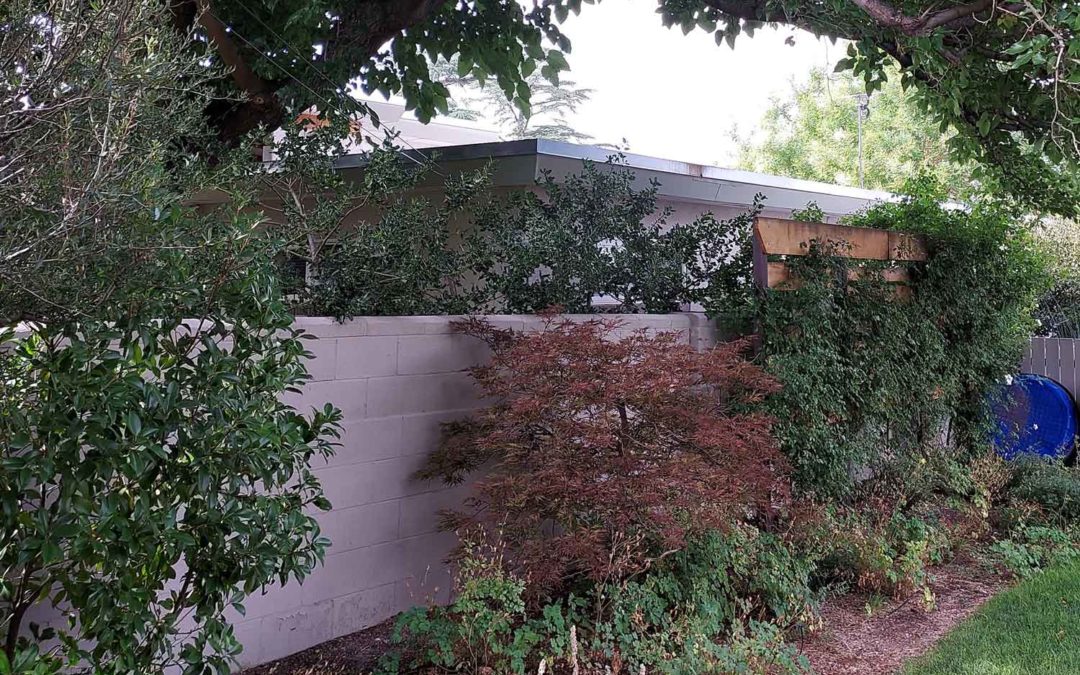
One of my favorite shade plants is something I hardly ever recommend in Albuquerque: Japanese maple trees. These small trees thrive in all-day dappled shade, although they do take a bit of water. Due to their small size, however, they don’t need that much extra water. These lovely little trees deserve a nice setting where you can see and enjoy them all year round. They may be a good choice for the oasis zone of your xeriscaped landscape. The caveat is that these little trees will not do well in strong sun, so pick your spot with care!

There are a couple of shrubs favored by nurseries that do much better with some shade than in the full-sun situations where they are often found. Both nandina (heavenly bamboo) and India hawthorn will look much better with some relief from scorching sun and suffocating heat. Native barberry (Berberis fendleri to the plant nerds) takes deep shade well, while the native three-leaf sumac and gro low sumac will tolerate moderate shade very nicely.  The latter tends to get taller and leggier in shade than it does in sun, but it’s happy either way and doesn’t need much water. Other locally-common shrubs/sub-shrubs that do well in dappled shade are autumn sage, cliff fendlerbush, and even blue mist spirea.

I’m a real fan of ground covers in shady areas, especially under trees and planted into organic mulch like shredded wood chips. Kinnikinnick (a.k.a bear berry) is a Montana native that too often is placed in full sun and doesn’t like it, but in a shadier spot it really shines. The periwinkles, Vinca major and Vinca minor, also do well in a shadier setting, attractively rambling through the mulch. Dwarf plumbago likes similar conditions to the vincas. Yerba mansa and creeping mahonia are native plants that also do well as ground cover.

Vinca Major

Mints are good in light shade. There are many types, from chocolate mint to spearmint to orange mint. I let them grow and bloom. Since bees of all types and sizes love the blossoms, the mint is a great addition to the landscape from the beneficial insect perspective. Many tiny wasps use mint flowers as adult food, while their offspring are busy parasitizing aphids and caterpillars. One thing to remember is to make room for the mint to spread, which it will happily do.

Related to mints, and likely to spread like mints, is dead nettle. Despite it’s name, it’s a great plant that uses little water and has blooms that attract good small insects. Other good flowering plants for light shade areas include the native columbines, lavender, and catmint.

What about turf grass? Most turf grasses like full sun and will get thin under shade,   however I’ve had great results with creeping red fescue. This Eurasian native needs regular water to do well but can tolerate deep shade.

By establishing irrigation for shade plants, the trees above them also receive water, which is a great way to make sure those trees get water. Some shade plants are available only as seed (red fescue, for example), but most of them can be found as containerized plants at our local nurseries. 

Learn more about gardening here:

Easy pollinator gardening

Trouble identifying Plants? We’ve got an app for that.

Luxury Consumers in Your Yard

Author: Joran Viers, Senior Partner at Root to Shoot Urban Forestry, Inc. find him at joran@root2shooturbanforestry.com  Have a question about the article? AskAnExpert@abcwua.org