by 505 Outside | Jul 2, 2026 | Flowering Plants
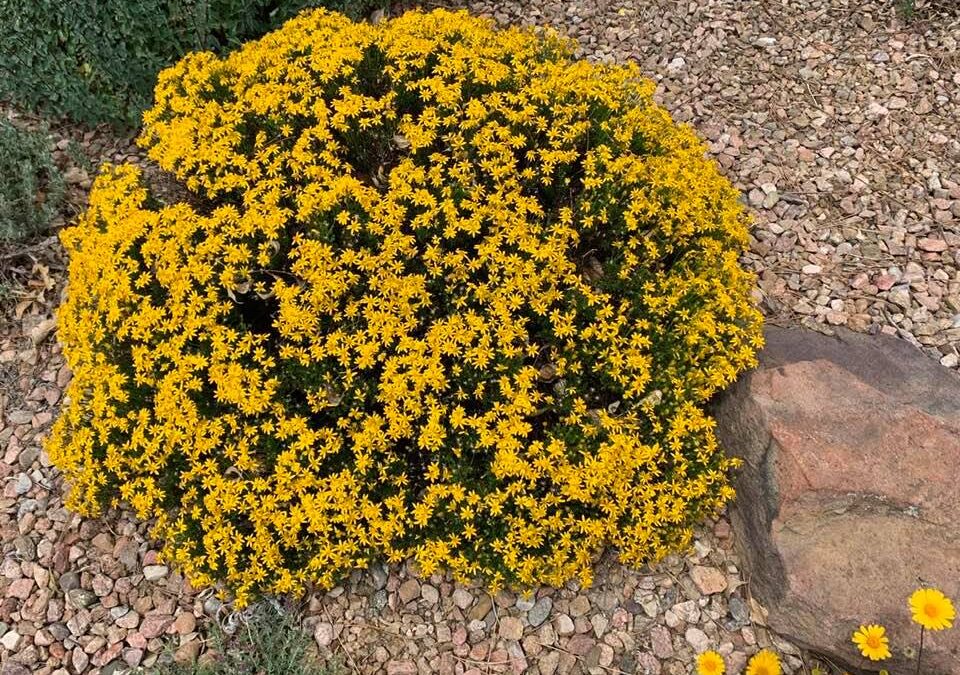
Damianita, Chrysactinia Mexicana
Type: Evergreen
Exposure: Full Sun
Water Use: Low
Mature Size: 2’x2′
Damianita is a darling of the xeric landscape. This lovely, small shrub fits into narrow hell strip areas, rock gardens, along walkways or massed in groups for dramatic effect. It is compact, rounded in form, evergreen and topped with bright yellow daisy-like flowers that cover the crown of the plant from late spring to fall. It has a delightful, if subtle, fragrance. It should be planted in the spring so it can be established before winter.
Bees and butterflies love this resilient, tough beauty. The deep green foliage and brilliant golden flowers look great when contrasting with plants both large and small that have grey, silver or blue green color. Think lavender, artemisia, ruschia, agave, cacti, leucophyllum or even large accent plants, like Yucca rostrata.
Damianita is drought tolerant and low water, though regular summer drip irrigation helps boost and prolong the blooming season. The tight, evergreen form requires very little maintenance. When the flowering stops, the spent flower parts remain as a dry, golden-brown lacy crown through the winter if you choose to leave them. Otherwise, a light shear over the top of the plant in fall or spring cleans up the form for the next bloom cycle.
This plant is one of those small gems with a big impact. Great in zones 7-11, preferring well drained soil and a hot location, Damianita is an excellent selection anywhere the sun shines in your garden.

Author: Wes Brittenham, artist, gardener and writer.
by 505 Outside | Sep 2, 2025 | Flowering Plants
Type: Deciduous
Exposure: Full Sun
Water Use: Low
Mature Size: 30” x 2’
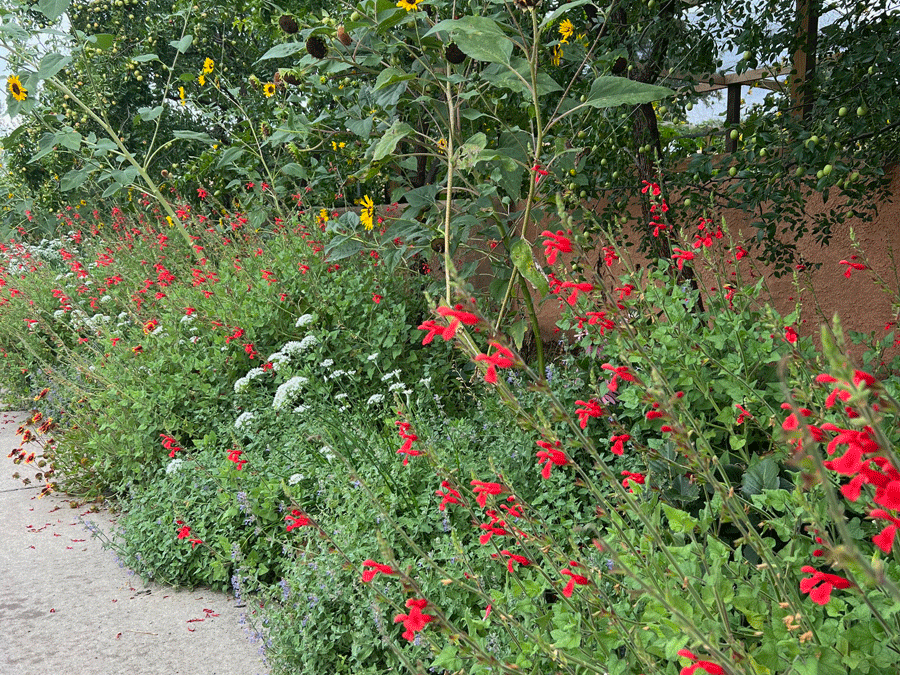
Salvia darcyi provides an upright burst of firecracker red blooms in the hot days at the end of the summer into the fall. It can shine on its own but it looks great mixed behind a perennial border garden with chocolate flower and ice plant or other flowering groundcovers. Plant near a patio and watch the hummingbirds flock to this flower.
by 505 Outside | Jun 30, 2025 | Flowering Plants
Type: Deciduous
Exposure: Sun/Shade
Water Use: Medium
Mature Size: 18” x 18”
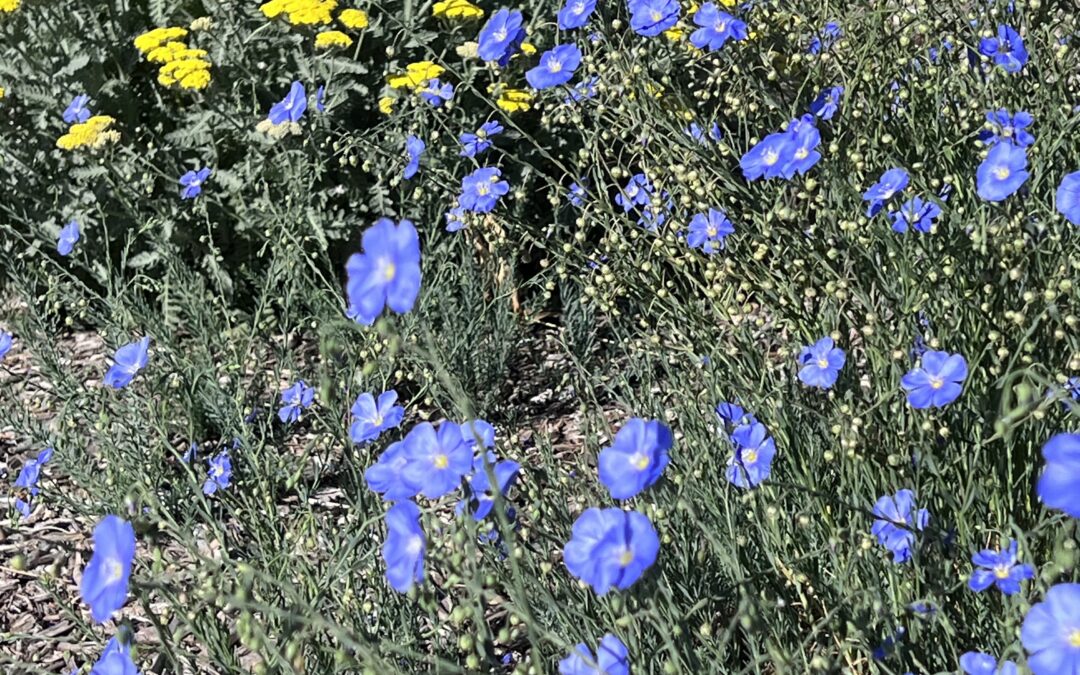
Dainty sky-blue blossoms appear daily on the top of tall wispy stems between the months of April and September. Blue flax is a short-lived perennial that reseeds itself in a sunny garden bed or a native grass meadow.
by 505 Outside | Sep 6, 2024 | Flowering Plants
Type: Flowering Plant / Deciduous
Exposure: Full Sun
Water Use: Low
Mature Size: 1’ x 3’
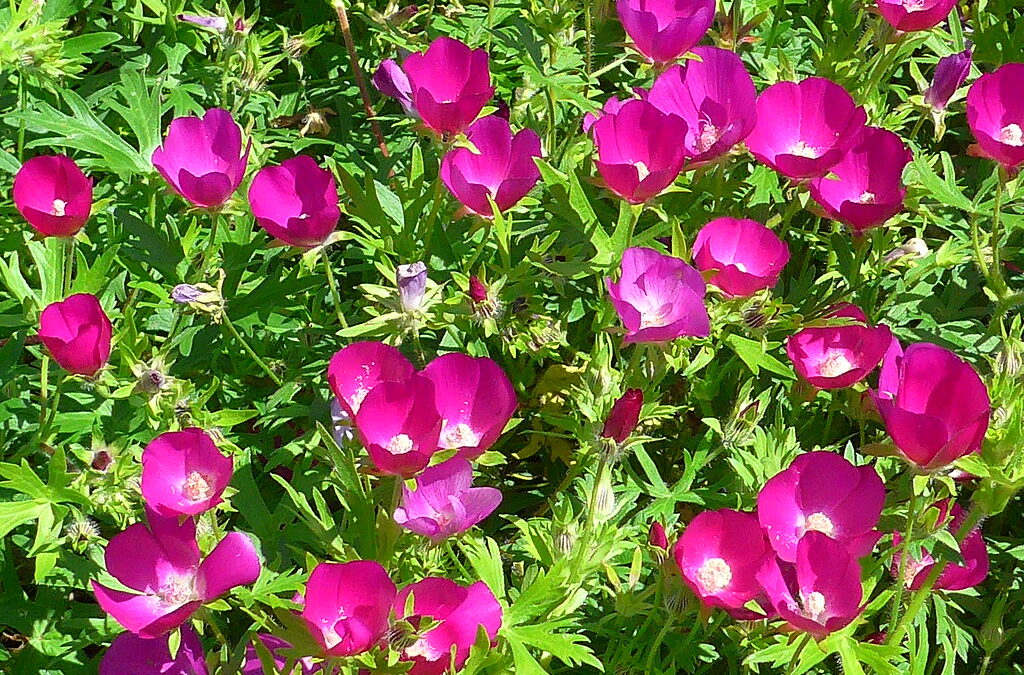
This plant is used as a groundcover, and its beautiful 2-inch wine-colored, cup-shaped flowers grace the garden. The flowers hang on long cord-like stems that weave into the plants around them, almost looking like they are floating around other plants in garden beds. Also known as purple poppy mallow, they are great in sandy soil, rock gardens and cascading over walls. Winecups will go dormant in winter, shrinking to just a few leaves above the ground. But beware, rabbits find this plant delicious.
by 505 Outside | Aug 1, 2024 | Flowering Plants
Type: Flowering Plant / Deciduous
Exposure: Full Sun
Water Use: Medium
Mature Size: 3’ x 3’
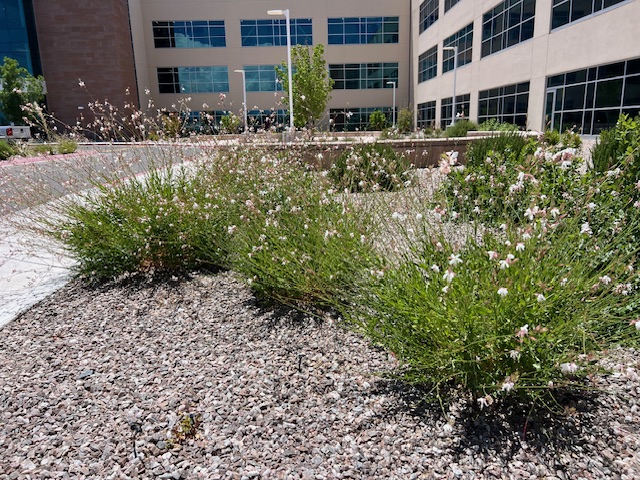
This airy plant bursts with delicate white and pink flowers whirling off of a central stem. In fact, one of its cultivars is called “whirling butterflies” due to the nature of the plant. The graceful stems are tall, narrow and fan out in a whirl that blows in the breeze. This airy plant flowers from June through September and brings a unique spray of flowers to the garden.
by 505 Outside | Jun 26, 2024 | Flowering Plants
Type: Deciduous
Exposure: Sun/Shade
Water Use: Medium
Mature Size: 8”x2’
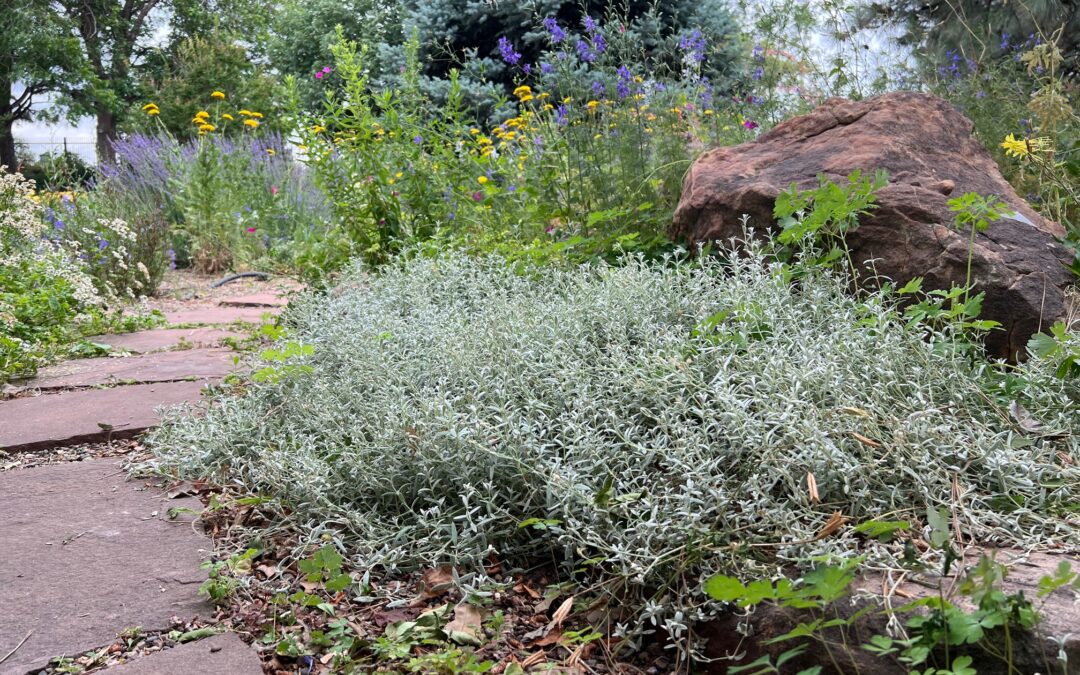
Just as its name declares, this perennial brings a little bit of white brilliance to the summer garden. It thrives well in shade and in part sun, thereby spreading and filling in a lot of space. The name doesn’t tell the entire story because this plant is also admired for its delicate silvery leaves. It makes an excellent ground cover for dry areas. The leaves spread a mat of foliage from which the flower stems rise. It also will cascade over rocks and walls.