Beaked yucca, Yucca rostrata

Beaked yucca, Yucca rostrata
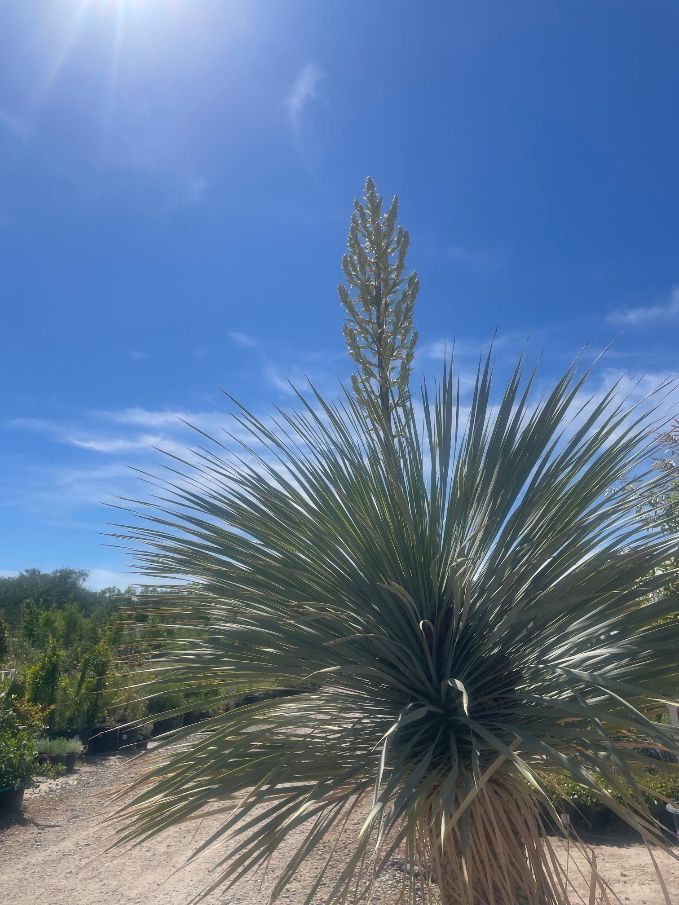
Type: Evergreen

Exposure: Full Sun

Water Use: Rain Water

Mature Size: 12’ H x 4’ W


Yucca rostrata is a trunk-forming yucca native to the Chihuahuan deserts of Texas and Mexico that is naturalized in New Mexico, Arizona and Utah. The common name beaked yucca refers to the sharp tips of the leaves, which can be up to 3 feet long.


Extremely drought and heat tolerant, Yucca rostrata can withstand temperatures down to 0 degrees, and sometimes lower for brief periods. It is hardy in USDA zones 5-11. Well drained soil is best as this plant does not tolerate dampness well.


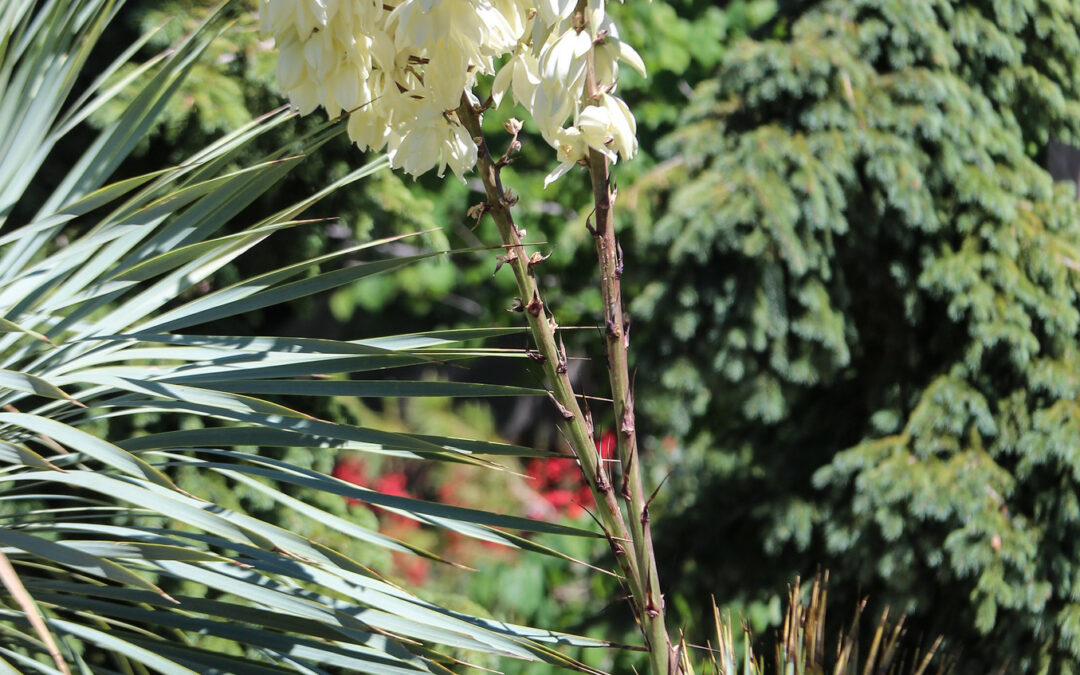
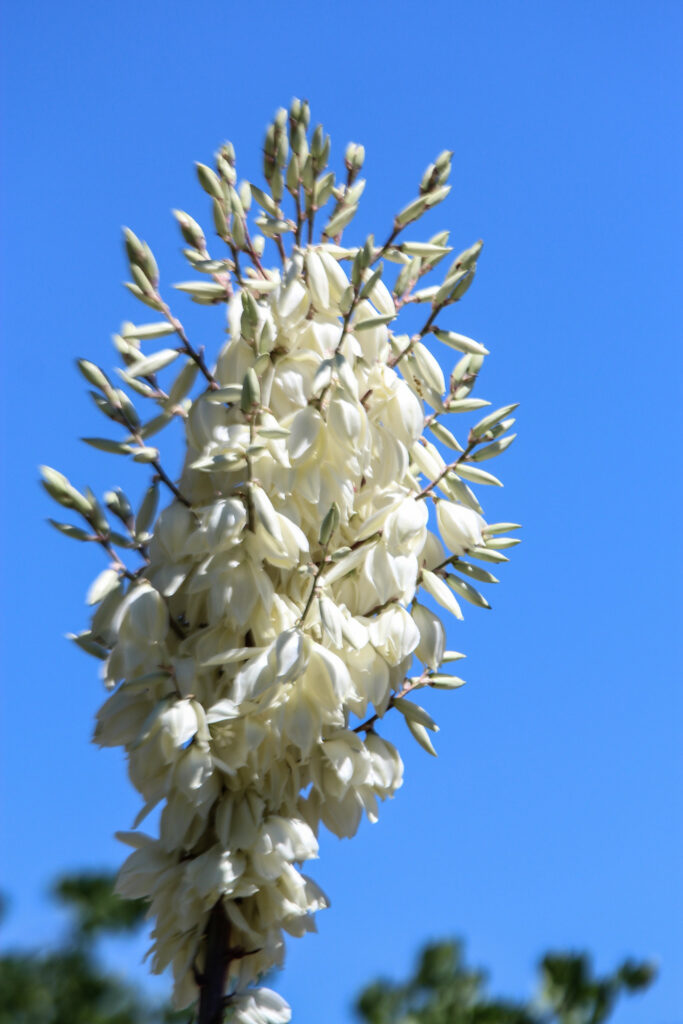
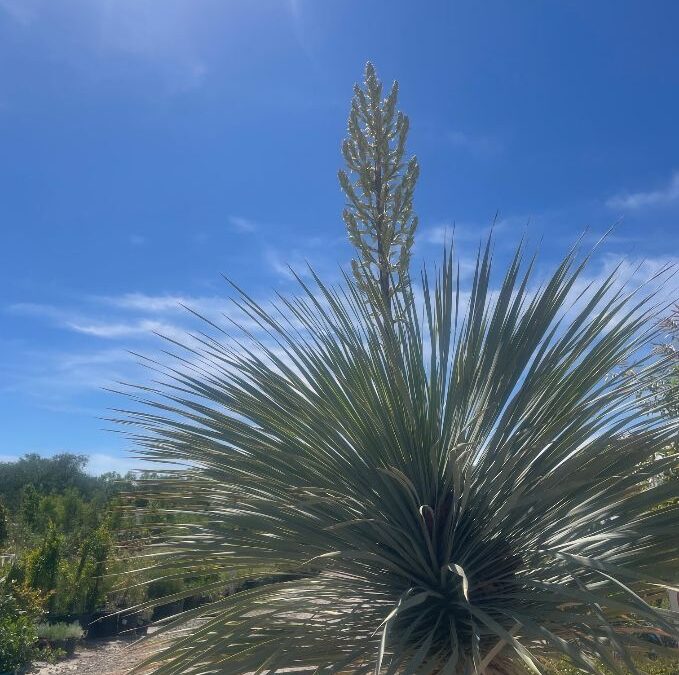
This is a striking trunk-forming species, with long, narrow ice blue leaves forming a perfectly rounded crown atop a very slow growing trunk that can eventually reach up to 15 feet tall. Although frequently single crowned, this plant will sometimes form multiple crowns that are each graced with a stalk of creamy white flowers in late spring. Visited by hummingbirds and moths, these flowers provide an additional 3 feet of height to the plant.


Maintenance requirements are few, removing spent flower stalks when dry, perhaps removing old, dry leaves as they fold down over the trunk, and giving the plant infrequent water during the warmest months of summer.

Spineless prickly pear, Opuntia cacanapa ‘Ellisiana’

Spineless prickly pear, Opuntia cacanapa ‘Ellisiana’

Type: Evergreen

Exposure: Full sun

Water Use: Low

Mature Size: 3’ x 4’

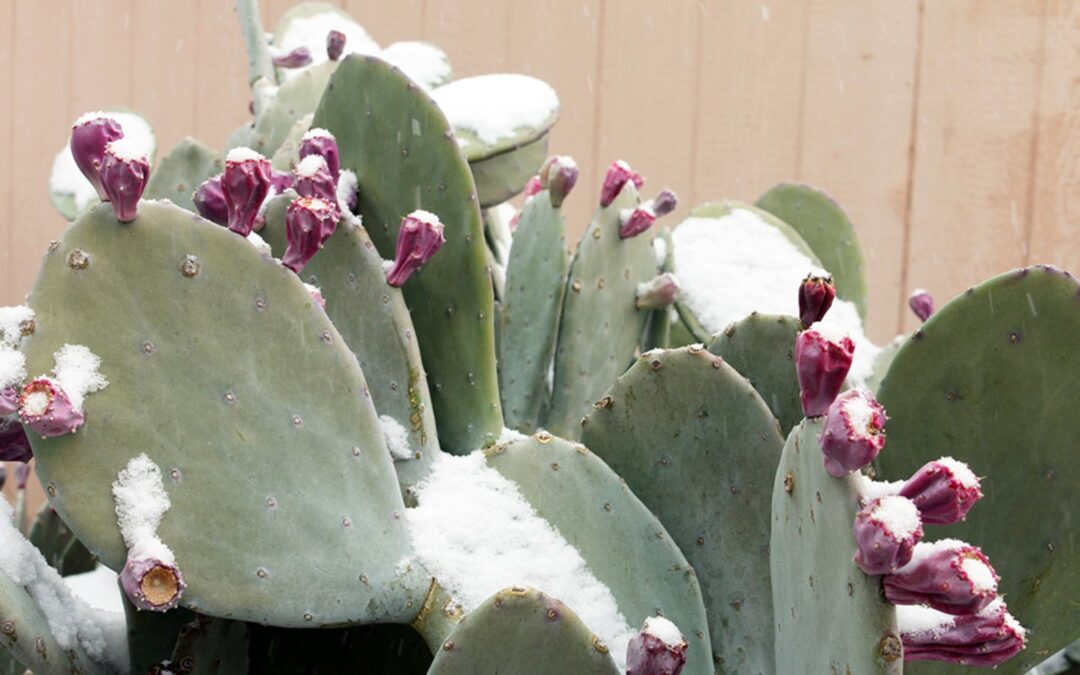
This easy to grow native plant thrives in our New Mexico climate. Striking against a stucco backdrop, bees can’t get enough of the pollen from the big yellow blooms during late spring. In late summer and early fall, it is filled with maroon-red fruit. While it gives off a smooth, non-spiny appearance, it does have tiny glochids or slivers that can grab onto your skin when handled. Once established, it can survive without water. As with most cactus, water is not necessary in the winter. Use tongs or gloves to plant and prune. Prickly pear is also very easy to propagate; learn how here.

Giant hesperaloe, Hesperaloe funifera

Giant hesperaloe, Hesperaloe funifera

Type: Desert Accent

Exposure: Sun

Water Use: Low

Mature Size: 5’ H x 4’ W

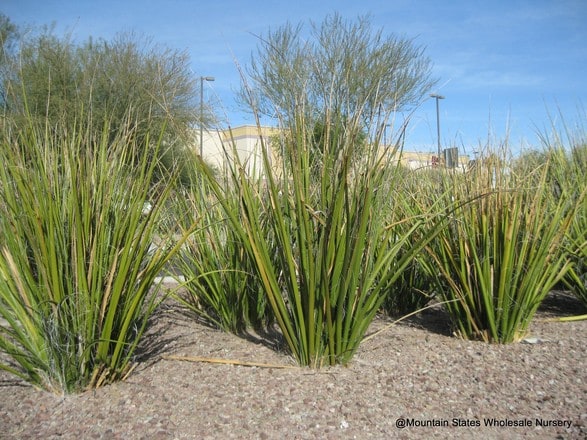
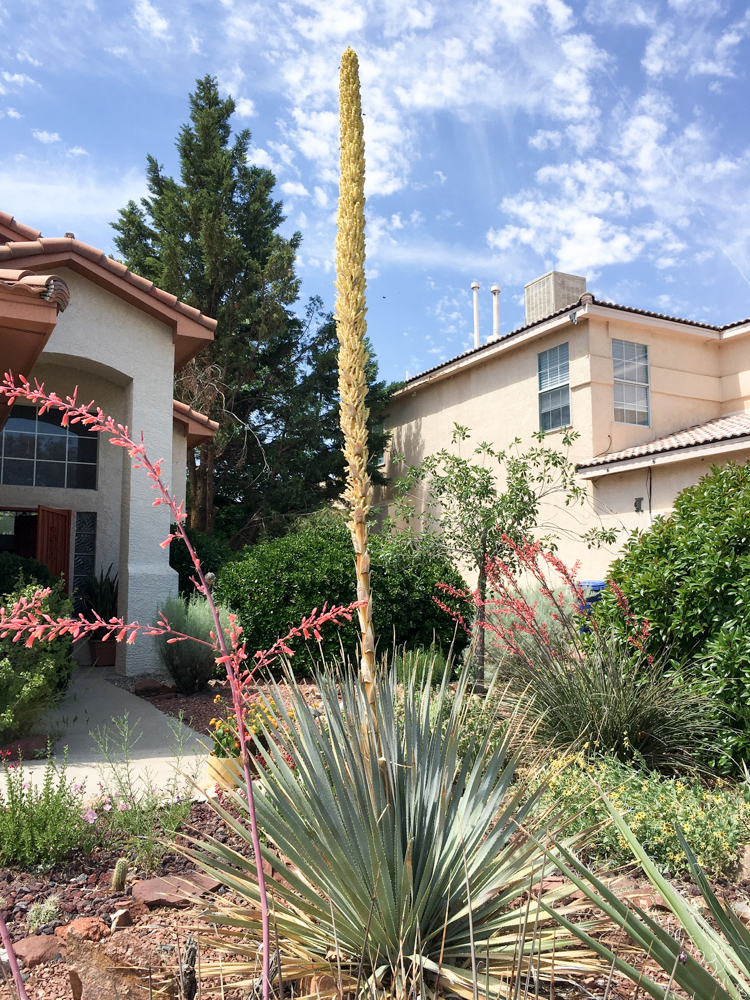
This upright desert accent has tall narrow and swordlike lime green leaves. It is a summer bloomer, putting up a 12- 14-foot-tall flower spike of creamy white flowers. This hesperaloe loves full sun, well-drained soil, low water and low maintenance. Flowers are nocturnal and pollinated by bats and hummingbirds.

Thompson yucca, Yucca thomsoniana

Thompson yucca, Yucca thomsoniana

Type: Desert accent evergreen

Exposure: Full sun

Water Use: Low

Mature Size: 6’ H x 4’ W

This is a small tree-forming yucca. It can grow from 5 to 8 feet tall and 6 feet wide. Its trunk can grow around 5 to 8 inches in diameter. The light green leaves with pale yellow margins grow in a mass radiating near the top and can be 8 to 24 inches long. It loves well drained soil and extreme heat conditions. It produces 3-foot-tall creamy white blooms from April through May. This yucca stays neat in appearance and requires little maintenance.

Photo by Arthur Chapman

Beargrass, Nolina microcarpa

Beargrass, Nolina microcarpa

Type: Desert accent

Exposure: Full Sun

Water Use: Rainwater Only

Mature Size:  5’x6’

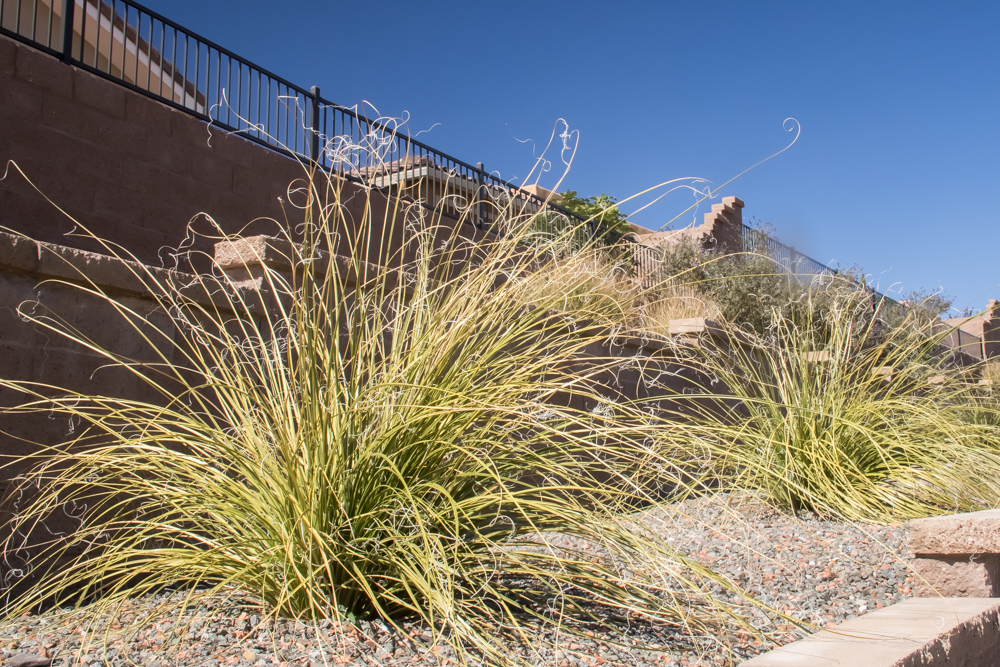
Beargrass offers the best of all worlds because it looks like a grass but is an evergreen succulent that produces flowers. Its grass-like leaves maintain their color and form year-round, adding a solid structural element in the garden. Tall spires of tiny white flowers cluster around 3’-6’ stems in the early summer. Give beargrass plenty of space, as it is not a true grass and responds poorly to shearing. A native of the Southwest, it will thrive with minimal supplemental irrigation once established. 

Sotol / Desert Spoon, Dasylirion Wheeleri

Sotol / Desert Spoon, Dasylirion Wheeleri

Exposure:  Sun/Shade

Water: Rainwater

Height and Spread:5’ x 5’

Blooming Season: Summer

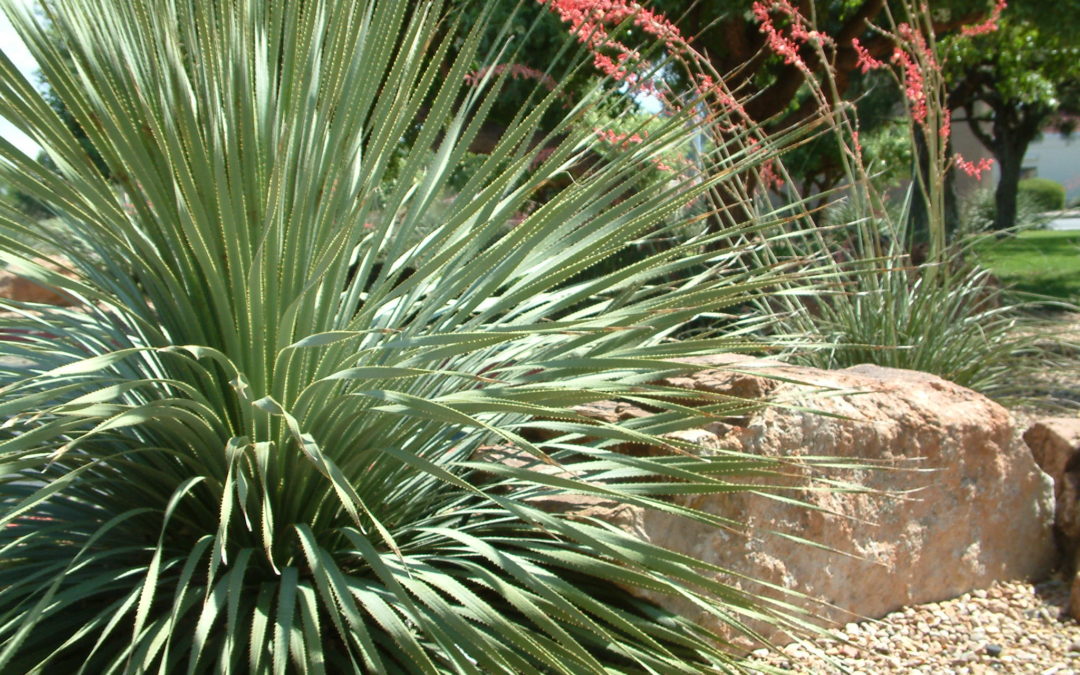
Striking thin evergreen leaf blades (sometimes referred to as saw blades) grace this desert accent. Once established, it thrives on rainwater alone in hot gravelly or sandy soils. It can stand alone as a beautiful symmetrical accent plant or be planted among desert flowering perennials. Give it space to grow away from patios and walkways. Trim old seed stalks once a year in late winter.

Dasylirion wheeleri