
Symphoricarpos albus, Snowberry
Type: Deciduous
Exposure: Full Sun
Water Use: Medium
Mature Size: 6’ H x 6’ W
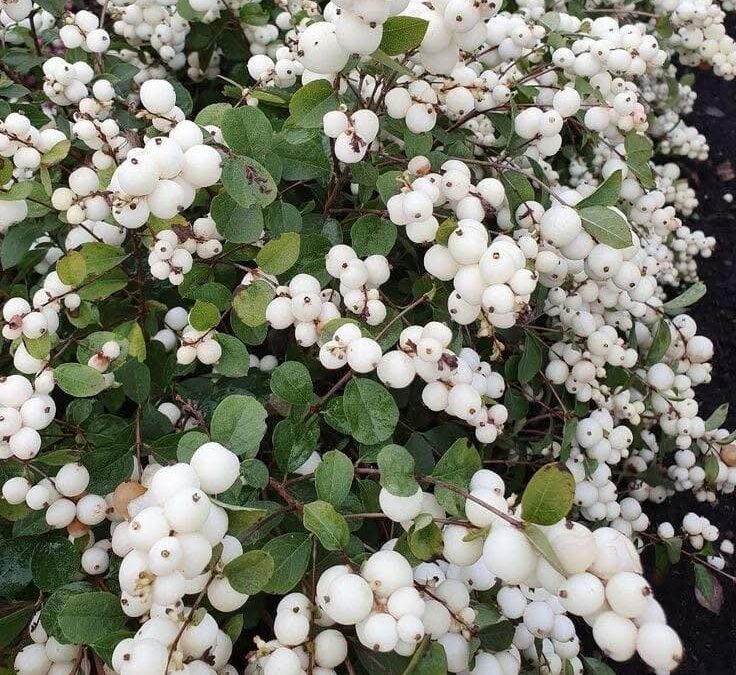
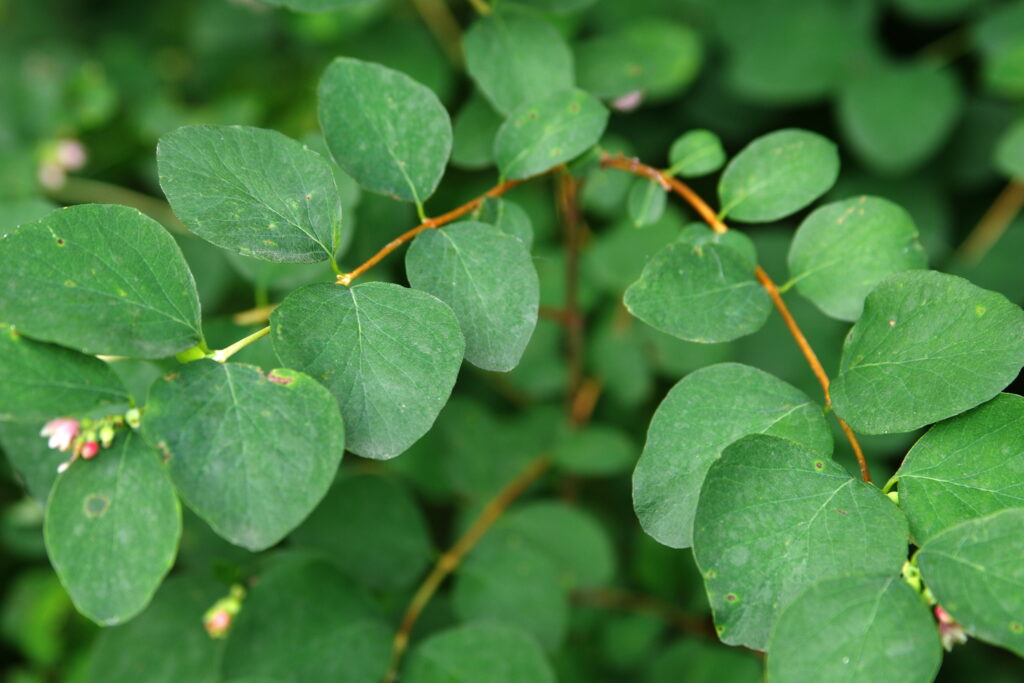
This shrub is sparsely branched, growing 2–5 feet tall and gradually forming a thicket 4–6 feet wide. Its slender, wiry twigs bear small, opposite leaves and pinkish white bell shaped tiny flower clusters, which are followed by large, snow-white berry-like fruit. It can be found along stream beds, making it a great plant for beneath the runoff of downspouts.
Related species include coralberry (S. orbiculatus), known for its purplish-green flowers and clusters of pink berries, and wolfberry (S. occidentalis), a dry prairie shrub with pale pink flowers, leathery oval leaves and greenish-white fruit.
This plant has many traditional and medicinal uses, according to the National Park Service, “Fresh berries can be crushed and rubbed on skin to cleanse and soothe; they also heal rashes and burns. Native Americans used the berries to clean their hair. Roots were soaked to make tea to treat stomach disorders, and tea made from twigs treated fevers. The spindly branches can be tied together to make brooms.”

Track Your Water Use Online
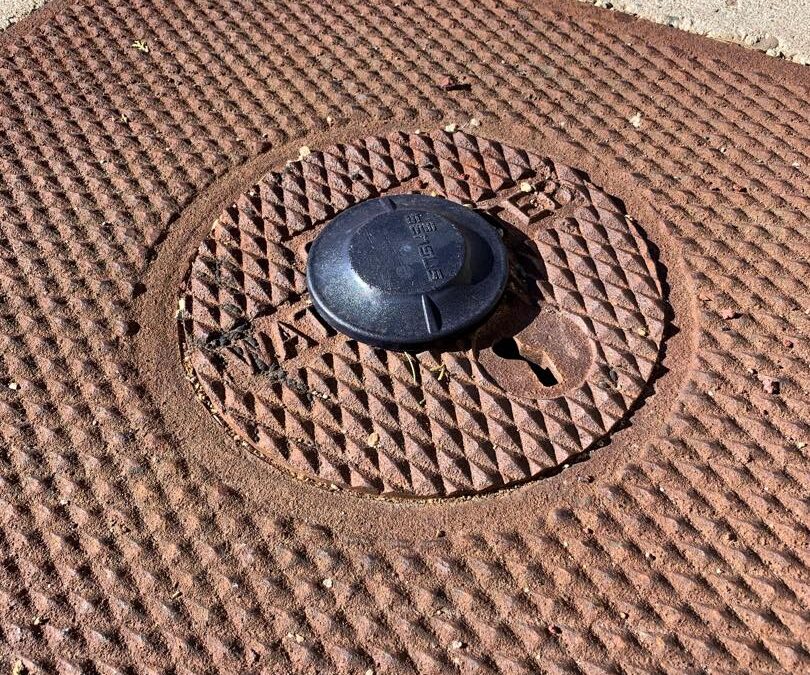
If you have a meter equipped with AMI (Advanced Metering Infrastructure) as shown in the photo above, you can log into your Water Authority account and see your hour-by-hour usage. This may help you locate any issues in your house or yard, such as a continuous water leak in toilets or irrigation systems. It can help you understand how much water you use throughout your day and serve as a guide to better decision-making in how you use your water. If you don’t have an AMI meter installed yet, it will produce an average use graph for your home.
Start by going to www.abcwua.org. Click on “My Account” in the top menu bar (shown below with a red arrow) to create an account if you haven’t done so already. You’ll need your billing information. Once you’ve created an account, you can view and pay your bills, as well as see your daily water usage.

Here is an example of the account page. We are going to focus on the “View Water Usage” section. It can take a few moments to add the dashboard information.

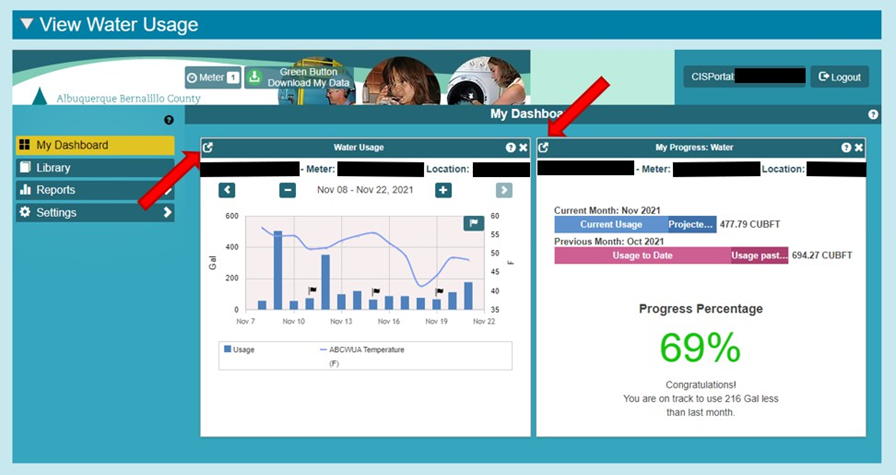
Initially, you will have two screens in your dashboard: “Water Usage” and “My Progress.” You can expand each one by clicking on the icon in the top left corner (red arrows). This will make the information easier to read and provide access to some additional features.
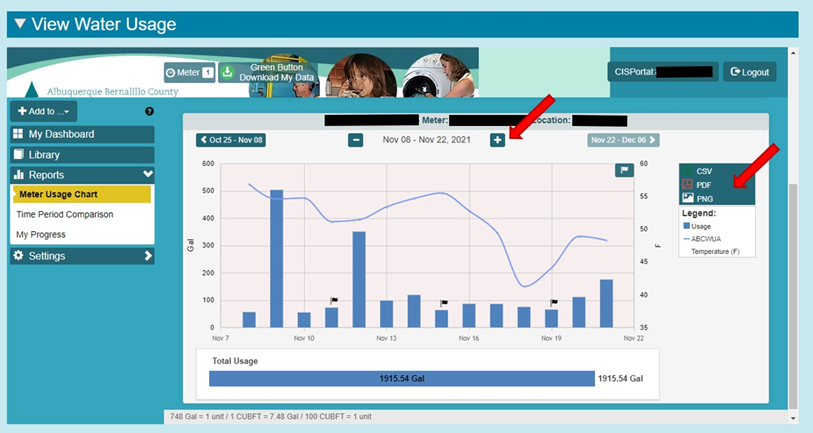
Below is a graph that provides you with a glance of your daily usage, along with the average temperature for that day. Two features highlighted in this photo are: 1) the “+” sign will change the date parameter and provide hourly usage and 2) the “PNG” feature will export your usage chart if you want to save it as a picture.
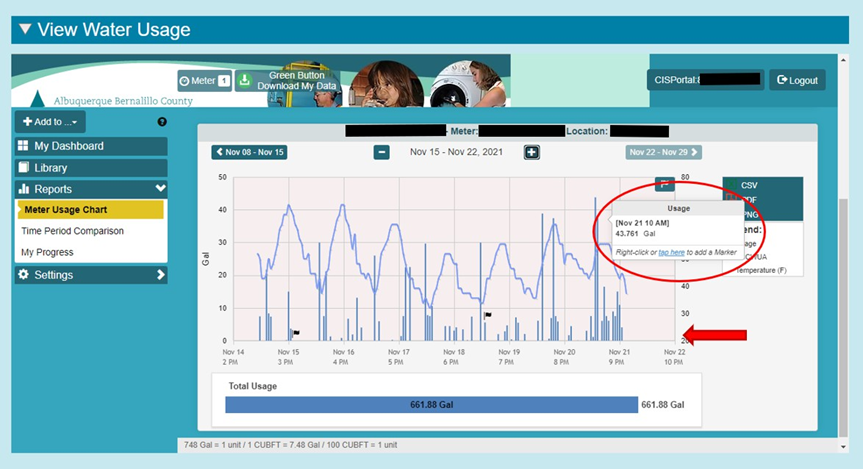
On the right-hand side, where the red arrow is, the “PDF” feature allows you to download the current month’s hourly data. An example of this is shown in the following image.

Below is an example of an hourly chart of your water usage, with the hourly temperature shown as well. Note: You can view your actual usage on each line of the graph by hovering your pointer over it. This is where you may see a possible leak if you have vertical lines (hourly usage) each hour, daily. A red arrow highlights where you would see that.
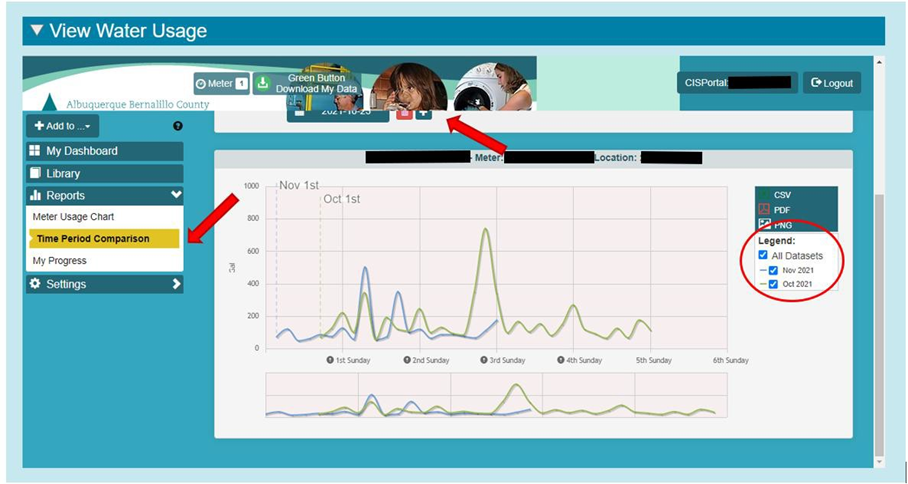
Next, we’ll look at a monthly comparison. To do this, choose “Time Period Comparison” on the left (highlighted by the red arrow). This example shows consecutive months, but you can adjust the view using the “slider” above the graph to click on the months. You can compare your usage for the same month from one year to the next. This is great if you are trying to track savings from changes in your household or irrigation.
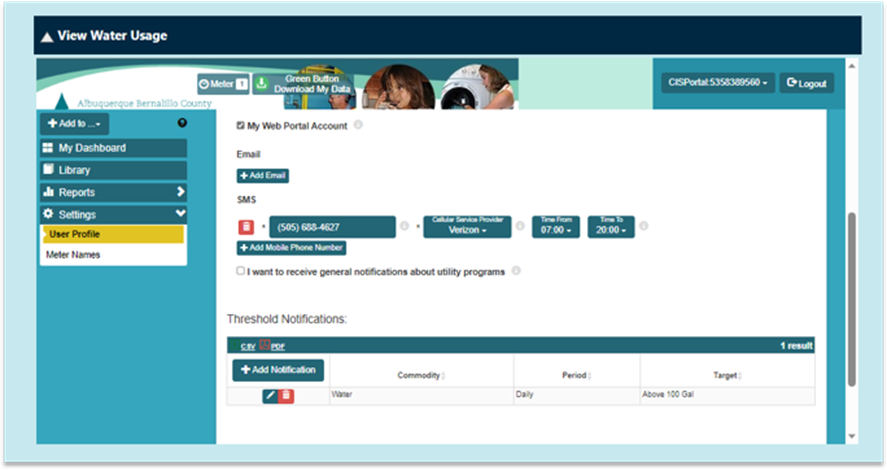
You can add a threshold notification that will inform you when your water use passes a set amount. The threshold should start at your “normal” daily usage. So, if your normal usage in the winter is 100 gallons a day, you can add that as your threshold, and our system will notify you if you’ve gone above the threshold. This picture shows you how to add a threshold. You can add an email address or phone number to receive the notifications.
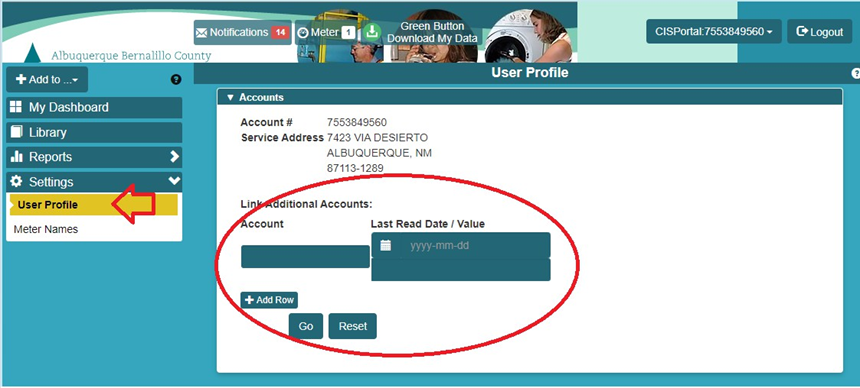
If you have more than one account that you watch over, you can go to the user profile tab and add additional account numbers to your profile.
Watch our How To Video below!

How the Water Authority is Weathering the Pending Drought
With most of Bernalillo County and much of north-central New Mexico in extreme drought, according to the U.S. Drought Monitor, and the Albuquerque stretch of the Rio Grande potentially running dry this summer, it’s time for action.
Albuquerque can use its groundwater resources to make up for the lack of surface water, but the drought reminds us that water is scarce in the arid Southwest. Here’s what the Water Authority is working on to help save water for future generations.
The Water Authority is now at “Stage 0 Drought Advisory,” which triggers several actions and calls for increased public education to encourage voluntary water conservation such as:
- Expanding public outreach efforts and customizing promotional and educational materials to raise awareness about the current drought conditions.
- Hosting a series of educational drought-focused webinars with a $20 rebate offered to attendees. About 200 ratepayers signed up for the first two webinars.
- The water conservation program generally follows a three-pronged approach: education, incentives and enforcement. This includes focusing on how we can help educate ratepayers to efficiently irrigate their existing yard, provide incentives for creating beautiful yard transformations, and better target sites that waste water.
- We will be expanding our media outreach on public radio, Spotify, YouTube and social media as well as through traditional methods such as billboards, newspapers and television.
We encourage the public to take advantage of our Desert Friendly Xeriscape Conversion Rebate. At $3 per square foot (the highest in our region), this rebate supports the transformation of water-thirsty lawns into desert friendly landscapes featuring plants, drip irrigation and mulch. This season, we aim to boost participation in this generous program as it remains one of the most effective methods for conserving water outdoors.
We are also prioritizing water waste enforcement. Landscape irrigation is the most common cause of water waste, but waste also can result from air conditioning system leaks, car washing, draining pools and other uses of water. It is also considered water waste to use spray irrigation between 11 a.m. and 7 p.m. from April 1 to Oct. 31. Click here to report water waste or call 842-WATR (9287).
Thank you for working together to support our community in conserving water regularly and during these drought conditions.
Learn more here:

How to Transform Your Thirsty Lawn in 6 Steps
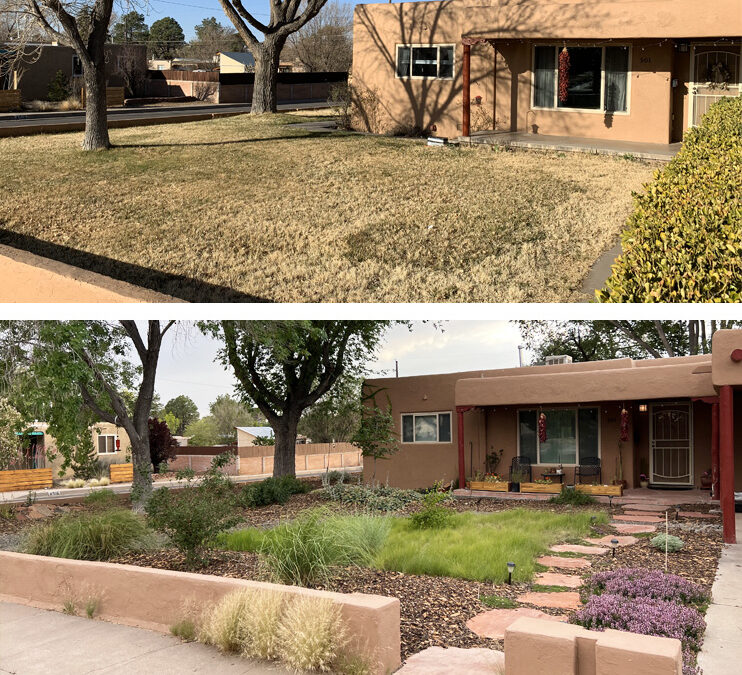
You undoubtedly have seen your neighbors and friends around town removing their grass lawns and replacing them with water efficient desert friendly xeriscapes. You may yourself be interested in doing the same with your yard but perhaps are overwhelmed by the tasks or concerned about how much it would cost. Don’t fret, it’s much simpler than you think. We’re walking you through the six steps to transform your lawn into a beautiful desert friendly xeriscape.
STEP 1
COME UP WITH A DESIGN, then apply for the $3-a-square-foot rebate.
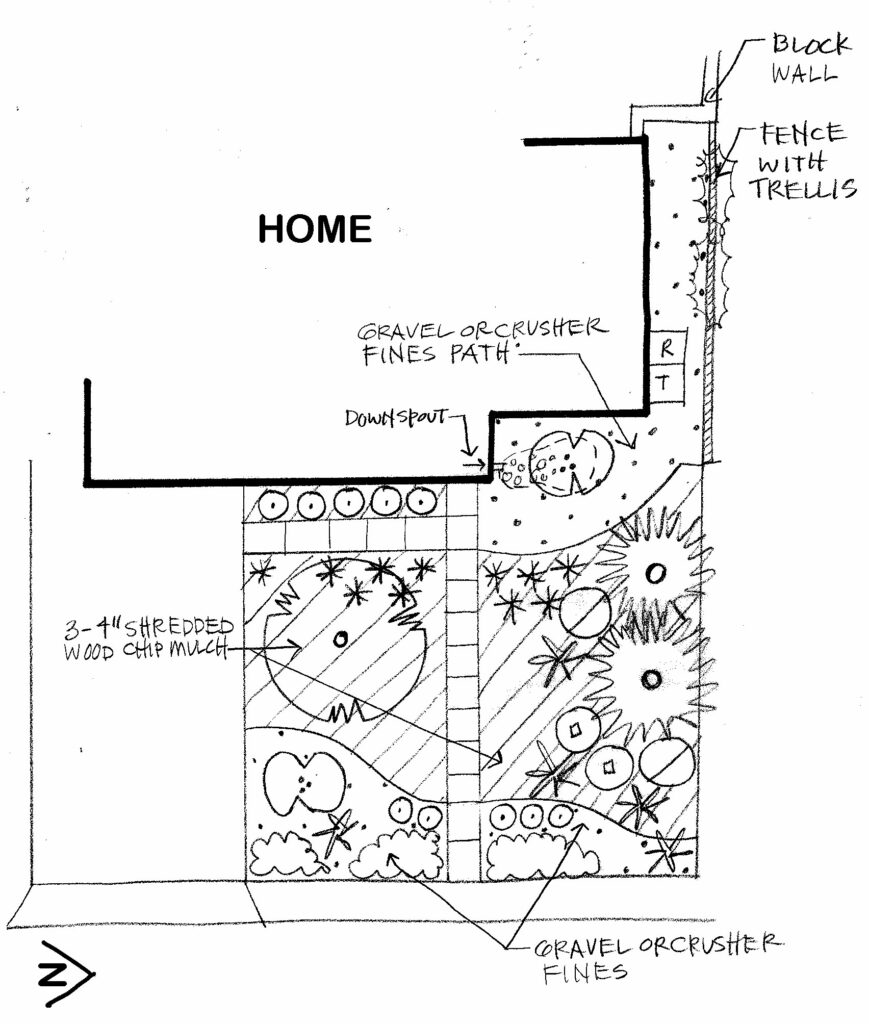
No need to get overwhelmed by this step. You know your yard best, so observe and understand how you want to use your space. Brainstorm elements you want to include. Take into account existing plants and trees, views you want to preserve or hide, shady or very sunny spots, and downspouts/canales or other places where water collects.
Dig Deeper with these design articles:
Simple Steps to Get Started Designing Your Yard
Desert Friendly Design Templates
Favorite Mediterranean Plants for the Albuquerque Area
Apply for the rebate.
STEP 2
DEMOLITION, GRADING AND DRAINAGE
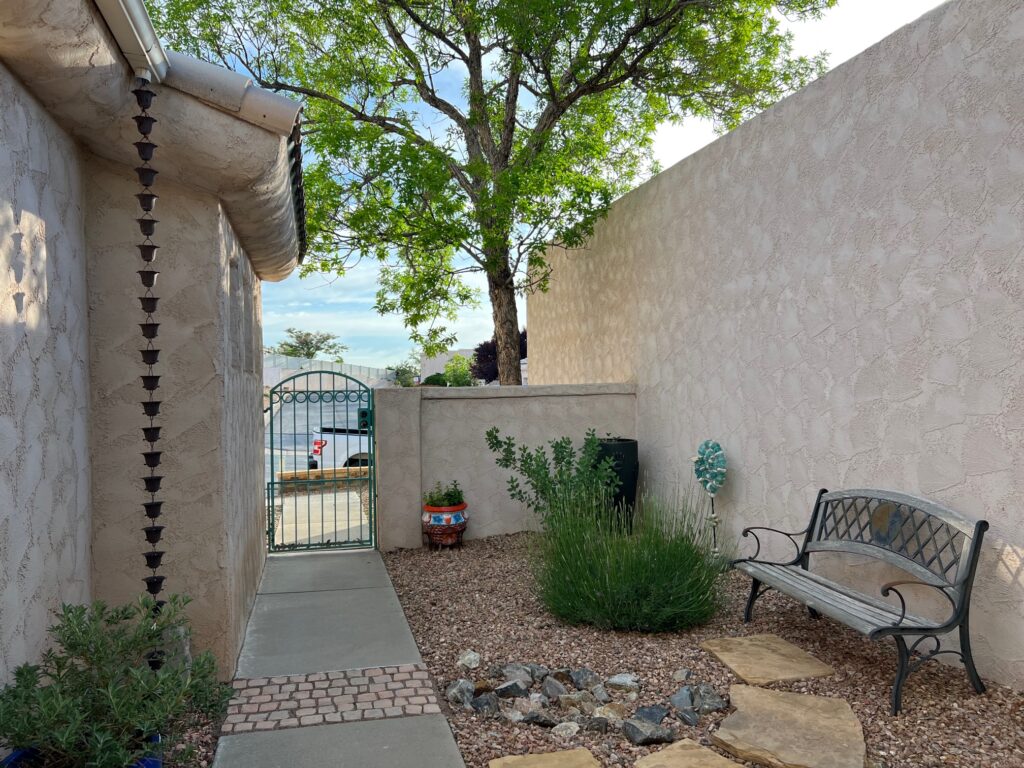
Once you have your design, use spray paint or old hoses to lay it out on the ground. Walk around the space and make changes as needed.
Before demolition and removal of the lawn, call 811 to mark underground utilities. Also note existing tree roots that you need to protect during your work.
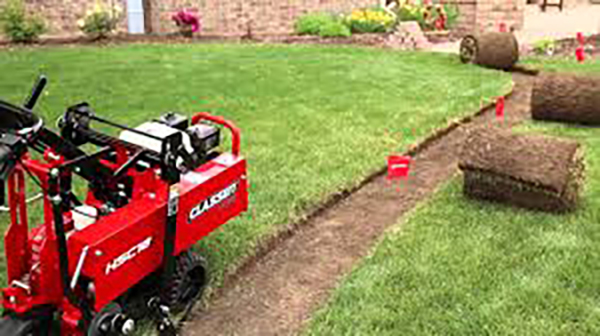
Lawn removal techniques: A sod cutter works best for most lawns unless there are large roots or the grass is Bermuda. Hand dig grass out around large roots so as not to cut any that are more than 2” thick. Use an herbicide to kill Bermuda due to its invasive and prolific roots. Along sidewalks you’ll want to dig down 4” by 12” wide to make room for 3” of mulch and slope the soil back up to the surrounding grade gently. Avoid using a skid steer to remove the grass, this can unnecessarily remove useful existing topsoil.
Drainage Considerations: Always grade water away from your house, masonry walls or walking paths and towards planting areas.
Dig Deeper with these articles:
Passive Rainwater Harvesting for Homeowners
Plants for Passive Rainwater Harvesting Gardens
Residential Rainwater Harvesting Information
STEP 3
HARDSCAPE
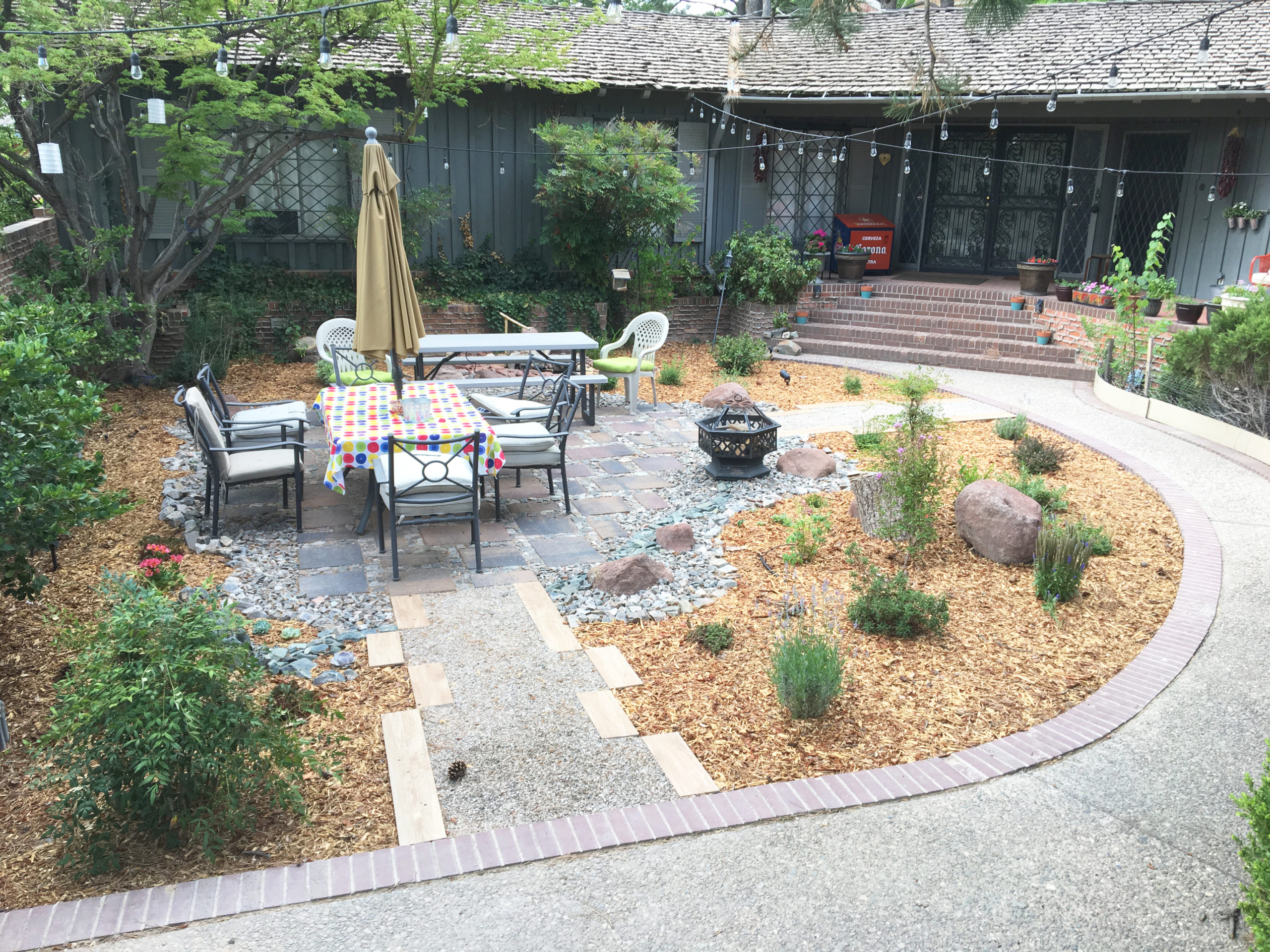
Install any hardscape elements such as walls, pergolas, sidewalks, pavers and boulders.
STEP 4
IRRIGATION
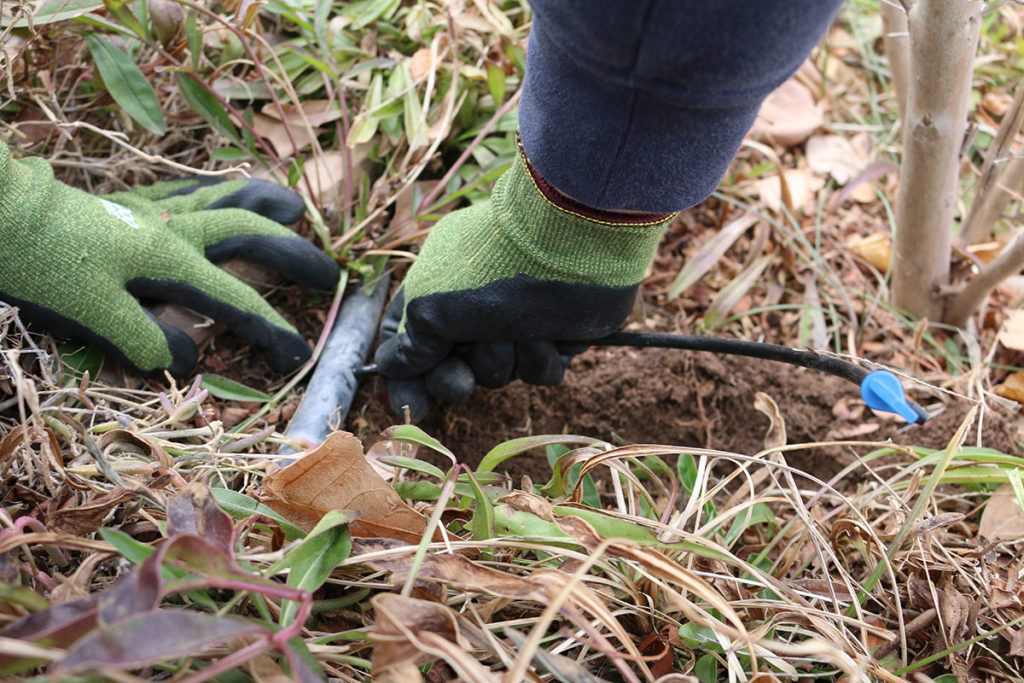
You’ll use a drip system to irrigate your new beautiful desert friendly xeriscape. Check that your existing spray valves are in good working condition. If so, you can reuse these valves. Simply have a licensed irrigator or plumber add a pressure reducer after the valve, then you can add your ½” drip polyline.
Irrigation Components: If your existing valves are damaged or non-functional you’ll need to install new ones. Typically, an irrigation specialist or licensed plumber would install your new manual shut-off valve, automatic valves, box, backflow preventers and pressure reducers. But if you want to do it yourself, do your research and reach out to local landscape irrigation suppliers for advice.
Drip Tubing: The drip tubing is everything downstream of the pressure reducers, and it’s relatively easy for homeowners to install. Uncoil the ½” or ¾” poly tubing in the sun until it’s flexible enough to manage (making sure there are no kinks in the process). Then, dig shallow 6” trenches, lay out the ½” poly in the trench, staking it with 6” weed fabric staples along the way, and snake the poly within a few feet of the plant locations. Wait until the plants are installed to cover the poly unless you have long lengths of it without plants.
Dig Deeper with these articles:
Use Drip Irrigation for your Trees and Shrubs
How to Convert your Existing Spray System to Drip
Drip Irrigation Maintenance Checklist
STEP 5
PLANTING
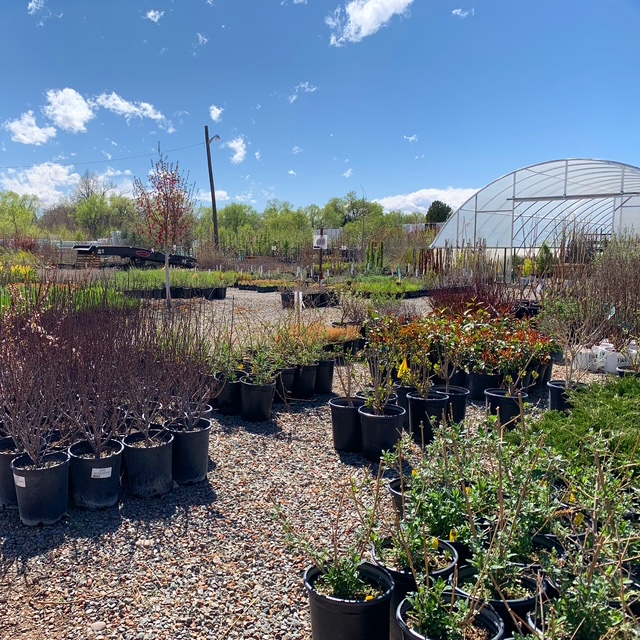
Install the plants (link to article). Water your new plants with a hose right after they’re installed. You might need to create temporary basins around each plant to keep the water from running off.
At this point, you’ll want to set up the permanent irrigation. Use your drip tubing punch tool to create a hole for the ¼” coupler and ¼” tubing. Always punch the hole in the side of the ½” poly, not the top, so a footstep doesn’t damage the connection. Carve a small trench in the dirt and run the ¼” tubing to the base of the plant and attach the emitter (use a weed fabric staple to hold it in place if necessary). Avoid running ¼” tubing farther than 3 feet in order to keep things orderly. After the ¼” tubing is installed, cover it with dirt to protect it and keep it from being tripped over.
Dig Deeper with these articles:
STEP 6
INSTALLING MULCH
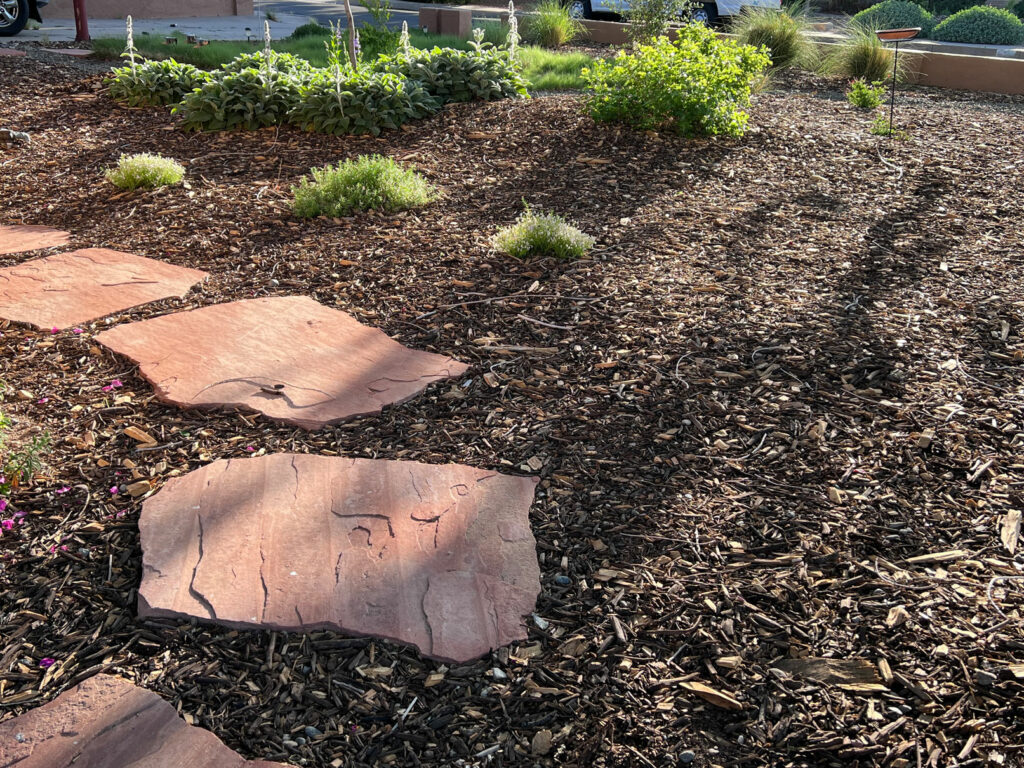
If you’re using gravel, the complexity and layout of your yard will determine whether you install weed barrier fabric before or after planting, but you do want the drip tubing under the weed fabric. For shredded wood chip mulch, lay the irrigation line down over the bare dirt then top with 3-4” of wood mulch.
If the mulch has been delivered in the street or on a concrete driveway, use a square shovel to scoop it up. From there, just load each wheelbarrow full and dump it throughout the yard. Spread it out with a rake and you’re done!
Dig Deeper with these articles:
Xeriscape Conversions that use Wood Chip Mulch
4 Common Myths about Organic Mulch
Great Natural Areas to Visit This Spring for Respite and Inspiration
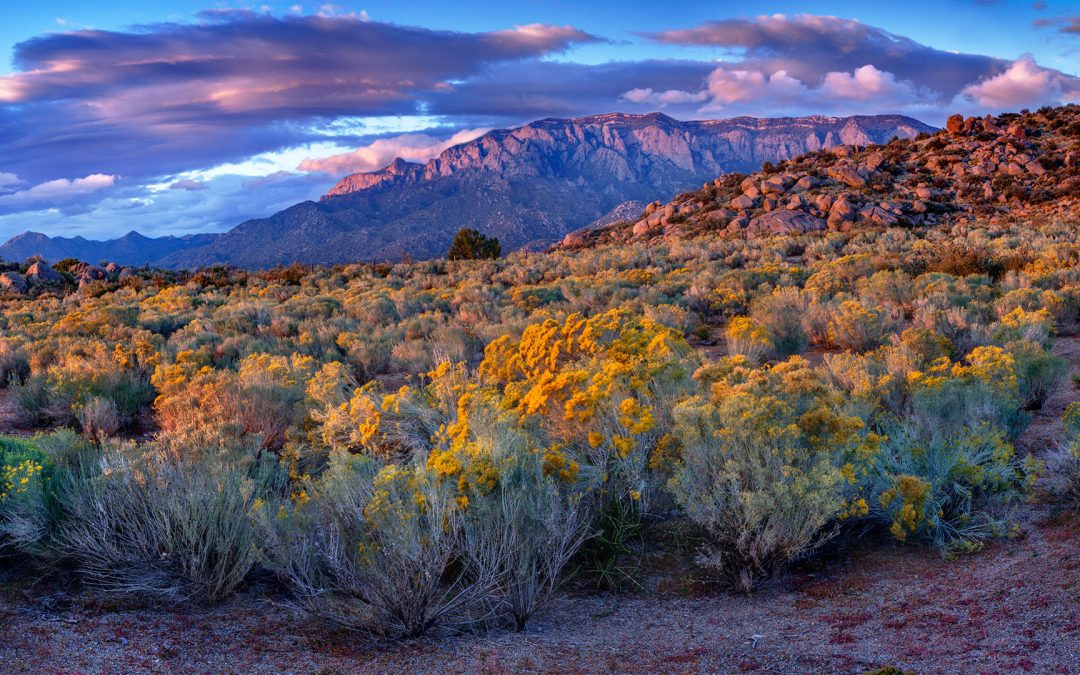
Natural areas and community gardens are great places to find inspiration for your landscape. We often look to neighbors’ yards, books, magazines or plant nurseries to get ideas, but those aren’t the only options. The greater Albuquerque area is home to beautiful open space areas that offer us places for recreation and conservation, but also are great sources of education and design inspiration. The plants you see in these natural areas are likely to do well in yards in that same part of town. Pay attention to what plants grow near each other as these will make good combinations in your yard as well.
Today, we are highlighting a couple of beautiful natural areas to visit in and around the South Valley.
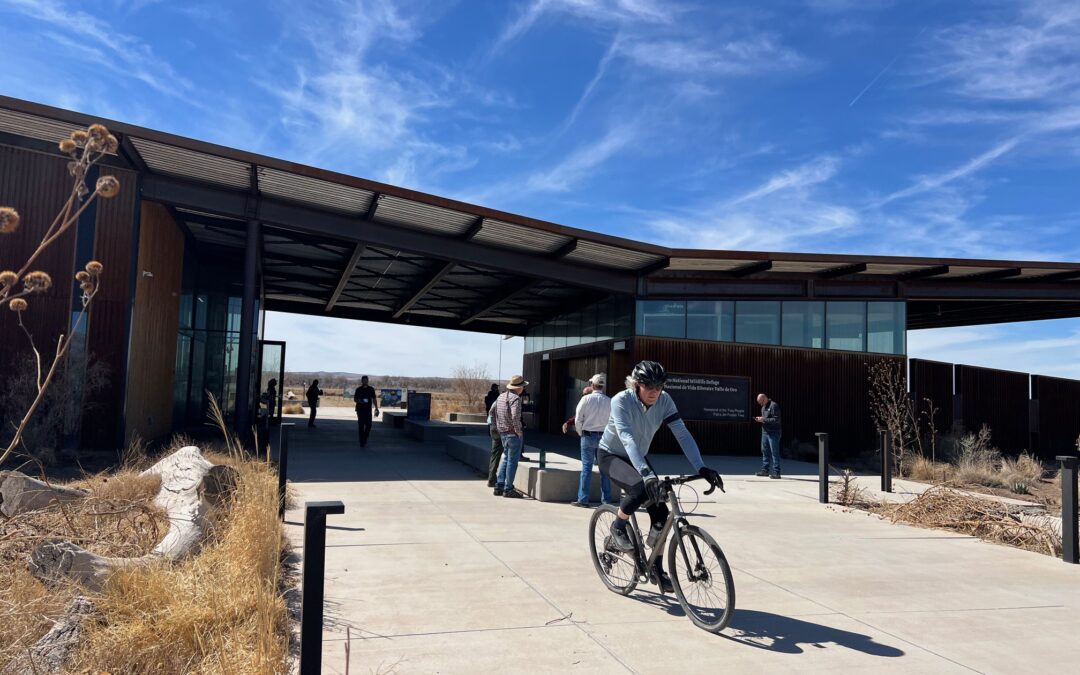
Valle de Oro National Wildlife Refuge
Did you know that within our great city, there is a national wildlife refuge? It was established in 2012 and is one of the most ambitious urban conservation projects in the nation. Tucked behind an industrial zone in the South Valley, the Valle de Oro National Wildlife Refuge provides an escape from the city. Enjoy a peaceful wetland demonstration pond, beautiful sunsets, and walking trail loops that mark the beginning of extensive transformation plans. Stop by the visitor center to learn about upcoming events and how you can help re-wild the land both on the refuge and in your community.
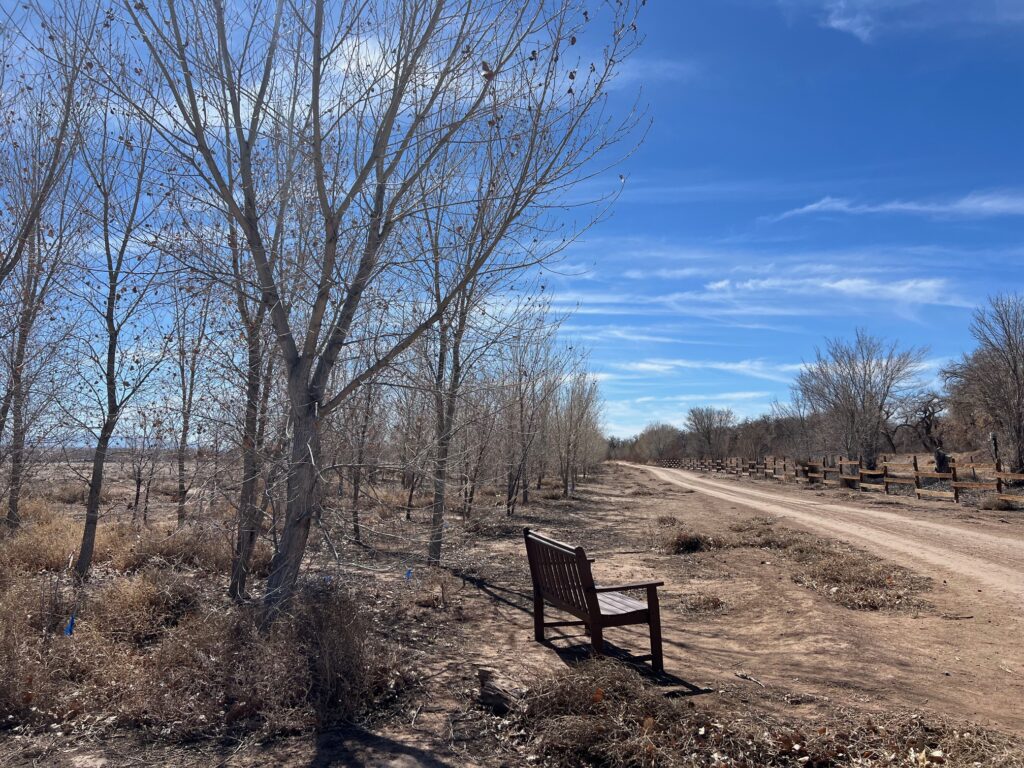
Valle de Oro offers a diversity of activities, including bicycling, bird watching, photography, horseback riding, dog walking, hiking, jogging, picnicking, education and interpretation. There are loop trails of all lengths available with the longest trail bringing you to the Rio Grande Bosque.
Gutierrez Hubbell House History and Cultural Center
Nearby and located on the original path of the El Camino Real de Tierra Adentro National Historic Trail is the Gutierrez Hubbell House History and Cultural Center. Located at 6029 Isleta SW in Albuquerque, it is run by Bernalillo County and noted for its state and national historic status.
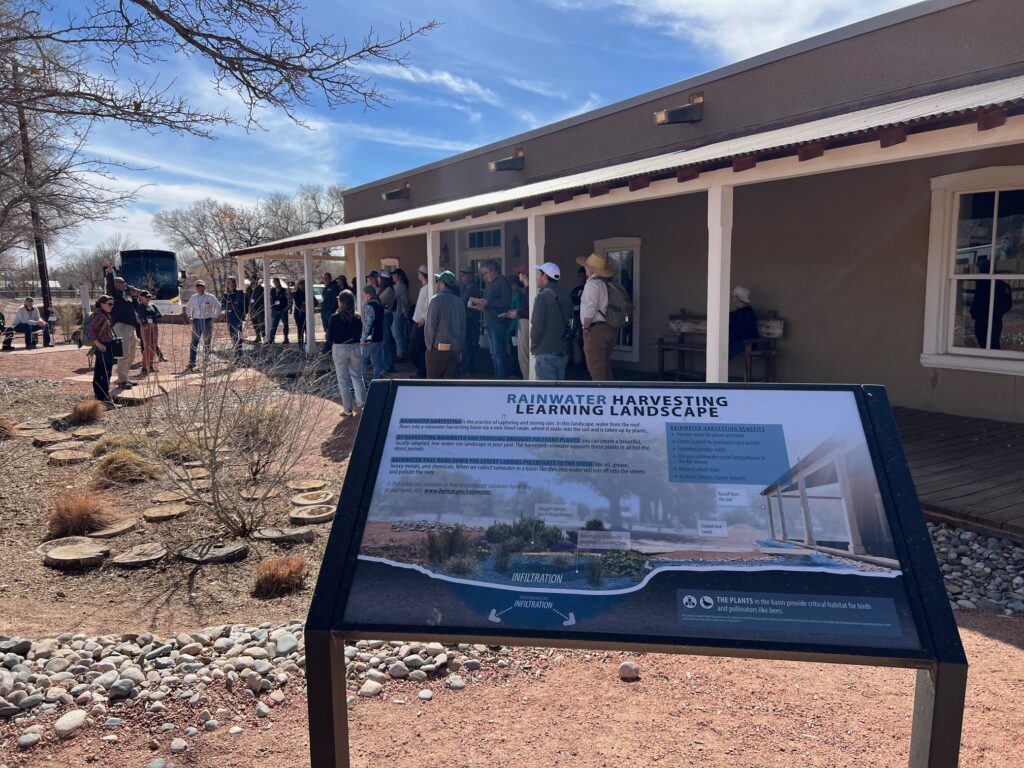
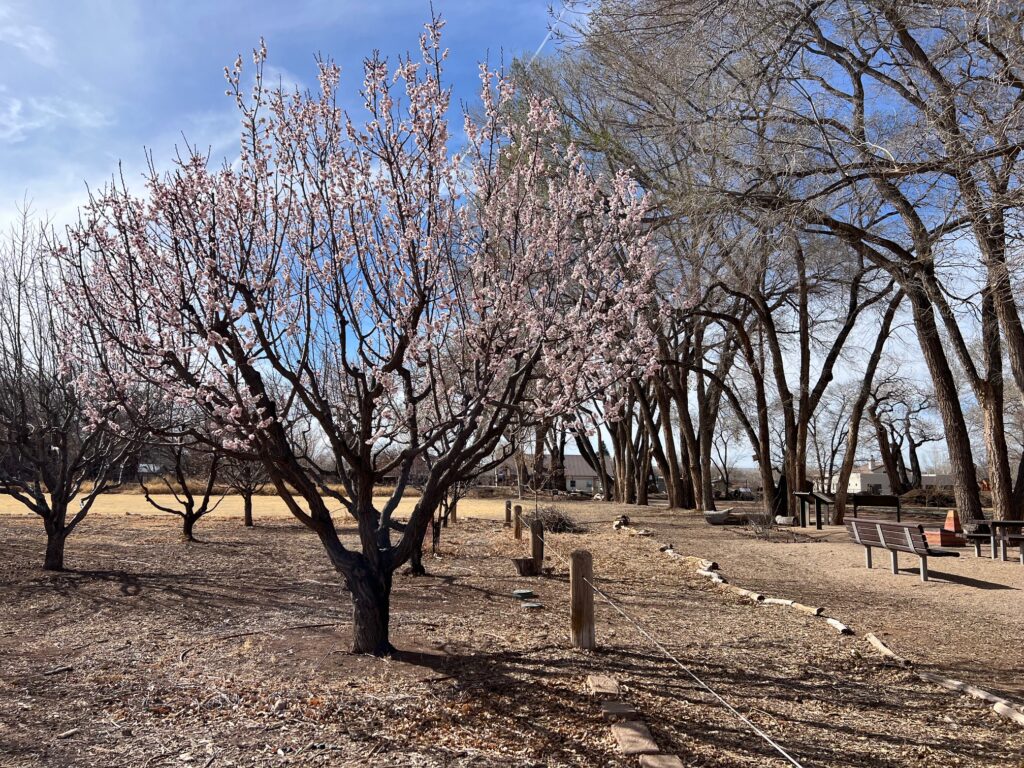
The Gutiérrez-Hubbell Open Space is an approximately 16-acre property that features the restored Gutiérrez-Hubbell House, courtyard, kitchen garden, heritage orchard, historic acequia and several actively farmed agricultural fields.
The house, a 5,700-square-foot earthen/adobe structure, is listed on the National Register of Historic Places and is a National Park Service certified site. Once a private residence of the prominent Gutiérrez and Hubbell families, it was also the location of a stagecoach stop, trading post and post office from the late 1860s to 1929. In 2000, the property was purchased by Bernalillo County and is managed as a Bernalillo County Open Space. Curated as a museum and educational center, the house also has community and gallery space and host several large events annually. Check the free backyard farming workshops and quarterly composting series that are held at the property.
Learn more here:
Desert friendly landscape reveal
Great Natural Areas to Visit This Winter for Respite and Inspiration
