Common Mistakes for Drip Irrigation Installations
In our hot, arid climate, drip irrigation efficiently waters trees, shrubs and other landscape plants by delivering the right amount directly to roots, promoting healthier plants and reducing waste. The drip systems greatest advantage is flexibility. It’s easy to install and modify a drip system as a landscape grows and changes. However, they can be incredibly wasteful if not installed and maintained correctly. Like many things, it’s easiest to learn from mistakes. We compiled the most common drip irrigation mistakes we see in our Albuquerque landscapes.
Mistake 1: Not installing a drip filter/pressure regulator combination.
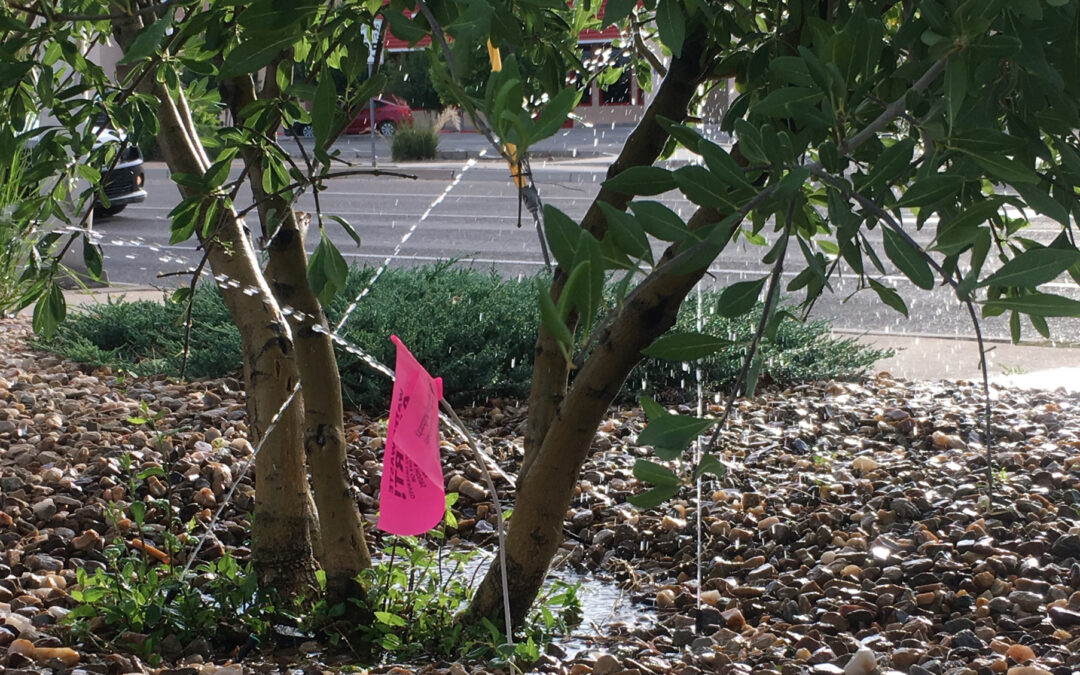
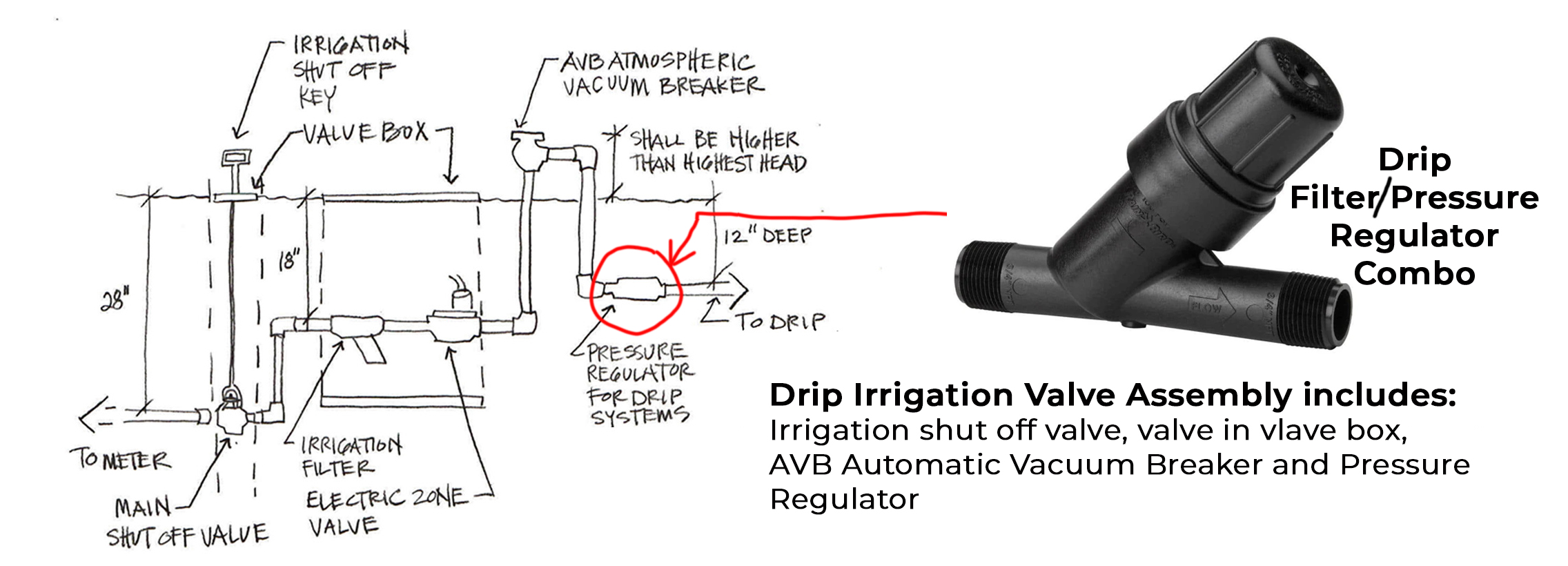
Average water pressure in Albuquerque ranges from 45-80 PSI, but drip irrigation systems have been designed to operate best at 25 PSI. All drip systems should have a pressure regulator to reduce the pressure and a filter to screen dirt and debris from water. If you notice drip emitters are popping off or leaking, then the water pressure is too high. Install a drip filter/pressure regulator combination downstream of the valve, immediately after the backflow preventer or vacuum breaker. If your system has a pressure reducer but emitters keep popping out of the ¼-inch distribution tubing then the end of the tubing may have become stretched. If so, cut off a small section of the tubing and reinstall the emitter into the fresh tubing to create a more secure fit.
Mistake 2: Relying on the existing sprinkler heads and sprinkler lines for drip irrigation.
Don’t rely on the old piping when converting sprinklers to drip. Abandon all old PVC and galvanized lateral lines and install sprinkler irrigation directly downstream of the valve assembly and backflow preventer. You may have seen the spray-to-drip retrofit kits locally available and wonder if this is a good approach. We don’t recommend this approach because studies show that nearly half of the water saved from converting a lawn to a xeriscape comes from abandoning leaky underground piping and fittings. Install your drip directly downstream of the valve assembly. Click here to learn how..
Mistake 3: Not burying or covering drip irrigation tubing.
One of the best ways to extend the life of your drip system is to keep it out of direct sunlight and hidden from rodents. Although drip tubing is UV-resistant, prolonged exposure to the sun gradually breaks down the plastic, making it brittle causing it to weaken and leak over time. To protect from the elements, ½” and ¾” distribution tubing should be installed with landscape staples and buried in a 4-6” depth trench and cover with 3-4″ of mulch.
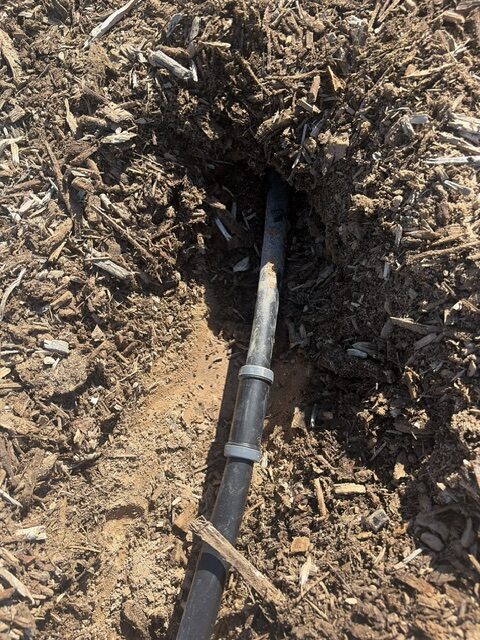
Polyline drip tubing buried underground.
Mistake 4: Going over instead of under retaining wall.
Avoid running drip tubing over the top of retaining walls (or landscape edging) whenever possible. A better option is to install a PVC sleeve beneath the wall before construction. Be sure to cover both ends of the sleeve with tape to prevent soil and debris from entering during construction. When you’re ready to install the irrigation system, simply feed the drip tubing through the sleeve. The sleeve protects the tubing from damage while also providing a convenient pathway for future repairs, replacements or system modifications.
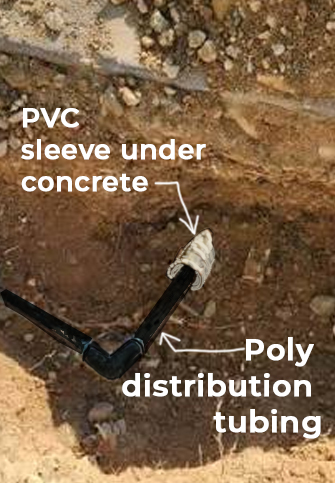
Irrigation PVC sleeve under concrete.
Mistake 5: Runs of ¼-inch distribution line (often called spaghetti tubing) that are too long.
In a perfect world, these smaller tubing lengths wouldn’t exceed 2 or 3 feet between the larger lateral tubing (½-inch or ¾-inch size) and the base of the plant. Keeping ¼-inch distribution tubing short, pinned down with landscape staples, and covered effectively with mulch helps prevent pressure loss from long runs plus reduces the opportunity for physical damage from UV sunlight, rodents or dogs.
Mistake 6: Having unnecessary fittings.
Every fitting creates an opportunity for leaks, compared to a continuous run of tubing. Whenever possible, use a single uninterrupted length of tubing. For example, if the tubing can be gently bent around a corner without kinking, there is no need to install a 90-degree elbow fitting,
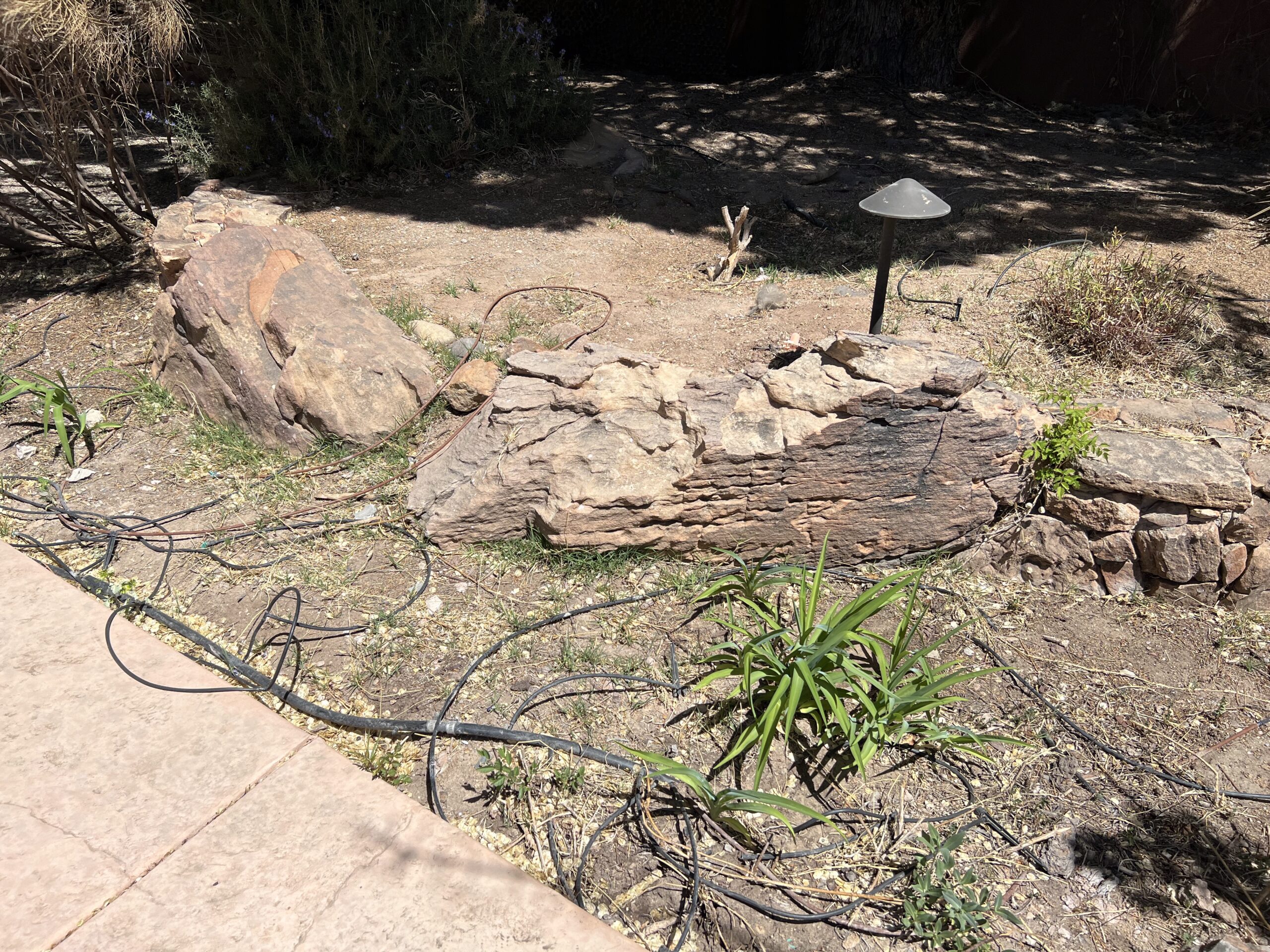
Lots of dripline connectors and long runs of ¼” distribution tubing – likely leading to damage and leaks.
Mistake 7: Not using enough landscape pins or staples.
Properly securing irrigation tubing with staples keeps it in place. Temperature fluctuations can cause the lines to expand and contract, which, over time, can allow the tubing to migrate to the surface, exposing it to sunlight and physical damage. Pin down the larger lateral supply line tubing and use at least one landscape pin on each ¼-inch tubing line to prevent the emitter from moving away from the plant’s root zone.
Mistake 8: Insufficient emitters for existing trees and plants.
This problem is most common when a lawn is converted to a xeriscape landscape with drip irrigation. Existing trees may have relied on sprinkler irrigation for many years, allowing their roots to spread throughout the lawn and often well beyond the edge of the canopy. When sprinklers are removed, homeowners or contractors sometimes replace the irrigation with just two or three emitters near the base of a mature tree. This does not provide enough water, and the water is not being applied where the majority of the feeder roots are located. This issue also occurs in newly installed landscapes when plants receive too few emitters; if the emitters are not repositioned, the problem continues as the plants mature. For newly installed landscapes use our Irrigation Guide page 28 to learn how many emitters should be installed per plant.
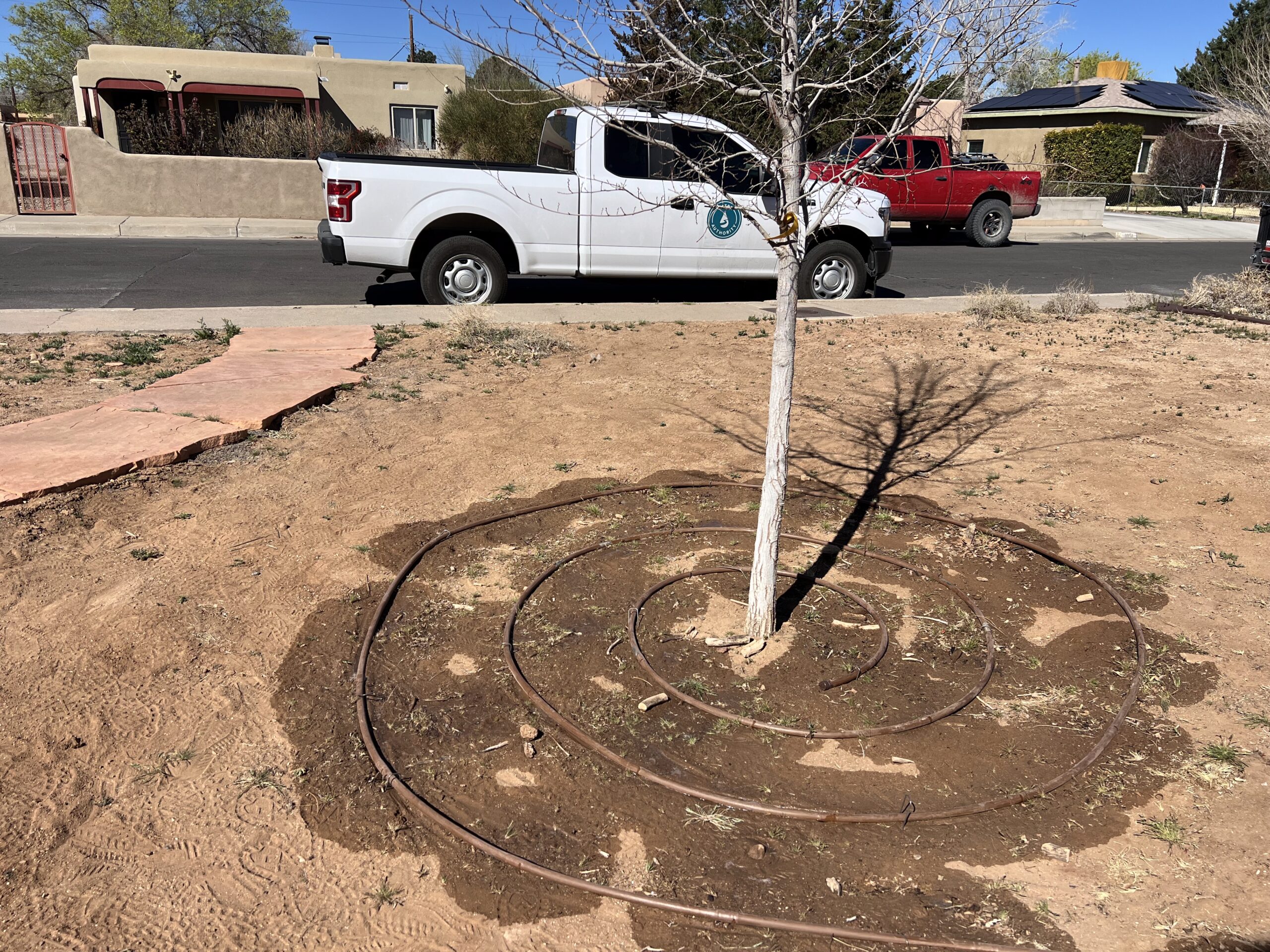
Newly installed tree watering system around a newly planted tree
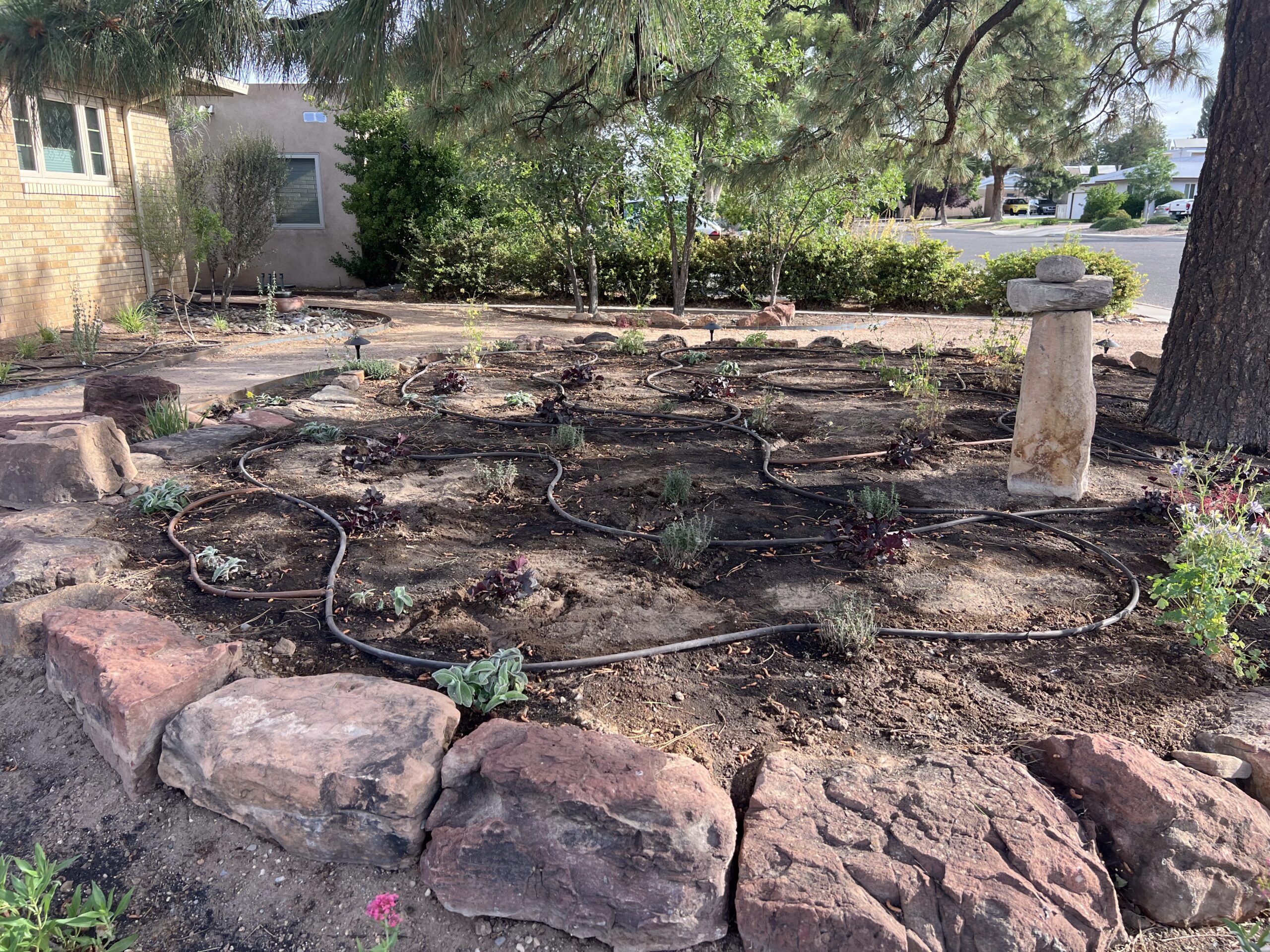
Tree watering system around existing tree to accommodate watering of the root zone around the large existing tree.
Mistake 9: Not separating trees and perennials into different irrigation zones.
We often find that customers have their low water use plants and medium water use trees on a single drip irrigation zone. One of the best irrigation practices – called ‘hydrozoning’ is to place trees and desert-friendly plants on separate watering zones. This allows each plant grouped by water need type to receive water according to its specific needs. Established trees typically benefit from deep, infrequent watering once or twice per month, while smaller plants generally require more frequent watering, often two to three times per week during the growing season. Separating these plants into different zones improves water efficiency, promotes healthier root systems and helps prevent both overwatering and underwatering. Occasionally, we come across a single irrigation zone or valve that contains both sprinklers for grass and drip irrigation for plants — this should always be avoided because it results in overwatered plants or underwatered grass.
Mistake 10: Not keeping emitters visible.
When walking through your newly installed landscape, you should be able to see the drip emitters positioned 2 to 3 inches above the mulch or gravel. (Emitters should also be placed on the uphill side of the plant.) Keeping emitters visible during the establishment period makes it much easier to verify that they are working properly and delivering water where it is needed. While they may not be the most attractive feature at first, the emitters will become less noticeable as plants grow and fill in. In a mature landscape, however, they can become hidden by plant growth and groundcover. In this case, the overall appearance and health of the plants provides clues if an irrigation problem exists. When you do need to locate an emitter, try listening when the drip zone first turns on. The sound of water flowing through the emitter can often help you pinpoint its location.
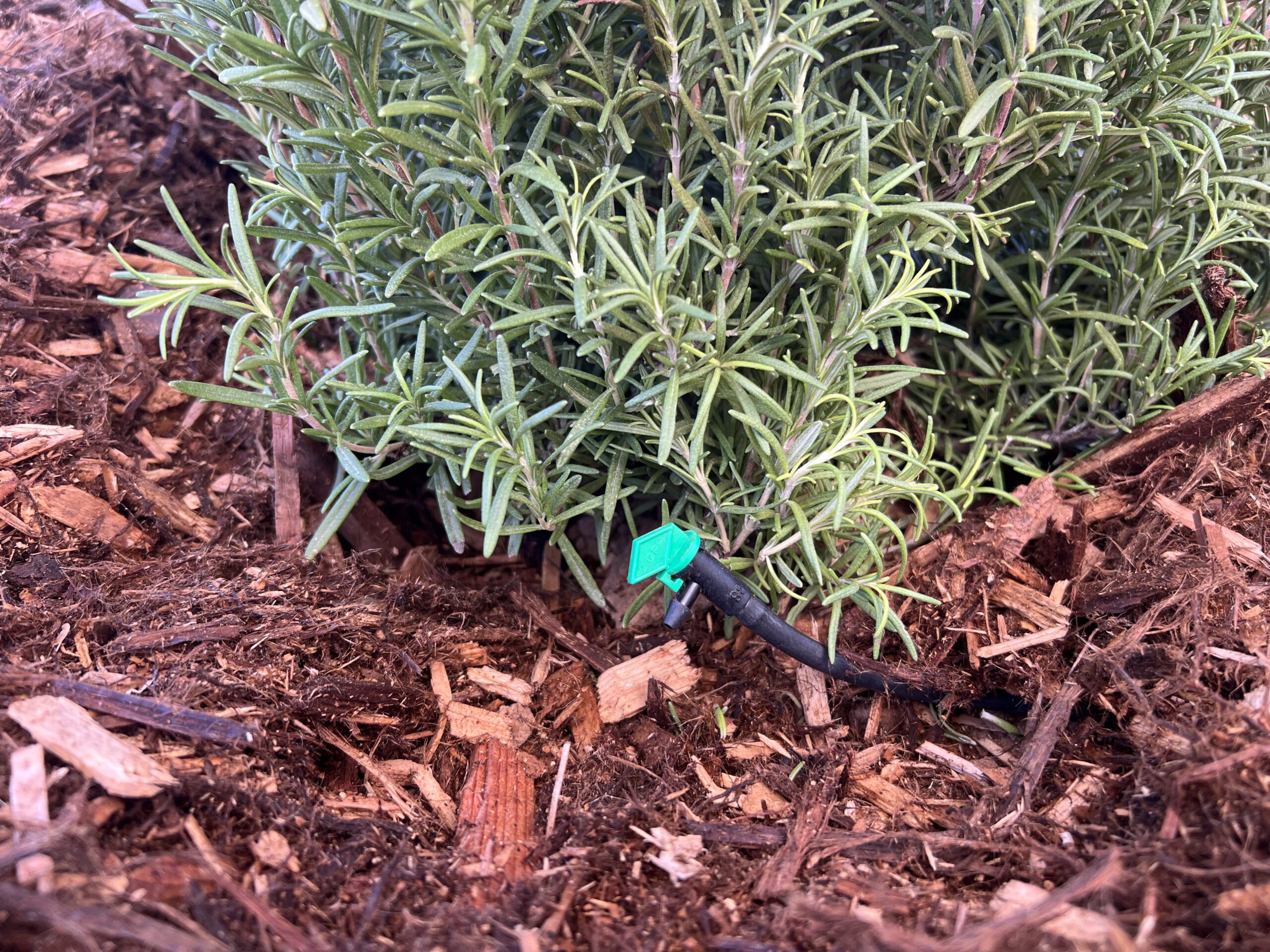
Emitter next to shrub.
Mistake 11: Using specialty parts that aren’t readily available at most irrigation or hardware stores.
When designing and installing your drip irrigation system, it’s best to use common, readily available parts. Choosing specialized components that are difficult to find or incompatible with standard fittings can lead to frustration, delays in repairs and resulting plant stress when repairs or replacements are needed in the future. We recommend purchasing supplies from irrigation specialty stores, as they offer higher-quality products, stock the same parts from the same manufacturers, and have experts available that can answer your questions. Be selective in the parts you purchase and keep a stash of extra parts in your toolbox so you can make a quick repair and avoid wasted water or stressed plants.
Learn More Here:
Irrigation 101 Video Tutorials
Take the Guesswork Out of Programming an Irrigation Controller
Yes You Can Afford and Irrigation System

Author: Carl Christensen, Xeriscape Inspector. Have a question about the article or anything else? [email protected]