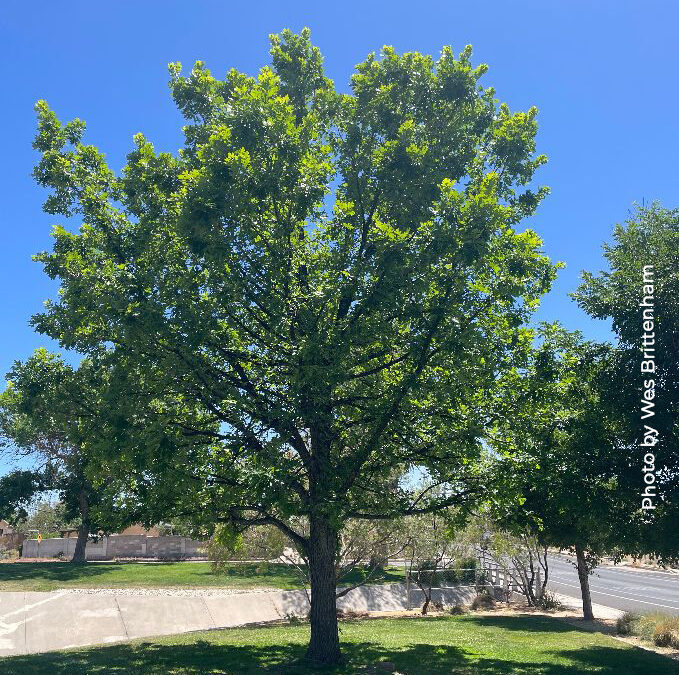
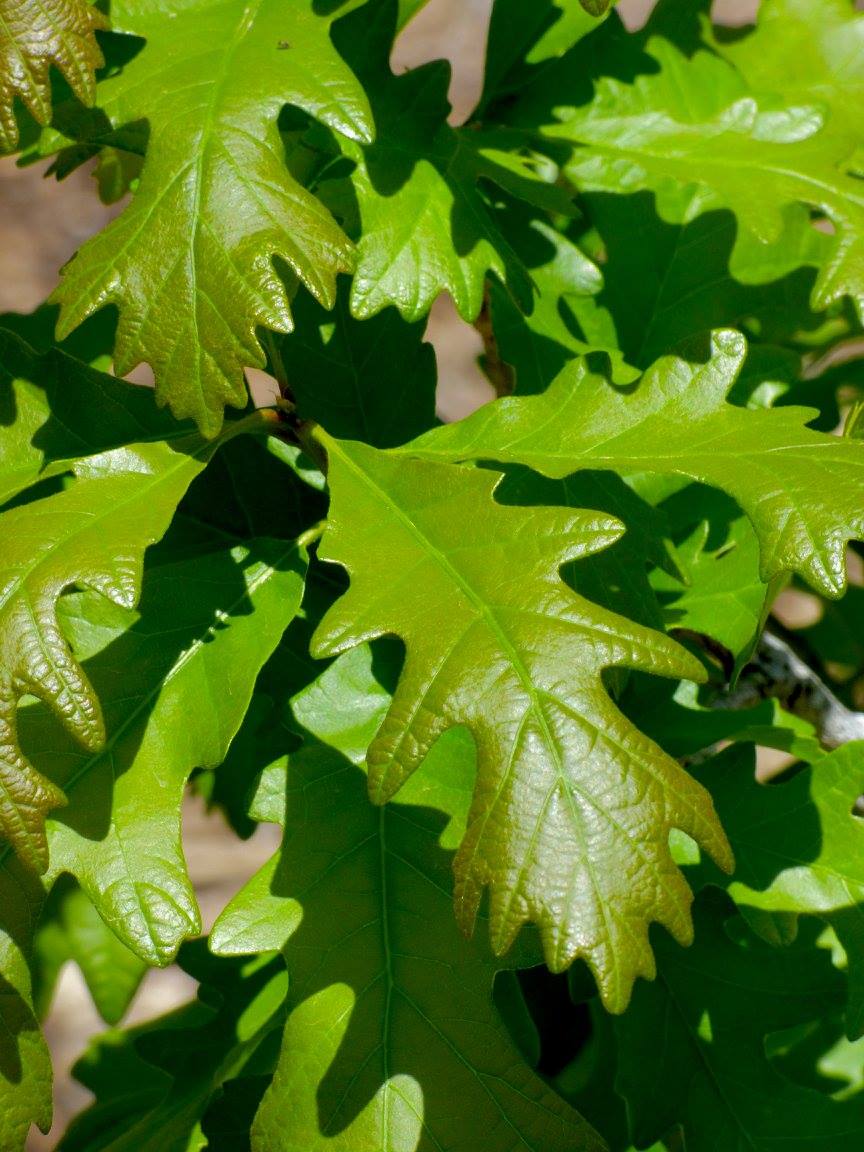
Bur oak is one of the largest of the Quercus species, growing 50-70 feet tall and wide (sometimes significantly larger in other areas of the country), so give this beauty the room it deserves. A wonderful deciduous shade tree, bur oak is tough, drought tolerant and possesses the classic rounded, lobed leaf form folks think of when picturing an oak leaf.
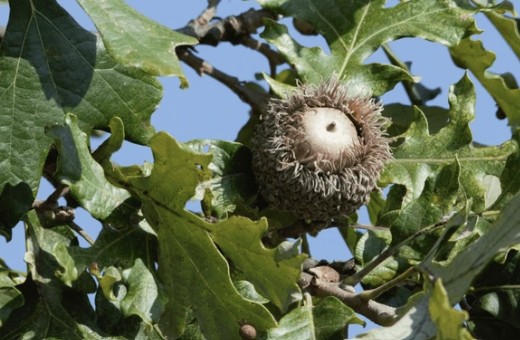
Not only is the tree massive, but it also produces the largest acorn of the oaks, each one around the size of a golf ball. The acorns are topped with a cap of mossy looking brown fringe, the “bur” that gives this tree its common name. Macrocarpa refers to the large size of the acorn.
The acorns are a great source of food for a wide variety of wildlife and several species of butterfly larvae utilize this tree as a host. The bark is deeply ridged and the thickness and texture provide visual interest. The fiddle-shaped leaves are leathery and dark green on the top, slightly grayish on the underside, turning to shades of golden yellow and soft brown in the autumn.
Bur oak does well in a wide variety of soil types — dry, moist, sandy, clay and alkaline — but grows best in well-drained soil. It does well in zones 2-8. Like most oaks, it grows slowly when first planted, but it can produce several feet of growth a year once established and is considered one of the fastest growing oaks. This incredible tree can live for 200-400 years or longer.
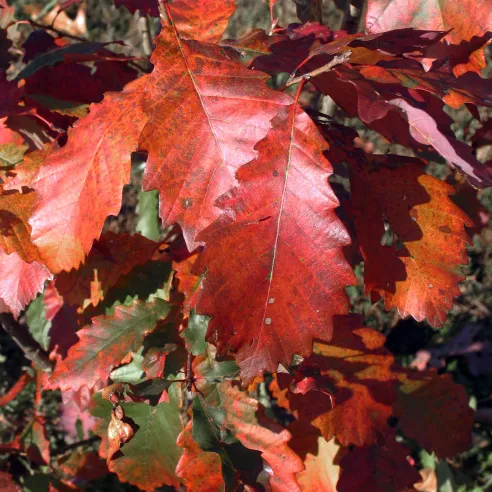
Bur oak rounded lobed leaf form. Photo by Hunter Ten Broeck
The acorns are topped with a cap of mossy looking brown fringe, the “bur” that gives this tree its common name.
Author: Wes Brittenham, artist, gardener and writer.
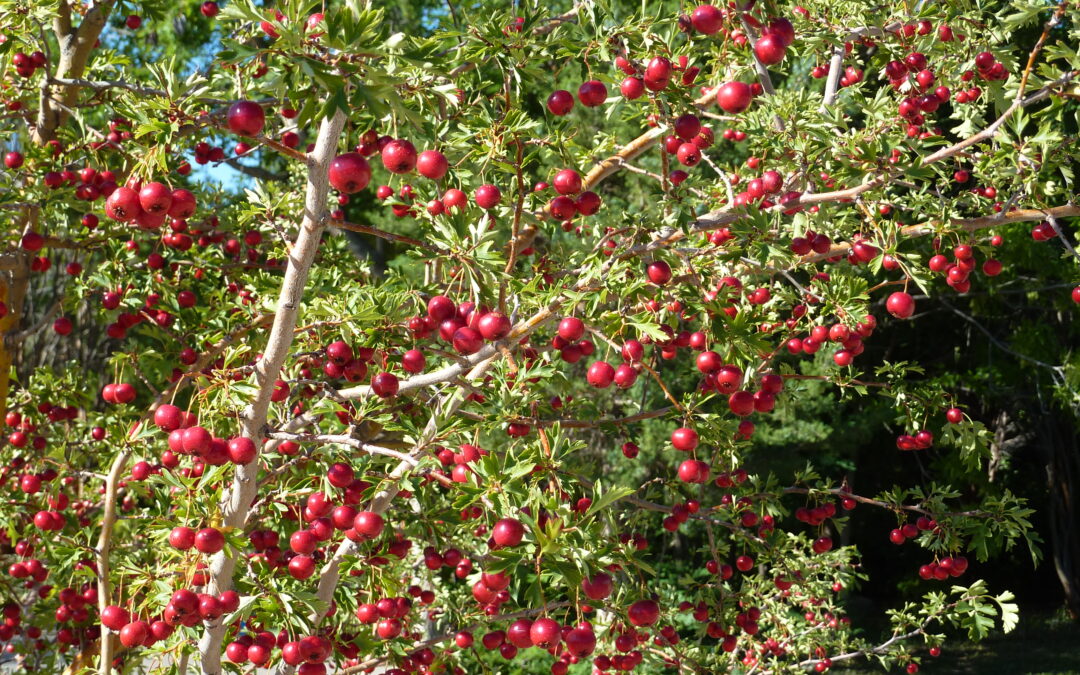
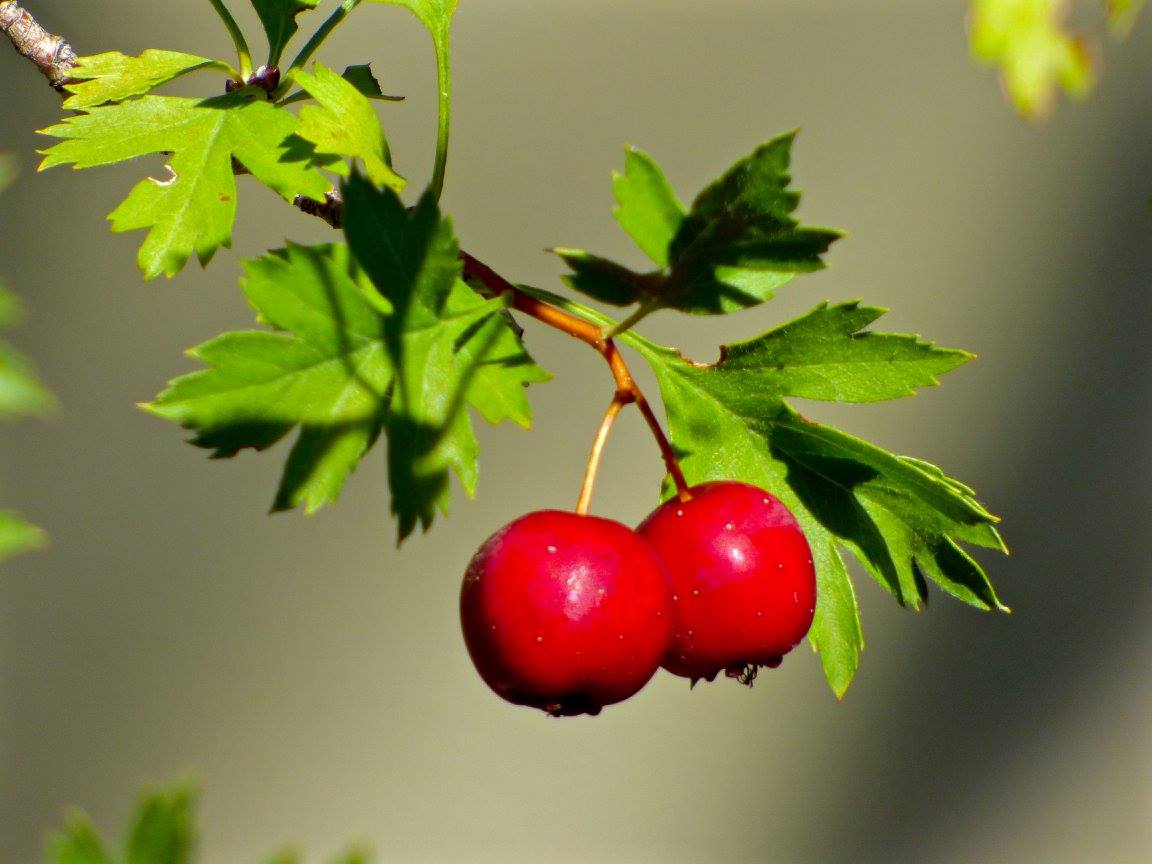
The Russian hawthorn is a small tree with arching stems that form a rounded crown about 20 feet tall by 20 feet wide. In the late spring, clusters of white flowers appear. Groupings of small ¼- to ½-inch vibrant red fruits appear in late summer and persist until the birds carry them off. Foliage is a soft green, turning shades of yellow, orange and red in the fall. This tree has thorns, and as it ages its trunk develops a gnarled character, both which have visual interest in the winter. Maintenance involves trimming any suckers and every few years thinning out crossing branches. Once established (at around three years) water to a depth of 24” every two weeks when temperatures are above 85 degrees and once a month during cooler weather.
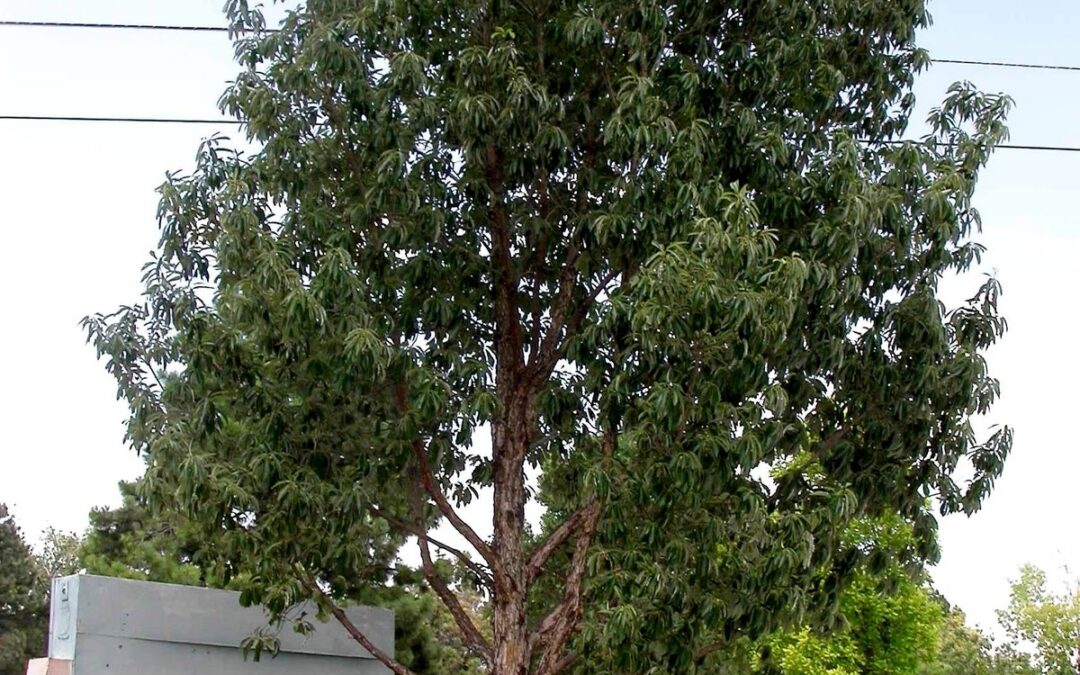
The Chinquapin oak (also spelled Chinkapin)is a rugged, adaptable shade tree native to New Mexico and primarily occurring in the southeastern mountains. This long-lived deciduous tree is valued for its extreme hardiness in arid climates, and it thrives in high-pH, alkaline, and limestone-based soils. It is a premier choice for landscaping in hot, dry areas because of its deep root system and drought tolerance once established. The tree is easily identified by its rough scabby bark and its glossy, dark-green, oblong leaves with serrated edges. In the fall, foliage turns vibrant shades of yellow, gold, orange or copper. It produces small, sweet acorns that are the preferred food for squirrels, deer, wild turkeys and songbirds like woodpeckers and blue jays. Given its potential width of 30-40 feet, plant it where it has room to spread. This oak will provide southern or western shade to homes under its spreading rounded crown.
As a keystone species, it hosts hundreds of caterpillar species that support local bird populations. Native American tribes, such as the Cherokee and Koasati, traditionally used infusions of the bark and roots for medicinal purposes, including treating fevers, headaches and stomach aches.
The El Capitan cultivar is specifically selected from New Mexico populations for its ability to tolerate higher elevations and more arid, low-humidity environments compared to Eastern varieties.
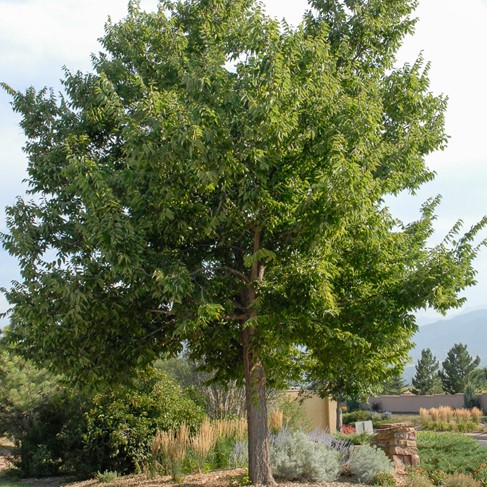
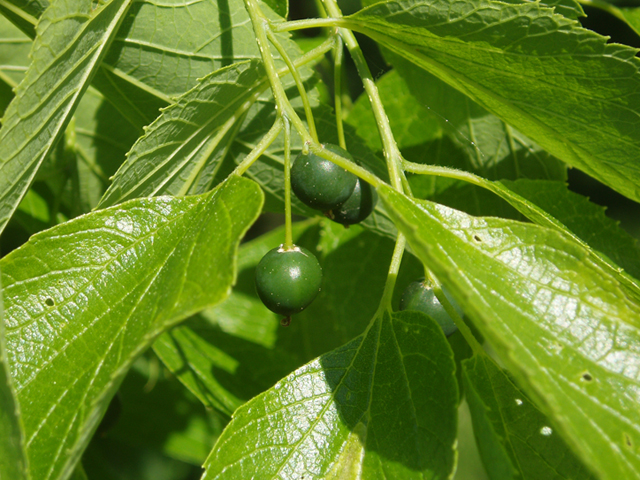
Hackberry is a medium-sized tree, known also as common hackberry or western hackberry. It has a broad upright top with ascending then arching branches. The bark is interesting with rough warty growths and a corky texture. Leaves are light green throughout the year with a little yellow fall color. The cherrylike fruits often hang on the trees throughout the winter, providing many birds with food. It can tolerate a wide range of soils, moisture conditions and harsh climates, as well as urban abuse. The roots rarely lift sidewalks, and the canopy is relatively upright, making it a good tree in tight spaces. Maintenance is minimal — prune every few years as needed during the dormant season.
Fruit that the birds enjoy on the common hackberry.
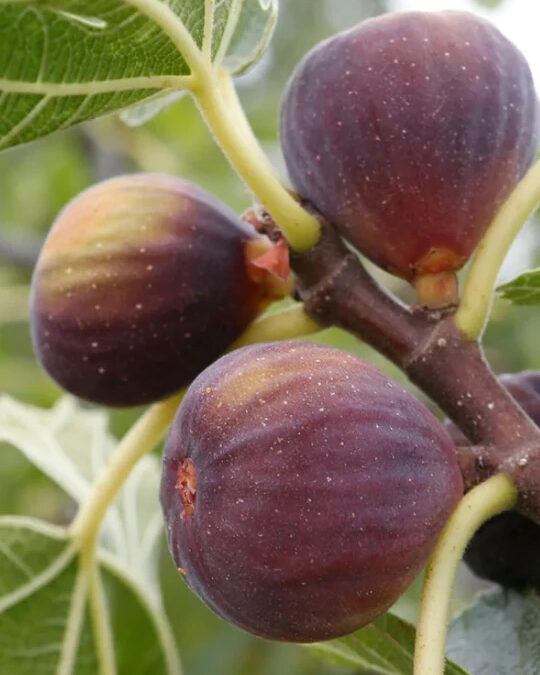
Fig trees are a beautiful addition to local backyard orchards. Their large leaves give yards a lush tropical appearance, and the sweet fruit is wonderful for eating fresh, drying, fruit leathers, baking, jams and canning. Fig trees can produce two fruit crops per year: the “breba” crop in the spring and “main” crop in summer.
The primary limitation for figs is low winter or spring temperatures that may sometimes partially or completely kill fig tree canopies. If the roots are not killed during winter, fig trees that have experienced freezing temperatures usually grow back vigorously and can even produce some main crop fruit in the first year of regrowth. Fig trees should be planted in a protected area next to a south facing wall and mulched or tarped to minimize freeze damage. Figs are tolerant of abuse and relatively content with intense sunlight, extended droughts and alkaline soils.
“Celeste,” “Brown Turkey,” “Hardy Chicago,” “Desert King,” Kadota” and “Violette de Bordeaux” are only a few of the fig varieties that do well. “Black Mission” is a readily available but not very cold hardy for the greater Albuquerque area. In general, backyard fig varieties require no cross-pollination to produce fruit.
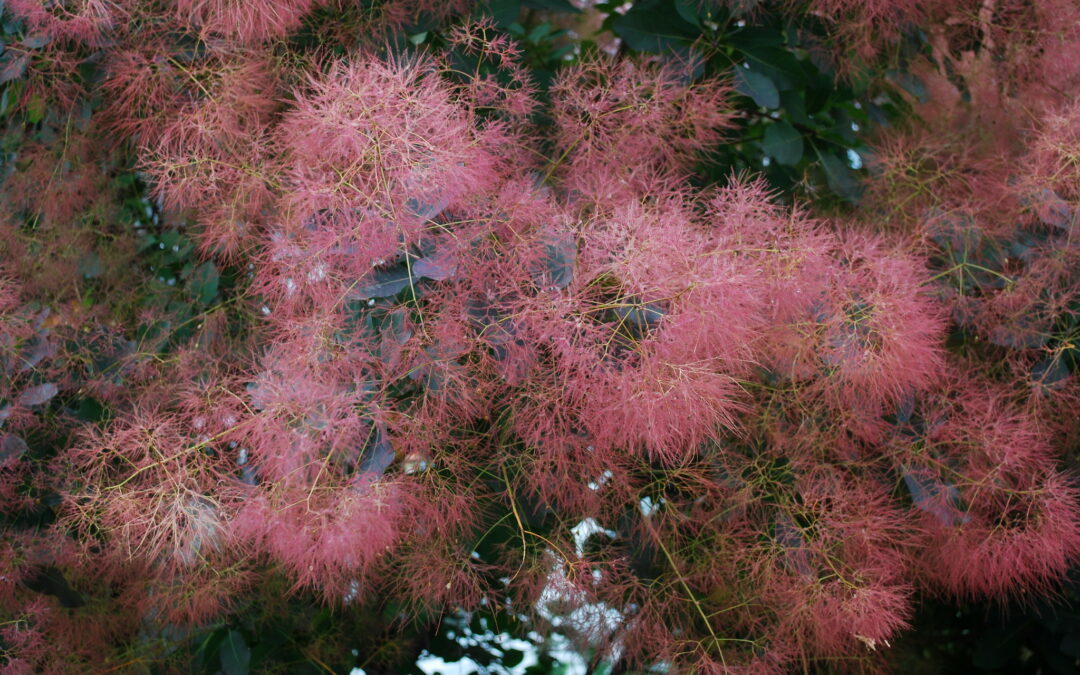
Smoketree is a small accent tree grown for its whimsical cloudlike misty spring blooms and its year-round dark purple color. It is not native to New Mexico but does well in just about any soil. Locate in full sun and cover with 3-4 inches of shredded wood chip mulch. Water to a depth of 24 inches twice a month once established when hot and monthly throughout the year. This tree is great for patios and looks nice when planted with grey green plants like artemisia or sages.