Walk the Line: A mid-summer check of your irrigation system
Up to 50% of outdoor water use is wasted due to lack of service. In just 15 minutes, a broken sprinkler could waste about 225 gallons of water. To put that in perspective, that’s more than the daily water needs for 3 Albuquerque homes.
If that broken sprinkler is set to run in the middle of the night, it could easily go a full week unnoticed, which would end up wasting 1575 gallons of water. That’s as much water as most Albuquerque residents use over an entire month during the winter. What if your leak goes unnoticed until you receive your next water bill? There goes 6300 gallons. If you’re like many of our customers and don’t pay much attention to your water bill due to auto payments, that broken sprinkler could run for an entire irrigation season unnoticed, wasting over 50,000 gallons of water. This one broken sprinkler can waste more water than what it takes to supply a home for a year. Consider the amount of water wasted citywide by that broken sprinkler along with all the other broken sprinklers, leaky pipes, and poorly programmed systems, and you can understand why it’s important for all of us to promptly address water waste issues in our landscapes.
Make the time to “walk the line”. While your system is running, walk the perimeter of your property and check your system. Do this a minimum of once a month for sprinkler systems. If you have a drip system, check it more often as they’re more susceptible to damage. If your system is over 20 years keep an eye on it as components are going to fail more frequently on older systems.
When you walk the line, it’s important to use all your senses, not just your eyes. Pay attention to the feel of the surface you’re walking on. If you feel a squishy spot below your feet, you probably have a subsurface leak. Also, listen, your brain is remarkably good at picking out sounds that are out of place, and can lead you to a leak.
Monthly Walk the Line Checks:
Leaks:
Sprinkler System Leaks: Quickly catching leaks will save plants and money. A broken sprinkler head is easy to identify. Less easy to see and often overlooked is a cracked pop-up spray nozzle (see photo). It’s important to know how your sprinklers look when they’re distributing water as intended, so if one starts spraying water differently from the rest, notice it and inspect it more.
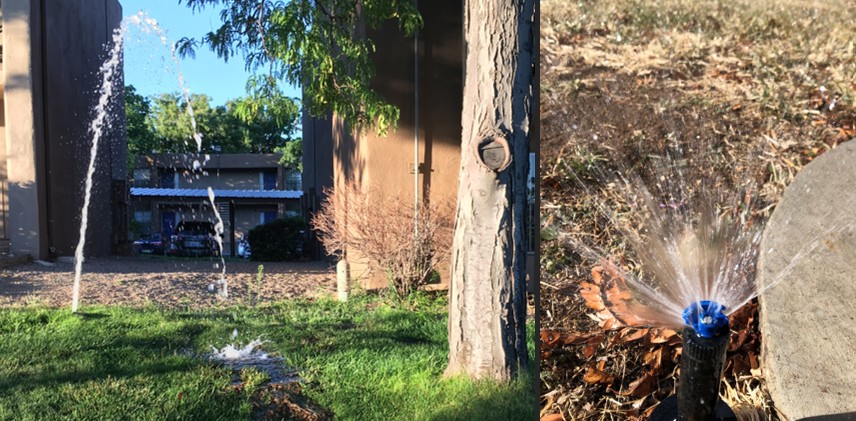 Leaks from sprinkler head and cracked nozzle.
The good news is that replacing sprinkler heads and nozzles is easy. All you have to do is unscrew the old one to remove it and then screw in the new one. Just remember to replace them with the exact same brand part and model. Putting in the wrong part can result in distributing the wrong amount of water on your turf. This will cause brown spots either from your grass dying because it’s not getting enough water or from fungus because it’s getting too much. Unfortunately, most homeowners’ responses to brown spots is to apply more water. But remember, symptoms of over and under watering can look similar.
Make your life easy and keep the correct spare parts for your system on hand. If you’re uncertain, consider taking what you have to your local irrigation supply store for help with finding the right match.
When you purchase your new sprinkler parts, ask about high efficiency nozzles and pressure regulating spray bodies to upgrade your system. We offer Irrigation Efficiency Rebates for this equipment. However, do not mix and match traditional spray sprinklers with newer high efficiency options, they do not deliver water at the same rate. So, if you replace one sprinkler with an upgrade, you need to also upgrade at least the rest of the sprinklers in that zone and then make sure you adjust your sprinkler run time for the new rate at which water is applied with efficient nozzles.
Drip System Leaks:
If you have a drip system we recommend that you walk the line more often. Drip systems are easy to install and maintain, but they’re also easily damaged. One of the more common problems we see is cracked or punctured polyline tubing.
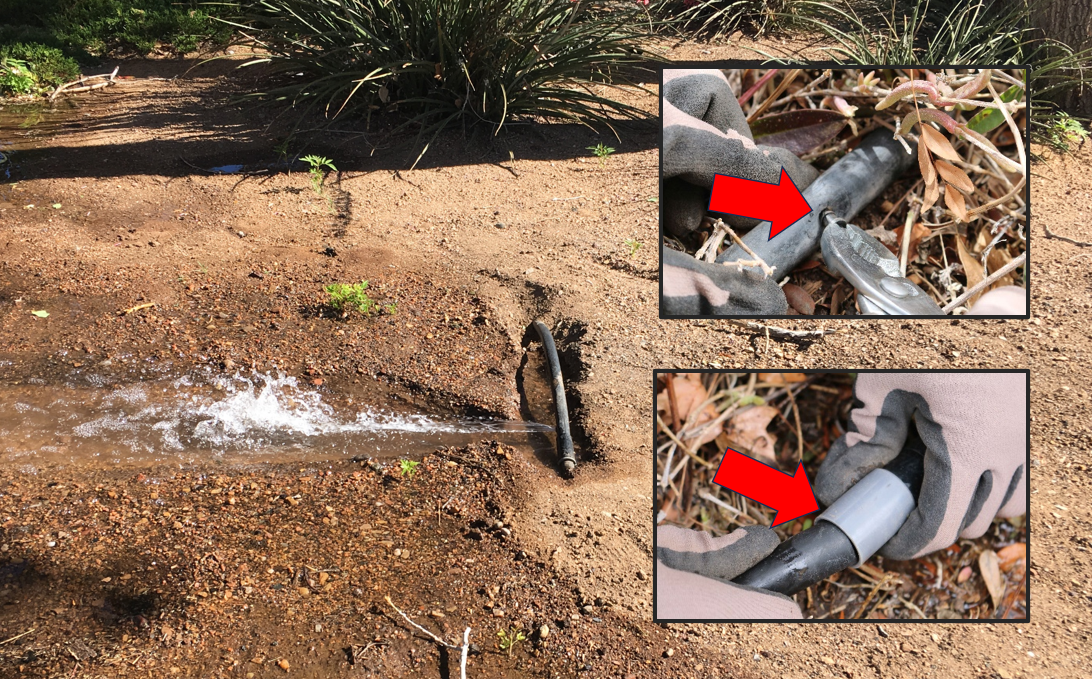
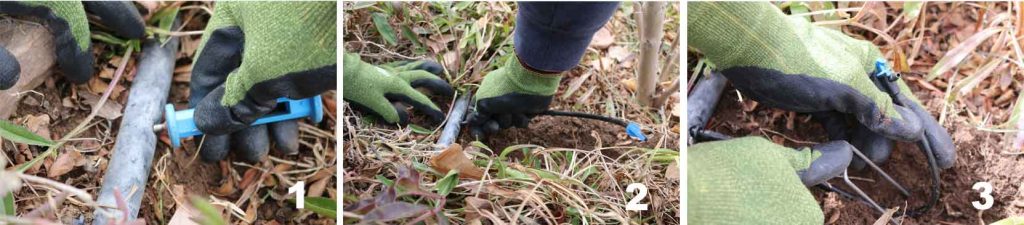
This is an inexpensive and easy fix. A small hole can be patched by inserting a “goof plug”. And a larger hole or crack can be repaired with a repair coupling, just make a clean cut and connect the two pieces with the correct size coupling. It’s a good idea to always keep goof plugs and the right sized couplings on hand if you have a drip system. A tackle box can be useful for all the parts. After the repair, run the system and observe the zone running to make sure the repair was successful and that you don't have other leaks.
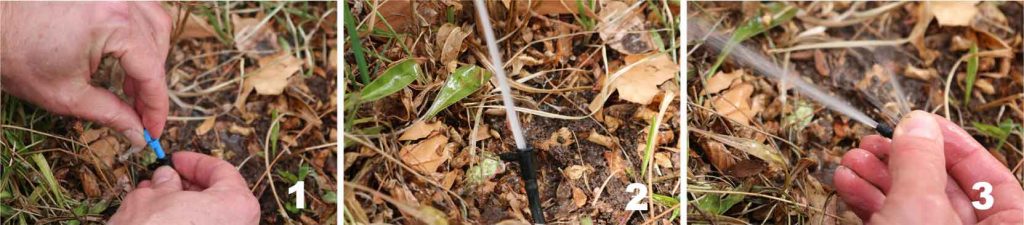
Another common issue with drip systems is missing emitters. This is also an easy and inexpensive fix. You just need to pop on a new emitter with a replacement that delivers water at the same rate as the old one.
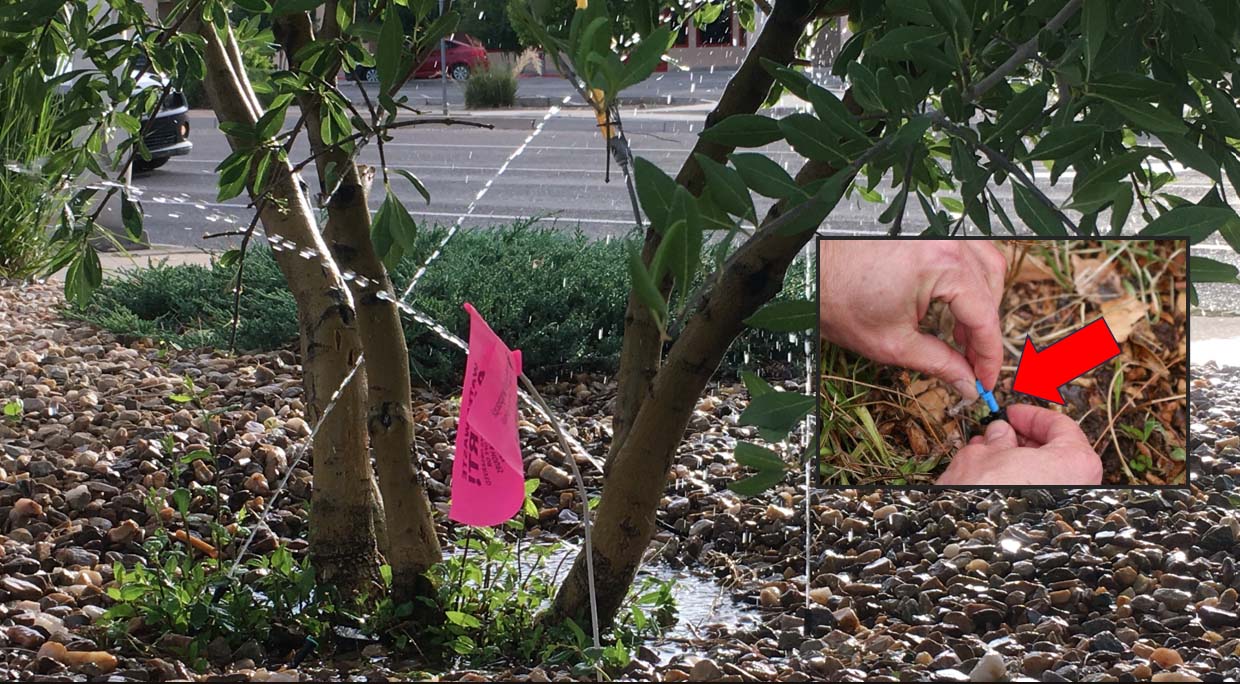
If you are frequently loosing emitters it's highly likely that the pressure in your drip zone needs to be reduced. Each drip valve should have a pressure reducer installed to match the pressure the parts were designed for (15-30psi). If yours doesn’t, consider installing one ASAP. Hold on to your receipt so you can apply for our irrigation efficiency rebate for pressure reduction within 90 days of the purchase or service.
Valve Assembly Leaks: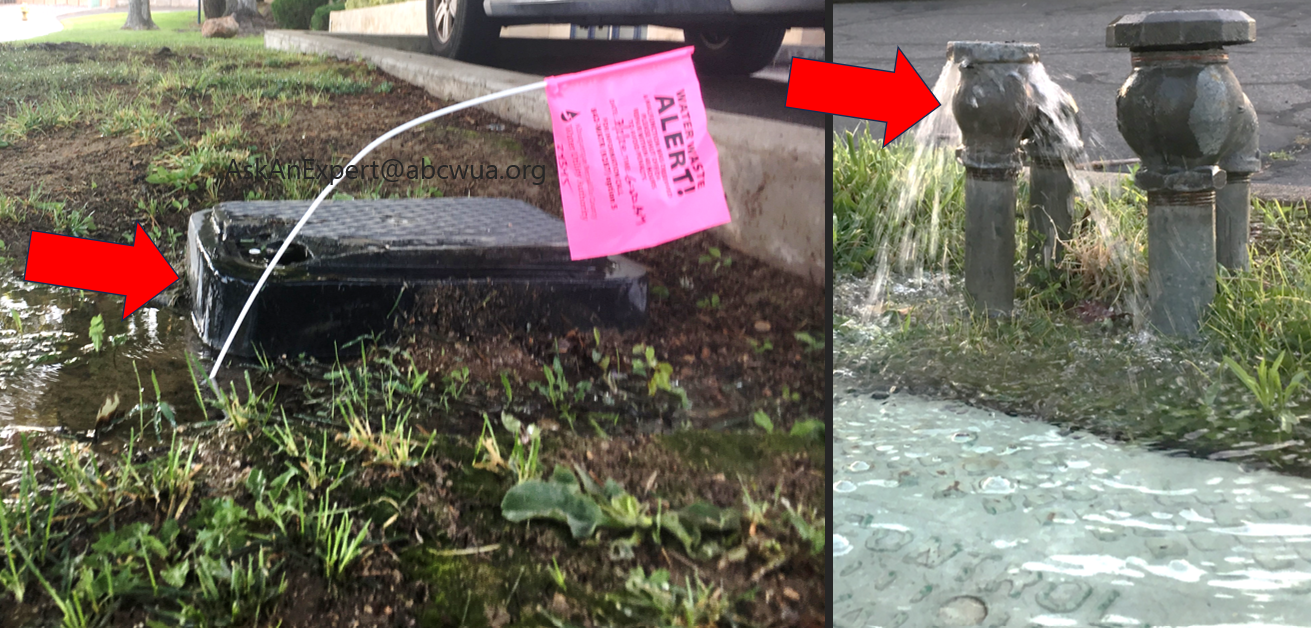
The picture of the left shows a valve box filled with water due to valve assembly leaks and the picture on the right shows a backflow preventer leaking due to an old or broken washer.
When you’re walking the line turn on the system then start at the valve assembly. This is where the whole irrigation system begins. It includes a valve (which is usually inside a valve box under a green or brown plastic cover) and a backflow preventer. The valve opens to turn on the water supply to the irrigation system and you should not see water in the valve box. Leaks often start gradually and they may not be immediately obvious so it’s a good idea to open the lid and look for water in the valve box when you’re doing your monthly system inspection. The valve assembly needs to include a backflow preventor. The backflow preventer is what prevents contaminated water from your landscape from siphoning back into your home’s water supply.

Valve box and backflow preventers.
If you are uncertain of whether or not you have a backflow preventer or you can’t locate your valves, you can always reach out to us through our “Ask an Expert” email us at [email protected]
Other Water Leak Clues: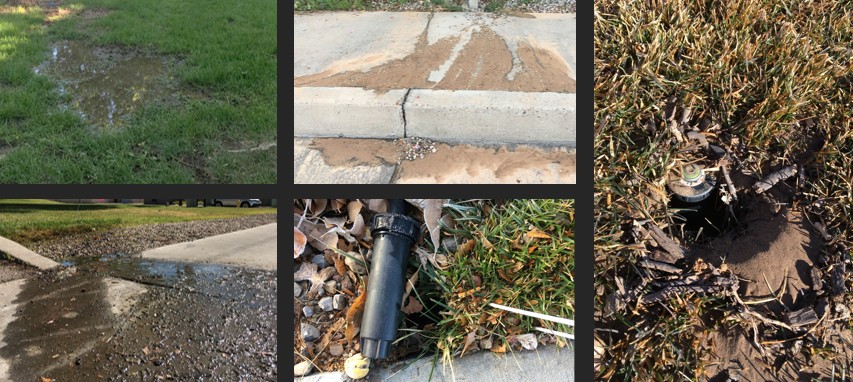
Even when your system isn’t running, there are clues you can look out for that can alert you to leaks and broken sprinklers. If you see ponds in your turf or in the street in front of your house, you might have leak. Other clues to look out for are things like algae growing on the sidewalk, or popped off sprinkler heads lying in the grass.
Another great visible leak clue is sediment flow. When water flows, it moves soil with it. So, if you see sediment around a sprinkler head like in the picture at right, or flowing across the sidewalk like in the top center, it’s a good sign that there is a leak below the surface.
Finally, one of the best clues you have is your water bill. If you notice an unusual jump in your bill, it’s a good idea to check your irrigation system for leaks. There is also a free online water use tracking tool we offer called HomeConnect, which allows users to view nearly real time data on their water use. With HomeConnect, you can view your water use down to the hour which allows you to familiarize yourself with your daily water use patterns so you can catch abnormal usage before it drives up your water bill. Set your water use thresholds so you can get alerts via email or text if your use goes above a set limit, this can also help avoid property damage at a rental or if you’re out of town.
Sprinkler Aim: Check for Efficient Alignment, Proper Throw, Consistency
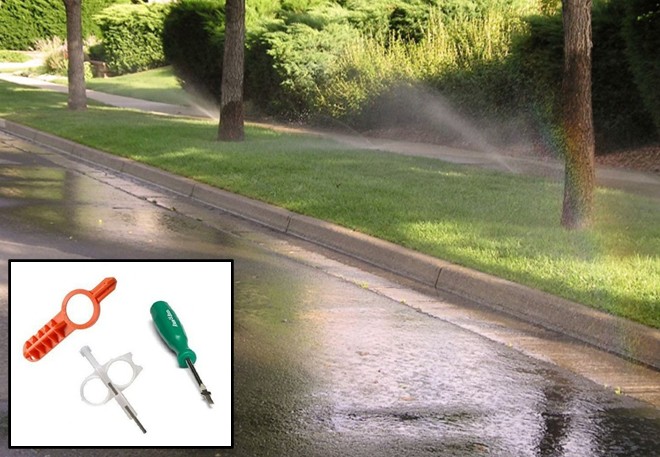
When you’re walking the line on your sprinkler system, check that your heads are spraying water onto the grass not pavement or other areas that don't need water. If you see overspray, you can usually fix it pretty easily by adjusting the throw radius. How you do this will depend on the type and brand of sprinkler you have. Some sprinkler nozzles require a special adjustment tool, so if you need one, make sure you have it handy when you walk the line.
Now with some grass it’s impossible to avoid overspray, like narrow strips next to pavement like you see here. These are fantastic opportunities for a Desert Friendly Xeriscape Conversion. This rebate gives customers $3 per square foot for transforming their unwanted or inefficient grass to a healthier xeriscape that contains plants, trees, mulch and drip irrigation.
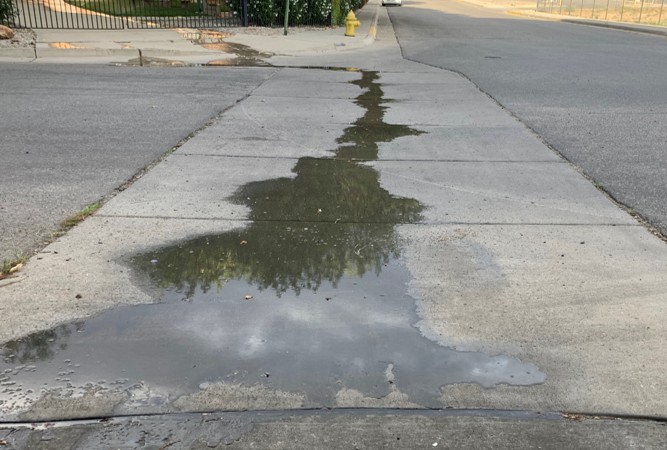
Another important aspect of checking your aim is looking for overflow. If you see water seeping off the grass, that tells you that the water isn’t soaking into the soil anymore, and no more water should be applied. This can usually be fixed by cutting back the time on your irrigation controller. Now if your grass needs more water than what can be applied before it starts running off, you can program your controller to a “cycle and soak” pattern. To determine the run times run your sprinklers until you see water is about to overflow. Then turn the sprinklers off, let it soak in for about half an hour, and run it again to meet your turf irrigation requirements. This is an excellent practice to help your grass develop a healthy and more drought tolerant root system, and it ensures that all of the water you’re paying for is benefiting your grass instead of being wasted in the street (which can result in a fine). Report Water Waste
Another solution for overflow is to replace all your spray nozzles with high efficiency rotating sprinkler nozzles, which we offer a rebate for. These nozzles apply water at a slower rate than traditional nozzles, giving water time to infiltrate to the root zone.
You should also make sure your sprinklers haven’t sunk or tilted. Take a close look and make sure that the outer radius of your sprinkler is throwing to the head of its neighbor what we call head to head coverage. And make sure that all the sprinkler throw patterns look consistent. The even distribution of water on your turf will help you avoid brown spots and uneven growth.
It’s very difficult to grow turf on a hill, the top can receive 2x as much water as the bottom. High efficiency nozzles and cycle and soak can help but, you’ve got another excellent candidate for a Desert Friendly Xeriscape Conversion rebate.
Clogs:
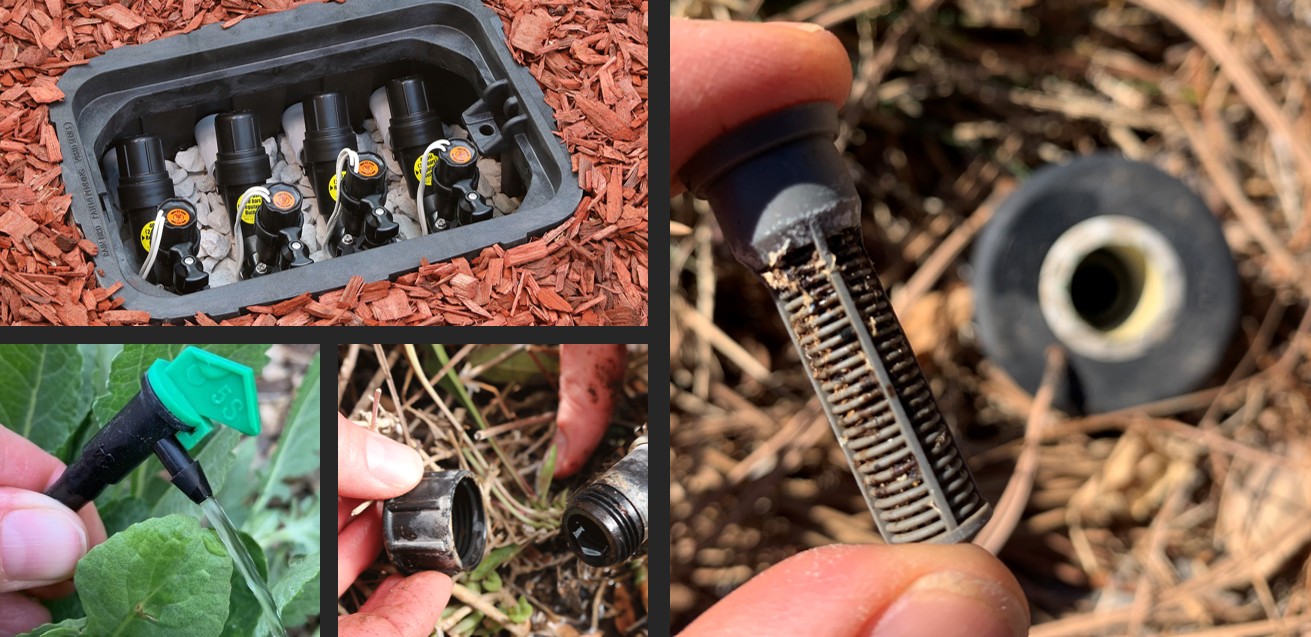 Automatic valves, drip emitter, end cap, basket filter.
Clogs in the system can be another cause of water waste. When sediment and debris collect in your system, water doesn’t get to the plants. And what do we tend to do when we see the plants struggle? Turn up the run times. That’s not going to help your plants.
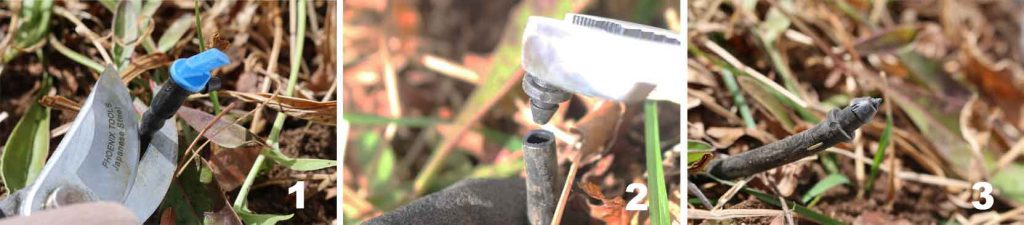
If you have a drip system, before you turn it on for your monthly check, take one minute and open the valve box cover, unscrew the filter, which you can see in the picture up top, and clear out any debris you find. If you don’t see a filter, it's a good idea to get one installed. Once you turn the system on, inspect your emitters to make sure water is flowing as it should and clear any clogs that you identify. On the green-topped emitter pictured on the bottom left, this is easily done by rotating the flag and removing it from the main body of the emitter, place your finger over the hole to flush it (if the system is running) and replace the flag. Other types of emitters need to be replaced if clogged. It’s also a good idea to flush your line during your monthly check, which is done by removing the end cap while the system is running. If you don’t have an end cap, they are super easy to install and we recommend installing one to make maintenance easier.
To identify clogs in a sprinkler system, look for sputtering sprinklers. If you look closer and don’t see a cracked nozzle, you probably have a clogged filter basket. To fix this, simply turn off the system, unscrew the nozzle, pull out the basket filter and wash out the debris.
Controller:

Our monthly service tip is to click through your controller settings on your timer. With this you’re looking out for a couple of things.
First, make sure that your settings haven’t unexpectedly changed as power surges and weather events can disrupt your controller's programming. If you’ve installed a fresh backup battery at the start of the season, which we recommend, you shouldn’t have to worry about a power failure wiping out your programming.
Another issue we come across is mystery programming. Controller programming is often not intuitive and sometimes well-intentioned people accidentally program a system to run the same zone multiple times, which ends up wasting water. If you have questions about programming your controller, email [email protected].
Most importantly, check that your controller is set appropriately for the season. You should not be watering the same in October as you were in June. If you need guidance on watering schedules, check out our Water by the Season charts.
Now if making regular adjustments isn’t something you’d realistically do, you can purchase a Smart Controller which will figure it all out for you. These are wifi enabled devices that will calculate how much water your landscape needs based on local weather conditions and make the necessary adjustments for you. We've calculated that if everybody in our service area adjusted their sprinklers for the seasons we would easily meet our water conservation goals. We’ll give you 25% off up to $100 rebate back on your water bill for installing one.
Check out our Irrigation Efficiency Guide.
Best Practices and Common Mistakes:
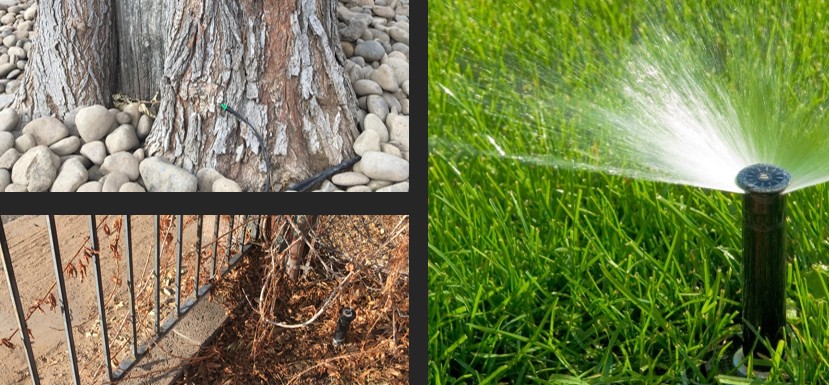
A quick note about your mid-summer check. Make sure you’re adjusting for plant growth. If you have a drip system, move your emitters to the edge of the plant’s root ball, or drip line. You want to avoid the situation where the emitter is placing water directly onto the trunk of established trees and plants.
With sprinkler systems, maintain the vegetation so it doesn’t interfere with the streams of water. Trim back plants for sprinkler clearance. And when it comes to grass height if the grass is too tall it will block the sprinkler. If it’s too low, your grass doesn't shade its roots and can dry out quickly making it susceptible to drought stress. Aim for grass height between 3-4” Check vegetation around irrigation.
If you suspect you’ve got a problem with your irrigation system and you’d like help troubleshooting it, you can always contact us through “AskanExpert” and we can walk you through it or even come out to your property for an irrigation consultation. We want to help you save water and have a healthy landscape, so please don’t hesitate to reach out!
Learn More Here:
Improving Irrigation Efficiency Can Be Affordable
Drip Irrigation Maintenance Checklist
3 Steps to Landscape Success Webinar
Residential Irrigation Rebates Page

Have a question about the article? Email us at [email protected]