
If you have heard of Bermuda grass or live in one of the older areas of Albuquerque, just the name might make you flinch or grimace. The reason it gets a bad rap is because it is dormant in winter, it spreads like crazy into garden beds and can magically appear out of a dirt mess after monsoon season.
You may be surprised to hear that some of us actually like Bermuda grass lawns. In fact, I’ve even planted the grass in my backyard. I’ll take you through the pros and cons and why I’ve come to love the Bermuda grass lawn. It can be the right plant for the right space to fill the right need.
Many homeowners would like turfgrass but feel irresponsible watering a lawn in the arid Southwest. The key to choosing a turfgrass is to determine the one most suited to the specific needs of your landscape The Water Authority is not anti-lawn that is efficiently irrigated and physically used and enjoyed. Bermuda grass cultivars are one means of having a traffic/play/dog tolerant surface that uses half the amount of water of a traditional cool season lawn
According to the “turf research lab” at New Mexico State University (NMSU), “Certain turf characteristics, such as climate adaptation, water use, traffic tolerance, color, quality, maintenance requirements, and available resources, are all factors that need to be considered when selecting a turf species. Climatic adaptation and traffic tolerance, which largely determine the future use of the turf area, are the two most important factors. Many problems encountered in maintaining turfs can be attributed directly to selecting the wrong turfgrasses for Albuquerque’s difficult growing conditions and to the lack of resources, especially water, that homeowners and professional turf growers face in the state.” This means that understanding how much traffic (kids and dogs playing) and our very dry local climate are how we should be selecting turf grass species not what the big box store happens to have in stock.
There are two different categories of turfgrasses: cool season and warm season. Common Cool season grasses are Kentucky Bluegrass, Perennial Ryegrass and Tall Fescue. These are cold tolerant, green most of the year and hold up to extensive foot traffic. But they use a lot of water, up to 50” a year If efficiently irrigated. The water authority frequently has many customers (especially commercial customers) that water grass 80-100” per year! in a town that only gets an average 8” of precipitation. Common warm season grasses are Bermuda grass, Blue Grama and Buffalo Grass. Warm season grasses have a shorter growing season. This means they green up in mid spring, are low maintenance and require less water than cool season grasses. But blue grama and buffalo grass can’t take extensive foot and paw traffic plus they go dormant in the winter.
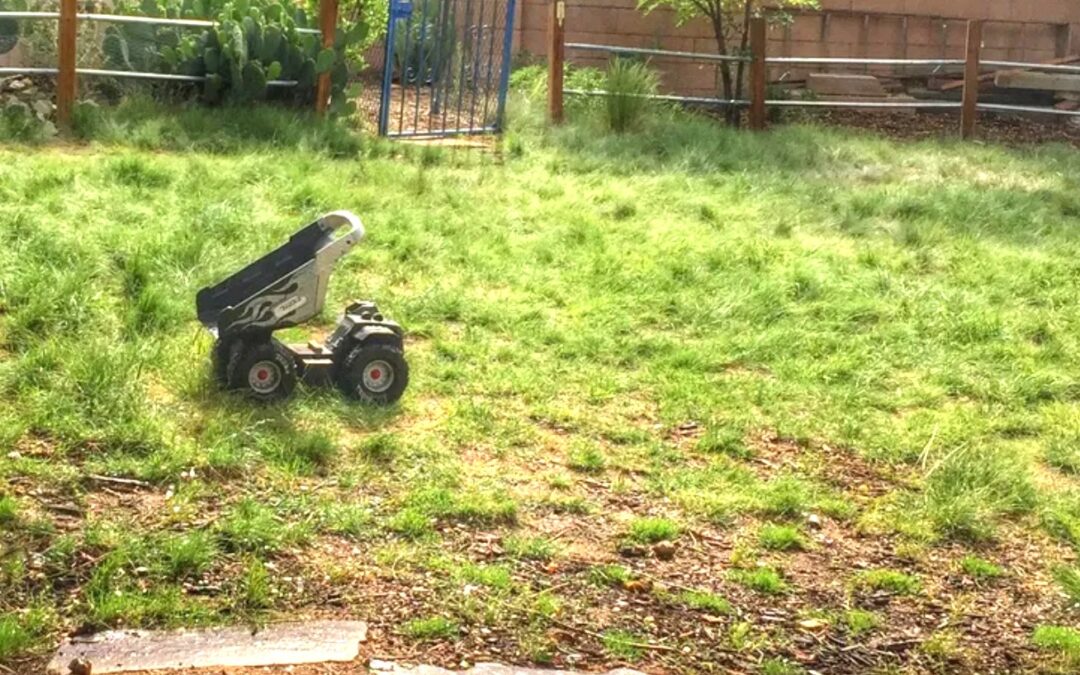
In my case, I had an existing native buffalo and blue grama grass lawn. It had always been perfect for our home. It’s native, low water use, easy to maintain and beautiful to look at. Fast forward to three kids and two dogs later. I was noticing wear and tear in certain areas of my lawn from two large dogs leaving run paths and kids playing soccer. I’m a professional landscape architect and knew Bermuda grass is a prolific spreader but in this case, I was actually looking for a grass to take over and fill in around the heavily accessed places in my yard. I found a species that could meet both my needs called Cynodon hybrida Dog Tuff ™ Grass Plugs, originally from High Country Gardens. There are many cultivars available check out the many options researched by NMSU. It is a Bermuda grass hybrid perfect for high traffic and play areas. It has excellent durability in yards with dogs. Once established, it is highly weed resistant, deep rooted and provides a soft, cushioned feel for bare feet.
The grass itself “produces an extensive system of creeping rhizomes and stolons commonly called runner roots that often have a scaly appearance. It also produces fibrous roots at the stem nodes. Bermuda grass reproduces through seed and vegetatively through rhizomes and stolons,” according to NMSU, allowing it to spread with just a little bit of water, around 20” a year. I find that it rarely needs mowing because of the traffic we give it. I mow it about twice a summer to the highest setting my mower goes around 4”.
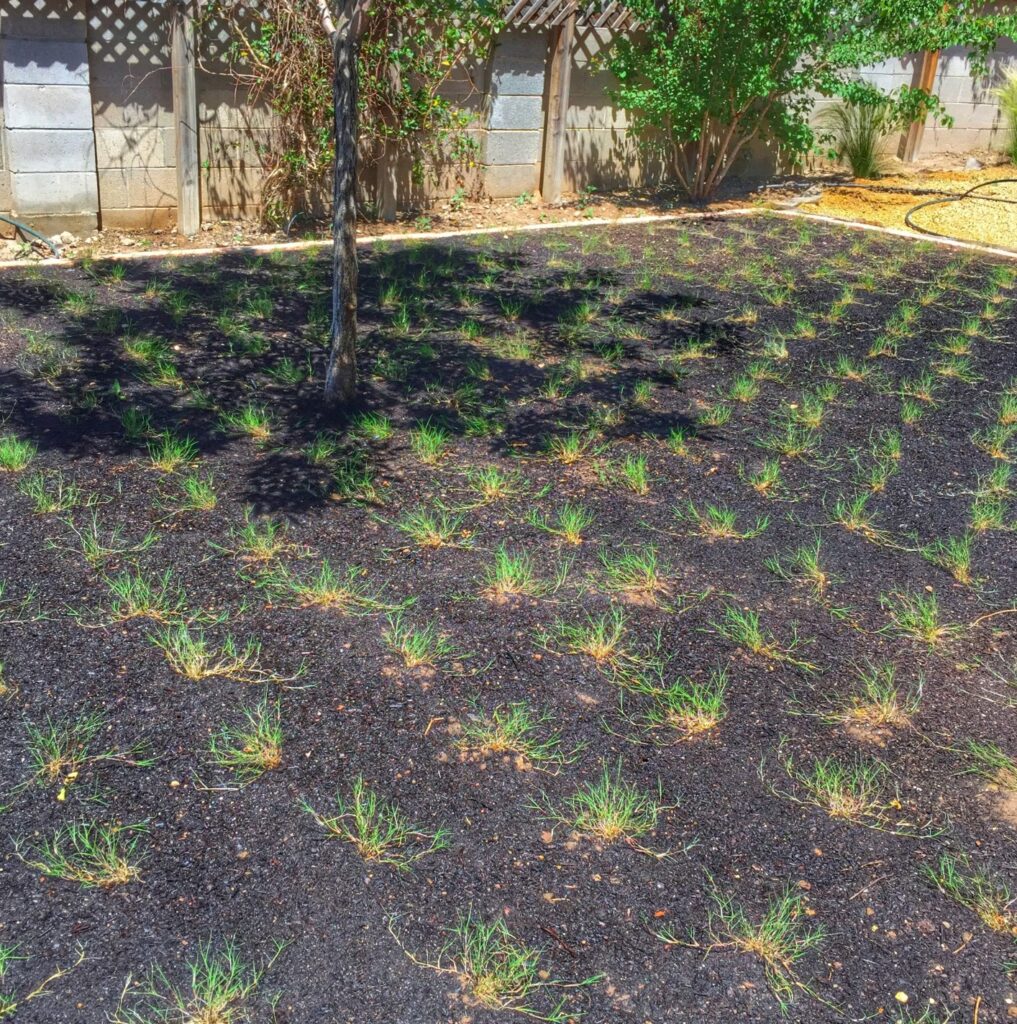
The data on this grass comes from NMSU, which has turf study sites in Las Cruces and Farmington. A few key points from their study sites mentions that “Bermudagrass (Cynodon dactylon) is similar to Kentucky bluegrass in its tolerance to traffic and turfgrass recuperative capabilities after stress or damage, but it appeared to be more aggressive than Kentucky bluegrass during hot weather in mid-summer.” NMSU evaluated five different varieties of bermudagrass, Guymon, Riviera, Wrangler, and Yukon, at both their northern NM and southern NM sites. “Riviera was given higher quality ratings than the other varieties due to finer leaf blades. Being a warm-season grass, the bermudagrasses required less irrigation to exhibit a quality comparable to the cool-season grasses.”
The shocking reason homeowners don’t like Bermuda grass is that it can become a troublesome weed, especially in southern NM, so it is wise to separate this grass from garden areas with a dry, unirrigated buffer strip, concrete mow strip at least 8”x 8” or other barrier. I like to design a concrete walk, patio or edger around these grass areas.
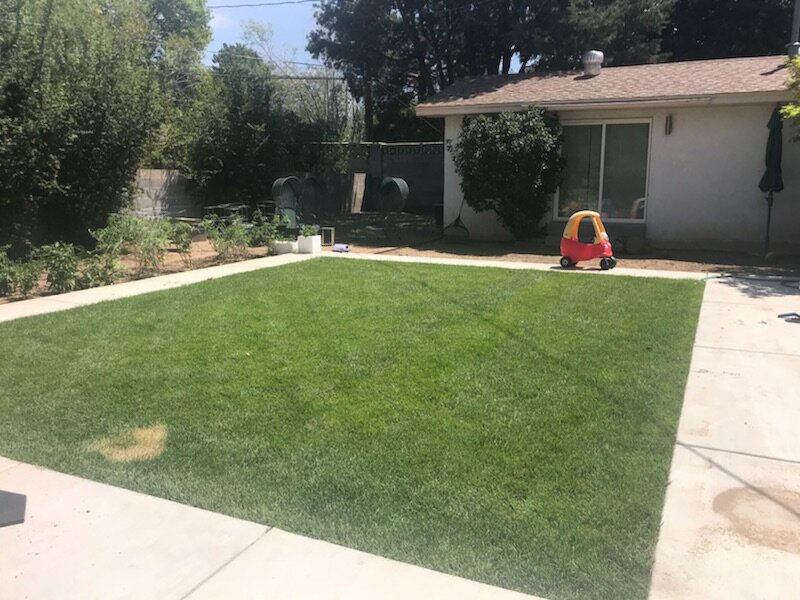
When placed strategically in a landscape this water friendly, high traffic, low mow grass is a winner in my book.
Learn more here:
Basics about Turf Grasses for New Mexico
How to make a more efficient turfgrass landscape in New Mexico
Make your turfgrass irrigation more efficient in 3 easy steps.
