We recently spoke with Judith Phillips, a local garden writer and landscape designer, about why vines are so useful in Southwest landscapes and how homeowners can use them successfully.
Vines can feel intimidating because many grow quickly and can become large or unruly. But Phillips points out that they solve landscape challenges where other plant types may not work. Vines create fast shade, screen narrow spaces, add winter interest and provide food and habitat for pollinators.
Below are suggestions of vine species for each of these four landscape scenarios.
CREATE FAST SHADE
When you don’t have the time or space needed to grow shade trees, but you can’t live comfortably outdoors in the blistering sun, building an arbor and planting a vine to provide a cool leafy canopy may be the solution.
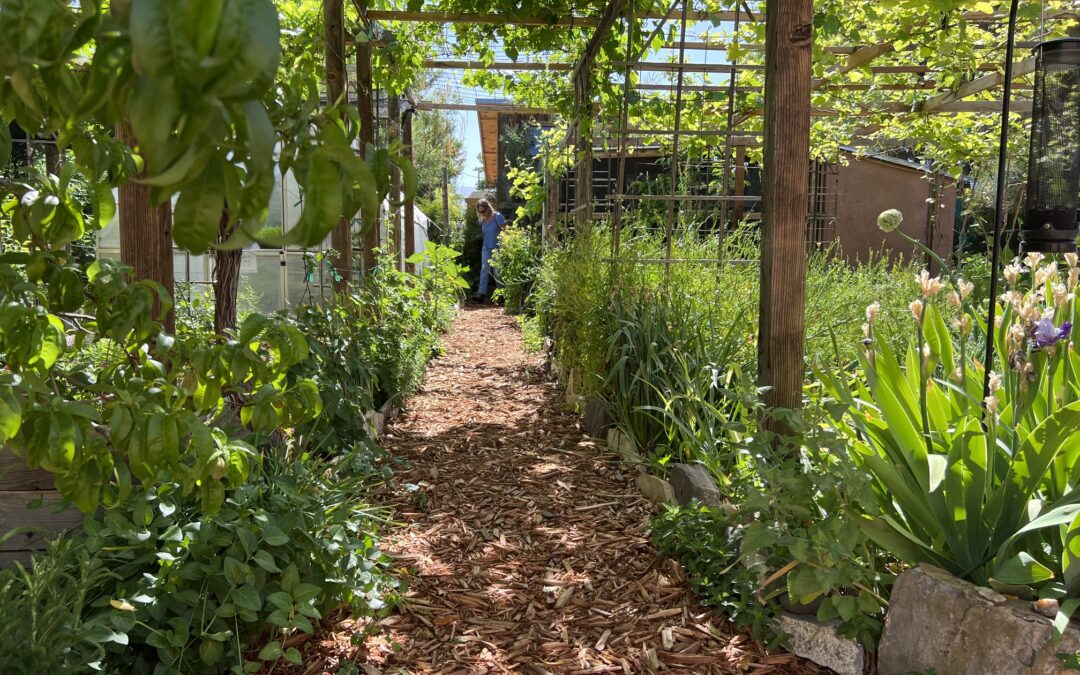
Phillips notes that vines can create shade faster than a tree. Once established, many vines, such as grapes, can have individual canes that grow as much as 10 feet a year, allowing them to quickly climb up and over a pergola or other structure. Because many vines are naturally riparian, an established large woody vine may use about as much water as a medium-sized tree. Their fast growth also means they require regular guidance and pruning, but the reward is a comfortable, inviting outdoor space.
Open lattice ramadas, arbors and pergolas all work well for vines. Wood is commonly used for structures because it is simple and easy to build with, but in Albuquerque’s climate, steel is often ideal because it is strong, long-lasting, low maintenance and resists UV damage.
Vines can be guided around structures, fences and trellises by gently weaving stems or attaching them with twist ties, string or twine through chain-link fencing or welded wire mesh, sometimes called “hog panel.” Remove ties once the vine has grown into place.
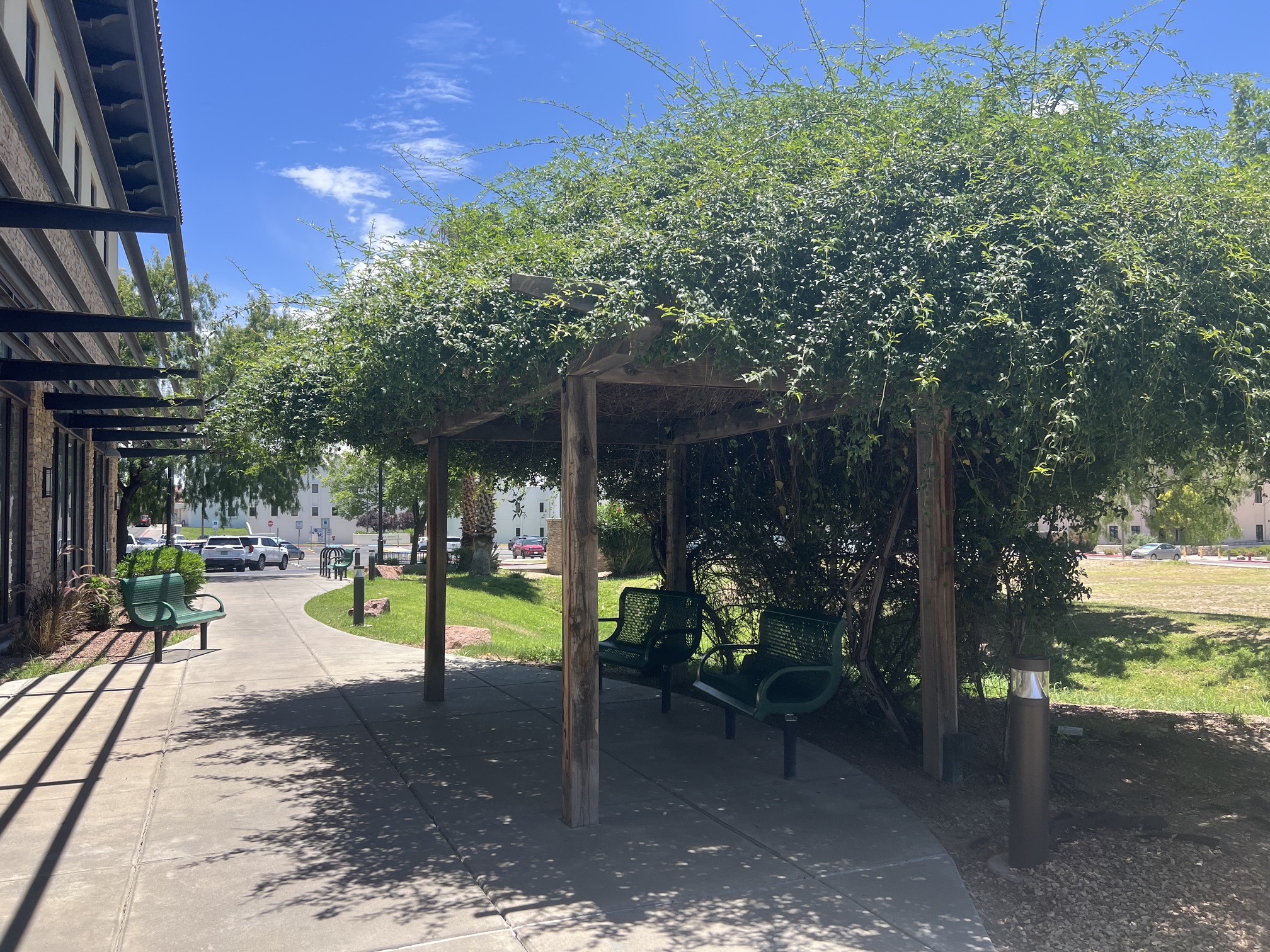
Lady Banks’ rose growing on pergola providing shade to seating area.
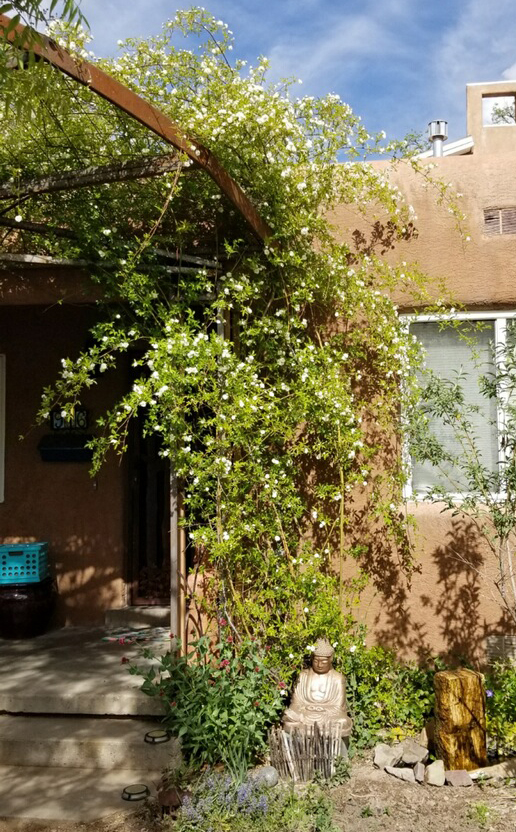
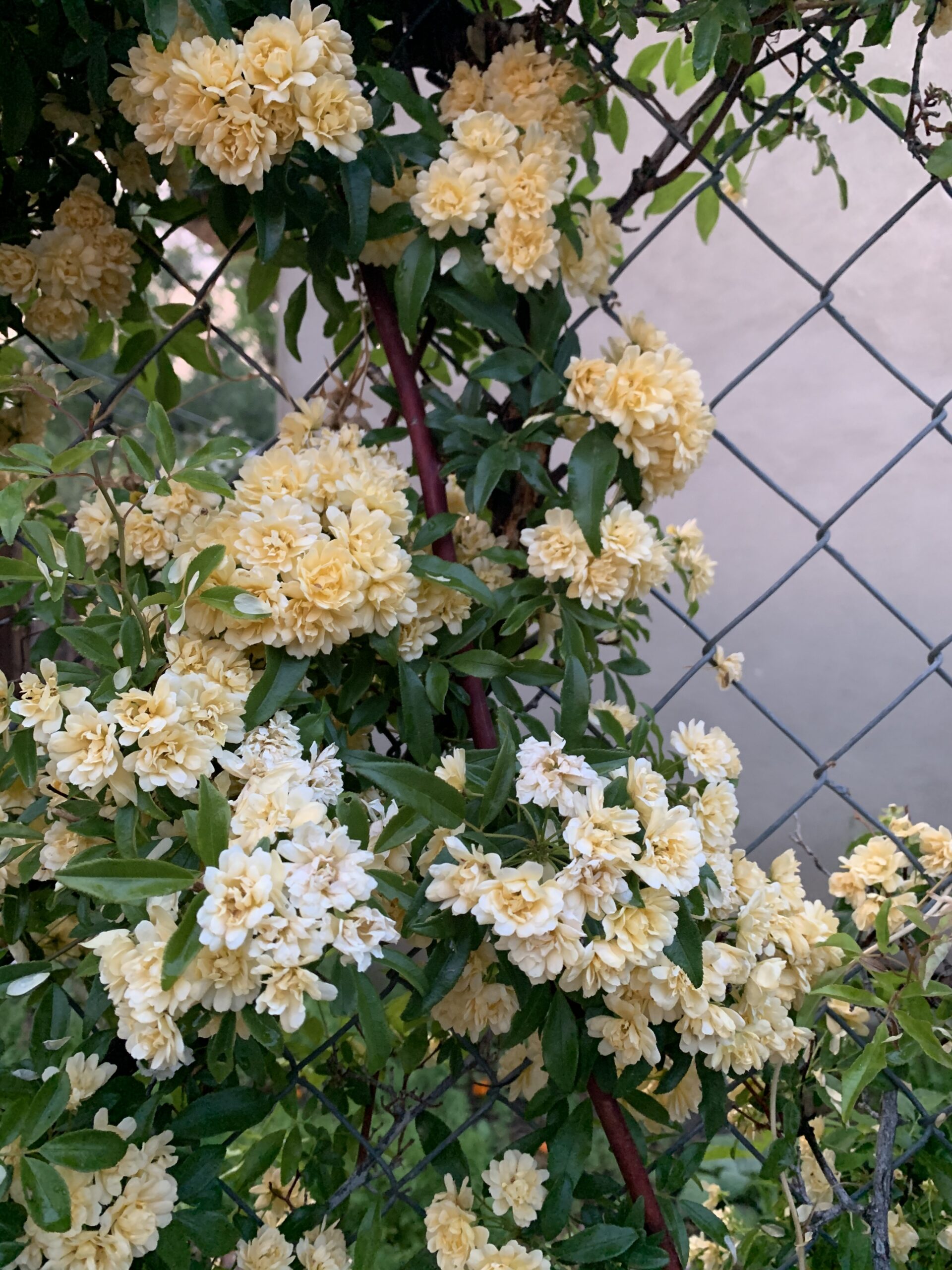
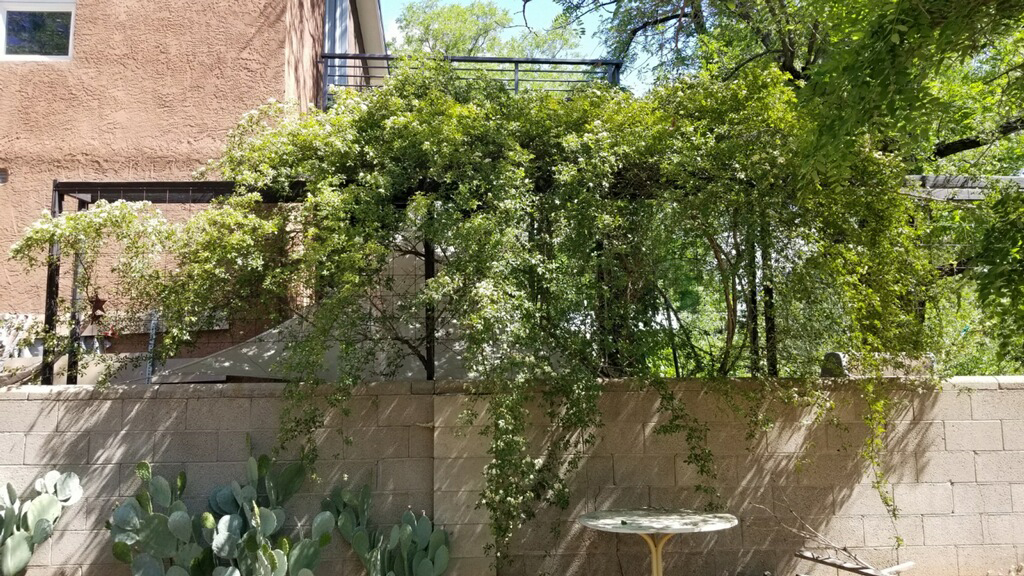
Lady Banks’ rose (Rosa banksiae): Rarely do you find a plant that is fast growing, evergreen and long-lived. Lady Banks’ rose is all those things, and it produces a beautiful if brief show of flowers in spring. And it uses surprisingly little water and grows well in sun or shade. This plant becomes quite large and, unlike most roses, blooms on old wood. If it grows too large, guide it around the structure or prune away unwanted growth; it adapts well to heavy pruning. Lady Banks’ is thornless and has incredible show stopping spring blooms.
Lady Banks’ on metal trellis.
Lady Banks Rose blooming on chain link fence.
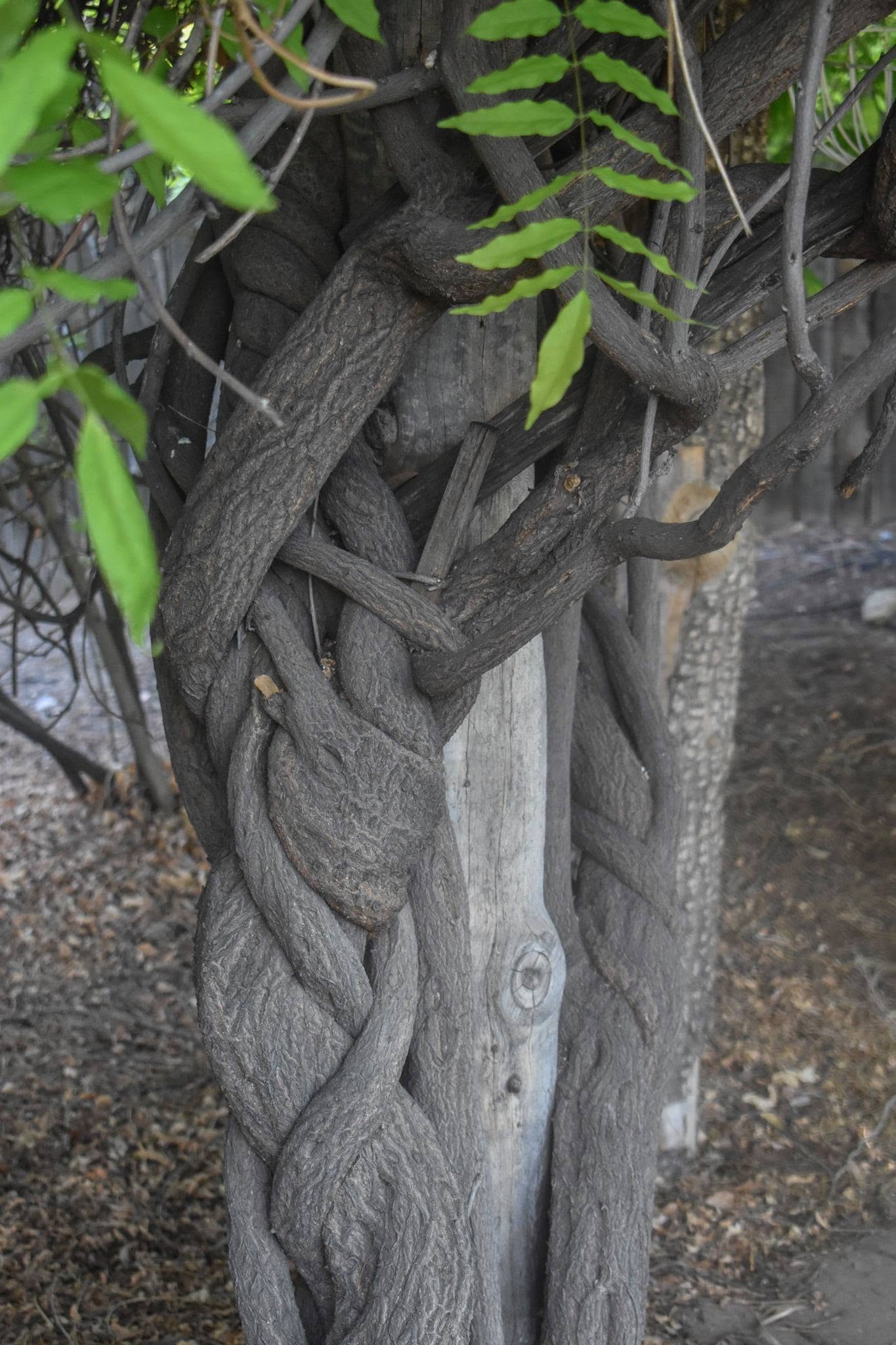
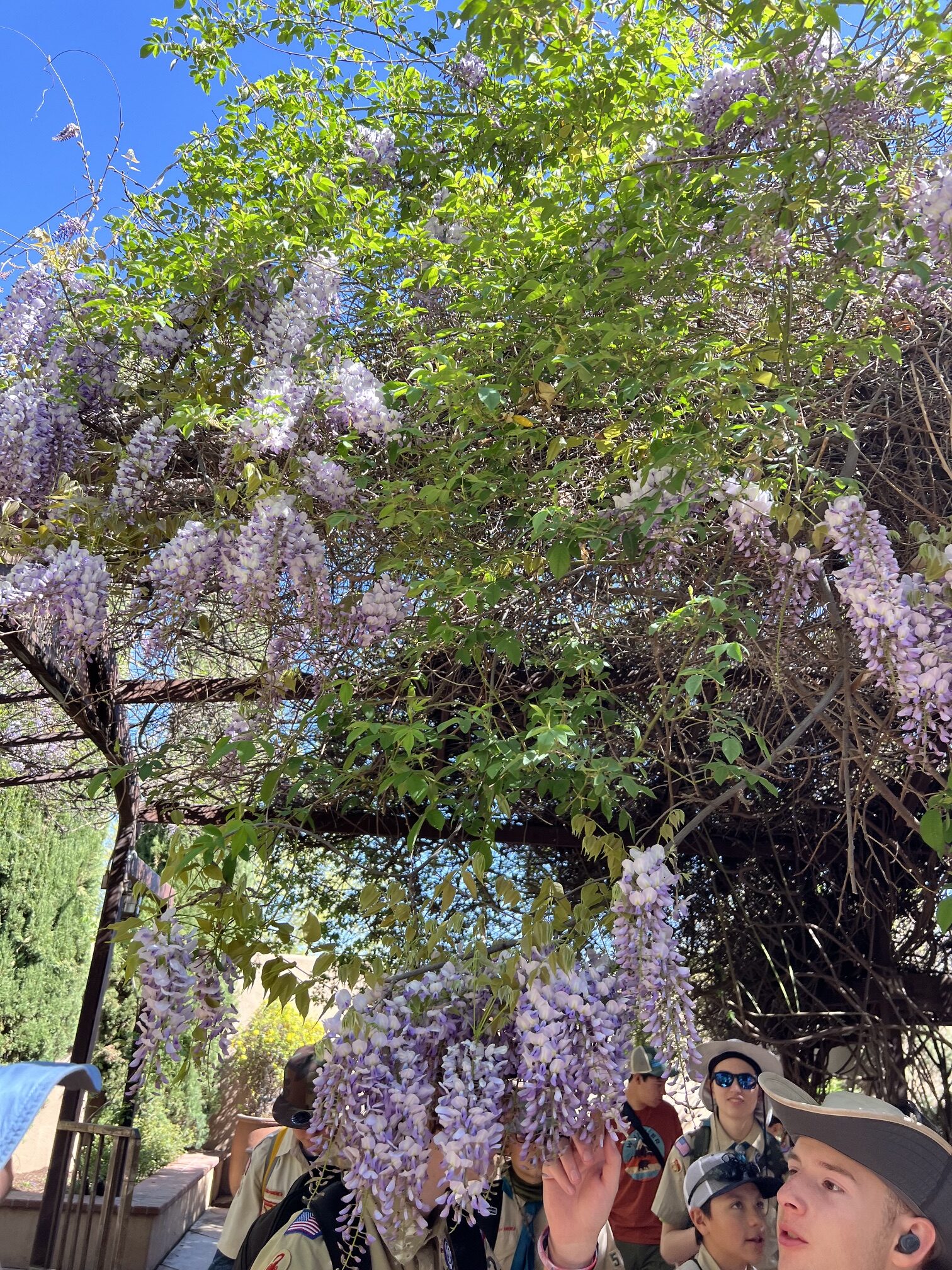
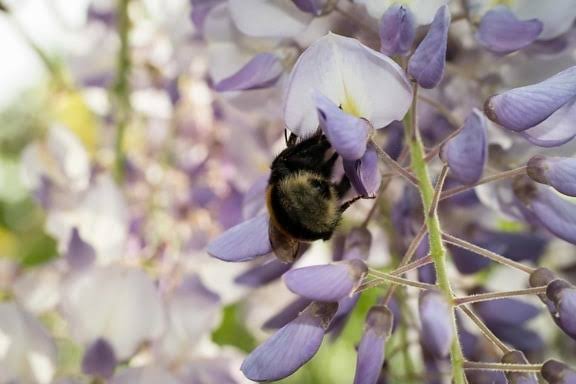
Wisteria (Wisteria sinensis): The pendulous, sweet-scented lavender flowers of this vine are some of the first to bloom in the spring. Bright green leaves follow shortly thereafter, filling the plant and creating lots of dappled shade below. Once the flowers fade, the leaves fill in to provide dense shade in the summer. Expect woody stems over time and train the vine strategically as it develops. Wisteria grows well in sun, shade and part shade.
Close up of Wisteria Trunk by Hunter Ten Broeck
Wisteria blooms hanging from a pergola.
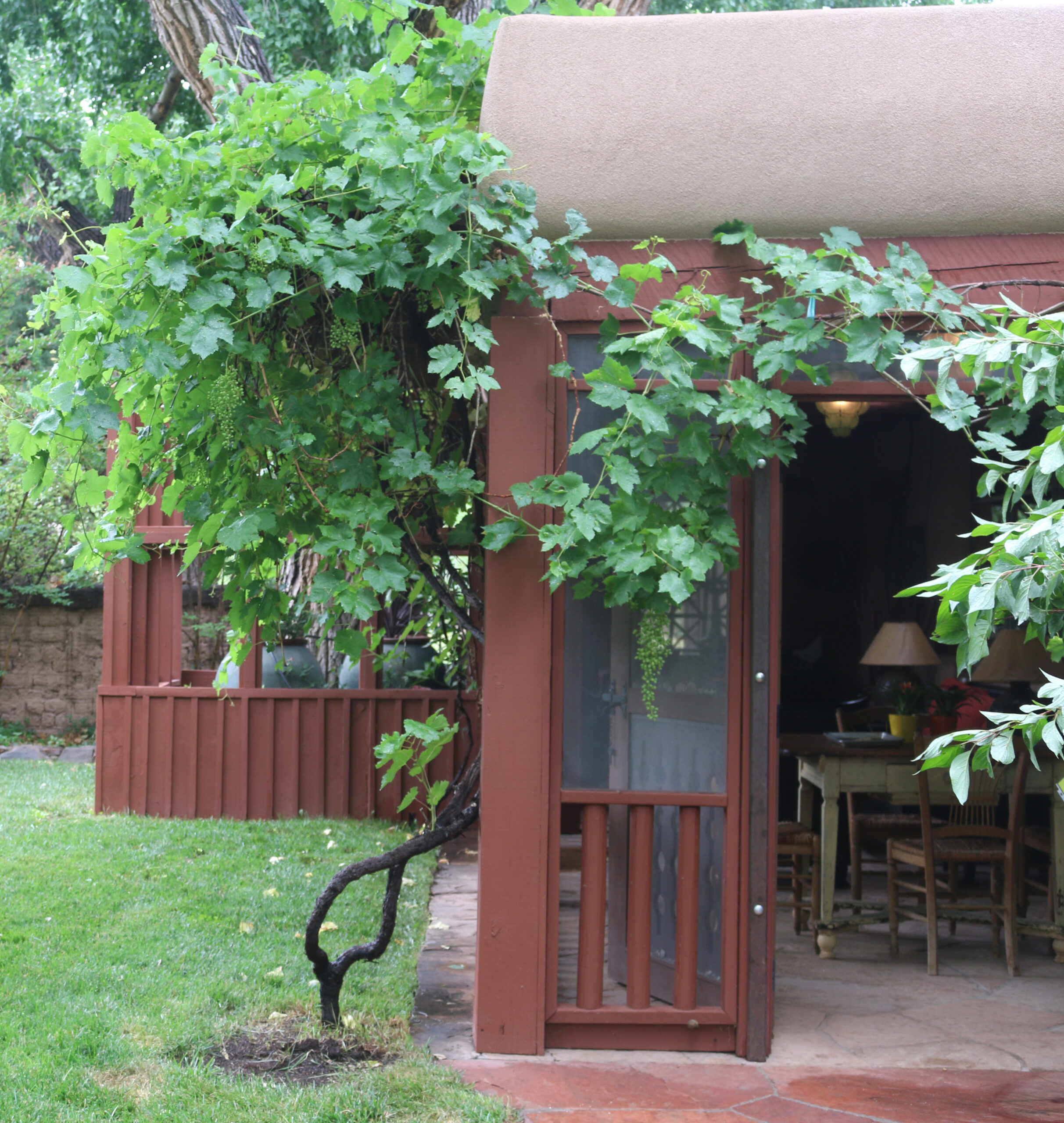
Grapes, multiple varieties: New Mexico is one of the oldest grape growing regions in North America, with plants brought to the state by Spanish colonialists and planting records dating back to 1652. Grapes prefer consistent moisture during their first year of establishment and grow best in full sun. The vines are fast growing and long-lived. Beautiful bright leaves create dense shade, and the fruit is delicious Grapes are deciduous so be prepared for a sculptural woody vista throughout the winter months. Late winter, before the last frost, is the best time to train and prune them. Some varieties to try are Himrod, an early ripening seedless white table grape; Red Flame, a seedless red table grape; Canadice, a cold hardy seedless red table grape known for disease resistance; and the unique Flambeau, a seedless pink table grape with strawberry sweetness. Another the Canyon grape, has beautiful fall color and grapes are loved by wildlife.
Grape vine growing on trellis at a home in the North Valley of Albuquerque.
SCREEN NARROW SPACES
Narrow spaces, such as side yards, can be difficult to plant because shrubs may become too wide before they provide enough height to provide screening. Vines trained on a trellis against a wall can fill vertical space without overwhelming the walkway and adjacent space.
Sun exposure in these narrow spaces affects which vines will do the best, explains Phillips. The west and south facing sides of the property receive the hottest afternoon sun, while the north facing side is typically cooler because of the shade, and the east facing side receives morning light.
Lady Banks’ rose growing on metal trellis attached to block wall on side of the house.
For southern and western exposures, Phillips suggests using passionflower vine and silver lace vine.
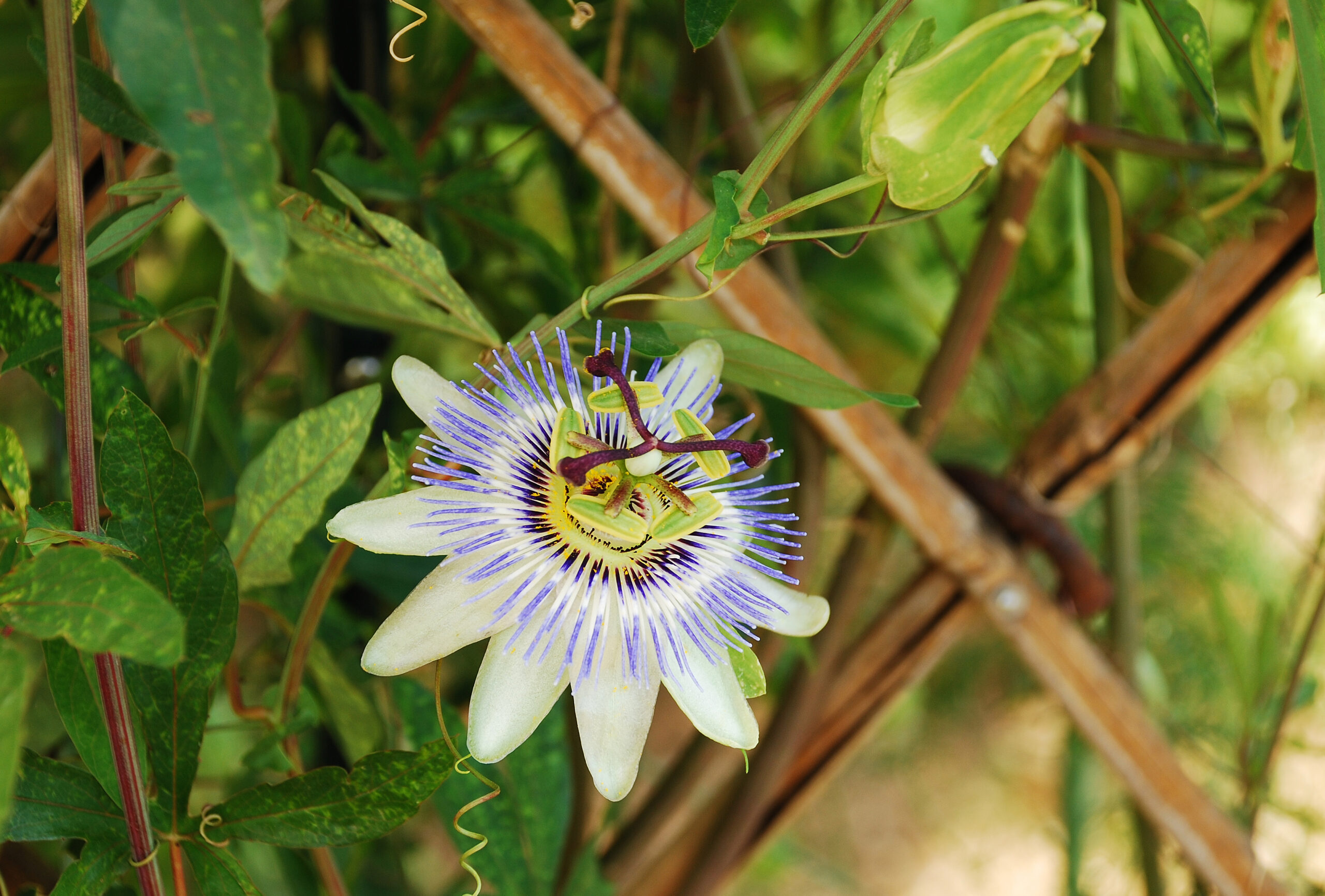
Passionflower vine (Passiflora caerulea): Stunning dark blue and ivory flowers appear in the summer flocked with butterflies. This vine grows well in heat but will freeze to the ground in winter. It will regrow from root-sprouts in the spring and climb again using tendrils.
A single Bluecrown Passiflora flower, also known as Passilfora Caerulea, an evergreen tendril climbing vine.
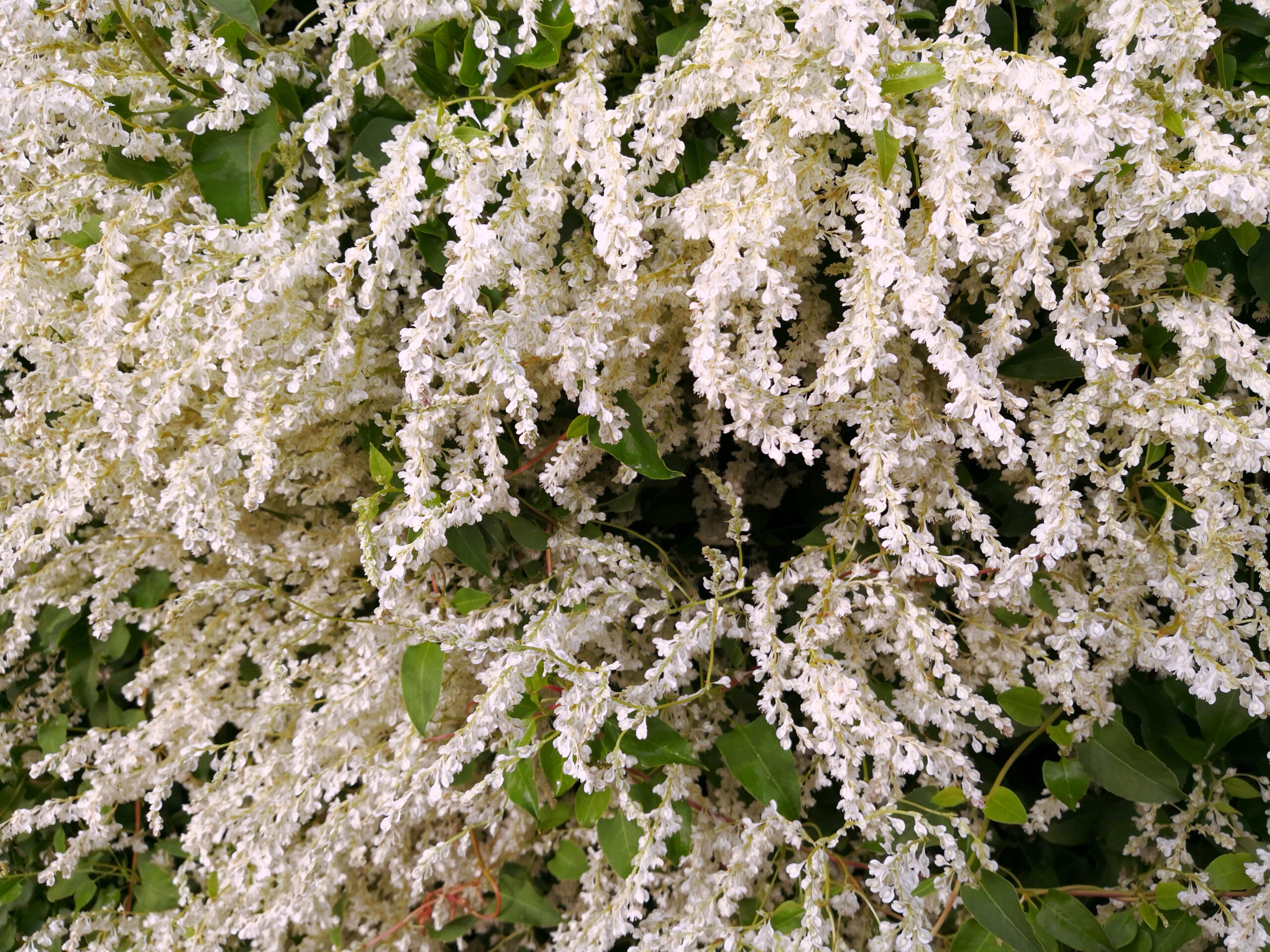
Silver lace vine (Fallopia baldschuanica):This is one of the most xeric and heat tolerant of the vines as well as a good pollinator that can smell like lilacs when blooming. Because it can become a tangle of spaghetti-like twigs, Phillips recommends cutting it to the ground every few years so that it will return with great exuberance in the spring.
Silverlace vine in bloom.
For shadier locations, she recommends using Carolina jessamine and Algerian ivy.
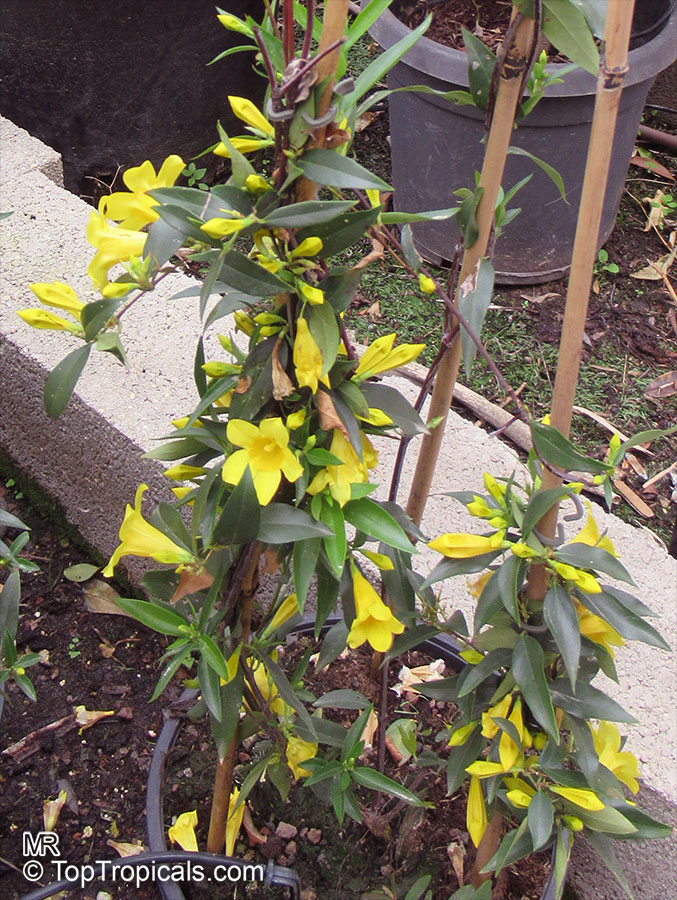
Carolina Jessamine (Glesemium sempervirens): This vine performs best in shade. It is not particular about soil and produces beautiful yellow flowers in early spring while retaining winter color. Note that it is toxic to humans, pets and livestock if ingested, even in small amounts. Prune one fourth of the vine’s mass every three years to keep it from getting too woody and to encourage vigorous plant growth.
Carolina Jessamine
Carolina jessamine (from internet, not great)
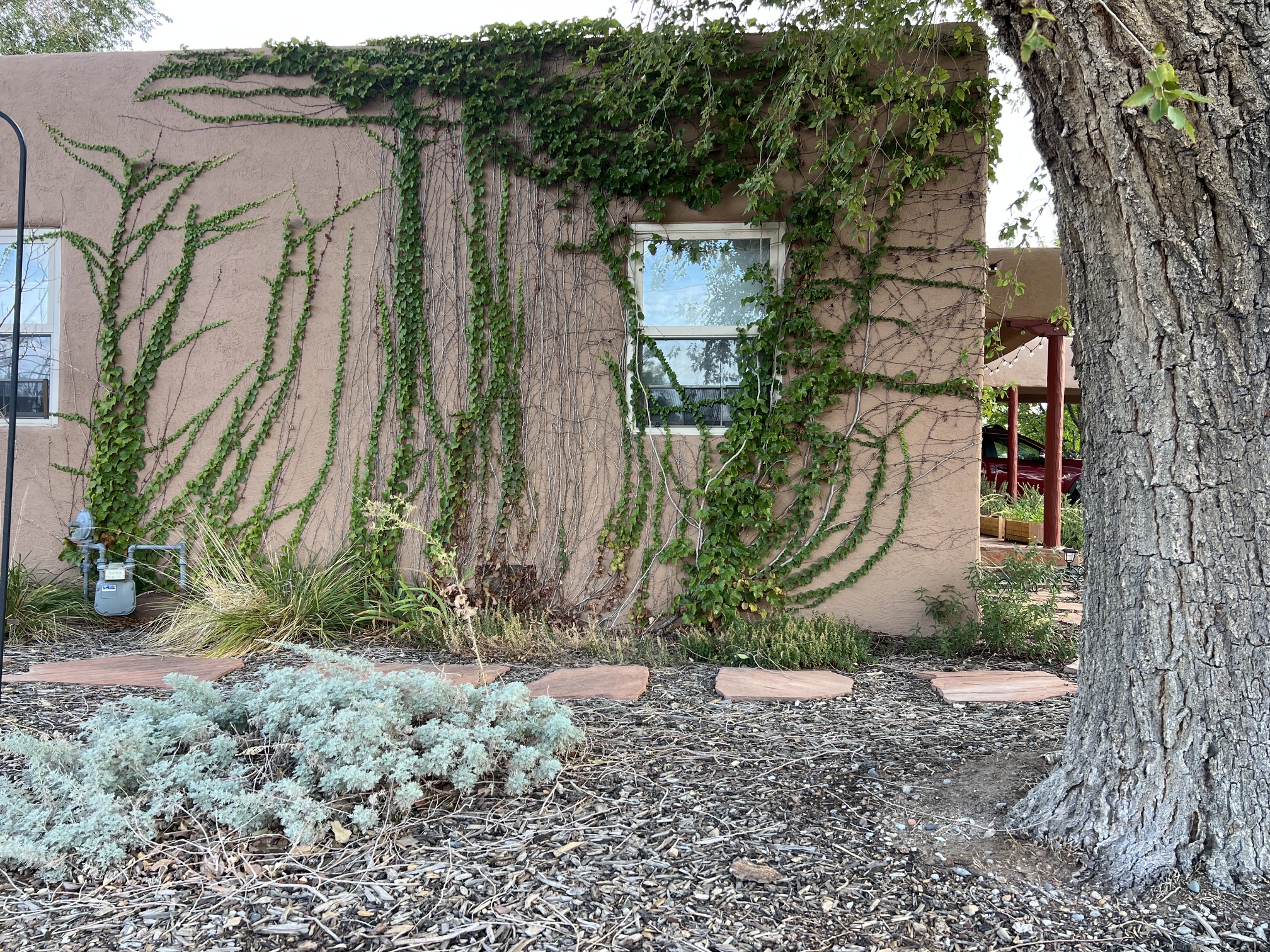
Algerian ivy (Hedera canariensis): This ivy climbs walls with clasping roots and provides evergreen color. It does best on north or northeast facing walls. Its large, bright green leaves resemble English ivy. The needlepoint dwarf variety is a smaller option that also performs well.
Ivy climbing up the side of a home.
ADD WINTER INTERST
Many vines fade or freeze back in winter, but some continue to add structure, color or texture. Phillips recommends Lady Banks’ rose and Algerian ivy for evergreen color along with wisteria for its sculptural woody branches.
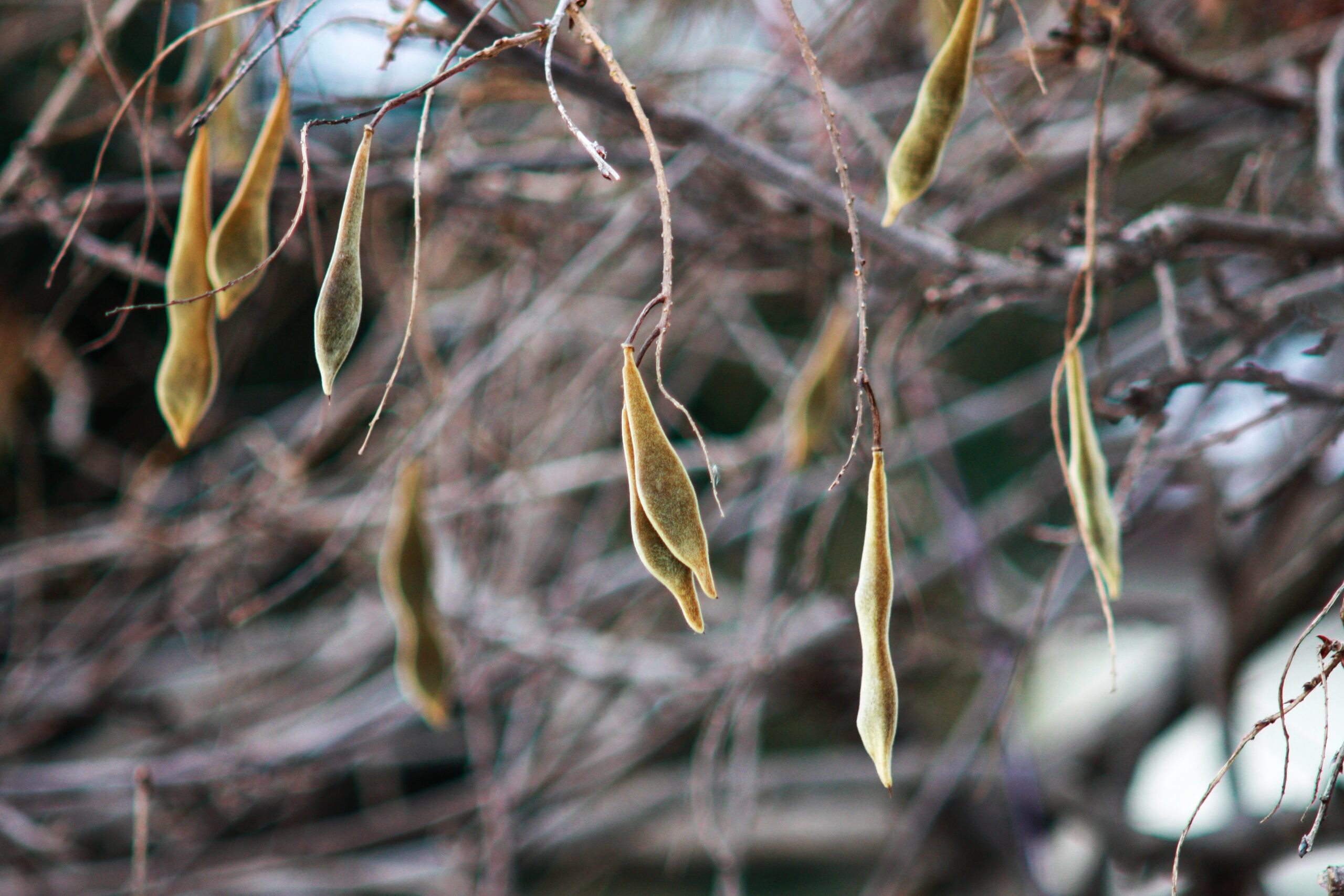
Wisteria seed pods in winter.
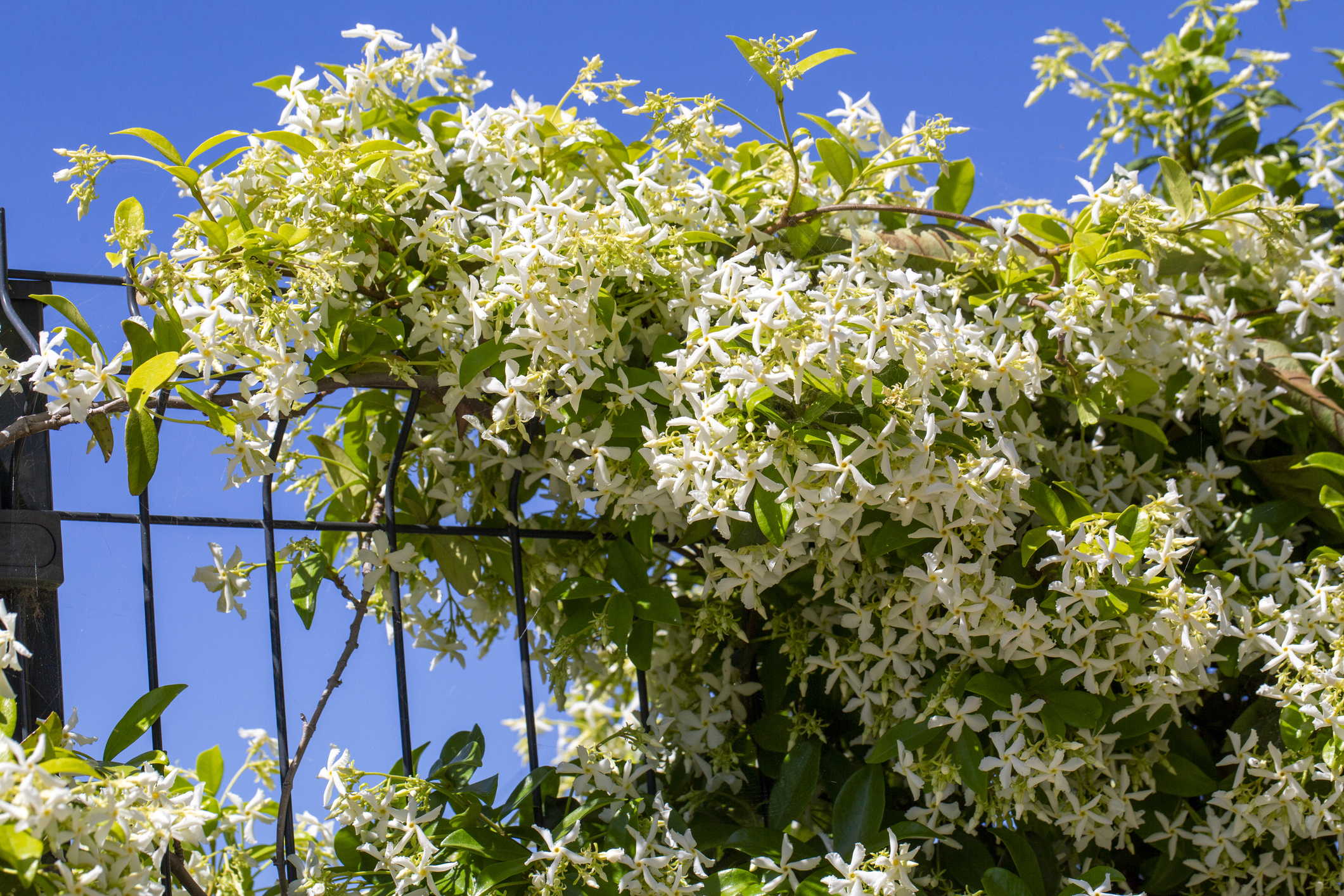
Star jasmine (Trachelospermum jasminoides): This vine has dark green foliage, fragrant spring flowers and smooth stems. When trained onto a trellis, it forms a dense cover. It grows well in partial shade, is a medium water user and is adapted to a wide range of soils. The sweet, pinwheel-shaped white flowers produce nectar for pollinators.
Star jasmine growing on a fence.
PROVIDE FOOD AND HABITAT FOR POLLINATORS
Several vines already mentioned — including wisteria, star jasmine, Carolina jessamine, silver lace vine and passionflower — support pollinators.
Wisteria blossom.
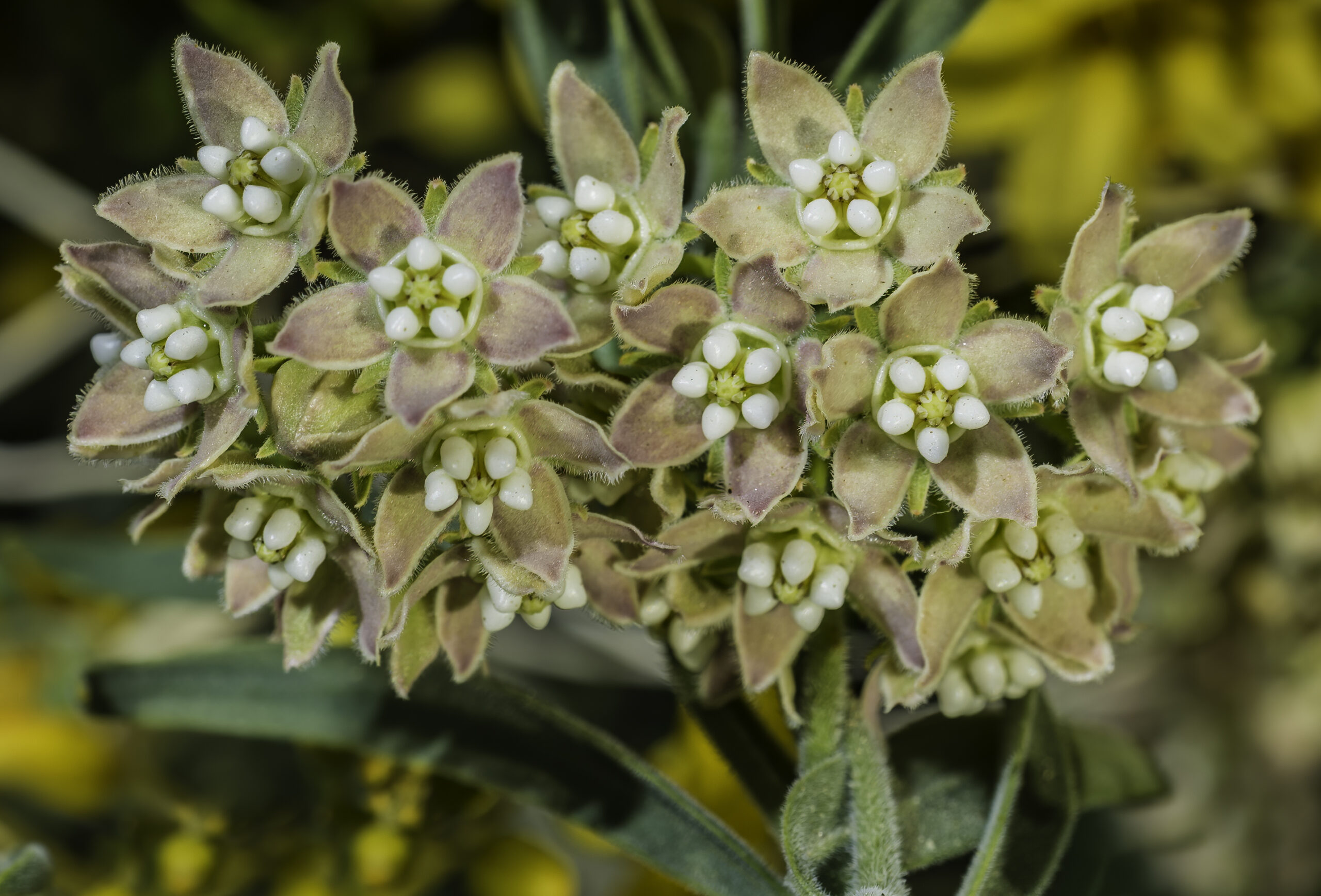
Climbing milkweed (Funastrum cynanchoides): This New Mexico native is one of Phillips new favorites. It dies back completely in winter but grows vigorously in spring, forming tangled curtains across fences, boulders and shrubs. It prefers heavier soils such as clay rather than
Climbing Milkweed, Funastrum cynanchoides var. hartwegii
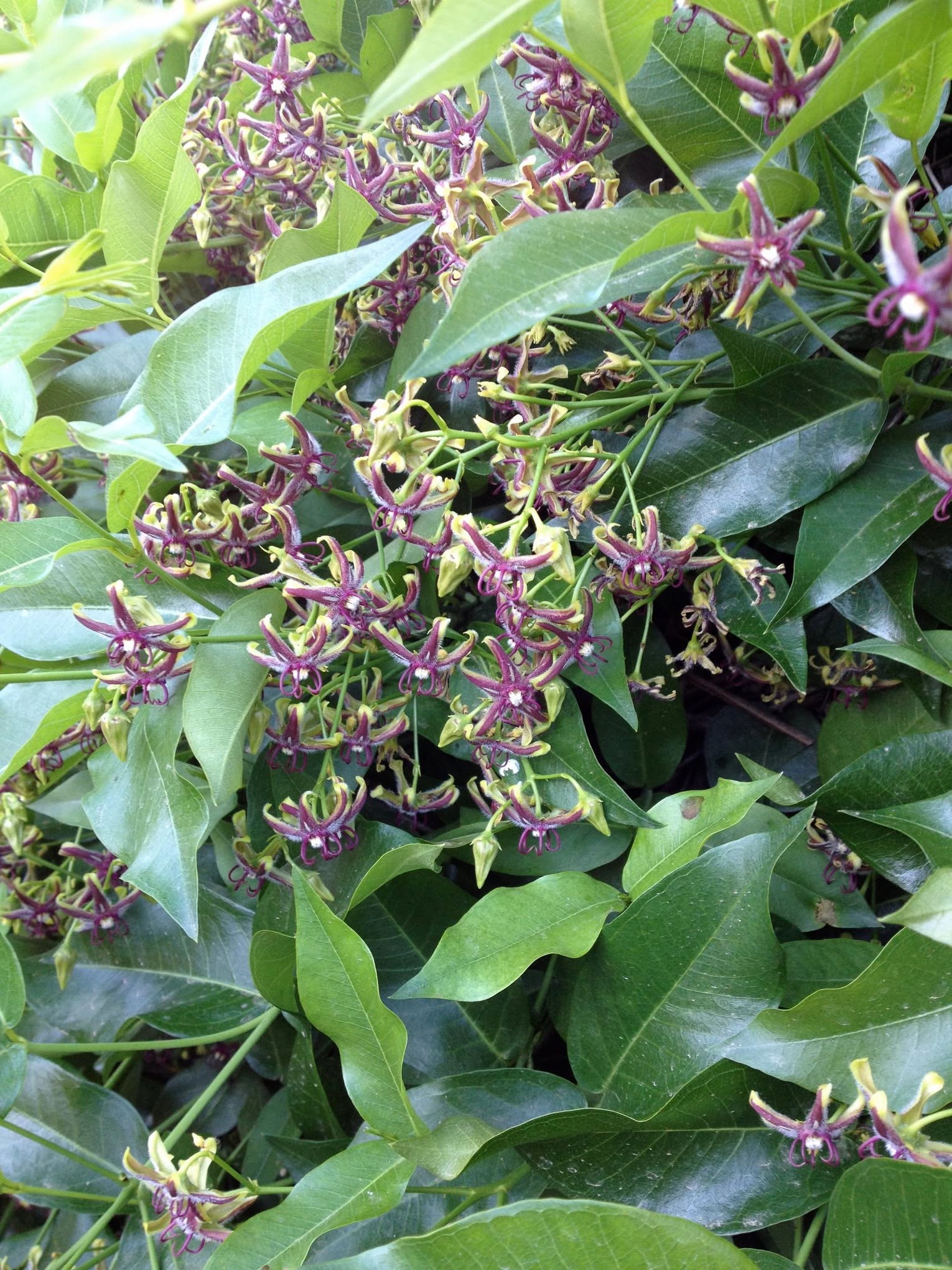
Silkvine (Periploca graeca): This deciduous vine can grow three feet or more in a year and sports glossy dark green leaves and dark maroon spring flowers. It’s fast growing and loves to climb up ramadas, wire fencing and trellises. On a pergola, it provides dense shade in the summer then loses its leaves in winter, letting the sun penetrate through the sculptural coiled stems. It tolerates both clay and sandy soil. Brought here by the earliest colonizers from the Valencia region of Spain, it’s found along the historic stagecoach routes of the Camino de Real.
Silkvine flower by Hunter Ten Broeck
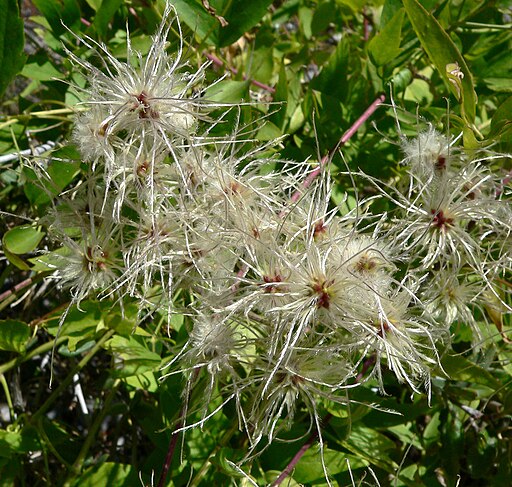
Western virgin’s bower (Clematis ligusticifolia): Also known as old man’s beard, this vine is fast growing where water is available and does well on north and east sides. Native to New Mexico, it can be found climbing over small trees and shrubs in the Jemez Mountains. Butterflies adore the fragrant white blooms, and attractive seed heads — one of the best parts of this plant — provide winter interest.
Clematis flower by Hunter Ten Broeck
Locally familiar trumpet vine and honeysuckle are not included here because Phillips is using them less often in home landscapes. Orange trumpet vine can root aggressively and become difficult to manage. Instead, Phillips has been using crossvine, a related species that she finds easier to live with and more evergreen, making it more attractive through winter. Honeysuckle (Lonicera sempervirens), including the Major Wheeler variety, can be temperamental, especially when it experiences leaf loss during late, hot summer months. Even so, both trumpet vine and honeysuckle are established local favorites and can still find homes in the right locations.
Whether used for shade, screening, winter structure or pollinator support, vines can bring beauty and function to places where other plants may struggle. With the right species, sturdy support, thoughtful placement and regular training, they can become some of the most versatile and rewarding plants in a Southwestern garden.
Interview with Judith Phillips, owner of Design Oasis and a landscape designer and garden writer with 30 years of experience designing arid-adapted and native gardens in the high desert. Have a question about the article or anything else? [email protected]
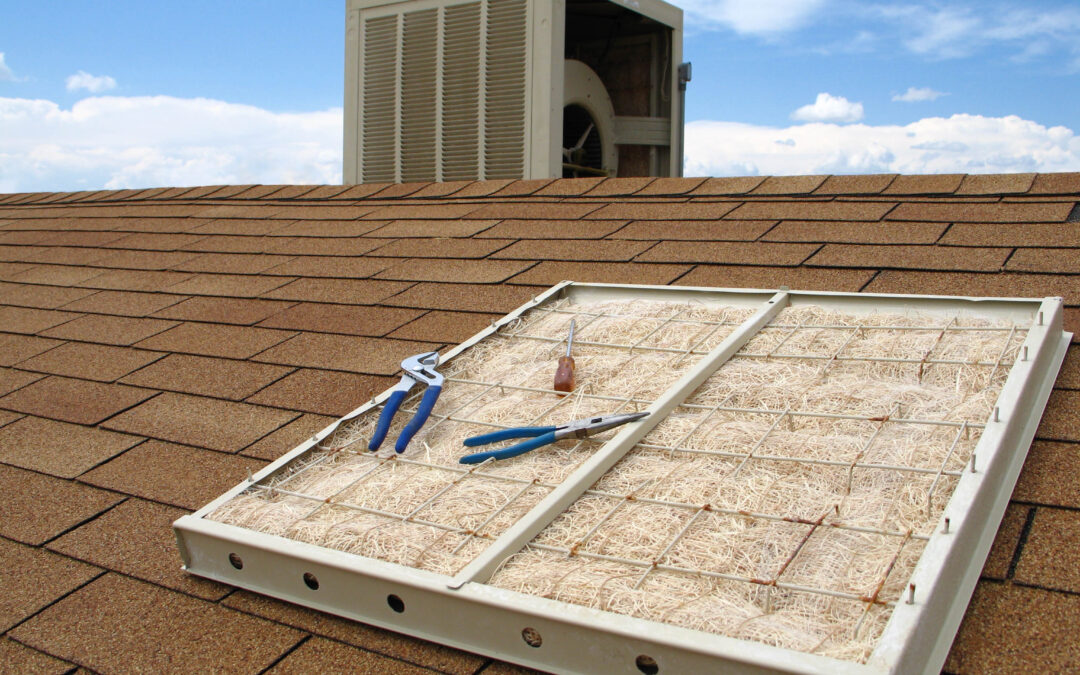
Over 40% of Albuquerque homeowners use evaporative coolers, while the rest use some type of refrigerated air system. Today’s evaporative coolers (also known as swamp coolers) provide a practical, energy-efficient way to cool air in the low humidity climates found throughout New Mexico. Evaporative cooling isn’t a new concept. In fact, it’s the oldest known method of cooling hot, summer air to make living spaces more comfortable. Ancient Egyptians hung wet material so the wind could blow through it to create a cooling effect. In an evaporative cooler, warm air is cooled as it passes through porous pads that are kept moist by water dripping on their upper edges. A blower wheel pulls outside air through the wet pad, and the cool, humidified air is then circulated through the house. In the process of cooling the air, evaporative coolers provide an additional benefit of removing dust and pollen that can cause allergies and asthma attacks.
Evaporative coolers are very effective, particularly when the relative humidity (the moisture content of the air) is low. An evaporative cooler works best during the hottest time of the day, because relative humidity drops quickly as temperature increases. Studies show that a typical evaporative cooler uses only about one-third the energy of a refrigerated air conditioner,
The big question is how much water do swamp coolers use? Water requirements for an evaporative cooler will vary with the size of the house, its orientation toward the sun, window area, type of landscaping, proximity to hard surfaces and other structures, temperature preferences of the occupants, local climate, how many hours the cooler runs, and water quality.
In an average weather year, a 1,500-square-foot home in Albuquerque might use 7,250 gallons (based on the evaporative cooler running 1,130 hours). In an unusually warm year, these water requirements would be significantly higher. Virtually all models of evaporative coolers now available recirculate the water that drips from the pads, resulting in an efficient use of water. (Older, less water-efficient evaporative coolers might not have a pan to catch and recirculate water. If so, excess water shall be directed to plant material. Or replace the old cooler with a recirculating one.)
Some coolers have a “bleed-off valve” to drain a portion of the recirculating water to prevent excessive mineral buildup on the porous pads. Bleed-off water can increase overall evaporative cooler water use by 50% or more, which could increase total evaporative cooler water use to 11,000 gallons in Albuquerque. A more water efficient alternative to continual bleed-off is a “dump pump,” which empties the cooler pan at regular intervals to reduce mineral buildup.
Waterwise Tips for Evaporative Coolers
Instead of turning on your cooler when it’s 79 degrees outside, wait until it is 85 degrees. Your cooler will use 50% less water.
Turn on the water pump a few minutes before turning on the fan to give the cooler pads a chance to become saturated.
Open a window 1-2 inches in the rooms you want to cool. This will draw cool air into the rooms and give warm air a chance to escape.
In the evenings or when it’s not quite so hot outside, run your cooler fan without running the water pump. You’ll get nice, cooling airflow without using any water at all!
Also run just the fan on rainy and high humidity days when your evaporative cooler is significantly less efficient.
To keep your cooler from wasting water, check it for leaks monthly during the summer season. Take a look at its filters, pads, pump and reservoir. Replace your cooler pads at least once every summer, preferably twice — or aim to clean them with soap and water.
Install a digital thermostat. Digital thermostats allow you to use much less water than you would otherwise because once your home gets to your desired temperature, it will automatically shut off.
Additional tips to keep your home cool, harvest water and reduce energy use
Direct any water from a refrigerated air conditioner or mini split condenser toward plants.
Servicing your refrigerated air conditioner by performing general maintenance such as replacing or cleaning air filters can lower energy consumption by up to 15%. Add a calendar reminder for the first day of spring to check your air conditioner’s evaporator coil. This should be cleaned annually to ensure the system is performing optimally.
Cooling your home with ceiling fans will allow you to comfortably raise your thermostat about 4 degrees. In the summer, fans should turn counterclockwise so air pushes downward, circulating the cooler air in the room and making the home feel cooler. Make sure to turn off ceiling fans when house is empty.
Window treatments or coverings such as blinds, shades and films can help reduce the heat when temperatures rise. Close blinds and curtains on the East, West and South sides when nobody is home to keep the sun from heating up the house.
Air loss through ducts can lead to high energy costs, accounting for nearly 30% of a cooling system’s energy consumption. By sealing and insulating your ducts, you can lower your energy bills.
Avoid using heat-producing appliances like clothes dryers, dishwashers, stoves and ovens during the hottest part of the day. Use your grill for cooking and hang dry your clothes.
Learn more by checking out these other useful articles:
Information courtesy of the Water Use and Conservation Bureau, New Mexico Office of the State Engineer. Additional tips courtesy of PNM. Have a question about the article or anything else? [email protected]
Mosquitoes have been so very prominent here in the Albuquerque area over the last five years, and we’ve been learning a lot about how to live with them in our yards. Fortunately, Bernalillo County and the City of Albuquerque have been studying mosquito lifecycles, treatment and abatement for years.
There are three types of mosquitoes found in our area, including the Aedes vexans (floodwater mosquito) and the Culex quinquefasciatus (southern house mosquito). Additionally, the Aedes aegypti (yellow fever mosquito) has become firmly established in the Albuquerque area in recent years.
All these species are well adapted to the local environment, but they differ significantly in behavior, feeding habits and the types of risks they pose. Southern house mosquitoes primarily feed on birds but will bite humans and domestic animals. They are active at night and during dawn and dusk.
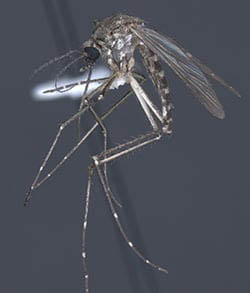
Floodwater mosquitoes prefer to host on humans, livestock and pets. They are highly aggressive and notorious for biting during the evening and nighttime hours. Floodwater mosquitoes are a nuisance because of their painful and frequent bites but not commonly associated with disease.
Floodwater Mosquito
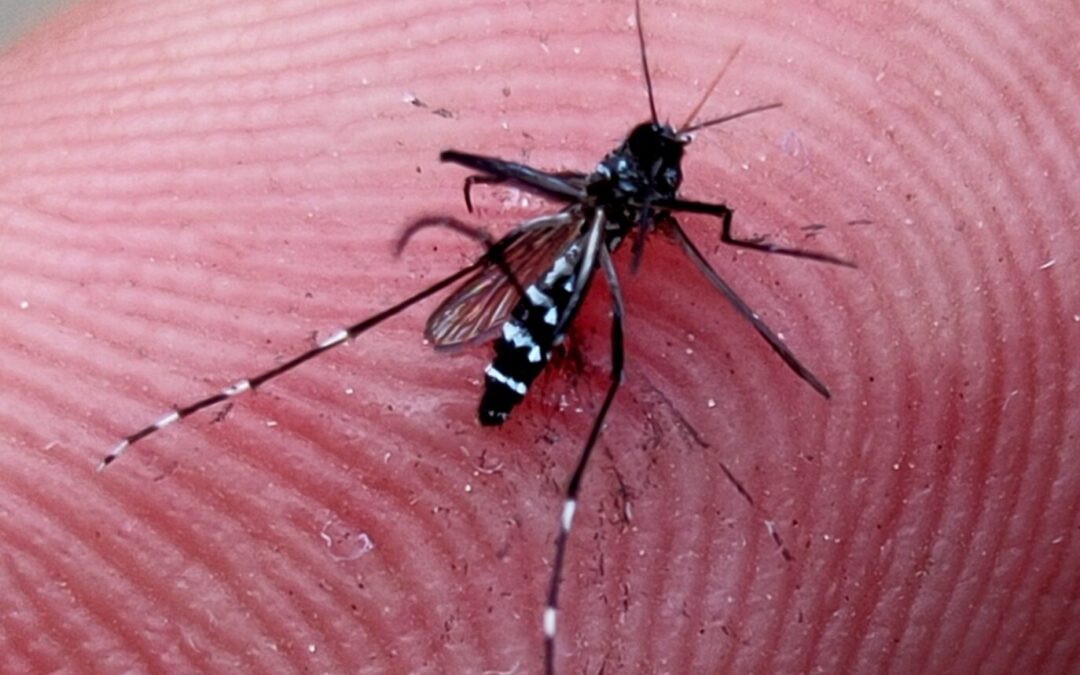
Yellow fever mosquitoes are specifically human-focused biters that actively hunt during the daytime. They are easily recognized by the distinct white, violin-shaped markings on their back and striped bands on their legs. They are the primary transmitters of critical mosquito-borne diseases, such as Zika, dengue fever and yellow fever. These diseases have not been found in the greater Albuquerque area and City-County prevention is underway to keep it that way. To learn more about the yellow fever mosquito, check out this useful flyer.
Yellow Fever Mosquito
Local mosquito control is conducted as a combined city-county effort. Mosquitoes are controlled at all life stages through a variety of methods, following the principles of integrated pest management. The goal is effective and efficient control designed to minimize the amount of pesticide released in the environment and to prevent pesticide resistance. Protecting public health and ensuring that outdoor activities can be enjoyed safely and comfortably is the City-County partnerships underlying mission.
Albuquerque and Bernalillo County residents can report mosquito issues by calling 311.
Residents who don't wish to have their property sprayed can register on the No-Spray List by calling 311.
The most important things you can do are reducing mosquito breeding habitat and preventing mosquito bites as per City of Albuquerque Environmental Health Department.
What you can do
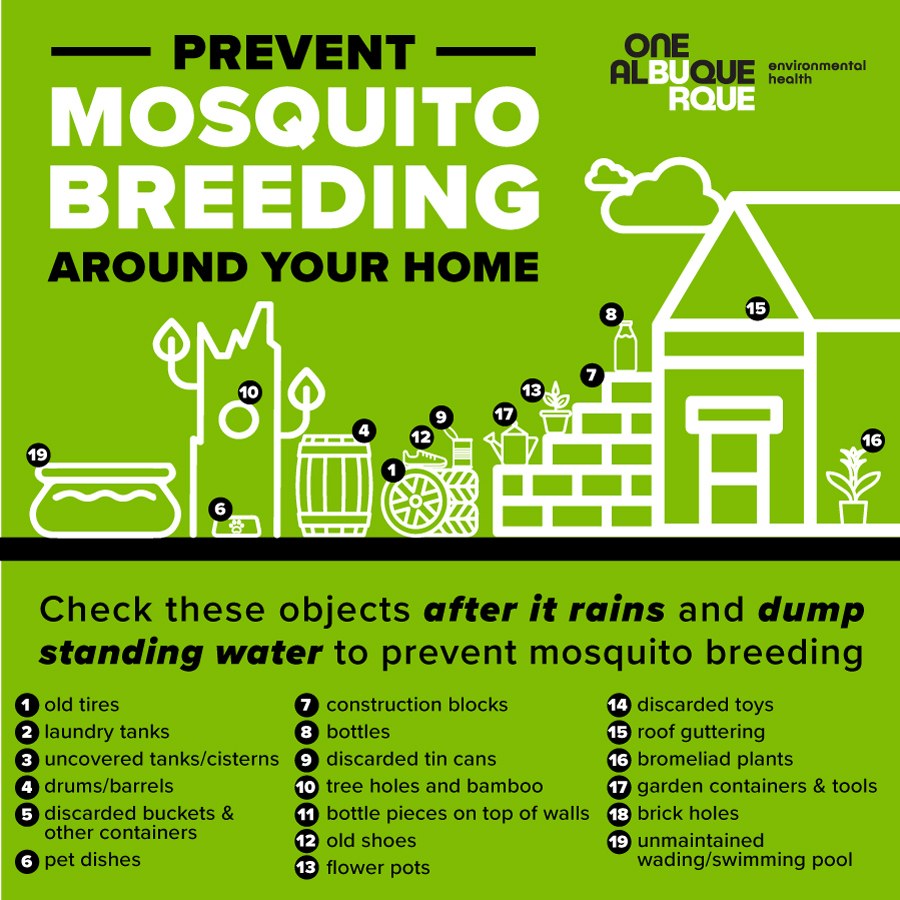
Prevent mosquito breeding on your property
Dump standing water found in trays beneath potted plants; used tires; trash, discarded buckets and other containers; children’s toys; and other places.
Store containers that could hold water upside down.
Keep your property uncluttered — mosquitoes can breed in the smallest pools of water even as small as a bottle cap.
Clean pet water dishes regularly by emptying, scrubbing and replacing the water.
Replace bird bath water regularly.
Cover rain barrels with a fine mesh and treat with mosquito dunks. Mosquito dunks contain bacteria called Bacillus thuringiensis israelensis (Bti). Bti is a naturally occurring bacterium found in soils. It contains spores that produce toxins that specifically target the larvae of the mosquito. Bti has no toxicity to people and is approved for pest control in organic farming operations. It has been well tested and based on the studies EPA has concluded that Bti does not pose a risk to humans. The Bti mosquito dunks are sold at hardware, home improvement, and feed supply stores. They can be placed in standing water, and the bacteria will kill mosquito larvae.
Treat pools with chlorine. If not in use, keep empty or treat with mosquito dunks
Reduce moist collection areas in your grass lawn as mosquitos like to bread in these small moist spaces. Aim to space your sprinkler watering out so the wet areas dry up between irrigation days.
Add mosquitofish, Gambusia affinis, to ponds and small water features (available free from the City of Albuquerque by calling 311).
Check flat roofs for pockets of water in shaded areas and clogged rain gutters.
Prevent mosquitoes from entering your home
Keep door and window screens in good condition.
Check window screens and doors for holes and repair any holes with sticky screen tape.
Protect yourself when outdoors
Environmental Protection Agency (EPA) approved insect repellents include those containing DEET, picaridin and oil of lemon eucalyptus.
Wear long sleeves and long pants, especially at dusk and dawn.
Report standing water and high adult populations to 311
Other home strategies
Set out mosquito traps to reduce the number of mosquitoes in your yard or home. BG-sentinel traps use dry ice (which can be bought at a grocery store) and/or a scent bait to attract mosquitoes and are very effective. The City uses BG-Sentinel traps when conducting mosquito surveillance. Ovitraps can be used to attract females that are ready to lay their eggs. It is important to maintain ovitraps by adding a mosquito dunk or they will become breeding habitat.
Repel mosquitoes with smell: Mosquitoes rely heavily on their sense of smell to locate their next meal. They are attracted to certain odors, such as carbon dioxide from our breath and lactic acid from our skin. Mosquitoes hate strong, pungent and herbaceous scents that mask the carbon dioxide and lactic acid humans emit. These can be distributed as sprays, diffused as essential oils or the plants can be crushed and rubbed onto your skin for a natural repellent. The smells they don’t like include:
Lemon eucalyptus: Approved by CDC and World Health Organization, it is recognized as one of the most effective natural deterrents. It contains PMD(p-menthane-3,8-diol) which is extracted from the leaves of a lemon eucalyptus tree. This scent is known to block mosquitoes from detecting you.
Citronella: The classic lemon-grass scent disrupts a mosquito's ability to find hosts.
Peppermint and menthol: The intense smell of mint can overpower their sensory receptors.
Lavender: Contains compounds like linalool that deter pests.
Citrus: Citrus smells, such as those from lemons, oranges and grapefruits, are highly effective at repelling mosquitoes. You could place citrus peels in strategic locations to deter mosquitoes from coming too close.
Rosemary: Rosemary is another herb that mosquitoes dislike. Plant rosemary bushes near outdoor seating areas then crush the leaves to release the smells and oils.
Basil: Crush fresh basil leaves to release their scent.
Garlic: Create a garlic spray by mixing crushed garlic cloves with water.
Lemon balm: Rub crushed lemon balm leaves on your skin for added protection.
Catnip: Catnip contains a compound called nepetalactone, which is highly effective at repelling mosquitoes. Plant catnip in pots or in your garden or crush the leaves and rub them on your skin for a natural repellent.
Create DIY sprays: One of the easiest ways to use essential oils for mosquito control is by creating a DIY spray.
Combine:
2 ounces of distilled water
1.5 ounces of witch hazel
30-40 drops of essential oils (Mix and match based on your preferences; effective options include citronella, lavender, peppermint, eucalyptus, lemongrass and tea tree.)
Repel mosquitos with smoke: Incense sticks and smudge sticks have been used around town by local restaurants and in yards with some success.
Repel mosquitos with a fan. The breeze of an outdoor fan can make it harder to trace the scents and harder for them to fly near the fan.
Schedule a yard audit: According to a recent KRQE interview with City of Albuquerque Urban Biology Division Manager Nick Pederson, the city can help residents reduce mosquitoes on private property by performing an inspection. “We like to offer what we call a yard audit or a yard inspection where we’ll come out and actually look at a person’s yard with them and see if we can identify possible sources of mosquito issues,” Pederson said, explaining that these inspections can be requested by contacting 311.
Creating shade in a landscape is about far more than escaping the summer heat. The right shade strategy can reduce energy costs, maximize moisture absorption of plants, improve comfort year-round, and dramatically change how a yard feels and functions. Yet many homeowners make decisions based only on appearance, without fully understanding how the sun moves through their property, how wind affects structures, how big mature trees will get or how shade systems hold up long term.
Understanding the Sun and Your Property
Before choosing any shade solution, it’s important to study how sunlight moves across the yard throughout the day and across the seasons. In summer, the sun sits high in the sky and creates intense heat, particularly on west-facing patios, windows and walls. In winter, the sun is much lower in the southern sky, allowing welcome warmth and natural light into the home from south and west facing windows.
A well-designed landscape should block harsh summer sun while still allowing beneficial winter light whenever possible. This is especially important in hot, dry climates like Albuquerque, where afternoon heat can make outdoor spaces unusable without proper shade.
The west and southwest sides of a property are typically the most critical areas to shade because they receive the hottest afternoon sun. South-facing areas also require careful planning, since they benefit from winter solar exposure.
Trees: Nature’s Best Long-Term Shade Solution
Trees are often the most effective and beautiful form of shade, but choosing the wrong tree or placing it incorrectly can create major problems over time. One of the biggest mistakes homeowners make is planting based on how a tree looks today instead of how it will perform in 20 years. A small nursery tree may eventually grow into a massive canopy that blocks winter light, crowds structures, damages paving or interferes with utilities. The most successful landscapes begin with selecting the right tree for the right location.
Tree placement is also critical. Improper tree placement is extremely common and often expensive to correct later. Some of the most frequent issues include planting trees too close to the house, ignoring mature canopy size, or failing to consider root growth and maintenance needs. Trees should also be selected based on climate compatibility, water use, soil type and branch strength. Fast-growing species may provide quick shade but often develop weak wood and become vulnerable during storms. Thoughtful placement can dramatically improve outdoor comfort and even reduce cooling costs by shading walls, roofs and windows from intense summer heat. Use the Climate Ready Tree Resource when selecting your tree.
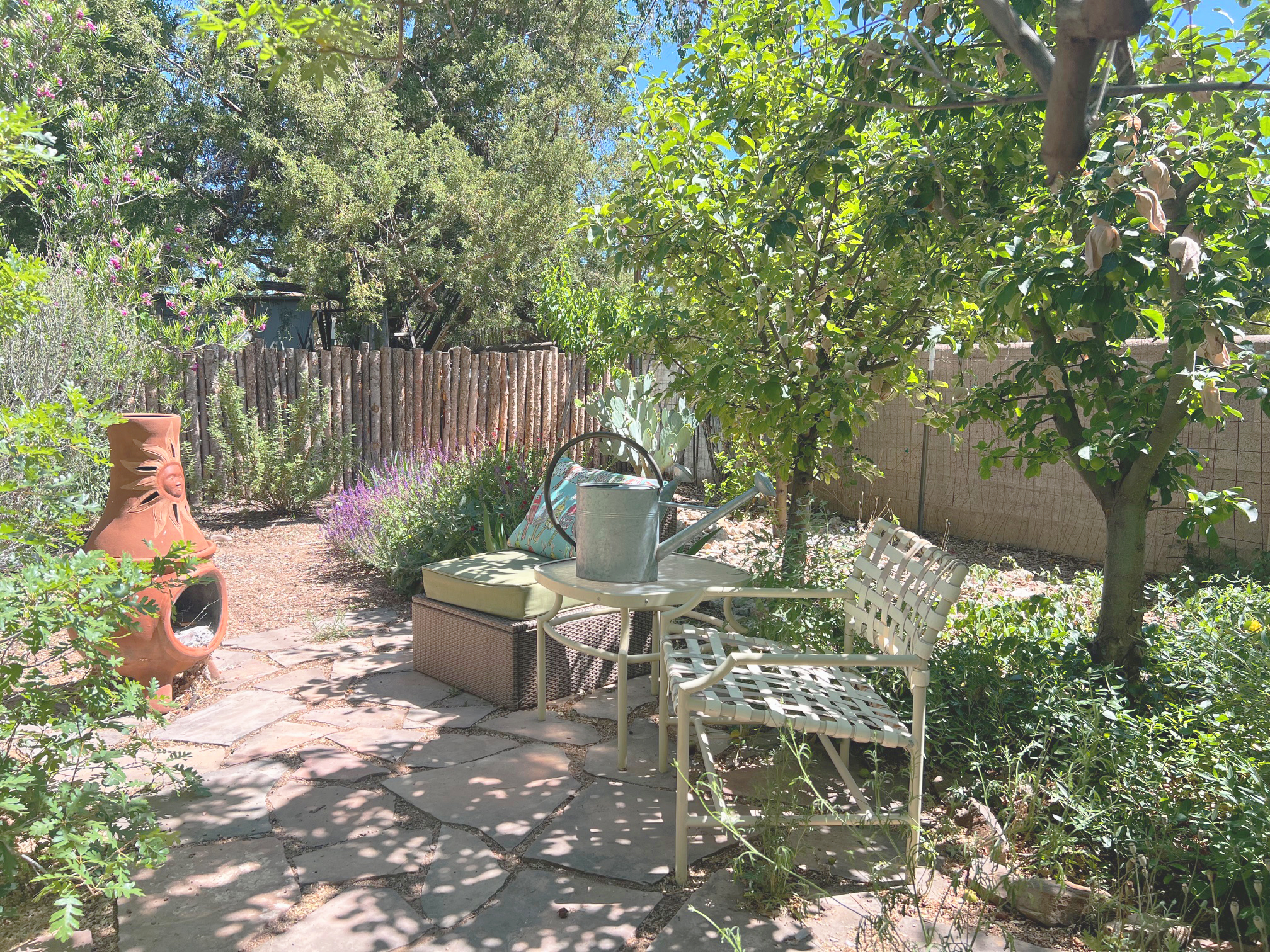
Patio Shaded by a dwarf apple tree.
Deciduous vs. Evergreen Trees
Deciduous trees lose their leaves in winter, making them ideal near south-facing windows and outdoor living areas because sunlight filters through the bare branches and helps naturally warm the home. During summer, their canopy provides cooling shade.
Evergreen trees, on the other hand, provide year-round screening and shade. While useful for privacy and wind protection, they can also block beneficial winter sun if placed too close to living areas. Understanding this difference is essential when planning a landscape that functions comfortably throughout the year.
Shade Sails: Modern Shade with Hidden Challenges
Shade sails have become increasingly popular because of their clean, modern appearance, simple installation and affordability. They can create dramatic outdoor spaces while providing significant relief from direct sun exposure. However, they are frequently installed incorrectly. What many homeowners do not realize is that shade sails behave much differently than traditional patio covers or pergolas. Under tension, the fabric acts similarly to a sail on a boat, capturing wind and placing enormous stress on posts, walls, and attachment points. Without proper engineering, failures are common.
Shade sails and shade fabrics are available in different shade densities, typically measured by the percentage of sunlight and UV rays blocked by the fabric. Lighter fabrics in the 50% to 70% range allow filtered light and maintain a more open feeling. Heavier fabrics in the 80% to 95% range provide greater cooling and UV protection but can create darker spaces with less airflow. For many residential applications, fabrics in the 70% to 90% range offer the best balance between comfort, openness and temperature reduction. These are not to be confused with the shade fabric used by farmers to reduce heat stress on their crops. These are lighter in weight and only provide 10-30% shade
One of the most common installation errors is underestimating wind loads. Many off-the-shelf systems are installed with insufficient footings, undersized posts or weak wall attachments. Over time, this can lead to sagging fabric, leaning posts, torn corners or even structural failure during high winds.
Another frequent mistake is installing shade sails completely flat. Properly designed sails use varying heights and angles to encourage drainage, maintain tension and reduce wind uplift. Flat sails tend to collect water and deteriorate more quickly.
Homeowners also often overlook maintenance and lifespan. Even high-quality shade fabrics eventually degrade from UV exposure, dust and wind fatigue. Most residential shade sails last approximately five to 10 years, depending on material quality and environmental conditions. In windy and snowy climates, some shade sails may need to be seasonally removed or designed with additional reinforcement systems.
Shade sail fabric stapled to wood beams.
Pergolas: Permanent Structure with Architectural Appeal
Pergolas provide a more permanent and structurally reliable shade solution in many residential settings. Unlike shade sails, pergolas integrate directly with the architecture of the home and help define outdoor living spaces. They can support climbing vines, retractable canopies or additional shade elements while creating a strong visual framework within the landscape.
However, pergolas are often misunderstood as complete shade structures. Traditional pergolas provide filtered shade rather than full sun protection unless combined with solid roofing, shade panels or vegetation. The orientation of the pergola beams plays a major role in how much shade is created throughout the day. Beam spacing, height and direction should all respond to the sun angle and intended use of the space. A properly designed pergola balances shade, airflow and openness without trapping heat underneath the structure.
One of the least discussed, but most important aspects of outdoor shade structures is liability. Today, many pergola kits and shade systems are sold directly to homeowners online or through retailers. While these products may appear simple to install, they are often not engineered for specific site conditions such as local wind loads, soil conditions, drainage or attachment methods. If a structure fails, liability can become complicated.
Off-the-Shelf Systems
Prefabricated systems may place significant responsibility on the homeowner if improperly installed. In many cases, manufacturers provide general installation guidelines but not site-specific engineering.
Potential risks include
Wind damage
Structural movement
Pulling fasteners from walls
Water intrusion
Premature failure
Injury from collapsing components
Custom-Built Structures
With custom-built pergolas or shade structures, liability typically falls on the licensed contractor, engineer or fabricator responsible for the design and installation. Professionally designed structures generally include proper footing design, code compliance, engineering review when required, and better integration with the home.
For larger projects, homeowners should always verify contractor licensing, insurance coverage, permits and warranty information before construction begins.
Wood pergola connected to house.
Combining Shade Elements for the Best Results
The most successful landscapes rarely rely on a single source of shade. Instead, they combine trees, structures and planting design to create layered comfort throughout the property. Trees provide long-term cooling and seasonal benefits. Pergolas create usable outdoor rooms and architectural character. Shade sails are affordable and offer targeted protection in areas where flexibility or modern aesthetics are desired.
Together, these elements can transform a yard into a comfortable extension of the home while improving energy efficiency and increasing long-term property value.
Shade should never be treated as an afterthought. When carefully planned, it becomes one of the most important and functional aspects of landscape design.
Local landscape architect Sara Zahm shares what she sees as trends coming to residential landscapes in Albuquerque.
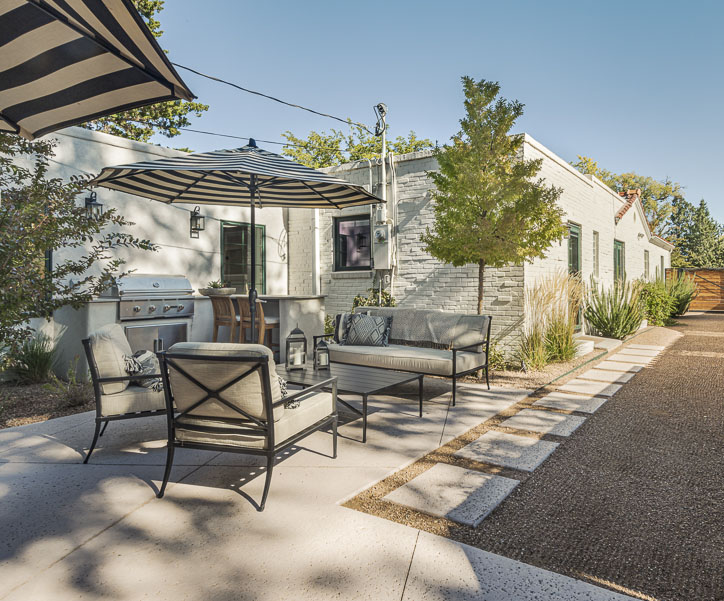
As we move into 2026, I’m seeing a meaningful shift in how homeowners are approaching their outdoor spaces. Many previously popular landscape elements are still in demand, including raised garden beds, comfortable seating areas, fire pits, outdoor dining spaces and fully equipped kitchens, but the purpose behind these features is transforming. Today’s outdoor spaces go beyond aesthetics, focusing on creating environments that promote relaxation, restoration and well-being.
More than ever, people want their yards to function as personal sanctuaries. In a world that often feels noisy and unpredictable, home has become a place to reset and recuperate. Outdoor spaces in particular are being designed intentionally as environments where families can decompress, recharge and reconnect.
The strongest trend I’m seeing this year centers around wellness. This isn’t a surprise as more and more studies are showing the profound benefits nature has on both physical and mental health. In Japan, physicians are writing prescriptions for “forest bathing” and “nature therapy.” Dr. Kathleen L. Wolf from the University of Washington has learned from her research that “exposure to trees and forests can have profound benefits for psychological health. Whether climbing a majestic old-growth tree or simply walking through a foliage-filled park, people who spend time in nature often report they feel less stressed, are better able to concentrate and generally experience a lift in mood. Some even say it helps heal trauma.” *
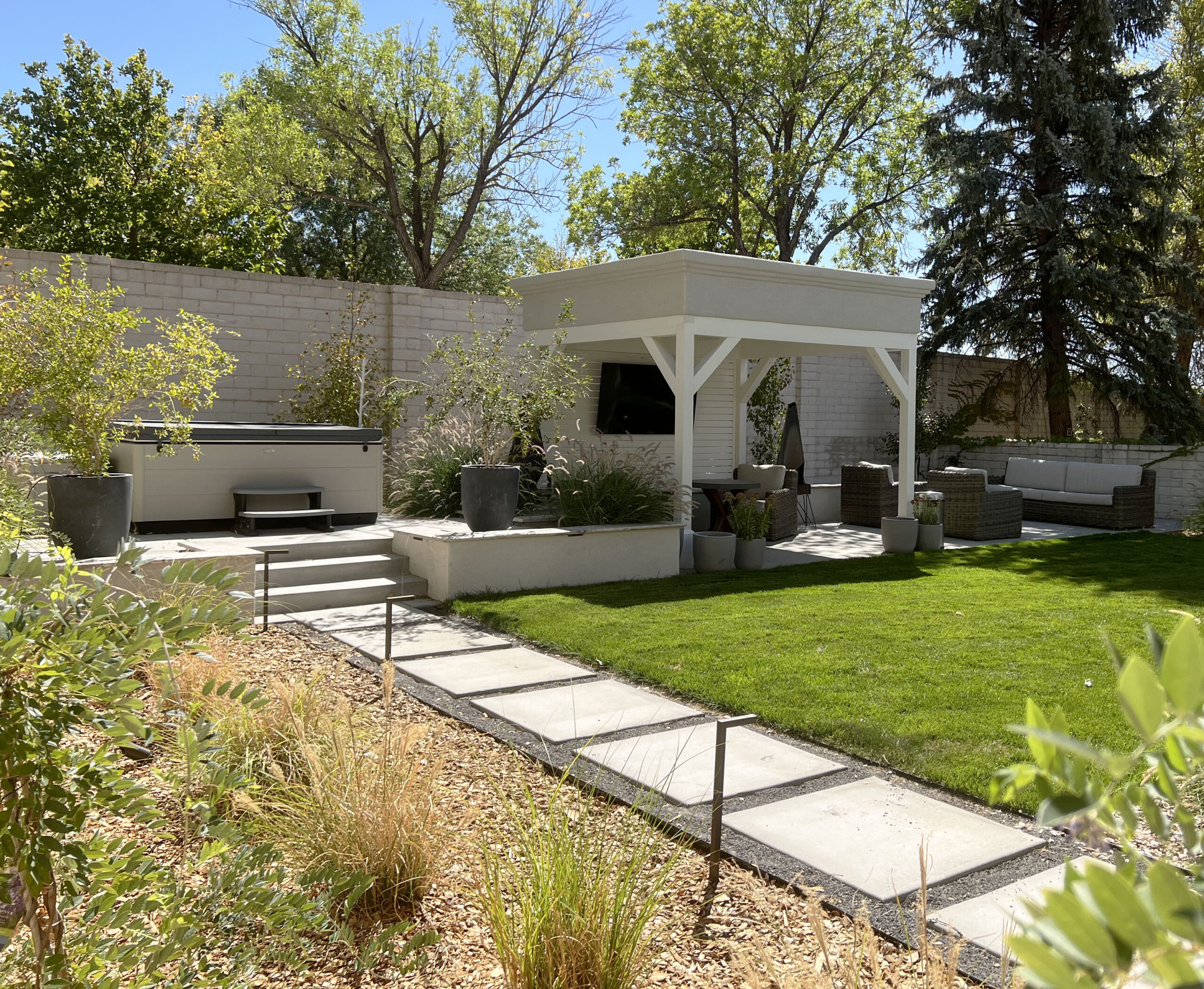
Homeowners are incorporating outdoor saunas, cold plunges and hot tubs into their landscapes — not simply as luxury additions, but as tools for physical and mental well-being. These elements create a spa-like experience at home, offering daily opportunities to relax, improve circulation, reduce stress and recover from busy schedules. When thoughtfully integrated into the design, they feel cohesive and purposeful rather than over-the-top.
I’m also designing more dedicated spaces for mindfulness and quiet reflection. Sometimes that looks like a tucked-away seating area framed by lush plantings. Or it’s a shaded pergola with comfortable furniture positioned to catch the morning light. These spaces don’t have to be elaborate to be effective. What matters most is how they feel. I pay close attention to texture, sound, scent and movement, like the rustle of ornamental grasses, the fragrance of blooming plants and the grounding feel of natural stone underfoot. These subtle details shape an experience that encourages people to slow down and reconnect with nature.
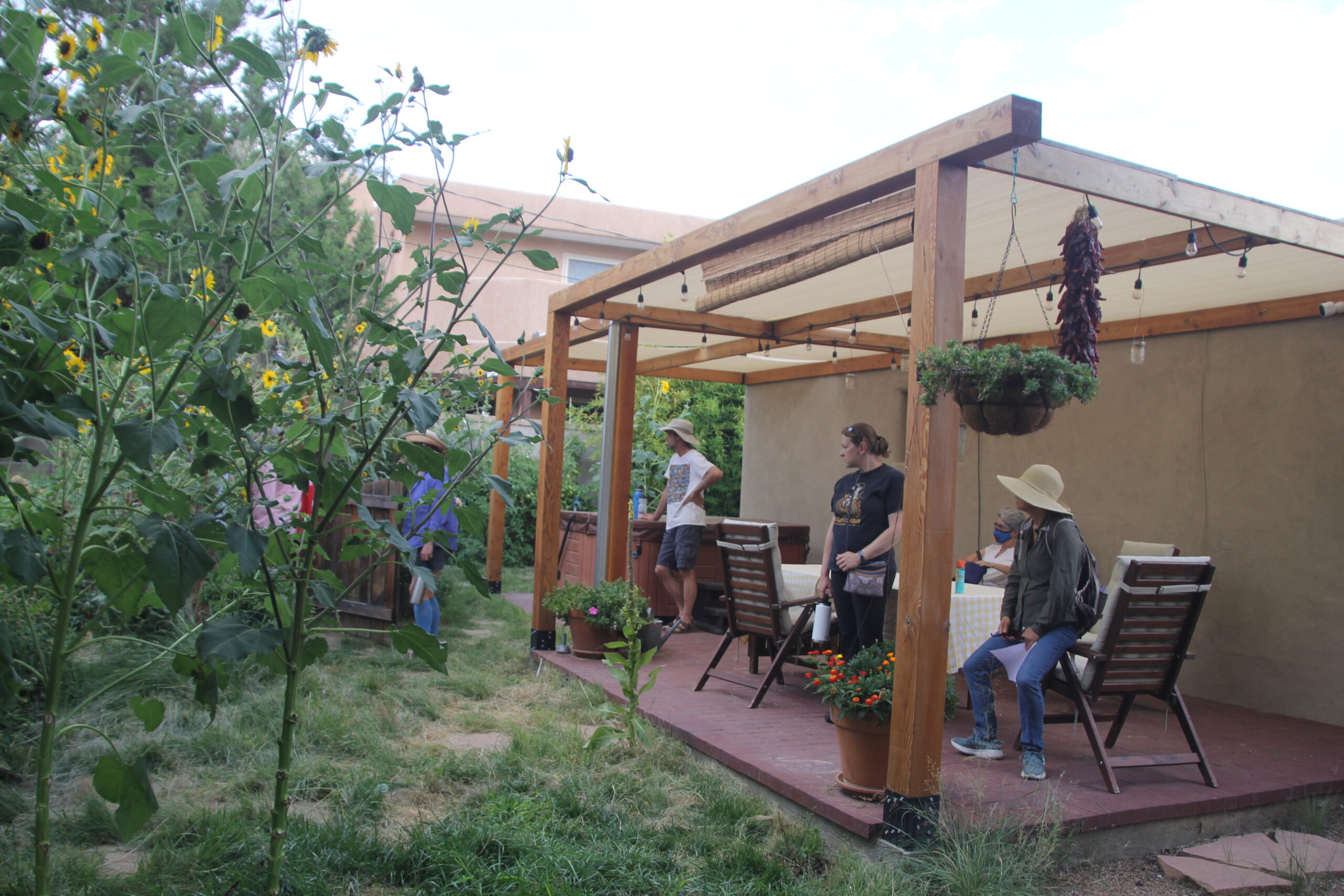
Backyard hot tub, outdoor entertainment and lounge area.
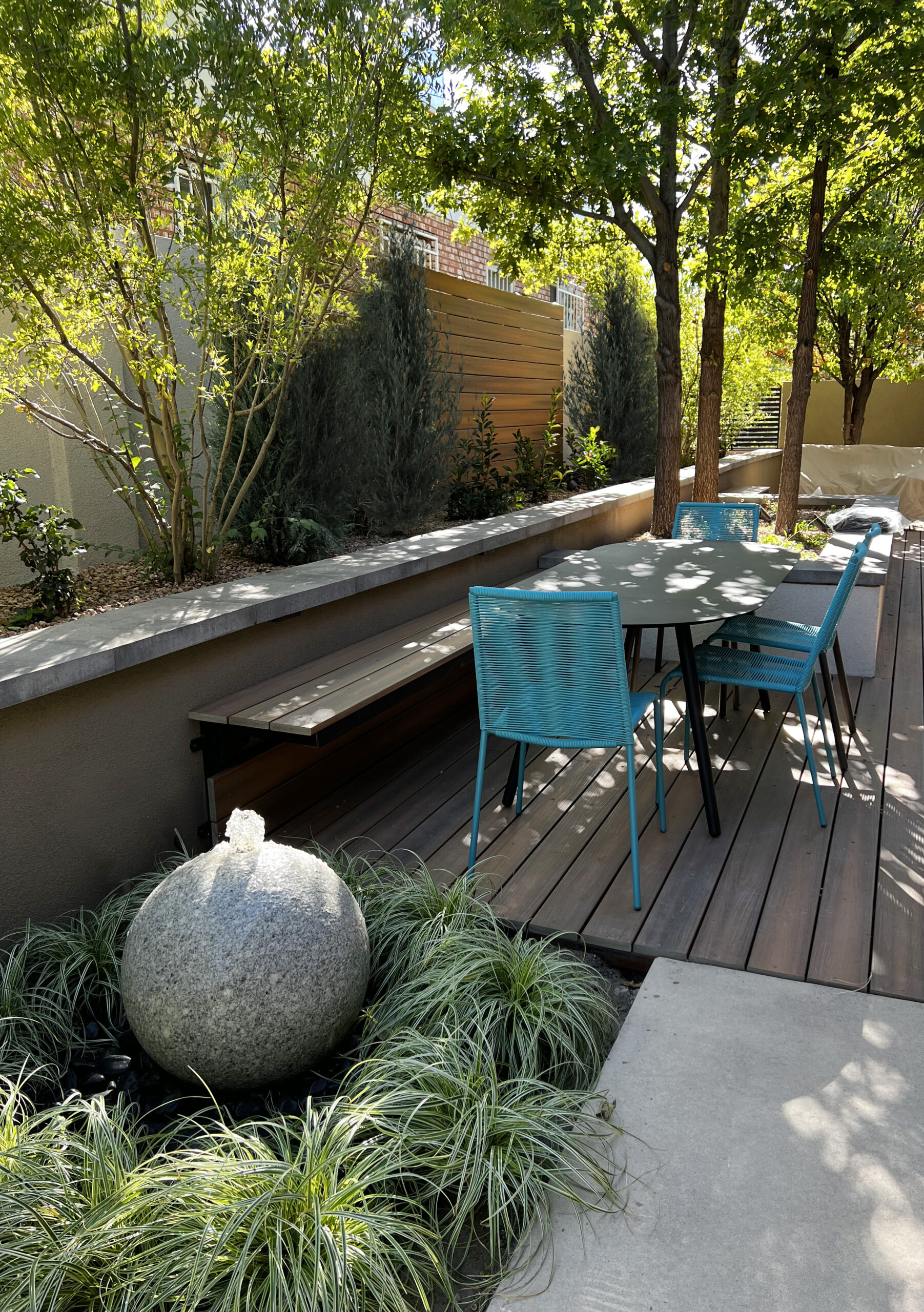
Water features continue to play a significant role in designs as well. Beyond their visual beauty, they serve a practical function, especially for homes near busy streets or close neighbors. The sound of moving water helps mask unwanted noise and creates a sense of privacy. There’s something inherently calming about the steady rhythm of a fountain. Having a source of water is important for supporting and attracting wildlife in yards and they can be very modest and water-efficient.
Water Feature in side yard.
Sustainability is also front and center in the conversations I’m having with clients. Many homeowners are choosing native plantings, drought-tolerant landscapes and pollinator-friendly gardens that support the local environment and our wild neighbors. Raised garden beds are especially popular, giving families the opportunity to grow their own herbs and vegetables while maintaining a tidy and intentional look. I love incorporating edible gardens into designs because they encourage people to engage with their space regularly — to plant, cultivate, harvest and spend time outdoors in a meaningful way.
Lighting design is another area where I’m seeing a shift. Clients are gravitating toward layered, ambient lighting that creates warmth and depth. Subtle pathway lights, gentle uplighting on trees and soft illumination around gathering areas make a yard feel inviting long after the sun sets. The goal isn’t to flood the space with light, but to enhance the atmosphere and extend its usability.
Even traditional gathering spaces are being approached more intentionally. Fire pits are arranged to encourage conversation. Dining areas are designed for lingering meals rather than quick get-togethers. Outdoor kitchens are integrated so hosts can cook and connect at the same time. These spaces aren’t just about entertaining; they’re about fostering genuine connection between people and nature.
If there’s one defining theme I see shaping outdoor design in 2026, it’s intentional living. Backyards are becoming immersive retreats, places designed not just to look beautiful, but to support how we want to live. They give us space to unplug, reflect, gather and restore. As a landscape architect, that’s what excites me most. Incorporating elements in your yard that allow you to connect with nature and slow down. The escape from the unrelenting digital world of screens doesn’t have to be expensive or time consuming and can have significant health benefits. Creating outdoor environments that truly enhance daily life isn’t just a trend, it’s a lasting shift, and I believe it’s one that will continue to shape the way we design our homes for years to come.
From the leafy corridors along the Rio Grande to the resilient specimens lining our streets and parks, trees are much more than just scenery — they are essential to our health, happiness and sense of place. Residents and visitors alike have come to appreciate, love and depend on Albuquerque’s urban forest, which transforms our city in countless ways.
For many, the presence of mature trees is a sign of a thriving, welcoming community.
The City of Albuquerque’s Urban Forestry staff has taken an active role in cataloging and celebrating the city’s best tree specimens. The Urban Forestry team within Parks and Recreation maintains a list of “champion trees” — remarkable individuals recognized for their size, age, beauty or historical significance.
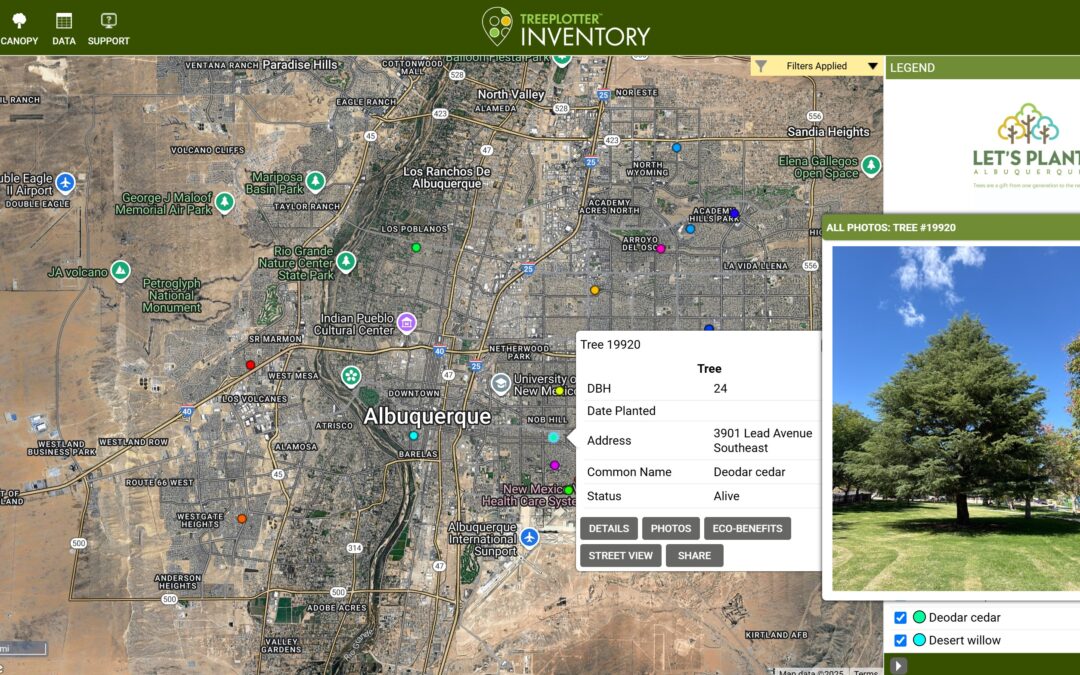
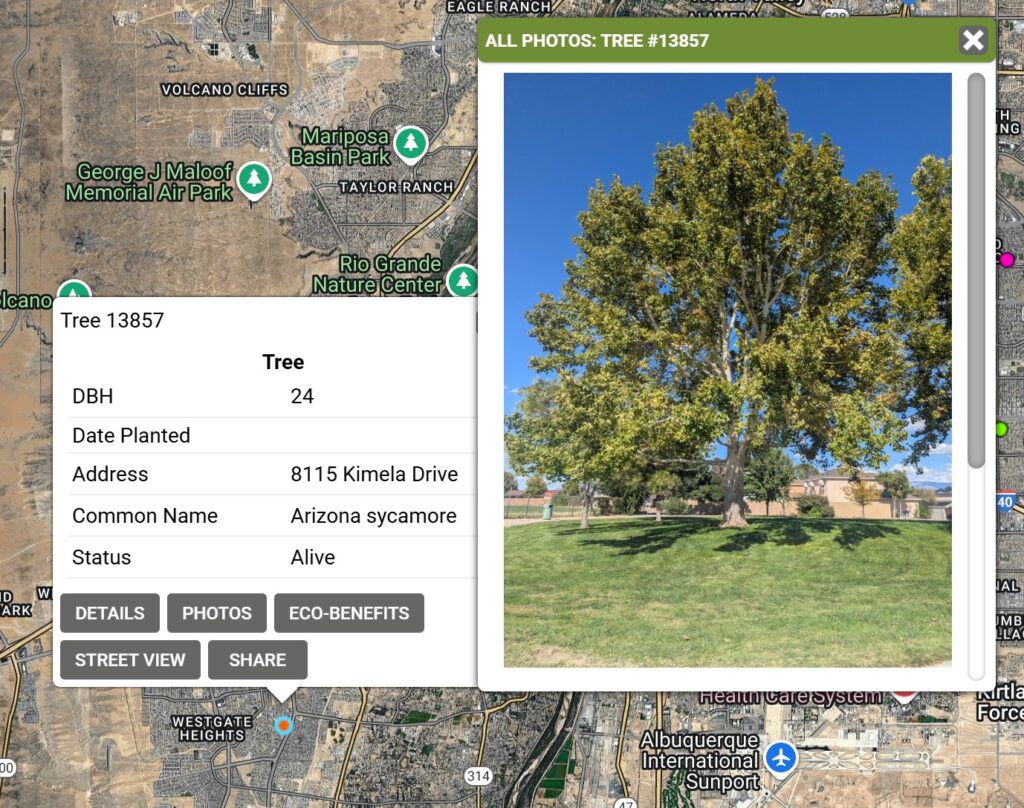
The City of Albuquerque’s Champion Tree GIS site shows the locations of all 23 Champion trees around public spaces managed by the city and includes information on their species, size, history and unique features. To use, simply click on one of the circles to learn all about the specific tree, its properties and its location.
Whether you’re a lifelong resident or a newcomer to Albuquerque, exploring the city’s champion trees is a unique way to visit our numerous parks and streetscapes plus celebrate the trees that make our urban environment vibrant and resilient.
In addition to managing 30,000 trees across 300 city parks, Urban Forestry has launched the Let’s Plant ABQ initiative. This initiative aims to plant 100,000 trees by 2030 to provide one tree for every child as a gift from one generation to the next. To track these trees, Urban Forestry uses software called Treeplotter for inventorying, planning and growing our urban canopy. As well as tracking Champion trees, Urban Forestry maintains a robust inventory of all trees in city parks where residents are welcome to explore our urban canopy, including ecosystem benefits of our trees. Urban Forestry’s data aids in informed decision making for urban designs and developments. Understanding what we have can help us preserve and enhance our urban forest.
Let’s continue to love, depend on and protect the trees that make Albuquerque a truly special place to live. You can help by planting more new trees; check out the Water Authority’s Treebates.



 Floodwater Mosquito
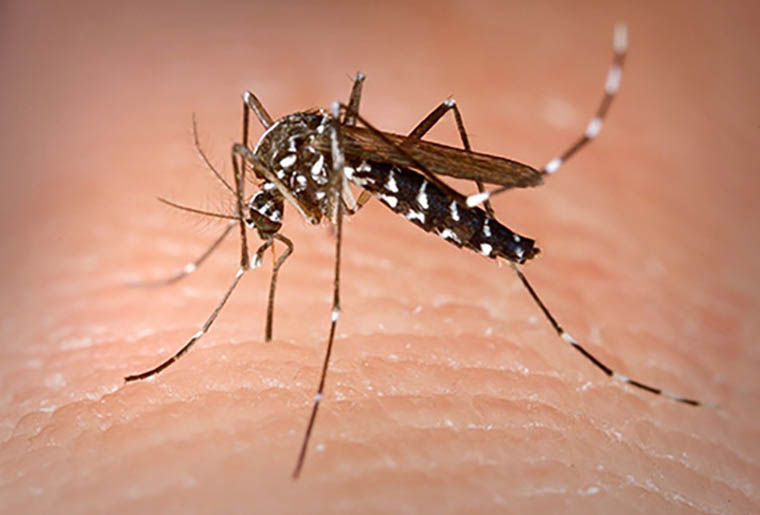 Yellow Fever Mosquito