Folks, it’s a hot, dry summer here in central New Mexico. No surprise, you say — we live in a desert. Even for our location, though, it’s hot and dry. This creates a little conundrum for us: keeping our landscape plants growing while using water efficiently.
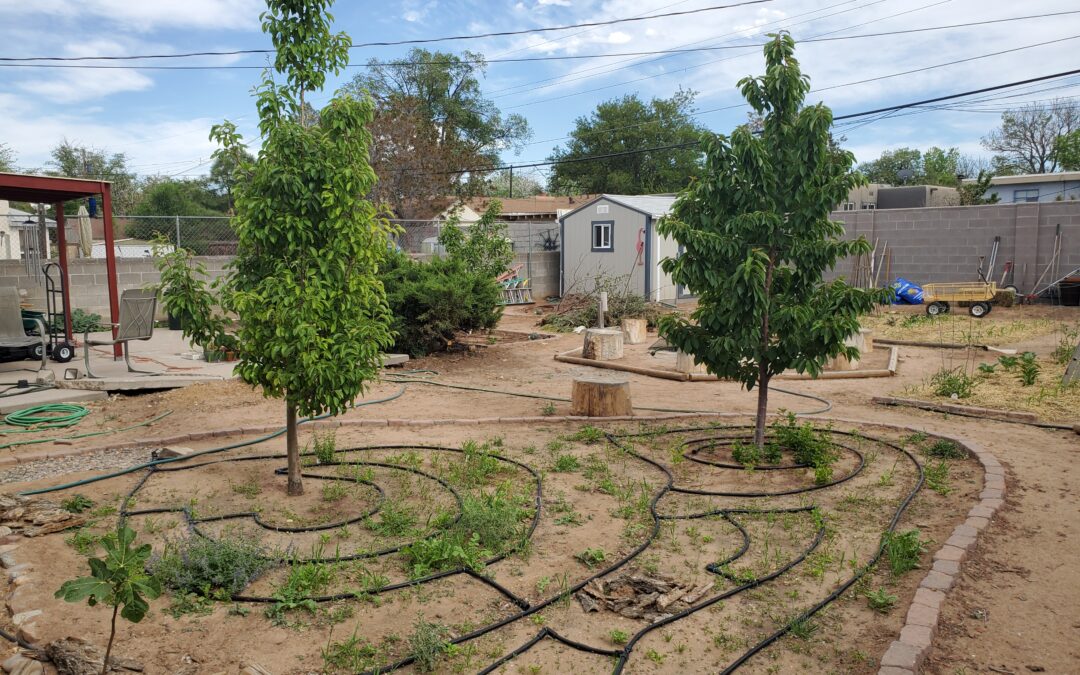
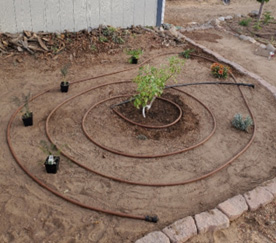
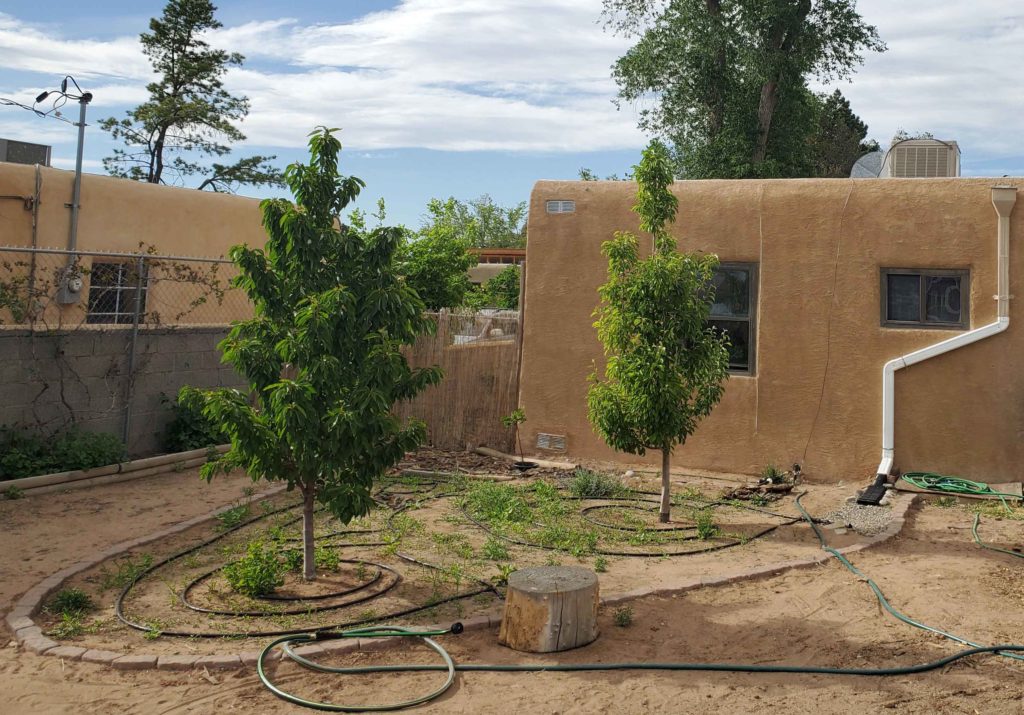
Tree and surrounding plants being watered by inline drip irrigation.
This applies especially to trees because as large plants with lots of leaves, they need regular adequate water for their size and species to remain happy and continue creating positive benefits for your yard and the city as a whole. Call that a biological law and reality. As temperatures go up, trees’ water demand goes up. That is a good starting point to keep in mind — in times of drought, you should water your trees a little more frequently than you would in a year with abundant rainfall.
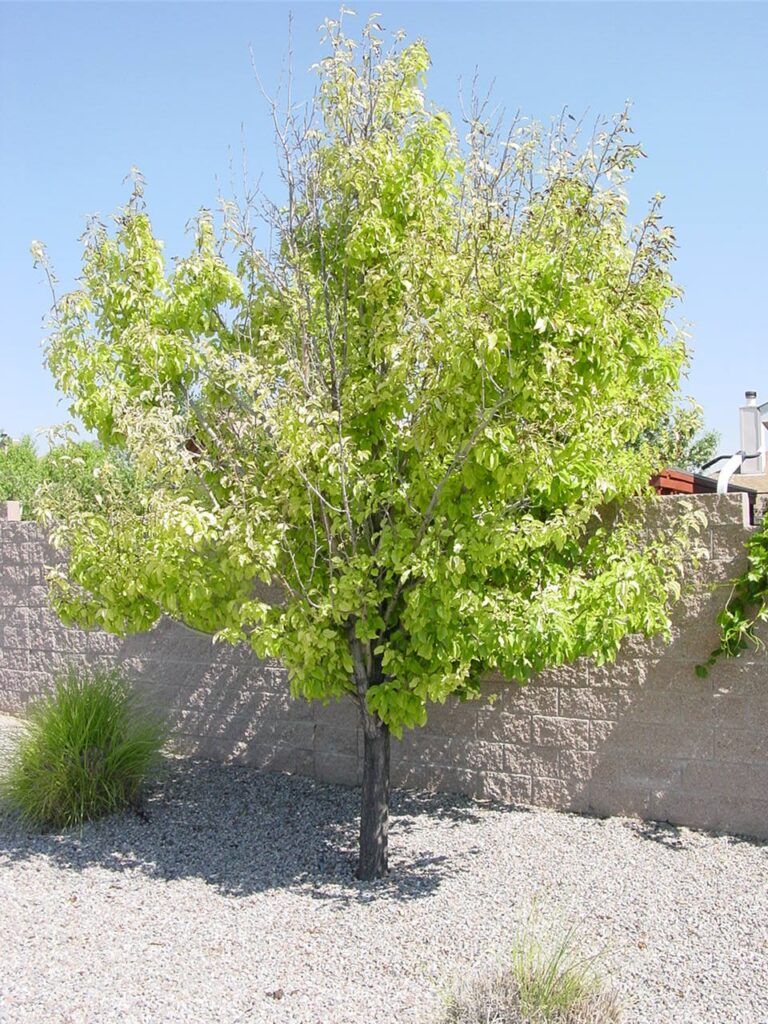
Drought stressed tree showing missing leaves and yellowing.
It turns out that over 90% of the water that comes into a tree simply escapes through the leaves as water vapor; the tree keeps very little water inside to grow. This loss of water vapor provides the “suction” that causes more water to enter the root system. It also cools the leaves and keeps them within comfortable working temperatures. Someone once said trees (and plants generally) have figured out a way to guide the natural movement of water from soil to atmosphere, channeling it through their bodies and using it to grow and function, which is one part of the water cycle. Having trees increases moisture in the air, allowing your swamp cooler to perform better.
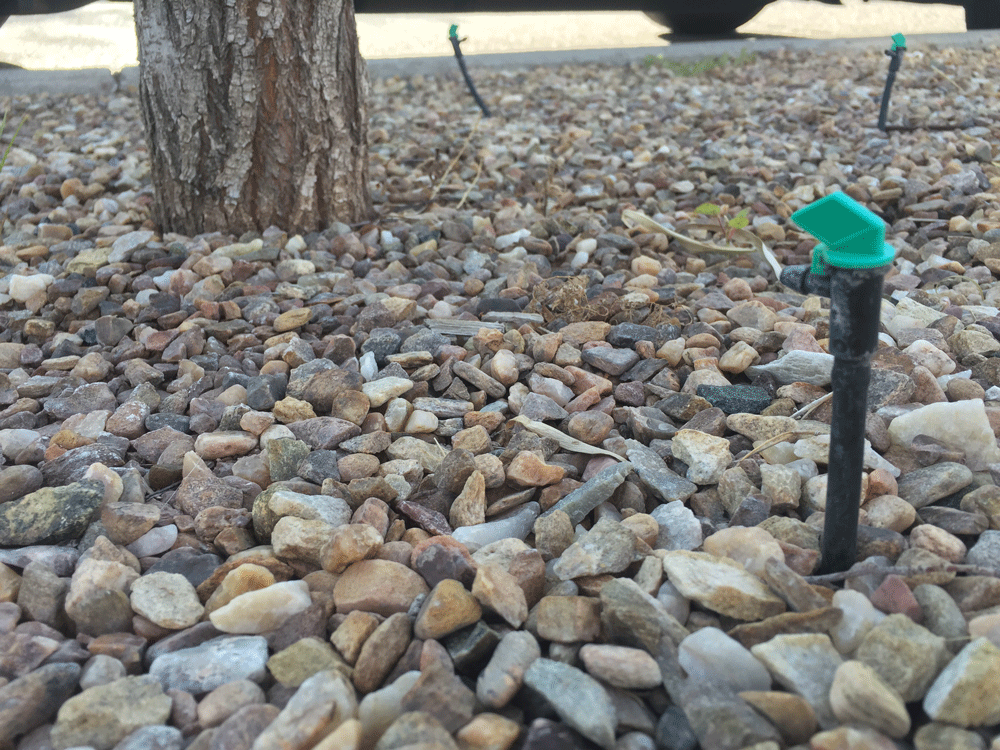
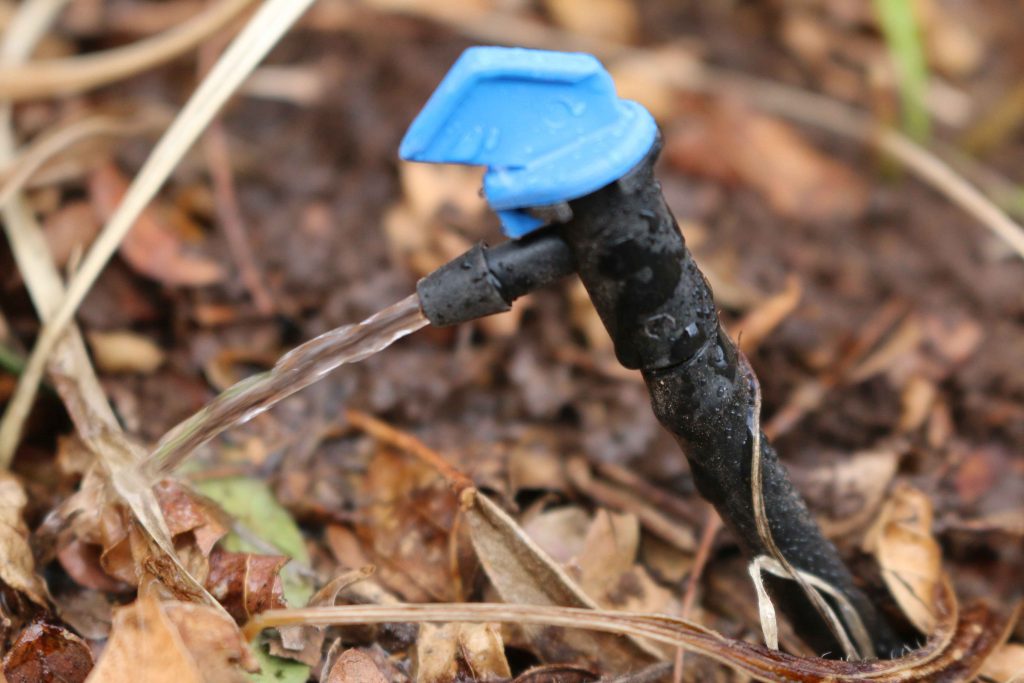
Trees “drink” very differently than you and I. We have one fairly large mouth into which all the water goes. However much we need, we have one target to hit in order to drink that water. Trees, on the other hand, take water in through their tiny, young roots out in the soil. Water has to get to a lot of soil in order to hit enough of those “mouths” to matter. A lot of tree irrigation eventually fails because there are only a few emitters (and those are often too close to the trunk). Those few emitters cannot put out enough water to satisfy the tree’s demand, nor do they wet enough surface area. (See examples in the photos below.)
Drip emitters located very close to the tree trunk.
What matters to a tree is the volume of water it has to work with. That volume is entirely dictated by the volume of soil that is holding water. And THAT volume is dictated by the surface area that received and absorbed water. The key is to disperse the water throughout the main root zone and do it in a way that allows the water to soak in where applied and not flow to low spots on the ground (which often are gutters. Science has found that most tree roots are located within the top three feet of the soil surface and quite likely even more shallow in landscapes that have not been deeply irrigated for the life of the tree, which is a common condition in Albuquerque.
To properly water your trees, you will need some sort of irrigation system. It could be a bucket you fill from the sink or a state-of-the-art sensor-controlled automated drip system. But somehow you need to put water on the soil surface in a slow, controlled manner so that it can soak into the soil where it is applied. While buckets and hoses work, their simplicity makes them very labor intensive. In-line emitter drip tubing, laid out in a spiral or concentric circles, does a much better job. Once in place, these drip systems can be set to run for two to four hours at a time, about once a week during the hottest part of the year and less often during other seasons. Irrigation improvements qualify for the Water Authority Treebate. See our rebates here.
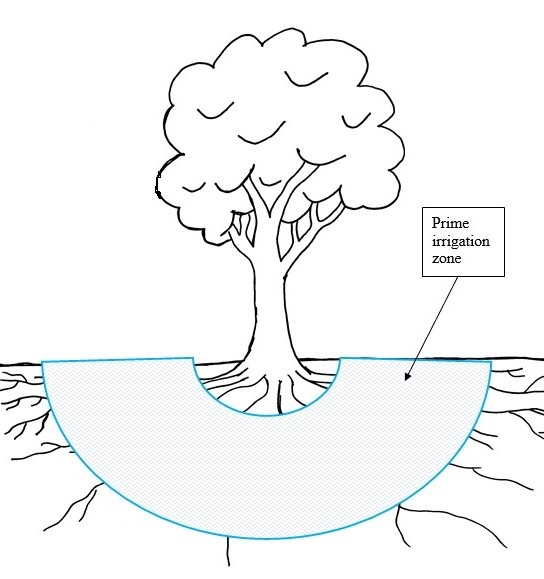
The ideal target area to irrigate is both theoretical and grounded to the reality of the site. Imagine a donut shaped area centered around the tree trunk. The trunk sits in the center of the donut hole. The body of the donut begins halfway between the trunk and the edge of the branch canopy and extends some distance beyond the edge of the canopy. This theoretical donut represents the ideal critical irrigation zone.
Now enters site reality — maybe there is a house or driveway or sidewalk covering part of the donut (or all three, with the tree located in a tiny unpaved space). We don’t want to encourage root growth at the house foundation, so don’t water within a couple of feet of it. Similarly, where concrete or asphalt covers the soil, root growth is moisture-limited and concentrated immediately under the impervious cover and under any planned or accidental cracks that allow rainwater to slip through. Ideally, we don’t want to water next to the pavement. The more of the donut that is unavailable for watering, the more often you may need to water the limited areas of open soil. Even so, it may simply not be enough soil volume to support the tree, which will then decline. In that case, replace it with a nice xeric shrub!
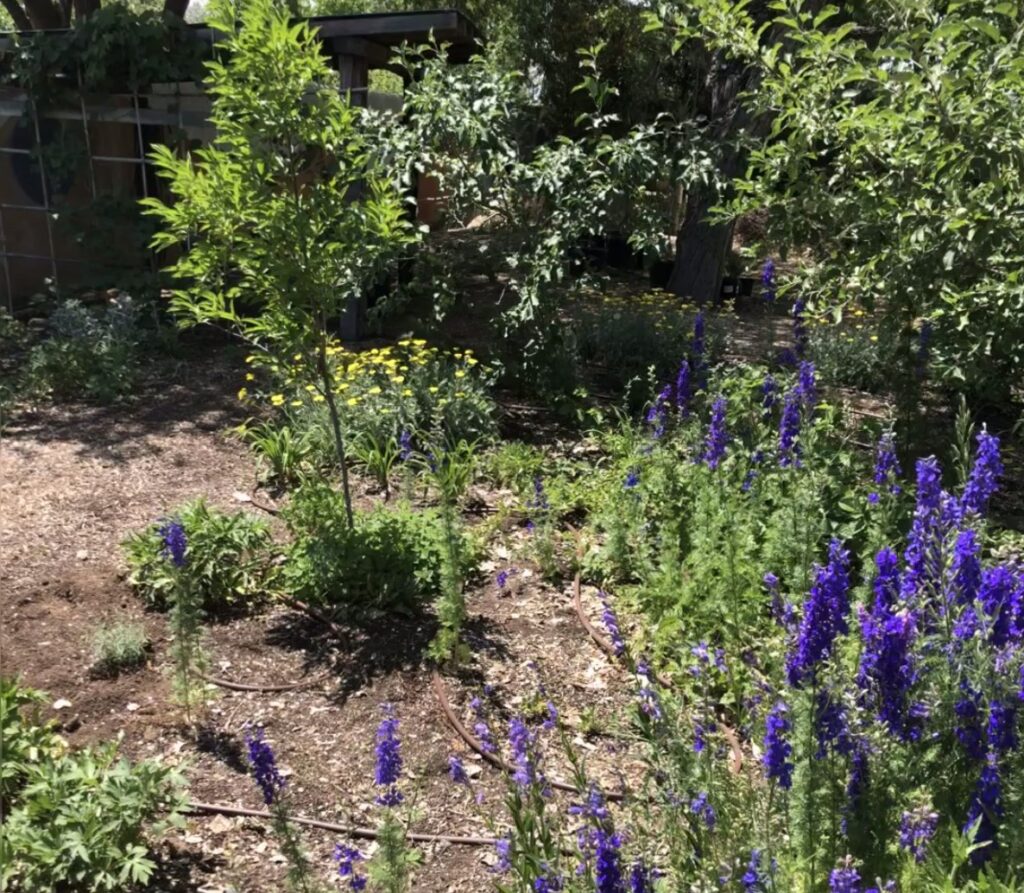
Recently installed drip tubing around a newly planted Mexican elder and some to-be-planted fennel. Both of those plants are excellent pollinator forage. A 4-inch depth of wood chip mulch will be installed over the top.
Author: Joran Viers is an arborist at Legacy Tree Company. Contact him at [email protected]. He’ll be speaking about this topic in greater detail on July 25. Sign up here. Have a question about the article? [email protected]
The Water Authority’s desert friendly xeriscape conversion incentive rebate has been around since the early ’90s and is still going strong. Millions of square feet of thirsty lawns have been converted to healthy xeriscapes that save billions of gallons of water. Although the rebate application process has a few more steps than our other rebates, our experts are here to help you along way. Remember to contact our xeriscape inspector, Carl Christensen, [email protected], before you stop caring for your lawn or start tearing it up.
Water Authority residential customers who convert their landscapes to desert friendly xeriscape and use drip irrigation can qualify for a $3 per square foot rebate.
The rebate area of your new landscape must have 50 percent coverage (at maturity) of qualifying low- to medium-water-use plants, and the soil between and beneath all plants must be covered with at least three inches of mulch (organic mulch, gravel, etc.).
If you are interested in participating, please don’t start removal your grass until you have applied online to the program and received an official notice to proceed.
Several conditions must be met to qualify for the rebate. Projects that have been started or completed are not eligible for the incentive, and other terms and conditions apply. After submitting your application online, your project will be screened to ensure it meets minimum requirements and an inspection will be scheduled. The visit may take up to three weeks or more to schedule during the busiest part of the season. Water Authority conservation rebate requirements are subject to change without notice. Rebates are limited to available funds.
Does Your Landscape Meet the Requirements?
Do you have an operating spray irrigation system on your site?
Do you have grass turf on your site?
If you answered yes to the above questions, then go to Step 1 below.
Have more questions? Call 842-9287 and choose option 4 to learn more or check out our xeriscape conversion web page for rebate requirements and more.
Step 1: Develop A Landscape Plan
Draw a simple landscape plan or submit a plan designed by a professional. Use the approved desert friendly plants from our Xeriscaping Guide plant list. List each plant (using the scientific name) and rebate allowance points on the application.
Step 2: Start Your Online Application
Click here to set up your online application. You will need to log in or create a Water Conservation Portal account.
Step 3: Schedule Your Initial Inspection
Be sure you have set up and filled out your online application. Then call (505) 289-3026 to schedule the initial inspection at your property. Initial inspections occur between 9:00am-2:30pm Monday through Friday. Please allow three weeks for availability.
Step 4: Proceed With Your Project
Once your online application has been approved, you may begin your project. Funding will be reserved for the anticipated amount of your rebate, and you will have six months to complete your project. If you need more than six months, you may apply for a project extension provided funds are still available.
Step 5: Schedule Your Final Inspection After Completing the Project
Have hard copies of material receipts or a contractor’s final paid invoice available for the final inspection. Following final inspection and application approval, the Water Authority will apply the rebate credit to your water bill. Your rebate should appear on your water bill one to two billing cycles after your form is processed.
In celebration of five years of bringing you 505Outside, we’d like to share our most popular articles from the website. 505Outside is your resource for beautiful, desert friendly landscapes. Desert friendly landscapes are resilient, sustainable, enjoyable and inspiring.
The articles below are the ones our community keeps coming back to year after year, month after month.
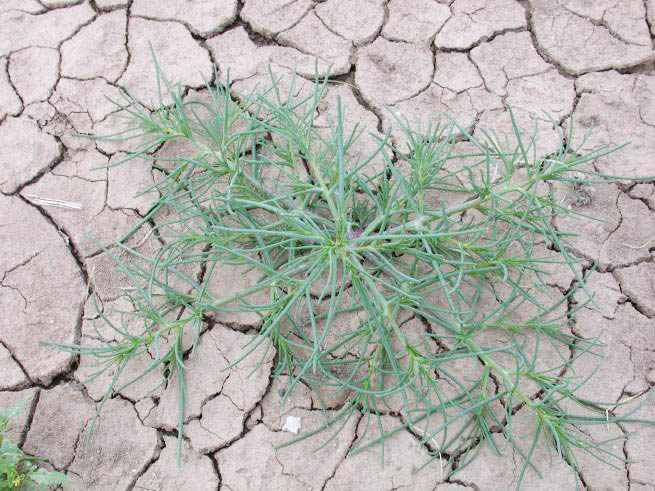
The Dirt on Albuquerque Weeds There are two times a year in the greater Albuquerque area when weeds can get out of hand. This happens typically in early spring after a wet winter and after a monsoon season in late summer. The first thing to do is to identify the plant and decide whether it is actually a weed. This article reviews the most common weeds in town.
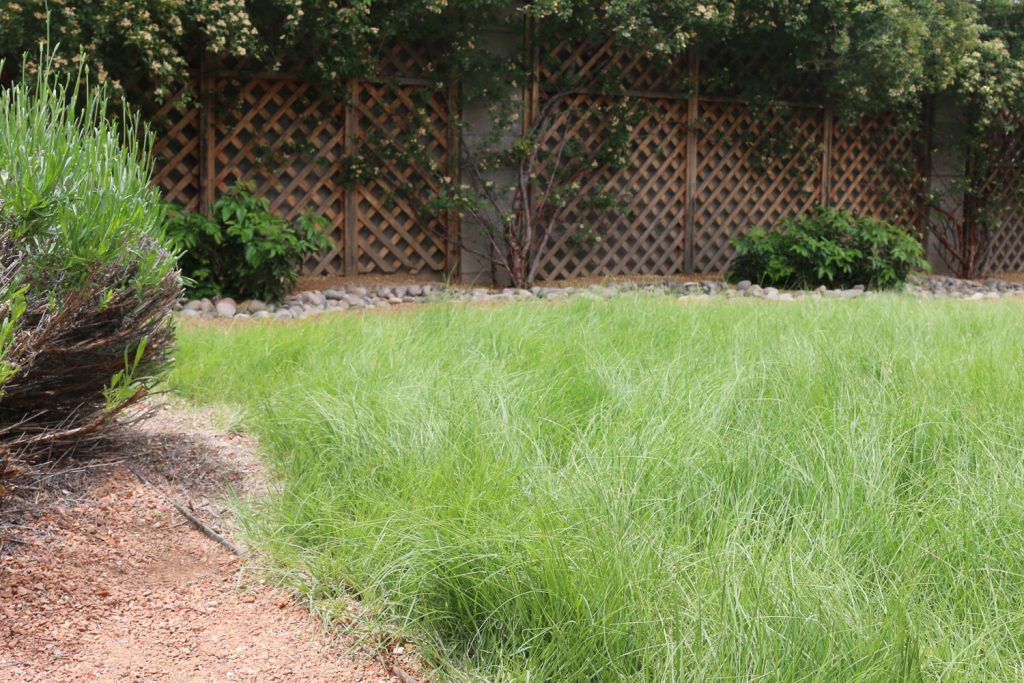
Basics about Turf Grasses in New Mexico Many homeowners would like a turf grass lawn, but might feel irresponsible watering a lawn in the arid Southwest. The key to choosing a turf grass is to determine the one most suited to the specific needs of your landscape. This article discusses four different grass types.
Use Drip Irrigation for Trees and Shrubs Drip irrigation is the recommended method of delivering water to shrubs, trees and all other plants that are not considered turf grasses. This article discusses the rules of thumb for irrigating trees and shrubs.
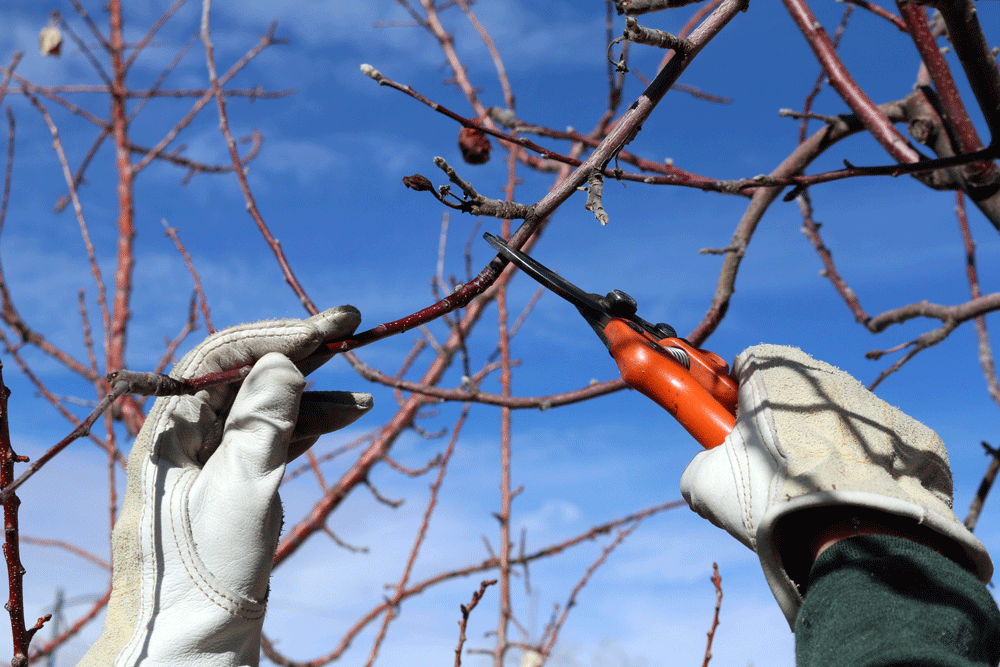
Basics of Fruit Tree Pruning All trees require some amount of pruning, especially when young, in order to set up good structure. Fruit trees have a few special considerations related to our intense sunlight, specific pests, and where on the tree the fruit is produced. This article covers the basics.
Three Ways to Water Established Trees. Trees are incredibly valuable and provide a wide array of benefits, from increasing home values to improving mental health. It’s more important now than ever to take care of your existing trees. This article outlines three strateties for watering your mature established trees.
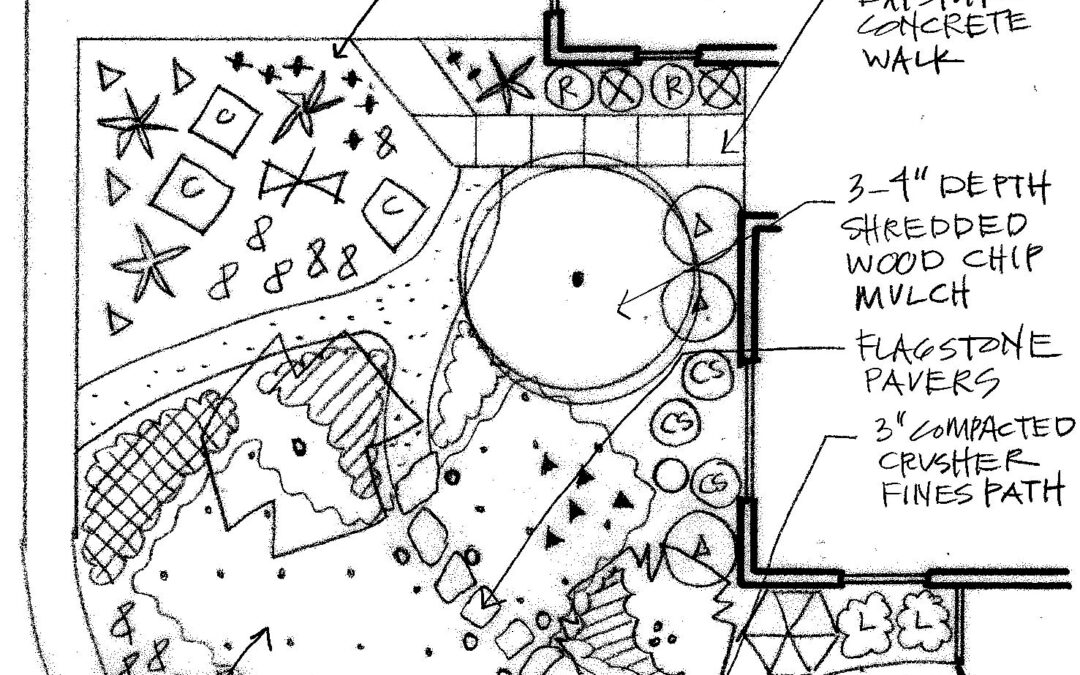
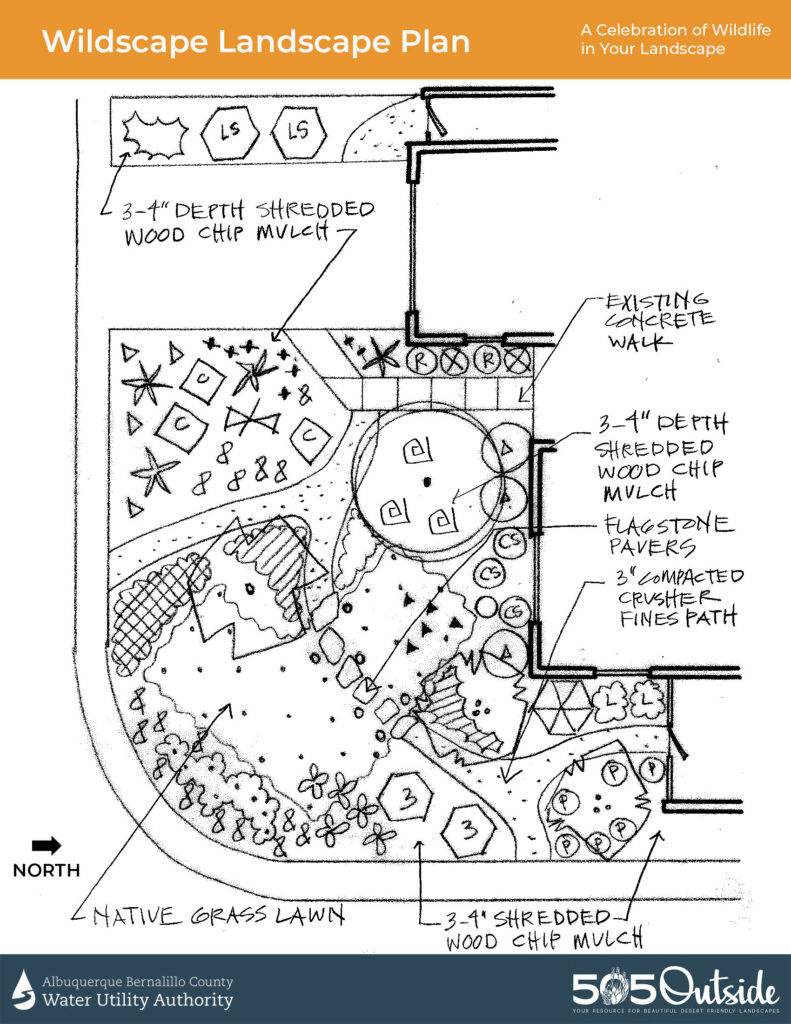
A lot goes into designing a landscape; hence, there’s an entire profession called landscape architecture devoted to designing outdoor spaces. We won’t be able to make you a landscape architect today, but we’re sharing a unique landscape plan designed by New Mexico landscape designer Judith Phillips to get you inspired with ideas for designing your own yard. We’ll be sharing five more landscape plans in future issues of 505Outside.
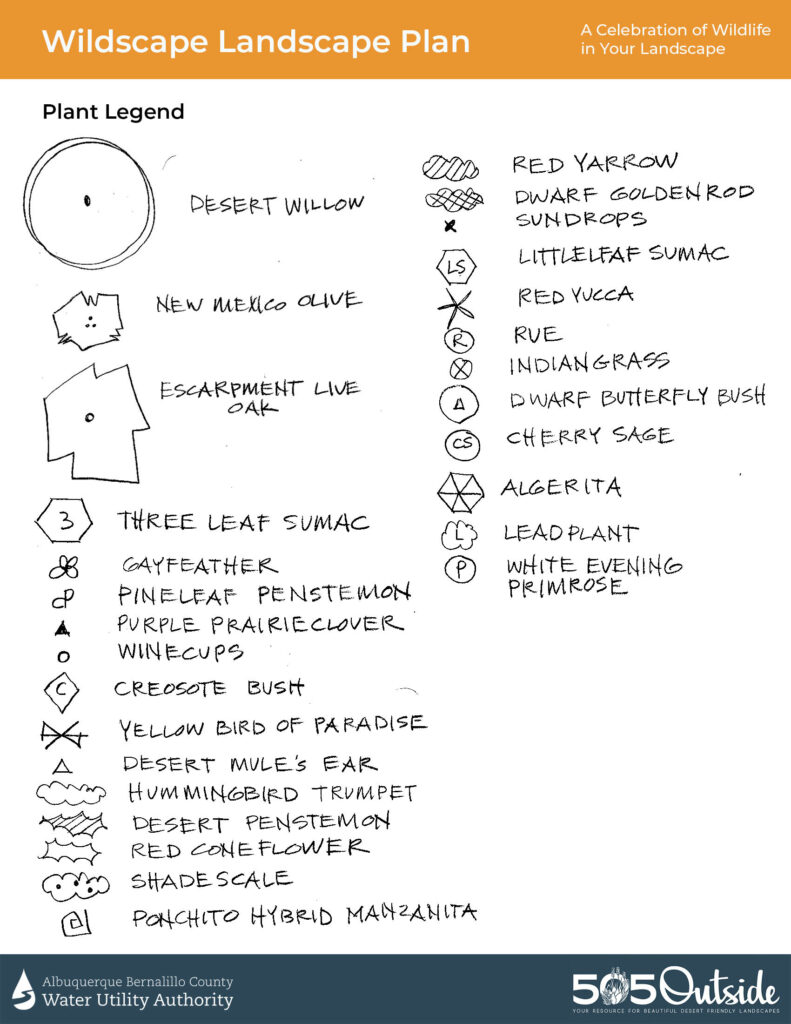
Plant for wildlife and you will host a never-ending garden party. Wildscapes should have tiers of canopy to provide shelter and food for a wide variety of wildlife, including birds, hummingbirds, bees and butterflies. Tall trees provide shade and shelter. Dense thickets of middle-height shrubs provide spaces for roosting and nesting and also give the landscape a sense of enclosure. Open areas with low-growing groundcovers provide areas for nesting and foraging, and the colorful flowers and berries appeal to people as well as winged visitors. A mix of evergreen plants for cover, brilliant flowers for nectar and pollen, and fruits and seeds ripening through the seasons will keep your wildlife friends fat and happy. In this wildscape, the gayfeather, dwarf goldenrod, leadplant, yarrow, rue, grasses and dwarf butterfly bush are lures for butterflies. Hummingbirds are drawn to plants with nectar-rich tubular flowers, such as desert willow, penstemons, cherry sage, coral honeysuckle and red yucca. Local songbirds and quail will be attracted by New Mexico olive, sumacs, creosote bush, desert mule’s ear, coneflowers, shadscale, gayfeather and algerita.
Designed by Judith Phillips, author of Plants for Natural Gardens
Learn more about specific types of gardening here:
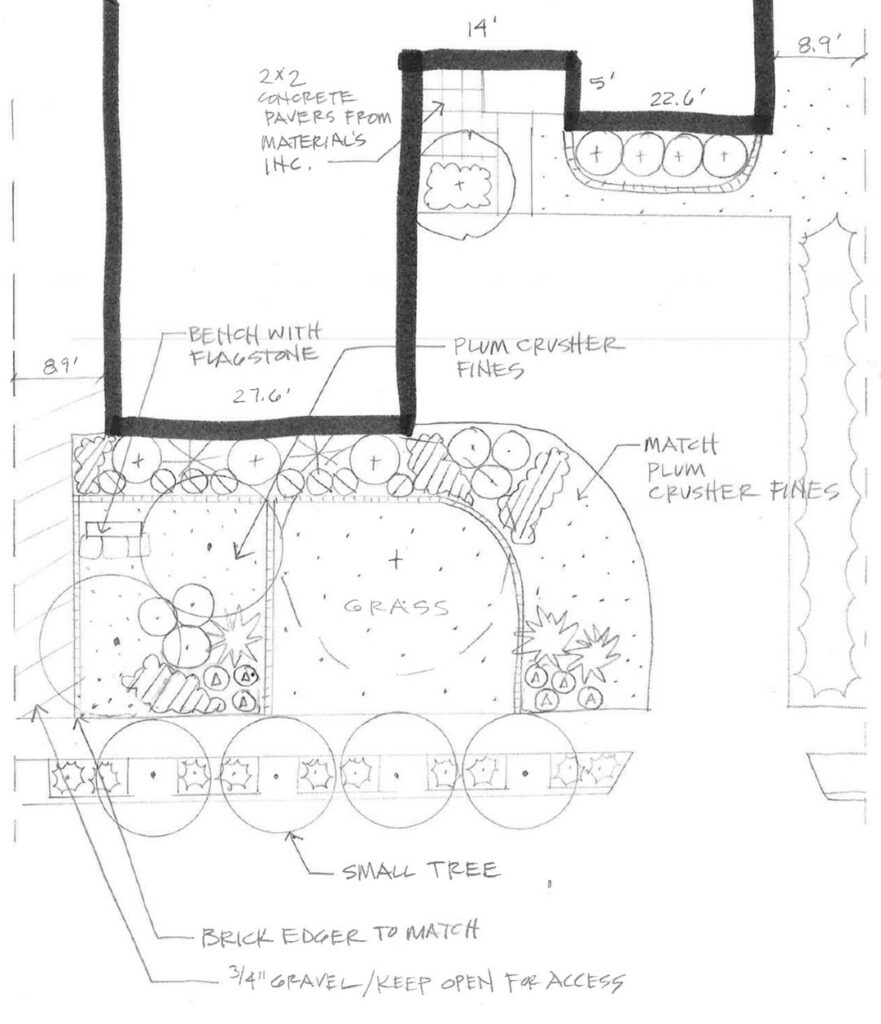
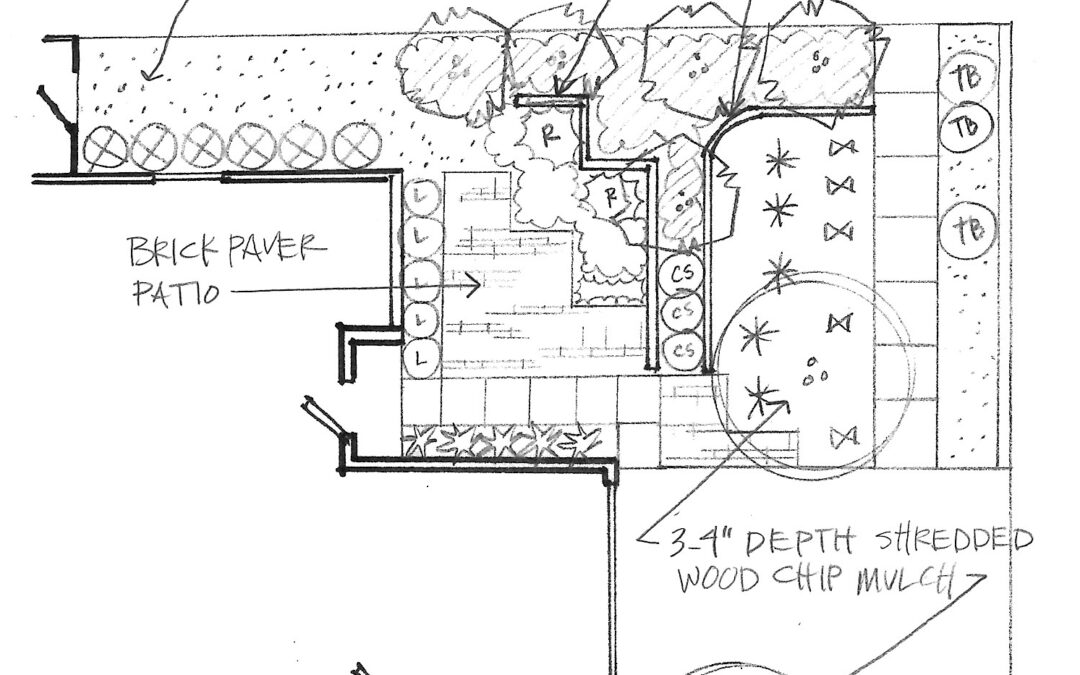
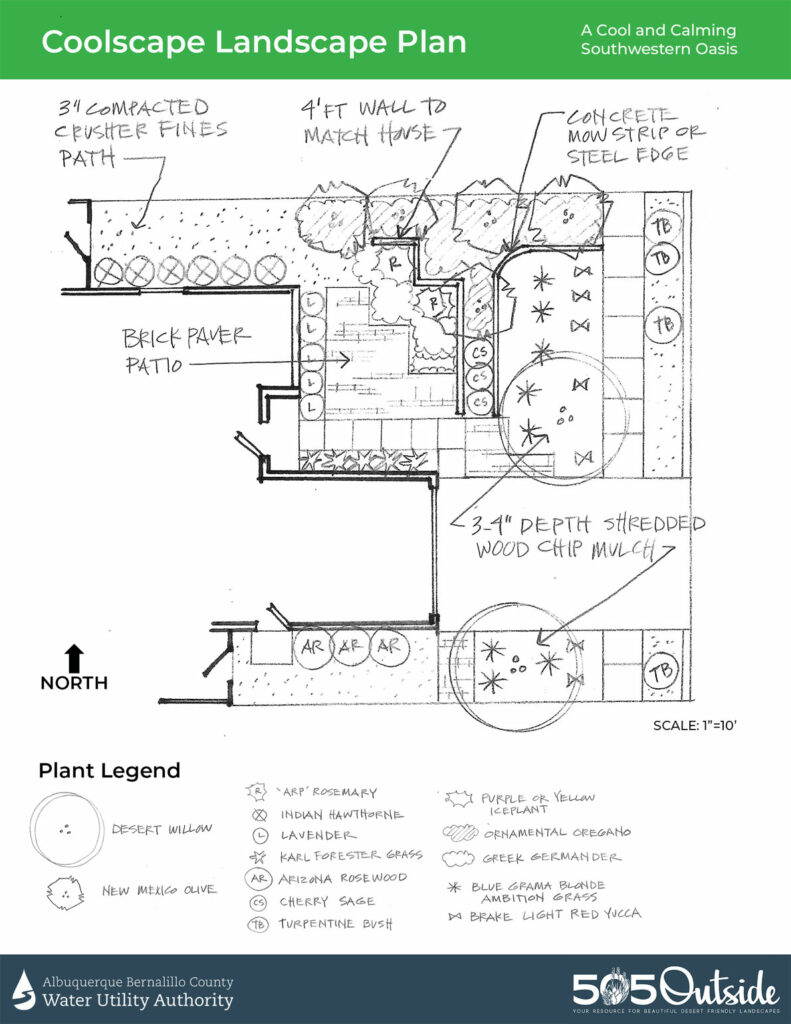
A lot goes into designing a landscape, hence there’s an entire profession called landscape architecture devoted to designing outdoor spaces. We won’t be able to make you a landscape architect today, but we’re sharing a unique landscape plan designed by landscape architects to get you inspired with ideas for designing your own yard. We’ll be sharing five more landscape plans in future issues of the 505Outside.
This Coolscape Landscape Plan is designed to provide an attractive streetside landscape as well as a comfortable, private area that is usable even in the winter. The privacy is achieved with a low wall (which should match or complement the house) and a grove of small trees, such as New Mexico olives or chaste trees. The placement of the trees effectively adds to the privacy and provides a backdrop along the edge of the brick patio. All the trees create lots of shade, adding to the coolness of the yard.
The courtyard patio was placed to provide some sun even on an east exposure. Beneath the trees, a groundcover of ornamental oregano grows in the sunnier spots and Kinnikinnick, in those most shady. For the best use of rainwater, the brick patio should be slanted to drain away from the house and into the surrounding planting beds. The edge of the patio on the north side of the yard ends in a bed of fine crushed gravel to create a path to the rear yard. Plants that do best on the cold north exposure of homes, such as Karl Forester ornamental grass and Indian hawthorn, are used to cope with the lack of sun, which in turn makes them more drought tolerant. Likewise, Arizona rosewood is used along the south exposure to capture as much warmth and sun as possible. Lastly, an ornamental clump buffalo grass in combination with a smaller specimen of the red yucca called Brake Light is planted along the front easternmost portion of the yard where it will be the most drought tolerant.
Learn more about specific types of gardening here:
Author: George Radnovich, FASLA Owner of Sites Southwest orchestrates an elegant, simple mixture of ornamental plants and features for north-facing xeriscapes. Have a question about the article? [email protected]
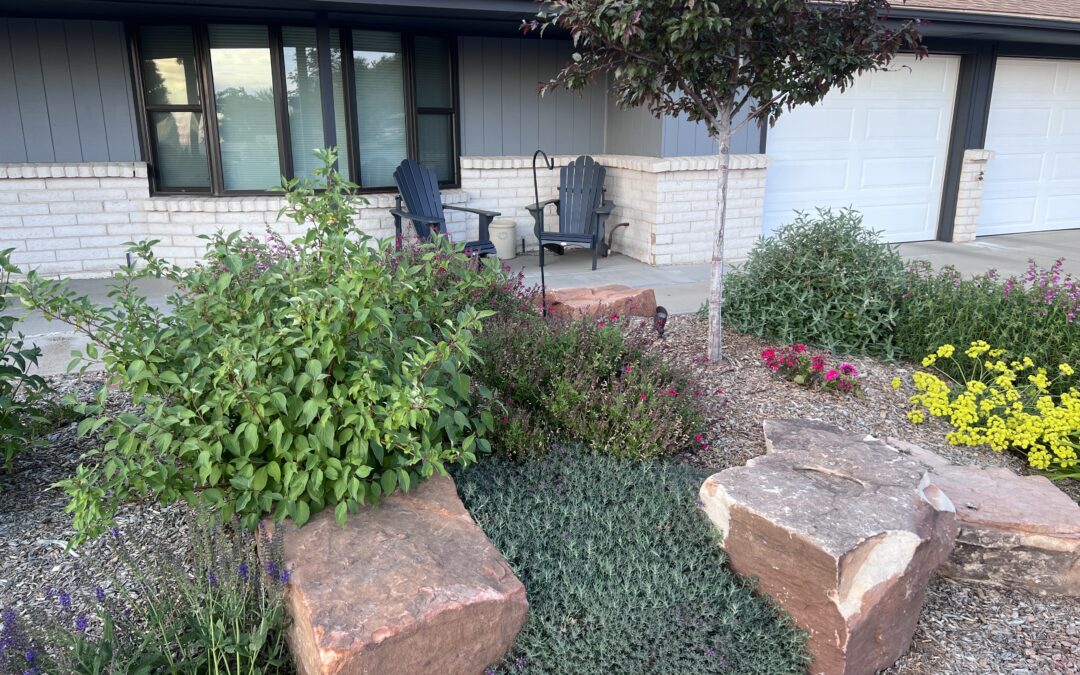
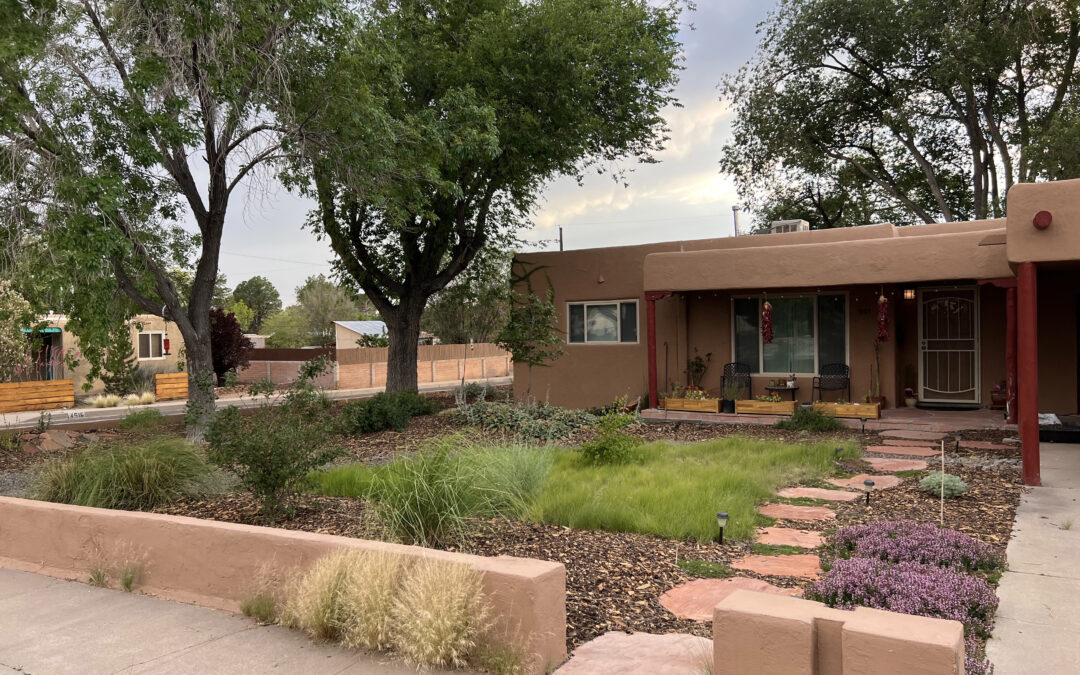
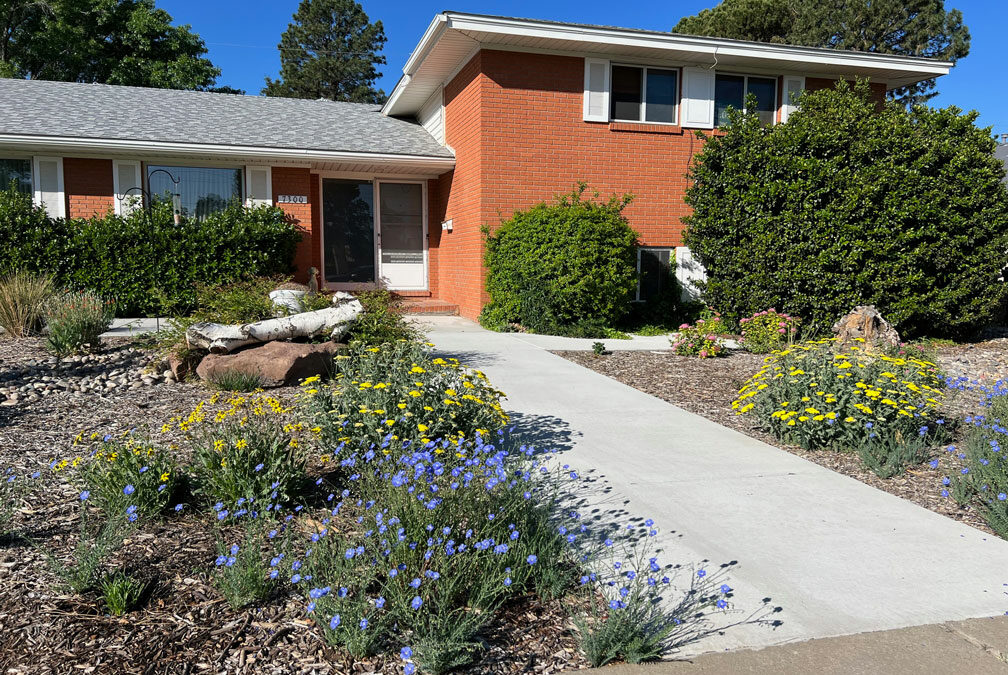
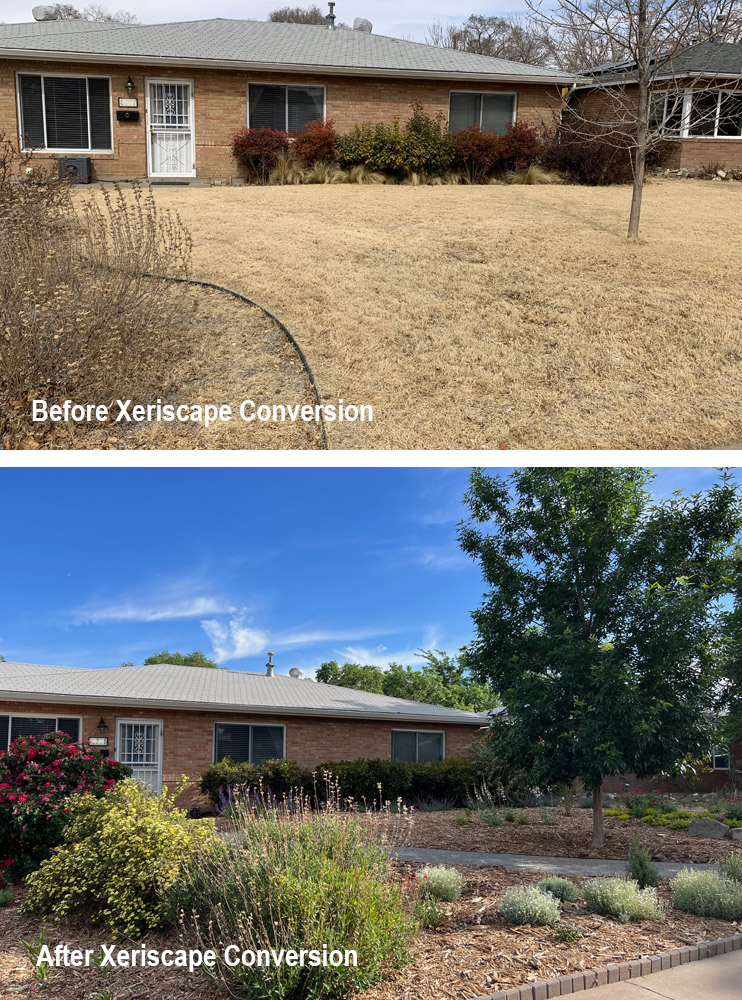
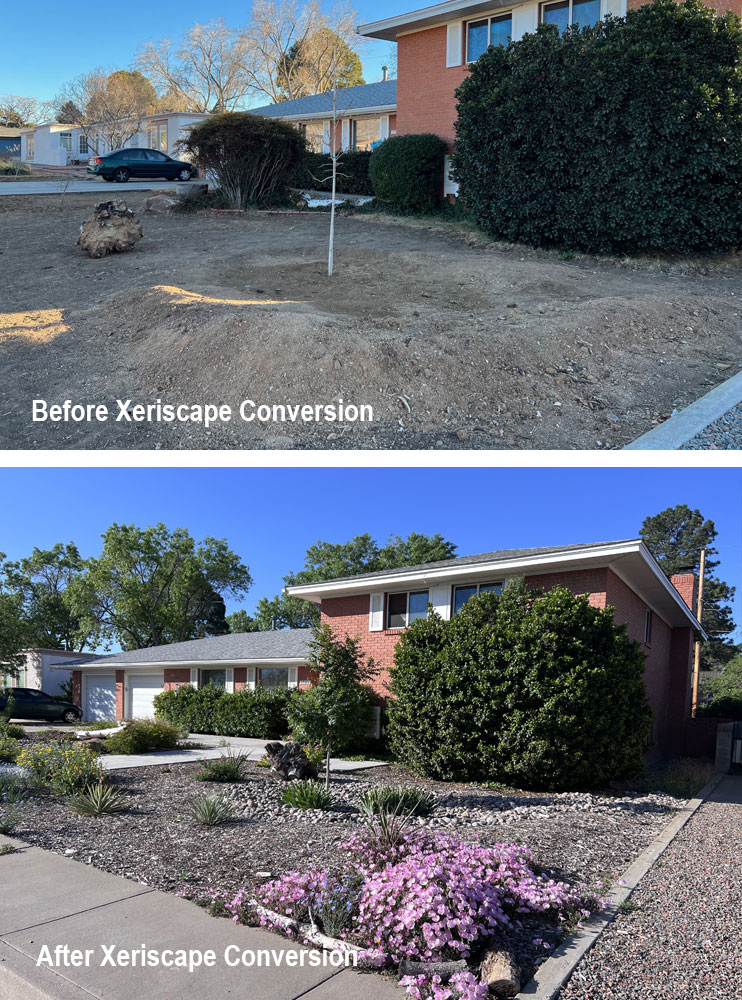
As Albuquerque area homeowners convert their high-water-use turf grass to desert friendly xeriscapes, many are opting for wood chip mulch rather than gravel or other aggregate, which can be hot and allow weeds to pop up.
The Water Authority checked in on two recent xeriscape conversion projects. These homeowners chose the DIY option for their front yards to save money. With all the resources available online, it has become easier to find how-to information on installing landscapes. The design, on the other hand, can be more difficult, and one of the homeowners chose to hire a professional. The other homeowner checked in with her mom who is an avid gardener, looked over resources from the library, and used online videos to pull together the design they wanted.
“I like the yard so much more now than the lawn we had before. The lawn would be pleasant about one or two days a month, and otherwise just felt like a chore and a needless expense. We’re lucky to live very close to a park, with a much nicer lawn than ours ever was, so when we want to play Frisbee or do ‘lawny’ things, we just walk the half a block to the park,” one homeowner said.
“While it took some labor to kill the grass, dig holes for the plants, install irrigation and lay down mulch, now when I look at my yard I no longer think, ‘Ugh, we need to weed/mow/fertilize/whatever.’ Now, I feel more joyful seeing all the different plants growing, and I’m always out there checking on my little plant friends.”
The other homeowner was motivated to create a landscape that “made more sense with the desert environment, used less water, helped provide habitat for pollinators and had a more natural look.”
Both homeowners chose to use wood chip mulch because it is extremely affordable and easy to install. They knew the advantages of mulch from their research and from seeing yards in their neighborhoods that use mulch. One of the added benefits, according to both homeowners, is attracting pollinators and other wildlife. “I see a lot more insects; I especially notice the bees,” one said. “There’s a family of roadrunners in our neighborhood, and they’re spending more time in our yard than they used to.”
Wood chip mulch is made up of chipped trees. This is a long-lasting mulch that decomposes slowly over bare dirt, retains moisture and is superior to other mediums at suppressing weeds. Most wood mulches available on the market are chipped flat and are consistent in shape and size. These are great in areas that receive foot traffic as they compact down to a firm surface.
Both homes installed a 3- to 4-inch layer of organic mulch over bare dirt. That depth is effective at stopping sunlight from reaching annual weed seeds, thereby preventing weed germination. The homeowners noted that mulch was easy to install and much less expensive than gravel, and they found that the mulch also was much cooler than the hot gravel.
“The main things we have noticed with the mulch are weed control and how well it retains water,” one homeowner said. “There are very few weeds that seem be able to germinate and make it through the mulch barrier. The weeds that do come up are actually very easy to remove by hand (my preferred method for weeding) because there is no artificial weed barrier or rocks to dig out.”
The advice both homeowners would like to pass along to other folks looking to DIY their yards is to give yourself plenty of time and tackle the project in small parts.
“I think the most important thing was breaking the project down into manageable tasks, and then figuring out the best order of those tasks. I also made some mistakes, so being adaptable to changes and adding tasks was key. I definitely needed the six-month extension in addition to the initial six-month period allowed; it took me about nine months total to complete the work.”
The other homeowner took almost a year to complete their project, but they now are basking in compliments from their neighbors.
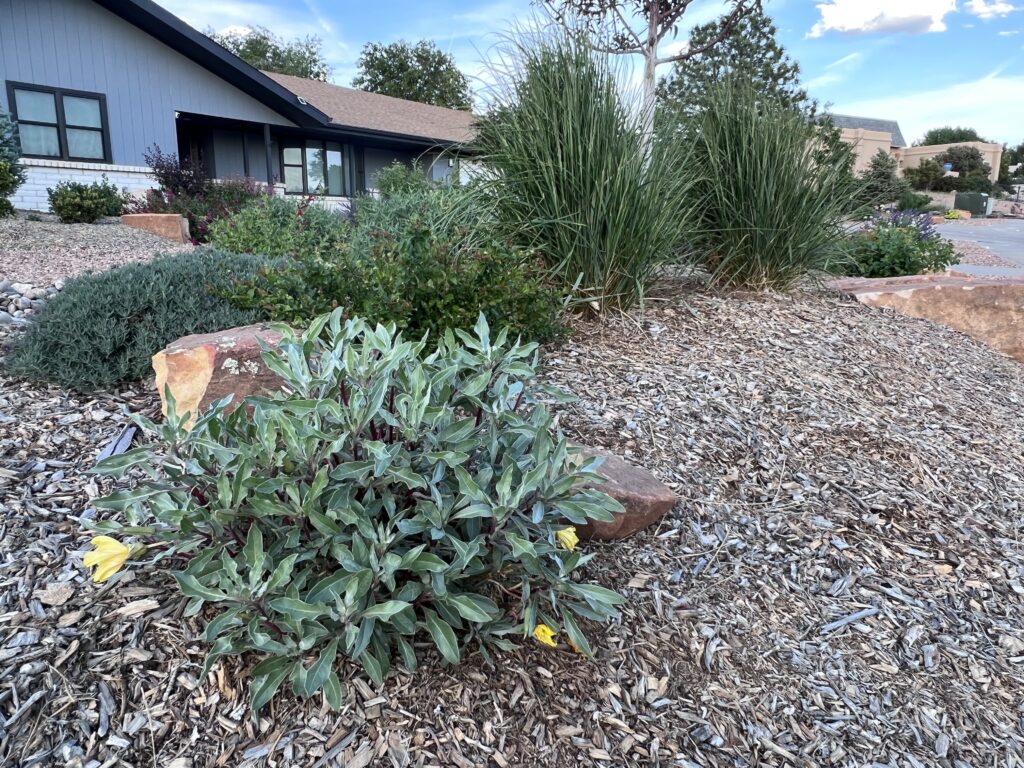
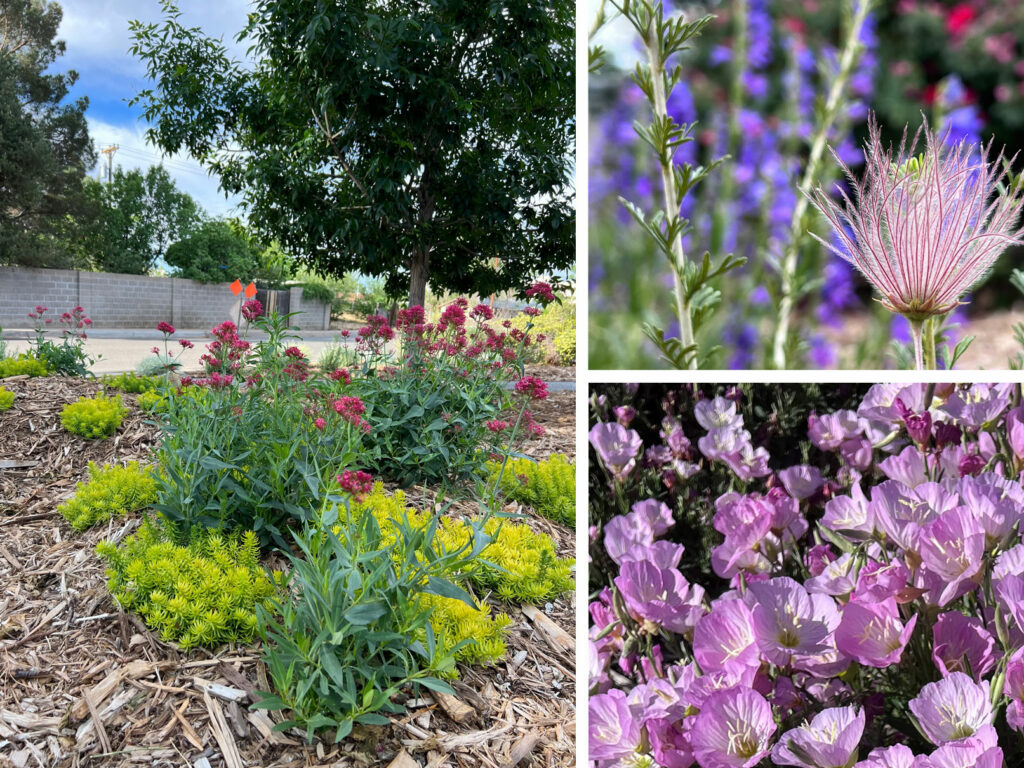
Sedum, Jupiters beard, Apache plume and Mexican primrose
Additional Facts on Mulches:
Wood chip mulch insulates plant roots from both heat and cold, reducing moisture loss from the soil by evaporation, feeding beneficial soil microorganisms that enhance plant growth and improving soil health. This makes the soil more sponge-like and better able to hold water. By installing 3-4 inches of mulch over bare dirt, weeds are reduced, the soil is enriched and new plants retain more moisture.
Another benefit of organic mulches is that they can visually accommodate a little bit of leaf litter, reducing the need for constant raking and clean-up. A thin top dressing of mulch added every two to three years keeps the landscape looking fresh and replaces the material that has broken down to sustain the soil. Organic mulches are lightweight, making them easy to transport in a wheelbarrow and spread with a rake.
Mulches are available in bags from most local garden centers (avoid the dyed ones as the colors will fade) and in bulk from several retailers in the Albuquerque area. When you buy from local bulk retailers, you are supporting the recycling of local organic materials that may otherwise end up in a landfill and contribute to greenhouse gas emissions. Buying bulk also means less plastic! Mulch is sometimes available at no cost from local tree trimming companies. In addition, Bernalillo County offers free mulch to residents who load it themselves at the East Mountain Transfer Station. County staff can load the mulch in your vehicle with a tractor for a $5 charge. The county also will deliver 30 cubic yards of mulch for $60, plus $2 a round trip mile for delivery. Mulches are a renewable resource that will improve landscape health and conserve water.
In areas of higher wind exposure or periodic inundation with water, use a wood chip mulch that is irregularly shaped and sized as the pieces will knit together better. This type of mulch can include recycled yard waste and tree trimmings as well as commercially available, locally processed wood products.
Property Data:
These homeowners converted a total of 2,940 sf of park blend grass to desert friendly xeriscape. Total gallons saved in one year since conversion: 100,000 gallons. Total rebate received: $3,140.
Thinking about converting your yard from high-water-use grass to xeriscape? Check out the Desert Friendly Xeriscape Rebate page to learn more about the qualifications, requirements and process to apply for this generous rebate. Additionally, xeriscape rebate participants get 25% off the cost of installing bulk organic mulch, up to $100. If you want to top dress mulch around your trees, take advantage of our Treebates. You are welcome to contact our xeriscape specialist, Amos Arber, at [email protected] or 505-208-2015.