Fall blooming plants and changing leaves can be just as exciting as the bright colors of spring and summer flowers. Fall is also an excellent time for planting: Temperatures begin dropping, making it easier for young plants to become established, and the cooler weather creates a more enjoyable time for gardeners to work outside.
Here are five great flowering options that offer a range of colors:
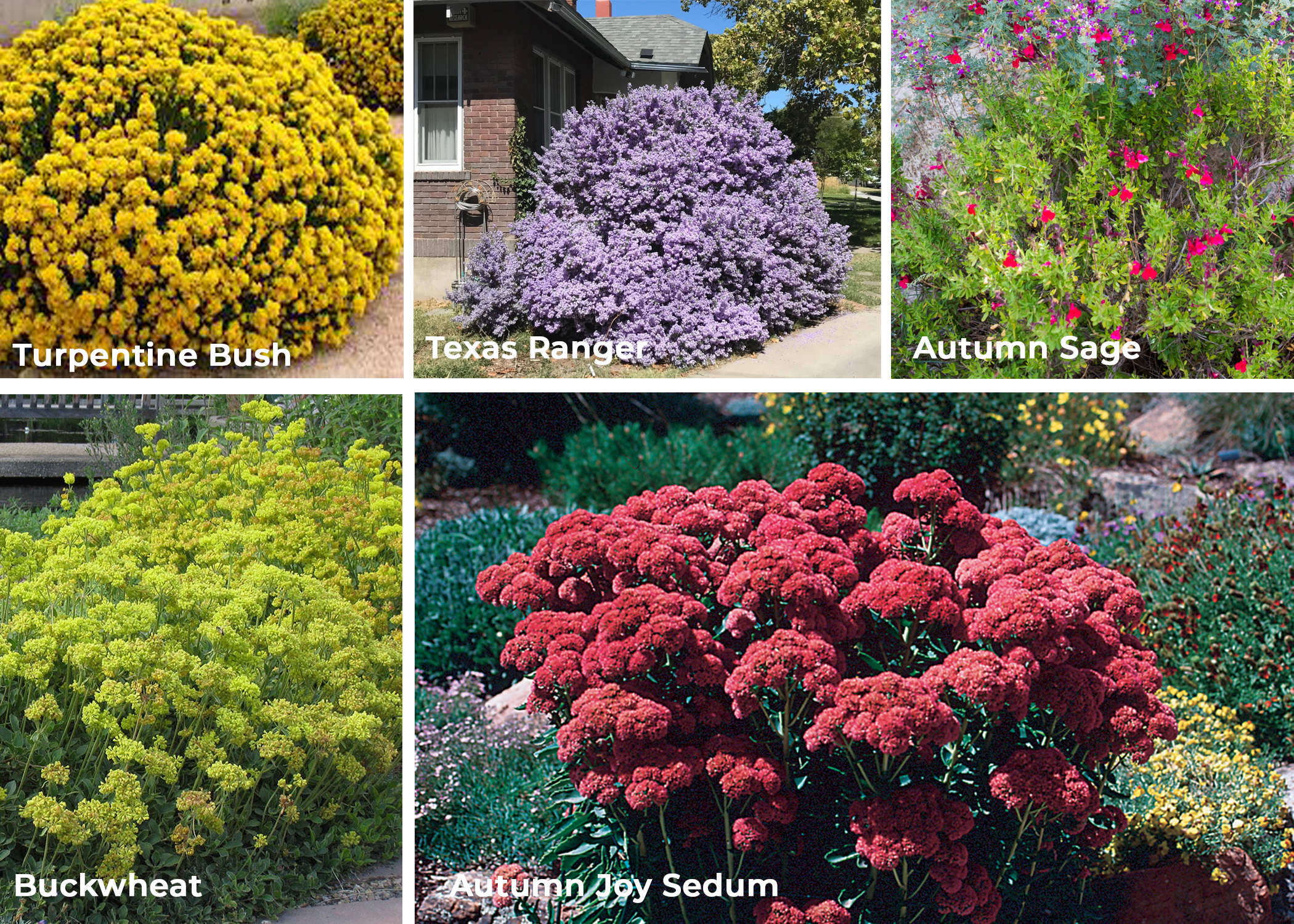
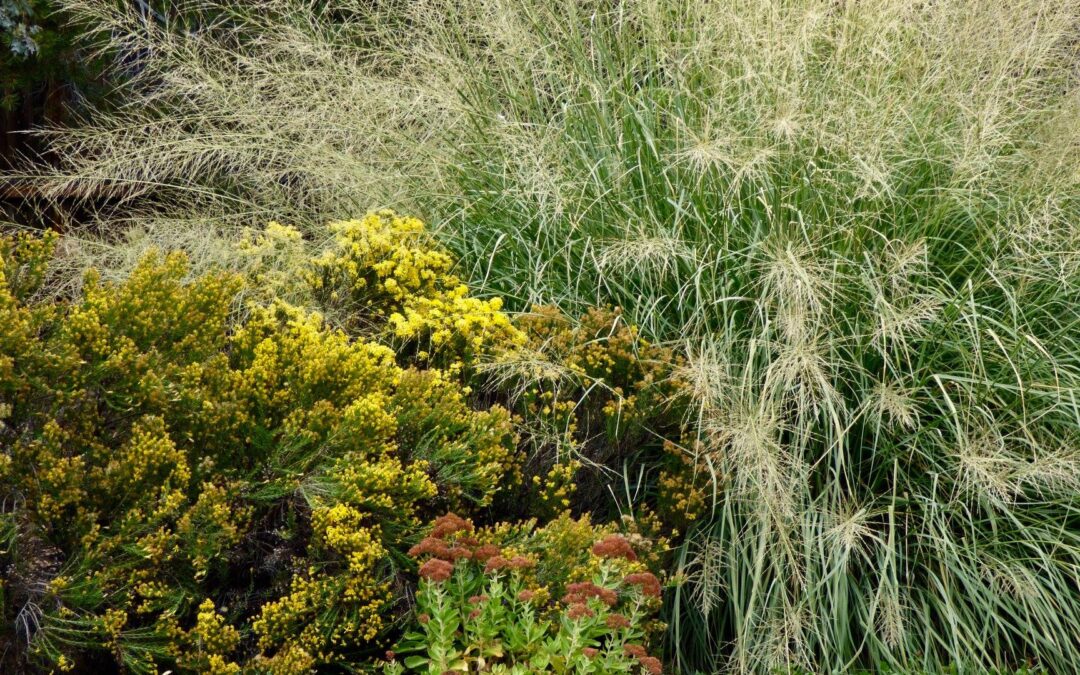
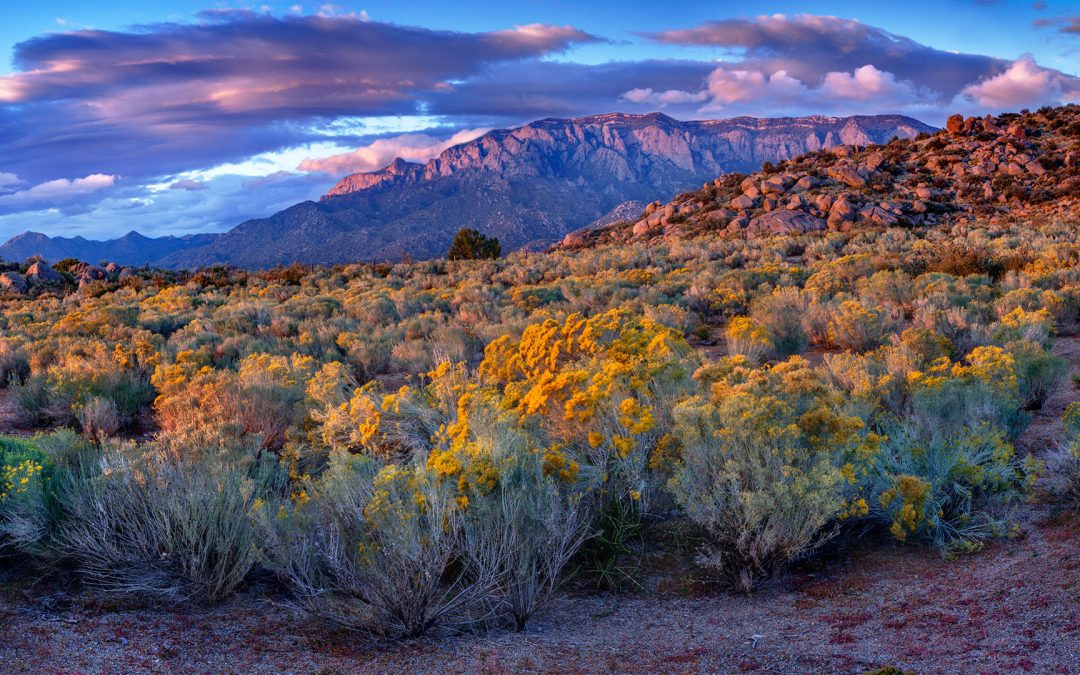
Turpentine bush (Ericameria laricifolia) is a compact evergreen shrub covered with bright yellow blooms in fall. Be sure to plant Texas Ranger in a protected location as it is not very cold hardy.
Autumn sage (Salvia greggii) is another versatile shrub with low water use that blooms, usually in shades of dark pink, for three seasons, including fall.
Some Buckwheat species (Eriogonum spp.) bloom in fall, but even those that bloom in summer contribute to fall color as their white flowers turn a striking rust in fall.
You don’t have to choose between blooms and red leaf color. Dwarf plumbago (Ceratostigma plumbaginoides) is a groundcover with bright blue summer and fall blossoms, spectacular red leaf color in late fall, interesting seedheads and excellent shade tolerance.
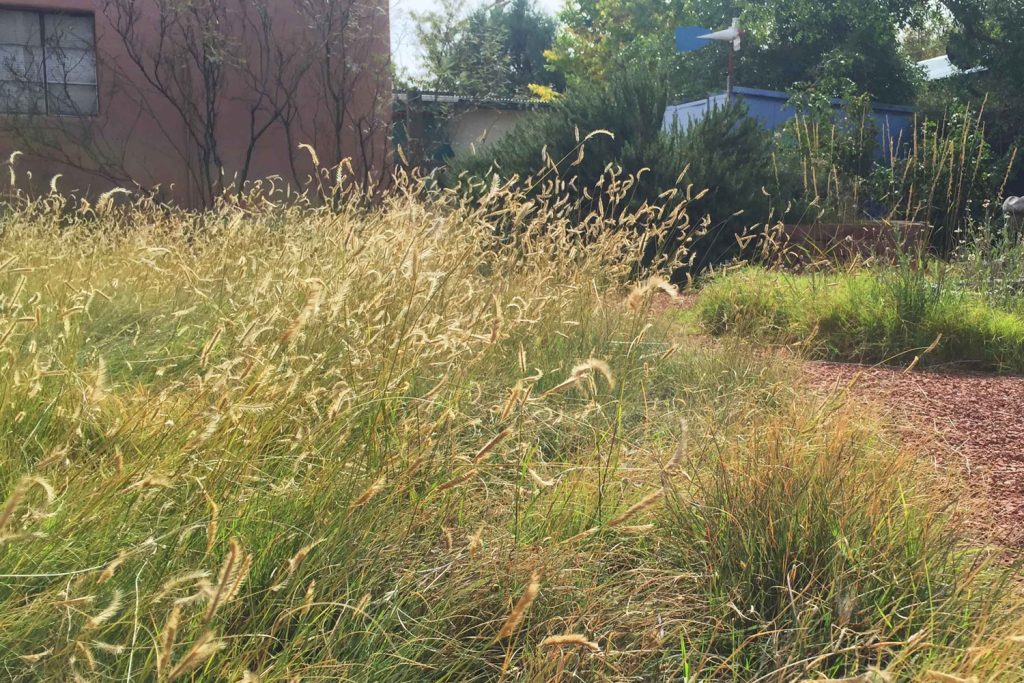
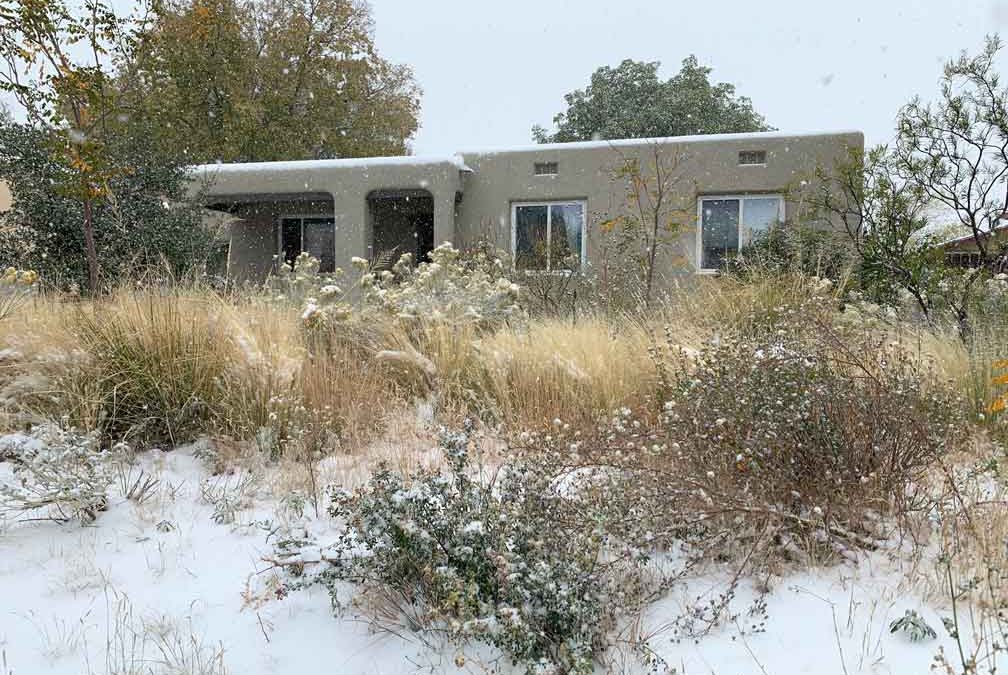
Many ornamental grasses have interesting seed heads in fall bringing soft colors and beautiful texture to autumn landscapes.
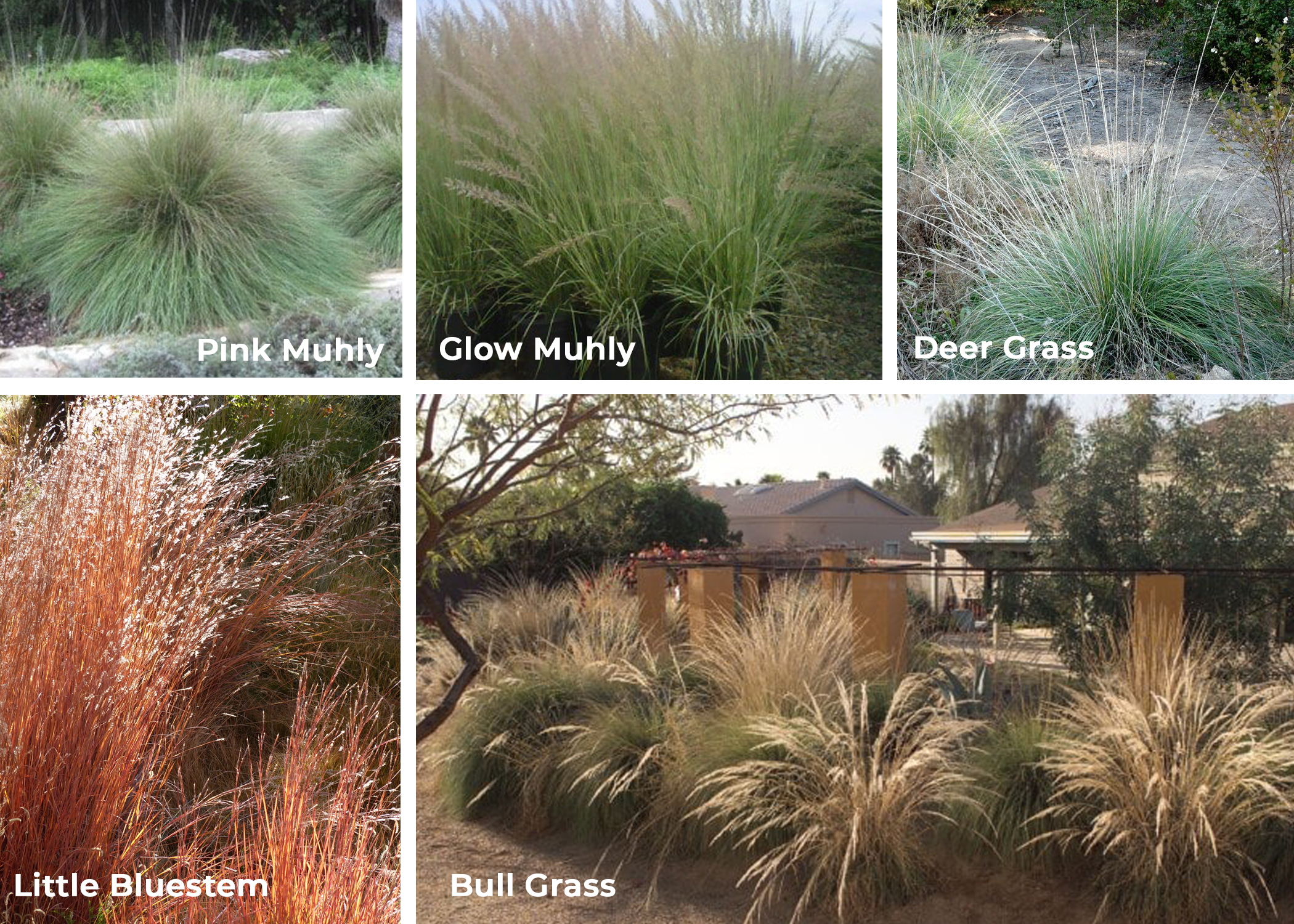
The many species of muhly grasses (Muhlenbergia spp.) are especially easy to grow and have lovely seed heads. You really can’t go wrong with a muhly grass: They are tough and add amazing texture and contrast to any landscape.
Pink muhly(M. capillaris) tolerates heat and drought and is covered in mounds of stunning delicate pink seed heads in fall.
Autumn glow muhly(M. lindheimeri) is a larger grass with spikes of tan flowers in fall.
Bull grass(M. emersleyi) and deer grass (M. rigens) are medium sized ornamental grasses with spikes of white or light tan flowers.
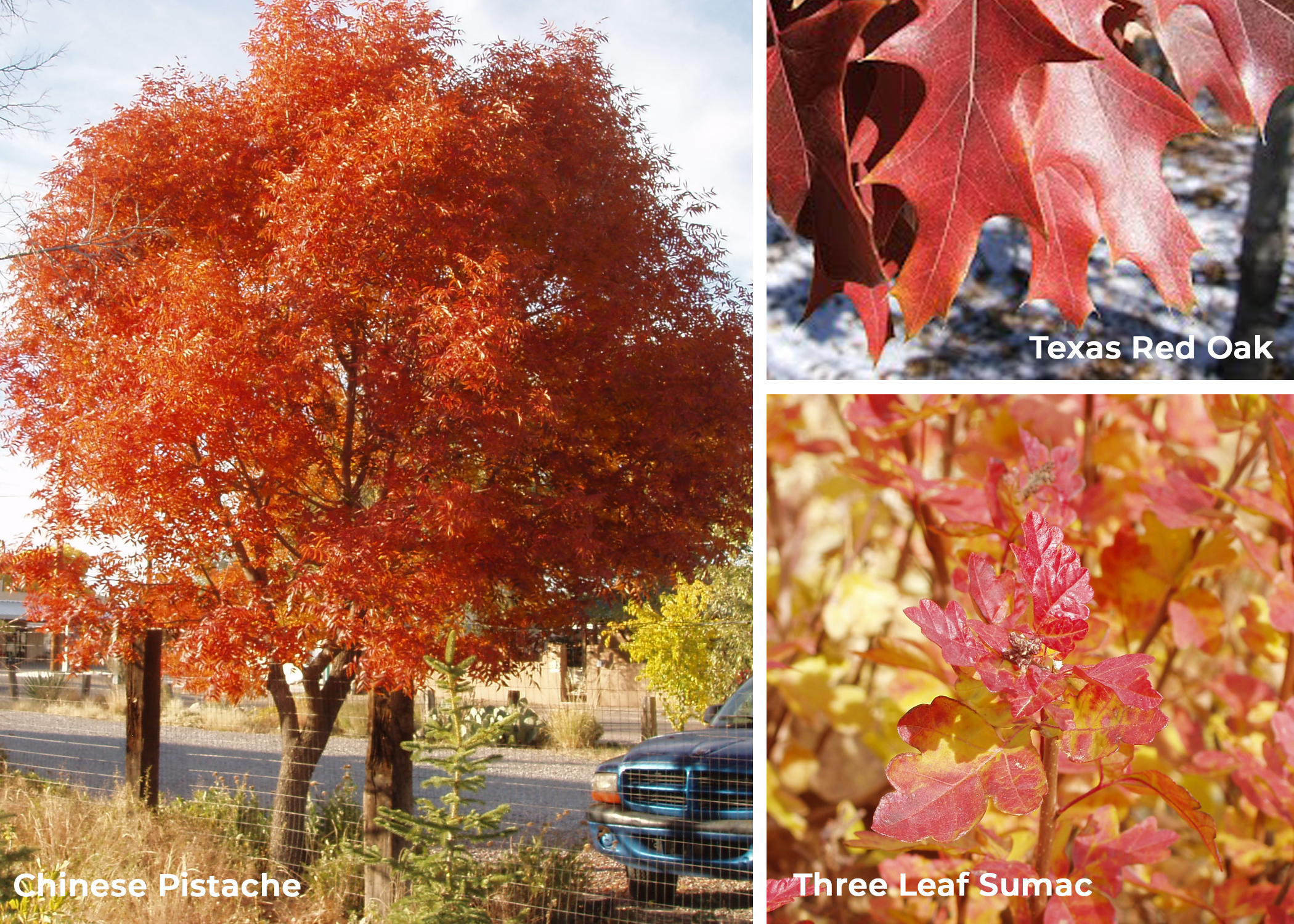
Red push pistache (Pistacia × ‘Red Push’) is a hybrid tree selected for its almost neon fall color. You can also plant standard Chinese pistache (Pistacia chinensis), which is a bit more cold hardy, though fall color can vary greatly from tree to tree. Visit a nursery in fall, when pistache leaves are turning color, to see the color of a particular tree before selecting one to bring home.
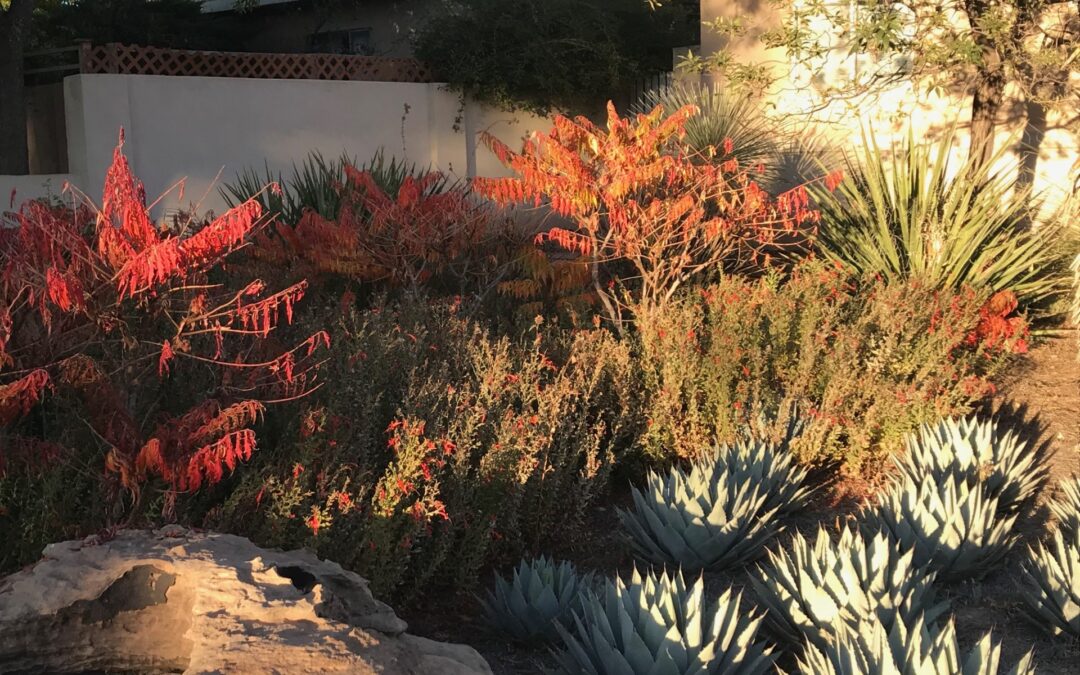
Three leaf sumac (Rhus trilobata) is a medium to large sized shrub. It is locally native, grows in all soil types and does well in sun or shade. In fall, its leaves turn beautiful shades of yellow, orange and red. Autumn amber sumac is a groundcover cultivar of three leaf sumac and rarely grows taller than six inches and spreads up to ten feet. Gro low sumac (Rhus aromatica ‘Gro Low’) is a Midwestern sumac that grows up to 3 feet tall and spreads up to 6 feet wide. Like three leaf sumac, its leaves turn fiery shades in fall.
And don’t forget an evergreen backdrop for all this fall color. The warm oranges and reds of sumacs, buckwheat, oaks and little bluestem are especially striking when paired with the silvery blue gray plants that do so well in Albuquerque, such as agave, artemisia, chamisa and Rocky Mountain juniper.
Selecting a mix of colorful blossoms, autumn leaf color, soft textures and contrasting blues and grays for your garden this fall will make your landscape a highlight of the season.
Author: Tess Houle, ASLA Landscape Architect with Pland Collaborative. Photos by Wes Brittenham, and Tess Houle Have a question about the article or anything else? [email protected]
Just as we take shelter when the weather turns colder, so does your yard. Below are our DIY tips for how to prepare your yard for winter.
WATERING
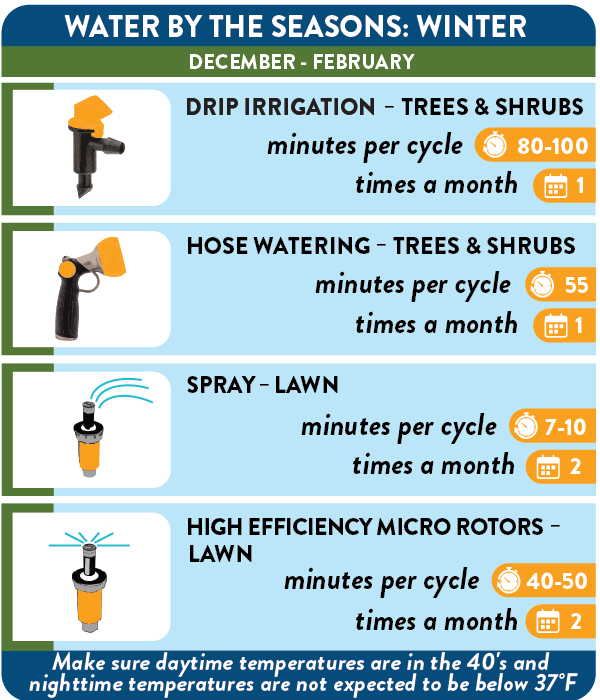
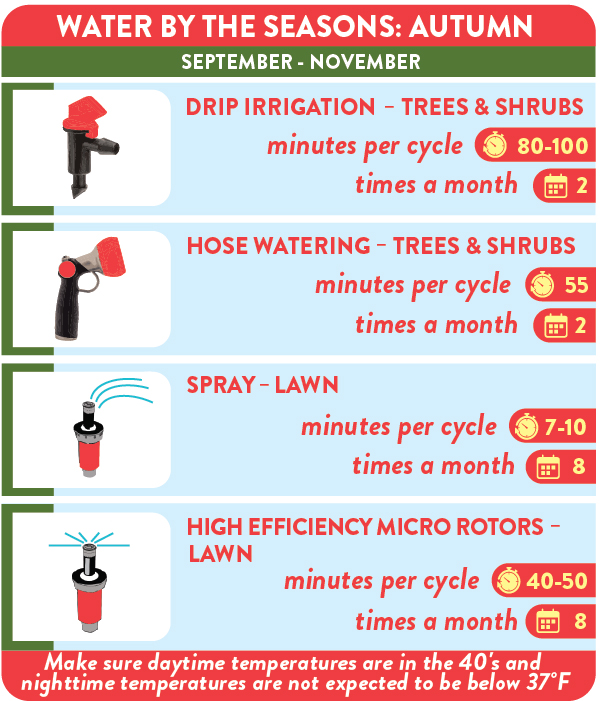
Water on warm days (daytime temperatures above 40 degrees and nighttime temperatures above 37 degrees).
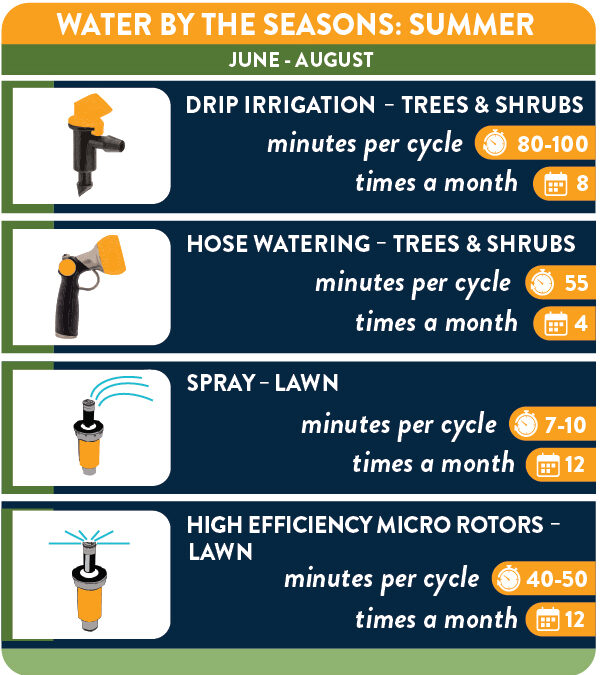
For drip irrigation on trees and shrubs, water twice a month for 80-100 minutes per cycle.
For hose watering trees and shrubs, water twice a month for 55 minutes per cycle.
For spray watering a lawn, water eight times per month for 7-10 minutes per cycle.
For high efficiency micro rotors on a lawn, water eight times per month for 40-50 minutes per cycle.
Skip watering if it rains more than ½ an inch or snows more than 6 inches.
Special Exceptions
Newly installed plants (shrubs planted within one year) and trees (trees planted within three years) are more susceptible to damage from dry conditions and should be watered more frequently than established plants. Water new shrubs to a depth of 18” three times a month in the winter. Try watering trees to a depth of 24 inches twice a month in the winter.
Evergreen trees lose water through their needles in cold, dry winter winds faster than their roots can absorb it. They need more stored-up water going into the winter season to make up for that so, it is especially important to provide enough water in the fall and during dry, warm spells in the winter.
When watering any tree, remember to apply water out to the edge of the tree’s canopy drip line and beyond. Most established trees have a root spread equal to their height and beyond. Water deeply and avoid spraying foliage. Watering to the right depth depends on your specific soil, so you will want to measure how much time it takes water to reach 24 inches deep in your soil. Read this article for tips on measuring watering depth.
LAWNS
Cool Season Grass
Mow your lawn to 3-3.5 inches. Grass left too long over the winter can develop brown patches. Dethatch your lawn by raking it through to remove built up debris.
Rake or blow off leaves that have fallen on your lawn to avoid brown spots. Save those leaves to use as mulch around your garden and trees.
Aerate next time it is warm. Before aerating, run the irrigation and flag all your spray heads or rotors. This prevents inadvertently creating the need for sprinkler repairs! Aerate the whole lawn in one direction and then again perpendicular to the first pass.
Top dress with compost. Compost acts as a fertilizer, adds moisture retention capacity and improves overall soil and root health.
Warm Season Grass
Grass can be left at full height during winter to provide habitat.
TREES
Apply a thin layer of compost, about ½ inch, to provide nutrients.
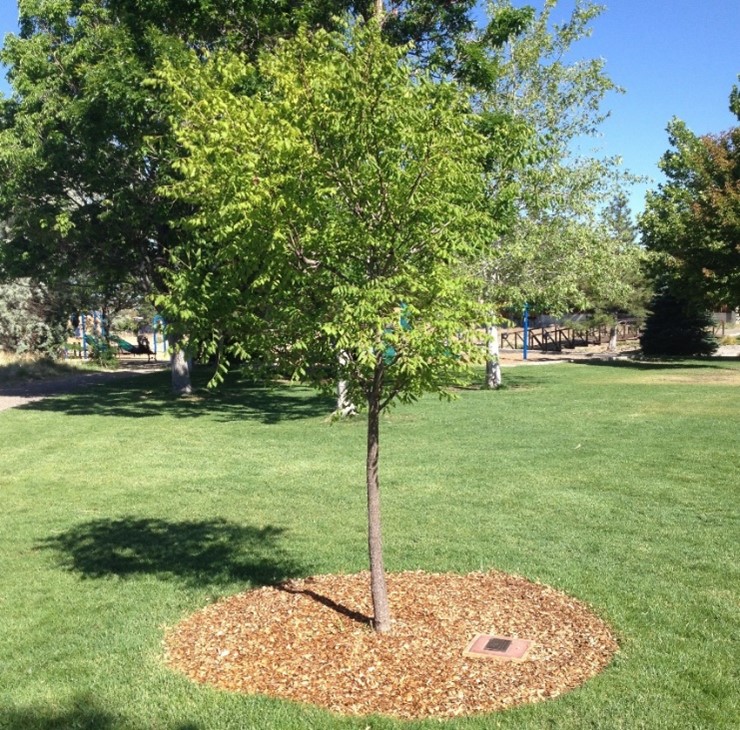
Add 3"-4" of shredded wood chip mulch around the trees drip line but keep away from the trunk base, about 6". Mulch helps insulate the soil from temperature extremes, retains soil moisture and keeps weeds out. Treebates for bulk organic mulch are available.
IRRIGATION
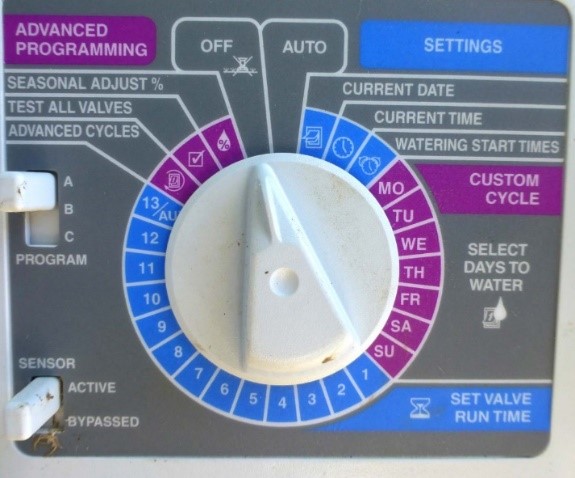
Turn off your irrigation system. Cold temperatures 40 degrees or lower mean it is time to give your irrigation system a rest. To avoid damage to your system, we recommend setting it to the OFF position. Since it is important to make sure your landscape stays healthy in the winter, find a warm day once a month to irrigate. After watering, set your system to the OFF position again. Skip watering if it rains more than ½ an inch or snows more than 6 inches.
Insulate pipes and faucets in unheated areas. Wrap exposed water pipes in unheated areas (such as a garage, basement, crawl space or space beneath your mobile home) with insulation or heat tape. Be sure to follow the manufacturer’s instructions carefully.
Just as we take shelter when the weather turns colder, so do your plants. This time of year, plants store most of their nutrients in their roots and find shelter in the ground. We can support this transition to help plants thrive during the entire winter season.
Also, it is time to give your irrigation system a rest. To avoid damage to your irrigation system we recommend setting it to the OFF position. Your next step will be to wait for a warm day to water deeply one more time and then take steps to winterize your irrigation system.
Follow this advice to ensure landscape success:
Turn off your irrigation system.
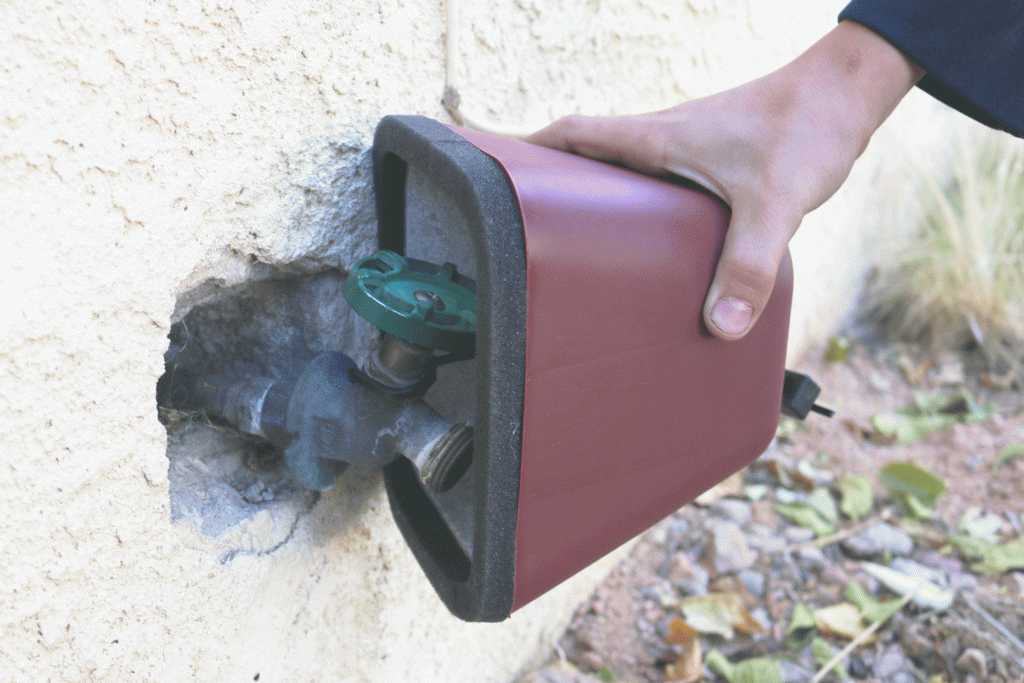
If your irrigation system is attached to an outdoor spigot, you should disconnect it and cover your hose bib using a faucet cover.
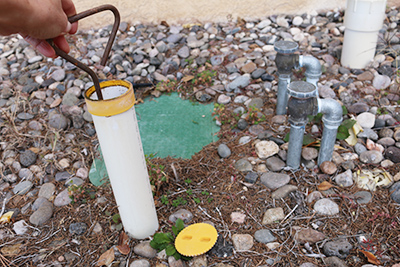
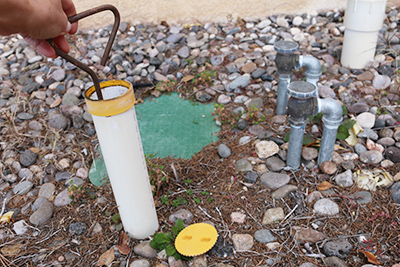
If you have a below-ground irrigation system, locate your shut-off valve (often hidden in a 3” PVC pipe; often with a white or yellow cap, as shown in the photo). Turn it to the right to shut it off. Be careful when turning so you do not break the valve.
Drain the water from all pipes, valves, and sprinkler heads. Learn more about protecting your irrigation system here.
It’s important to make sure your landscape stays healthy in the winter during times of drought. If we don’t get snow or rain, find a warm day once a month and deeply water your plants. After watering, set your system to the OFF position again.
How much should I water this November?
1-2 more times this month
Skip watering if it rains or snows
Give individual trees 100 gallons to a depth of 24 inches at least one time this month
Water turf for 7-10 minutes, to a depth of ½ inch”
Your outdoor water usage should be 80% less than in the summer season
How can I keep my landscape healthy this winter?
Turf
Mow your lawn to 2-2.5 inches tall. Grass left too long over the winter can develop brown patches.
Aerate next time it is warm. Aerating your lawn will give it a chance to breathe before the grass goes completely dormant. This also provides relief from any compaction that has built up during the warmer months.
Rake or blow off the leaves that have fallen on your lawn. Leaves that are left on the lawn could become moldy, which invites disease.
Top dress with compost. Compost acts as a fertilizer, adds moisture retention capacity and improves overall turf health.
Trees
Apply a thin layer of compost, about ½ inch, to provide nutrients.
Add mulch away from the trunk base, about 2 inches thick. Mulch helps maintain your ground at a constant temperature and helps retain moisture.
Water your trees thoroughly once a month, if needed, to support winter hardiness. Withholding water will not help the tree acclimate to winter.
Shrubs
Leave your leaves. Every autumn, leaves fall to the ground, sheltering the soil and beneficial organisms, returning organic matter back to the ground, and perpetuating the nutrient cycling essential for good plant health. This year, think about leaving those leaves in your garden by tucking them in around your shrubs. When we allow leaves to follow their natural life cycle, we can enjoy a colorful tapestry on our landscape as well as all the benefits provided by an organic mulch.
How do I avoid irrigation and other plumbing system damage? To avoid costly repairs, we recommend that homeowners take the following steps:
Find the master shutoff valve The master shutoff valve turns off the water to the entire house. If you have one, learn its location. This could be critical if a pipe bursts. Need an emergency turn-off? Call 842-WATR and select Option 1.
Insulate pipes and faucets in unheated areas Wrap exposed water pipes in unheated areas (such as a garage, basement, crawl space or space beneath your mobile home) with insulation or heat tape. Be sure to follow the manufacturer’s instructions carefully.
Seal off access doors, air vents and cracks Winter winds whistling through overlooked openings can quickly freeze exposed water pipes. DO NOT plug air vents used by your furnace or water heater.
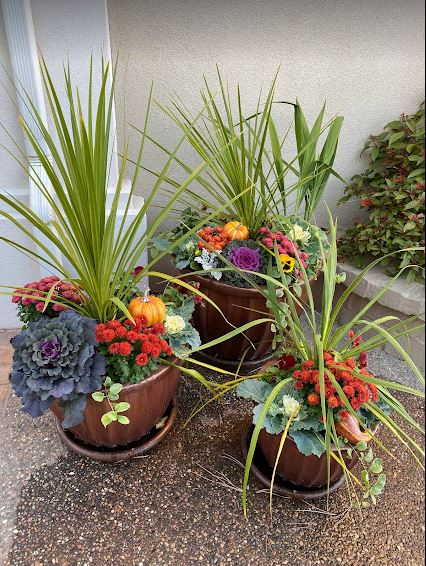
Containers are an easy way to add a splash of color to your garden, porch, balcony or patio, without ever having to dig a hole in our hard New Mexico soil. While you could drop pansies or geraniums in a pot and consider it complete, you could also plant a truly stunning container garden full of color, texture and fragrance. The right combination of plants arranged properly in a planter can be magical. After that, you only need to keep things watered and fertilized as you enjoy the colorful design all season long.
1. Choose the Right Container
Containers have their own unique characteristics to consider, including weight, appearance and sensitivity to weather changes. Also, consider your budget, space and style when selecting them. Keep in mind that the larger the size, the less you'll need to water. But whatever you choose, make sure your containers have good drainage.
2. Select a Color Theme and Plant Combinations
Starting with a color theme for your container garden can help with plant selection. When combining plants in your containers, it’s important to make sure they all have the same light requirements and watering needs. A good rule of thumb is to plant in odd numbers and combine three types of plants — thrillers, fillers, and spillers — in each container to add interest and balance to your design.
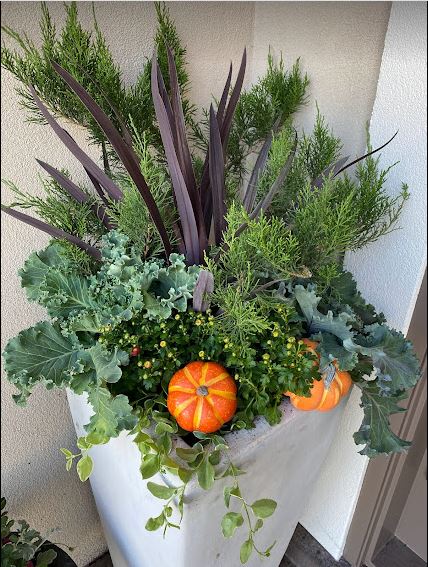
“Thriller” plants are the centerpiece of your design. They add height and a bold vertical element. Options include plants chosen for foliage, ornamental grasses or other upright plants. In larger containers, small shrubs or trees, topiaries, spirals and other vertical selections can be used. Thrillers typically go near the center of a container, but they can also be put toward the back of the planter, depending on its final location.
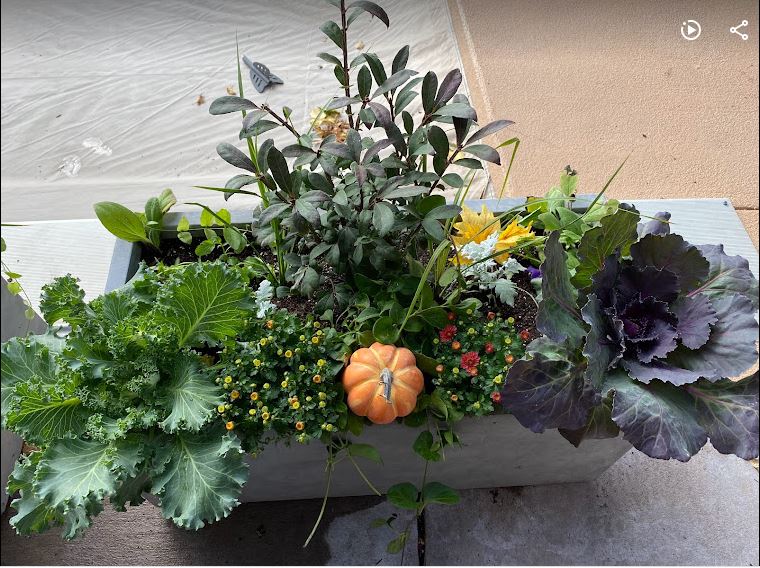
“Filler” plants tend to be more rounded and make the container look full. These are generally placed in front of or around your selected thriller. In a narrow, long container like a window box, fillers are placed halfway between the edge of the container and the thrillers. Violas, pansies, dusty miller, ornamental kale/cabbage, ornamental peppers, geraniums and mums are just a few of the many options for autumn fillers.
“Spiller” plants literally spill out of a container. If your container garden is going to be visible from all sides, be sure to place spillers all the way around. Some favorite autumn spillers are licorice plant (Helichrysum), English ivy, Dichondra 'Silver Falls', ivy geranium and perennial vinca (minor or major), also called periwinkle. I am especially fond of some of the brighter vinca varieties like Illumination or Wojo’s Gem.
3. Fill the Container with a Good Potting Mix
Once you've selected plants and a container, it's time to get started! Fill your container about two-thirds full with a good quality potting mix. If you have a really large planter and would like to use less potting mix, you can use empty water bottles or smaller empty nursery pots or containers turned upside down to take up some of the space in the bottom of the container. Fill around them with potting mix until your container is two-thirds full.
4. Arrange Plants in Your Container
When you're ready to add plants, remove the plants from their nursery pots, gently loosening the root ball with your fingers. Place them in your container and add soil, stopping about two inches from the top of the container to leave enough space for watering.
5. Water Your Plants
Water your container garden thoroughly to help the soil settle. After watering, add more soil if needed to insure good root coverage. Check your containers every 2-3 days, and when the top two inches are dry, it’s time to water again. Don’t forget container plantings may need water twice a day when it’s hot, especially if it’s also windy.
Don't be afraid to add different types of plants, such as annuals, perennials, herbs, cold-hardy vegetables, and even small shrubs, to the same container. The important thing is to select plants that require the same growing conditions. I really like using dwarf Alberta spruce or lemon cypress as the vertical element, surrounded by licorice plants, pansies/violas, dusty miller and ornamental cabbages. I will occasionally add artificial gourds, pumpkins and other décor to make them even more festive.
With a little planning and creativity, you can put together stunning container designs that can be enjoyed all season long.
During this time of year, plants store most of their nutrients in the roots and find shelter in the ground. Also, this is the time of year to winterize your irrigation system.
To avoid damage to your irrigation system we recommend setting it to the OFF position. Since it is important to make sure your landscape stays healthy in the winter during times of drought, find a warm day once a month and deeply water your plants if we don’t get snow or rain. After watering, set your system to the OFF position again, and to avoid costly repairs, we recommend that homeowners take the following steps after watering:
1. Disconnect the water supply to your irrigation system.
2. If you manually water using a hose or if the irrigation system is attached to an outdoor spigot, you should disconnect it and cover your hose bib using a faucet cover.
3. If you have a below-ground irrigation system, locate your shut-off valve (often hidden in a 3” PVC pipe; often with a white or yellow cap, as shown in the photo). Turn it to the right to shut it off. Be careful when turning so you do not break the valve.
4. Drain the water from all pipes, valves, and sprinkler heads. Learn more about protecting your irrigation system here see the article
How much should I water this winter season?
Water trees thoroughly once a month, to support your tree’s winter hardiness. Give individual trees 100-250 gallons.
Water turf only twice a month for about 5-7 minutes.
How can I keep my landscape healthy this winter season?
Mow your lawn to 2-2.5 inches. Grass left too tall over the winter can develop brown patches.
Aerating and dethatching your lawn will give it a chance to breathe before the grass goes completely dormant. This also provides relief from any compaction that has built up during the warmer months.
Rake or blow off the leaves that have fallen on your lawn. Leaves that are left on the lawn could become moldy, which invites disease.
Apply a thin layer of compost. Compost acts as a fertilizer adds moisture retention capacity and improves overall turf health.
Add mulch but keep it away from the trunk base of your trees. Mulch helps maintain the ground at a constant temperature and helps retain moisture.
Author: Carlos Bustos, Water Conservation Manager, Water Resources Division Have a question about the article? [email protected]