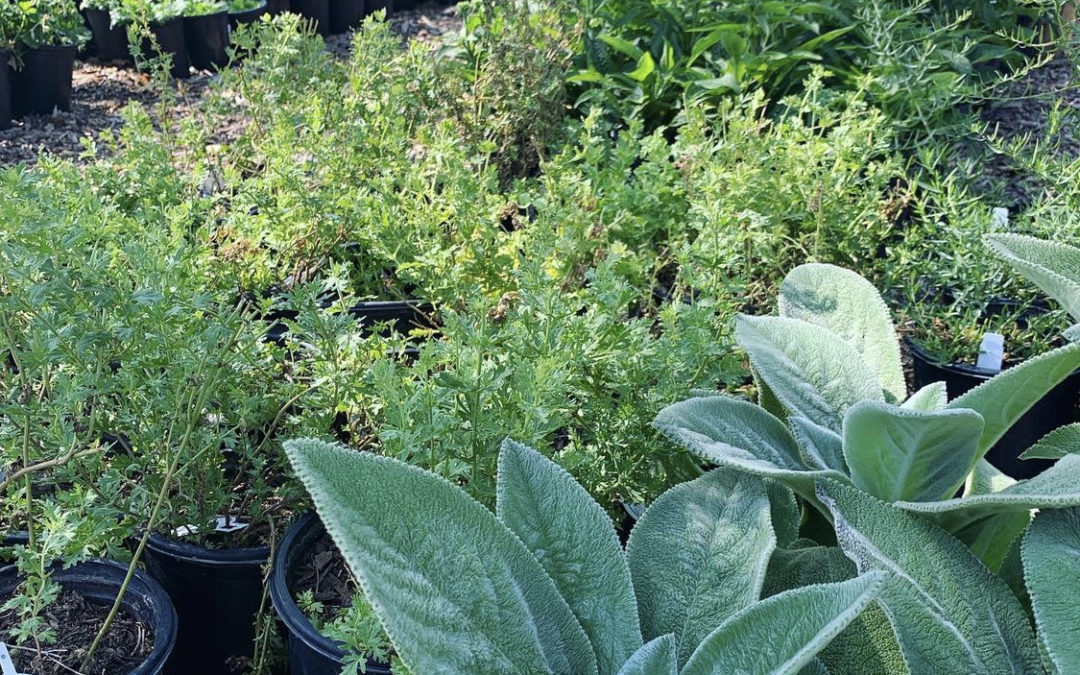
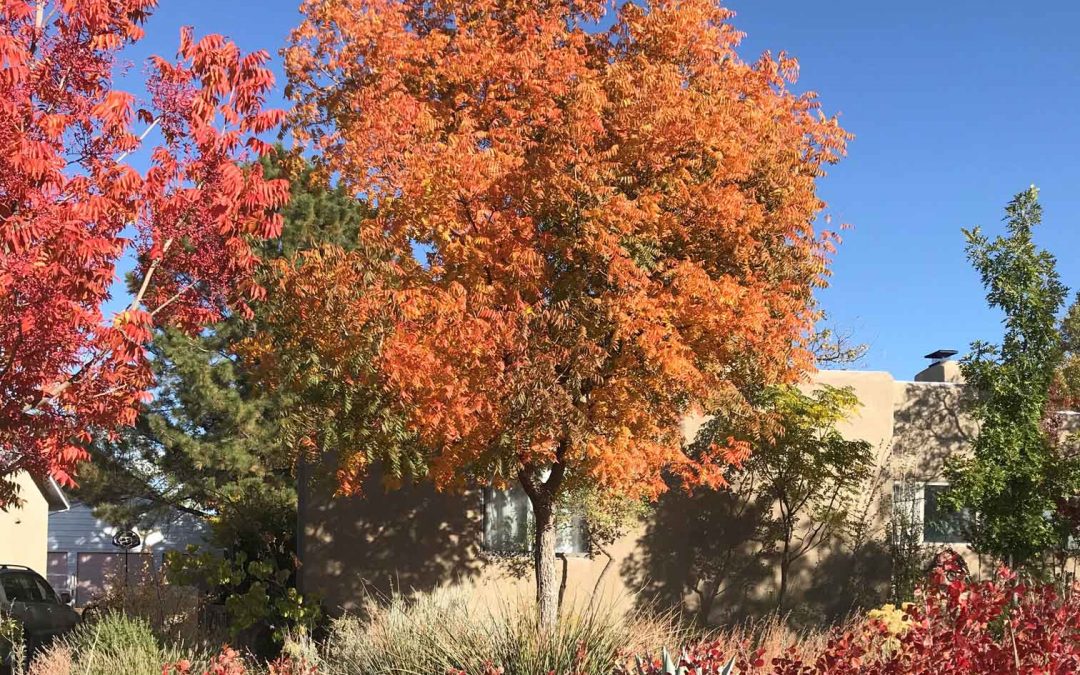
Fall can be a great time to plant, especially if you are planting higher elevation and temperate climate plants that are adapted to cooler, more humid growing conditions. In the fall, the soil is still warm enough to encourage roots to develop so watering properly makes a big difference on preparing them to survive in the winter season. What to plant? Most conifers, shade trees, cool season grass and moisture-loving fruit and ornamental trees, such as crabapples, apples and pears, are a great selection for planting in this autumn.
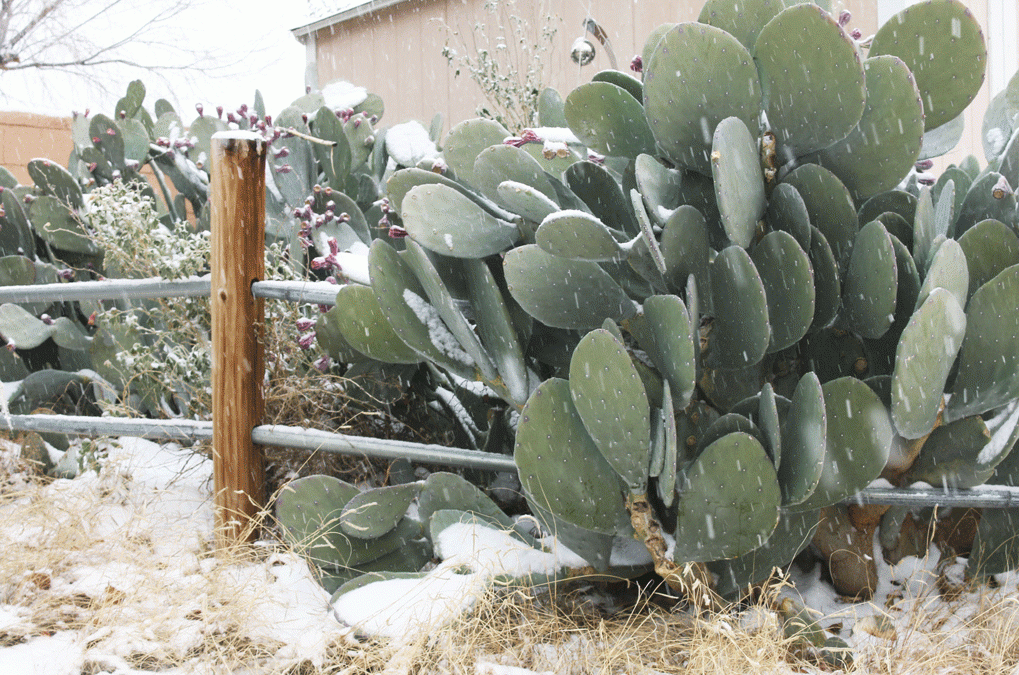
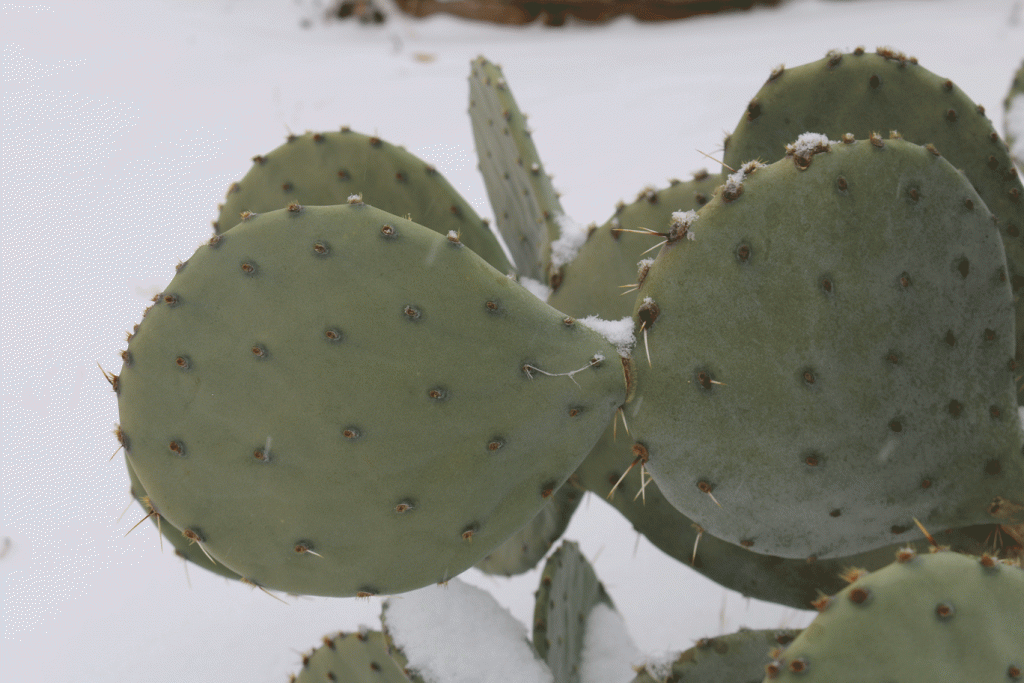
What not to plant this fall? The answer is plants from desert ecosystems like southern New Mexico and the Mediterranean natives. Their newly planted roots are less able to survive our winter cold. The same is true for perennial wildflowers and warm season grasses. These should be planted in the spring through early August. Succulents are another group of plants that thrive after settling into the garden during the warmer part of the growing season, so wait until the spring to plant them.
Knowing what to plant at this time of year will give you that edge you need to grow healthy plants!
Author: Judith Phillips, owner of Design Oasis, landscape designer, and garden writer with 30 years of experience designing arid-adapted and native gardens in the high desert. Photography:Plants of the Southwest. Have a question about the article? [email protected]
Just as we take shelter when the weather turns colder, so do your plants. This time of year, plants store most of their nutrients in the roots and find shelter in the ground. We can support this transition to help plants thrive during the entire winter season.
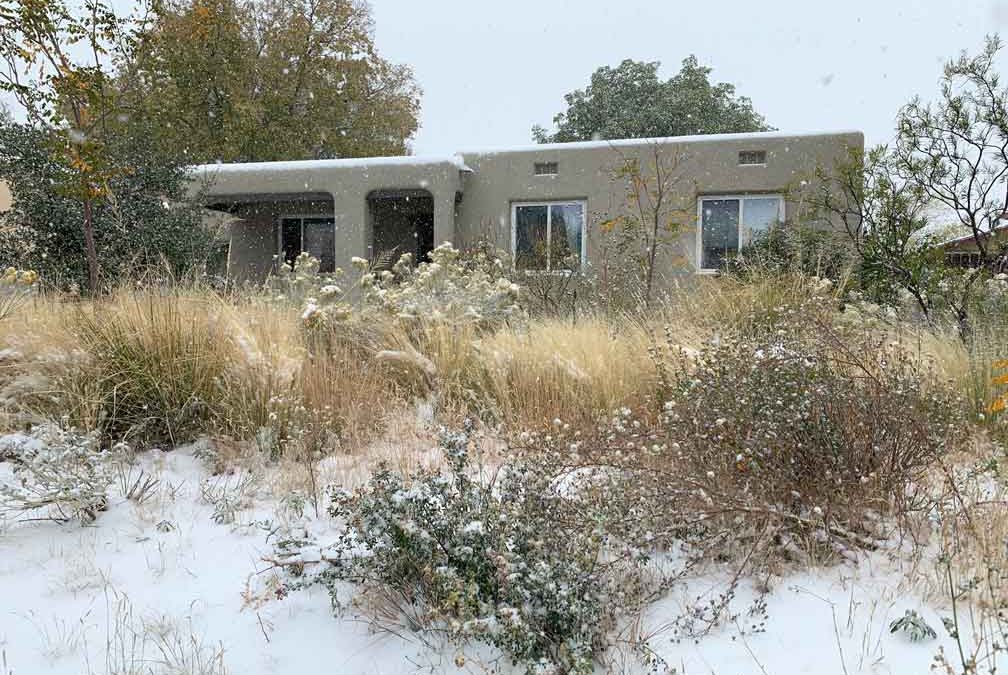
Also, it is time to give your irrigation system a rest. The recent storm brought much-needed precipitation and along with the snow came freezing temperatures. To avoid damage to your irrigation system we recommend setting it to the OFF position. Your next step will be to wait for a warm day, to deeply water one more time and then take steps to winterize your irrigation system.
Follow this advice to ensure landscape success:
How much should I water this November?
1-2 more times this month
Give individual trees 100 gallons to a depth of 24”
Skip watering if it rains or snows
Water turf to ½ inch, 7-10 minutes
Your outdoor water usage should be 80% less than in the summer season
How can I keep my landscape healthy this winter season?
Turf
Mow your lawn to 2-2.5 inches. Grass left too long over the winter can develop brown patches.
Aerate next time it is warm. Aerating your lawn will give it a chance to breathe before the grass goes completely dormant. This also provides relief of any compaction that has built up during the warmer months.
Rake or blow off the leaves that have fallen on your lawn. Leaves that are left on the lawn could become moldy, which invites disease.
Top dress with compost. Compost acts as a fertilizer, adds moisture retention capacity, and improves overall turf health.
Trees
Apply a thin layer of compost, about ½ inch, to provide nutrients.
Add mulch away from the trunk base, about 2 inches thick. Mulch helps maintain your ground at a constant temperature and helps retain moisture.
Water your trees thoroughly once a month, if needed, to support your plants' winter hardiness. Withholding water will not aid the plant in acclimating itself to winter.
How do I avoid irrigation and other plumbing system damage? To avoid costly repairs, we recommend that homeowners take the following steps:
Find the master shutoff valve. The master shutoff valve turns off the water to the entire house. If you have one, learn its location. This could be critical if a pipe should burst. Need an emergency turn-off? Call 842-WATR and select Option 1.
Insulate pipes and faucets in unheated areas. Wrap exposed water pipes in unheated areas (such as a garage, basement, crawl space, or space beneath your mobile home) with insulation or heat tape. Be sure to follow the manufacturer's instructions carefully.
Seal off access doors, air vents, and cracks. Winter winds whistling through overlooked openings can quickly freeze exposed water pipes. DO NOT plug air vents used by your furnace or water heater.
Author: Carlos A. Bustos, Water Conservation Program Manager with the Water Resources Division for the Water Authority. Have a question about the article? [email protected]
The balancing act of watering your trees in the fall and winter is important. Established trees should be watered two to three times a month in the fall season and once a month in the winter season. If not watered properly, trees that get too dry during this time can suffer stress and drought injury. This often does not show up until the heat of the following summer, which then makes trees more susceptible to pests and disease. Fall is the time to set your trees up for winter success.
Other important factors to consider when watering trees:
Newly planted trees (trees planted within 1-3 years), are more susceptible to damage from dry conditions and should be watered more frequently than established trees. Try watering them to a depth of 24 inches three times a month in the fall and twice a month in the winter.
Evergreen trees lose water through their needles in the dry winter air. They need more stored-up water going into the winter season to make up for that. Cold, dry winds can strip water from evergreens faster than their roots can absorb it, too. That is why it is especially important to provide enough water in the fall and during dry, warm spells in the winter.
Even though they lose their leaves, deciduous trees should also not get too dry in the fall and winter. Water acts as an insulator for both the tree and soil. Soil that stays moist will be warmer. Likewise, plant cells that are plump with water will be less susceptible to damage from the cold. Water deciduous trees to a depth of 24 inches twice a month during the fall and once a month in the winter.
When watering any tree, remember to apply water out to the edge of the tree’s canopy drip line. Most established trees have a root spread equal to their height and beyond. Water deeply and avoid spraying foliage. Watering to the right depth depends on your specific soils, so you will want to measure how much water it takes your soils to reach 24 inches deep. Read this article for tips on measuring watering depth.
One of the best things you can do for your trees in the coming months is to add mulch. Layering three to four inches of organic mulch protects the soil from moisture loss and helps regulate soil temperature throughout the winter. Treebates for bulk organic mulch is available.
Pro Tip: "Watering to the right depth and managing the frequency of watering are both very important aspects of keeping our plants healthy throughout the year, but especially in the fall and winter months,” says Patrick Chavez, Trees of Corrales Wholesale Nursery.
Author: Amos Arber, Xeriscape Incentive Inspector, and Certified Arborist with the Water Resources Division for the Water Authority. Photography: Wes Brittenham Pro tip:Trees of Corrales Have a question about the article? [email protected]
September days can have widely varying temperatures, with some days getting into the 90s, but we can count on nights being longer and cooler. This means that plants do not need to be watered as often. Ramping down how often you water your yard is a great way to save money on your water bill and keep plants happy.
After spending the summer putting energy into growing leaves, flowers, and fruit, plants use the fall to store water and energy in their roots for winter survival and spring growth. Proper watering supports this activity.
Ramping down your irrigation does not mean you should stop watering altogether. If you have a lawn, cut back to two days per week. Cut back to two times a month for mature trees (4 times a month for younger trees).
A lot of things have changed since last spring, but at least one thing is the same: April 1 is still the date on which time-of-day watering rules go into effect for Water Authority customers in Albuquerque and Bernalillo County. That means sprinkler and spray irrigation is not allowed between 11 a.m. and 7 p.m. from now until Oct. 31 in order to minimize losses to wind and evaporation.
Using spray irrigation during the hottest, windiest part of
the day is not efficient. Instead, water in the early morning or in the evening
when it’s cooler. Another good way to avoid water waste is by troubleshooting
your irrigation system on a regular basis to identify leaks and make sure water
is directed properly to the plants. Follow these tips for a desert friendly
yard:
For turf, follow the Water by the Numbers program and adjust your watering schedule as the season changes: Two days per week in April and May, three days per week in the summer, and ramp down again in the fall.
Irrigate only when your plants need it, and water them deeply rather than too frequently. Use a long screwdriver or soil probe to check soil moisture.
Add compost to your soil to increase moisture retention and boost soil fertility.
Mulch around plants to help retain moisture and reduce weeds.
Grow strong and healthy trees by watering infrequently, to a depth of at least 24,” in a wide area around the tree’s canopy. Many of our trees only need deep watering 1 -2 times per month (depending on the species and conditions).
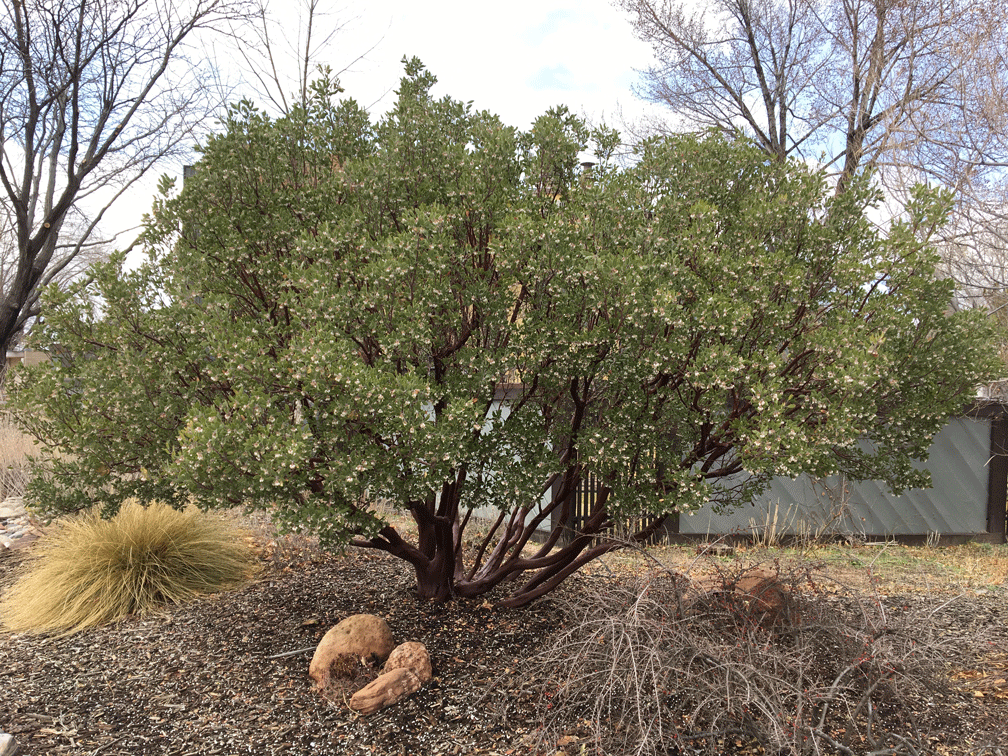
When we think of the word evergreen, many of us think about pine trees, cedars and junipers. However, an evergreen is simply any plant that remains green all year long. These plants are welcome fixtures in our winter landscapes, too. 505Outside highlights these essential elements of the greater Albuquerque area landscape by asking local plant experts which ones they love. Below are some of their favorites.
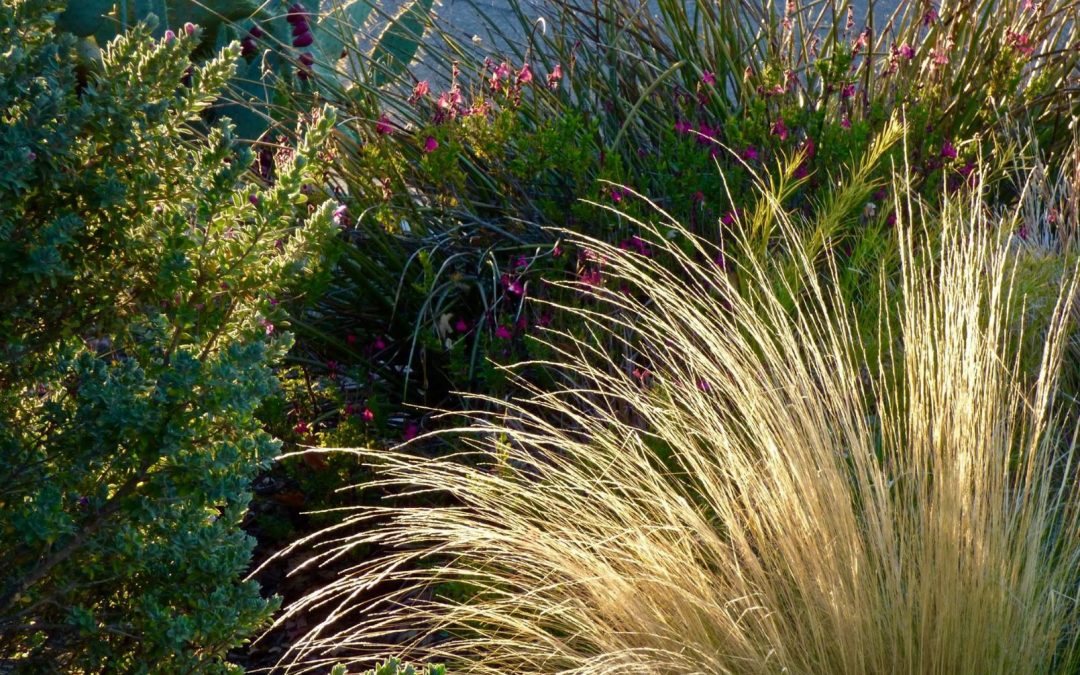
When the last of the yellow and purple perennial colors fade away in the fall, these (and other) evergreen plants provide the structure that holds landscapes together through the winter months. Don’t forget to include evergreen plants in your landscape for year-round interest.