Mosquitoes have been so very prominent here in the Albuquerque area over the last five years, and we’ve been learning a lot about how to live with them in our yards. Fortunately, Bernalillo County and the City of Albuquerque have been studying mosquito lifecycles, treatment and abatement for years.
There are three types of mosquitoes found in our area, including the Aedes vexans (floodwater mosquito) and the Culex quinquefasciatus (southern house mosquito). Additionally, the Aedes aegypti (yellow fever mosquito) has become firmly established in the Albuquerque area in recent years.
All these species are well adapted to the local environment, but they differ significantly in behavior, feeding habits and the types of risks they pose. Southern house mosquitoes primarily feed on birds but will bite humans and domestic animals. They are active at night and during dawn and dusk.
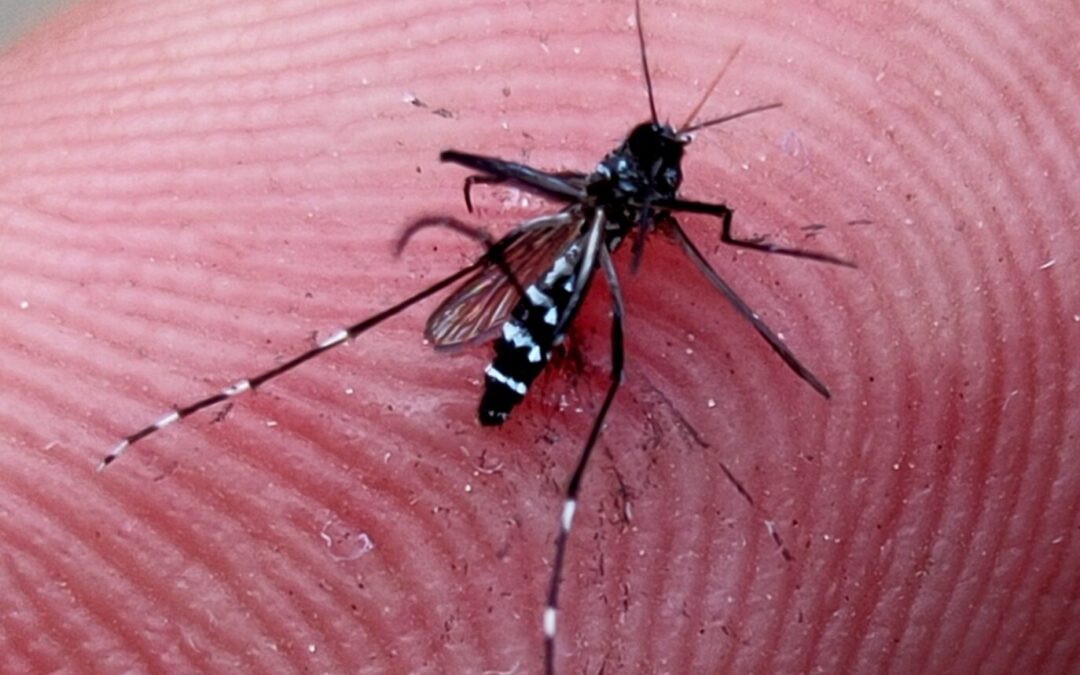
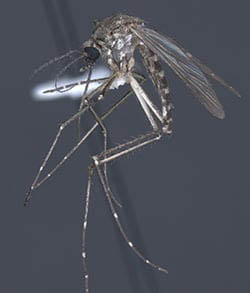
Floodwater mosquitoes prefer to host on humans, livestock and pets. They are highly aggressive and notorious for biting during the evening and nighttime hours. Floodwater mosquitoes are a nuisance because of their painful and frequent bites but not commonly associated with disease.
Floodwater Mosquito
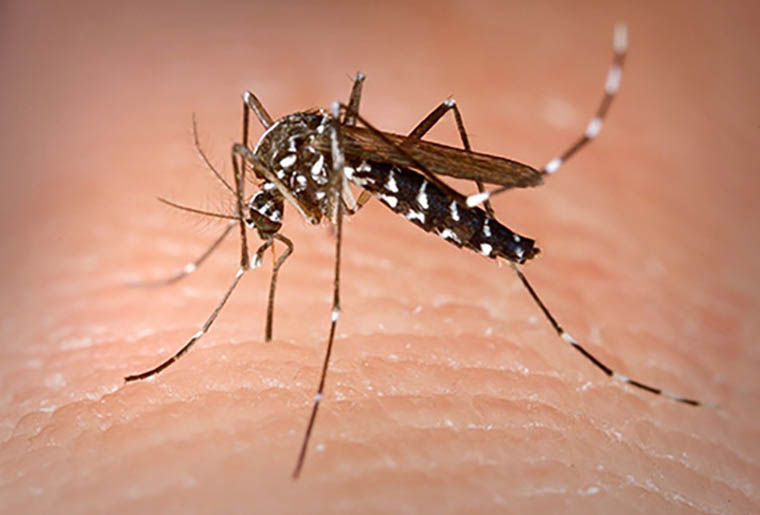
Yellow fever mosquitoes are specifically human-focused biters that actively hunt during the daytime. They are easily recognized by the distinct white, violin-shaped markings on their back and striped bands on their legs. They are the primary transmitters of critical mosquito-borne diseases, such as Zika, dengue fever and yellow fever. These diseases have not been found in the greater Albuquerque area and City-County prevention is underway to keep it that way. To learn more about the yellow fever mosquito, check out this useful flyer.
Yellow Fever Mosquito
Local mosquito control is conducted as a combined city-county effort. Mosquitoes are controlled at all life stages through a variety of methods, following the principles of integrated pest management. The goal is effective and efficient control designed to minimize the amount of pesticide released in the environment and to prevent pesticide resistance. Protecting public health and ensuring that outdoor activities can be enjoyed safely and comfortably is the City-County partnerships underlying mission.
Albuquerque and Bernalillo County residents can report mosquito issues by calling 311.
Residents who don't wish to have their property sprayed can register on the No-Spray List by calling 311.
The most important things you can do are reducing mosquito breeding habitat and preventing mosquito bites as per City of Albuquerque Environmental Health Department.
What you can do
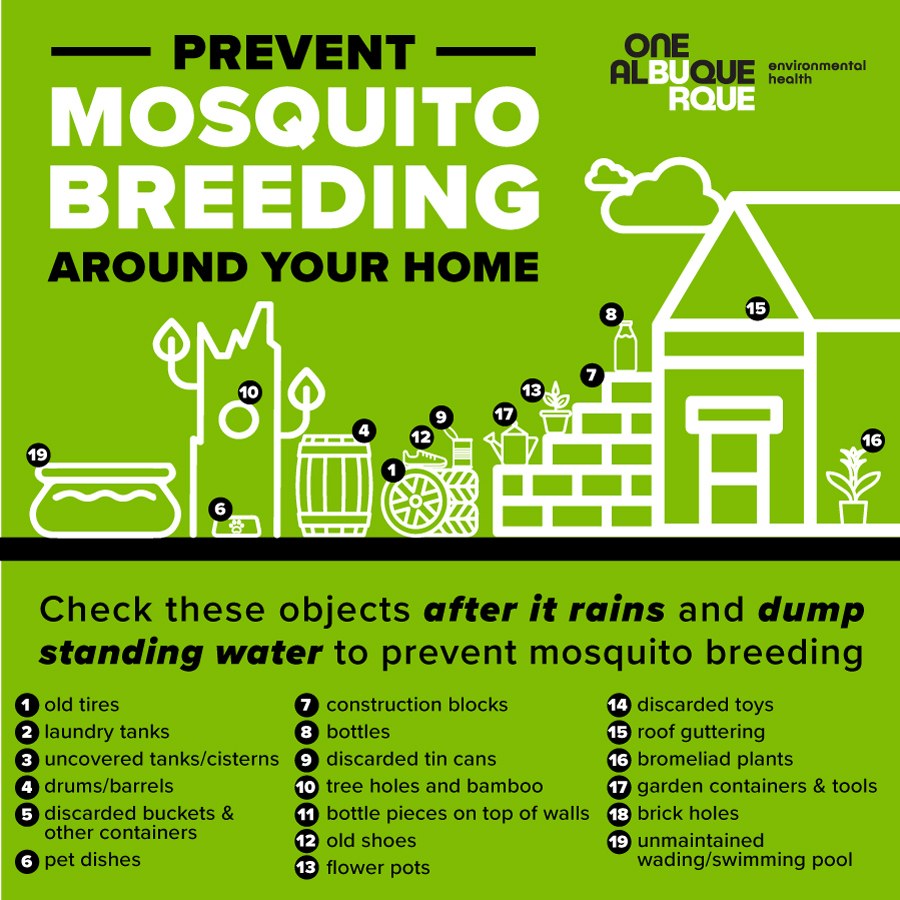
Prevent mosquito breeding on your property
Dump standing water found in trays beneath potted plants; used tires; trash, discarded buckets and other containers; children’s toys; and other places.
Store containers that could hold water upside down.
Keep your property uncluttered — mosquitoes can breed in the smallest pools of water even as small as a bottle cap.
Clean pet water dishes regularly by emptying, scrubbing and replacing the water.
Replace bird bath water regularly.
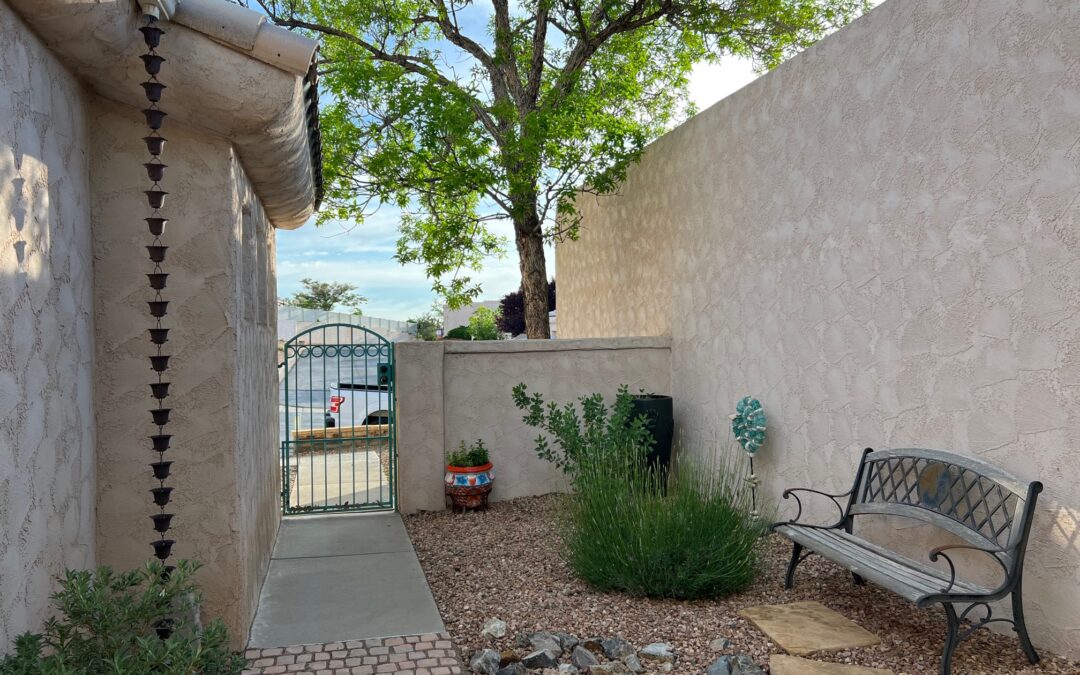
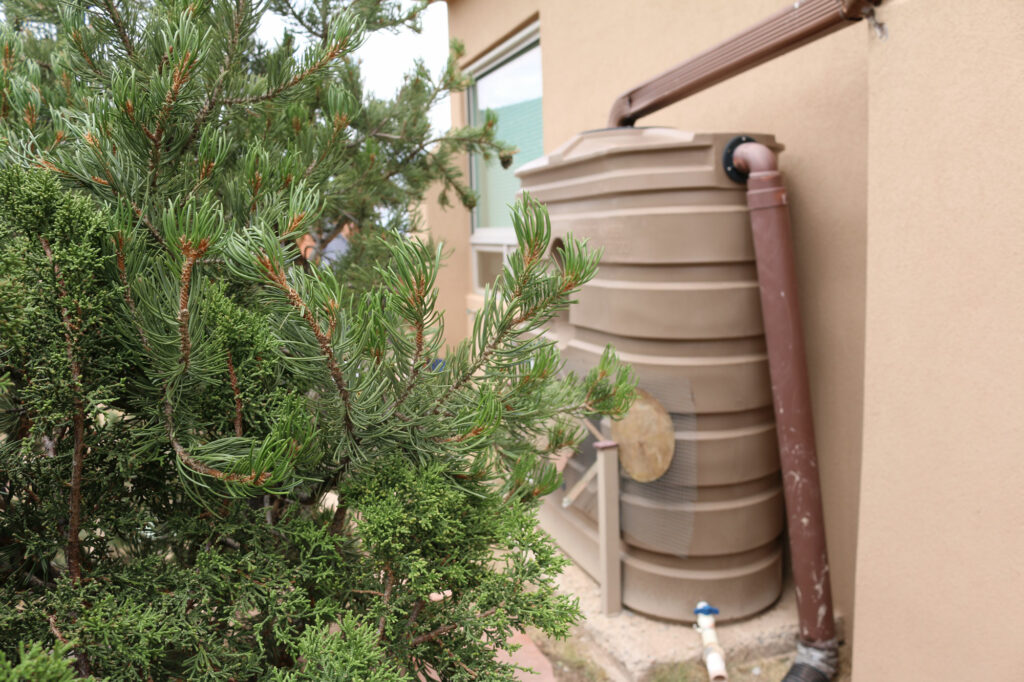
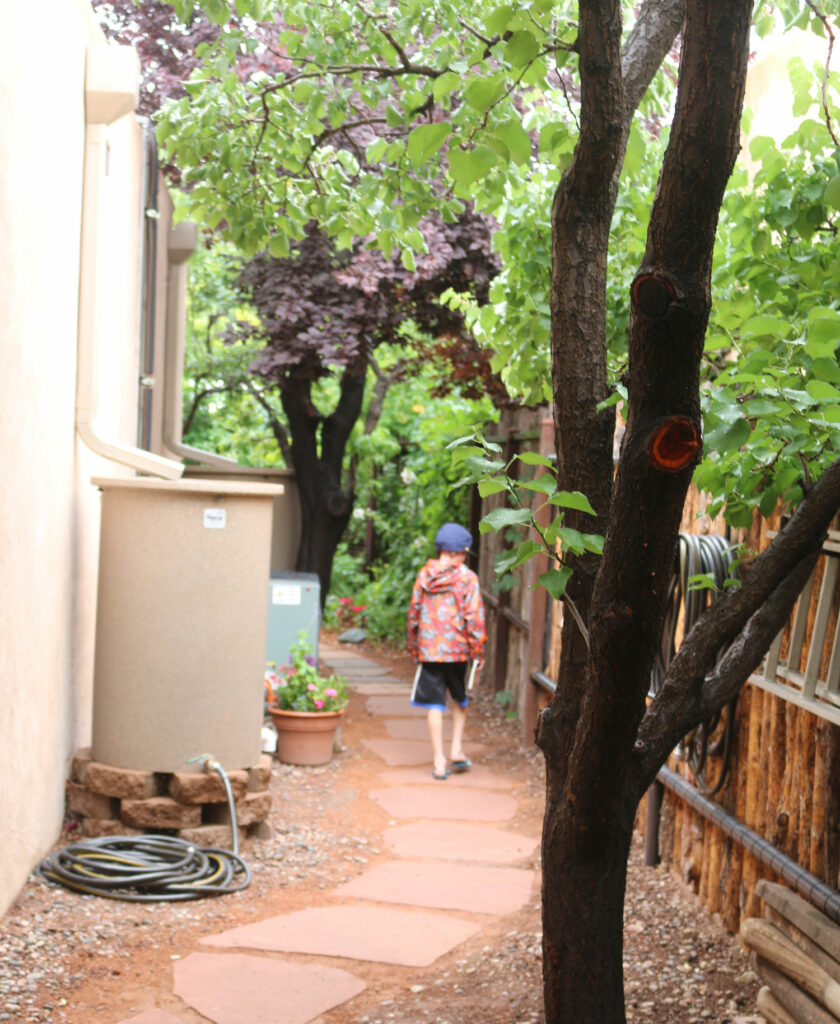
Cover rain barrels with a fine mesh and treat with mosquito dunks. Mosquito dunks contain bacteria called Bacillus thuringiensis israelensis (Bti). Bti is a naturally occurring bacterium found in soils. It contains spores that produce toxins that specifically target the larvae of the mosquito. Bti has no toxicity to people and is approved for pest control in organic farming operations. It has been well tested and based on the studies EPA has concluded that Bti does not pose a risk to humans. The Bti mosquito dunks are sold at hardware, home improvement, and feed supply stores. They can be placed in standing water, and the bacteria will kill mosquito larvae.
Treat pools with chlorine. If not in use, keep empty or treat with mosquito dunks
Reduce moist collection areas in your grass lawn as mosquitos like to bread in these small moist spaces. Aim to space your sprinkler watering out so the wet areas dry up between irrigation days.
Add mosquitofish, Gambusia affinis, to ponds and small water features (available free from the City of Albuquerque by calling 311).
Check flat roofs for pockets of water in shaded areas and clogged rain gutters.
Prevent mosquitoes from entering your home
Keep door and window screens in good condition.
Check window screens and doors for holes and repair any holes with sticky screen tape.
Protect yourself when outdoors
Environmental Protection Agency (EPA) approved insect repellents include those containing DEET, picaridin and oil of lemon eucalyptus.
Wear long sleeves and long pants, especially at dusk and dawn.
Report standing water and high adult populations to 311
Other home strategies
Set out mosquito traps to reduce the number of mosquitoes in your yard or home. BG-sentinel traps use dry ice (which can be bought at a grocery store) and/or a scent bait to attract mosquitoes and are very effective. The City uses BG-Sentinel traps when conducting mosquito surveillance. Ovitraps can be used to attract females that are ready to lay their eggs. It is important to maintain ovitraps by adding a mosquito dunk or they will become breeding habitat.
Repel mosquitoes with smell: Mosquitoes rely heavily on their sense of smell to locate their next meal. They are attracted to certain odors, such as carbon dioxide from our breath and lactic acid from our skin. Mosquitoes hate strong, pungent and herbaceous scents that mask the carbon dioxide and lactic acid humans emit. These can be distributed as sprays, diffused as essential oils or the plants can be crushed and rubbed onto your skin for a natural repellent. The smells they don’t like include:
Lemon eucalyptus: Approved by CDC and World Health Organization, it is recognized as one of the most effective natural deterrents. It contains PMD(p-menthane-3,8-diol) which is extracted from the leaves of a lemon eucalyptus tree. This scent is known to block mosquitoes from detecting you.
Citronella: The classic lemon-grass scent disrupts a mosquito's ability to find hosts.
Peppermint and menthol: The intense smell of mint can overpower their sensory receptors.
Lavender: Contains compounds like linalool that deter pests.
Citrus: Citrus smells, such as those from lemons, oranges and grapefruits, are highly effective at repelling mosquitoes. You could place citrus peels in strategic locations to deter mosquitoes from coming too close.
Rosemary: Rosemary is another herb that mosquitoes dislike. Plant rosemary bushes near outdoor seating areas then crush the leaves to release the smells and oils.
Basil: Crush fresh basil leaves to release their scent.
Garlic: Create a garlic spray by mixing crushed garlic cloves with water.
Lemon balm: Rub crushed lemon balm leaves on your skin for added protection.
Catnip: Catnip contains a compound called nepetalactone, which is highly effective at repelling mosquitoes. Plant catnip in pots or in your garden or crush the leaves and rub them on your skin for a natural repellent.
Create DIY sprays: One of the easiest ways to use essential oils for mosquito control is by creating a DIY spray.
Combine:
2 ounces of distilled water
1.5 ounces of witch hazel
30-40 drops of essential oils (Mix and match based on your preferences; effective options include citronella, lavender, peppermint, eucalyptus, lemongrass and tea tree.)
Repel mosquitos with smoke: Incense sticks and smudge sticks have been used around town by local restaurants and in yards with some success.
Repel mosquitos with a fan. The breeze of an outdoor fan can make it harder to trace the scents and harder for them to fly near the fan.
Schedule a yard audit: According to a recent KRQE interview with City of Albuquerque Urban Biology Division Manager Nick Pederson, the city can help residents reduce mosquitoes on private property by performing an inspection. “We like to offer what we call a yard audit or a yard inspection where we’ll come out and actually look at a person’s yard with them and see if we can identify possible sources of mosquito issues,” Pederson said, explaining that these inspections can be requested by contacting 311.
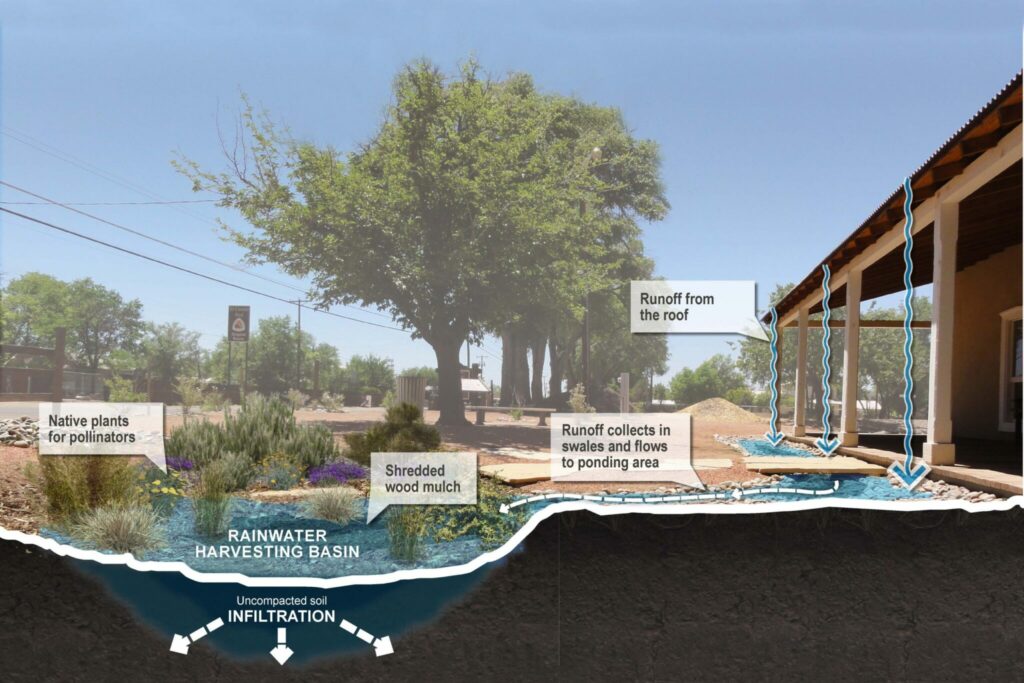
Passive rainwater harvesting allows you to collect rainwater runoff from roofs, patios and driveways as well as the overflow from rain barrels and cisterns (active rainwater harvesting sources) and direct it into the landscape. The water then gets stored in the soil where plants can take advantage of the moisture.
Several rainwater harvesting techniques can turn potential problems (i.e. erosion, flooding or excess moisture near foundations) into water for your plants. Rainwater contains extra nutrients not always found in potable water, so the plants receive additional benefits. Passive rainwater harvesting also helps filter out pollutants, increase infiltration to the aquifer and provide healthier ecosystem habitat.
Start by calculating the amount of water that flows from your potential runoff sources. For every 1,000 square feet of hard surface, 1 inch of rain will generate approximately 600 gallons of water. It’s easy to see why rain barrels or cisterns can quickly fill during medium to larger rain events, so a passive collection system for overflow is always a good idea. You want to make sure whatever system you create will be able to handle a
good-sized rain event (refer to the link above). It’s very important to create a directed overflow so that when there is a large rainstorm, the excess water will flow into a basin or other feature onsite or into the street (if your capacity is limited) without creating erosion.
There are many different techniques, and some can be used together to enhance the benefits. These techniques include rain gardens, swales, basins, soil sponges, curb cuts, French drains and pumice wicks, check dams and gabions. Study your site and these techniques to determine the best option for your garden. Watch your site during a rain to see where the runoff comes from and where it goes. You may want to take advantage of existing patterns.
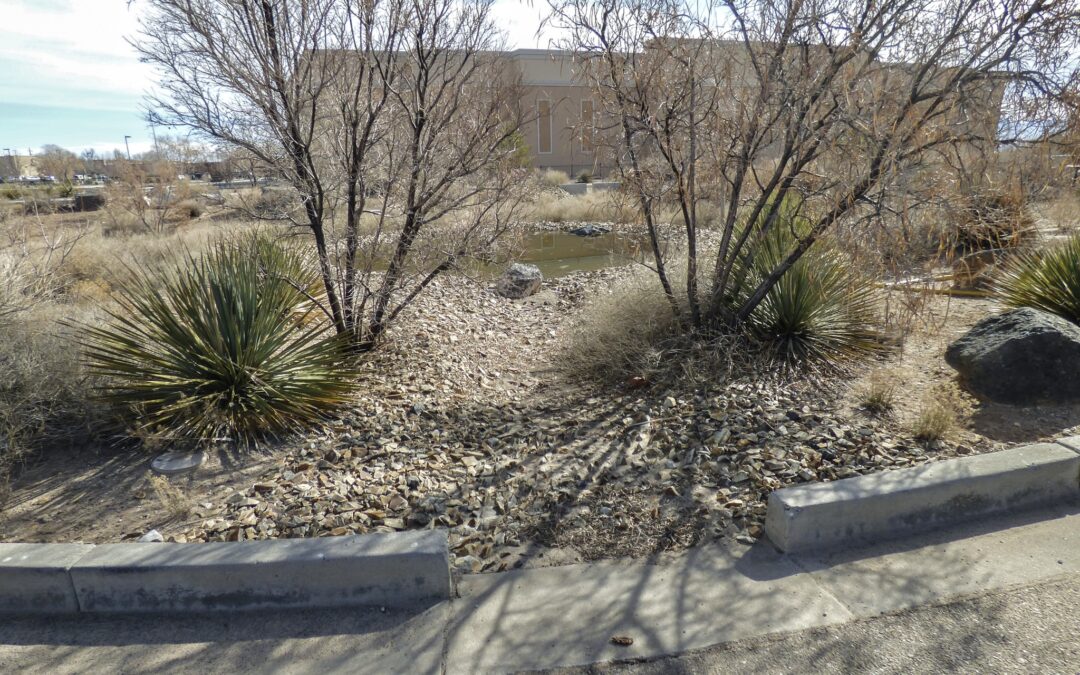
Rain gardens are depressions to catch surface runoff from slopes and are best planted with native plants that can take occasional flooding.
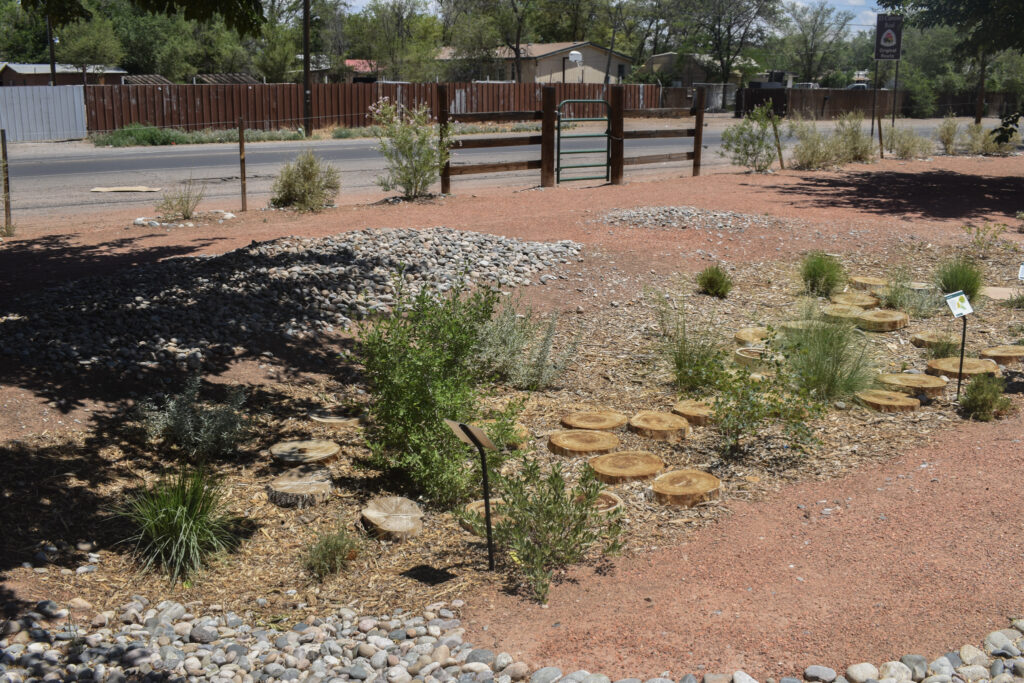
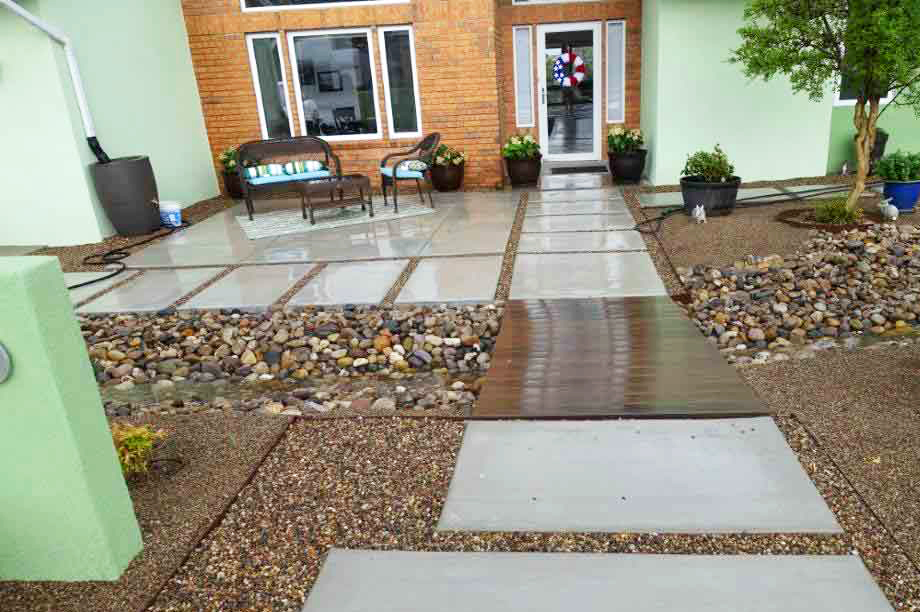
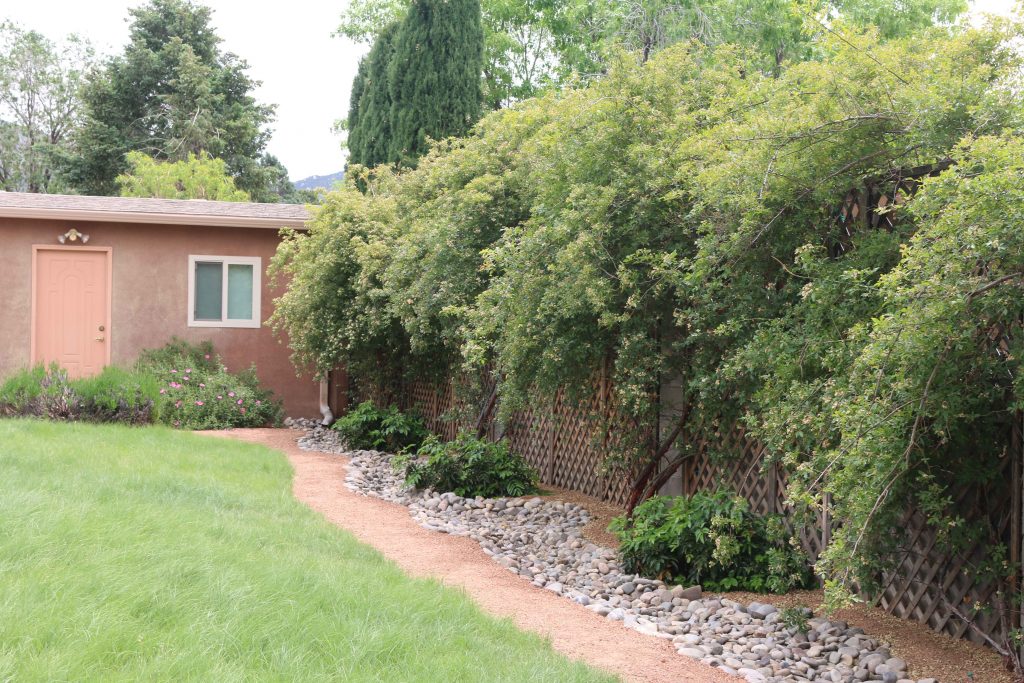
Swales are sloped depressions that convey water into basins or rain gardens from canales, downspouts or other drains. Make sure the slopes consistently move the water downhill and are large enough to not get overwhelmed. Swales are usually lined with large gravel or cobble to prevent erosion. If you have extra material onsite, this is a great recycling solution. Make sure that swales are designed to catch the slow drip of a light rain as well as the powerful flow of a heavy downpour.
Basins are catchment ponds designed to handle large rain events and provide a great place to plant trees and larger shrubs or heavy water use plants that can benefit from the extra water. Calculating the size to match your runoff is vital here. The area where the runoff from your swale(s) enters the basin will need gravel to dissipate the erosive forces. Shredded wood mulch works best in the bottom of the basin. The capacity of the basin and the health of the plants can be further enhanced by installing soil sponges (see below) in the low points. In larger yards, you may want to create a series of basins to increase capacity and opportunities for plantings.
Soil sponges are post holes dug and filled with a soil mix containing compost to increase infiltration and introduce organic matter and beneficial microbes to the soil sponge and surrounding soil. These also provide an avenue for plant roots to quickly grow deeper, improving health and drought tolerance.
Curb cuts are made with a concrete saw to channel runoff into a basin. This can be done on your own property, but permission is needed to cut into a public curb to direct excess water into the street.
French drains and pumice wicks are progressively deeper trenches lined with geotextile fabric (to prevent silting up) and filled with gravel or pumice. These are best used when you have existing trees or large shrubs and the base of those plants is on the same level or higher than where your runoff originates. Aim them directly at the tree or shrub to minimize root damage while still providing additional water to the plants’ root zone. The open space in pumice provides additional water capacity.
Check dams and gabions are small dams used in areas where existing runoff has started to erode and cut deeply into the soil. These small dams slow down the water so it infiltrates and lessens erosion. Gabions are a type of check dam constructed of riprap (oversize gravel/cobble) held together with a wire basket. Generally, both have an area of cobble below to prevent erosion.
Passive rainwater harvesting is a great way to lessen your use of potable water, reduce erosion and provide a supplemental water source for your garden. Remember, you still will need to water your plants (through irrigation or hand watering) to establish them and, in most cases, to maintain their health.
Passive rainwater harvesting is a great way to optimize your landscape while minimizing water use. So you may ask, “What are active and passive rainwater harvesting?”
Active rainwater harvesting involves collecting rainwater runoff from roofs and other impermeable surfaces into containers such as rain barrels or cisterns for later use. These containers can vary from small (50 gallons or less) to very large (thousands of gallons). The saved water can be distributed with a hose or drip system for use in the garden.
Passive rainwater harvesting channels water from roofs, patios or driveways directly into the landscape via swales (channels) into basins (depressions in the landscape) or into French drains where the water will be stored in the soil for use by the plants. For every 1,000 square feet of hard surface, 1 inch of rain will produce about 600 gallons of water, so it’s easy to see how active systems will produce overflow and why it’s always recommended to send that overflow into a passive rainwater harvesting system. This will lessen the amount of potable water you will need for your landscape while improving plant health.
So, what plants should you choose for your passive rainwater harvesting garden? First you need to realize there will be three different zones with different amounts of water available to the plants.
1. The High Ground Zone is the area around the outside perimeter of your basin or swale where there will be limited amounts of extra water available to the plants. This will be your most xeric (low water use) zone. Plants for this area could include:
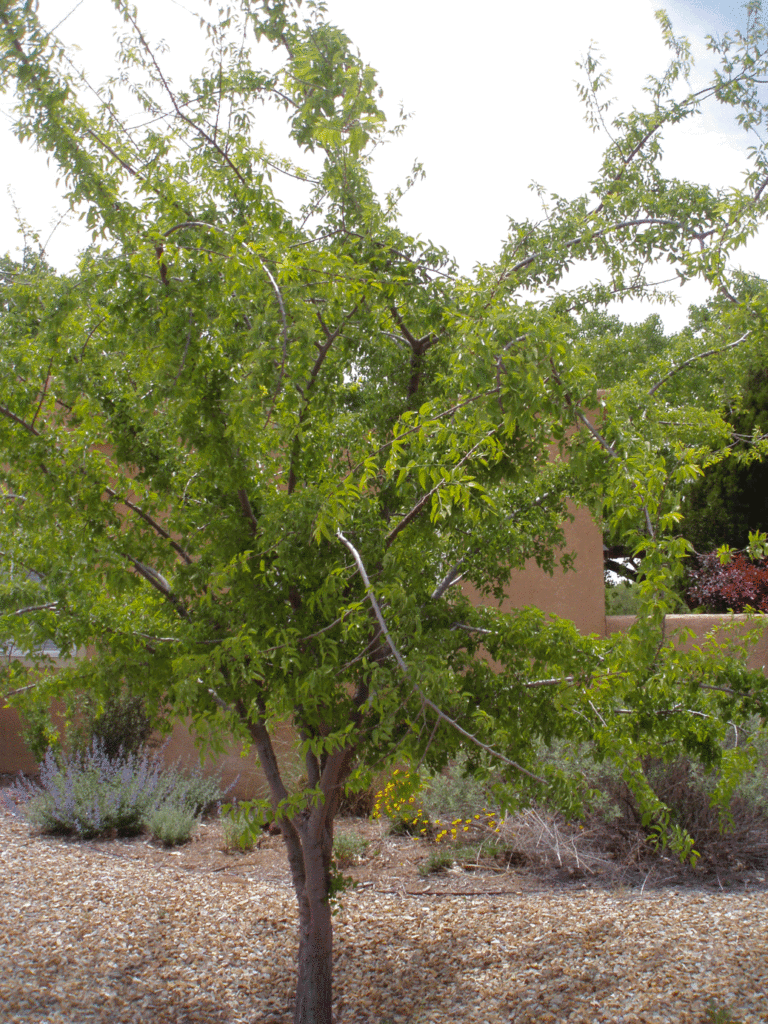
Desert willow (Chilopsis linearis)
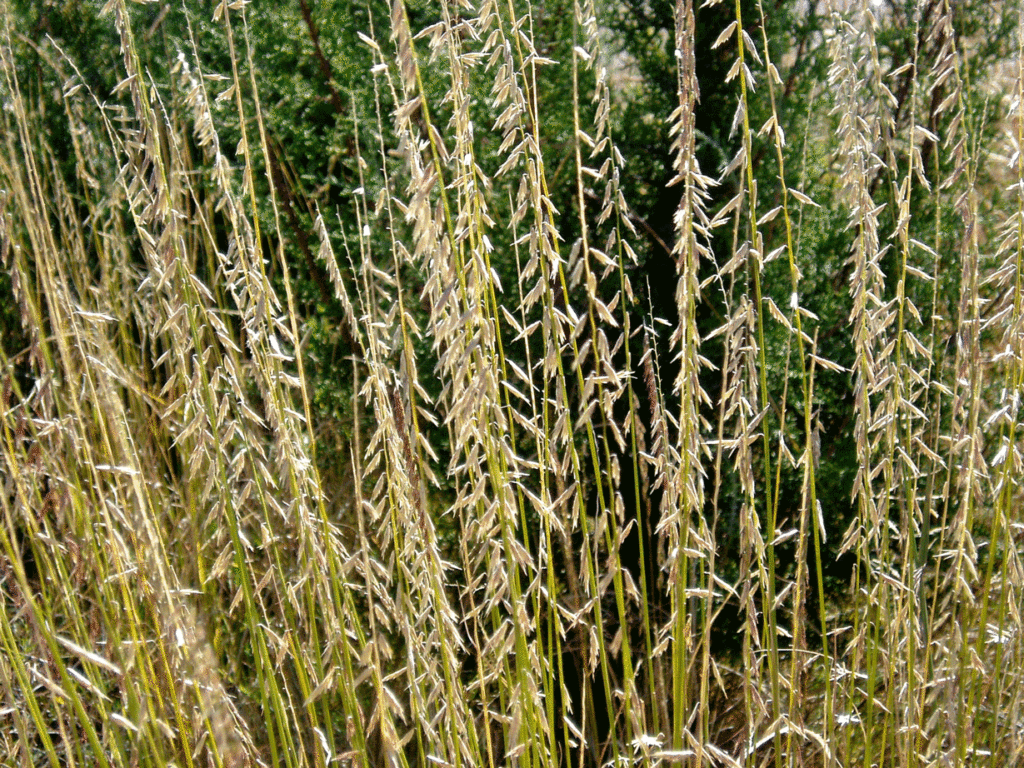
Grasses such as sideoats grama (Bouteloua curtipendula) or sand dropseed (Sporobolus crytandrus)
Desert four o’clock (Mirabilis multiflora) or blackfoot daisy (Melampodium leucanthum)
Sideoats Grama
2. The Transition Zone is partway up the sides of the swale or basin. Plants growing here will get some extra moisture but will not be at the low points of the basin or swale.
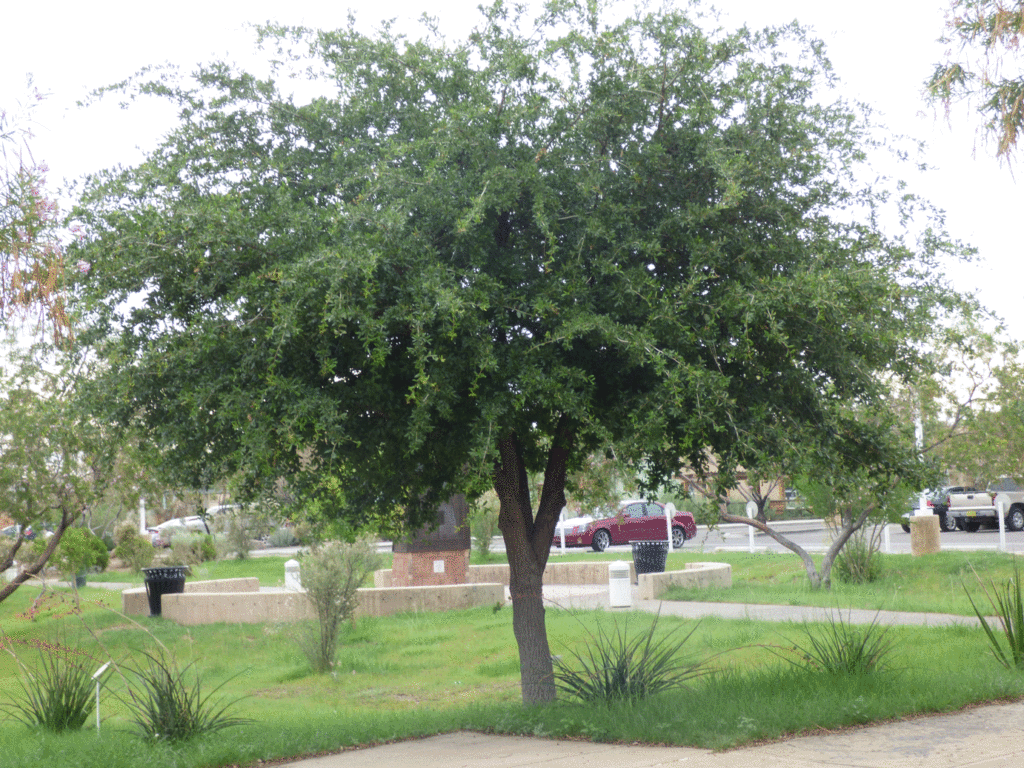
Escarpment live oak (Quercus fusiformus)
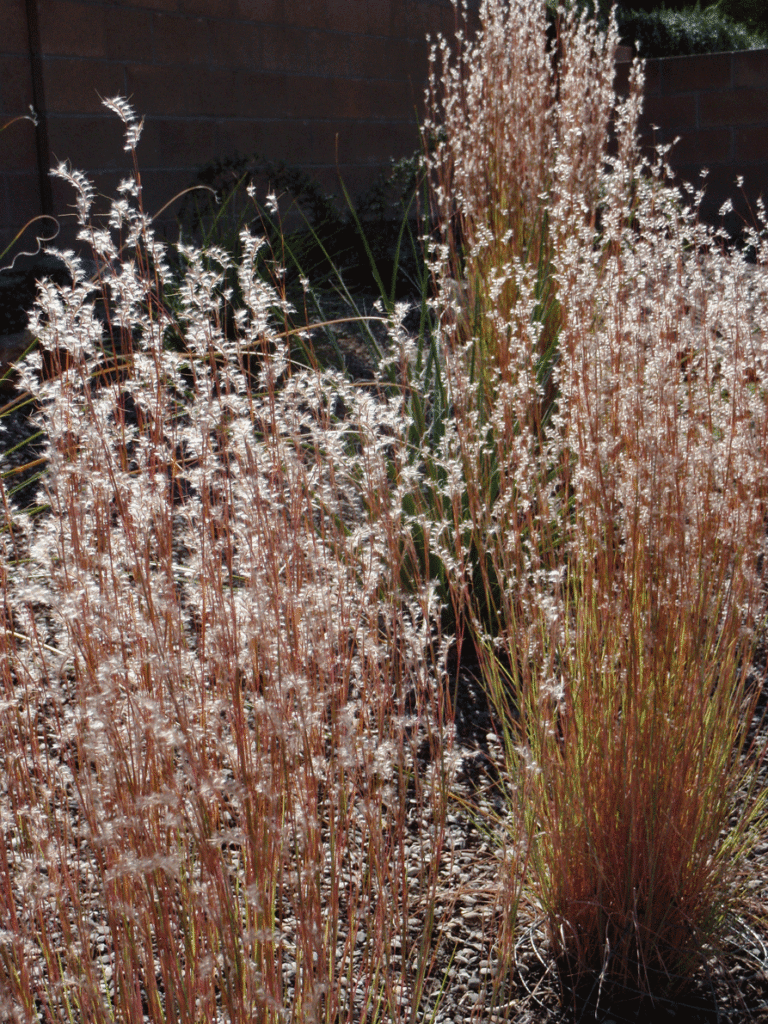
Grasses such as blue grama (Bouteloua gracilis) or little bluestem (Schizachryium scoparium)
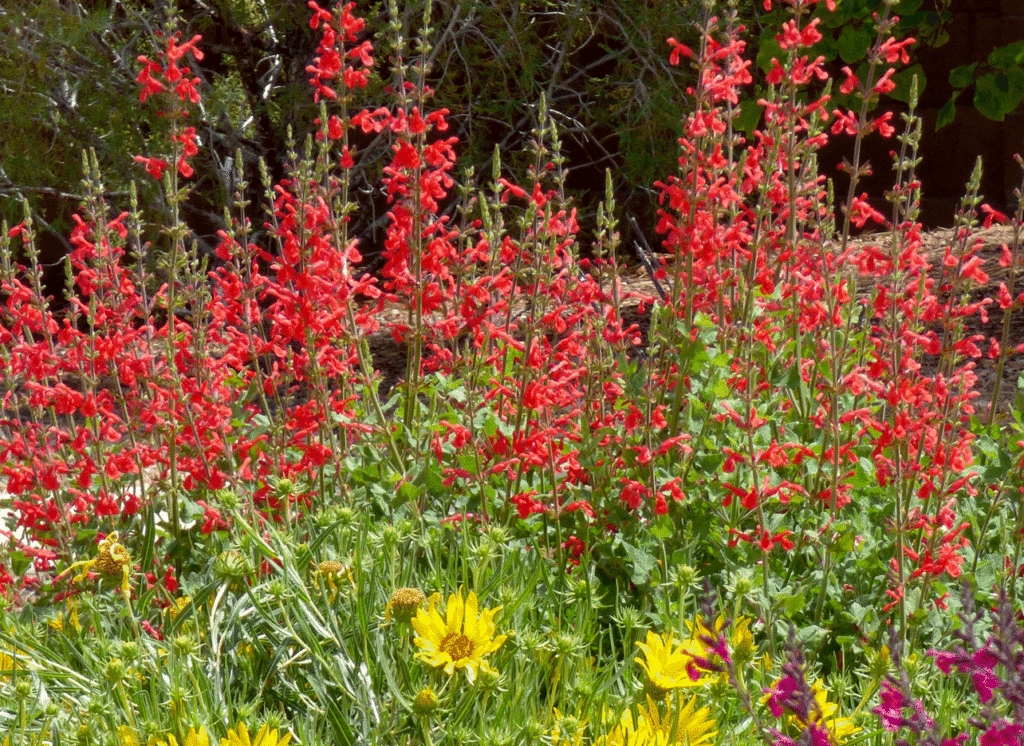
Salvias such as autumn sage (Salvia greggii), Mexican blue sage (Salvia chamaedryoides) or Mexican red sage (Salvia darcyii), or dwarf goldenrod (Solidago sp.)
Escarpment Live OakLittle BluestemSalvia darcyii
3. The Inundation Zone will be the wettest area during large rain events. Only plants that can tolerate periods of standing water will work here. The basins can be enhanced with soil sponges to increase storage capacity and soil quality.
Netleaf hackberry (Celtis reticulata)
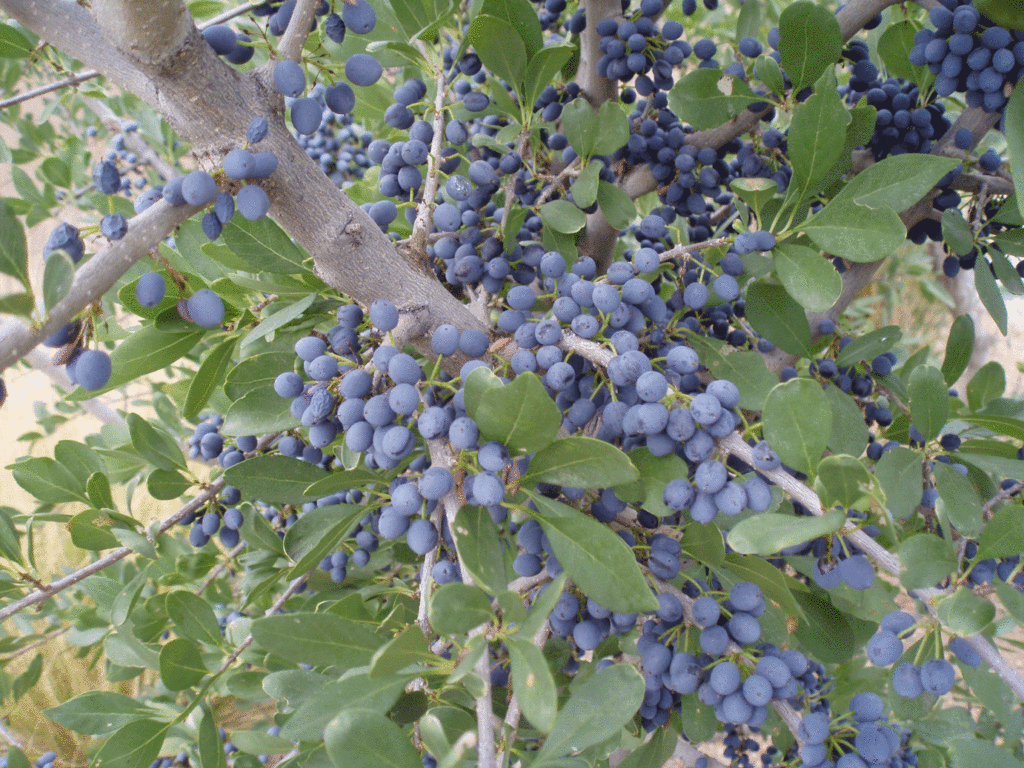
New Mexico olive (Forestiera neomexicana) or fernbush (Chamebatiaria milefolium)
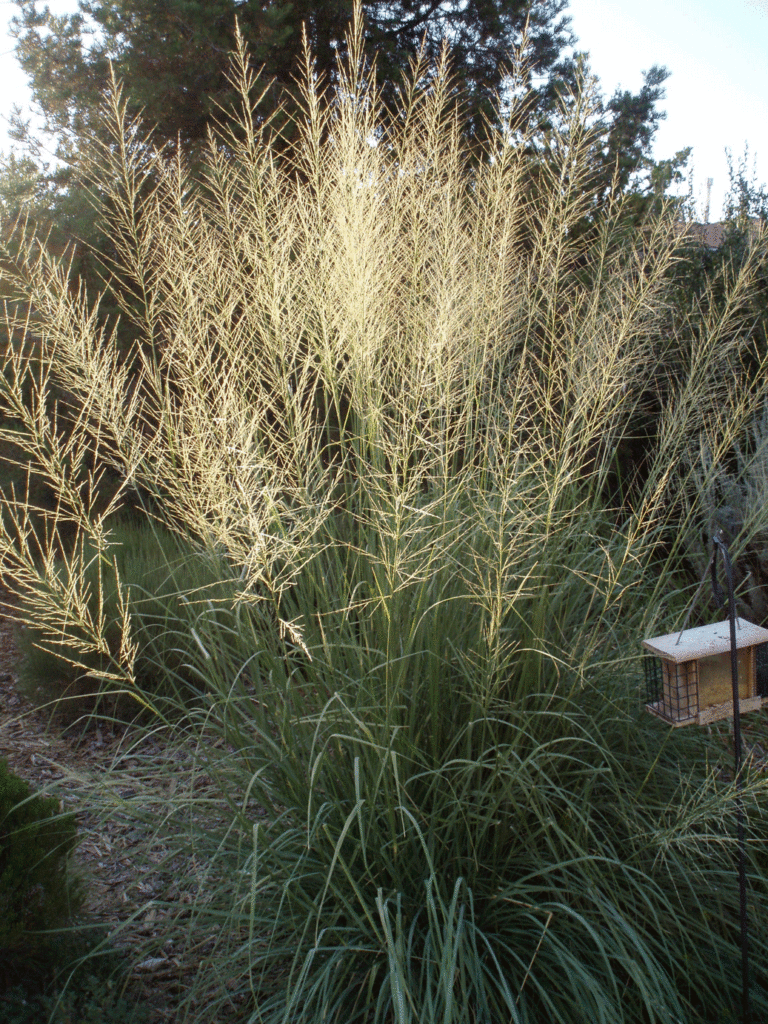
Grasses such as giant sacaton (Sporobolus wrightii) or Indiangrass (Sorghastrum nutans)
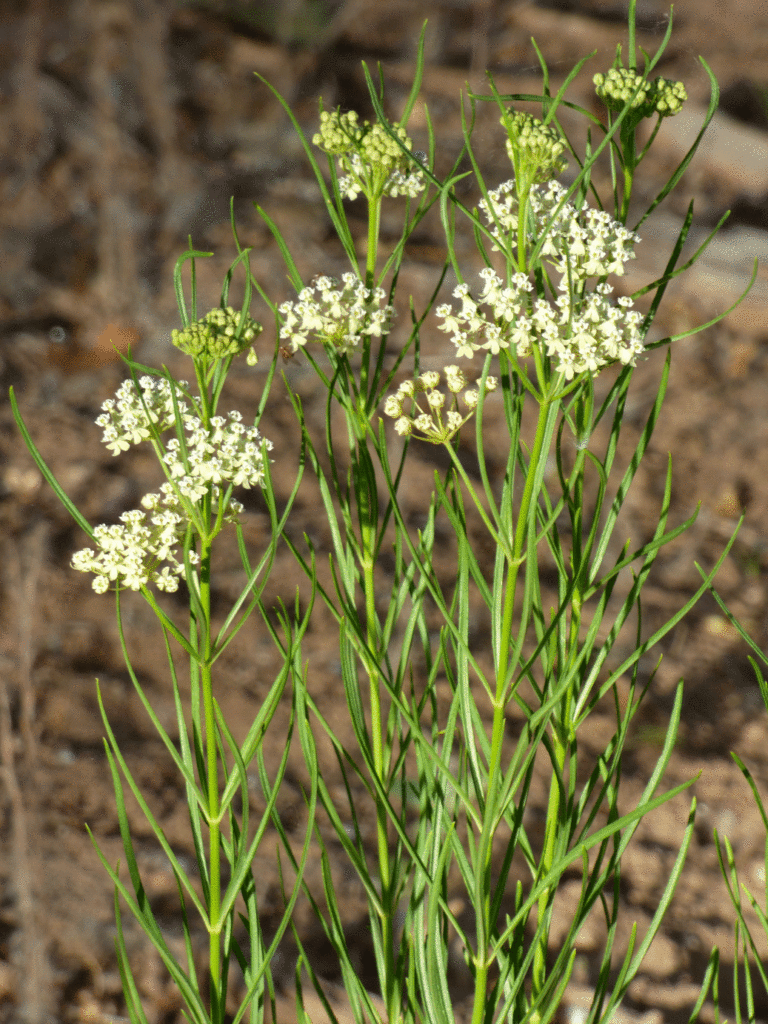
Horsetail milkweed (Asclepius) or creeping germander (Teucrium chaemadrys)
Always make sure the sun or shade exposure needs of the plant match your site and remember that you will need to water these plants at least until established.
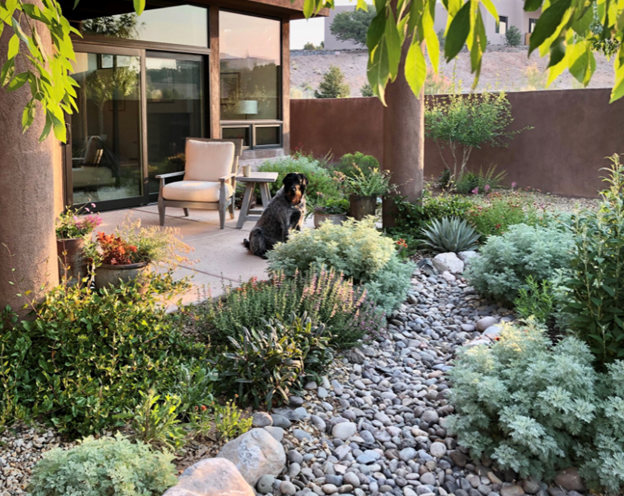
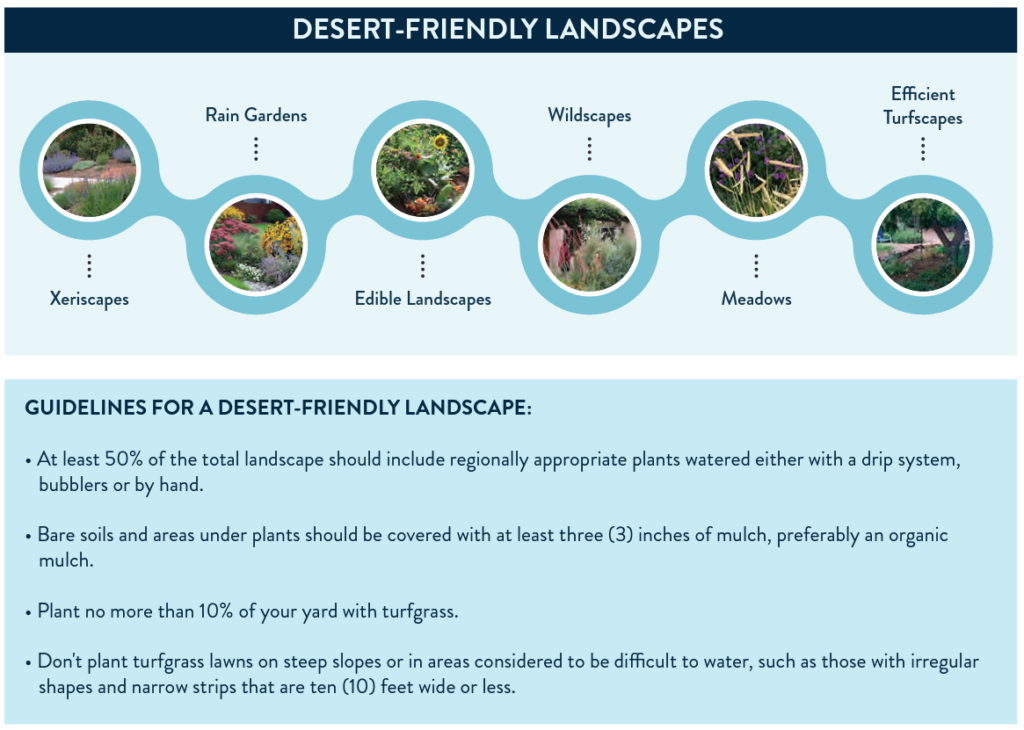
The Albuquerque metro area has a wide variety of landscape types, which include desert-friendly landscapes, lush pollinator-friendly xeriscapes and wildscapes or prairie plantings where native grasses and wildflowers bring the feel of a prairie to a yard. Rain gardens are specifically designed to make the most of natural precipitation, while edible landscapes have garden beds or edible plants interspersed throughout them. Efficient turfscapes have smaller areas of turfgrass and diverse plantings. Conventional turfscapes, with large areas of cool-season grasses and high-water foundation shrub plantings, are no longer considered desert-friendly landscapes. The term “desert-friendly” now describes a variety of landscapes that include beautiful, diverse plantings with increased resiliency achieved through efficient watering.
Rain gardens, a subset of xeriscapes, maximize the benefits of active and passive rainwater harvesting. Plant choices become more critical, particularly if the intent is to use little supplemental irrigation.
Pro Tips for Rain Gardens:
* Direct any overflow from a rain barrel or cistern into a passive water harvesting system.
* Prioritize trees for passive rainwater harvesting.
* Choose low-water and rainwater-only plants for the best results.
* Contour the soil to create gentle berms that drain better. Put water-loving plants in the low spots (swales) where rainwater and irrigation water collect.
Do you want to learn how to harvest rainwater to support a beautiful, regionally adapted, low -water-use landscape in your yard? A new video series launched in June provides instruction on how to design, install, and maintain residential-scale, passive rainwater harvesting features. In passive water harvesting, rainwater is conveyed directly to a landscaped area and infiltrated in the soil.
Landscapes that incorporate rainwater harvesting and native/drought-tolerant plants require little supplemental irrigation. Rainwater harvesting provides the deep watering that large plants like trees and shrubs need in our hot and dry climate. Capturing and infiltrating rainwater also reduces runoff that carries pollutants to the Rio Grande River.
In this series, you will learn how to construct some of the most common passive rainwater harvesting features in residential applications – basins, swales and soil sponges. The training addresses site selection, sizing basins, grading swales, installing soil sponges for enhanced infiltration and selecting plants. It is presented by four local experts on rainwater harvesting and arid-adapted gardens: Jim Brooks, Tess Houle, Judith Phillips, and Hunter Ten Broeck.
The video series was developed through a collaboration between Bernalillo County, Ciudad Soil and Water Conservation District, and the Arid LID Coalition, and included the installation of a Rainwater Harvesting Learning Landscape at the Gutiérrez-Hubbell House History and Cultural Center. Please visit the Rainwater Harvesting Learning Landscape in person to see an example of a rainwater harvesting feature designed for our arid climate.
505Outside sat down with local landscape contractor Hunter Ten Broeck, owner of WaterWise Landscapes Incorporated, to chat about Water Harvesting in Albuquerque.
There are two categories of water harvesting techniques: passive water harvesting and active water harvesting. Passive water harvesting is the practice of slowing water down and encouraging it to soak into the ground. Water is collected from the source (roof, canale, downspout, or sloped earth) and directed to the landscape where the water can be immediately used by the plants. Active water harvesting uses rain barrels, cisterns, and other types of containers to store rainwater for later distribution. These typically hold as few as 200 gallons of water up to 10,000 gallons. A good calculation to remember is 1” of rain on a 1000 sq. ft. roof equals about 600 gallons of water.
Hunter
says the key to any type of water harvesting system, whether active or passive,
is to incorporate it into the landscape design. Thinking through how the rain
water will interact with your landscape and designing for that should be first
and foremost.
When asked what a homeowner could easily do to start water harvesting in their yard, Hunter recommended starting small and trying passive water harvesting. Passive systems can be as simple as a swale, a French drain (or rock burrito, as nicknamed by his staff), or more complicated systems that include building an underground soil sponge area. He says to start by finding the roof’s downspouts and canals, then provide a catch area underneath them. A catch area could be a concrete splash block or cobbles. Then direct that water away from the home via a cobble swale that runs into a planting area. This can be done easily by digging down a few inches and creating a slope away from the house into the planting area. Once the swale is dug, add cobble on top to stabilize the soil and prevent erosion.
Cobble swale located at downspout next to house.
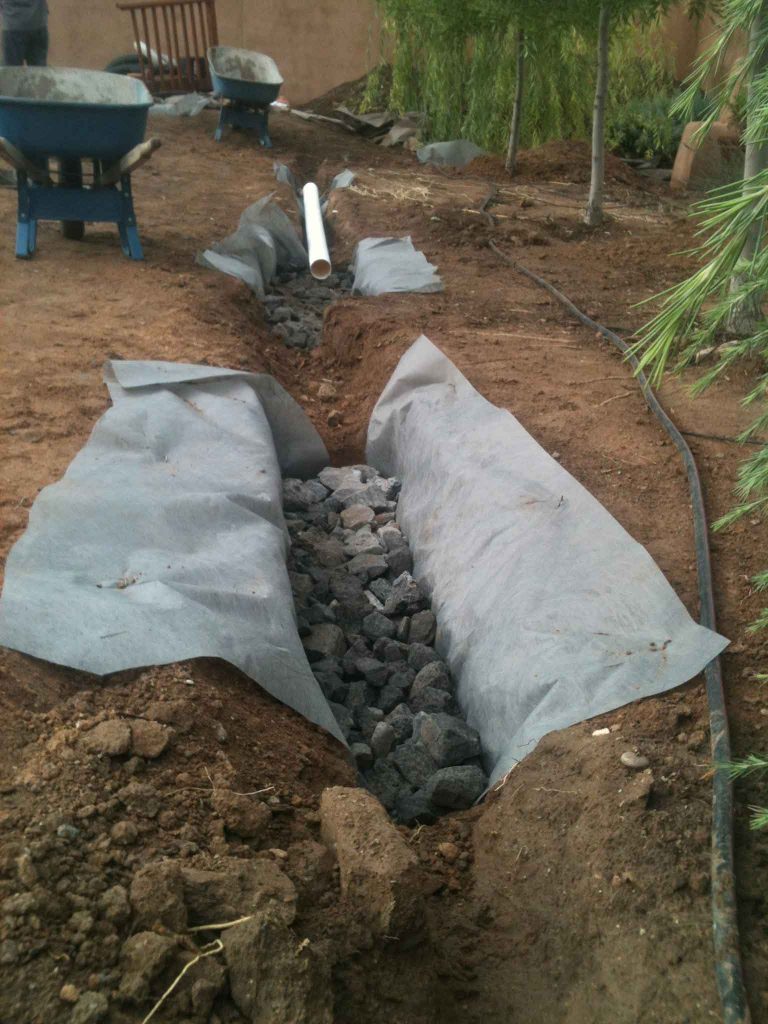
To make Hunter’s “rock burrito” simply dig an 8” wide trench at least 12” deep and as long as necessary for the space. Slope the bottom of the trench toward the drainage area. Layer the trench with filter fabric followed by cobble or rocks. Roll the fabric over the rocks then backfill with soil. This will provide an underground collection area for water. Water will slowly soak into the ground providing moisture to adjacent planting areas.
"Rock Burrito" French drain under construction in an Albuquerque landscape.
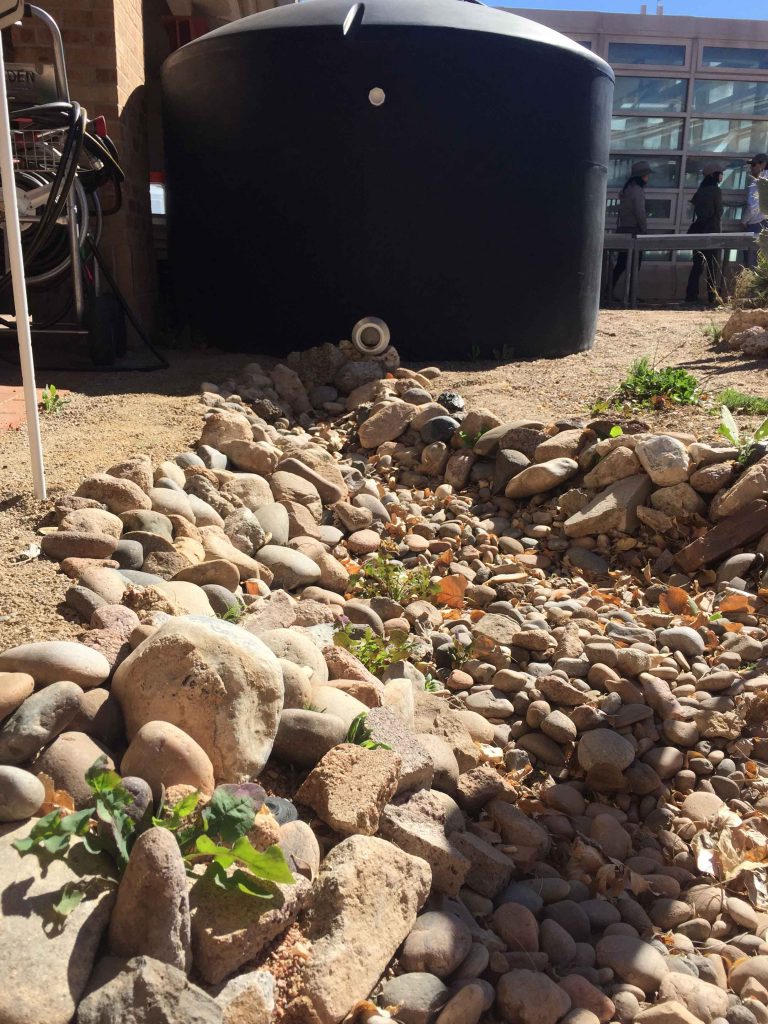
For homeowners who are ready to tackle an active water harvesting system like a rain barrel or cistern, Hunter recommends adding a passive water harvesting system next to the active one for when the container overflows.
Passive water harvesting swale next to active water harvesting cistern.
Using every drop of water through water harvesting is an important feature Hunter incorporates into all his landscape designs.
Local Expert: Hunter Ten Broeck, Landscape Contractor and owner of WaterWise Landscapes Incorporated in Albuquerque, NM. Author: Jill Brown, ASLA Landscape Architect and owner of My Landscape Coach in Albuquerque, NM.

 Floodwater Mosquito
 Yellow Fever Mosquito