We recently spoke with Judith Phillips, a local garden writer and landscape designer, about why vines are so useful in Southwest landscapes and how homeowners can use them successfully.
Vines can feel intimidating because many grow quickly and can become large or unruly. But Phillips points out that they solve landscape challenges where other plant types may not work. Vines create fast shade, screen narrow spaces, add winter interest and provide food and habitat for pollinators.
Below are suggestions of vine species for each of these four landscape scenarios.
CREATE FAST SHADE
When you don’t have the time or space needed to grow shade trees, but you can’t live comfortably outdoors in the blistering sun, building an arbor and planting a vine to provide a cool leafy canopy may be the solution.
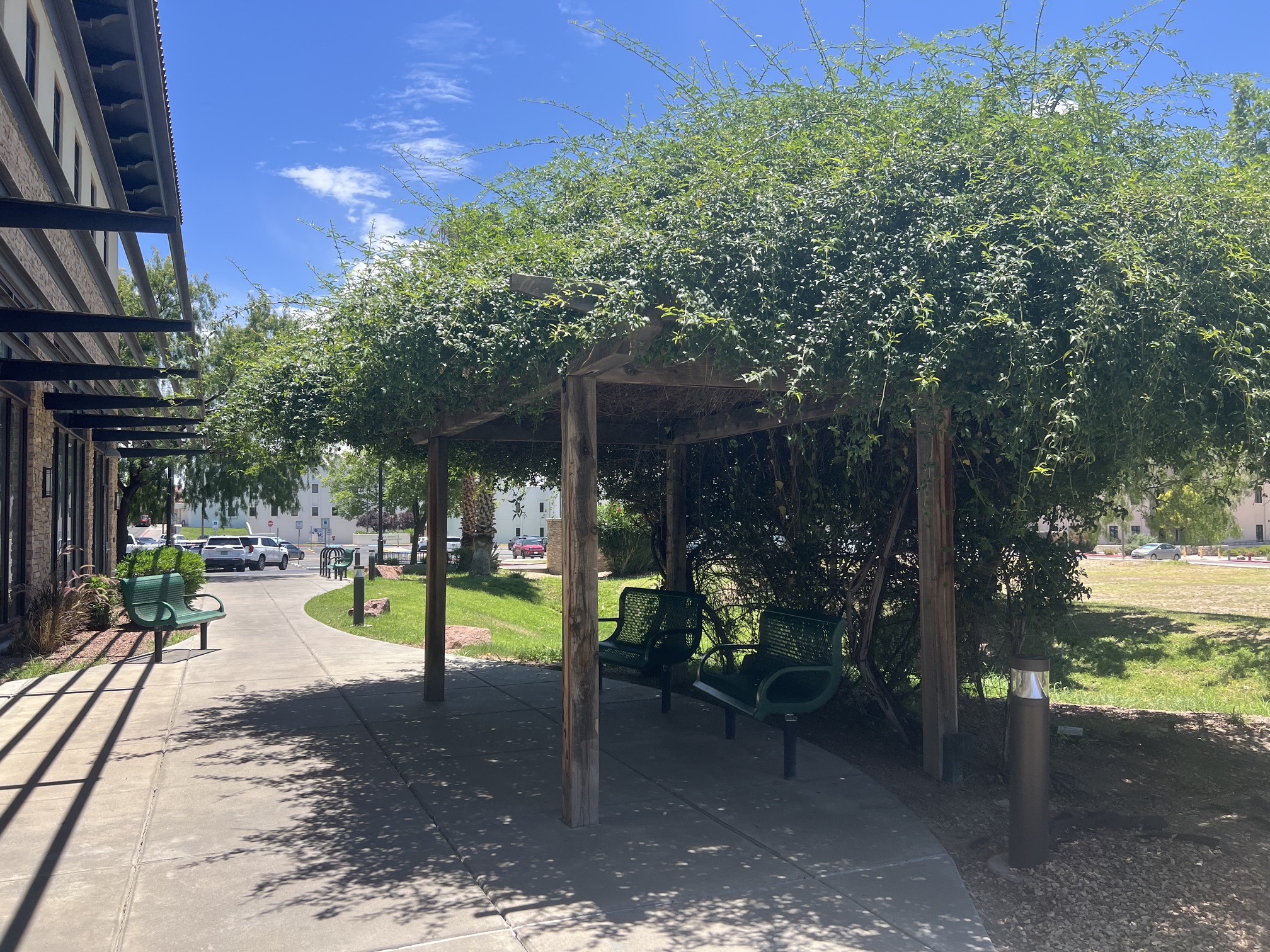
Phillips notes that vines can create shade faster than a tree. Once established, many vines, such as grapes, can have individual canes that grow as much as 10 feet a year, allowing them to quickly climb up and over a pergola or other structure. Because many vines are naturally riparian, an established large woody vine may use about as much water as a medium-sized tree. Their fast growth also means they require regular guidance and pruning, but the reward is a comfortable, inviting outdoor space.
Open lattice ramadas, arbors and pergolas all work well for vines. Wood is commonly used for structures because it is simple and easy to build with, but in Albuquerque’s climate, steel is often ideal because it is strong, long-lasting, low maintenance and resists UV damage.
Vines can be guided around structures, fences and trellises by gently weaving stems or attaching them with twist ties, string or twine through chain-link fencing or welded wire mesh, sometimes called “hog panel.” Remove ties once the vine has grown into place.
Lady Banks’ rose growing on pergola providing shade to seating area.
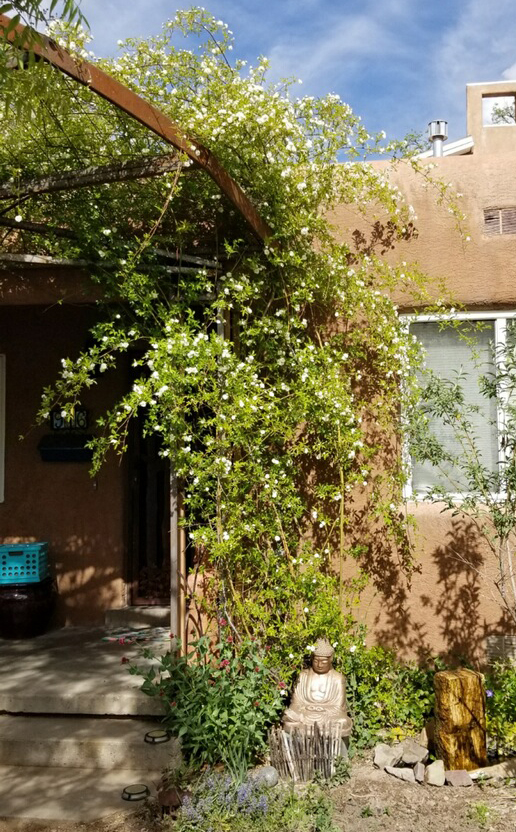
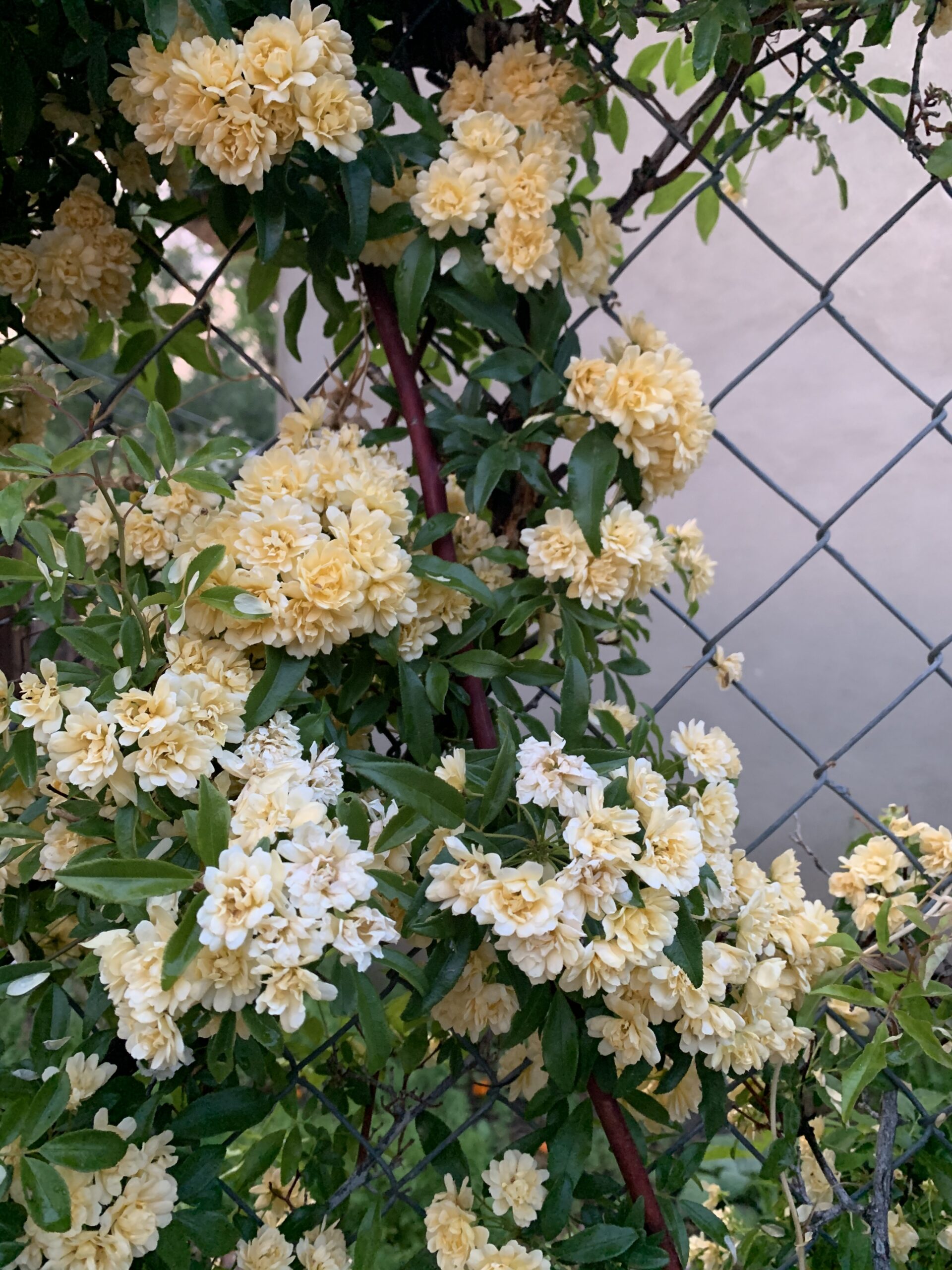
Lady Banks’ rose (Rosa banksiae): Rarely do you find a plant that is fast growing, evergreen and long-lived. Lady Banks’ rose is all those things, and it produces a beautiful if brief show of flowers in spring. And it uses surprisingly little water and grows well in sun or shade. This plant becomes quite large and, unlike most roses, blooms on old wood. If it grows too large, guide it around the structure or prune away unwanted growth; it adapts well to heavy pruning. Lady Banks’ is thornless and has incredible show stopping spring blooms.
Lady Banks’ on metal trellis.
Lady Banks Rose blooming on chain link fence.
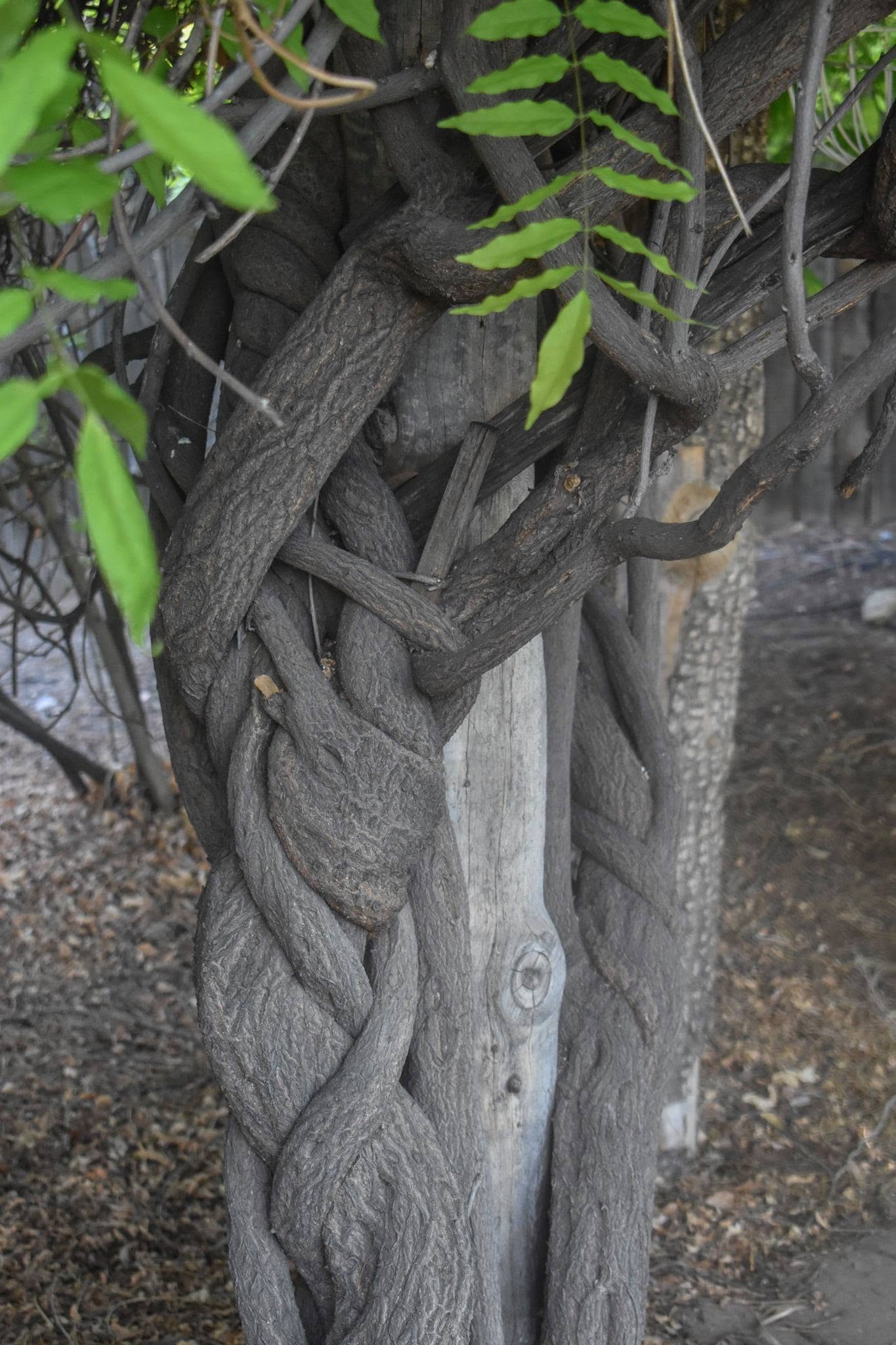
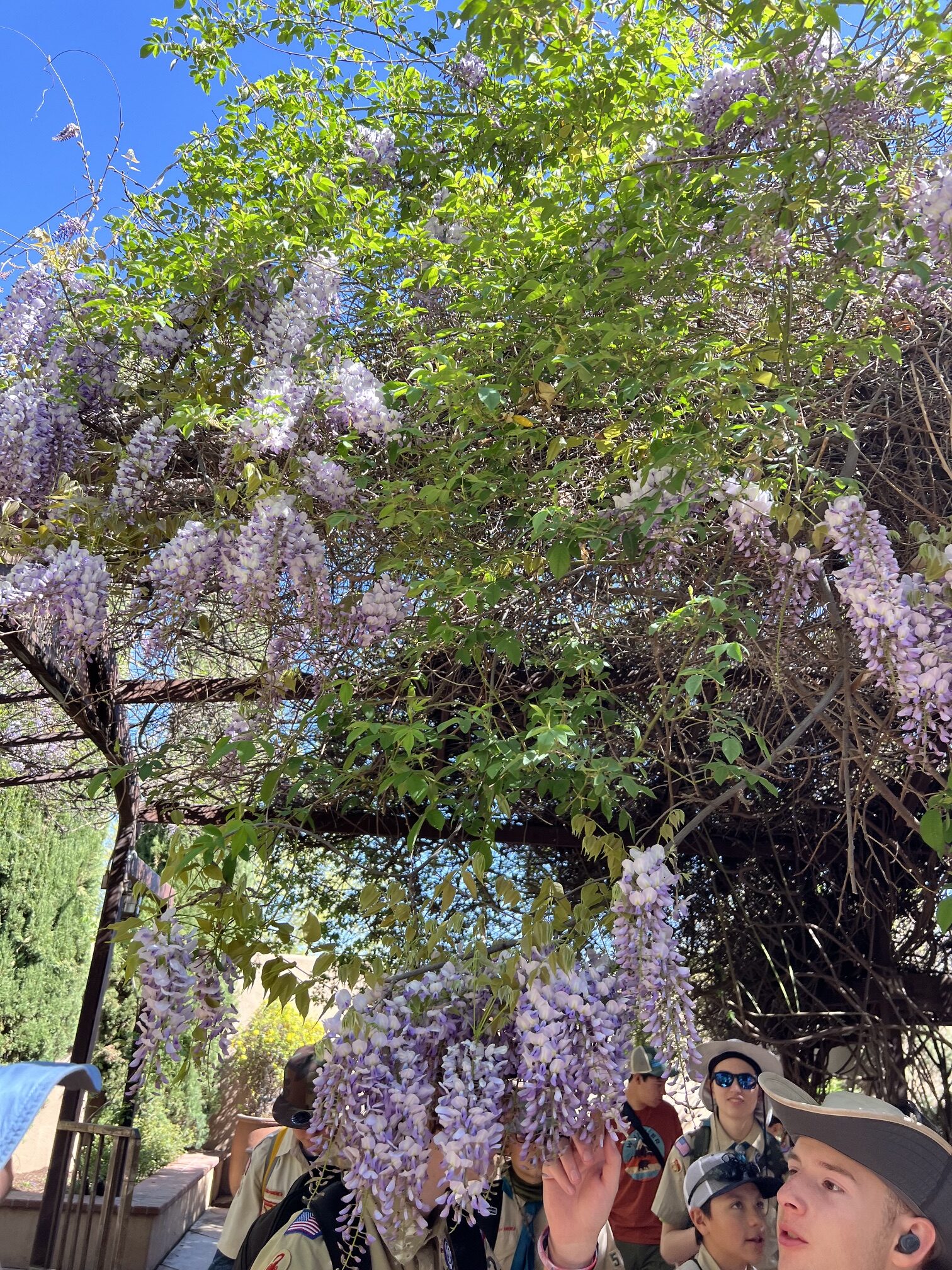
Wisteria (Wisteria sinensis): The pendulous, sweet-scented lavender flowers of this vine are some of the first to bloom in the spring. Bright green leaves follow shortly thereafter, filling the plant and creating lots of dappled shade below. Once the flowers fade, the leaves fill in to provide dense shade in the summer. Expect woody stems over time and train the vine strategically as it develops. Wisteria grows well in sun, shade and part shade.
Close up of Wisteria Trunk by Hunter Ten Broeck
Wisteria blooms hanging from a pergola.
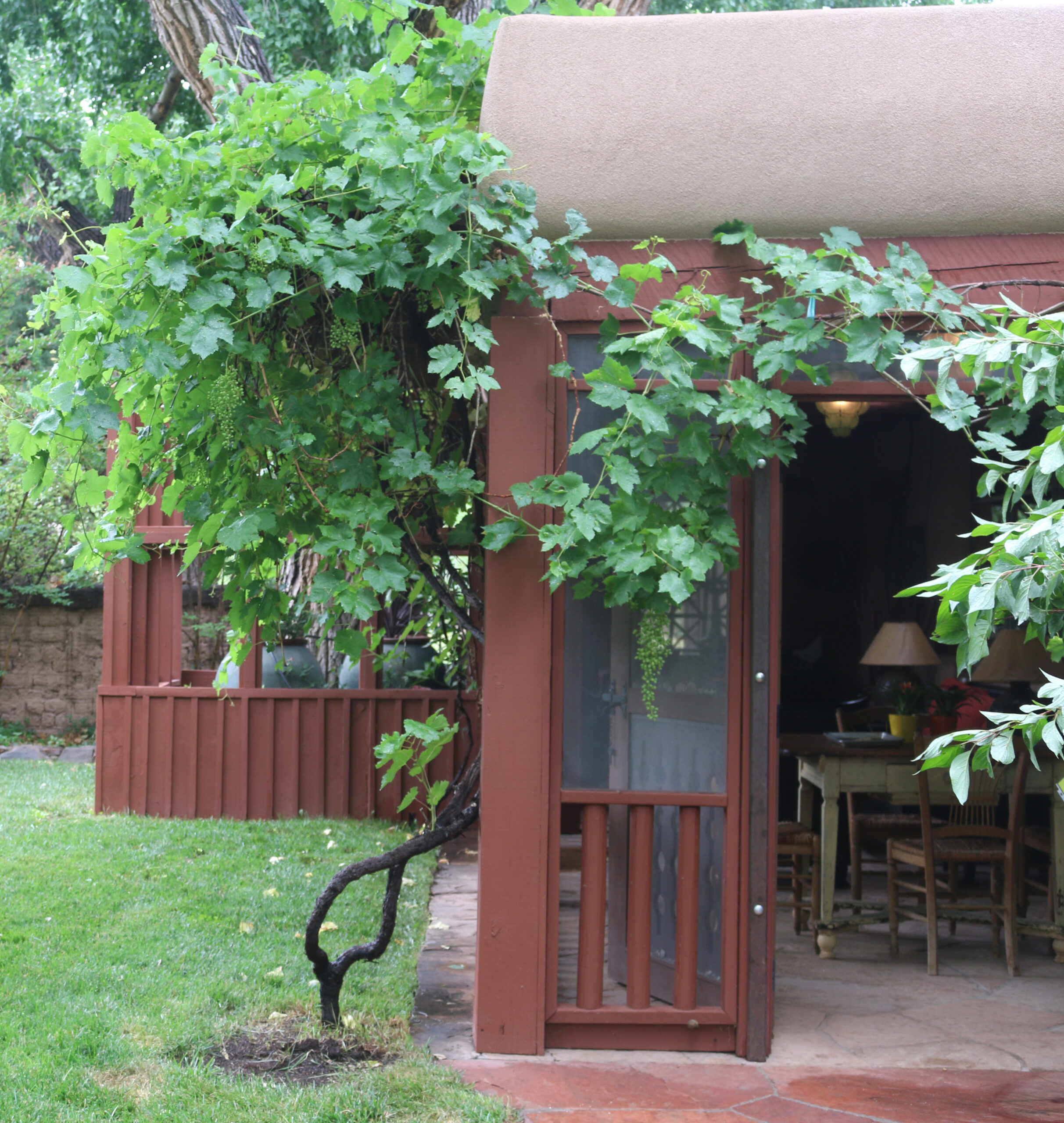
Grapes, multiple varieties: New Mexico is one of the oldest grape growing regions in North America, with plants brought to the state by Spanish colonialists and planting records dating back to 1652. Grapes prefer consistent moisture during their first year of establishment and grow best in full sun. The vines are fast growing and long-lived. Beautiful bright leaves create dense shade, and the fruit is delicious Grapes are deciduous so be prepared for a sculptural woody vista throughout the winter months. Late winter, before the last frost, is the best time to train and prune them. Some varieties to try are Himrod, an early ripening seedless white table grape; Red Flame, a seedless red table grape; Canadice, a cold hardy seedless red table grape known for disease resistance; and the unique Flambeau, a seedless pink table grape with strawberry sweetness. Another the Canyon grape, has beautiful fall color and grapes are loved by wildlife.
Grape vine growing on trellis at a home in the North Valley of Albuquerque.
SCREEN NARROW SPACES
Narrow spaces, such as side yards, can be difficult to plant because shrubs may become too wide before they provide enough height to provide screening. Vines trained on a trellis against a wall can fill vertical space without overwhelming the walkway and adjacent space.
Sun exposure in these narrow spaces affects which vines will do the best, explains Phillips. The west and south facing sides of the property receive the hottest afternoon sun, while the north facing side is typically cooler because of the shade, and the east facing side receives morning light.
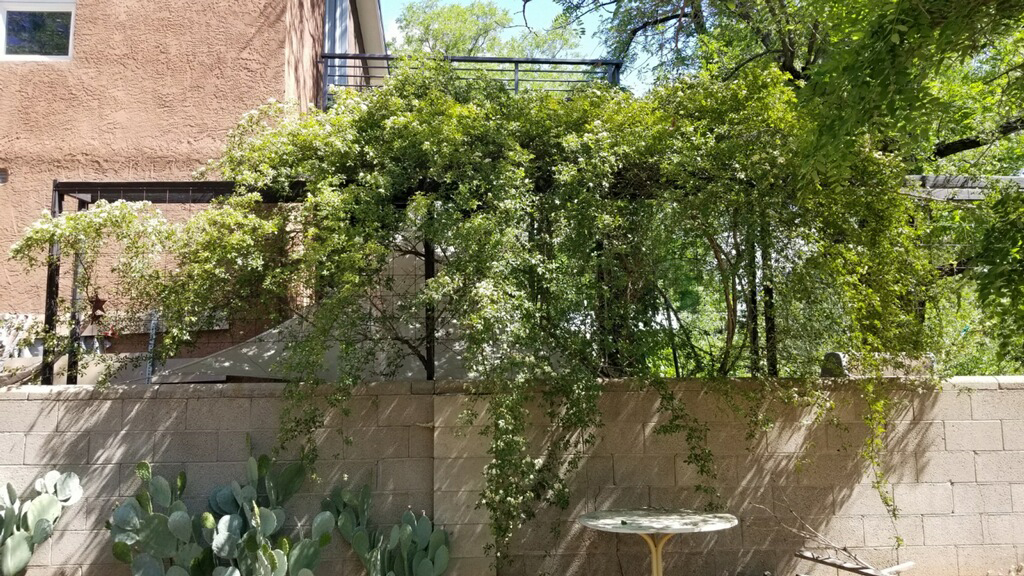
Lady Banks’ rose growing on metal trellis attached to block wall on side of the house.
For southern and western exposures, Phillips suggests using passionflower vine and silver lace vine.
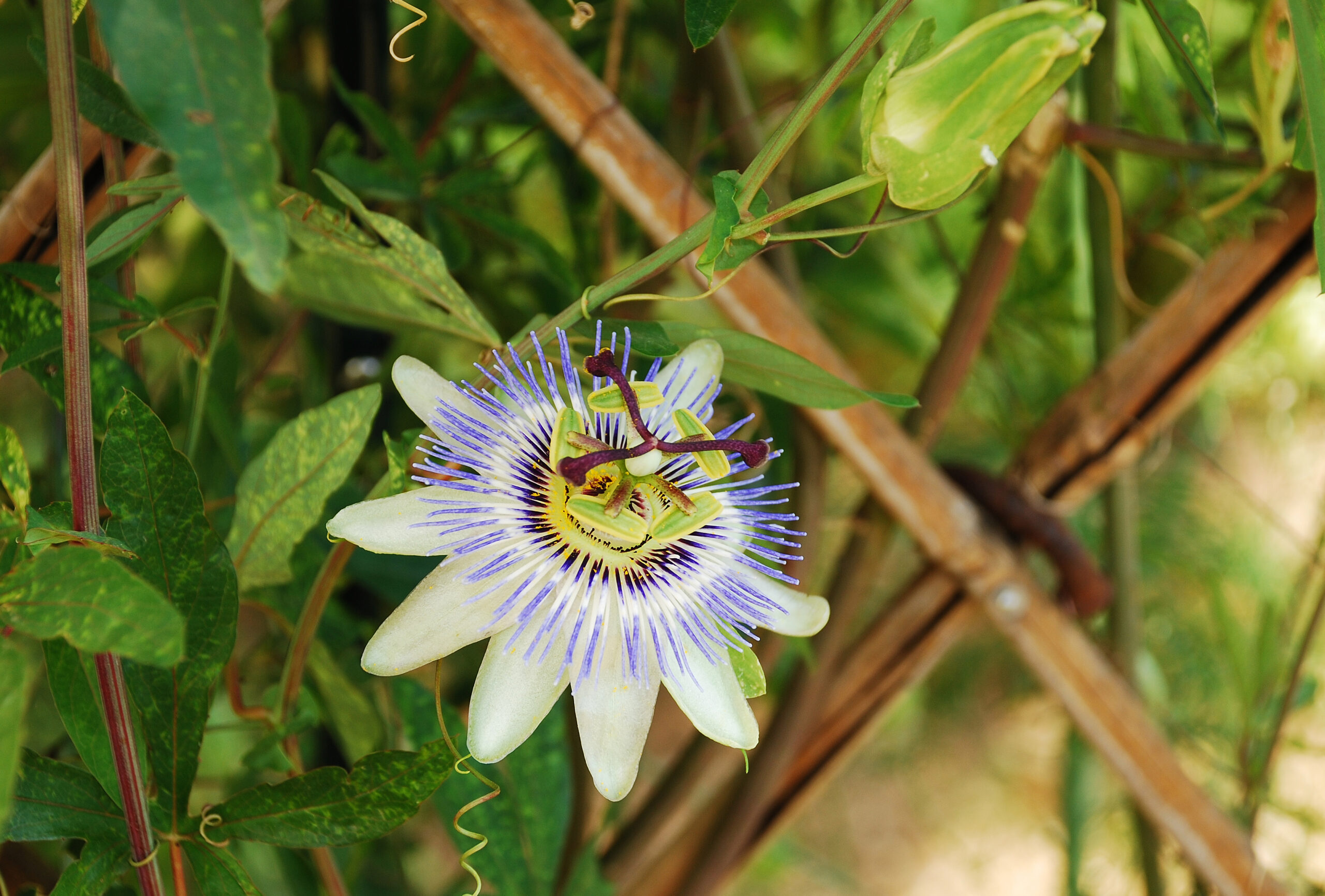
Passionflower vine (Passiflora caerulea): Stunning dark blue and ivory flowers appear in the summer flocked with butterflies. This vine grows well in heat but will freeze to the ground in winter. It will regrow from root-sprouts in the spring and climb again using tendrils.
A single Bluecrown Passiflora flower, also known as Passilfora Caerulea, an evergreen tendril climbing vine.
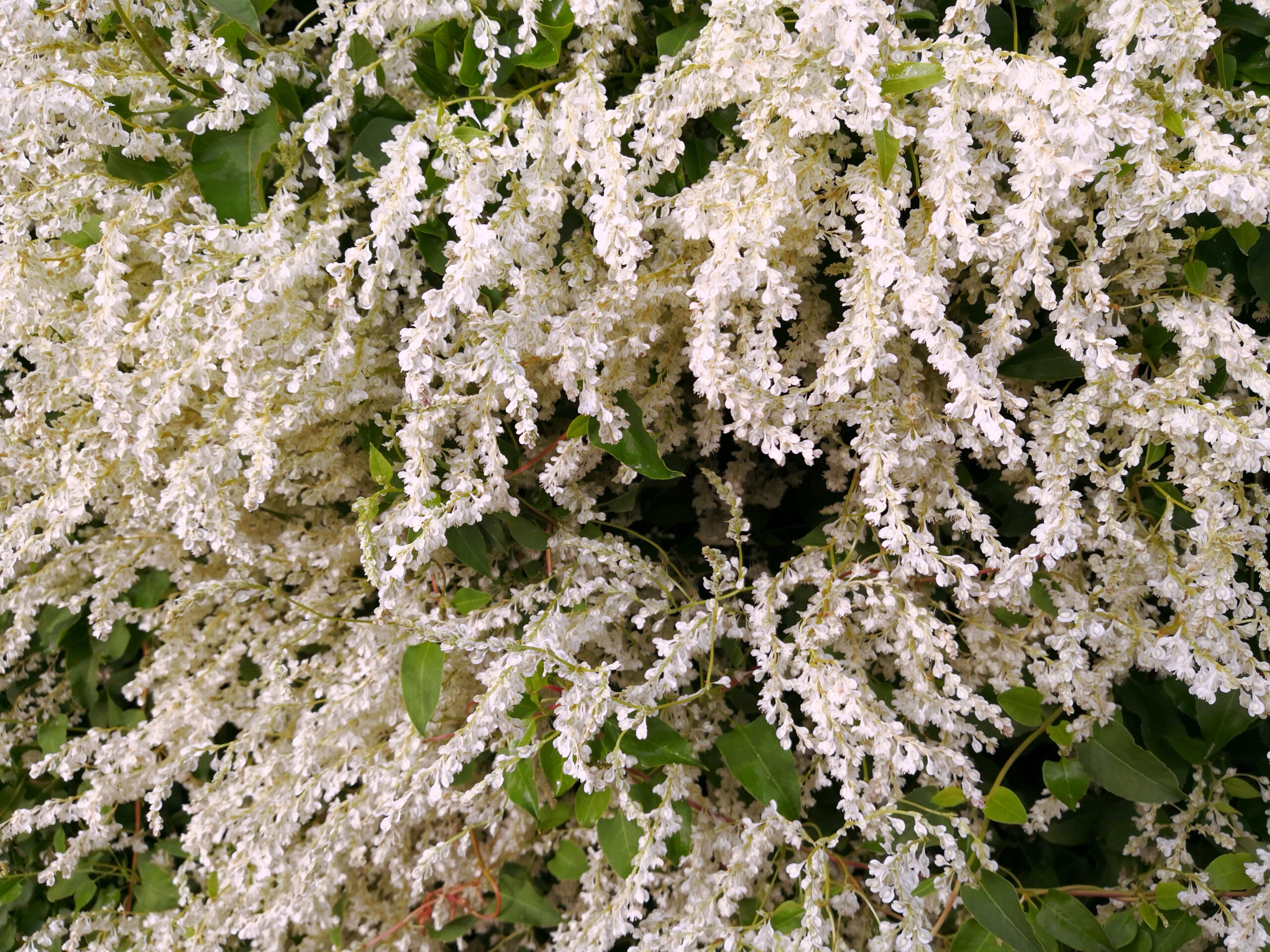
Silver lace vine (Fallopia baldschuanica):This is one of the most xeric and heat tolerant of the vines as well as a good pollinator that can smell like lilacs when blooming. Because it can become a tangle of spaghetti-like twigs, Phillips recommends cutting it to the ground every few years so that it will return with great exuberance in the spring.
Silverlace vine in bloom.
For shadier locations, she recommends using Carolina jessamine and Algerian ivy.
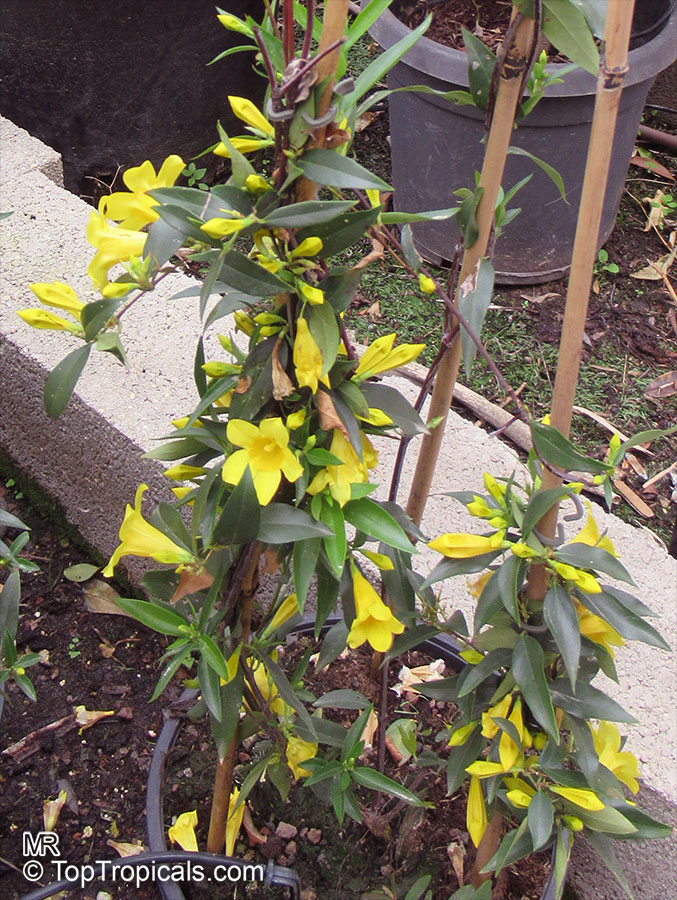
Carolina Jessamine (Glesemium sempervirens): This vine performs best in shade. It is not particular about soil and produces beautiful yellow flowers in early spring while retaining winter color. Note that it is toxic to humans, pets and livestock if ingested, even in small amounts. Prune one fourth of the vine’s mass every three years to keep it from getting too woody and to encourage vigorous plant growth.
Carolina Jessamine
Carolina jessamine (from internet, not great)
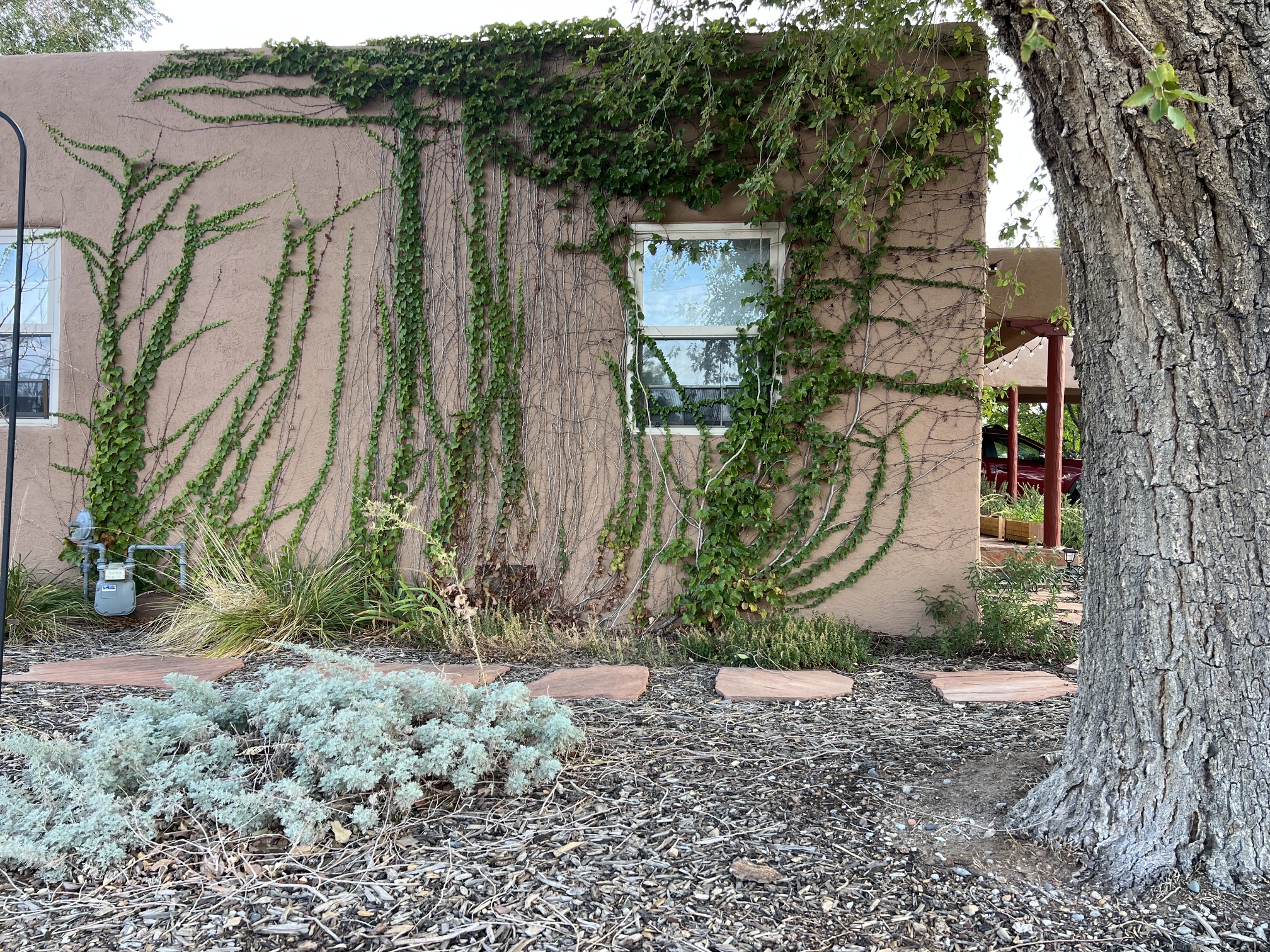
Algerian ivy (Hedera canariensis): This ivy climbs walls with clasping roots and provides evergreen color. It does best on north or northeast facing walls. Its large, bright green leaves resemble English ivy. The needlepoint dwarf variety is a smaller option that also performs well.
Ivy climbing up the side of a home.
ADD WINTER INTERST
Many vines fade or freeze back in winter, but some continue to add structure, color or texture. Phillips recommends Lady Banks’ rose and Algerian ivy for evergreen color along with wisteria for its sculptural woody branches.
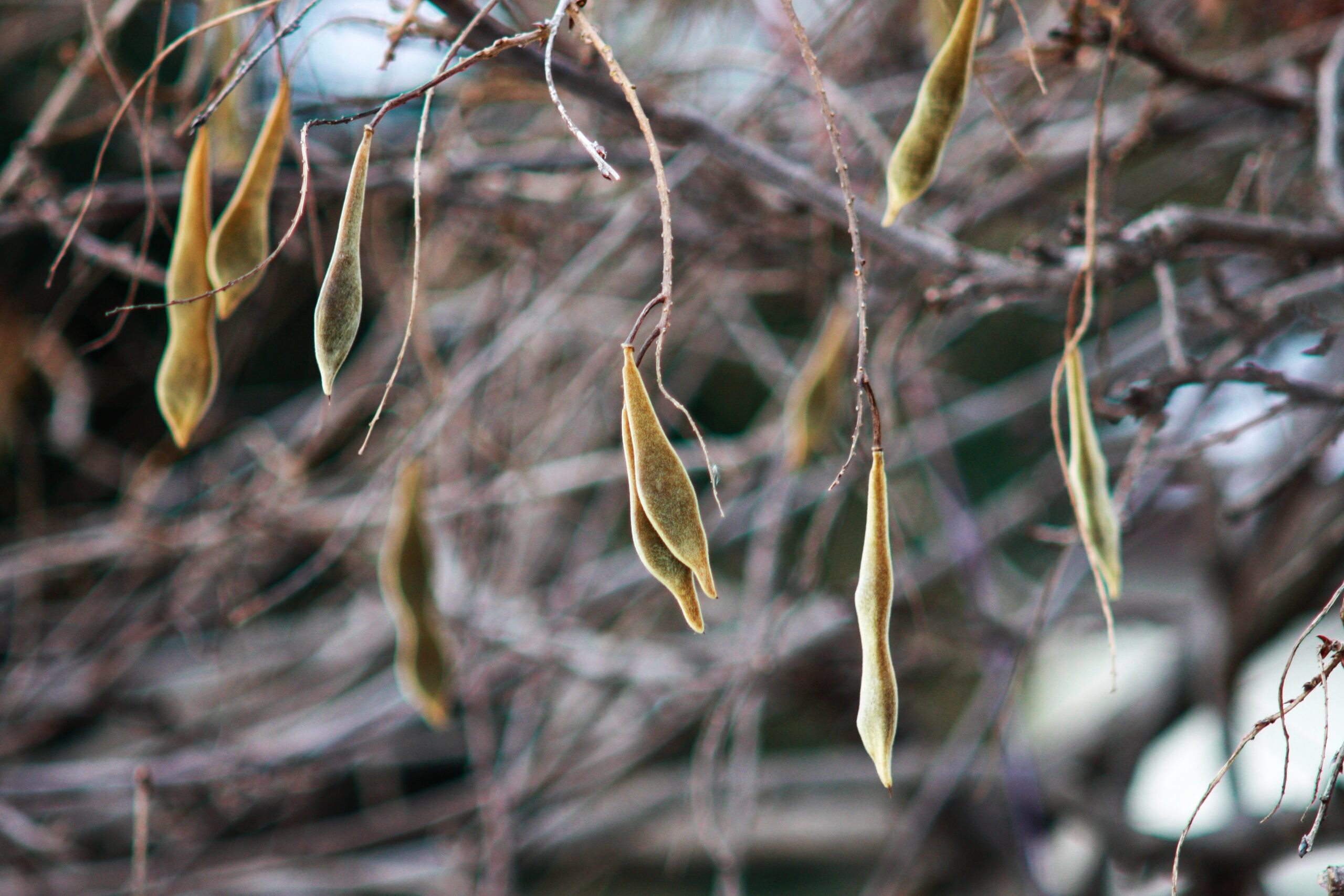
Wisteria seed pods in winter.
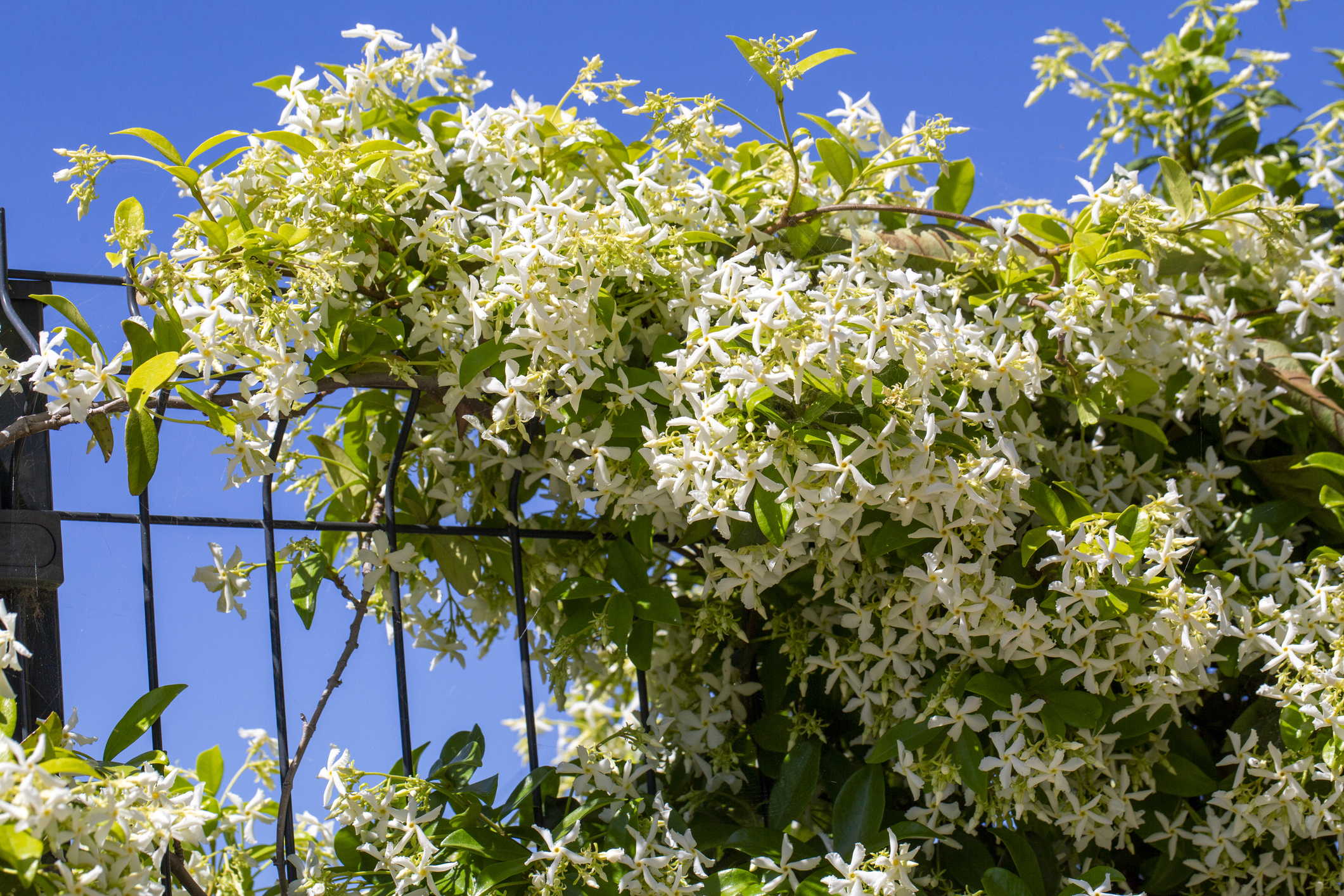
Star jasmine (Trachelospermum jasminoides): This vine has dark green foliage, fragrant spring flowers and smooth stems. When trained onto a trellis, it forms a dense cover. It grows well in partial shade, is a medium water user and is adapted to a wide range of soils. The sweet, pinwheel-shaped white flowers produce nectar for pollinators.
Star jasmine growing on a fence.
PROVIDE FOOD AND HABITAT FOR POLLINATORS
Several vines already mentioned — including wisteria, star jasmine, Carolina jessamine, silver lace vine and passionflower — support pollinators.
Wisteria blossom.
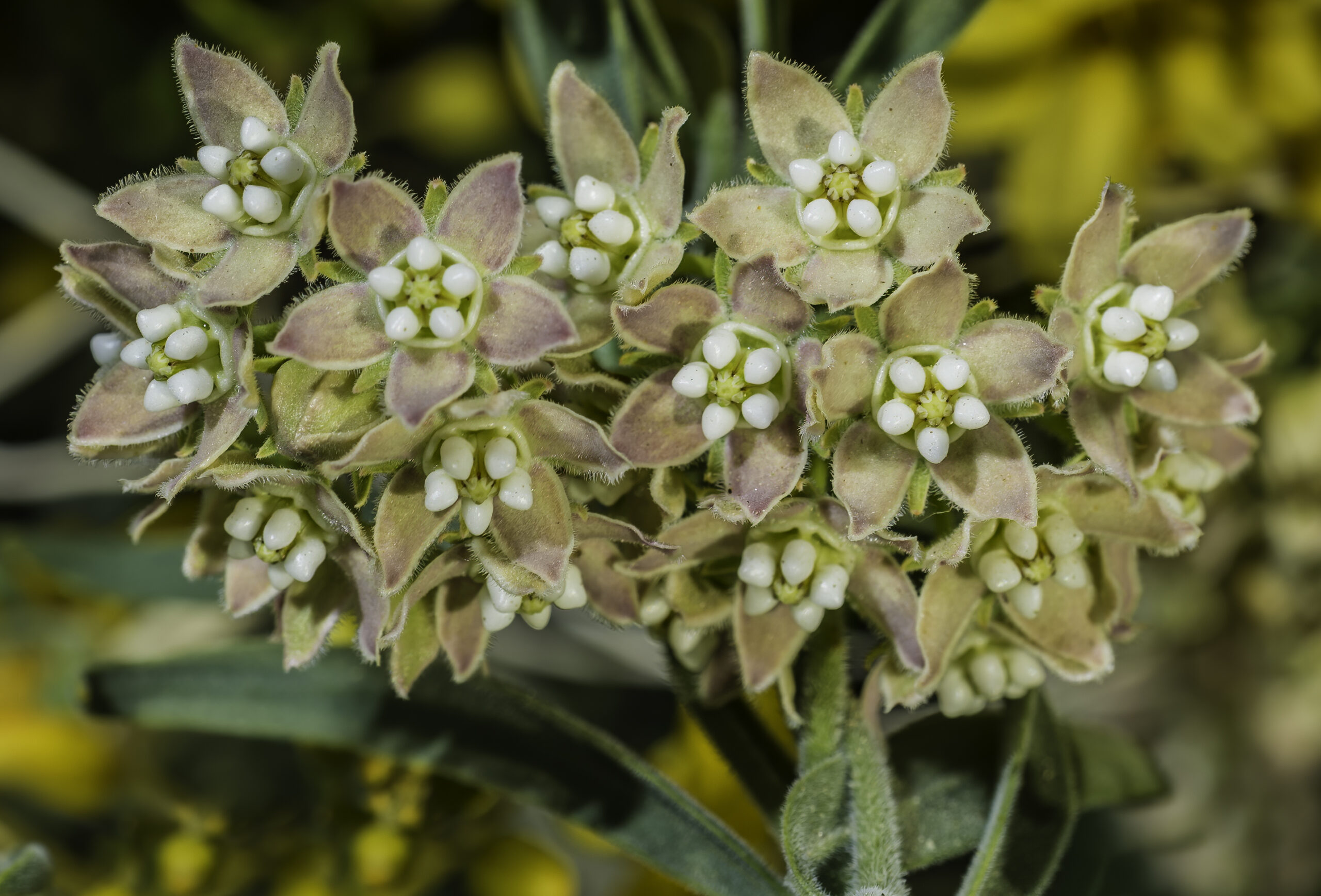
Climbing milkweed (Funastrum cynanchoides): This New Mexico native is one of Phillips new favorites. It dies back completely in winter but grows vigorously in spring, forming tangled curtains across fences, boulders and shrubs. It prefers heavier soils such as clay rather than
Climbing Milkweed, Funastrum cynanchoides var. hartwegii
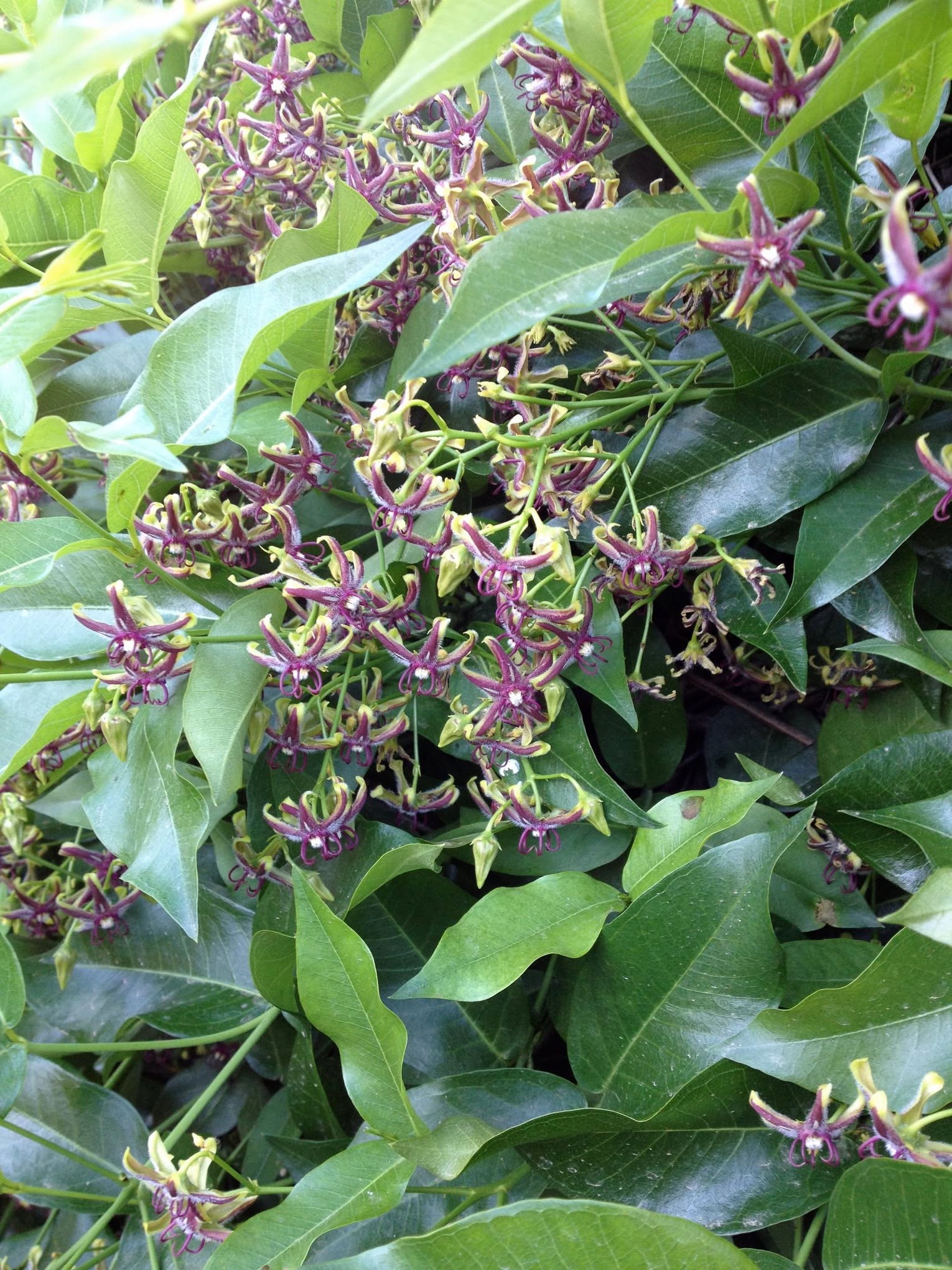
Silkvine (Periploca graeca): This deciduous vine can grow three feet or more in a year and sports glossy dark green leaves and dark maroon spring flowers. It’s fast growing and loves to climb up ramadas, wire fencing and trellises. On a pergola, it provides dense shade in the summer then loses its leaves in winter, letting the sun penetrate through the sculptural coiled stems. It tolerates both clay and sandy soil. Brought here by the earliest colonizers from the Valencia region of Spain, it’s found along the historic stagecoach routes of the Camino de Real.
Silkvine flower by Hunter Ten Broeck
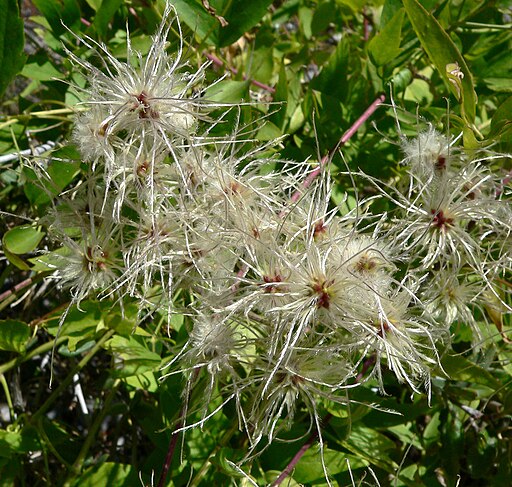
Western virgin’s bower (Clematis ligusticifolia): Also known as old man’s beard, this vine is fast growing where water is available and does well on north and east sides. Native to New Mexico, it can be found climbing over small trees and shrubs in the Jemez Mountains. Butterflies adore the fragrant white blooms, and attractive seed heads — one of the best parts of this plant — provide winter interest.
Clematis flower by Hunter Ten Broeck
Locally familiar trumpet vine and honeysuckle are not included here because Phillips is using them less often in home landscapes. Orange trumpet vine can root aggressively and become difficult to manage. Instead, Phillips has been using crossvine, a related species that she finds easier to live with and more evergreen, making it more attractive through winter. Honeysuckle (Lonicera sempervirens), including the Major Wheeler variety, can be temperamental, especially when it experiences leaf loss during late, hot summer months. Even so, both trumpet vine and honeysuckle are established local favorites and can still find homes in the right locations.
Whether used for shade, screening, winter structure or pollinator support, vines can bring beauty and function to places where other plants may struggle. With the right species, sturdy support, thoughtful placement and regular training, they can become some of the most versatile and rewarding plants in a Southwestern garden.
Interview with Judith Phillips, owner of Design Oasis and a landscape designer and garden writer with 30 years of experience designing arid-adapted and native gardens in the high desert. Have a question about the article or anything else? [email protected]
Mosquitoes have been so very prominent here in the Albuquerque area over the last five years, and we’ve been learning a lot about how to live with them in our yards. Fortunately, Bernalillo County and the City of Albuquerque have been studying mosquito lifecycles, treatment and abatement for years.
There are three types of mosquitoes found in our area, including the Aedes vexans (floodwater mosquito) and the Culex quinquefasciatus (southern house mosquito). Additionally, the Aedes aegypti (yellow fever mosquito) has become firmly established in the Albuquerque area in recent years.
All these species are well adapted to the local environment, but they differ significantly in behavior, feeding habits and the types of risks they pose. Southern house mosquitoes primarily feed on birds but will bite humans and domestic animals. They are active at night and during dawn and dusk.
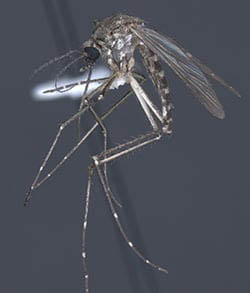
Floodwater mosquitoes prefer to host on humans, livestock and pets. They are highly aggressive and notorious for biting during the evening and nighttime hours. Floodwater mosquitoes are a nuisance because of their painful and frequent bites but not commonly associated with disease.
Floodwater Mosquito
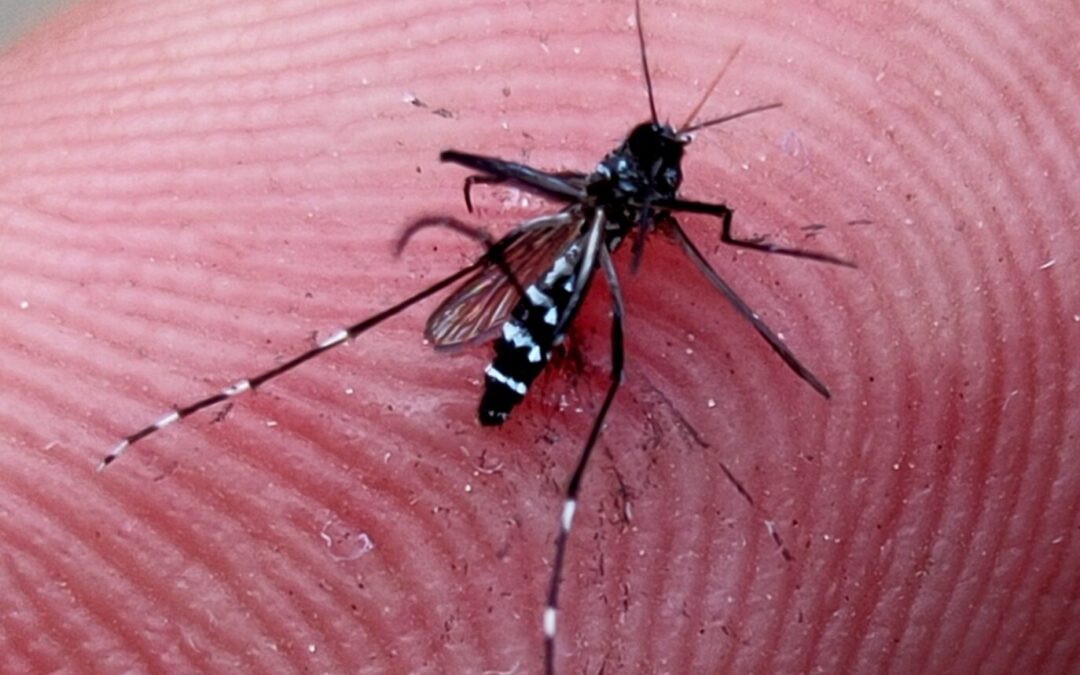
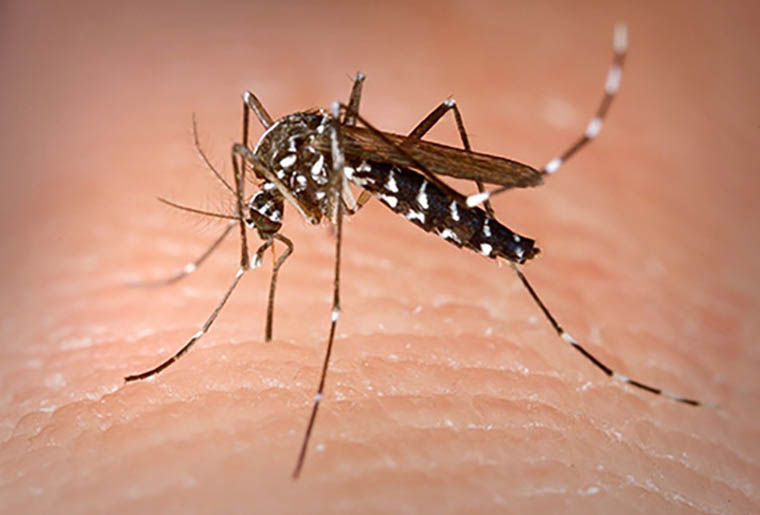
Yellow fever mosquitoes are specifically human-focused biters that actively hunt during the daytime. They are easily recognized by the distinct white, violin-shaped markings on their back and striped bands on their legs. They are the primary transmitters of critical mosquito-borne diseases, such as Zika, dengue fever and yellow fever. These diseases have not been found in the greater Albuquerque area and City-County prevention is underway to keep it that way. To learn more about the yellow fever mosquito, check out this useful flyer.
Yellow Fever Mosquito
Local mosquito control is conducted as a combined city-county effort. Mosquitoes are controlled at all life stages through a variety of methods, following the principles of integrated pest management. The goal is effective and efficient control designed to minimize the amount of pesticide released in the environment and to prevent pesticide resistance. Protecting public health and ensuring that outdoor activities can be enjoyed safely and comfortably is the City-County partnerships underlying mission.
Albuquerque and Bernalillo County residents can report mosquito issues by calling 311.
Residents who don't wish to have their property sprayed can register on the No-Spray List by calling 311.
The most important things you can do are reducing mosquito breeding habitat and preventing mosquito bites as per City of Albuquerque Environmental Health Department.
What you can do
Prevent mosquito breeding on your property
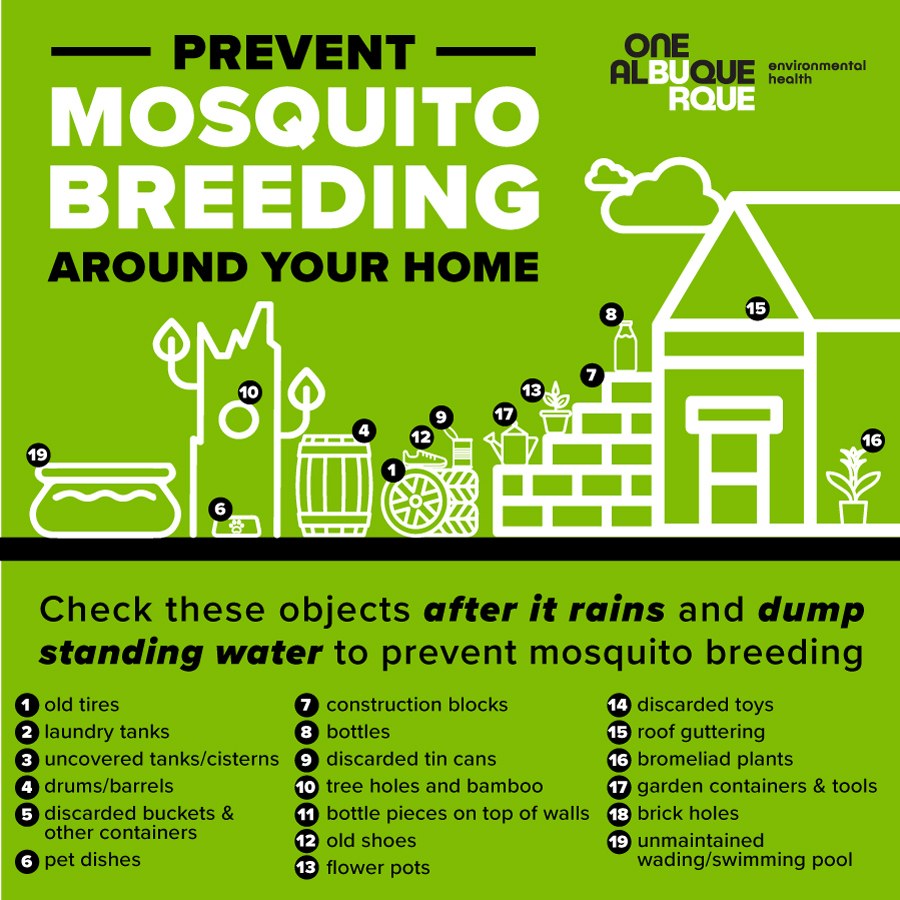
Dump standing water found in trays beneath potted plants; used tires; trash, discarded buckets and other containers; children’s toys; and other places.
Store containers that could hold water upside down.
Keep your property uncluttered — mosquitoes can breed in the smallest pools of water even as small as a bottle cap.
Clean pet water dishes regularly by emptying, scrubbing and replacing the water.
Replace bird bath water regularly.
Cover rain barrels with a fine mesh and treat with mosquito dunks. Mosquito dunks contain bacteria called Bacillus thuringiensis israelensis (Bti). Bti is a naturally occurring bacterium found in soils. It contains spores that produce toxins that specifically target the larvae of the mosquito. Bti has no toxicity to people and is approved for pest control in organic farming operations. It has been well tested and based on the studies EPA has concluded that Bti does not pose a risk to humans. The Bti mosquito dunks are sold at hardware, home improvement, and feed supply stores. They can be placed in standing water, and the bacteria will kill mosquito larvae.
Treat pools with chlorine. If not in use, keep empty or treat with mosquito dunks
Reduce moist collection areas in your grass lawn as mosquitos like to bread in these small moist spaces. Aim to space your sprinkler watering out so the wet areas dry up between irrigation days.
Add mosquitofish, Gambusia affinis, to ponds and small water features (available free from the City of Albuquerque by calling 311).
Check flat roofs for pockets of water in shaded areas and clogged rain gutters.
Prevent mosquitoes from entering your home
Keep door and window screens in good condition.
Check window screens and doors for holes and repair any holes with sticky screen tape.
Protect yourself when outdoors
Environmental Protection Agency (EPA) approved insect repellents include those containing DEET, picaridin and oil of lemon eucalyptus.
Wear long sleeves and long pants, especially at dusk and dawn.
Report standing water and high adult populations to 311
Other home strategies
Set out mosquito traps to reduce the number of mosquitoes in your yard or home. BG-sentinel traps use dry ice (which can be bought at a grocery store) and/or a scent bait to attract mosquitoes and are very effective. The City uses BG-Sentinel traps when conducting mosquito surveillance. Ovitraps can be used to attract females that are ready to lay their eggs. It is important to maintain ovitraps by adding a mosquito dunk or they will become breeding habitat.
Repel mosquitoes with smell: Mosquitoes rely heavily on their sense of smell to locate their next meal. They are attracted to certain odors, such as carbon dioxide from our breath and lactic acid from our skin. Mosquitoes hate strong, pungent and herbaceous scents that mask the carbon dioxide and lactic acid humans emit. These can be distributed as sprays, diffused as essential oils or the plants can be crushed and rubbed onto your skin for a natural repellent. The smells they don’t like include:
Lemon eucalyptus: Approved by CDC and World Health Organization, it is recognized as one of the most effective natural deterrents. It contains PMD(p-menthane-3,8-diol) which is extracted from the leaves of a lemon eucalyptus tree. This scent is known to block mosquitoes from detecting you.
Citronella: The classic lemon-grass scent disrupts a mosquito's ability to find hosts.
Peppermint and menthol: The intense smell of mint can overpower their sensory receptors.
Lavender: Contains compounds like linalool that deter pests.
Citrus: Citrus smells, such as those from lemons, oranges and grapefruits, are highly effective at repelling mosquitoes. You could place citrus peels in strategic locations to deter mosquitoes from coming too close.
Rosemary: Rosemary is another herb that mosquitoes dislike. Plant rosemary bushes near outdoor seating areas then crush the leaves to release the smells and oils.
Basil: Crush fresh basil leaves to release their scent.
Garlic: Create a garlic spray by mixing crushed garlic cloves with water.
Lemon balm: Rub crushed lemon balm leaves on your skin for added protection.
Catnip: Catnip contains a compound called nepetalactone, which is highly effective at repelling mosquitoes. Plant catnip in pots or in your garden or crush the leaves and rub them on your skin for a natural repellent.
Create DIY sprays: One of the easiest ways to use essential oils for mosquito control is by creating a DIY spray.
Combine:
2 ounces of distilled water
1.5 ounces of witch hazel
30-40 drops of essential oils (Mix and match based on your preferences; effective options include citronella, lavender, peppermint, eucalyptus, lemongrass and tea tree.)
Repel mosquitos with smoke: Incense sticks and smudge sticks have been used around town by local restaurants and in yards with some success.
Repel mosquitos with a fan. The breeze of an outdoor fan can make it harder to trace the scents and harder for them to fly near the fan.
Schedule a yard audit: According to a recent KRQE interview with City of Albuquerque Urban Biology Division Manager Nick Pederson, the city can help residents reduce mosquitoes on private property by performing an inspection. “We like to offer what we call a yard audit or a yard inspection where we’ll come out and actually look at a person’s yard with them and see if we can identify possible sources of mosquito issues,” Pederson said, explaining that these inspections can be requested by contacting 311.
Are you interested in finding plants for your landscape that easily reproduce from seed? Perhaps plants that are beneficial for wildlife create a natural look and cover a lot of ground? How would you recognize a seedling of one of these species? In this article, we will look at a dozen species of native plants — including trees, shrubs, grasses and wildflowers — that germinate naturally, transplant easily when small, fill in your landscape or garden with beauty, are easy to care for and are low to moderate water users.
Trees:
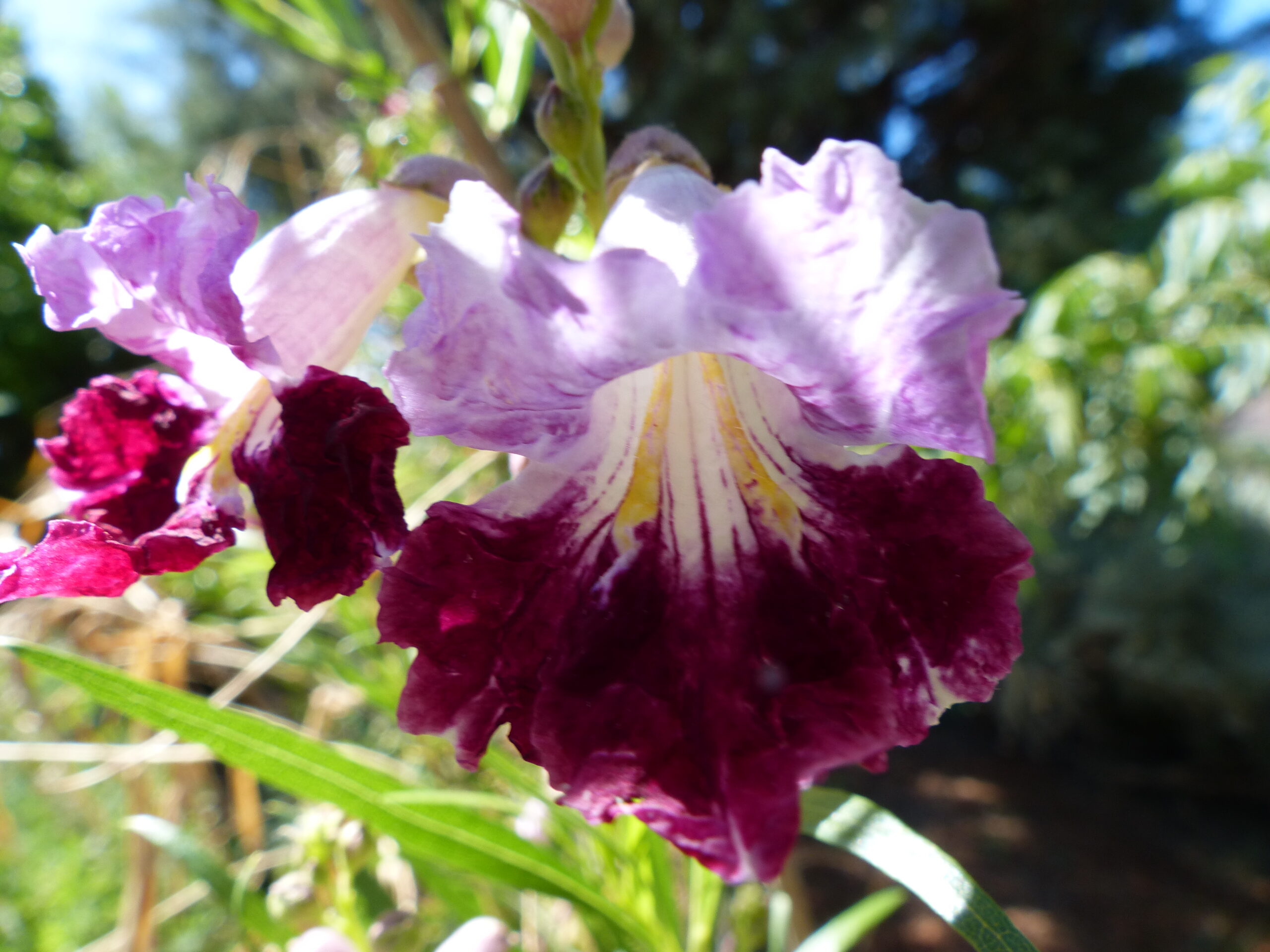
Close up of Desert Willow flower (Photo by Wes Brittenham)
Desert Willow (Chilopsis linearis)
This lovely drought tolerant native is not a true willow, but the long, narrow leaves are similar enough to willows to inspire the common name. The lovely, ruffled flowers come in a variety of colors from white to pink to deep burgundy and attract hummingbirds and a wide variety of other pollinators. This tree can range from 12 to 20 feet tall and wide and is appreciated for its dramatic sculptural form, with curvy branching that creates a sinuous feel. Often multi-trunked, its signature orchid-like flowers appear in abundance in spring and frequently repeat throughout the warmer months. With careful proper pruning, this tree is a lovely addition to any landscape, casting light shade and requiring only monthly deep watering after several years of establishment.
Unless you have a seedless cultivar, this plant produces a prodigious amount of narrow, elongated seed pods resembling thin, dried bean pods. It will germinate in poor soil, gravel or crusher fine mulches — or anywhere the seed catches and gets the moisture and light it needs. A deep-rooted species, this native transplants easily when tiny, within the first couple of years of growth. After that, the deep roots can be damaged by digging. Recognize young plants by the narrow leaves that look like miniature versions of the mature leaves, usually a single vertical stem a few inches tall when you first notice it. It is easy to gather seeds and grow in containers.
Forestiera pubescens var. pubescens (photo by Brandt Magic)
New Mexico Olive (Forestiera neomexicana/Forestiera pubescens var. pubescens)
Sometimes also called New Mexico privet, this native bosque understory plant is neither an olive nor a privet. Common names often refer to an aspect of the plant that reminds people of a familiar landscape plant. Some folks prune this plant severely to resemble privet hedges, though that is not recommended. Usually multi-trunked, this plant hovers between large shrub and small tree, growing from 10 to 15 feet tall and 5 to 10 feet wide. It is happy in full sun to moderate shade, and the female plant produces small purplish berries that are beloved by many birds. The birds deposit the seeds with their natural fertilizer, and you will find transplantable volunteers scattered throughout the landscape. The pale rounded green leaves look like tiny versions of the parent plant. The early, almost inconspicuous flowers born before the leaves emerge are visited by many species of bees. If the tree has eggs of the cabbage looper (the early white butterfly flitting about the garden), which produce tiny inchworm caterpillars, you may see delighted flocks of tiny bushtits swarming in for the buffet. These lovely birds feast on the caterpillars before much leaf damage occurs, making your habitat garden functional and educational.
Shrubs:
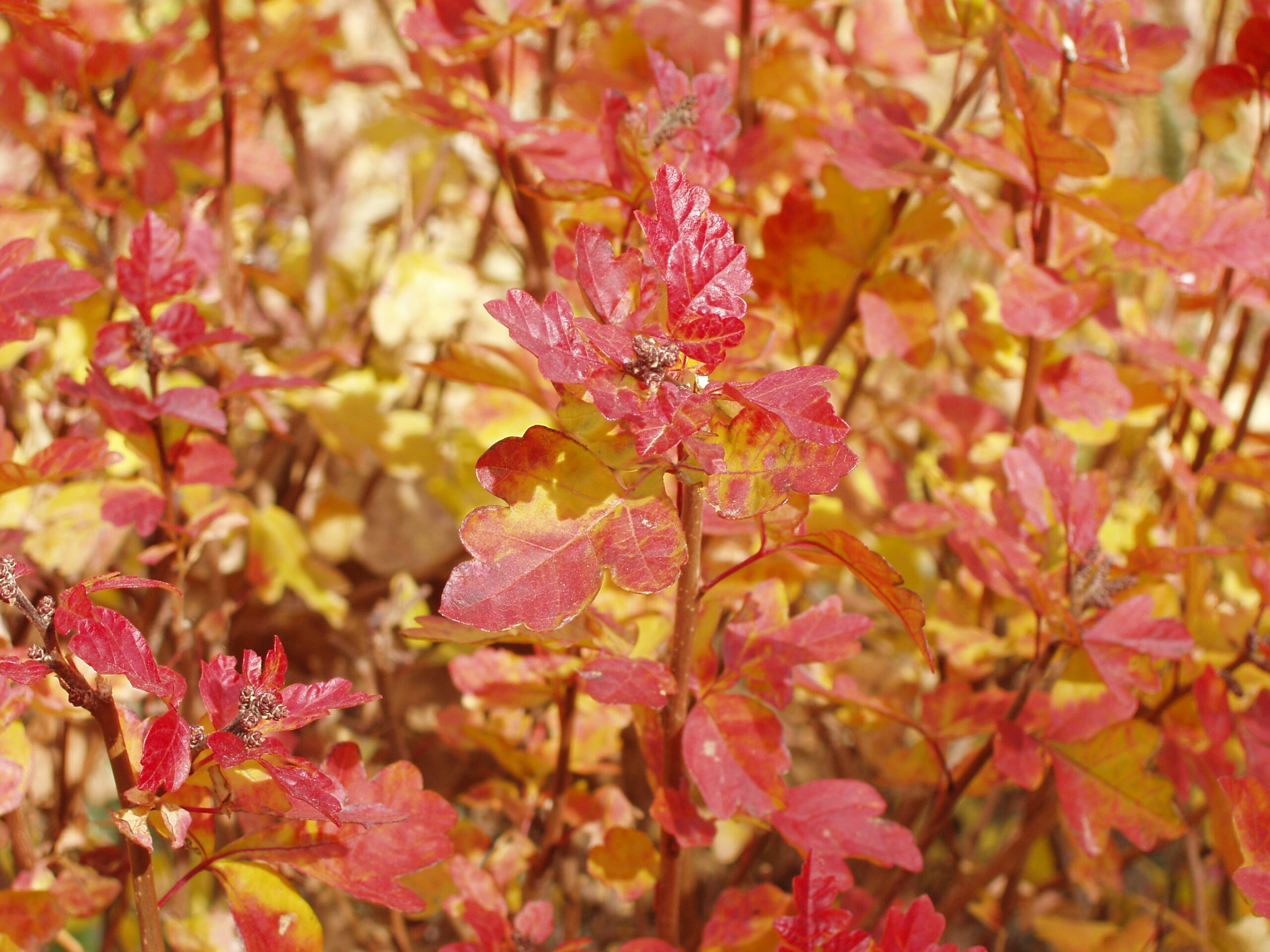
Three Leaf Sumac with fall color. (Photo by Wes Brittenham)
Three Leaf Sumac (Rhus trilobata)
This native shrub is a wonderful habitat plant. The early, almost inconspicuous greenish yellow flowers come early, giving bees a good source of nectar and pollen. Later, small, berry-like fuzzy fruits ripen, much to the pleasure of the spotted towhee, who will dance and stomp under this shrub, feasting on the fallen fruit. The fruit has a lemony flavor and can be used to make a flavored drink or a great seasoning for grilled trout. Widely branching, this very low water use shrub can grow from 3 to 10 feet tall and wide but can be pruned to keep it on the smaller side. The autumn color ranges from yellow to orange to red and is a great addition to any landscape. The dense branching provides cover from raptors and roadrunners hunting for small birds. The fallen or bird-deposited seeds germinate easily, the three-lobed leaf is easily recognizable, and the seedlings transplant well.
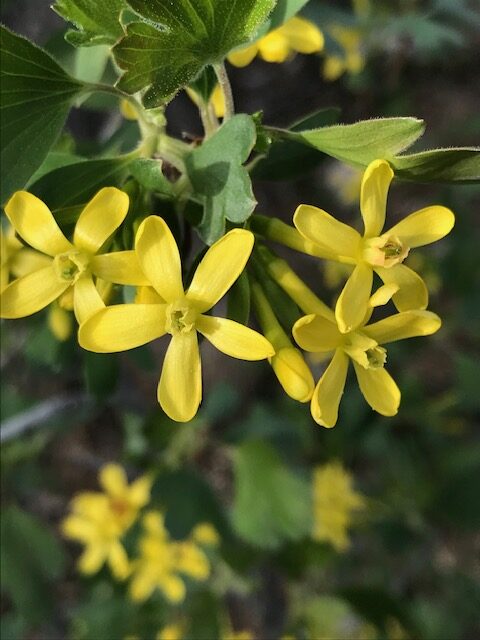
Golden Currant blooms (Photo by Wes Brittenham)
Golden Currant (Ribes aureaum)
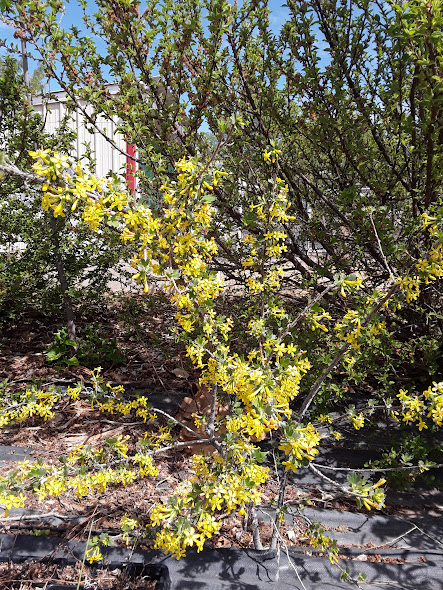
Golden currant is named for the beautiful golden flowers that bear a slightly spicy clove like fragrance and are visited by many pollinators. The delicious fruits ripen to a shiny blackish purple and are a favorite of birds and humans fresh off the plant or made into jam, jelly or syrup. This is a wonderful native shrub. Found in riparian areas, it needs moderate water to thrive and full sun to part shade. The prodigious berries produce many seedlings to transplant around the garden. It can be pruned to create a fuller shape and usually grows 3 to 5 feet tall and wide.
Grasses:
Many of our native grasses are prolific seeders, producing volunteers that transplant easily.
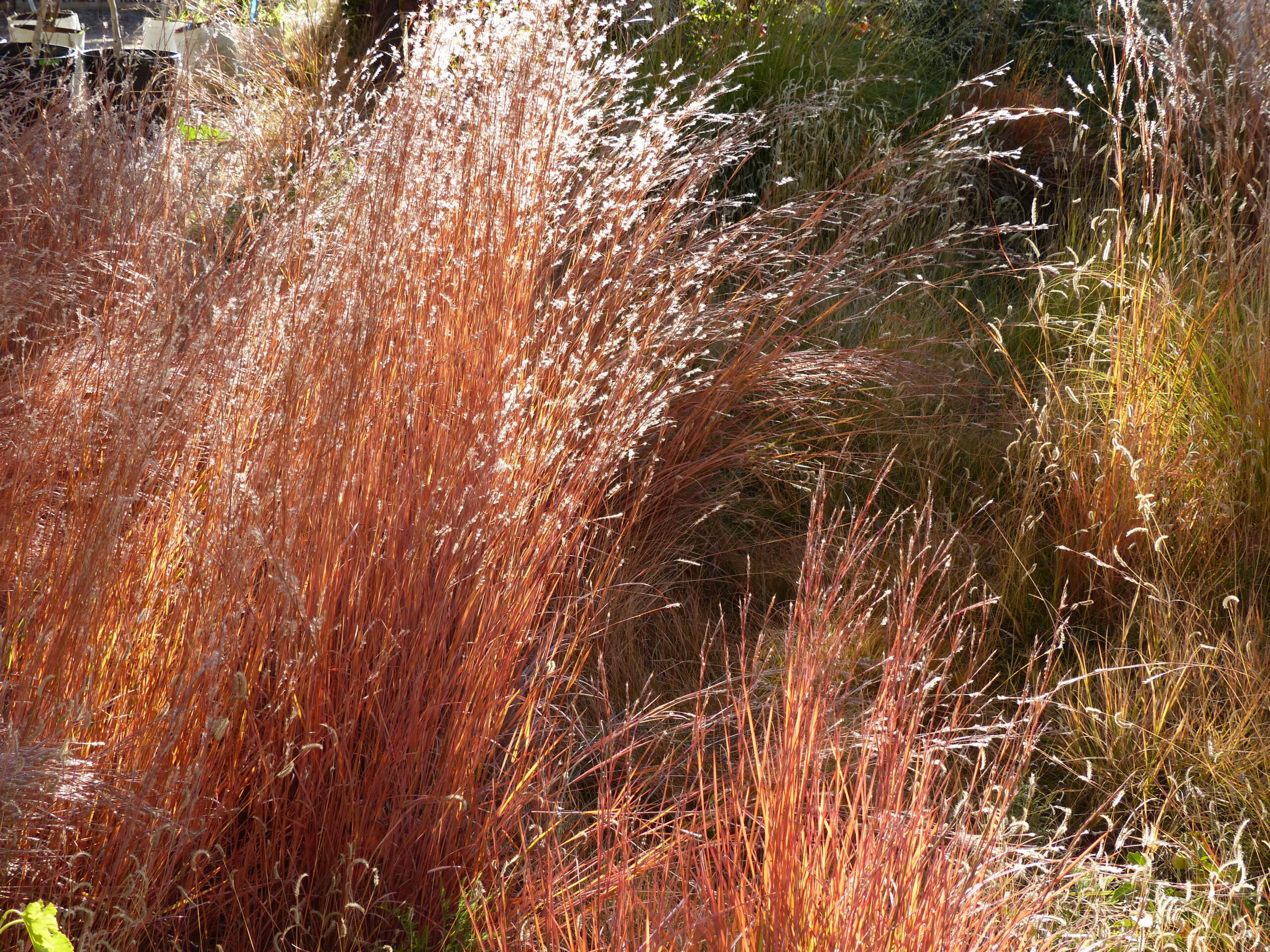
Little Bluestem grass (Photo by Wes Brittenham)
Little Bluestem (Schizachyrium scoparium).
This is an upright clump-forming grass that ranges from shades of green to blue-gray during the growing season and beautiful reds and russet colors in fall. A warm season, drought tolerant grass, it is at home in masses, in a meadow or as an individual accent, punctuating the landscape with its strong, vertical form. It produces fluffy, silvery seed heads in the late summer to early fall. These seeds are fabulous light catchers, and this robust grass is spectacular when the seeds are backlit by the rising or setting sun. It is a host plant for native skipper butterflies, and songbirds enjoy the seeds. Best in full sun.
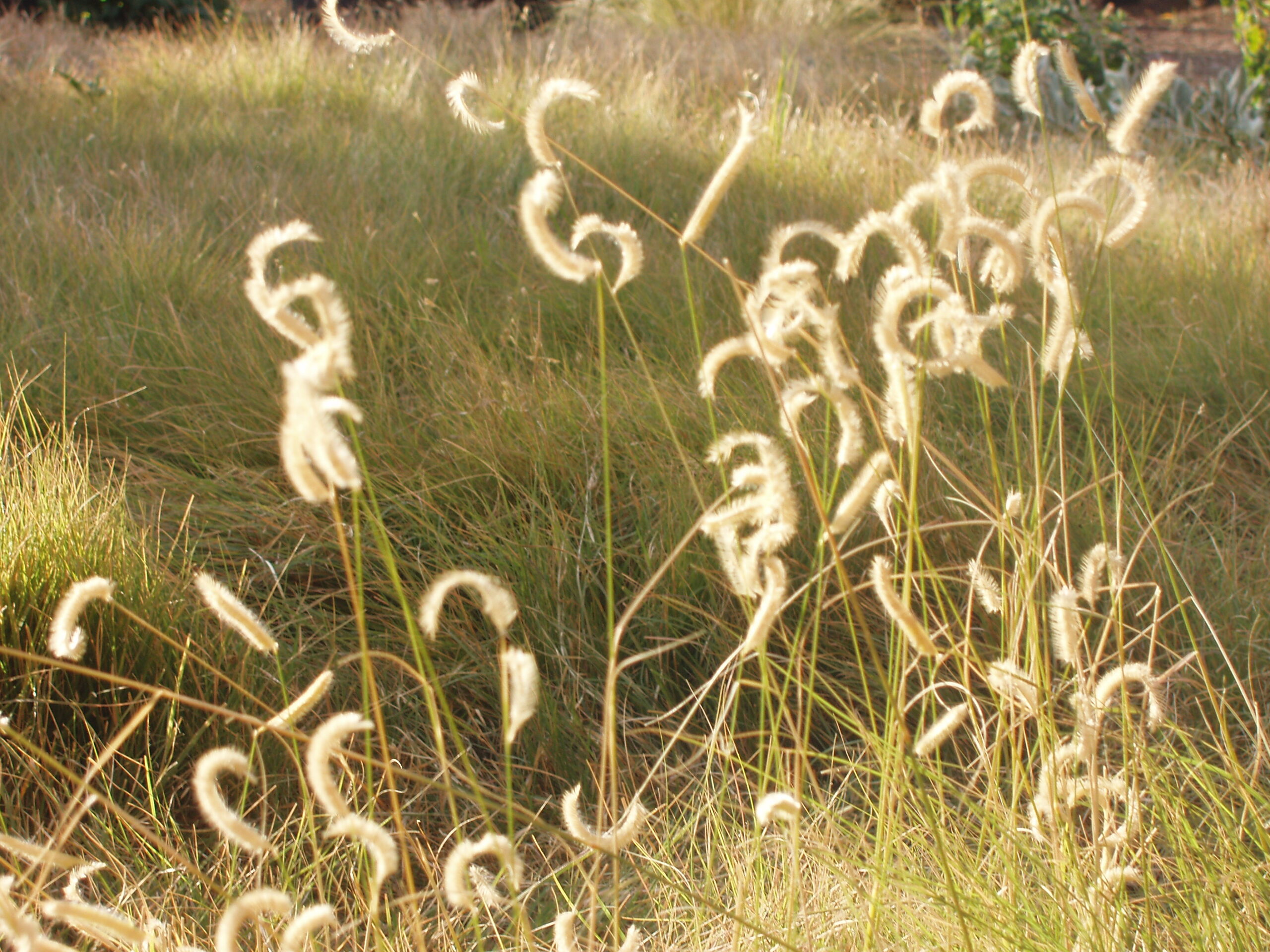
Blue Grama grass (Photo by Wes Brittenham)
Blue Grama (Bouteloua gracilis)
This lovely, clump-forming, self-seeding, drought tolerant native grass is well known for its signature curling seed head that begins with an eyebrow shape and curls to a circle as it dries. This grass is often used as a native lawn mixed with buffalo grass (Buchloe dactyloides) and mowed for a turflike appearance, but the real benefit is to let this grass grow naturally, its deep roots penetrating the soil while the top of the grass goes to beautiful seed and provides habitat for native bees and butterflies. You will notice pollinator activity during the flowering season for this grass. Great in a meadow, as a specimen in a rock garden or tucked among wildflowers.
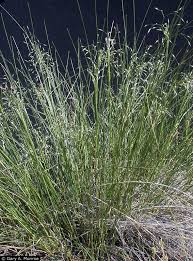
Indian Ricegrass (photo by Gary Monroe)
Indian Ricegrass (Achnatherum hymenoides)
This striking native loves hot, dry, sandy soil found in west side neighborhoods. It has tiny, gluten free seeds that were a staple food for Indigenous peoples in the Southwest. The thin, wiry leaves grow 1 to 2 feet tall. They are sage green and are topped by ivory colored seed heads that appear in early summer. Another clump-forming grass, it is grown for its durability and lovely seedheads that are beautiful in dried arrangements. A natural food source for wildlife, as well as attracting birds and butterflies, it is the larval host of skipper butterflies.
Flowers:
So many of our wildflowers produce seeds that volunteer easily in the right location. For ease of growth and transplanting, we will look at a few species that have many benefits to offer.
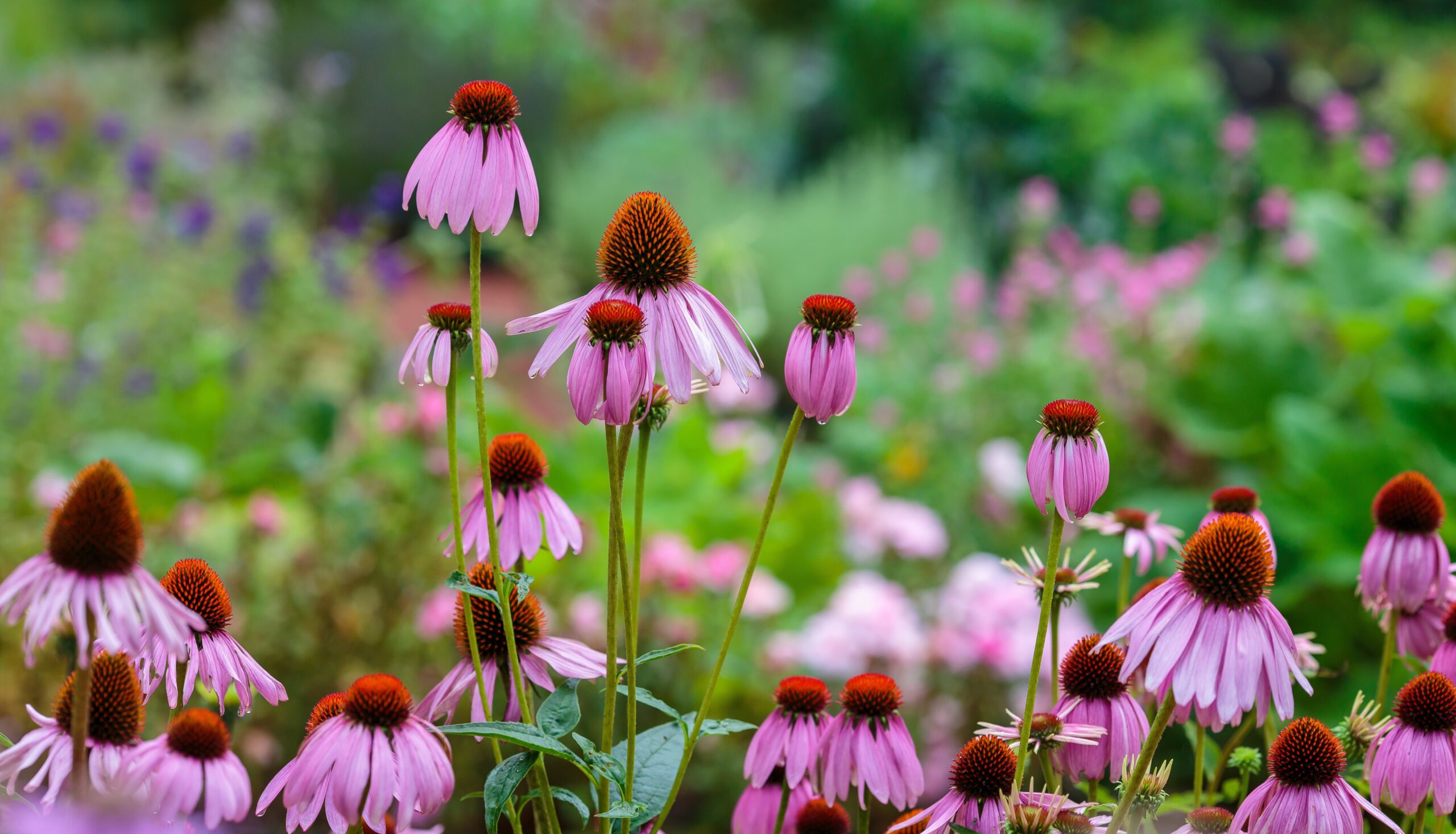
Purple Coneflower (Photo by Wes Brittenham)
Purple Coneflower (Echinacea purpurea).
This perennial delight grows in full sun to part shade and looks its best with moderate water. Beloved by bees and butterflies, the purple/pink petals and dark center cone are a striking form in any landscape or garden. Leave the seed heads through the winter and not only will seed eating birds have a source of nutrition, but you will be rewarded with volunteer seedlings that you can easily transplant in your garden. The small new plants look just like tiny versions of the mature ones.
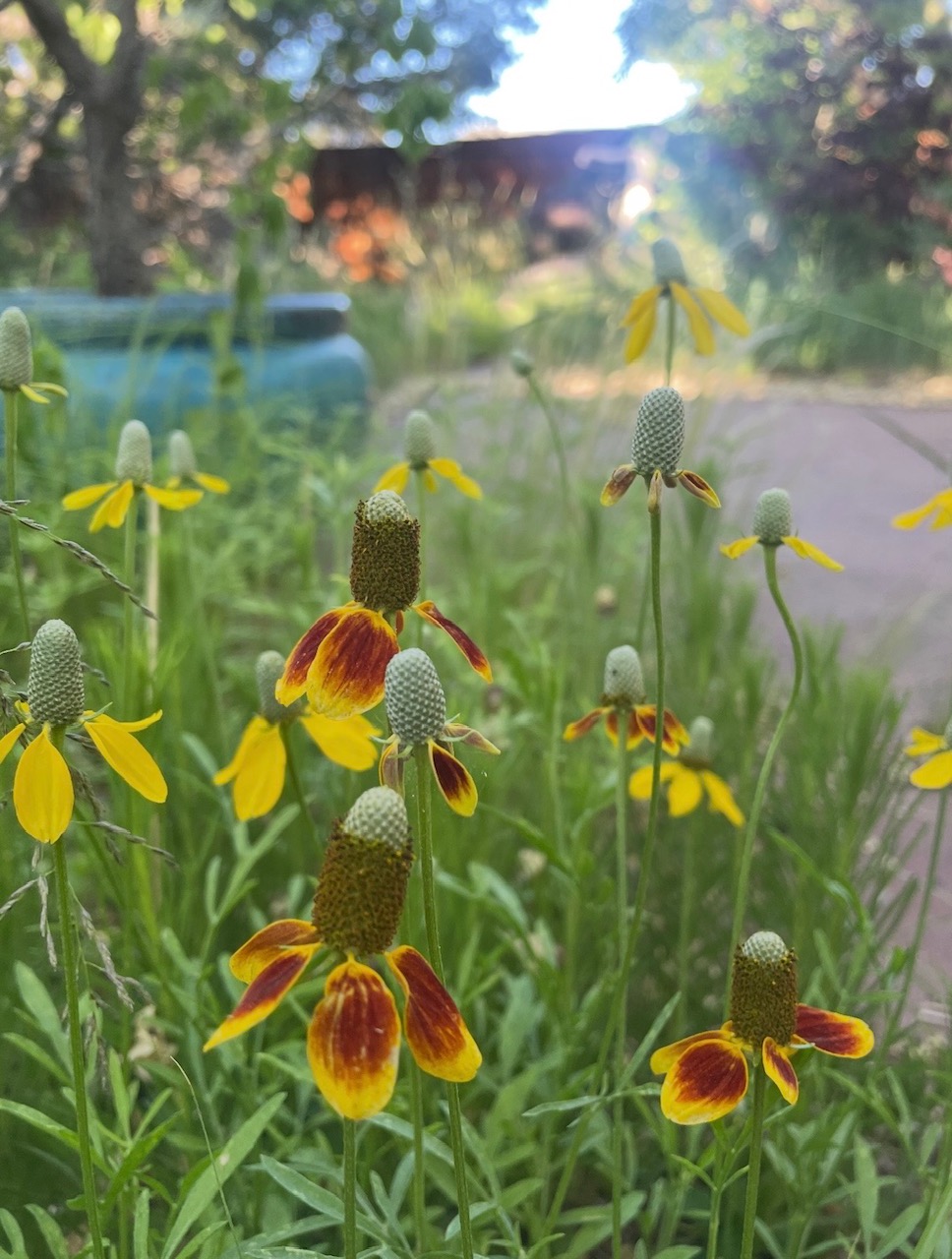
Mexican Hat Flower (Photo by Wes Brittenham)
Prairie Coneflower/ Mexican Hat (Ratibida columnifera)
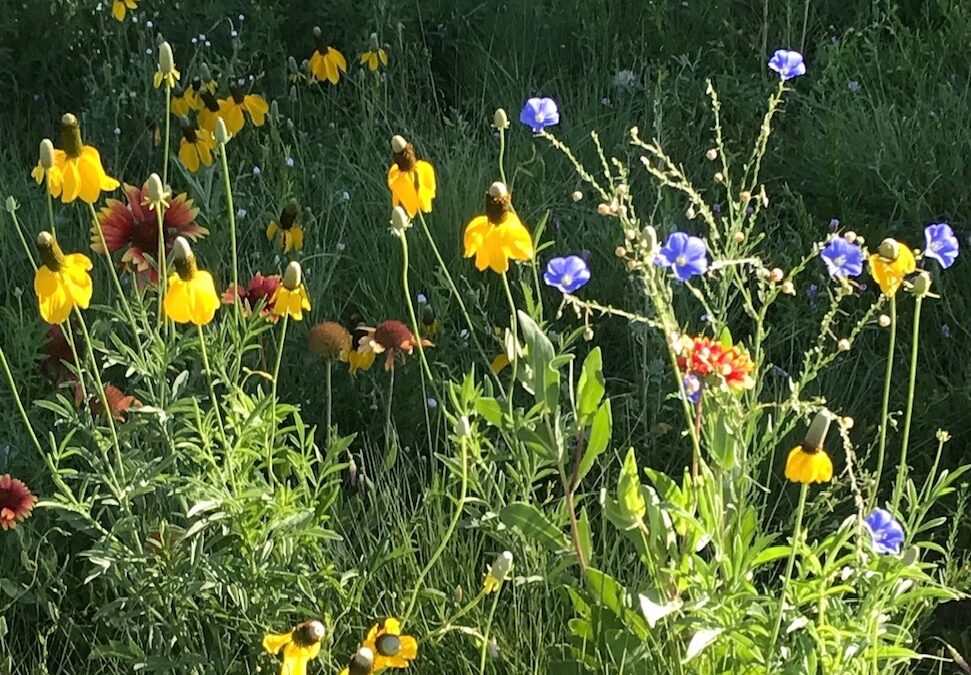
This tough, drought tolerant native perennial is known for the distinctive tall center seed cone and drooping flower petals that give it the common name of Mexican hat as it resembles a sombrero. It re-seeds readily, thriving in full sun and well-drained soil. It attracts pollinators, with flowers that can be yellow, maroon or a combination of the two. It has a lengthy bloom time, and birds love the seeds. Growing to about a 1½ feet tall, it is at home in mixed meadows, flower beds and even container gardens.
Tickseed (Coreopsis)
This low maintenance wildflower comes in both perennial (Coreopsis) and annual (Plains coreopsis, C. tinctoria) forms. The perennial is a sturdy plant featuring bright yellow daisy-like flowers that bloom for a long time, attracting bees, butterflies and birds when it goes to seed. The tick-like shape of the seed gives it its common name. Plains coreopsis is airy and thinner than perennial coreopsis and has smaller flowers that are usually yellow around the margins, with red to burgundy in the center.
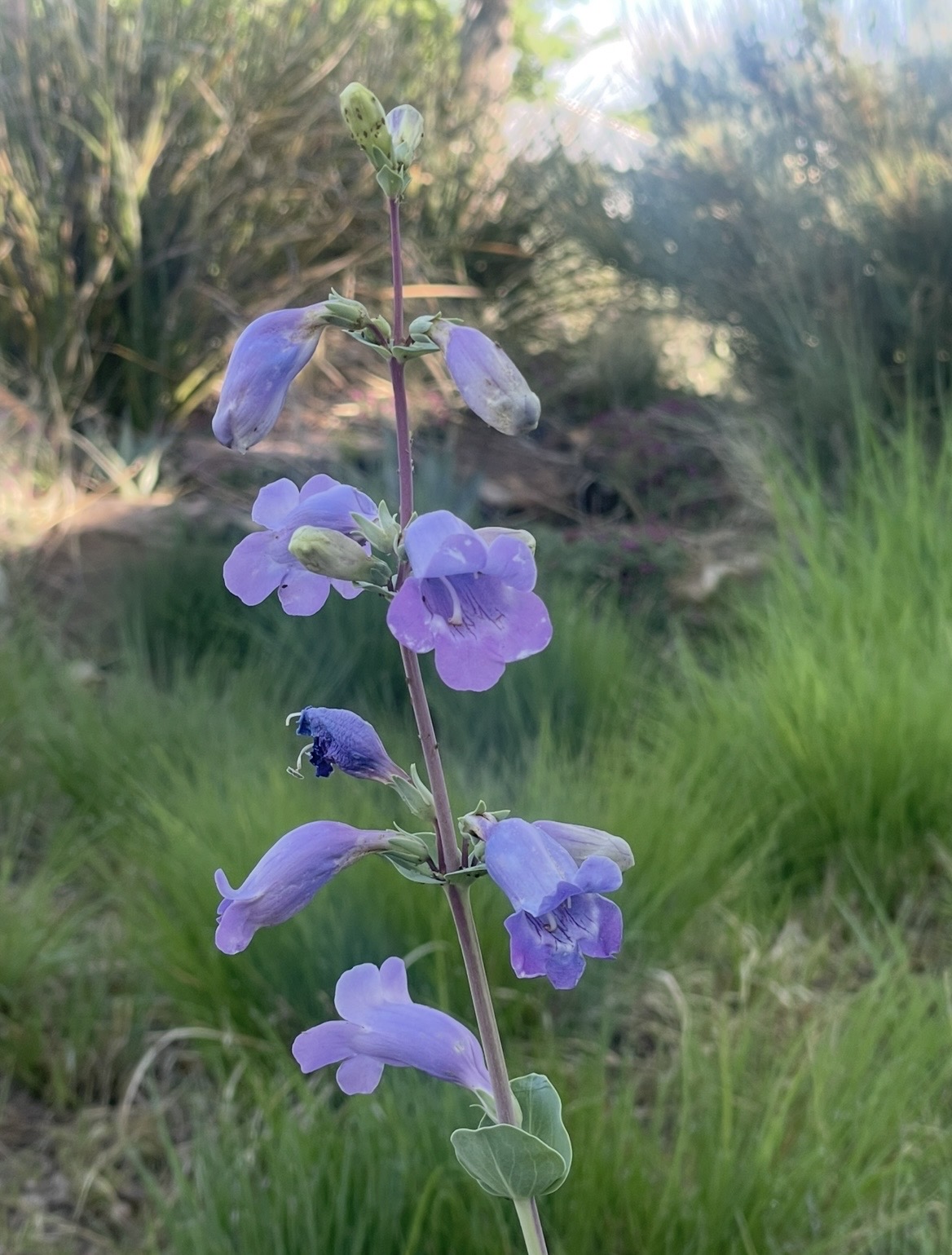
Large Flower Beardtongue (Photo by Wes Brittenham)
Large Flowered Beardtongue (Penstemon grandiflora)
A 2- to 4-foot-tall native perennial, this penstemon features large lavender to pink tubular flowers in late spring and early summer. It prefers well drained soil, even thrives in sandy soil, and attracts a variety of pollinators, including hummingbirds and the checkerspot butterfly. Wonderful in meadows and prairies, this striking native also looks great when planted in masses as it produces smaller clumps than other large penstemons such as desert beardtongue or Palmers penstemon. The large flowered penstemon re-seeds easily, but like most penstemons, needs to be seeded in the fall for natural cold stratification. The leaves are rounded and a rich blue-grey color.
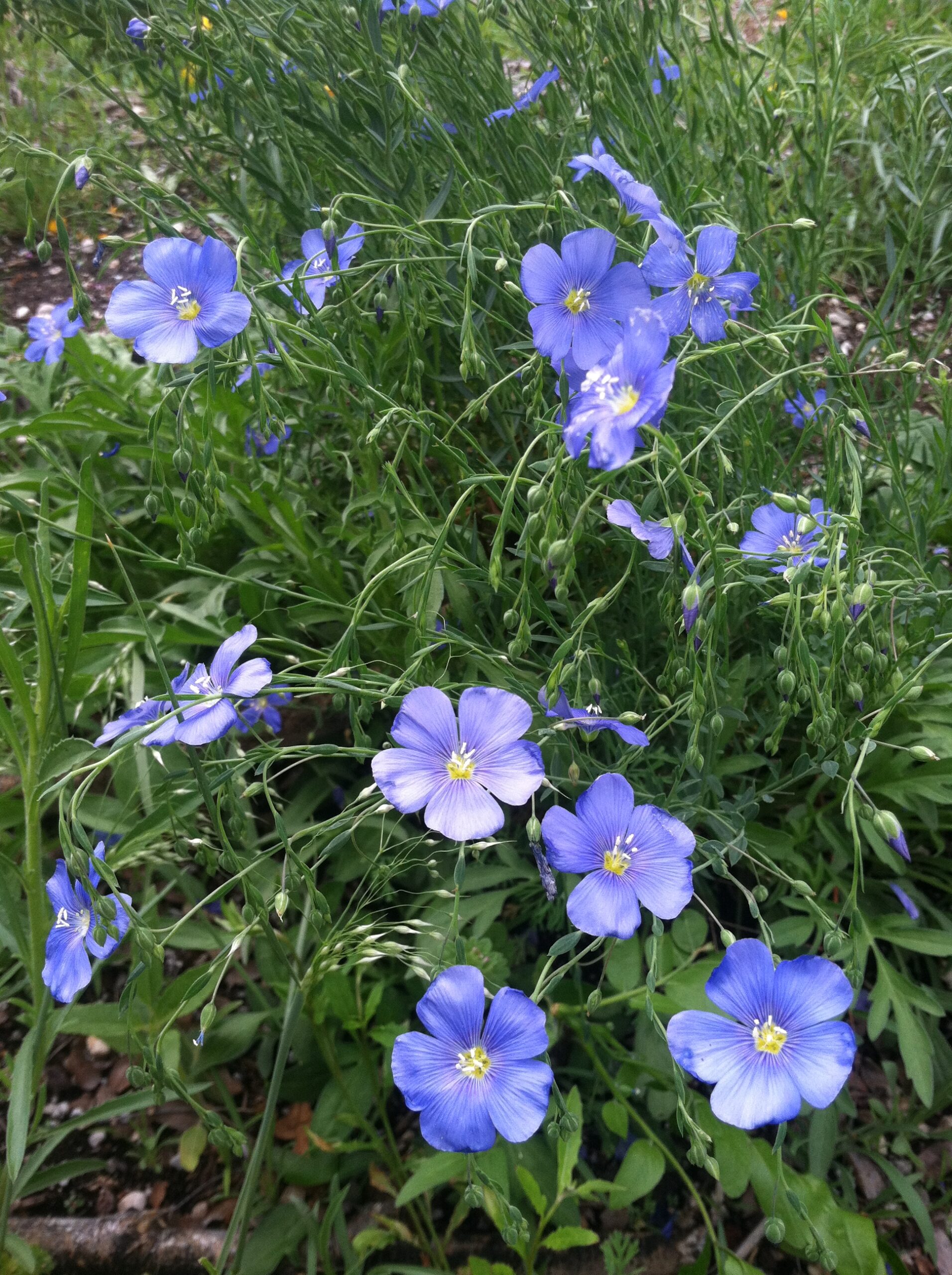
Blue Flax Flower (Photo by Wes Brittenham)
Blue Flax (Linum lewisii)
This sky blue, delicate looking wildflower is actually quite tough. It blooms profusely on thin, airy stems in spring to mid-summer. The flowers open in the morning and close by the afternoon. It prefers poor, well-drained soil and is very drought tolerant once established. It is usually a short-lived perennial, with each plant lasting perhaps several years in the landscape, but it is a prolific producer of seeds and, if the conditions are conducive, it naturalizes in large, shimmering swaths, with the rounded petals giving a satin sheen effect. It is to be fond of sprouting in decomposed granite or crusher fine mulches.
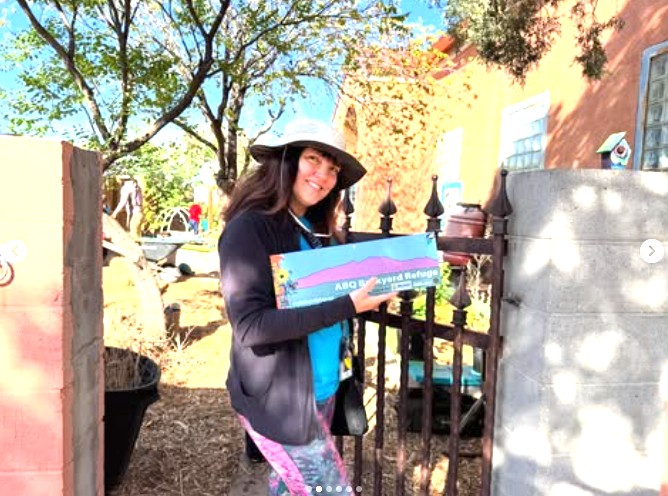
The ABQ Backyard Refuge Program is working with greater Albuquerque residents to create a mosaic of habitat across the city that will support a wide variety of both year-round and migrating wildlife. The program, which is managed by the Friends of Valle de Oro National Wildlife Refuge, was developed by more than 40 partners, including local government agencies, university departments and conservation organizations. The program provides resources for residents, including an introductory guide that features a list of plants that both thrive here and attract wildlife as well as a workbook for building and documenting your refuge. In addition to recruiting homeowners to build habitats in their yards, we are working with our partners to increase green space in the communities most affected by our changing climate.
Any space can be certified, including a front yard, patio, balcony, community space or, of course, a backyard. As of May 22, the program has certified about 166 acres with 629 individual and business participants. That surpasses the initial goal of certifying as many habitats as there are national wildlife refuges in the nation (572). Next, the program hopes to match Valle de Oro's 570 acres. Every bit of habitat counts!
Whether you have a balcony, a patio (where you can put potted pollinator plants) or acreage at your home, you can make changes that benefit wildlife. Here are some tips:
Leave a few dead branches in your yard, as long as they don’t pose a safety hazard. They can provide great perches for birds and food sources or potential nesting sites for woodpeckers.
Allow some leaves to stay on the ground in the fall so more butterflies are attracted to your property in the spring.
Leave dried sunflowers and grasses in your yard because they provide food for wildlife during the winter.
Plant pollinator friendly species such as sunflowers, mistflower, yarrow, beebalm, salvias, penstemon, oregano, fennel, whorled milkweed or native buckwheats.
When you certify your space as an ABQ Backyard Refuge, you are helping to encourage neighbors to build wildlife habitats. As a member of the certification program, you will receive a metal sign with stickers that show your certification level.
The sign can be a conversation starter with your neighbors and help the program grow.
When I mention black currants while talking fruit trees and shrubs with people in Albuquerque, I have come to expect that we are often starting the conversation thinking about different things. Most commonly, people have experienced or heard about the European black currant, Ribes nigrum.
They recall an earthy, resinous flavor with nice sweetness and a tart finishing kick. European currants are best reserved for cooking. With their strong flavor, they make incredible sauces and condiments and are equally delicious as preserves and in pies and tarts. These black currants have a devoted following. Because the flavor is very distinct, I have found people often have a binary reaction when I mention the fruit: either pleasurable nostalgia or occasionally disinterest or dislike.
The other thing people confuse for black currants are little dried raisins, similarly dark in color and confusingly sold as “currants.” These fruits are made from “raisins de Corinthe,” Greek grapes grown, dried and shipped for hundreds of years from a port of that name. These are not the black currants I am talking about.
While I do like eating and growing the European black currant here in Albuquerque (mostly as a shady understory plant), I am much more excited about our native black currant — Ribes aureum— the clove currant, aka golden or buffalo currant.
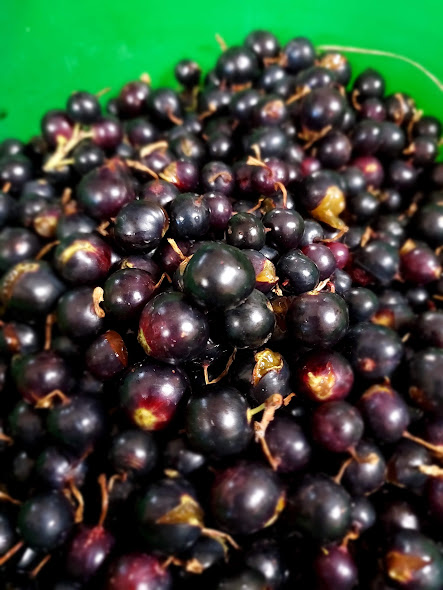
The clove currant is more fruity, less funky and a bit sweeter than its European counterpart. There is still some pleasing complexity and tartness to the fruit, but nothing mouth-puckering. They are perfect for fresh eating — or freeze them so they can be thrown in a smoothie or used as a blueberry replacement in pancakes when the snow flies. The fruits can get nice and large for a currant, from ¼ inch up to ¾ inch in size, with a shiny, blue/black color. Even the shrubs themselves are a bit larger, reaching 5 to 6 feet at maturity.
As an ornamental, the clove currant is a bit too floppy for a hedge, and they do send out runners — so consider yourself warned. However, if you give them a little space as a focal point in the garden, you will be rewarded with abundant dangling, bell-shaped yellow flowers in the spring that draw you across the yard with an overpowering vanilla and clove scent and, of course, all the incredible life that visits the flowers for their nectar. You will also get to see them with their dusky-crimson foliage in the fall. For most of the summer, you and the birds can keep eating the fruits as they ripen singly or in small clusters.
Clove currants handle the New Mexico sun and heat with grace, but they are quite adaptable and can do well with partial and even full shade. Along the river, they are only occasionally shaded out by taller thickets. If you’re out wandering in the bosque this spring, keep an eye out (or follow your nose) for these incredible flowers and fruits.
Author: Graeme Davis is an ISA certified arborist and the owner of Flora Fauna Farm, a nursery that focuses on plants that grow well in the high desert. Flora Fauna Farm grows a diversity of edible trees and shrubs, useful native plants and unique landscape plants curiously underrepresented in the urban canopy of Albuquerque. You can see its offerings at www.florafauna.farm.
Being someone so immersed in planting design in my daily life and someone who is so plainly in love with plants, both wild and cultivated, it can be difficult to narrow my focus and play favorites. I owe this relationship with plants unequivocally to my grandmother the rosarian, who, when asked which rose was her favorite, would always reply, “The one that’s in front of me right now.” Therefore, I shall restrain myself for the purpose of this article to the seeded meadow in the high desert. I hope you will find the selections mentioned compelling enough to consider them and possibly experiment a little!
It was actually at my grandmother’s house that, in 2009, a friend and I, fresh out of the landscape architecture program at the University of New Mexico, germinated our first meadow from seed. We had stabilized 99% of the site’s steep grades with retaining walls, but a pesky little 300-square-foot sliver of dead sod at about a 30% slope seemed forever destined to erode out the driveway and down the storm sewer — rats!
There was an existing sprinkler system in place, and we were therefore able to provide timed irrigation to the surface of the soil without having to dig a bunch of new trenches and put a bunch of new plastic piping in the ground. A little idea sparked: Why not just seed a meadow! The cost of ingredients would be relatively low, and, given how cooked our bodies were from the work we’d already invested, a little bit of (somewhat) instant gratification sounded downright appealing.
On a late spring day, we bounced a springy roll of burlap out of the truck bed and onto our shoulders, then tossed the following in a large paper grocery bag:
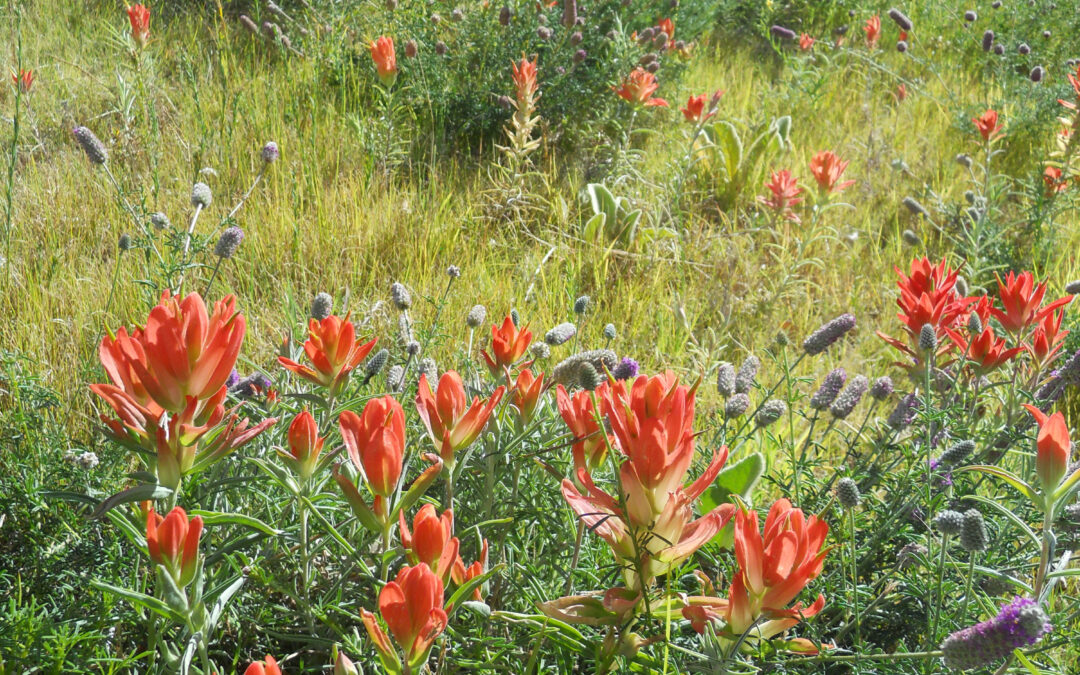
2 small packets of Indian paintbrush (Castileja lanata)
2 small packets of mullein (Verbascum thapsis)
A couple of handfuls of grape hyacinth (Muscari armeniacum) and species tulip bulbs collected from excavation on site
We prepared the soil minimally for the seed mix, scuffing a couple of 2-cubic-foot bags of compost into the top inch or two of soil with a hard rake. We then hand-broadcasted the seed atop the loose dirt, east-west and then north-south, followed by lightly raking the seed and soil together to mix the two. Lastly, using a generous fistful of (100-ish) sod staples, we tightly pinned a single layer of burlap to the surface. The burlap serves as the secret ingredient in the concoction of a high desert meadow, especially on a slope. It serves a couple of purposes: First, it secures the soil and seed mixture, ensuring it doesn’t wash away in rivulets from the sprinklers or get blown away by the wind; it also holds onto a little moisture while allowing the emerging cotyledons — the plants’ first leaves — enough elbow room to squeeze into the sunlight.
Straightening up and drying our foreheads, both a bit chuffed at how easy that’d all been, we started taking wagers. “Which of the wildflower seeds do you think will bloom first?” I asked. “My money’s on the Indian paintbrush,” said my friend, fully aware that Indian paintbrush is hemi-parasitic and relies on blue grama to survive. I cracked up. He cracked up! If there seemed to be a clear underdog in the race, that was it!
We set the sprinklers to run for five minutes twice a day and after a couple weeks had passed, we teased the burlap from the surface, revealing a uniform green carpet. At the margins of the sliver of meadow there was a distinct green border of sprouts ceasing right where the burlap was cut. Neither of us had expected it.
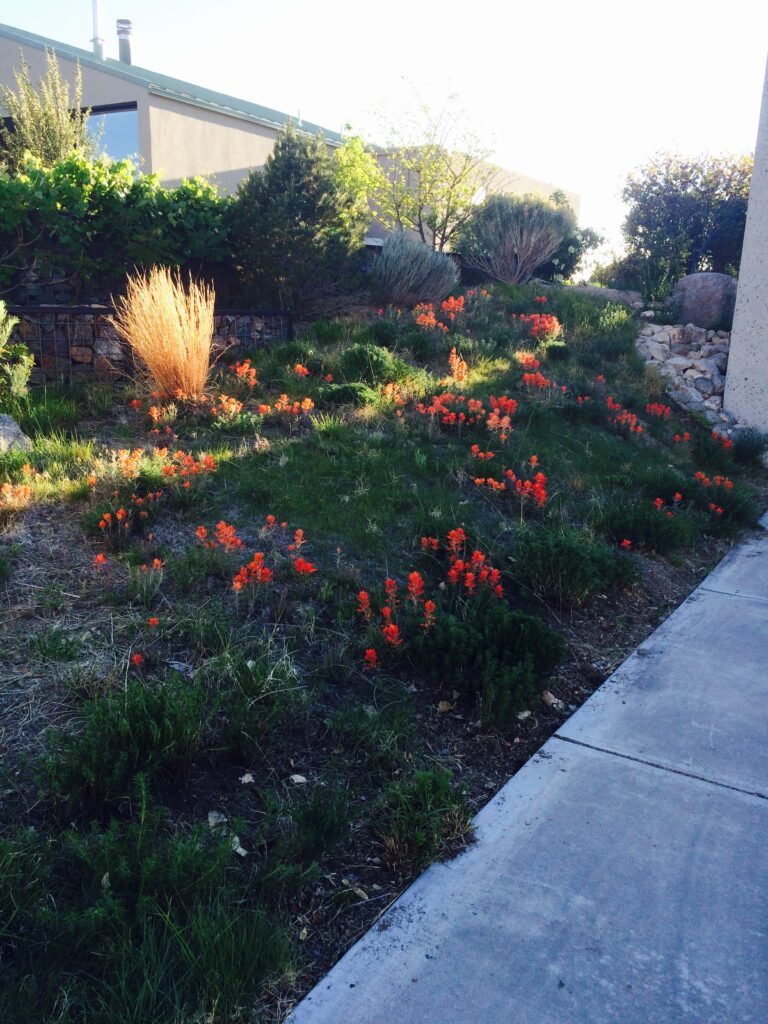
By the end of that summer, we had nearly weaned the meadow off irrigation. The grasses and perennial wildflowers had come in marvelously. Now, as we near the spring season of 2024, and the first winter jasmine shrubs and daffodils are blooming, I drive by that yard in the Sandia foothills and think to myself how one of the best performing landscapes I ever had a hand in was also one of the easiest and least expensive.
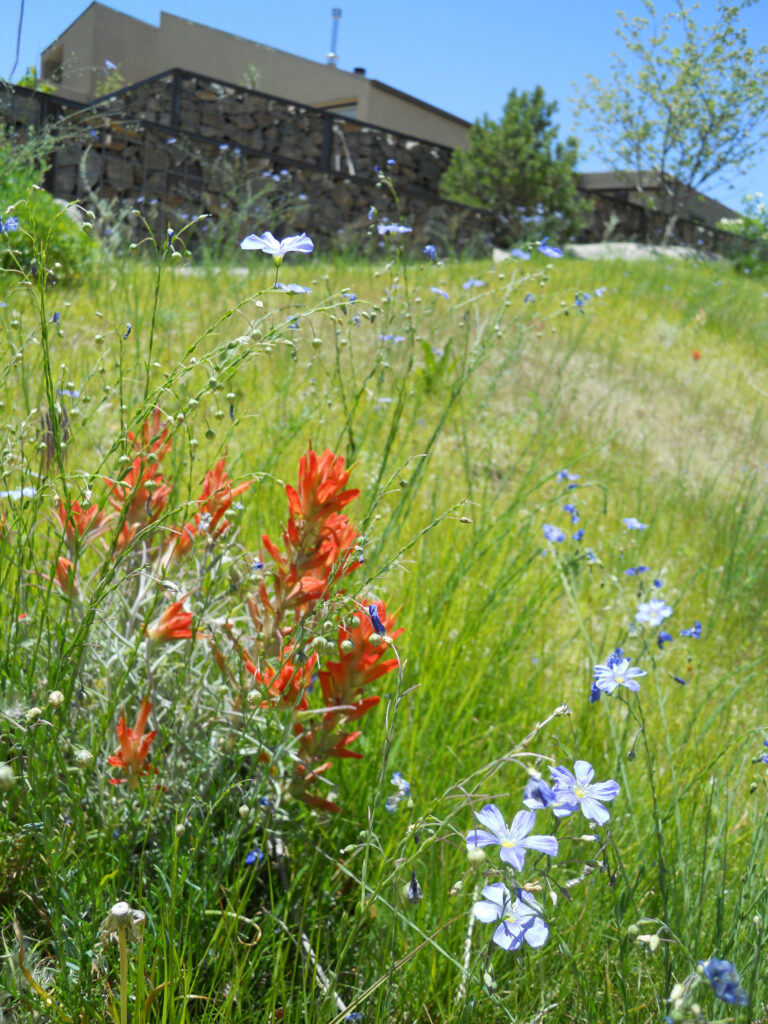
Each year, there continues to be a succession of blooms. In springtime, grape hyacinth emerges first, followed by a flush of Indian paintbrush and then purple prairie clover. The grasses green up in May and mature through August, and the little bluestem holds a warm, russet color through the winter.
While the flax initially performed well and provided early color, it has had the least longevity of any of the wildflowers. The mullein seeds germinated well and formed soft rosettes, but the current residents of the property sadly weeded it out of the meadow for aesthetic reasons. The purple prairie clover flowers profusely every summer with irrigation once or twice a week. But, the real star of the show, from that first year until this day is — I never thought I’d say it — the underdog, Indian paintbrush.
Learn more about specific types of gardening here:


 Floodwater Mosquito
 Yellow Fever Mosquito