
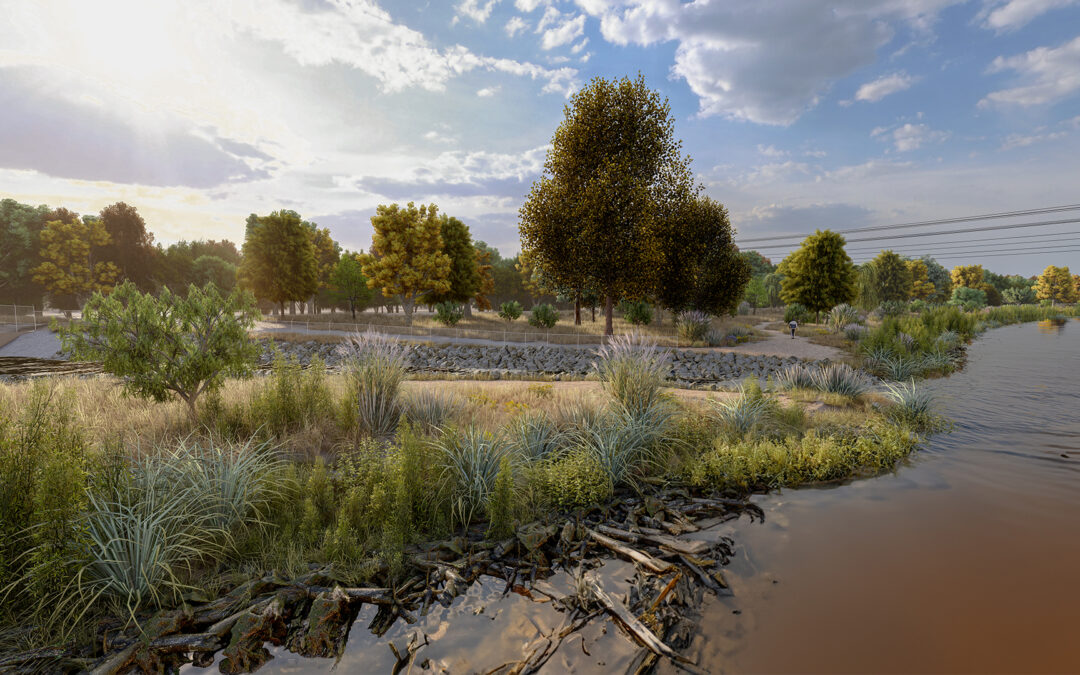
Water flowing from the Southside Water Reclamation Plant is so clear that a person can see rocks at the bottom of the riverbed, and the Albuquerque Bernalillo County Water Utility Authority is trying to make that outflow a better habitat for fish and more accessible to hikers, joggers, bikers and anglers.
The water reclamation plant is where Albuquerque’s wastewater comes to be treated for reuse. Some is used as reuse water in sprinkler systems, while some is thoroughly cleaned and released into the Rio Grande. The outflow puts about 55 million gallons per day into the river, said Diane Agnew, water rights program manager with the Water Authority.
The water has low sediment and a nice temperature — so fish really like to swim there, she said. As a result, fisherman come to enjoy it, too.
“People love to fish right here,” Agnew said. But the outflow could be better. That’s the idea behind the treatment plant outflow restoration project, which aims to improve water quality, increase community and maintenance access, and rehabilitate the flood plain. The design is complete, and the restoration project is permitted but still needs $2.5 million in additional funding to build.
The total cost for planning, permitting, design and construction will be $6.6 million, and the project has already received some funding from the state Legislature, the Office of Natural Resources Trustee and the Water Trust Board.
“We designed this using historical flow data in the Rio Grande, so we know that with the designed flows, we will get the number of days that the fish need for spawning,” Agnew said.
The project is trying to make the outflow a better habitat for fish, especially the endangered Rio Grande silvery minnow.
At present, the bank is steep with a roughly 2-foot drop to the river. The restoration project will turn the bank back into a flood plain, where water can wash over the bank, depositing ground water, watering native plants and making the space more appealing to fish and safer for anglers.
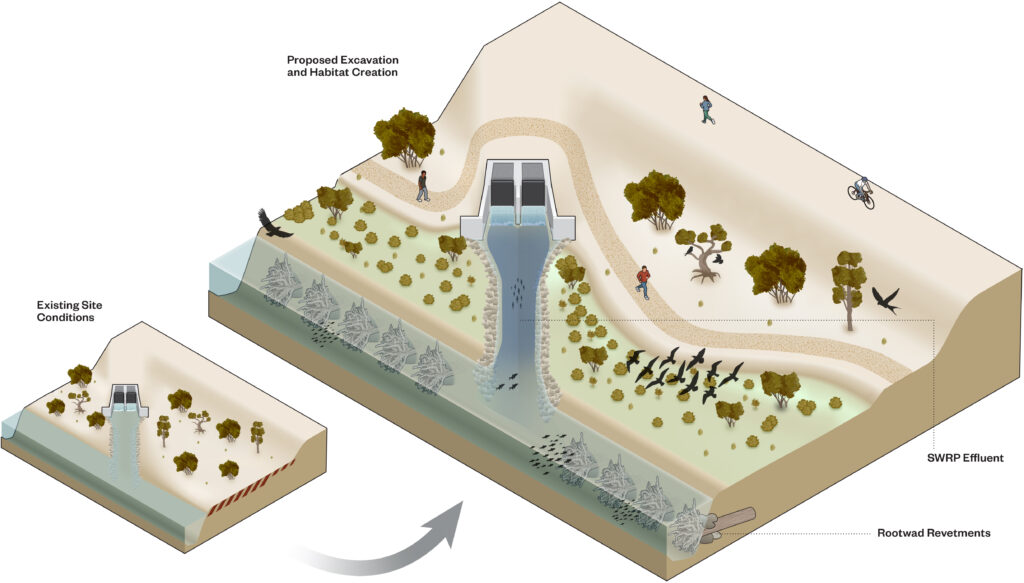
“Not only are we creating a flood plain terrace where the water will come up onto it, we’re putting in these bioengineering features called rootwad revetments. So, we’re taking trees that were already dead, and we’re going to cut them and turn them around so their roots stick out into the stream. And that creates stream stability, so that we won’t get as much erosion and we’ll get less sediment in the water, which is good for the fish. And, create little nooks and crannies for the fish to spawn in and hang out in until the eggs hatch,” Agnew said.
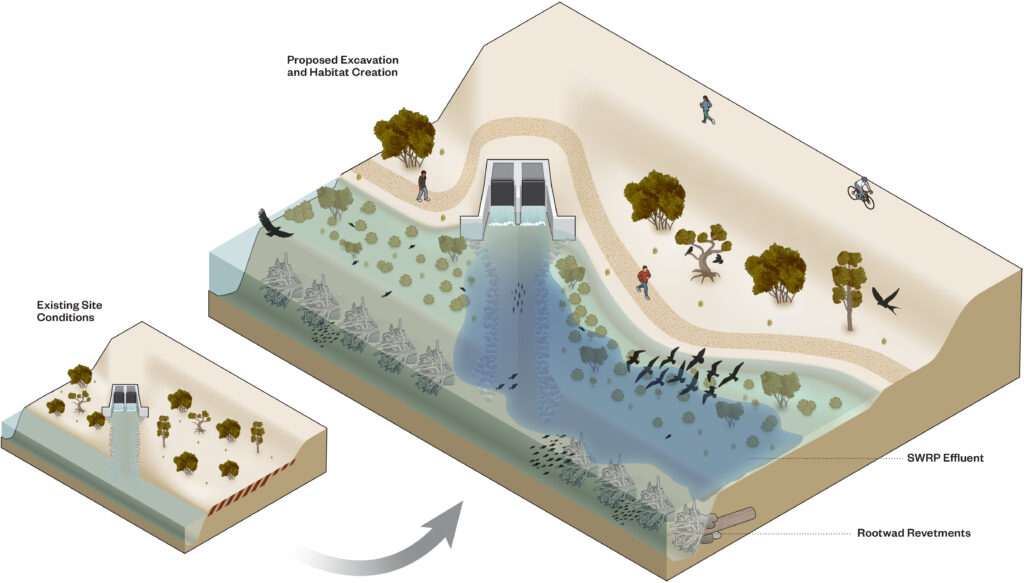
The restoration project would include 1,100 feet of rootwad revetments and calls for removing invasive species like salt cedar and ravenna grass and replacing them with native plant species over 18 acres. The native plant species will create a tiered habitat, with grasses, bushes and trees.
“That allows the different animals to have habitat, and those root systems are all individually different, too, so it helps increase the stability of the flood plain overall. Whereas out here, and as you see all over the Rio Grande, there’s increased sedimentation and a lot of erosion that occurs in this area. The river has to get to a pretty high level before it floods. This spring, the river got to 4,000 CFS (cubic feet per second) and this area did not flood,” Agnew said.
After the project, she said, the area should start flooding at 900 CFS.
The project should benefit the yellow-billed cuckoo and the Southwestern willow flycatcher, two protected birds, by creating more spots where they can nest. Planting milkweed will benefit the monarch butterfly.
The work should make the area more accessible to the public by connecting two bosque trail systems on either side of the outflow. The project would create 4,800 feet of new trails. Crews also will be removing 198 jetty jacks.
The Legislature has provided about $1.2 million for planning and design, but District 26 Sen. Antonio “Moe” Maestas, a Democrat, is advocating for more investment in bosque restoration because he believes the bosque is underused.
“We’re one of the only cities in the country that doesn’t utilize its river for recreation or economic purposes,” Maestas said. “Given the fires that happened last spring, it’s imperative that we deal with the fuels and the underbrush.”
There’s not a city with a comparable river, Maestas said, but the San Antonio River Walk does offer an example of a river becoming central to a city’s tourism.
“Because we want to protect it, we do nothing with it,” Maestas said. “That’s not consistent with what we’re capable of.”
Additional funding from the state likely would have to come from capital outlay appropriations, Maestas said. He’s on the lookout for other project proposals that would restore or enhance the bosque.
“We have the financial resources to turn the bosque in Bernalillo County into a beautiful state park that we can all be proud of, that increases environmental protections and will add to our quality of life and build the city we want to build, which is a city that climbs out of poverty and keeps future generations from moving away,” Maestas said.
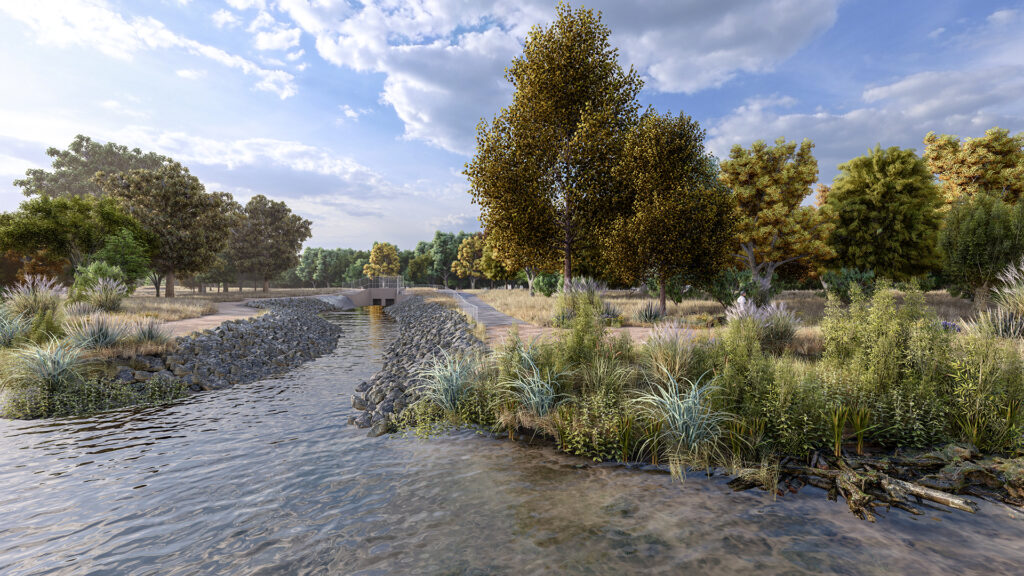
Construction should begin in August 2024 due to a $3 million dollar federal grant from the Bureau of Reclamation. Once construction starts, the project is expected to be finished in eight months. This important project will improve the riparian habitat for endangered species and make the outfall area more attractive to hikers and bikers in this section of the Bosque.
