Summer evenings in Albuquerque often end outdoors with a refreshing drink and dessert. We’ve partnered with Edible New Mexico magazine to bring you a selection of lovely recipes made from two fruit trees commonly grown in Albuquerque.
Apple and Pomegranate trees grow well in our area. In fact, a 1926 survey by the New Mexico Manzano Forest Reserve identified an apple tree that is believed to have been planted prior to 1676, which makes New Mexico home to the oldest apple orchard in the United States. Apple production in the state peaked in the 1960s, in the heydey of the Red Delicious variety.
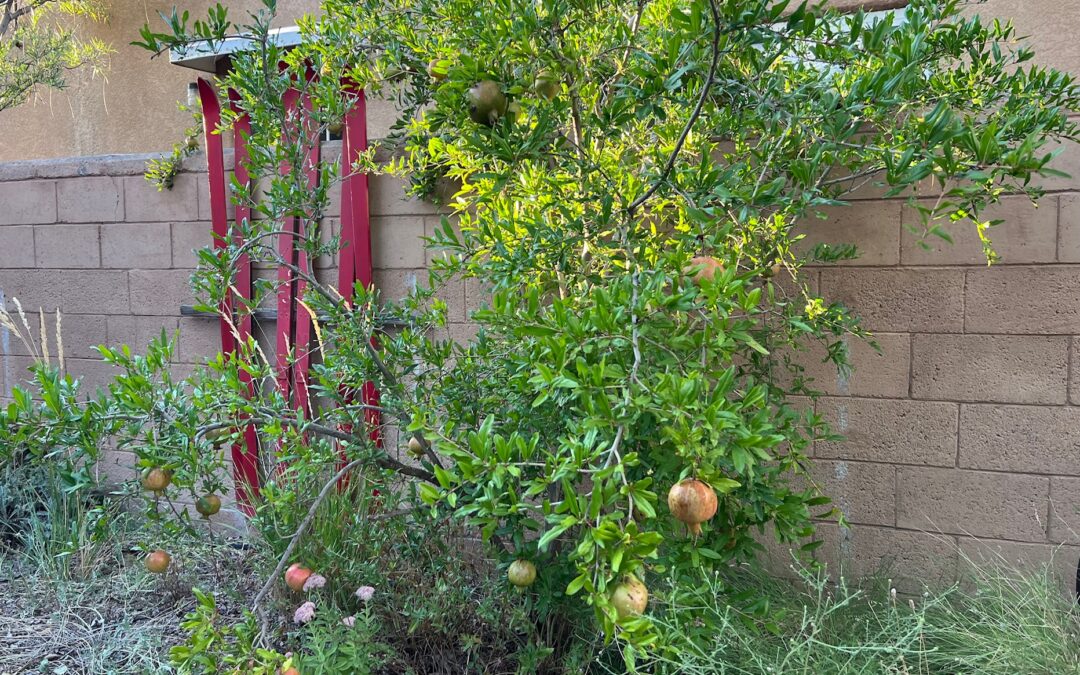
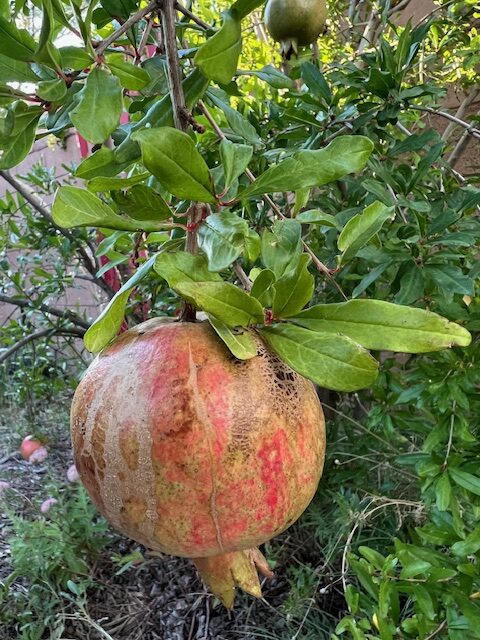
Pomegranate trees are native to the region that stretches from present-day Iran, Afghanistan, Pakistan, and northern India. Through the millennia, they were cultivated to grow in warmer regions of the Mediterranean. Therefore, it makes sense that they perform well in New Mexico. In Albuquerque, Pomegranates benefit from a protected, south-facing location to improve winter survival.
Harvesting time for both of these fruit trees are late summer and fall. Apples are ripe for picking in late August followed by Pomegranates starting in October. Below are some drink and dessert recipes for you to enjoy when these fruits are at their finest this season.
Level: Easy; Prep time: 10 minutes; Cook time: 10 minutes; Cooling time and steeping time: A day-1 week.
Shrubs are one of the easiest nonalcoholic cocktail bases to make. They are just fruit, sugar and vinegar in equal parts. They’re endlessly adaptable and a great way to preserve seasonal produce. This version pairs pomegranate with a touch of balsamic for depth and complexity.
Pomegranate and Balsamic Shrub
Ingredients
1/2 cup fresh pomegranate arils (seeds)
1/2 cup white sugar
1/4 cup balsamic vinegar
1/4 cup red wine vinegar
Instructions
In a medium, nonreactive bowl, combine pomegranate arils and sugar; mix until the sugar coats all the fruit. Let the mixture sit for 1 hour at room temperature.
Mash fruit with a wooden spoon to break it up.
Let sit for another hour and stir again. Cover with a clean kitchen towel and let sit at room temperature for 24 hours.
Add in vinegar, stir, and let sit, covered, for 1 week at room temperature, making sure to stir the mixture every day. After a week, strain the fruit by pouring through a cheesecloth-lined sieve.
Notes
Storage: Refrigerate shrub syrups. Tightly sealed, they can last for up to 6 months. If opened often, they last 3-6 weeks: taste syrup before using to make sure the flavor is good. Discard immediately if it has mold or any signs of continued fermentation, such as bubbling, cloudiness or sliminess.
For mocktail: Combine 1 1/2 ounces of a shrub with 4 ounces of soda water in a glass with ice.
Level: Easy; Prep time: 15 minutes; Cook time: 25 minutes; Total time: 40 minutes, plus cooling time
This recipe makes use of the inevitable apple waste from making pies, or any other apple recipe for that matter. Simply toss cores in a bag and freeze until ready to use. There is no need to worry about the seeds; cooking the cores eliminates the arsenic toxins.
Formosa oolong is semi-oxidized and falls somewhere between green and black tea. It is an excellent brew for mocktails. Double the sugar in this recipe, and you will have a syrup thick enough for your pancakes and waffles.
Apple and Formosa Oolong Syrup and Mocktail
Ingredients
Apple oolong syrup (makes 1 cup)
6 assorted apple cores (8 ounces)
5 black cardamom pods, lightly crushed
4 teaspoons Formosa oolong tea leaves
2 cups water
1 cup granulated sugar
Mocktail (serves 1)
3/4 ounce lemon juice
1 1/2 ounces apple oolong syrup
3 ounces sparkling water
1 thyme sprig, for garnish
Instructions
Syrup
Put apple cores, cardamom pods, tea leaves, and water in a small saucepan. Bring to a boil over high heat, then continue to boil uncovered, until the liquid reduces by half, about 20 minutes.
Strain through a fine mesh strainer into a medium bowl, pressing on the softened apple cores with a wooden spoon to release additional liquid.
Pour 1 cup of apple liquid into the saucepan. Add sugar and return the pan to the stove over medium-high heat. Bring to a simmer and cook, stirring, until sugar dissolves and the liquid gets slightly thicker but still quite pourable, about 5 minutes. Cool and strain into a bottle for storing. Keeps in refrigerator for 2-3 weeks.
Mocktail
Pour lemon juice and syrup into a shaker and shake. Then pour evenly into a rocks glass with ice. Top with sparkling water and stir gently. Garnish with a sprig of thyme.
Level: Easy; Prep time: 10 minutes; Cook time: 1 hour, 10 minutes; Total time: 1 hour, 20 minutes, plus 15 minutes resting time
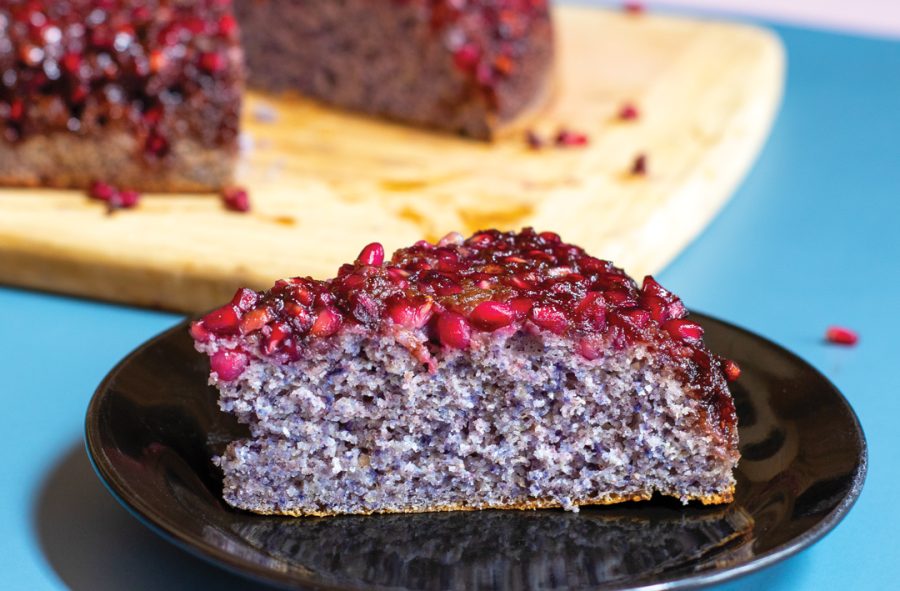
This pomegranate upside-down bread is a bit seedy but if you love this fruit, you’re used to that. Butterfly pea flowers take the blue corn bread mix to another level of the cerulean hue. The contrast between the bright red fruit topping and the blue bottom of the corn bread is stunning. Swap in any seasonal fruit for your upside-down top and serve with a light weeknight dinner of calabacitas or alongside other colorful fare on a holiday table.
Pomegranate Upside-Down Blue Corn Bread
Servings: 8
Ingredients
2 tablespoons butter
1/4 cup brown sugar
2 cups pomegranate arils (seeds)
3 cups blue corn bread mix
2 teaspoons butterfly pea flower powder
1 1/4 cups buttermilk
1/4 cup vegetable oil
2 tablespoons honey
2 eggs
Instructions
Preheat oven to 400 degrees F (or whatever temperature is recommended for your corn bread mix)
In a 10-inch cast-iron skillet, melt butter over medium heat. Remove from heat and swirl butter to coat the entire bottom of the pan. Sprinkle with brown sugar, then spread pomegranate seeds evenly on top of the sugar. Set aide.
Combine blue corn bread mix, butterfly pea powder, buttermilk, oil, and eggs in a large mixing bowl.
Spoon corn bread batter over fruit and spread it evenly from edge to edge. Bake for 35 minutes (or whatever time is recommended for your corn bread mix) or until a toothpick inserted in the center comes out clean.
Cool for a few minutes. Then run a knife around the edge of the corn bread and place a large plate or platter upside down over the cake pan. Using pot holders to hold the pan to the plate. Flip the plate over and lift off the pan, so the bread comes out upside down on the plate.
Notes
If you want to make this recipe without a prepackaged mix, follow your favorite corn bread recipe using blue cornmeal and adding 2 teaspoons butterfly pea flower powder to the dry ingredients. Follow step 2 for the pomegranate topping.
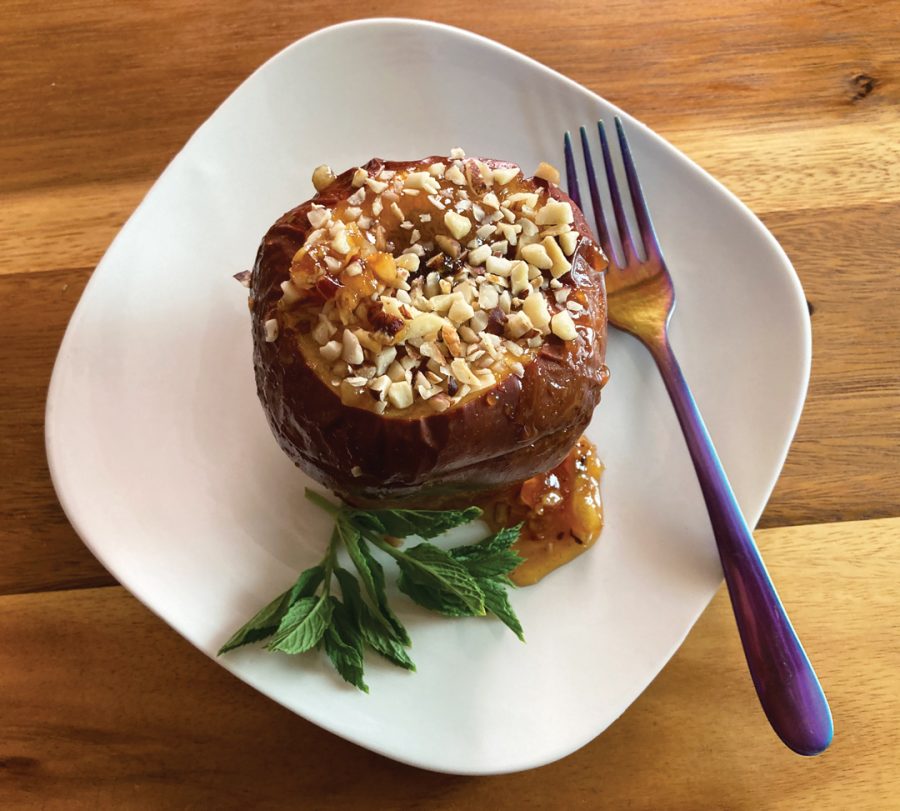
This recipe was first appearing in Auguste Escoffier’s Le Guide Culinaire, pommes bonne femme showcases the apple with the simplest of French methods. This version is adapted from Jacques Pépin’s recipe in Essential Pépin. Choose apples that can hold up during baking; dense, thicker-skinned varieties such as Gala, Fuji, Red Delicious, and Golden Delicious work well.
Preheat over to 375 degrees F. Rinse and dry apples.
Core apples, taking care to remove all pith and seeds. Cut about 1/4 inch off the bottom of each apple so it can stand upright on the baguette silce while cooking.
Score apples about one-third of the way down, cutting through skin (no more than 1/4 inch deep) and drawing the incision all the way around. As the apples cook, the flesh will explode and the part above this cut will rise, almost like the cap of a mushroom.
Arrange baguette slices in a gratin dish or baking dish that can second as a tabletop serving dish. Place an apple on top of each baguette slice.
Place one teaspoon butter and one teaspoon brown sugar in the cored hole of each apple. Mix together apricot jam and maple syrup and pour into cored hole, allowing mixture to spill over and coat the apples. Sprinkler one tablespoon chopped nuts and a pinch of cinnamon or freshly grated nutmeg over each apple.
Bake for 30 minutes.
Baste apples and cook for another 30 minutes.
Spoon some of the juice from the baking dish over the apples and let cool to lukewarm before serving. Garnish with a sprig of mint.
Serve as is, or celebrate your apple creation by adding whipped cream, creme fraiche, or ice cream.
505Outside.com in coordination with Edible New Mexico magazine https://www.ediblenm.com/. Have a question about the article or anything else? [email protected]
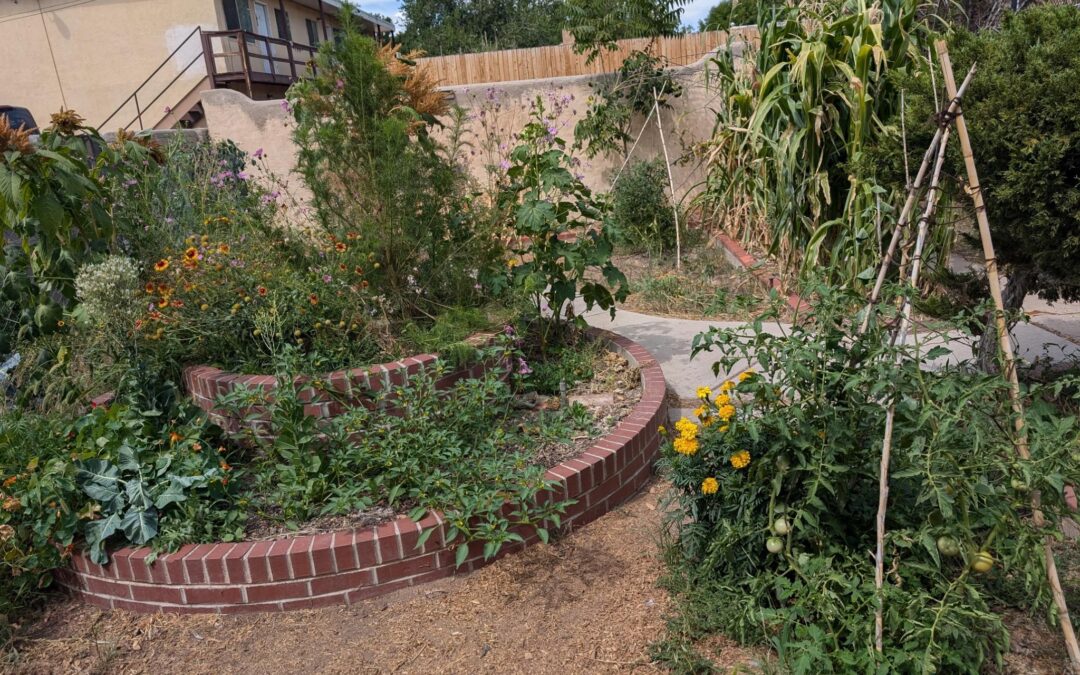
Growing vegetables successfully in the hot, arid climate of New Mexico can be tough. My partner and I have extensive farming experience and education in permaculture from the mid-west and we found that it took us several seasons of observations, learning and adjustment before we could have a thriving food garden in Albuquerque.
Success came when we stopped fighting the environmental conditions and started working with them. Instead of forcing plants to survive in habitat they weren’t adapted to, we began focusing on supporting natural systems that already exist in the Southwest. Observing the flow of energy across the land — the movement of sun, wind, water and heat — taught us a great deal. We started paying attention to where water naturally collected, where afternoon shade formed, how soil stayed cooler under plant cover, and how native plants thrived with little care.
It is important to begin not by digging in (literally or metaphorically) but by observing what is already happening in the area where you want your garden. Some questions to ask yourself are Where do I get sun? How does water flow in the garden? How can I get the best energy storage in my garden? How is my soil? What plants do I want to grow? What other things might affect them (animals, wind, etc.)?
SUN: Look out for the sun!
The Southwestern sun is not only harsh but ever present in the landscape. Always observe how sunlight enters your garden, areas that have full sun, partial shade or full shade. This will be very helpful in designing where to grow specific plants or vegetables. Have a dedicated notebook for this and make your observations by seeing where other plants are already growing. Ask your neighbors what works for them!
Observing sun patterns and learning from native plants — many of which grow beneath partial shade or alongside rocks and shrubs — can help guide crop placement and shading strategies. While most vegetable crops require six to eight hours of sunlight, prolonged afternoon sun in the Southwest can be damaging. Timing is critical. Heat- and drought-adapted crops benefit from being planted early enough to establish deep root systems before peak summer temperatures or timed to take advantage of late-summer monsoon moisture.
Reduce heat stress with shade.
If your observation diary is telling you that you have almost full sun in most of the garden, then it may be time to think about how you can use simple solutions to add shade.
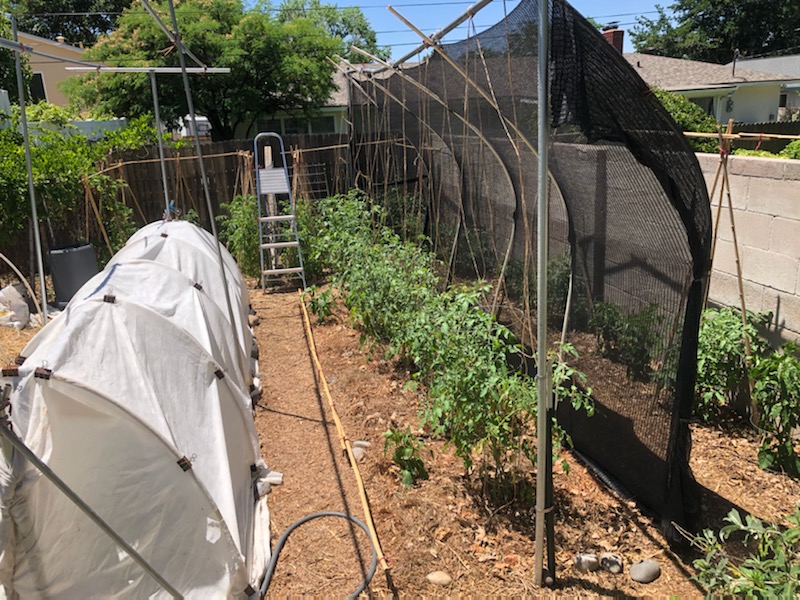
A shade cloth rated between 30% and 50% lowers temperatures while still allowing sufficient light for photosynthesis. When installed over beds during the hottest months, shade cloth helps prevent sun scalding, reduces moisture loss and minimizes flower and fruit drop.
Create shade with native plants like ocotillo, mesquite and rabbitbrush. Living fences can also be used to create beneficial microclimates by providing afternoon shade, reducing drying winds and moderating temperature extremes.
Creating shade for tomato plants.
SOIL: Essentially, all life depends upon the soil. It is the home for your seeds.
Healthy soil is the foundation of any successful vegetable garden. In the Southwest soil is usually low in organic matter and exposed to intense heat along with not having any cover during the harsh summer months. Living soils — those rich in organic matter and biological activity — retain moisture more effectively, cycle nutrients efficiently and buffer plants against temperature extremes.
To get living soil, start by saving your food scraps from the kitchen! They have nutrients that your soil needs. Building organic matter through compost (made from your kitchen scraps), mulch (from dried fallen leaves, straw, etc.) and continuous root growth (from growing cover crops like winter wheat, rye or barley) supports fungi, bacteria and other organisms in your soil that make nutrients available to plants.
Many native Southwestern plants thrive in undisturbed soils, offering a useful model for garden management. Soil, when protected and undisturbed, can be naturally rich in nutrients, living organisms and living roots. This creates soil that stores water longer, resists erosion and supports plants through heat and drought. Tilling or digging deep can expose these living organisms to the harsh sun, killing all the healthy parts of the soil. Reducing tillage helps preserve soil structure, fungal networks and pore spaces, allowing water to infiltrate deeply rather than evaporating or running off. Most vegetables prefer soil that drains well while still retaining moisture. Improving soil aggregation through organic matter allows soil to hold water like a sponge while maintaining adequate airflow to plant roots.
How to keep your soil full of nutrients and moisture.
Heavy mulching: In urban areas, we have the bad habit of raking all our leaves into plastic bags, but that is quite counterproductive. These leaves actually serve a very important function: They provide natural mulch and keep the soil from getting too hot or losing too much moisture. They also provide homes to bees and other insects that burrow in them for the winter. Heavy mulching is central to water conservation, weed suppression and living-soil management. A thick mulch layer — typically 3-4 inches — keeps soil covered, reduces evaporation and moderates soil temperatures. Use organic mulches such as straw, shredded leaves, wood chips, compost and grass clippings. Mulch can be easily attainable for free. Grab the neighbors’ bags of fall leaves, ask local tree pruning companies for their woodchips, or use your backyard compost. Other options are corn and rice husks and straw waste from mushroom growers.
High-density plantings: Planting really close together protects soil by shading the surface and reducing moisture loss. As plants transpire, they release moisture into the surrounding air, creating a cooler, more humid microclimate near the soil surface that benefits both crops and soil life.
Continuous soil cover: Don’t leave your soil bare; after a harvest, plant a cover crop. It could be something that helps give different nutrients to the soil in winter such as winter wheat or barley or let the skeletons of the previous plants stay. Try the chop and drop method which uses the unused part of the plant harvest as cover during non-planting months.
Ultimately, it is important to remember that feeding the soil food web with a variety of materials/food and rotating what you grow in that soil is important. When they break down, they improve soil structure and fertility over time.
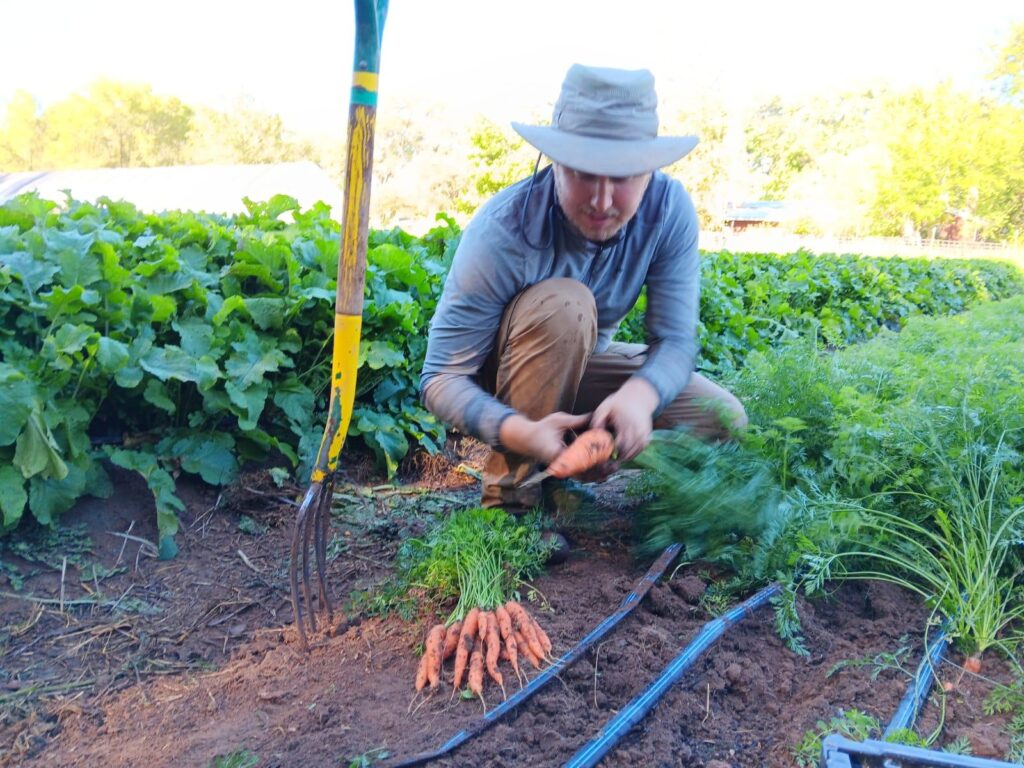
Harvesting carrots from nutrient rich soil.
WATER: Oh Water! What would we do without you?
Water is one of the most important elements and energy systems that you need to plan for in your garden. Water might feel like a renewable, ever-present resource, but we know it is limited in the Southwest. Efficient irrigation is essential for vegetable production in water-limited environments.
Three Types of Watering Methods
Drip irrigation systems are widely recommended because they deliver water directly to the root zone, minimizing evaporation and runoff. ¼-inch in-line drip tubing is particularly well suited for vegetable beds. These lines feature evenly spaced 6” or 12” emitters that provide consistent moisture along plant rows. When installed beneath mulch, they offer precise water delivery while keeping foliage dry, reducing the risk of fungal disease.
Olla means “pot” in Spanish, but the concept of using ollas as an irrigation system goes back thousands of years in many cultures. An olla watering system is basically any type of unglazed clay pot that is buried beneath the soil with only a small amount sticking up above the surface and filled with water. You can tell that a pot is unglazed because it will be that classic terracotta red color with no shiny finish or paint. The water then leeches out of tiny holes or pores in the clay and is pulled through the soil to the roots of your thirsty plants using a process called soil moisture tension. This functions much the same way as osmosis in that the water is trying to equalize to a certain level of moisture within the soil. This means your soil will never become overwatered either — if the soil is moist, the water stays in the pot until it is needed.
Other irrigation options include soaker hoses, overhead sprinklers and hand watering. Soaker hoses are affordable but clog, degrade in the sun and use more water, while sprinklers tend to waste water and increase disease pressure by wetting leaves. Hand watering is flexible but time-consuming and often inconsistent. For most gardens, a hose attached irrigation system combining a 3/4-inch main line with ¼-inch drip tubing offers the best balance of efficiency and control. Learn how to make one here.
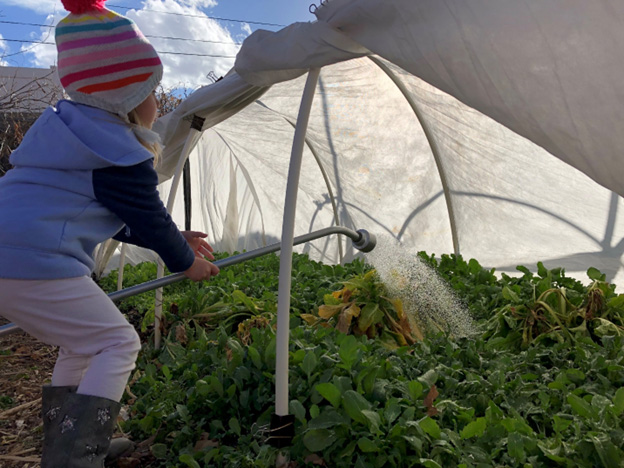
Hand watering a winter vegetable garden.
BIODIVERSITY: Beneficial insects and ecological balance
A healthy vegetable garden is supported not only by sun, soil and water, but by insects that help regulate pest populations naturally. When gardens provide habitat for beneficial insects — such as lady bugs, spiders, green lacewings, parasitic wasps, native bees and predatory beetles — many common garden pests never reach damaging levels. And larger species like lizards and birds can minimize pests such as grasshoppers.
Diverse plantings of varying flowering herbs, native plants, mulch and undisturbed soil create food and shelter for these beneficial species. In a balanced ecosystem, predators and parasitoids feed on aphids, caterpillars, mites and other pests, preventing outbreaks before they occur. Rather than eliminating insects entirely, successful gardens support a web of life where no single species dominates.
Avoid broad-spectrum chemical pesticides. These products often kill beneficial insects before controlling pests and will harm your health, the soil's health and anything that feeds from your garden. When the right insects are present and the ecosystem is healthy, troublesome pests are rarely a serious problem and intervention is often unnecessary.
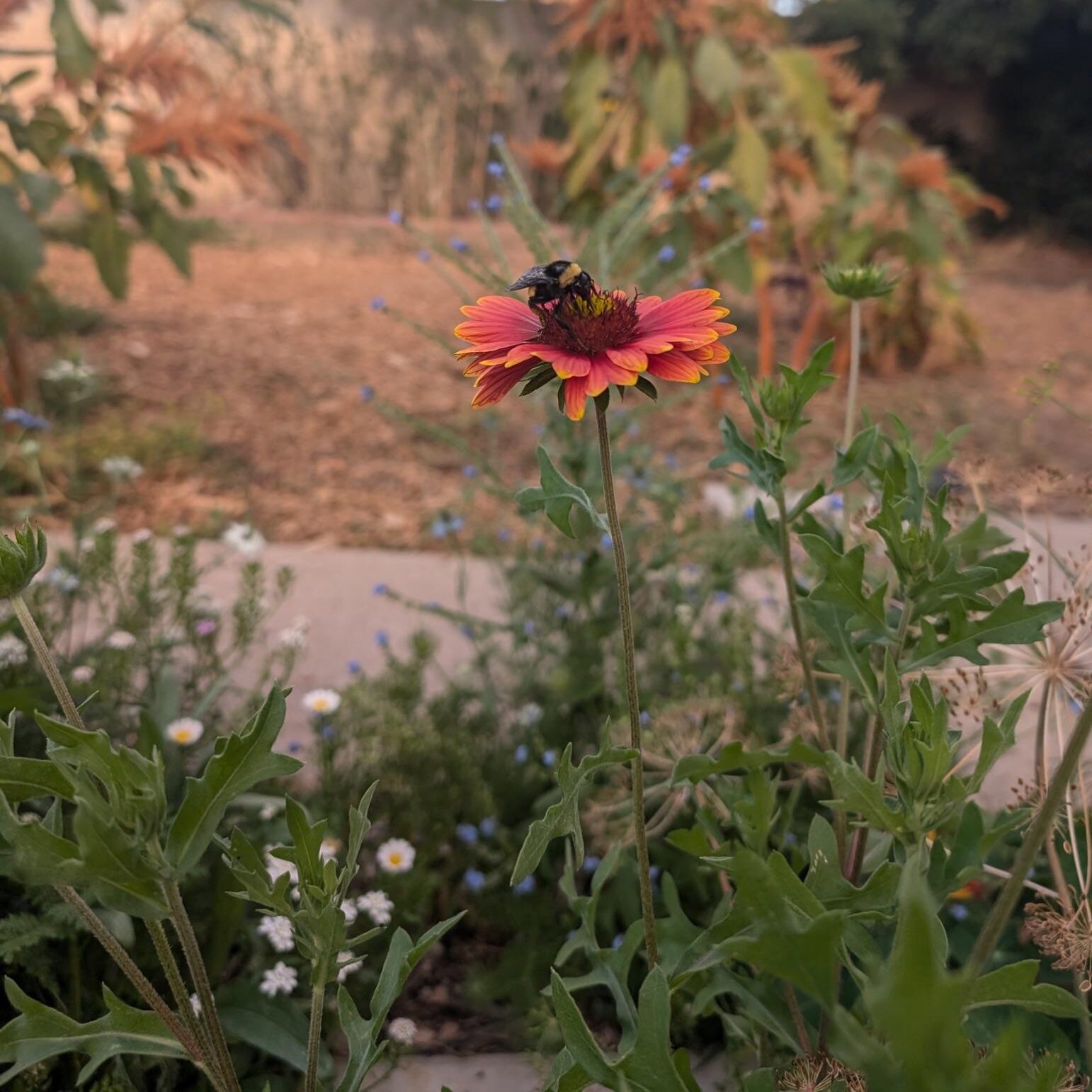
Pollination in action.
RESILIENT CROPS: Some crops and seed to consider
Heirloom and regionally adapted crops are especially well suited to the Southwest’s heat and low-water conditions. Chiles such as Chimayo, Española Improved, and New Mexico No. 9 tolerate high temperatures and are ideal for roasting or drying. Beans including tepary, Zuni gold and Anasazi are extremely drought-tolerant and improve soil fertility through nitrogen fixation.
Squash and pumpkins, including calabacita and Navajo pumpkin, require minimal care once established and naturally shade the soil, helping conserve moisture. Onions such as New Mexico 6-4 handle heat well and are a flavorful staple in Southwestern kitchens. Hopi red, golden and yellow amaranth is an ancient grain that is nutrient dense, and you can eat its leaves and seeds that are high in calcium and iron. These plants require less water and fertilizer than modern hybrids and form the backbone of resilient, climate-adapted gardens.
Buy non-GMO seed that supports organic farmers. Then plan to save your own seeds and grow your collection. There is a beautiful sense of accomplishment that comes not only from harvesting what you grew from seed, but also saving your best harvest’s seed so those plants can grow next year and the year after. Seeds pass on what they learned about their surroundings to the next generation, so if you save your seed, your plants will be stronger, happier and more adapted.
By observing local environmental patterns, managing the sun, building healthy soil, conserving water, fostering biodiversity and choosing resilient crops, you can grow a thriving vegetable garden even in the tough conditions of the Southwest.
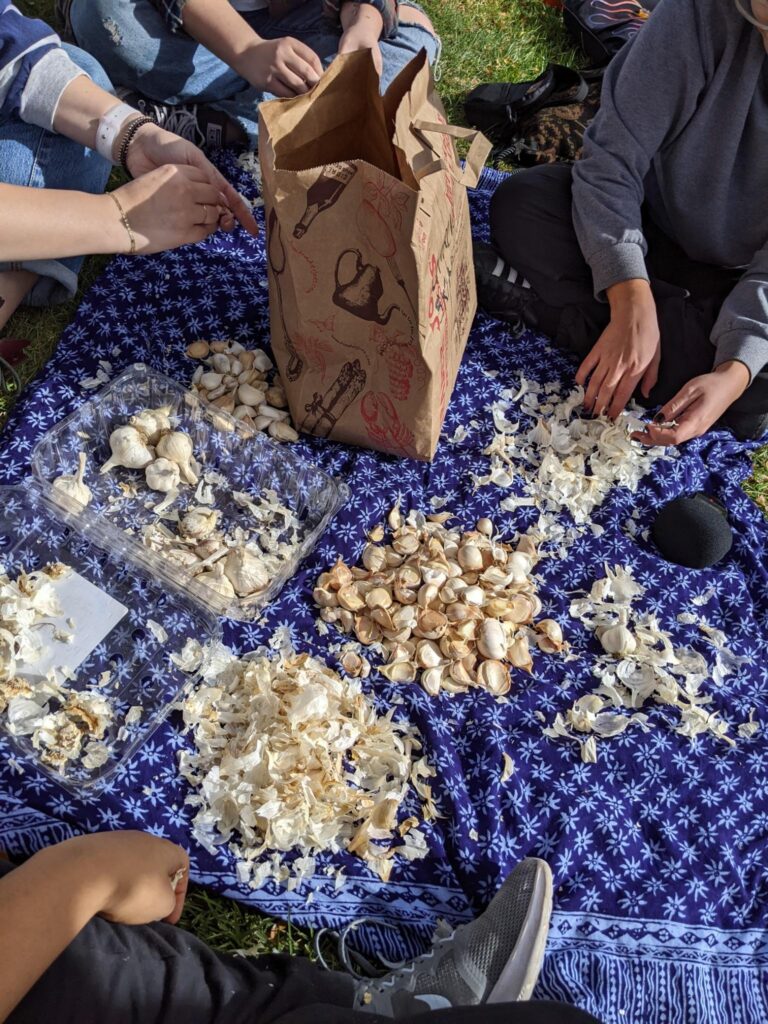
Prepping garlic for planting.Healthy garden bed with straw mulch.
Water-Wise Vegetable Gardening Webinar
With our hot summers and low precipitation, growing vegetables in NM can be challenging. This talk will provide strategies and recommendations for growers to cultivate a thriving vegetable harvest in the region. Discussion will include irrigation and infrastructure suggestions, as well as selection of vegetable varieties that are well-adapted to the area.
Instructor: Stephanie Walker, PhD. Professor and Vegetable Specialist, New Mexico State University, Extension Plant Sciences Department.
Authors: Sachika Goel and Cody Louscher, Water Conservation Specialist with the Water Authority. Have a question about the article or anything else? [email protected]
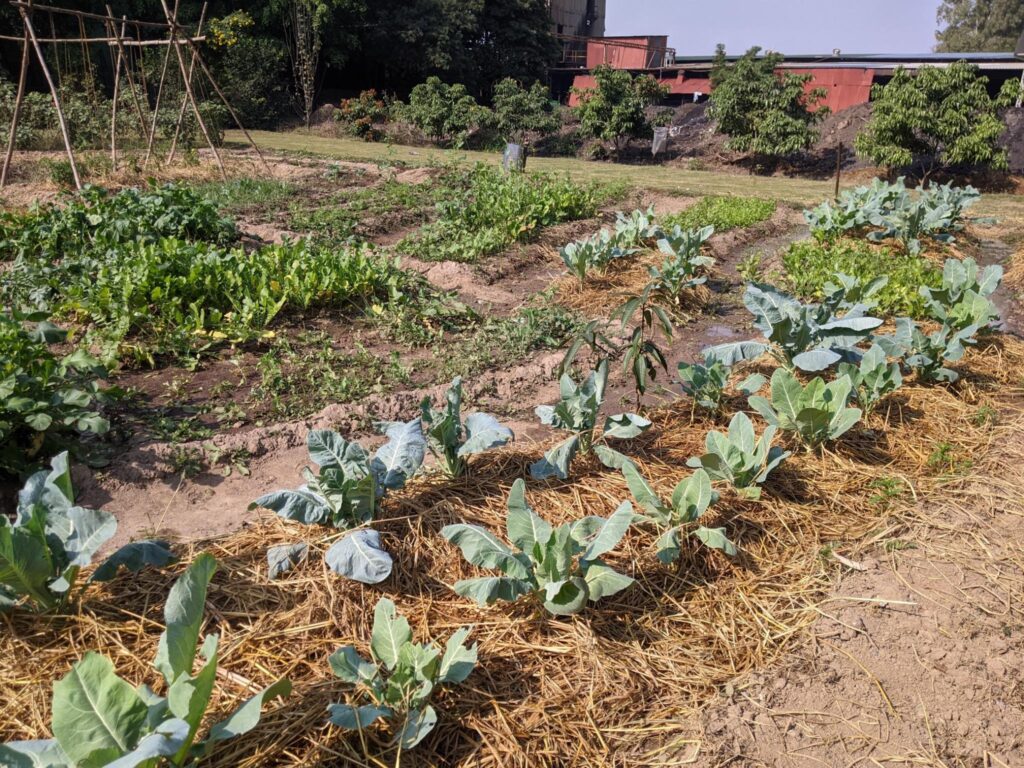
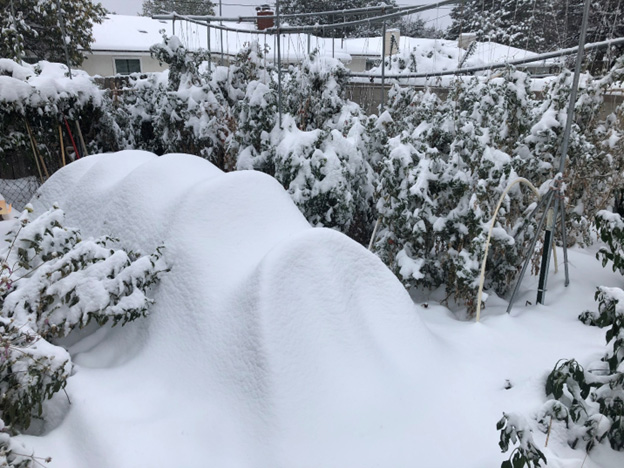
Growing winter veggies is a fun and valuable effort more people should experiment with in our area. In many ways, winter gardening is a lot easier than trying to garden in the summer — there are fewer pests, cooler temperatures require less watering and common winter veggie’s seeds are super easy to germinate and then cultivate. Two things are important to ensure success: the timing of starting seeds and modifying the climate to extend the season.
If you're hoping to enjoy sweet, delicious, and healthy salads and other dishes all winter long, it's important to start your seeds by the middle to late August. Unfortunately, by then, we're usually very tired of the heat and of taking care of the plants in our yards. It’s not a time we often think about starting new seeds. However, it's important to start seeds early so the plants can reach a good size before it gets cold. This is where being able to modify the climate in your garden is important on both sides of the spectrum. When starting seeds at the end of the summer and it's still hot, having some sort of shade fabric to keep things a little bit cooler makes all the difference. Later, when it starts to get cool, being able to cover your garden bed with a row cover material, sometimes called Reemay (white polyester nonwoven fabric), modifies the climate in the other direction by making it a few degrees warmer and more protected — crucial for having productive beds of kale, Swiss chard, beets, lettuce, spinach, radishes and other yummy veggies. Most of those veggies are super easy to germinate, usually popping up within a couple of days — another reason why this kind of gardening is especially fun for beginners or people feeling frustrated with starting seeds.
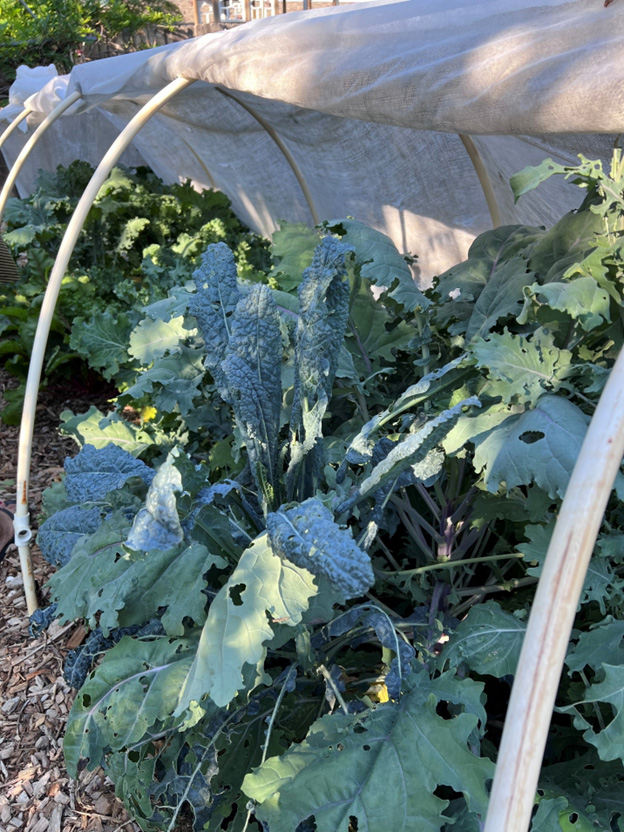
Winter Gardening with Hoops
Being able to walk out to your garden and harvest a colander full of fresh kale and Swiss chard is a true delight and can save a lot of money if it's something that you purchase at the store regularly. Winter gardening is easier because the temperatures are cooler and you have to water only once about every two or three weeks, December-February. Also, the cold temperatures don't allow for many pests. Some of my favorite veggies to grow in the winter are kale — I really enjoy red Russian and Dino — beets and collard greens, all of which increase in sweetness substantially once the temperatures begin to drop.
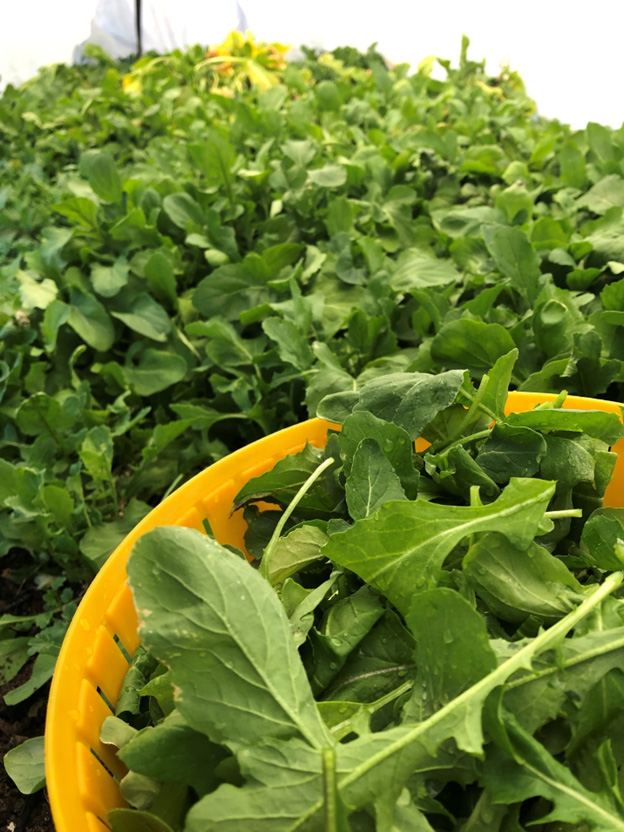
Winter bounty of Arugala
There are substantially less pests in the fall, winter, and early spring compared to the summer. Two pests that you might encounter are aphids and cabbage worms which are relatively easy to manage. Cabbage worms can be avoided by covering your plants with the row cover material to exclude the cabbage moth from laying eggs on your tender greens.
Another advantage of having hoops and shade or frost fabric is that it can protect plants from hail damage. Similarly, some people like to start their tomatoes under row covers to exclude leaf hoppers which can transfer the curly top tomato virus (Learn More in this article by NMSU.)
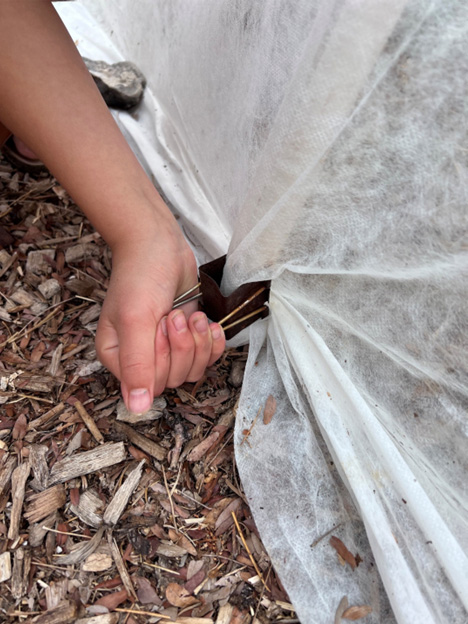
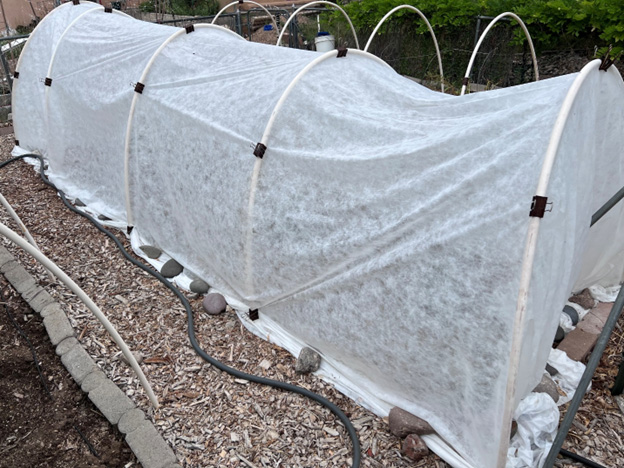
Creating hoops for your garden to help modify the climate and extend the season is easy to do using common materials — ½” by 10-foot lengths of PVC, 2-foot lengths of 3/8” rebar (both items can be purchased pre-cut at home improvement centers), extra-large binder clips (available at office supply stores), row cover material or shade fabric (available at some local nurseries and greenhouse supply stores), and some stones or bricks to help hold down the fabric at the edges and ends. You may also consider having loose-weave burlap to lay on the soil to facilitate seed germination and keep foraging birds at bay.
Installing hoops on rebar stakes.Clipping fabric to hoops.Hoop garden.
Other Tips:
Use burlap to help retain soil moisture between waterings and keep birds away when germinating seeds.
A thick, 3-4” layer of mulch such as straw or leaves (once seeds have germinated) is incredibly helpful for keeping moisture in the soil and regulating soil temperature.
If you have room, allow winter veggies such as arugula to flower and go to seed. Arugula flowers are beautiful and beneficial for pollinators. If left to go to seed, they also benefit birds and often result in new “volunteer” plants the following year.
You don’t need much space for a winter garden — a thriving 4’ x 8’ bed of leafy greens is plenty for a small family.
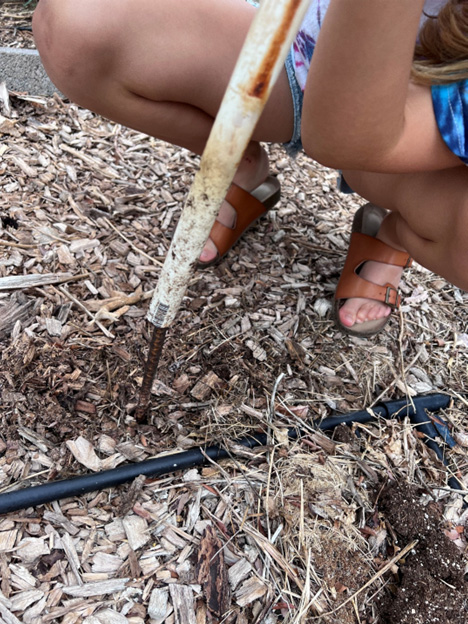
Installing hoops is simple: Pound the 3/8” rebar about 12”-14” deep, slip the ½” PVC over the rebar, clip the fabric to the PVC with extra-large binder clips and weigh down the edges and ends with stones.
A 10’ length of PVC on a 4’ wide bed makes a hoop about 4’ tall. Having a 12’ wide piece of row cover fabric allows for 1’ on each side to secure it with stones.
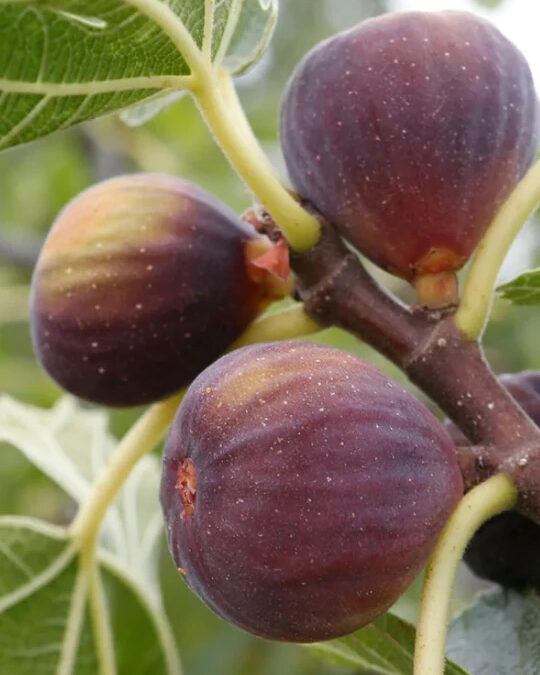
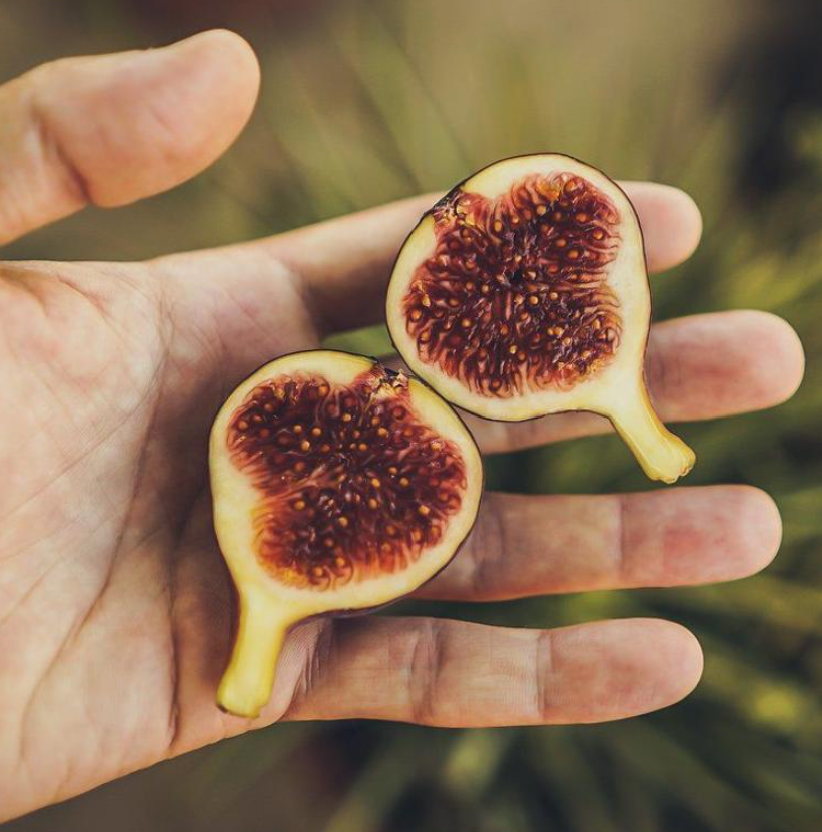
Fig trees are a beautiful addition to local backyard orchards. Their large leaves give yards a lush tropical appearance, and the sweet fruit is wonderful for eating fresh, drying, fruit leathers, baking, jams and canning. Fig trees can produce two fruit crops per year: the “breba” crop in the spring and “main” crop in summer.
The primary limitation for figs is low winter or spring temperatures that may sometimes partially or completely kill fig tree canopies. If the roots are not killed during winter, fig trees that have experienced freezing temperatures usually grow back vigorously and can even produce some main crop fruit in the first year of regrowth. Fig trees should be planted in a protected area next to a south facing wall and mulched or tarped to minimize freeze damage. Figs are tolerant of abuse and relatively content with intense sunlight, extended droughts and alkaline soils.
“Celeste,” “Brown Turkey,” “Hardy Chicago,” “Desert King,” Kadota” and “Violette de Bordeaux” are only a few of the fig varieties that do well. “Black Mission” is a readily available but not very cold hardy for the greater Albuquerque area. In general, backyard fig varieties require no cross-pollination to produce fruit.
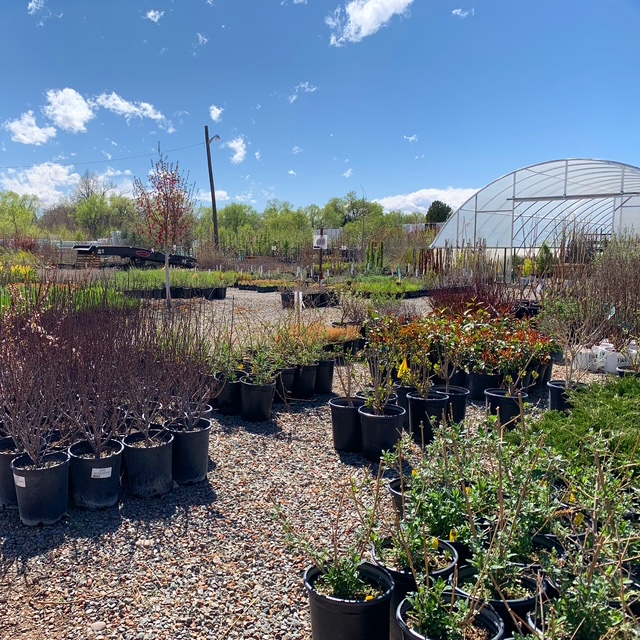
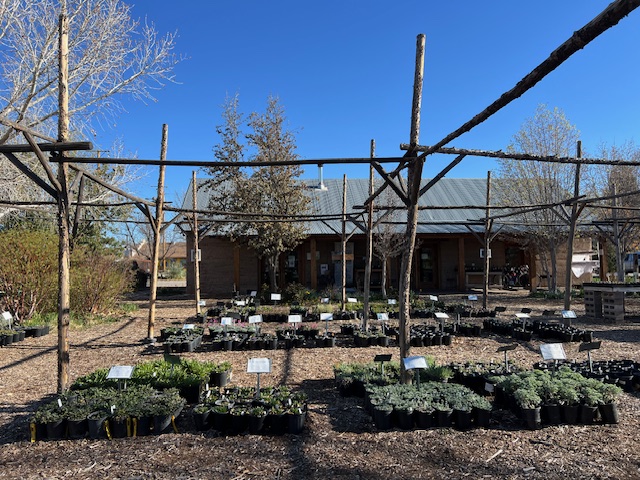
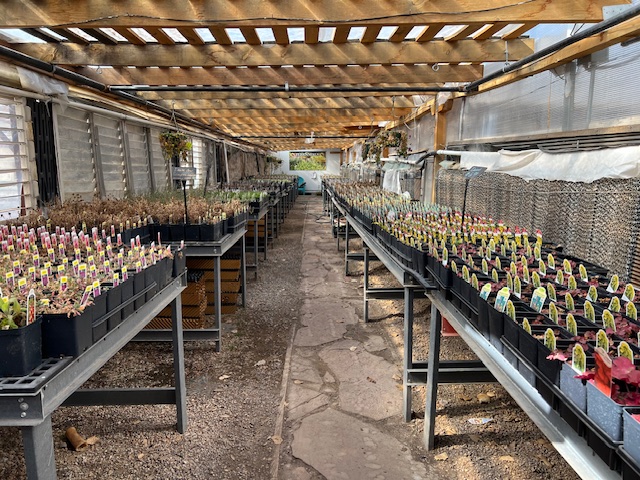
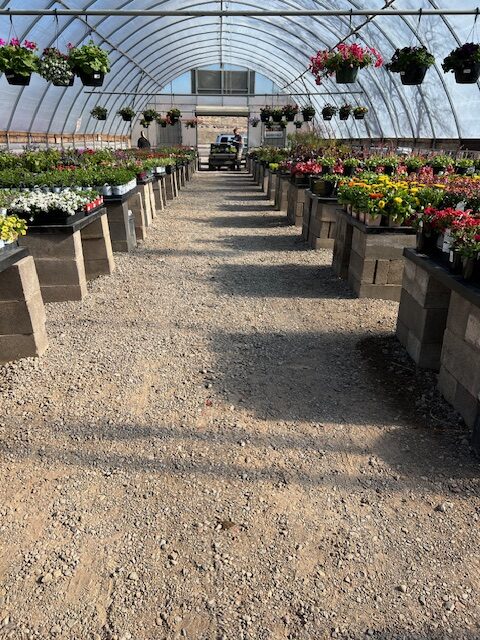
A popular question we get at 505Outside is “Where should I go to get plants for my yard?” We’re highlighting our local nurseries and the uniqueness of each of them.
Every yard has its own unique environment that includes things like sun and wind exposure, soils, drainage, climate, bugs, orientation, views, weather conditions and elevation. And certain species of plants like certain types of conditions. Nurseries pride themselves in getting plants that are specifically grown for your area. And the only way to ensure that you get a plant that is well-suited for your yard is to go to a local nursery. Plants that are grown in your region for your region are going to do much better in your yard.
Local nurseries have very knowledgeable staff experienced in dealing with all the variables of yards just like yours. But remember, they have limited time so go prepared with a list of questions. Make sure you note all the conditions of your space so the nursery staff can steer you in the right direction.
Check out some local nurseries below, listed in alphabetical order:
This plant nursery located along Alameda NW near Fourth Street is best known for its thousands of vegetable seedlings, making it a must-stop for all your vegetable needs. Of course, they also carry a ton of other plants like perennials, annuals, groundcovers, trees, roses and more — but go for the vegetables.
As the name suggests, this North Valley nursery specializes in aquatic plants and fish. However, they also carry a wide variety of locally grown perennials, trees and shrubs. You’ll want to linger as their garden offers a very pleasant shopping experience.
Located in the South Valley bosque of Albuquerque, this off-the-beaten-path farm and nursery specializes in edibles and resilient and native trees and shrubs, alongside egg-laying ducks and orchards. Grown onsite, you can find underrepresented trees and shrubs that grow well in the harsh New Mexico climate.
The shop is mostly known for home décor but walk towards the back of the store and you’ll find a well-stocked nursery with a good selection of annuals, perennials, shrubs, trees, succulents, houseplants and vegetables. They also carry a host of garden supplies and are easily accessible, being located along San Mateo NE near Interstate 25.
From a location near Balloon Fiesta Park, Jericho provides some unique items not found at other nurseries in town. Of course, they have the usual annuals, perennials, natives, trees, roses, shrubs and more, but you’d never guess they have all kinds of specialty miniature garden and fairy garden materials. You’ll also find a friendly staff and everything you need to make a terrarium, garden tools, outdoor décor and other garden products.
At this large nursery located on Osuna NE just east of Edith, you can find just about everything you need. Be sure to check out the native plant section. But one of the coolest features of Osuna is its Plant Pharmacy featuring certified staff eager and willing to answer all your wildest questions about your plants. Bring a picture of your aphids or leaves from the actual plant and they diagnose the problem.
Natives, natives, natives. Located on Fourth Street NW north of Chavez Road, this nursery sells native New Mexico plants and seed. Just about any plant you find here will grow with ease in your yard. You will also find a wide variety of seeds, from vegetables to any type of wildflower you’d like. The staff even curates specialty blends of wildflowers and grass lawn seeds.
Originally only a wholesale nursery, now anyone can shop here via the Garden Club, which costs $25 for a lifetime membership. Conveniently located on El Pueblo NE west of Edith, you will be able to find everything you need for your yard. In fact, Plant World sells some of the largest ball and burlap trees in town.
Known as your neighborhood nursery, this store located at 5801 Lomas NE has everything you need for your yard conveniently located near those in the Near Northeast Heights, Nob Hill and Uptown. The staff is extremely knowledgeable, and the deep family-like atmosphere and roots of this store shine through.
As one might guess, the subtropics are a great place to grow fruit trees and a particularly good place to find plants that are heat and drought tolerant — sort of a prerequisite for plant selection in a hot, dry place like New Mexico, or at least it should be!
The term subtropical refers to a climatic region, defined by latitude, that lies between the tropical and temperate zones. This region experiences warm to hot summers and mild winters with overall annual temperature variation more significant than in tropical regions but less extreme than in temperate zones. There is also plenty of rainfall variation across the subtropics, with climates ranging from arid to humid. Subtropical regions often experience seasonal rainfall patterns such as monsoons or wet and dry seasons.
The problem with growing heat and drought tolerant subtropical plants in our high desert is that we have anything but mild winters. Much like another inhabitant of the subtropical/mediterranean climate of Greece, the hero Achilles known for his one weakness, these plants have a very specific vulnerability — cold.
I love to grow plants, fruit in particular. But as irrigation access has become harder to come by and the summer heat seems to last longer than it used to, I have become more and more attracted to plants that thrive in the hot and dry. Navigating the puzzle of a changing climate while planting trees and shrubs is challenging. Long-lived perennials need to be appropriate for today's climate as well as the climate 20 years from now and even the climate 250 years from now if you are a real optimist.
It's tempting to just plant a zone or more higher than the current USDA Plant Hardiness Zone Map (which has itself been updated to reflect higher temperatures twice since 2012), but our weakening jet stream means more chance of Arctic air slipping in and spoiling the fun as we experienced to the extreme in the winter of 2011. The way things are headed has, in many cases, led us to exchange one set of growing problems — namely, heat and drought stress — with another — cold damage.
Two fruiting shrubs from the subtropics, pomegranates and figs, have proven to have the right combination of fruiting characteristics and cold tolerance to work in our moving-target-Goldilocks-growing-zone of Central New Mexico.
The fig is extremely adaptable. I imagine this has something to do with why they have evolved and been grown by humans for thousands of years. They perform well in Albuquerque, particularly because of all the heat that gets banked into concrete, asphalt and structures during the day. This heat radiates back out at night, keeping figs at much warmer temperatures than they would otherwise experience during winter in a more exposed area. Figs are tolerant of abuse and relatively content with our intense sunlight, extended droughts and alkaline soils. They can take temperatures down to the low teens, but need to be protected, buried or even brought inside if temperatures fall below that.
There are plenty of examples around town of figs without protection that rarely, if ever, freeze to the ground. Even so, freezing to the ground does not mean death for a fig — a winter-killed fig of an early ripening variety can easily end up fruiting by the end of the summer. That's because figs often come up from the roots and fruit their main crop on the current season's growth. Given an early enough ripening variety, that once-frozen fig can still yield fruit in the same year!
Pomegranates, I have found to be a bit more cold-hardy than figs — although they, too, benefit from a protected, south-facing location to improve winter survival. Optimal conditions for the wild pomegranate exist in high sunlight, hot climates with minimum temperatures not lower than 10 degrees. Although, with the protective care of a thoughtful gardener, lower temperatures are negotiable. There is also significant variation in cold-hardiness among pomegranate varieties, with dwarf varieties experiencing damage at 19 degrees, many soft-seeded varieties at 10-12 degrees and hard-seeded varieties at 0-3 degrees.
For both pomegranates and figs, young plants are more frost sensitive to cold than mature plants. So if you have trouble the first year or two with losing branches to cold, remember that these plants get more frost resistant with time. These are both wonderful subtropical fruiting shrubs that are worth the extra trouble during our high desert winter to experience their summertime beauty and bounty.
Learn more about specific types of gardening here:
Author: Graeme Davis is an ISA certified arborist and the owner of Flora Fauna Farm, a nursery that focuses on plants that grow well in the high desert. Flora Fauna Farm grows a diversity of edible trees and shrubs, useful native plants and unique landscape plants curiously underrepresented in the urban canopy of Albuquerque. You can see its offerings at www.florafauna.farm. Have a question about the article? [email protected]