
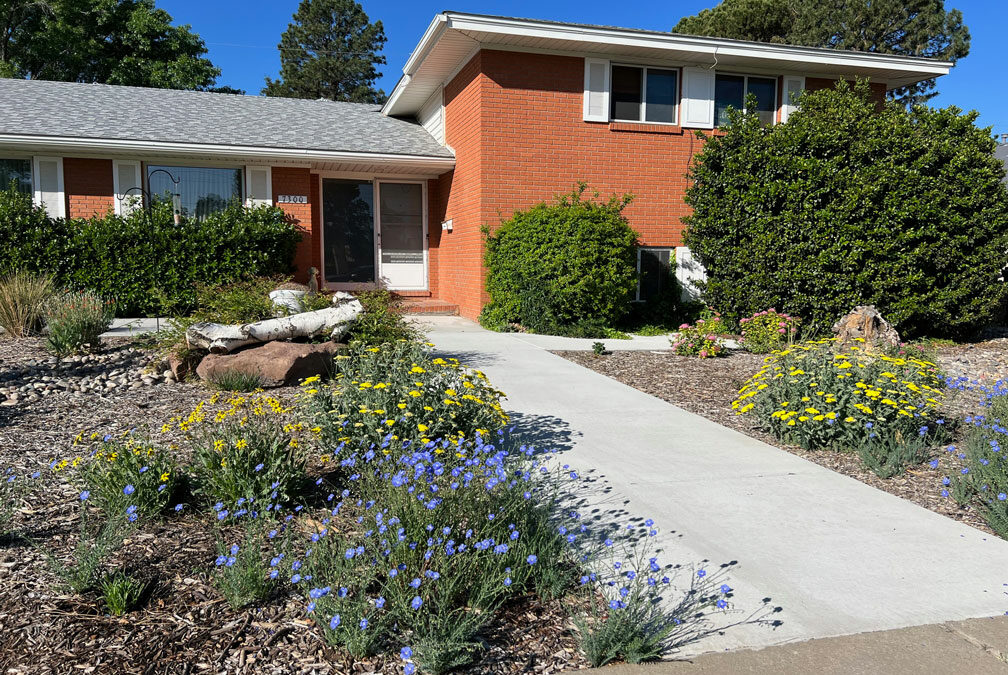
As Albuquerque area homeowners convert their high-water-use turf grass to desert friendly xeriscapes, many are opting for wood chip mulch rather than gravel or other aggregate, which can be hot and allow weeds to pop up.
The Water Authority checked in on two recent xeriscape conversion projects. These homeowners chose the DIY option for their front yards to save money. With all the resources available online, it has become easier to find how-to information on installing landscapes. The design, on the other hand, can be more difficult, and one of the homeowners chose to hire a professional. The other homeowner checked in with her mom who is an avid gardener, looked over resources from the library, and used online videos to pull together the design they wanted.
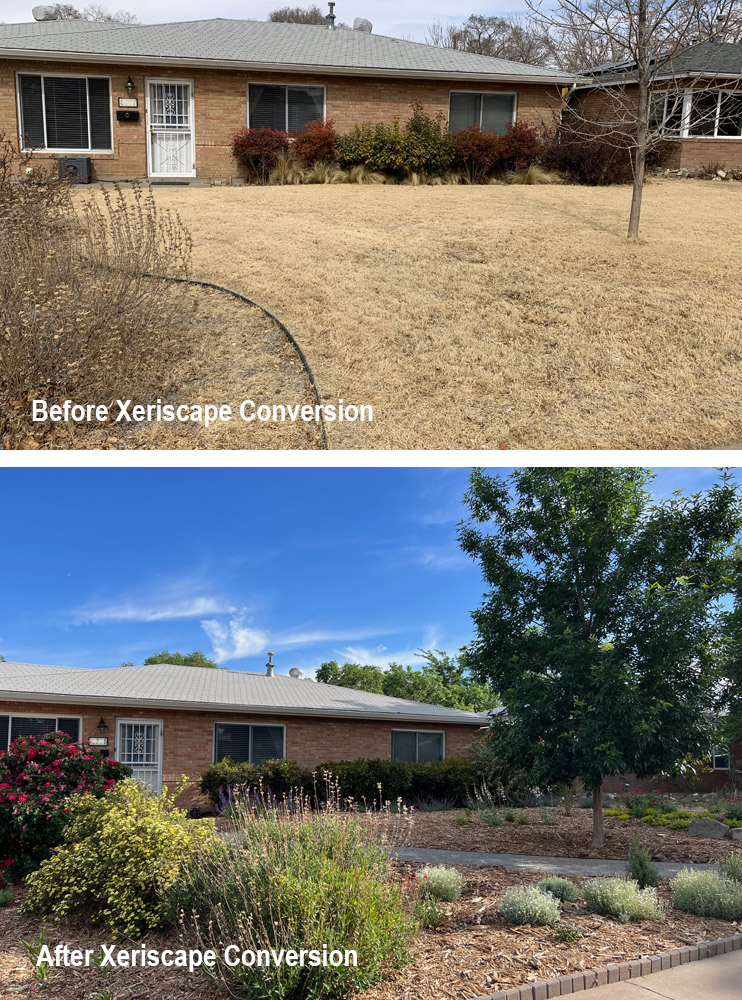
“I like the yard so much more now than the lawn we had before. The lawn would be pleasant about one or two days a month, and otherwise just felt like a chore and a needless expense. We’re lucky to live very close to a park, with a much nicer lawn than ours ever was, so when we want to play Frisbee or do ‘lawny’ things, we just walk the half a block to the park,” one homeowner said.
“While it took some labor to kill the grass, dig holes for the plants, install irrigation and lay down mulch, now when I look at my yard I no longer think, ‘Ugh, we need to weed/mow/fertilize/whatever.’ Now, I feel more joyful seeing all the different plants growing, and I’m always out there checking on my little plant friends.”
The other homeowner was motivated to create a landscape that “made more sense with the desert environment, used less water, helped provide habitat for pollinators and had a more natural look.”
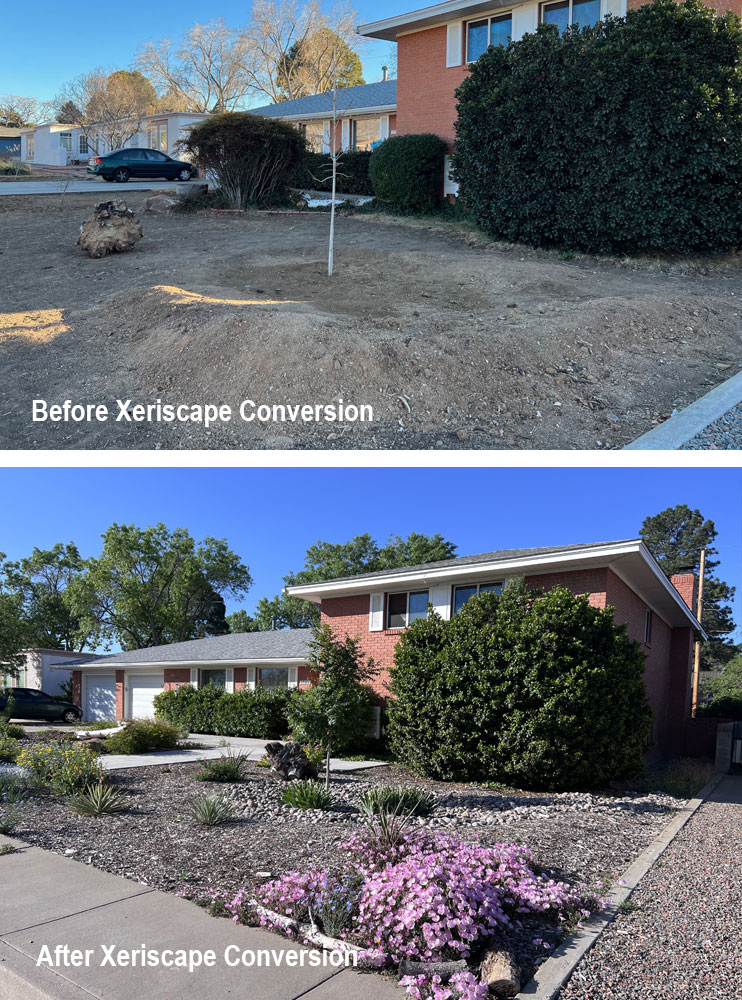
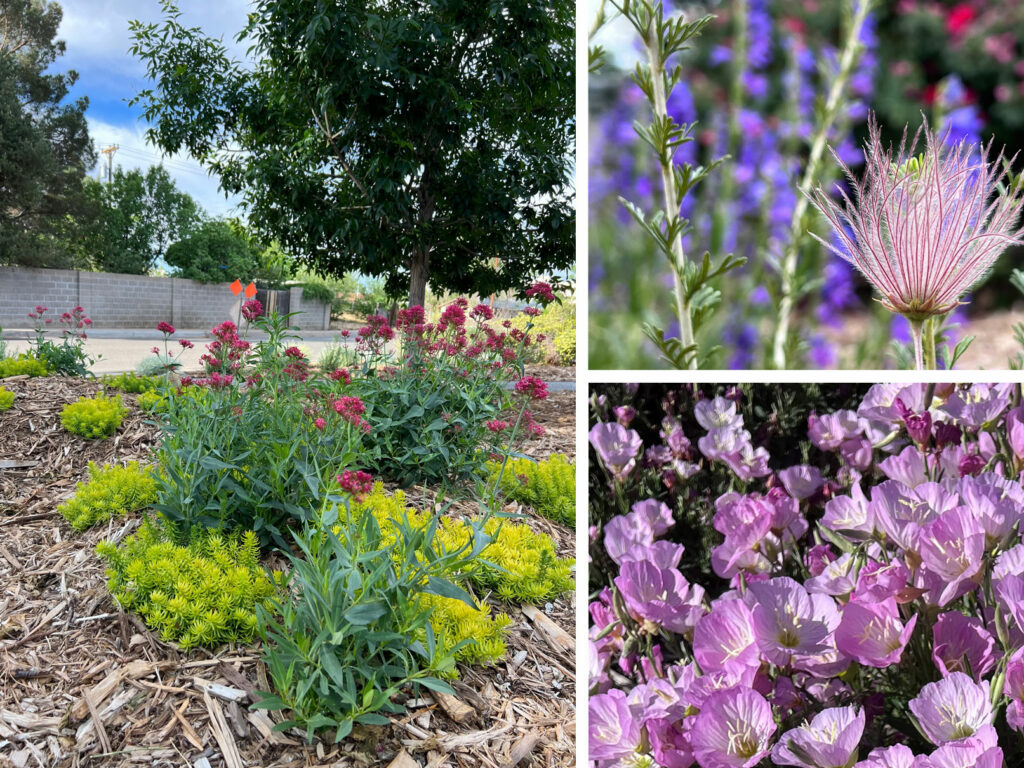
Both homeowners chose to use wood chip mulch because it is extremely affordable and easy to install. They knew the advantages of mulch from their research and from seeing yards in their neighborhoods that use mulch. One of the added benefits, according to both homeowners, is attracting pollinators and other wildlife. “I see a lot more insects; I especially notice the bees,” one said. “There’s a family of roadrunners in our neighborhood, and they’re spending more time in our yard than they used to.”
Wood chip mulch is made up of chipped trees. This is a long-lasting mulch that decomposes slowly over bare dirt, retains moisture and is superior to other mediums at suppressing weeds. Most wood mulches available on the market are chipped flat and are consistent in shape and size. These are great in areas that receive foot traffic as they compact down to a firm surface.
Both homes installed a 3- to 4-inch layer of organic mulch over bare dirt. That depth is effective at stopping sunlight from reaching annual weed seeds, thereby preventing weed germination. The homeowners noted that mulch was easy to install and much less expensive than gravel, and they found that the mulch also was much cooler than the hot gravel.
“The main things we have noticed with the mulch are weed control and how well it retains water,” one homeowner said. “There are very few weeds that seem be able to germinate and make it through the mulch barrier. The weeds that do come up are actually very easy to remove by hand (my preferred method for weeding) because there is no artificial weed barrier or rocks to dig out.”
The advice both homeowners would like to pass along to other folks looking to DIY their yards is to give yourself plenty of time and tackle the project in small parts.
“I think the most important thing was breaking the project down into manageable tasks, and then figuring out the best order of those tasks. I also made some mistakes, so being adaptable to changes and adding tasks was key. I definitely needed the six-month extension in addition to the initial six-month period allowed; it took me about nine months total to complete the work.”
The other homeowner took almost a year to complete their project, but they now are basking in compliments from their neighbors.
Additional Facts on Mulches:
Wood chip mulch insulates plant roots from both heat and cold, reducing moisture loss from the soil by evaporation, feeding beneficial soil microorganisms that enhance plant growth and improving soil health. This makes the soil more sponge-like and better able to hold water. By installing 3-4 inches of mulch over bare dirt, weeds are reduced, the soil is enriched and new plants retain more moisture.
Another benefit of organic mulches is that they can visually accommodate a little bit of leaf litter, reducing the need for constant raking and clean-up. A thin top dressing of mulch added every two to three years keeps the landscape looking fresh and replaces the material that has broken down to sustain the soil. Organic mulches are lightweight, making them easy to transport in a wheelbarrow and spread with a rake.
Mulches are available in bags from most local garden centers (avoid the dyed ones as the colors will fade) and in bulk from several retailers in the Albuquerque area. When you buy from local bulk retailers, you are supporting the recycling of local organic materials that may otherwise end up in a landfill and contribute to greenhouse gas emissions. Buying bulk also means less plastic! Mulch is sometimes available at no cost from local tree trimming companies. In addition, Bernalillo County offers free mulch to residents who load it themselves at the East Mountain Transfer Station. County staff can load the mulch in your vehicle with a tractor for a $5 charge. The county also will deliver 30 cubic yards of mulch for $60, plus $2 a round trip mile for delivery. Mulches are a renewable resource that will improve landscape health and conserve water.
In areas of higher wind exposure or periodic inundation with water, use a wood chip mulch that is irregularly shaped and sized as the pieces will knit together better. This type of mulch can include recycled yard waste and tree trimmings as well as commercially available, locally processed wood products.
Property Data:
These homeowners converted a total of 2,940 sf of park blend grass to desert friendly xeriscape. Total gallons saved in one year since conversion: 100,000 gallons. Total rebate received: $3,140.
Thinking about converting your yard from high-water-use grass to xeriscape? Check out the Desert Friendly Xeriscape Rebate page to learn more about the qualifications, requirements and process to apply for this generous rebate. Additionally, xeriscape rebate participants get 25% off the cost of installing bulk organic mulch, up to $100. If you want to top dress mulch around your trees, take advantage of our Treebates. You are welcome to contact our xeriscape specialist, Amos Arber, at [email protected] or 505-208-2015.
Learn more about mulches here:
4 Common Myths about Organic Mulch
MulchingHow to Make a Tree Watering System for Your Established and Mature Trees
