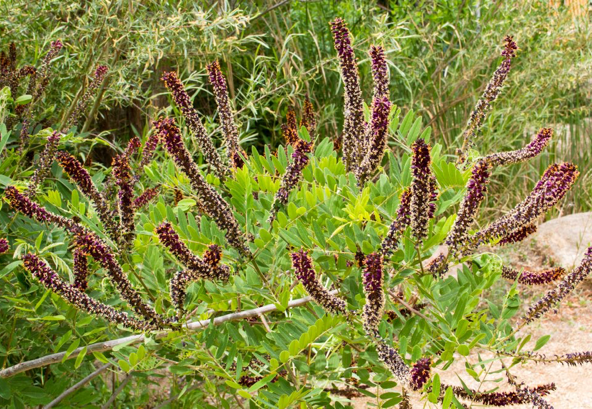
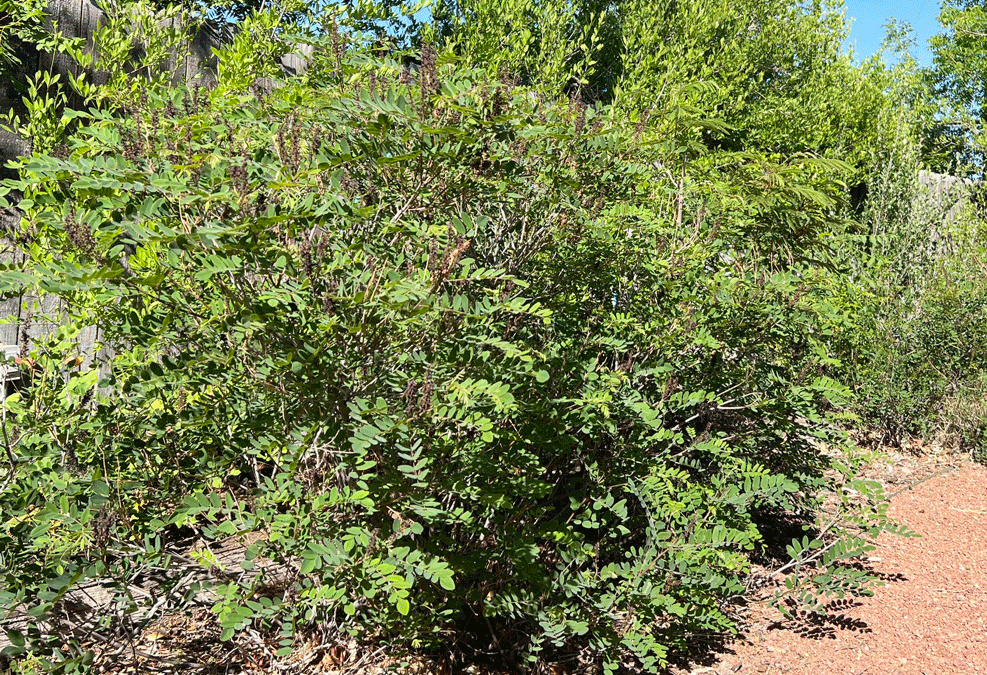
False indigo bush is a deciduous shrub that typically spreads 10–10 feet tall and wide. It has loosely branching, leafy stems and forms dense thickets, especially along riverbanks. It spreads readily via self-seeding and suckers. The plant is known for attracting pollinators with its showy, spike-like clusters of purple to dark blue flowers that bloom from May to July. The foliage is fine-textured and concentrated on the upper third of the plant, with leaflets velvety underneath. It produces small fruit pods containing 1–2 seeds. The shrub is highly variable and adaptable, thriving in riparian zones, moist woods, slopes, canyons, drainages in elevations from 3,700–6,800 feet (1128–2073 m).
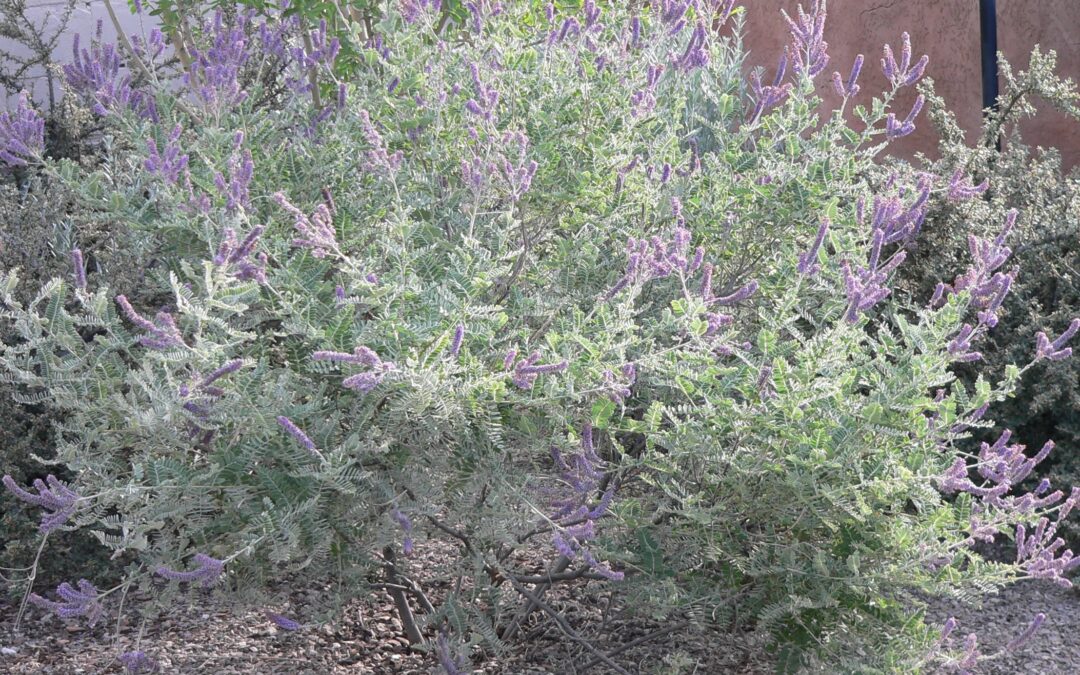
Leadplant is a hardy, drought-tolerant native shrub commonly found in Southwestern landscapes. It is valued for its deep root system, which helps stabilize soil and improve its ability to retain water. Leadplant is in the Pea plant family and also enriches the soil by fixing nitrogen from the atmosphere, improving the soil. Its attractive purple flowers that bloom in late July support pollinators and its foliage of densely hairy leaflets provide shade, creating microclimates that protect neighboring plants from extreme heat. It occurs from grasslands to ponderosa forests in northeast and scattered Central New Mexico.
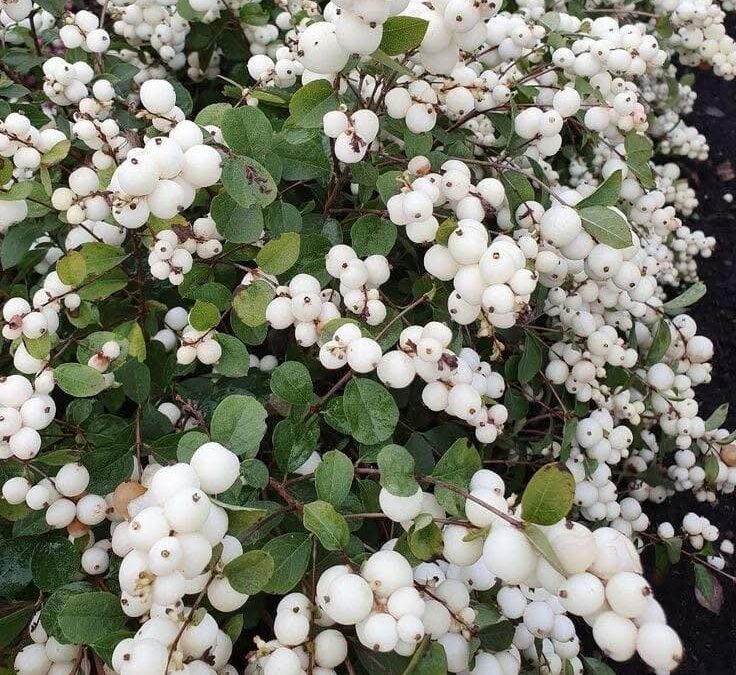
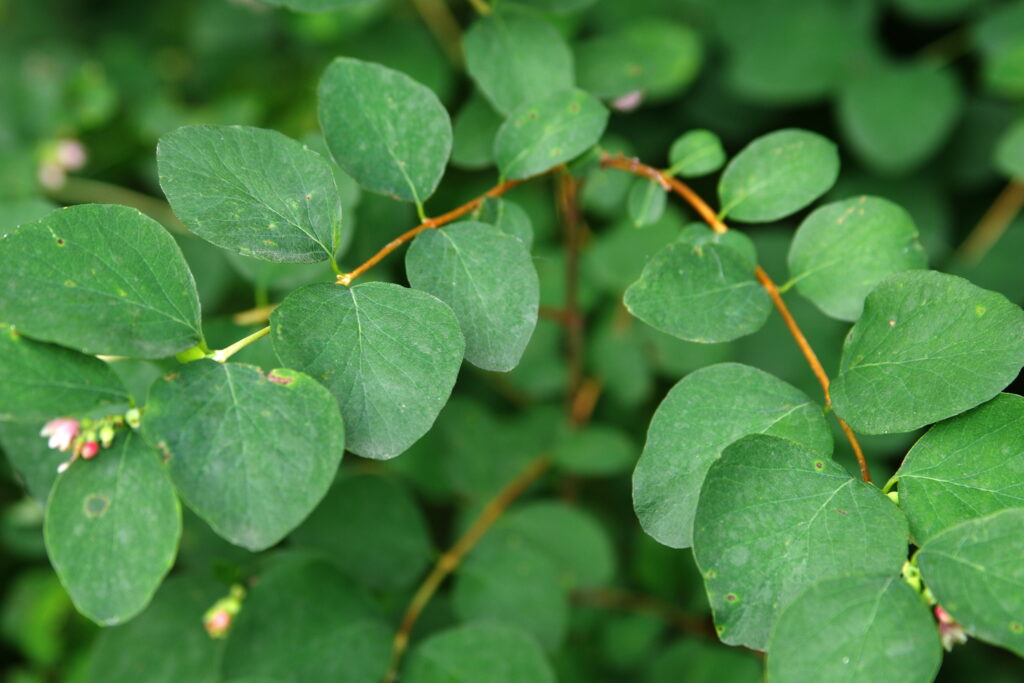
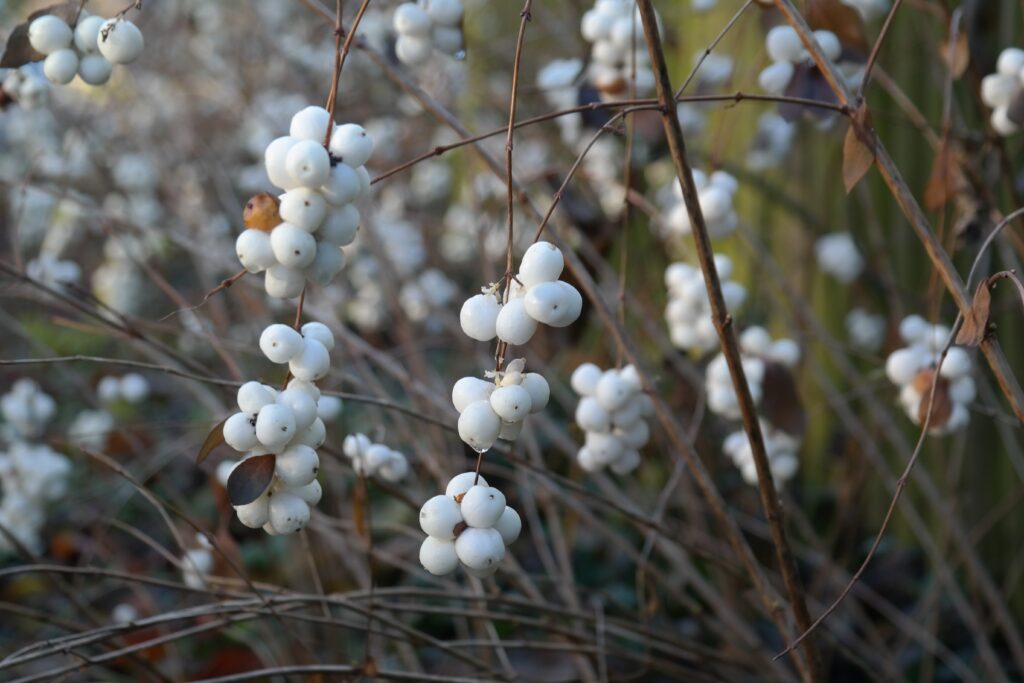
This shrub is sparsely branched, growing 2–5 feet tall and gradually forming a thicket 4–6 feet wide. Its slender, wiry twigs bear small, opposite leaves and pinkish white bell shaped tiny flower clusters, which are followed by large, snow-white berry-like fruit. It can be found along stream beds, making it a great plant for beneath the runoff of downspouts.
Related species include coralberry (S. orbiculatus), known for its purplish-green flowers and clusters of pink berries, and wolfberry (S. occidentalis), a dry prairie shrub with pale pink flowers, leathery oval leaves and greenish-white fruit.
This plant has many traditional and medicinal uses, according to the National Park Service, “Fresh berries can be crushed and rubbed on skin to cleanse and soothe; they also heal rashes and burns. Native Americans used the berries to clean their hair. Roots were soaked to make tea to treat stomach disorders, and tea made from twigs treated fevers. The spindly branches can be tied together to make brooms.”
The tiny leaves and intricate branching on this sumac make for a very beautiful and dense looking shrub. Growing about 4’-8’ tall, it stands alone as a specimen plant, a companion plant or a background plant. Although it is deciduous, littleleaf sumac provides almost nine months of seasonal interest with white flowers appearing before the leaves in the spring, followed by clusters of orange red berries in late summer and ending with purplish tinted leaves in the fall. It is cold hardy to -10 degrees Pollinators enjoy the flowers and birds feed on the fruit. It is a low water use shrub so be sure to reduce the water to it after it is established, after one to two growing seasons. Maintenance is minimal — it does not need pruning but will tolerate pruning if it is used as a hedge.
This beautiful deciduous native shrub fills with unique purple spiked flowers in May and June. This plant is adored by wildlife for its small seedpods, and pollinators love the flowers. It also serves as a host plant for some butterfly larvae. The False Indigo has small dark green deciduous leaves that are attractive in the garden. It is a workhorse when used in abandoned fields or along streambeds as it enriches heavy clay soils and stabilizes slopes.
Austrian copper rose, which blooms in June, has flowers that are copper red on the upper surface and yellow on the lower. It is an old cultivar of shrub rose that’s been around in New Mexico for a long time. This rose grows tall with arching stalks and spreads around the garden. It’s an attention-getter when used as a backdrop or screening plant along a wall or fence, especially when it’s in bloom! Placing grey/green plants with strong texture in front of the rose adds interest. When fall arrives, the leaves turn yellow.