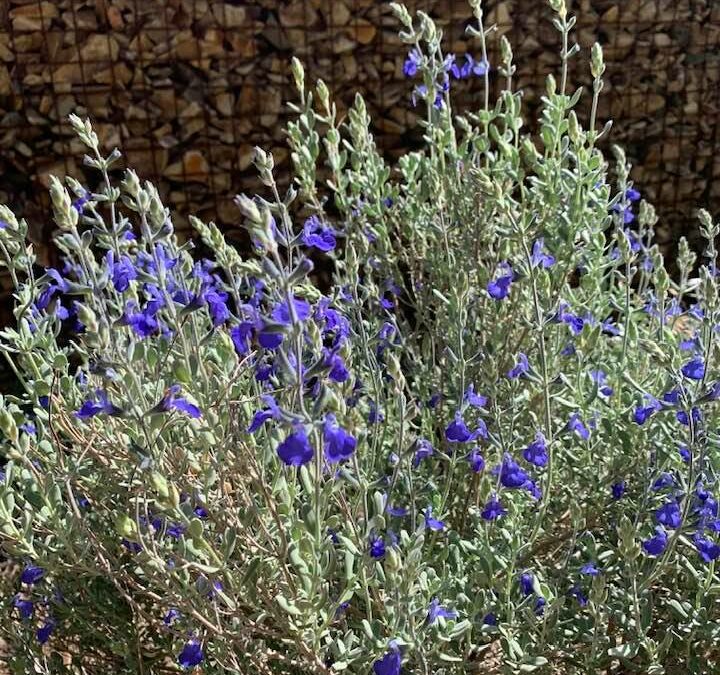
Mature Size: 1’-2’ x 2’-3’ Mexican blue sage is a semi-evergreen, silvery-blue flowering perennial that holds its mounding shape well. It’s a heavy bloomer in the spring and early fall, with leaves that emit a spicy fragrance. Mexican blue sage does well in all soils, even clay.
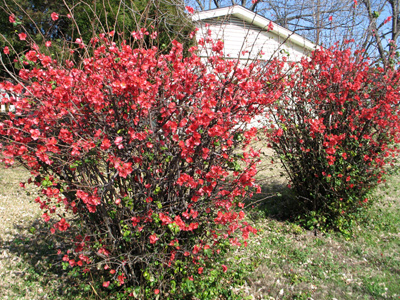
The flowering quince is a winter showstopper, producing spectacular blooms well before anything else starts to green up for spring. This shrub’s apple-like blossoms, ranging in color from pink to coral to red, grace elegant arching branches that make beautiful cut flower arrangements. Long oblong leaves fill in after bloom time is over. Be sure to give it some space in your garden, as the stems are thorny.
Flowering quince is surprisingly easy to grow and will thrive on a modest water budget once established.
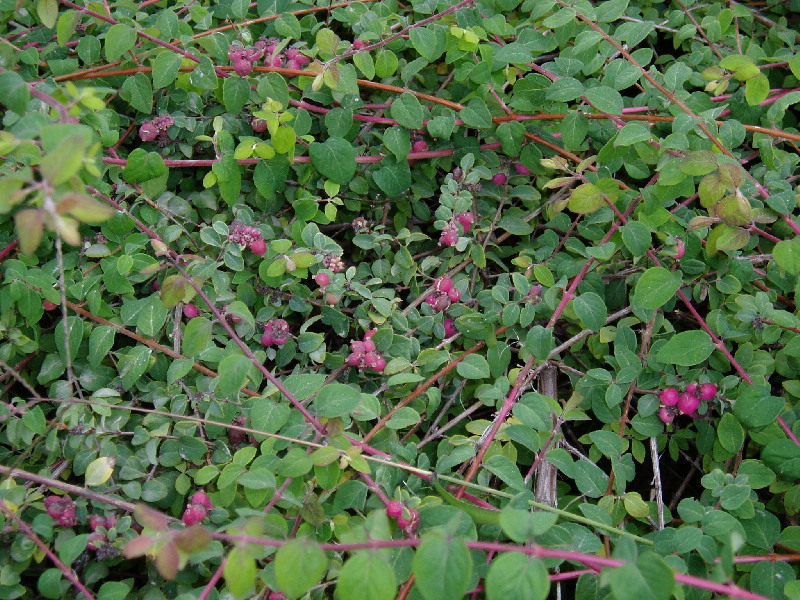
A great shade loving plant for the Fall and
Winter months, Coralberry is best planted where water collects in the yard. It can
be found along stream beds, making it a great plant for beneath the runoff of down
spouts. Lined with pink flowers in the summer and pink berries in the winter, Coralberry
is a great used underneath trees. Their foliage keeps the soil cooler for tree roots.
The stems of this plant arch when loaded with berries and will root where they touch
the ground, making more plants. Deep water established plants twice a month for
vigorous growth in drier gardens.
Noted
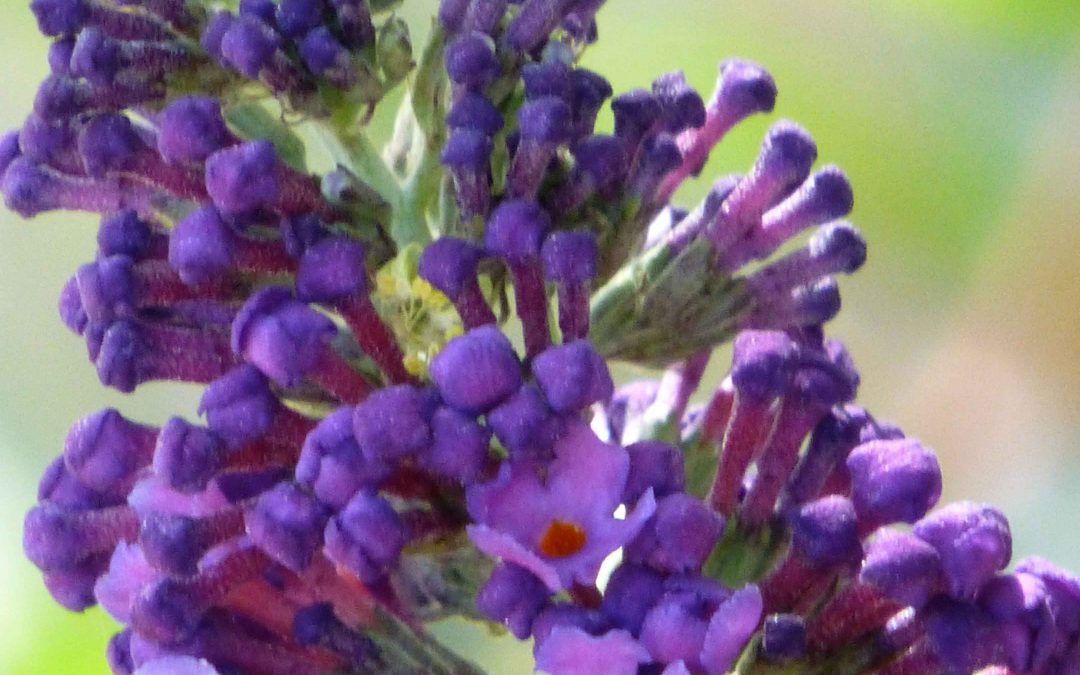
for its ability to handle alkaline soils, the Dwarf Butterfly Bush is a magnet
for its namesake garden visitors, including the majestic Monarch. Some
gardeners consider these the absolute best plants for attracting butterflies (though
Asclepias is a strong contender for that award), as they are known to
attract as many as 25 North American butterfly species. Panicles nearly 6” long
emit a light fragrance vaguely reminiscent of honey, and produce a nectar that
attracts not only butterflies, but hummingbirds!
Like
most plants, the Dwarf Butterfly Bush is most susceptible to pests and disease
if stressed by drought. Irrigate these plants according to our Watering
Guidelines (look to the middle of the range recommended for shrub irrigation
frequency). Tolerant of urban pollution, this plant prefers well-drained soils.
To best take advantage of the fragrant flowers, locate these in groups along a
path or near a window or porch, or in the front of a bed where their petite
size can be appreciated. And take heart, these will not require pruning like
the standard Butterfly Bush.
In recent years, breeders have produced plants with a variety of flower colors and mature sizes. Look for cultivars including “Nanho Blue,” which has mauve-blue flowers, and “Nanho Purple,” which has a more traditional, distinctively purple flower. Enjoy a cascade of flowers from June to September.
Region:
All parts
of the Greater Albuquerque area except the East Mountains
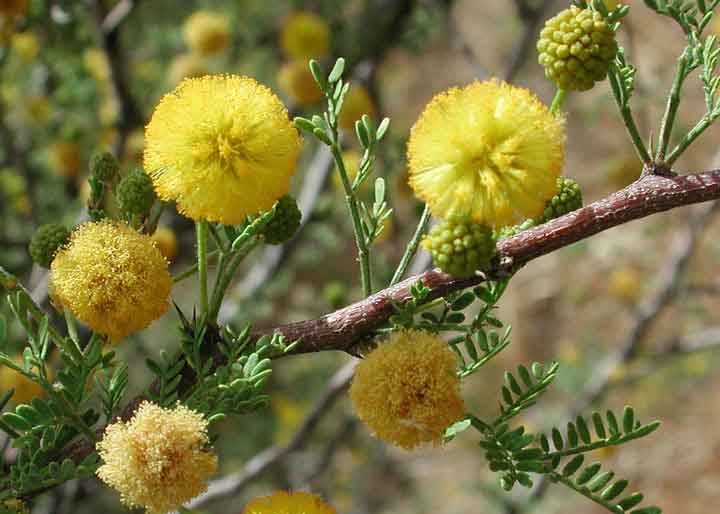
A member of the pea family, the Whitethorn
Acacia is long-lived and able to survive only on rainwater in the Albuquerque
area. It becomes either a large shrub or small tree. Naturally occurring on
rocky slopes and drainage washes from Arizona to Texas at elevations from 1,500
to 6,000 feet, Whitethorn Acacia produces fragrant, yellow puffball flowers
from April through June that develop into 2”-5” long
capsules with clear constrictions between the beans (thus the Latin name).
Branches range from dark grey to reddish-brown, with a distinctive zigzag shape
and deciduous, fern-like foliage. Whitethorn Acacia is hardy to -10 degrees.
Site this plant with an
understanding of mature size, and a realization that pruning will require
interaction with numerous slender, white spines. With diligence, it can be
pruned into a small tree that casts filtered shade. Well-adapted to life in an
arid location, the Whitethorn Acacia will not produce leaves or flowers during
drought. It’s a great plant for wildlife, as the flowers
attract butterflies and bees and the seed pods are favored by quail.
This versatile plant,
whether trained as a small tree or allowed to grow naturally as part of a
low-maintenance buffer, asks for little and gives much. Select it for any of
its numerous positive qualities, including its showy flowers, whimsical form,
and excellent drought tolerance.
As
the seasons begin to change and the signs of Spring appear in the landscape, be
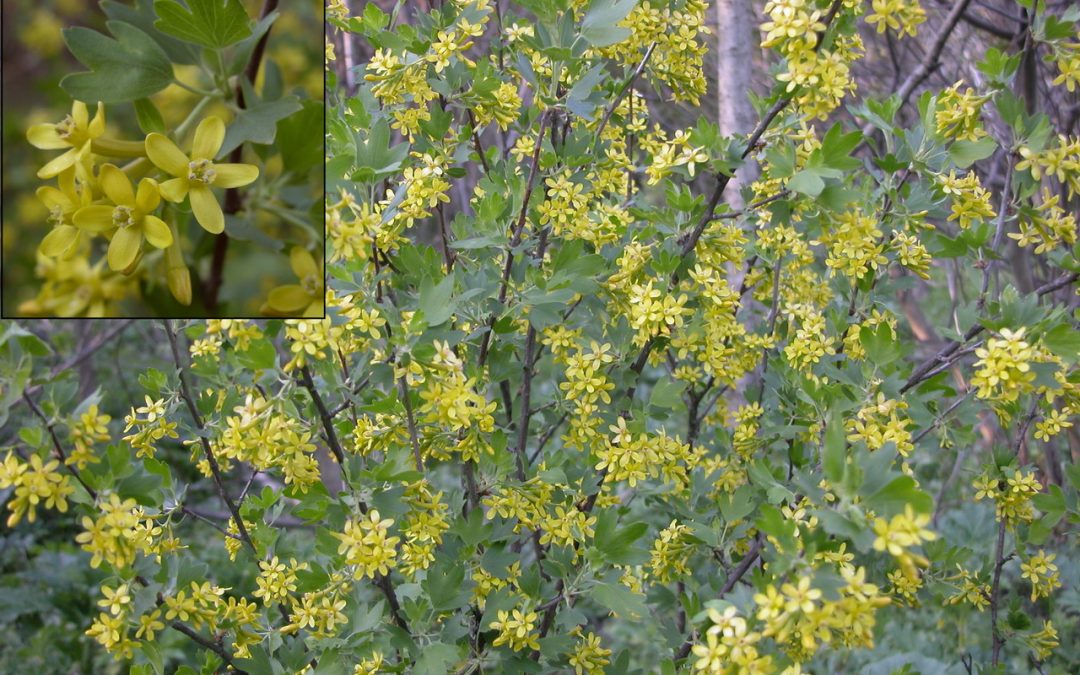
on the lookout for a remarkable shrub with small, fragrant yellow flowers: the Golden
Currant. A native to New Mexico moisture catchments at elevations from 2,500 to
8,000 feet, this plant is suitable for many Albuquerque landscape situations if
sited and cared for properly.
A
standout in terms of multi-season interest, fragrance and wildlife garden value,
Ribes aureum has few botanical peers. In late
Spring, five-petaled flowers - with a scent said to resemble the aroma of cloves
or vanilla - attracts hummingbirds and monarch butterflies. The flowers develop
into edible currants, a favorite of birds, which by June will mature from a red
color to deep blue. Small green leaves turn a bright red in autumn before falling.
Tips for success: Golden
Current may succeed in sunny or shaded locations, but will require less irrigation
(link to new Efficient Irrigation Consultation tab) in lower elevations if sited
in at least partial shade. However, it is likely to fruit most heavily in sunnier
locations. Golden Current is adaptable to a wide range of soil types, but is not
tolerant of salt. It also benefits from a substantial layer of organic mulch for
moisture retention. Water every few weeks in summer. It may try to spread via suckers
so be careful when choosing a location.
A
useful specimen in any edible or wildlife garden, Ribes
aureum is also suitable for the edge of a rain garden or beneath a shade tree.
Grow it for its ornamental properties or simply for the fruit, which can be eaten
raw or used in juices, jams or pies.