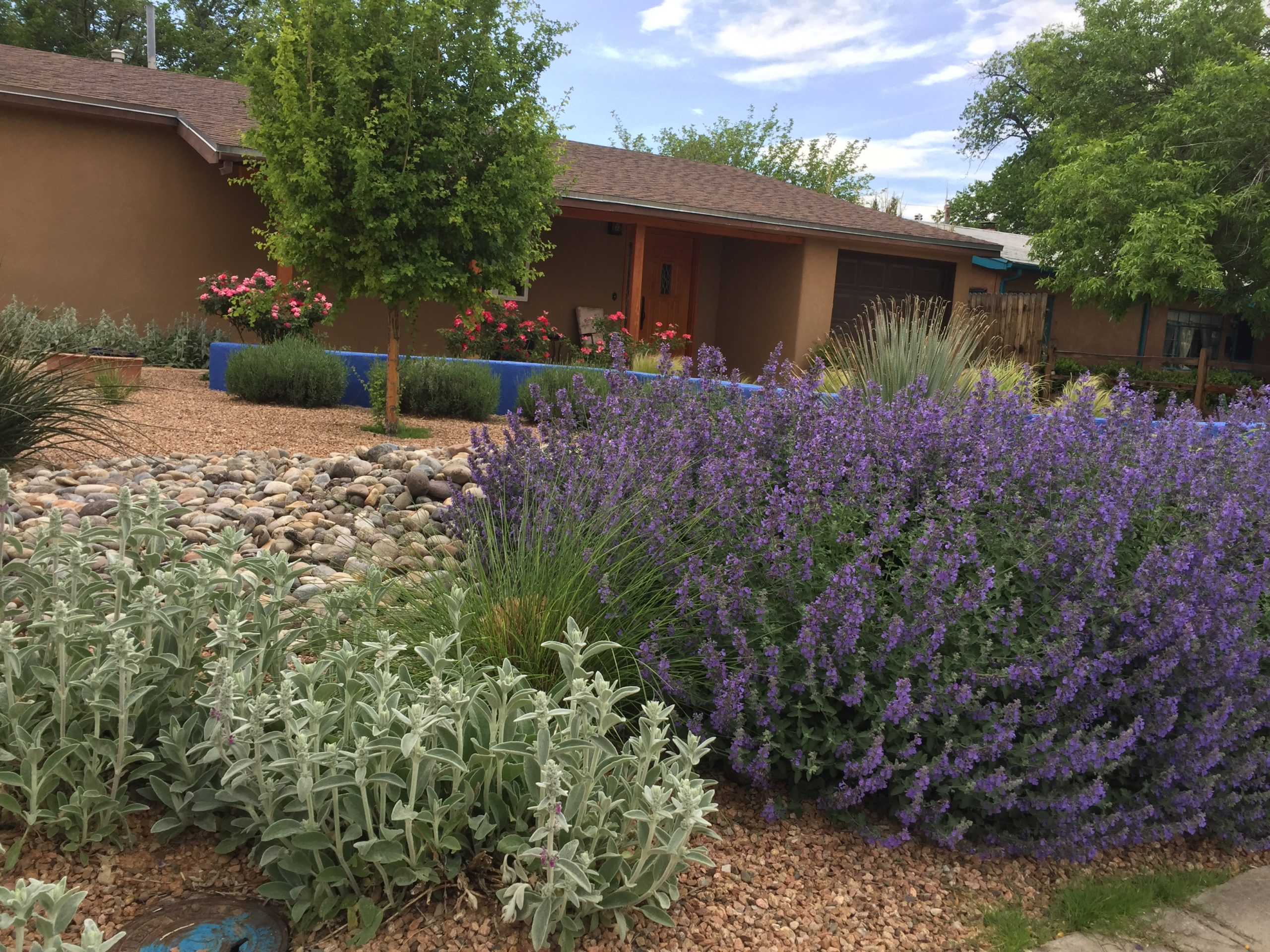
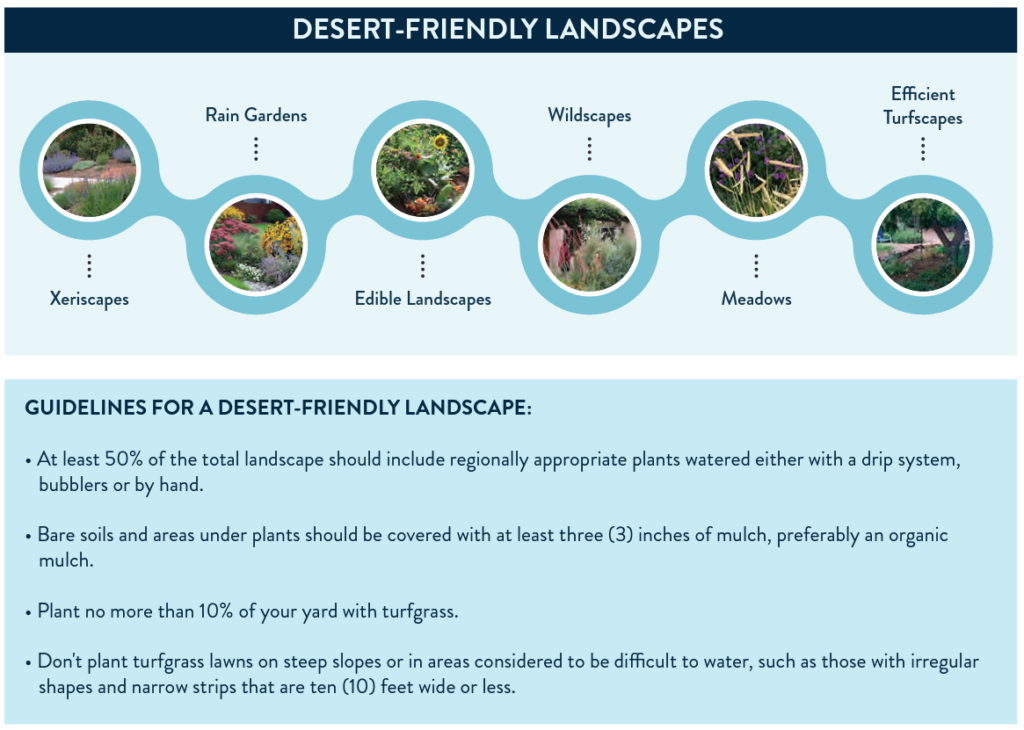
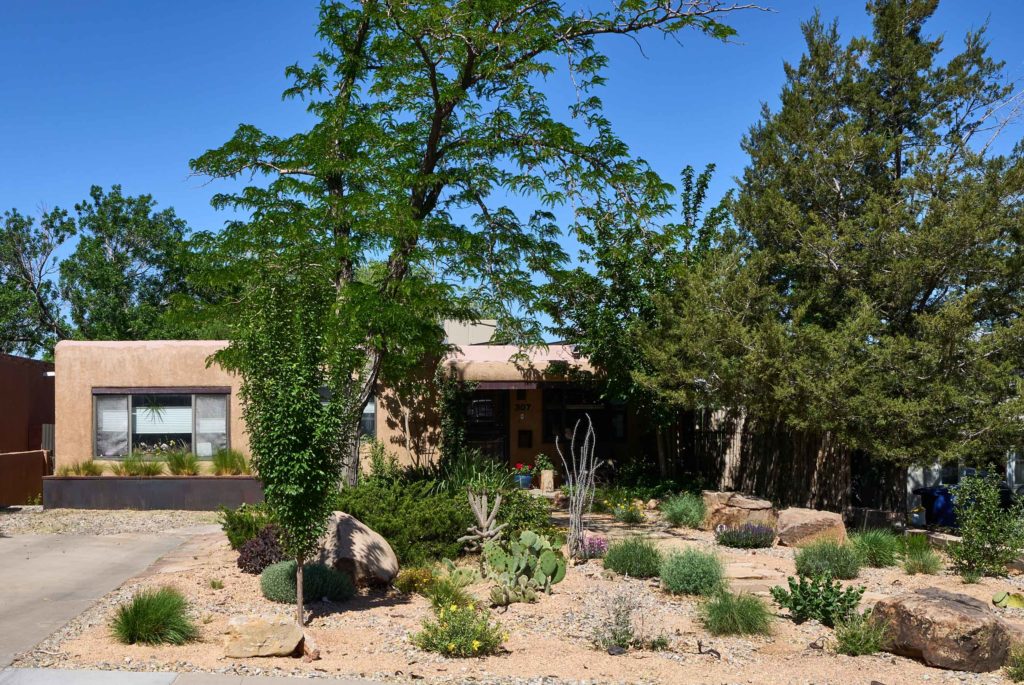
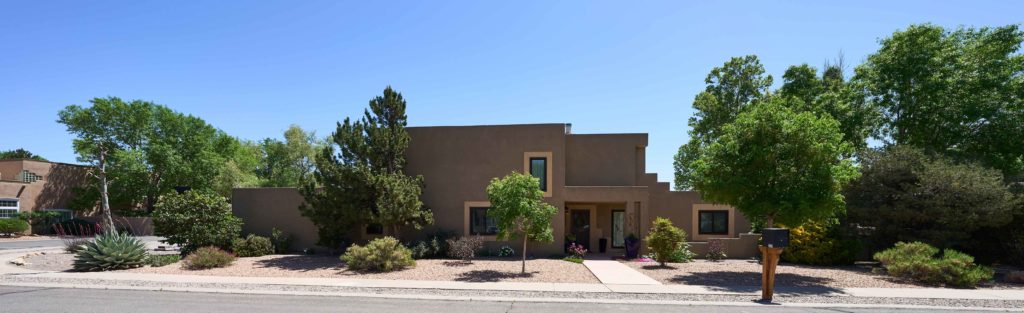
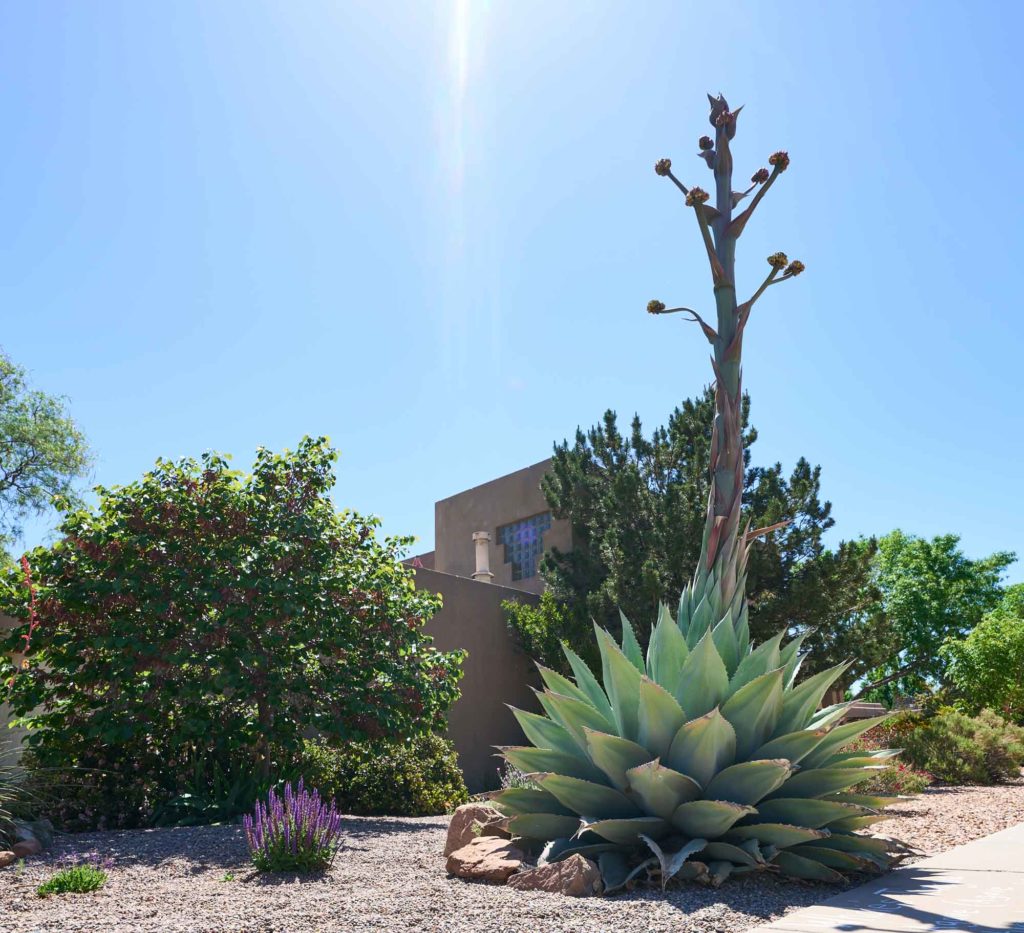
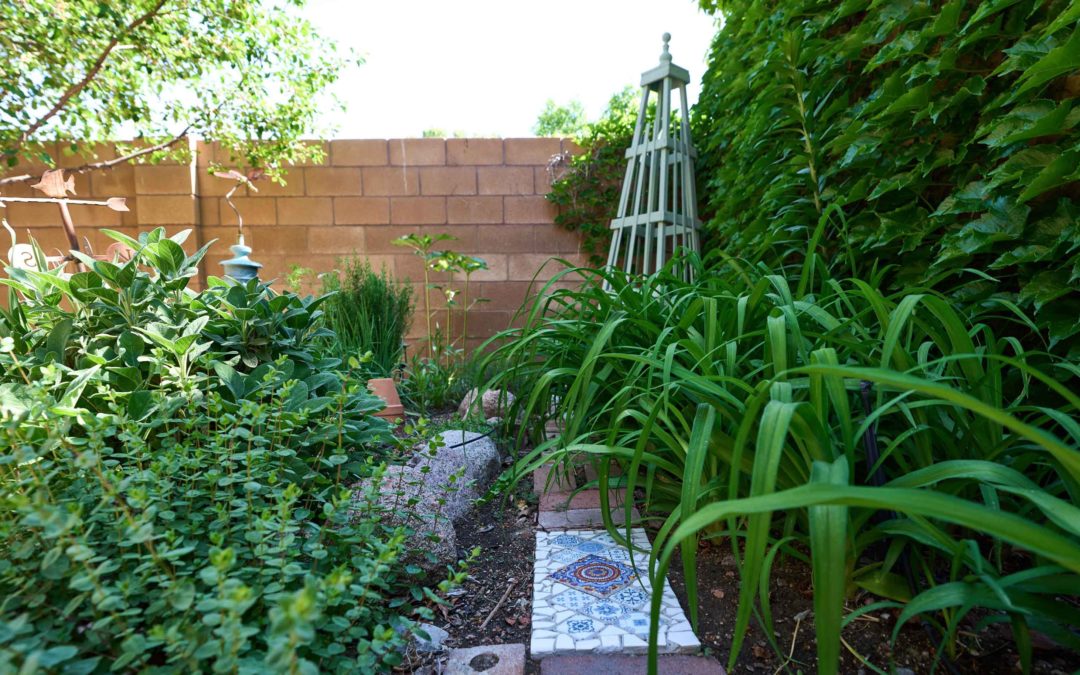
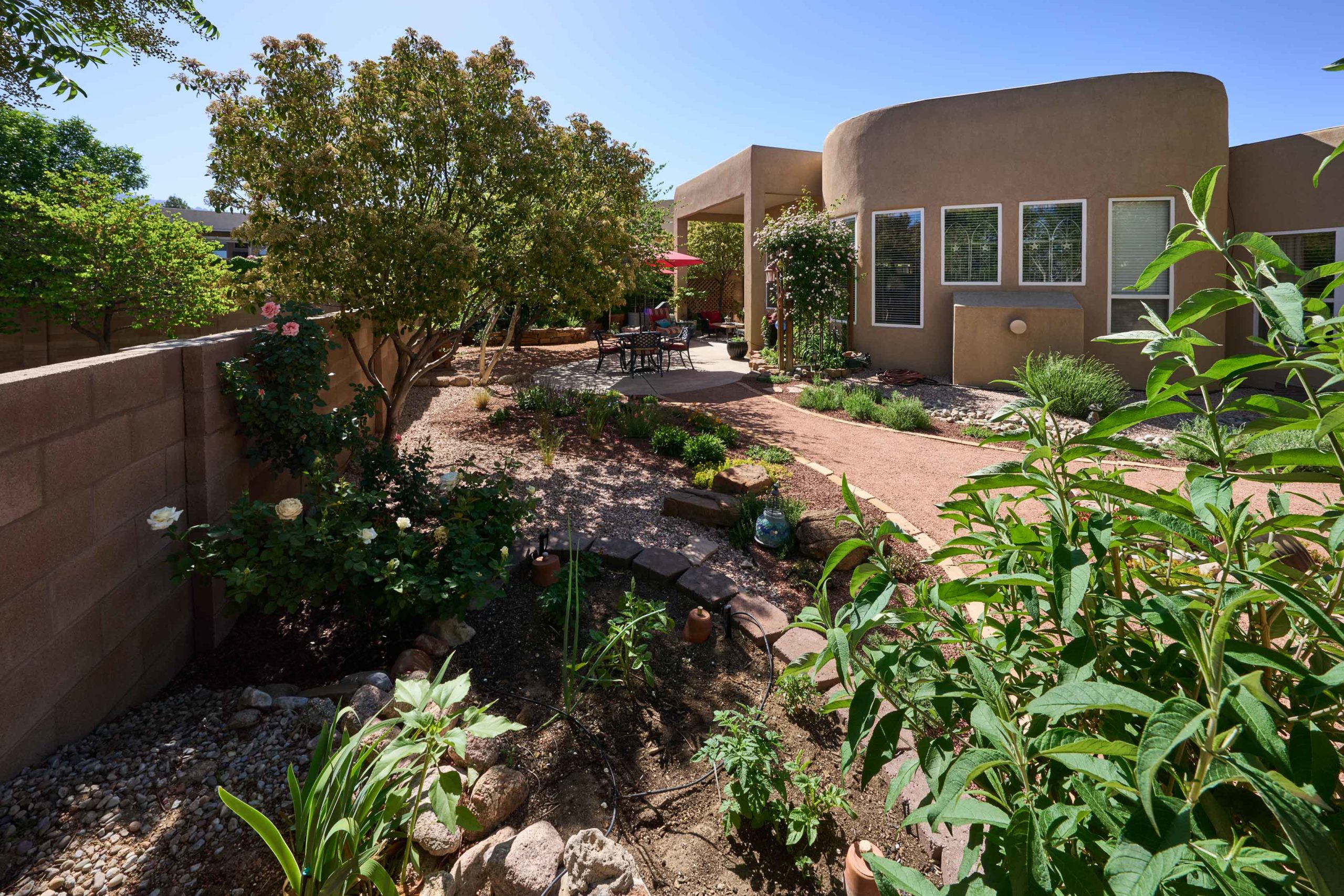
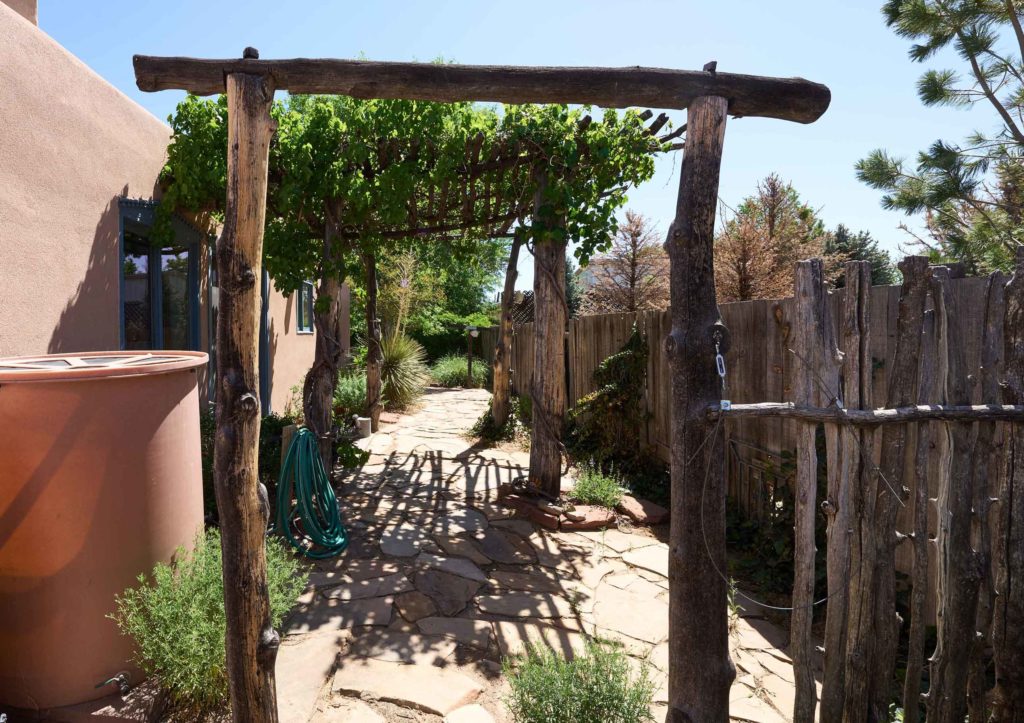
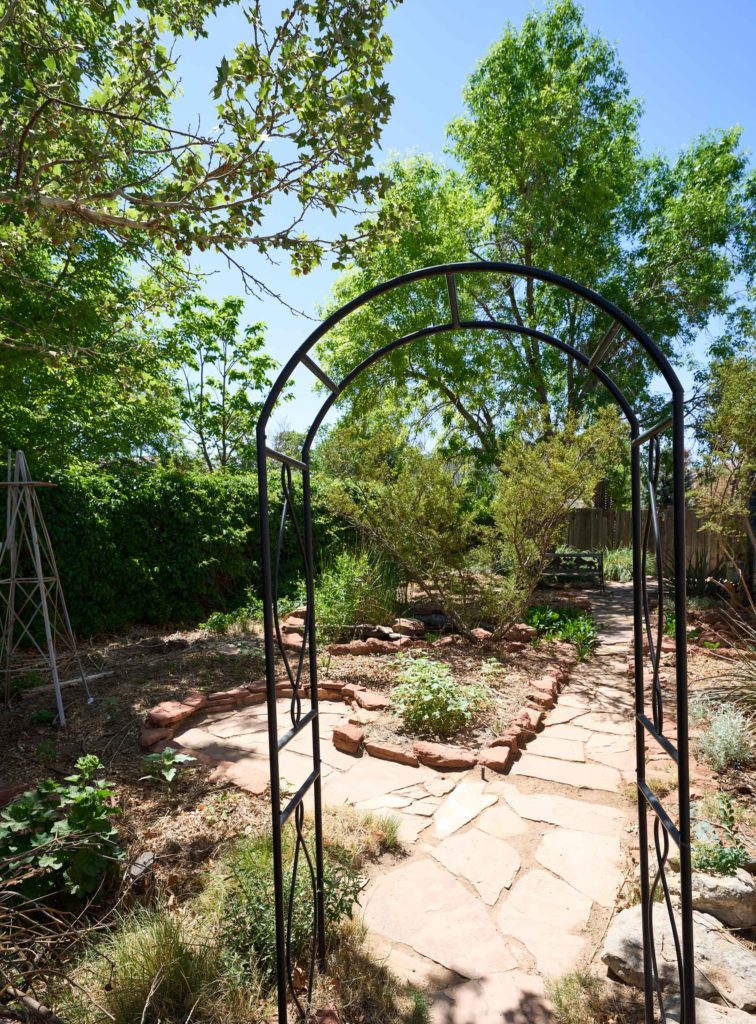
The Albuquerque metro area has a variety of landscapes. These include desert-friendly landscapes, such as lush, pollinator-friendly xeriscapes, and wildscapes or prairie plantings, where native grasses and wildflowers bring the feel of a prairie to a yard. Rain gardens are specifically designed to make the most of natural precipitation, while edible landscapes have garden beds or edible plants interspersed throughout them. Efficient turfscapes have smaller areas of turfgrass and diverse plantings. Conventional turfscapes with large areas of cool-season grass and high-water foundation shrub plantings are no longer considered desert-friendly landscapes. Desert-friendly landscapes describe a variety of landscapes that include beautiful, diverse plantings with increased resiliency achieved through efficient watering.
A sea of gravel may require little water, but it does not create a healthy environment. Weed fabric doesn’t prevent weeds from growing on top of the fabric and has been proven to be detrimental to soil and tree health in the long term. Trees struggle if they have been part of a yard that was once heavily irrigated and has been converted to a gravelscape. We do not recommend gravelscapes for reducing water use. Instead, transform those landscapes into cooler, healthy environments by adding appropriate plants and irrigation.
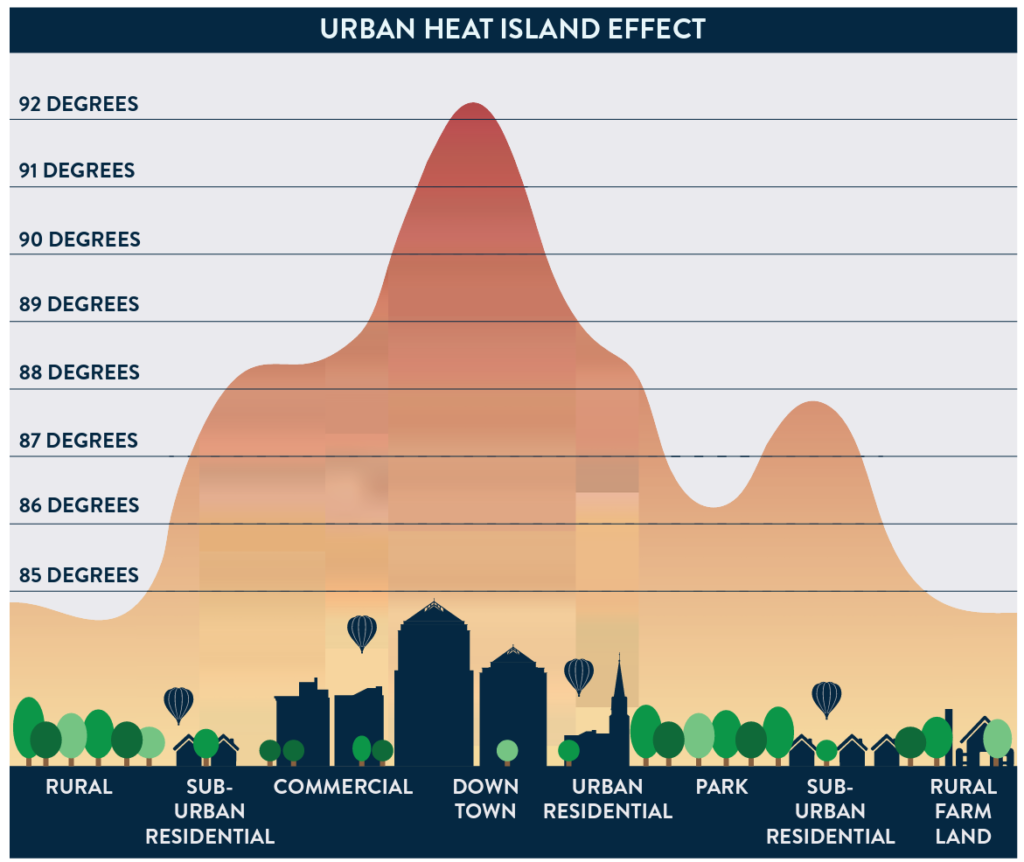
Desert-friendly landscapes make a positive contribution to lowering the urban heat-island effect, which is caused by heat emitted off surfaces including gravel, concrete and asphalt. This heat causes an updraft within an urban setting, which changes the weather patterns over a city and decreases the chances of precipitation and cooling. Plants, especially trees, help decrease or eliminate this heat island effect.
Desert-friendly landscapes help reduce noise pollution by absorbing sound. Desert-friendly plantings also increase biodiversity in your yard and in our community, generating much-needed pollinator habitat. Xeriscapes, particularly once they are established, use significantly less water than a conventional turfgrass lawn. Did you know that Albuquerque is a designated Bee City USA? To find out more, go to: Burque Bee City USA (beecityusa.org). For more information on pollinator gardens, go to ABQ Backyard Refuge Program (https:// www.505outside.com/2021/05/31/backyard-refug-es-for-people-and-wildlife/). To find out about rebates that help homeowners transform their yards into desert-friendly xeriscapes, visit: https://www.505outside.com/residential-desert-friendly-conversion-rebates-xeriscape-conversion/
Xeriscapes have been largely misrepresented and misunderstood over the past 30 years, often being mistaken for zeroscape (a.k.a. no plants). What xeriscape really means is a native, desert-adaptive or desert-friendly landscape that often feels lush and vibrant and has plants that are appropriate for the Albuquerque climate. It attracts all kinds of wildlife and changes with the seasons.
Pro Tips for Using Drip Emitters in Xeriscapes:
• Always have more than one emitter per plant in case one becomes clogged. • Switch from adjustable micro sprayers and “shrubblers” to individual emitters or in-line emitted drip lines to know exactly how much water is being provided to your plants. • When using drip or other low-flow irrigation, accommodate plant needs by adjusting the flow rate (larger or smaller gph) and number of emitters per plant. • Drip irrigation is the best way to water plants that do not like getting their leaves wet. With drip emitters and ¼” spaghetti tubing, water can be placed exactly where it is needed.
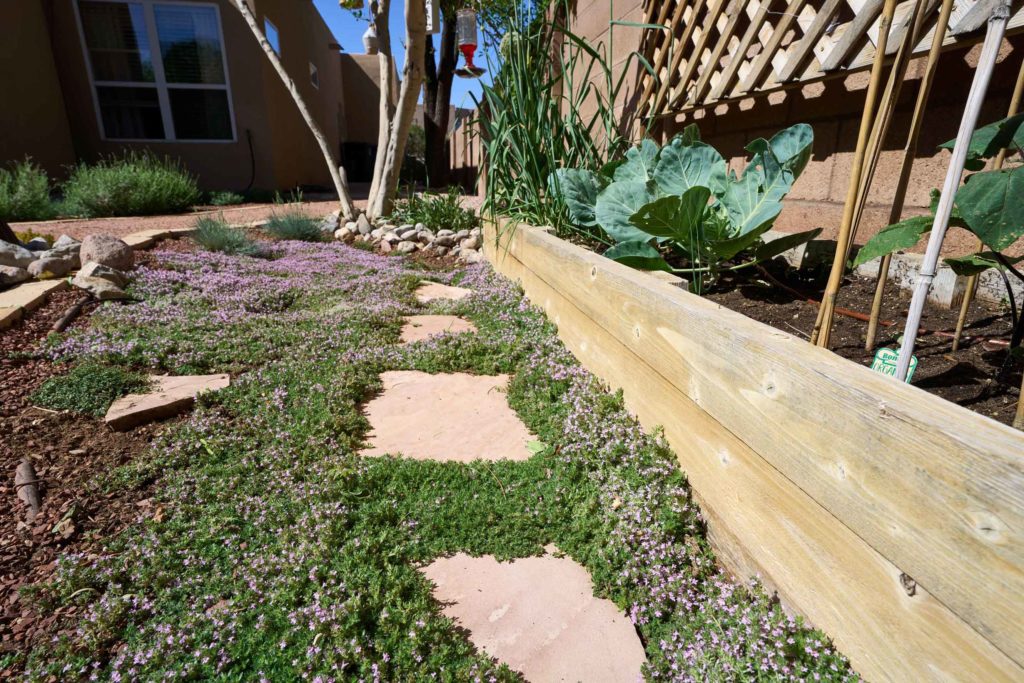
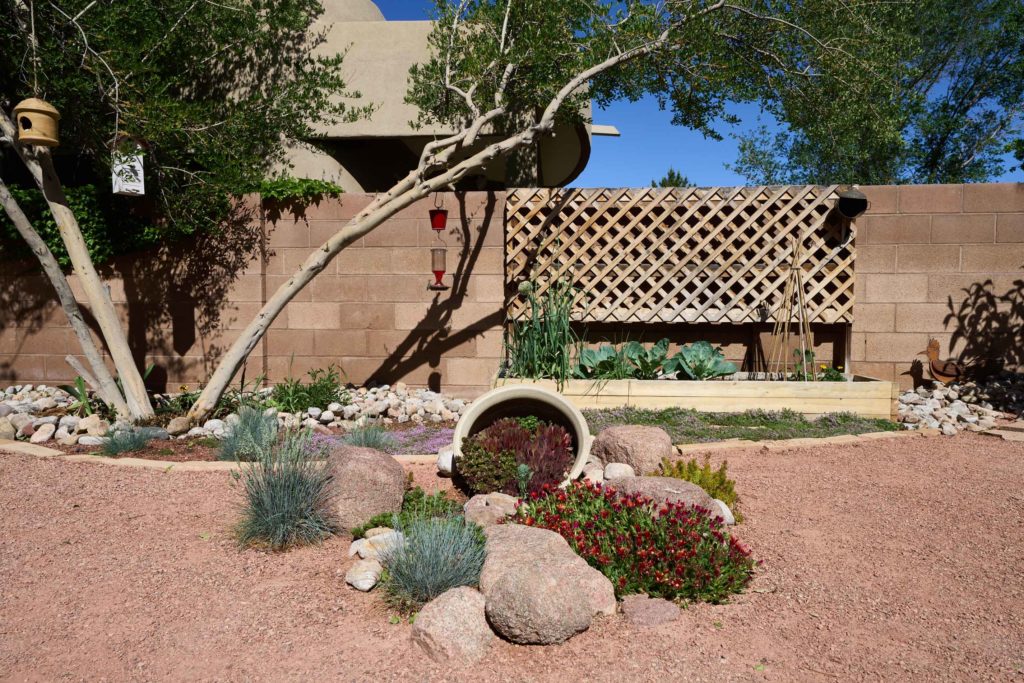
Xeriscapes often include trees, shrubs, flowering “pollinator-friendly” perennials, desert accents, groundcovers, ornamental grasses and vines. They also can contain small functional turf areas, vegetable beds and other edible plants. Xeriscape plants are medium or low-water usage plants. Some can survive with rainwater alone after an establishment period of at least three full irrigation seasons. Adding trees to a desert-friendly xeriscape increases shade and habitat, creates favorable microclimates and reduces the urban heat island effect in Albuquerque. When deciding which tree to use in a particular place, refer to our Xeriscaping Guide or The Nature Conservancy’s Climate Ready Tree List.
HOW MUCH WATER IS NEEDED TO KEEP UP A BEAUTIFUL XERISCAPE?
This budget is only for outdoor use. Please include your winter averages to complete your TOTAL usage on your billing. For typical xeriscape landscapes with 500 square feet of NATIVE grass lawn (warm-season grasses) and two medium trees
Congratulations to the ten winners of our first annual Water Authority Desert Friendly Landscape Contest! Thank you for sharing your beautiful gardens with us. They are an inspiration for others to make the switch to desert-friendly landscapes.
The transformation of adirt front yard into a Desert-Friendly Landscape
Many Albuquerque homeowners are interested in saving water, so over time they have turned off their sprinkler systems and let nature take its course. However, nature takes a long time to come back to life in the desert, which is why we see bare dirt yards all over the city.
When Katrina and Peter Nardini moved into their southeast Albuquerque house, it had a dirt yard. After observing the landscaping in neighboring yards, Peter came up with a plan for their property that included a hardscape path and a wide variety of plants. To make sure the hardscape path was put together properly, a landscape professional was hired to build the path and steps.
“We chose plants by looking at other yards, taking pictures, and then working with garden center staff on selecting plants,” Peter and Katrina explain. Attracting hummingbirds was foremost in their minds.
Fortunately, a drip system was already in place in their yard, although some of the components needed to be upgraded to extend irrigation to all the areas that supported plants. “Initially, we had the irrigation drip system running most days of the week to get the new plants established,” they said. “Now, we turn it on twice a week in the summer and only one time a week during the other seasons. We only irrigate trees in the winter season. Most of our other plants do well with rainfall and snow.”
Katrina and Peter are delighted with the diversity of native and drought-tolerant plants in their transformed yard. “Our fruit trees are our favorite. They provide us with shade, beautiful flowers, and fruit!"
Grassy Lawn to Low Maintenance
After growing tired of weekly lawn maintenance, mowing, trimming, and the expense of watering, Daniel Stromberg decided to get rid of the grass in the front and back areas of his northwest Albuquerque yard and create a drought-tolerant, desert-friendly space. The first order of business was to replace the sprinkler system with a drip system.
Daniel worked with several different companies and a friend who is a master gardener to come up with the right design and plant selection. There was a bit of trail and error in the process, but the result is a thriving yard with drought-tolerant and native plants that gives Daniel a great deal of pleasure. “These plants look and do much better in the yard,” Daniel explains.
Transforming the yard from one that was high-maintenance to an easy-to-take-care-of space that requires little work was worth the effort, Daniel says. He is most proud of his sunflowers, whale tongue agave, ice plants and giant desert willow.
Congratulations to the ten winners of our first annual Water Authority Desert Friendly Landscape Contest! Thank you for sharing your beautiful gardens with us. They will be an inspiration for others to make the switch to desert-friendly landscapes.
Succulent Garden Wisdom
What once was a high-water use turfgrass lawn in the Northeast Heights is now a xeriscape garden with a focus on succulents. Janice transformed 550 square feet of turf into a diverse landscape complete with low-water use trees and shrubs and a beautiful succulent garden. She loves that there is, “No more mowing! No more trimming edges! No more feeding with nutrients! No more grass!”
When selecting plants, Janice turned to a variety of resources, including 505Outside, the Xeriscape guide and avid gardener friends. She hired a professional landscape company to install her new drip system. “The drip system is my go-to irrigation system as recommended by various professionals,” Janice said. “My plants and trees are happy following the 505Outside seasonal watering recommendations.”
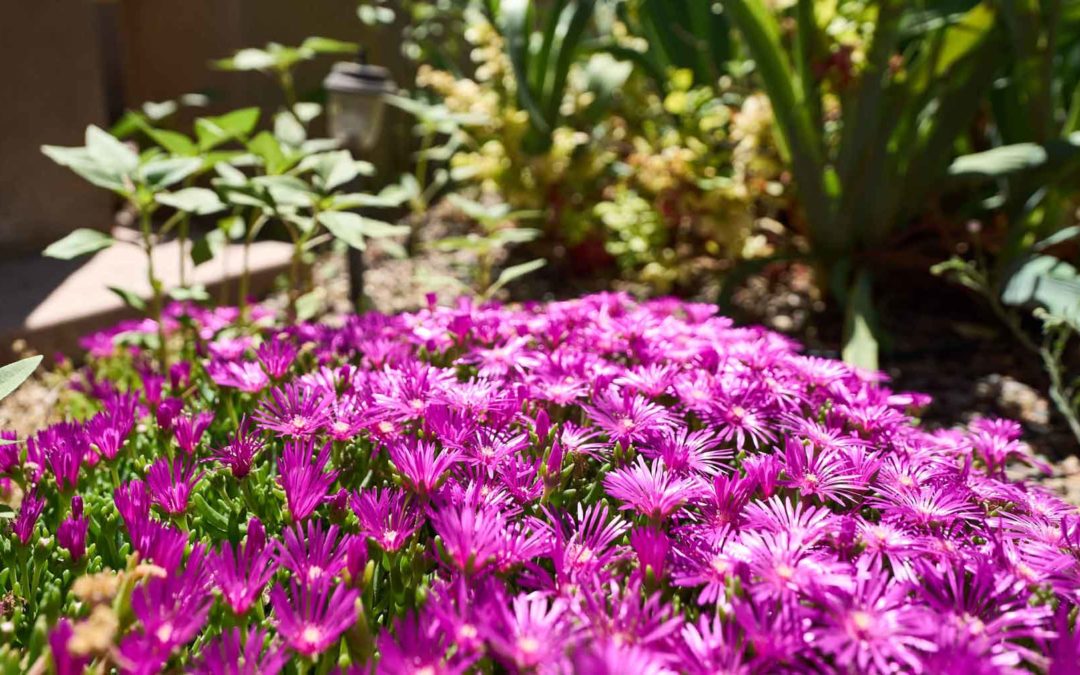
Succulent beds are her favorites, and she looks forward to adding new succulent species each year. Janice enjoys the diversity of plants in her yard and how they change colors throughout the seasons.
What started as a way to reduce water usage has evolved into a renewed love of the outdoors. Janice keeps track of landscape seasonal transitions, rain events, plant changes and teachings in her “Garden Wisdom” journal. “A garden can teach a lot about flexibility, patience and calmness,” she added.
Unearthing Wildscape
Local scientists Paul and Teri started with high-water use turfgrass and trees when they set out to make a wildlife habitat in their yard in the North Valley. They removed all the non-native grass and have been slowly replacing it with low-water native plants. Areas that haven’t yet been planted are covered with 3"-4” of organic mulch, which is an easy way to prep the soil before they’re ready to plant.
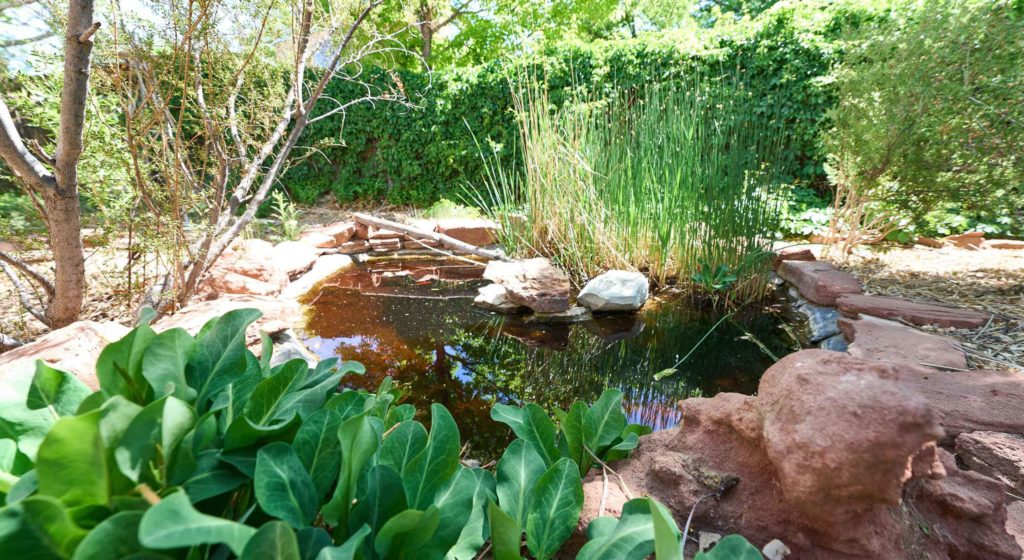
A pond was added to create a habitat for western toads. Other creatures have joined their landscape, and it is now a recognized Fish and Wildlife backyard refuge.
Part of the scientific work that Paul and Teri do involves mapping vegetation across the Southwest. Their extensive knowledge of local ecosystems has helped them select native plants that will thrive in different environments and through our changing climate, especially during times of drought. “Wild native plants can be very beautiful and add value to gardens because they remain resilient thru changes,” they said.
Their yard is set up with a drip irrigation system that waters as needed. During rainstorms rain barrels collect up to 1,500 gallons of water, which supplement their irrigation system.
“We are proud to minimize water use while maximizing pollinators, edibles and the abundance of plants,” they said.