It’s been a rough few months in the 505. We’re having a challenging gardening season, to say the least. Dry. Hot. Intense. The unraveling of our climate has been on full display.
Whether you’re choosing more adaptive plants and creating habitat or beginning your gardening journey, no doubt you’ve lost plants this summer — or worried about it. I’ve been calling it the Summer of Feeling Like a Not So Great Gardener.
Just to put this in perspective, I’ve been gardening for over 30 years and I’ve struggled and learned a lot this summer. Learning to steward land in a way that’s in alignment with our changing climate is not easy. But it’s crucial.
In the midst of these challenges, you might be experiencing more emotions than you’re used to — anxiety, for example? Frustration, perhaps. Confusion about where to start. Sadness at all the loss and devastation. Feeling alone. Lack of confidence. Overwhelm. Anger. Dread.
So, what’s a gardener to do? It’s easy to think our emotions are totally separate from the scorching heat. We’re used to compartmentalizing — experiencing emotions and deep spiritual questions in one part of our life and tackling complex external issues, like choosing climate-ready trees to plant, in another part of our life. No matter how well we’re dealing with these emotions, they’re bound to creep into our external gardening. What if, instead of shutting ourselves down in order to accomplish the daunting task of adapting our urban forest to the changes before us, we actually bring our emotional and spiritual selves into the garden? This is precisely the zone where deep and meaningful climate resilience awaits us — in the cultivation of our Home Gardens with our Inner Gardens. We grow an ability to weather storms, to adapt as things unravel — in both our inner and outer landscapes.
For example, let’s look at overwhelm, which is so common these days and to which we gardeners are not immune. We might be asking, “Am I doing enough? Am I making the right changes and adaptations? Which do I do first — spread mulch or create ways to passively harvest the rain?” We might be worrying about how much water we’re using or that we’re not using enough. There are so many decisions to make, and it’s easy to feel overwhelmed.
Here’s what I recommend for dealing with overwhelm:
Notice: Take a deep breath and recognize, “Ahh, this is overwhelm. That’s all it is. It’s happening in my inner garden, inside my heart.” That’s the first step. Pause. Notice it. Take a breath with it. The inner garden is what is happening in our consciousness — which primarily lives at the level of our heart (not our brain). There’s a lot of fertile ground to work with in there.
Just be: Next, take 15 minutes and just go outside and sit in the garden. Find a place to just be. Don’t plan or make any lists, just sit and breathe. Don’t skip this step, it’s the most important one. Listen to the sounds, feel the soil, notice the smells. What insights come through?
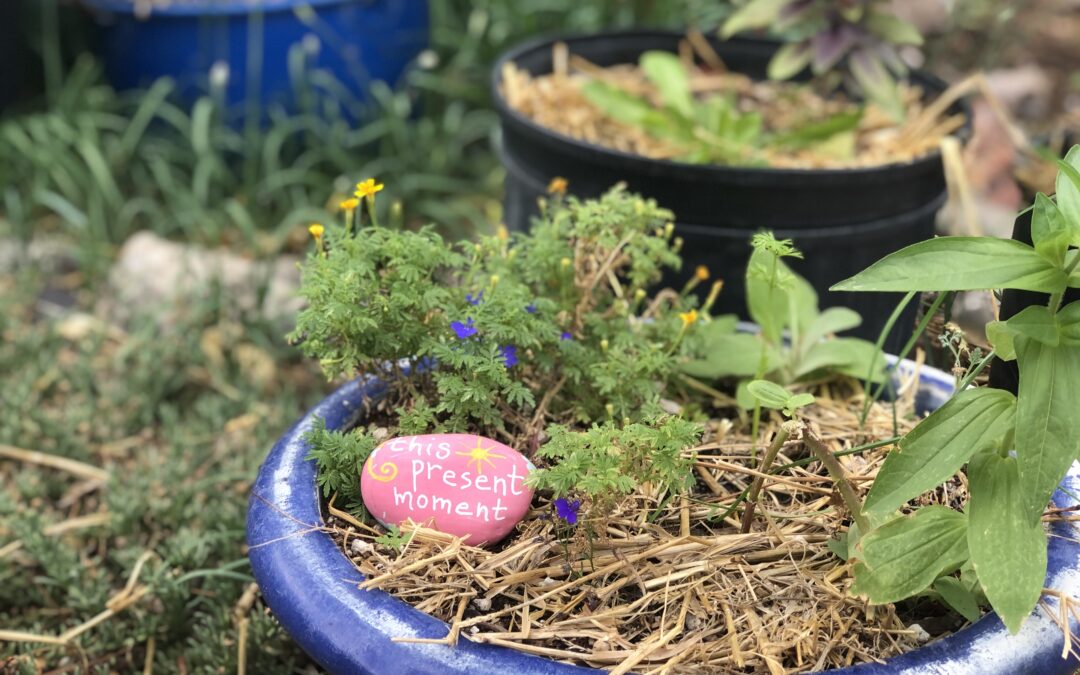
Create: Then, find a special place in the garden and create something to help remind you of what insights came up. It can be very simple, just something that speaks to you — a gathering of stones, an arrangement of leaves, a circle of flower petals. When we take the time to tend what’s growing within our inner garden, we have more inner space to effectively handle what’s happening in our outer garden. This is resilience.
Reconnect: The next time you’re doing a garden task — like weeding — briefly pause and reconnect with your inner garden in your heart. Set a simple intention to help shift the pattern of overwhelm, such as “This garden belongs to all who live here, human and non-human. May my activities today bring benefit to all the beings here.” And then carry on weeding, but with this intention.
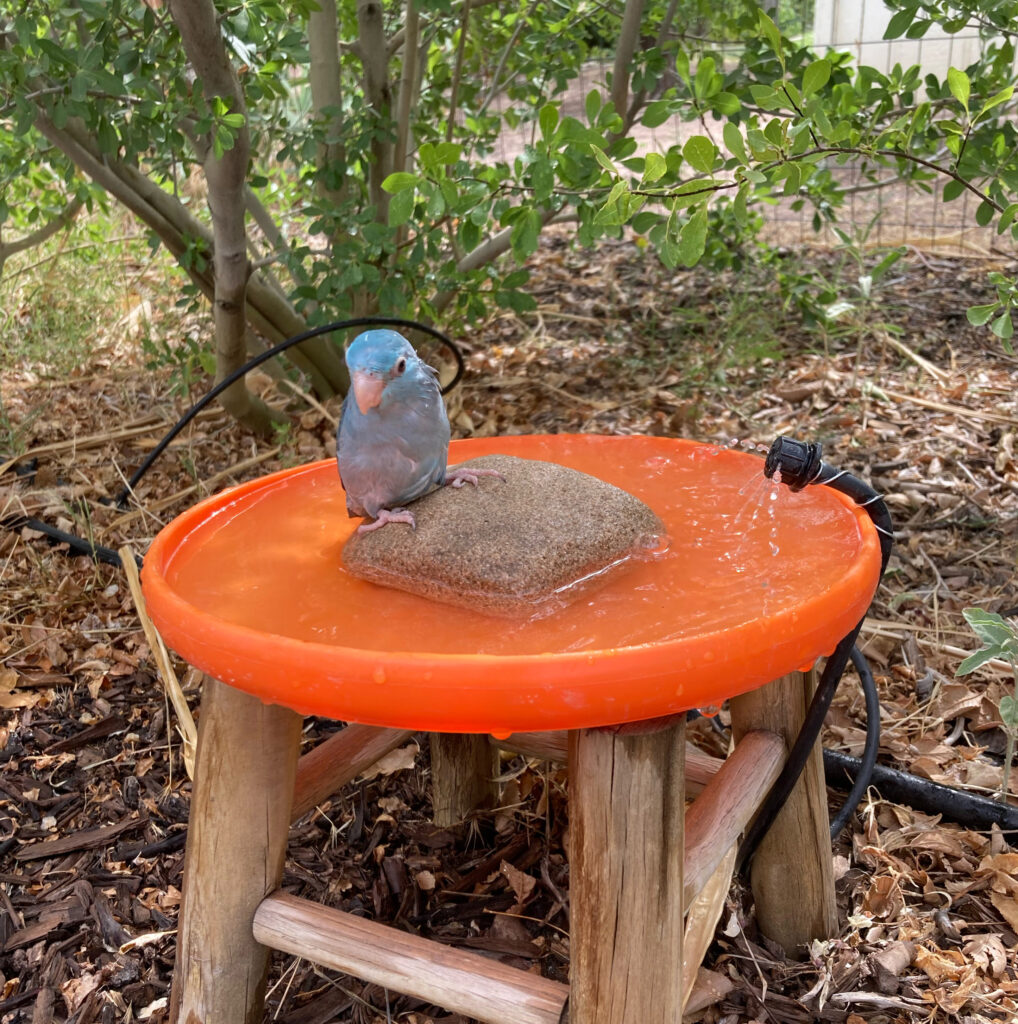
An intention like this can shift our state of mind away from overwhelm and into a place of gratitude and caring. From this place, we’ll make better gardening decisions. We might notice that the birds need more water and fill an old Frisbee with water and put a rock in it. We might start giving ourselves the space to be imperfect in our gardening. We might begin to see ourselves more as a caretaker of the space and less as the “owner” — ”our” garden becomes “the” garden.
The inner garden and the home garden have a profound and interdependent relationship. As we tend both of them together, we cultivate a deeper resilience in both gardens. This adaptation and flexibility then ripple from our own hearts out into the world, so in need of our tending and care.
Learn more about specific types of gardening here:
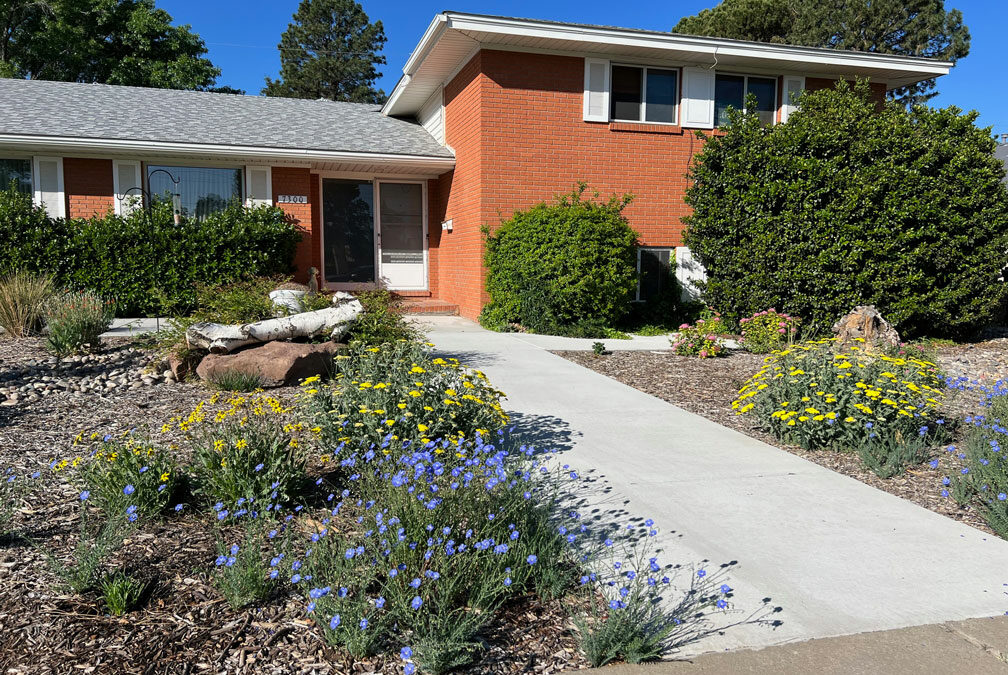
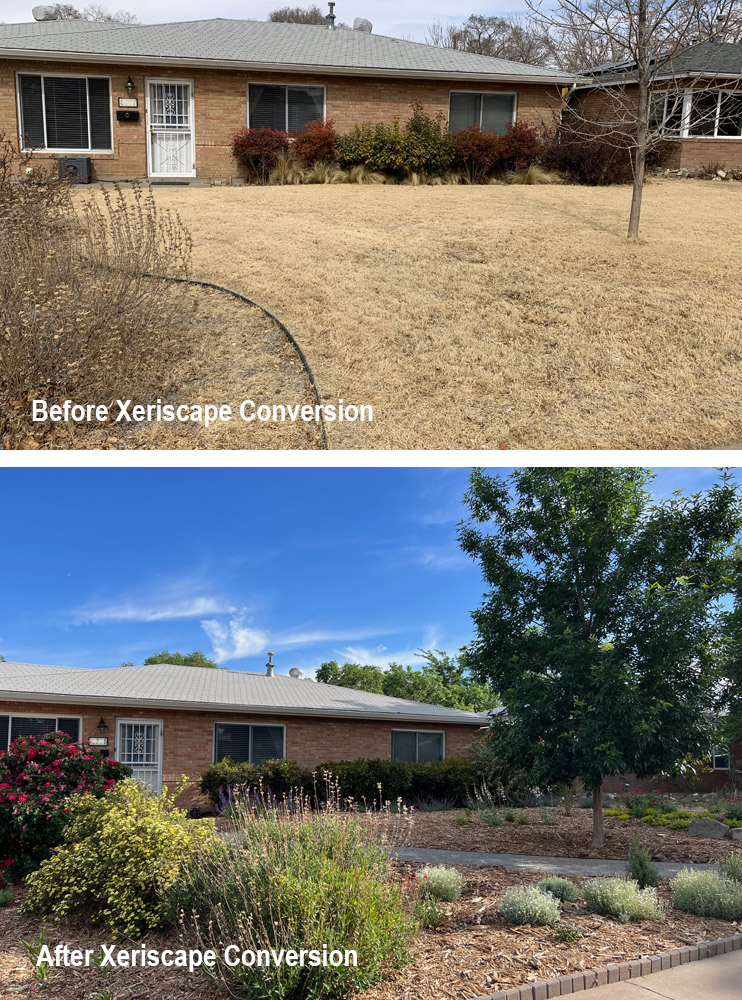
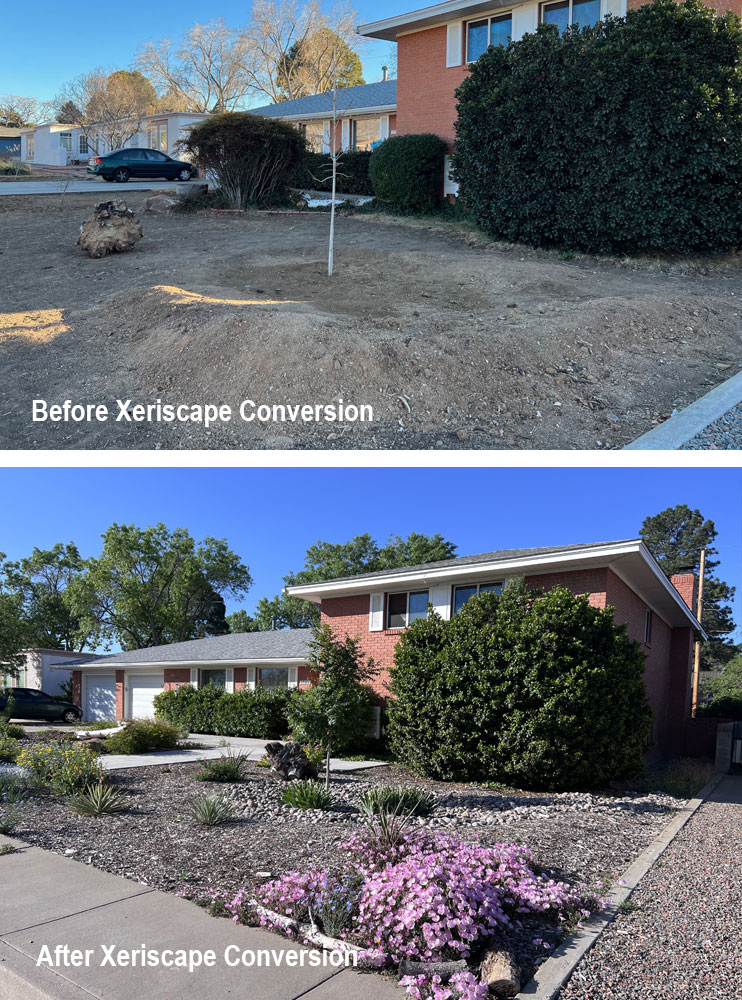
As Albuquerque area homeowners convert their high-water-use turf grass to desert friendly xeriscapes, many are opting for wood chip mulch rather than gravel or other aggregate, which can be hot and allow weeds to pop up.
The Water Authority checked in on two recent xeriscape conversion projects. These homeowners chose the DIY option for their front yards to save money. With all the resources available online, it has become easier to find how-to information on installing landscapes. The design, on the other hand, can be more difficult, and one of the homeowners chose to hire a professional. The other homeowner checked in with her mom who is an avid gardener, looked over resources from the library, and used online videos to pull together the design they wanted.
“I like the yard so much more now than the lawn we had before. The lawn would be pleasant about one or two days a month, and otherwise just felt like a chore and a needless expense. We’re lucky to live very close to a park, with a much nicer lawn than ours ever was, so when we want to play Frisbee or do ‘lawny’ things, we just walk the half a block to the park,” one homeowner said.
“While it took some labor to kill the grass, dig holes for the plants, install irrigation and lay down mulch, now when I look at my yard I no longer think, ‘Ugh, we need to weed/mow/fertilize/whatever.’ Now, I feel more joyful seeing all the different plants growing, and I’m always out there checking on my little plant friends.”
The other homeowner was motivated to create a landscape that “made more sense with the desert environment, used less water, helped provide habitat for pollinators and had a more natural look.”
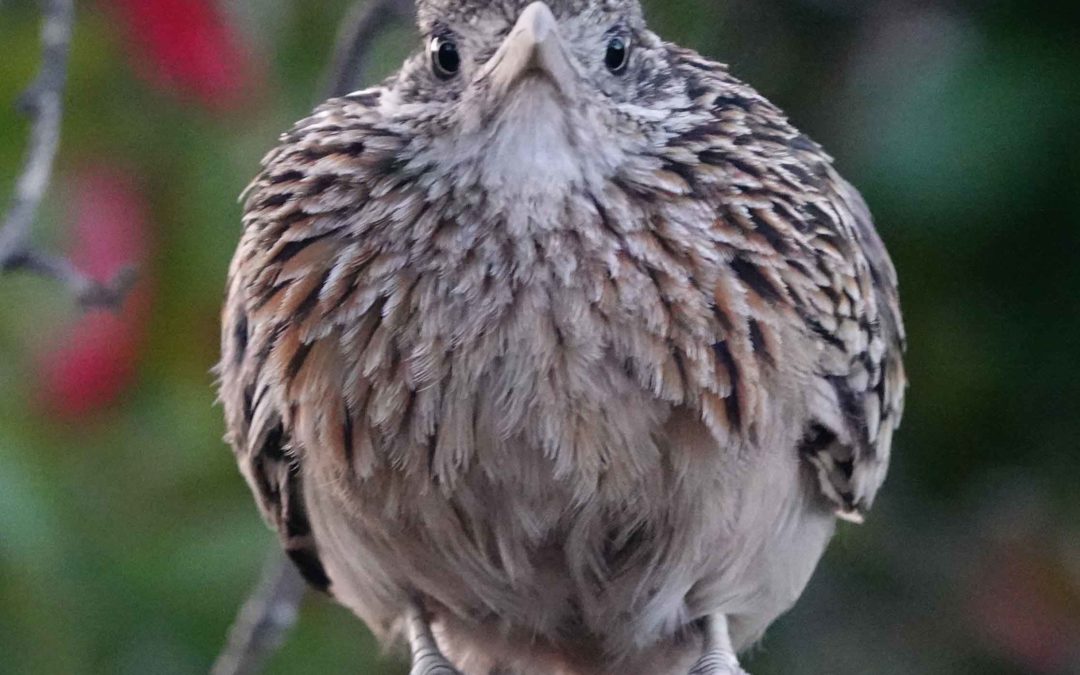
Both homeowners chose to use wood chip mulch because it is extremely affordable and easy to install. They knew the advantages of mulch from their research and from seeing yards in their neighborhoods that use mulch. One of the added benefits, according to both homeowners, is attracting pollinators and other wildlife. “I see a lot more insects; I especially notice the bees,” one said. “There’s a family of roadrunners in our neighborhood, and they’re spending more time in our yard than they used to.”
Wood chip mulch is made up of chipped trees. This is a long-lasting mulch that decomposes slowly over bare dirt, retains moisture and is superior to other mediums at suppressing weeds. Most wood mulches available on the market are chipped flat and are consistent in shape and size. These are great in areas that receive foot traffic as they compact down to a firm surface.
Both homes installed a 3- to 4-inch layer of organic mulch over bare dirt. That depth is effective at stopping sunlight from reaching annual weed seeds, thereby preventing weed germination. The homeowners noted that mulch was easy to install and much less expensive than gravel, and they found that the mulch also was much cooler than the hot gravel.
“The main things we have noticed with the mulch are weed control and how well it retains water,” one homeowner said. “There are very few weeds that seem be able to germinate and make it through the mulch barrier. The weeds that do come up are actually very easy to remove by hand (my preferred method for weeding) because there is no artificial weed barrier or rocks to dig out.”
The advice both homeowners would like to pass along to other folks looking to DIY their yards is to give yourself plenty of time and tackle the project in small parts.
“I think the most important thing was breaking the project down into manageable tasks, and then figuring out the best order of those tasks. I also made some mistakes, so being adaptable to changes and adding tasks was key. I definitely needed the six-month extension in addition to the initial six-month period allowed; it took me about nine months total to complete the work.”
The other homeowner took almost a year to complete their project, but they now are basking in compliments from their neighbors.
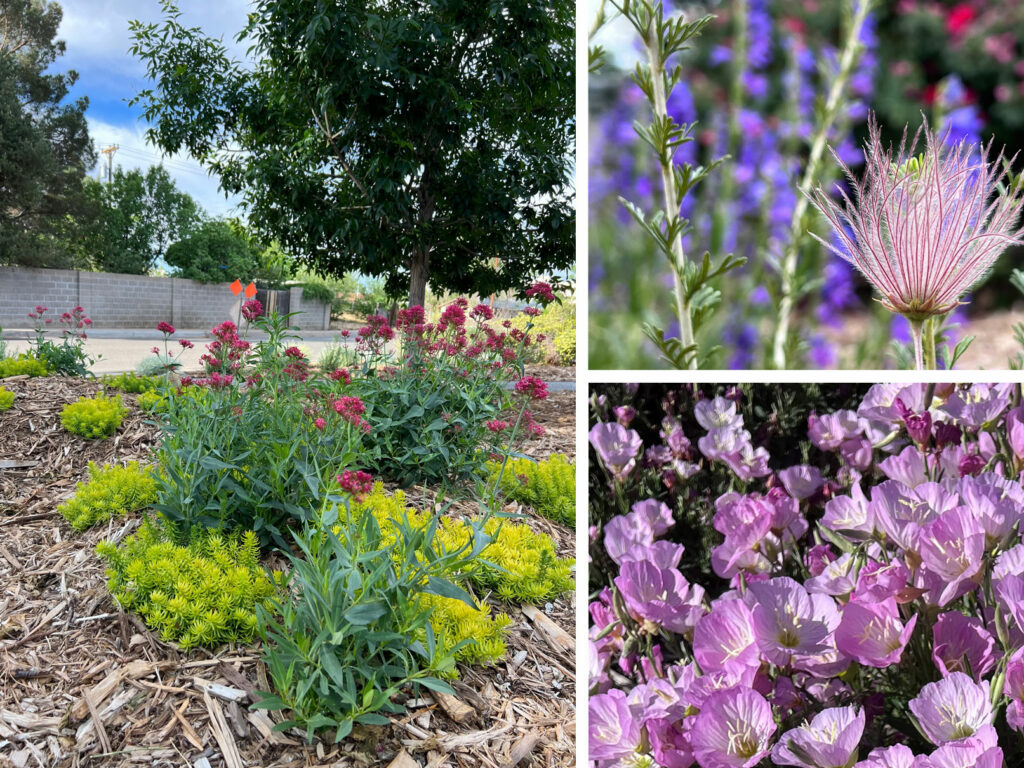
Sedum, Jupiters beard, Apache plume and Mexican primrose
Additional Facts on Mulches:
Wood chip mulch insulates plant roots from both heat and cold, reducing moisture loss from the soil by evaporation, feeding beneficial soil microorganisms that enhance plant growth and improving soil health. This makes the soil more sponge-like and better able to hold water. By installing 3-4 inches of mulch over bare dirt, weeds are reduced, the soil is enriched and new plants retain more moisture.
Another benefit of organic mulches is that they can visually accommodate a little bit of leaf litter, reducing the need for constant raking and clean-up. A thin top dressing of mulch added every two to three years keeps the landscape looking fresh and replaces the material that has broken down to sustain the soil. Organic mulches are lightweight, making them easy to transport in a wheelbarrow and spread with a rake.
Mulches are available in bags from most local garden centers (avoid the dyed ones as the colors will fade) and in bulk from several retailers in the Albuquerque area. When you buy from local bulk retailers, you are supporting the recycling of local organic materials that may otherwise end up in a landfill and contribute to greenhouse gas emissions. Buying bulk also means less plastic! Mulch is sometimes available at no cost from local tree trimming companies. In addition, Bernalillo County offers free mulch to residents who load it themselves at the East Mountain Transfer Station. County staff can load the mulch in your vehicle with a tractor for a $5 charge. The county also will deliver 30 cubic yards of mulch for $60, plus $2 a round trip mile for delivery. Mulches are a renewable resource that will improve landscape health and conserve water.
In areas of higher wind exposure or periodic inundation with water, use a wood chip mulch that is irregularly shaped and sized as the pieces will knit together better. This type of mulch can include recycled yard waste and tree trimmings as well as commercially available, locally processed wood products.
Property Data:
These homeowners converted a total of 2,940 sf of park blend grass to desert friendly xeriscape. Total gallons saved in one year since conversion: 100,000 gallons. Total rebate received: $3,140.
Thinking about converting your yard from high-water-use grass to xeriscape? Check out the Desert Friendly Xeriscape Rebate page to learn more about the qualifications, requirements and process to apply for this generous rebate. Additionally, xeriscape rebate participants get 25% off the cost of installing bulk organic mulch, up to $100. If you want to top dress mulch around your trees, take advantage of our Treebates. You are welcome to contact our xeriscape specialist, Amos Arber, at aarber@abcwua.org or 505-208-2015.
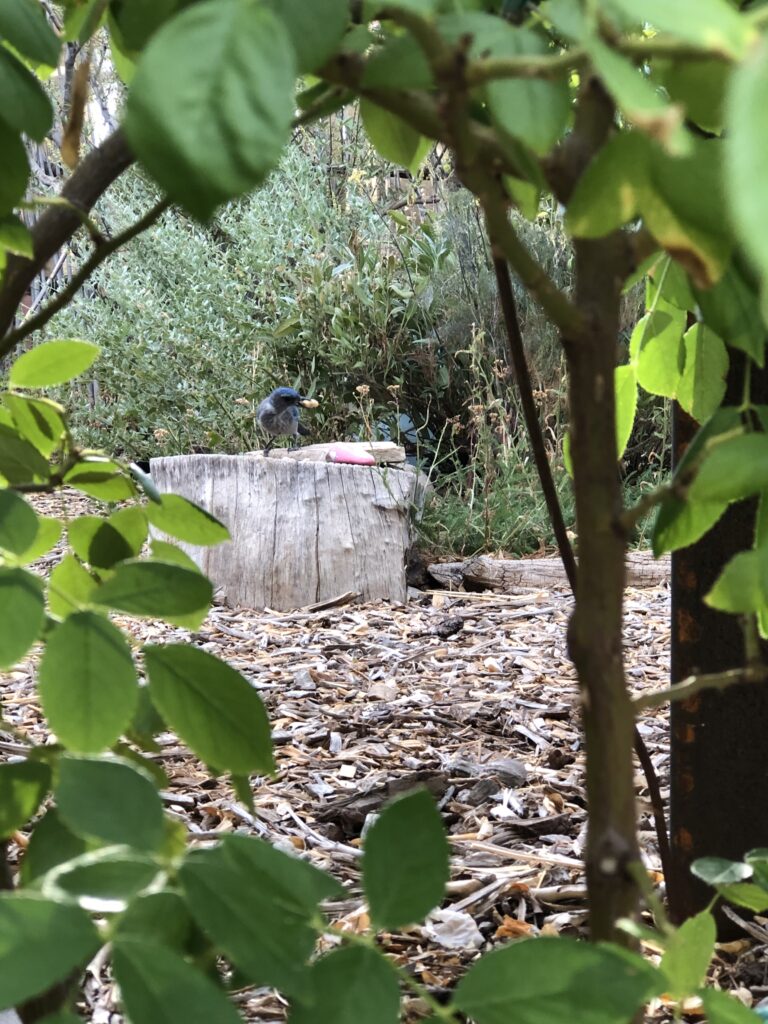
All species are in constant need of habitat in which to dwell that gives the next generation a chance to thrive. It is easy to share your space with wildlife and provide crucial habitat for birds. If you have a yard with non-native grass (or one full of gravel), you have a blank slate for making your yard a bird and pollinator paradise. By planting xeric and native plants and using natural mulch, you can make your yard cooler, reduce water usage and actively care for birds.
If the thought of converting an entire yard seems daunting, dig out the grass (or pull back the rocks and weed cloth) from one section at a time. Adding pollinator plants to a sunny patch is a great way to start. Many pollinator plants produce fruits or seeds for birds.
Providing both food and cover is important for birds. If you already have mature shrubs and trees, you can focus on adding food sources. If your yard is bare, plan to add different levels of habitat with trees, shrubs, perennial flowering plants and native grasses. Plant wildflowers in clusters of three or more so that birds and pollinators will notice them when flying by and be able to have a hearty meal once they find the food source. For information about the size and needs of each plant you want to put in your yard as well as its habitat value, search for “bird” in The ABQ Backyard Refuge plant list.
In the desert, providing a clean water source is beneficial to birds. A dinner plate with fresh water will be as welcome as a fancy bird bath!
Another easy way to make a bird-friendly yard is by employing these simple practices:
Keep birds safe by trimming trees after nesting season ends in late September. Bird nests are inconspicuous by design and can be easily overlooked. Trees with dead or diseased branches also provide perches, food, shelter, and nesting sites. If they don’t pose a safety risk, consider leaving dead branches for the birds.
Plants that provide seeds for birds can only do so if you leave the dried seed heads over winter instead of cutting them off in autumn. Leave them standing until spring and then remove last year’s stalks to make room for new growth.
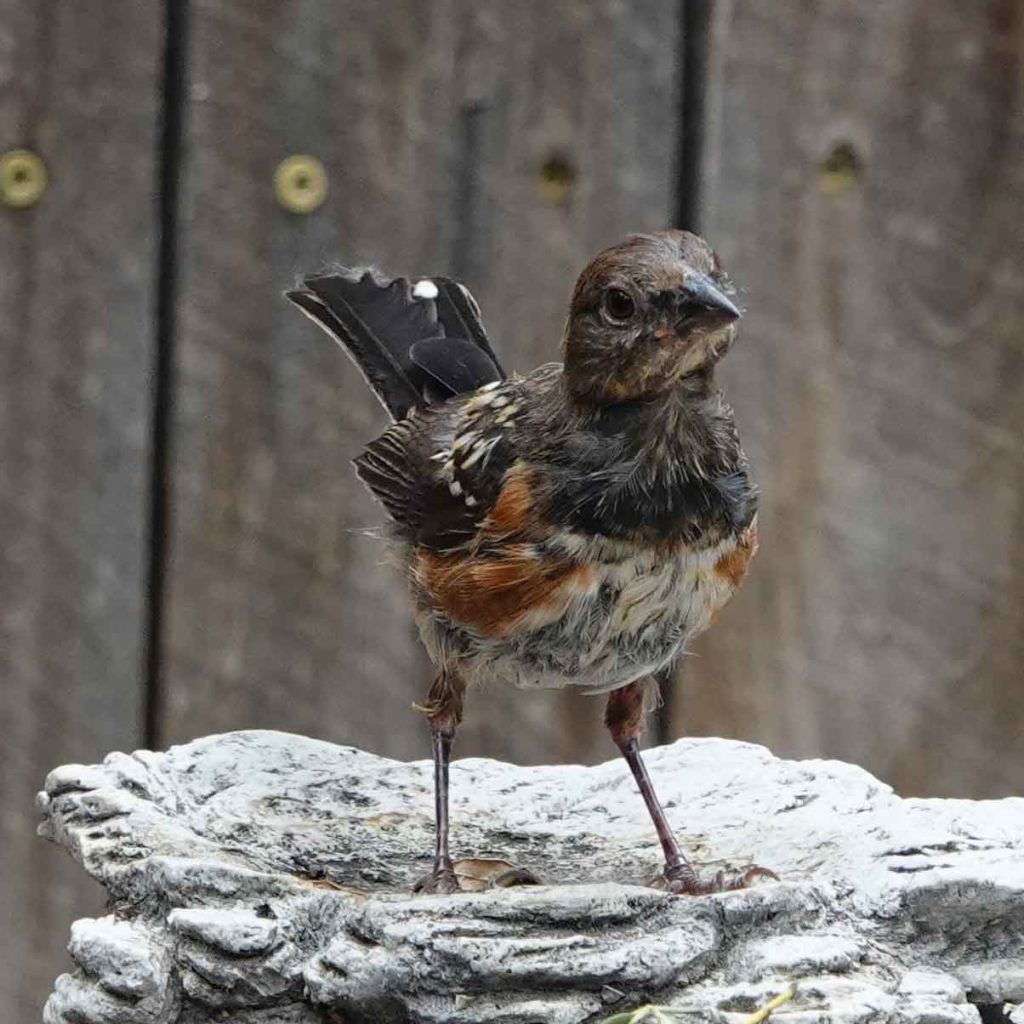
Leaving even just a small patch of leaves where they fall supports insects and the birds, like Spotted Towhees, that rely on them.
Challenge yourself to develop a tolerance for “pests." Insects are the primary food source for many species of birds. Hummingbirds use spider webs to build nests that hold fast to branches and expand around their growing nestlings. Avoid using chemical controls so you do not harm the wildlife you’ve invited into your yard.
Love your dandelions! In addition to supporting pollinators, hummingbird mamas use aster fluff to build cozy nests.
Owls and other raptors keep rodent populations in check and die if they eat a poisoned rat or mouse. Never use rodenticides! If you have a suitable tree, consider installing an owl box as well.
Domestic cats are part of the ecosystem when outdoors. They are both predators and prey, killing millions of birds and mammals each year, and in danger of being eaten by a coyote or owl. Keeping your cat indoors, or in a catio, will protect your cat and wildlife at the same time.
The ABQ Backyard Refuge Program introductory guide, workbook and plant list can be very helpful in designing a habitat that includes all the necessary habitat elements (food, shelter, water), or you can simply begin by managing your yard in bird-friendly ways.
Supporting birds in our urban area starts with focusing care and attention on our wild neighbors and taking their well-being into consideration when managing our yards. By supporting birds you will have opportunities for observing how our wild neighbors live and discovering new ways of sharing your space. Sharing our resources and growing habitat that benefits both you and wildlife can make our city a better place for the entire living community.
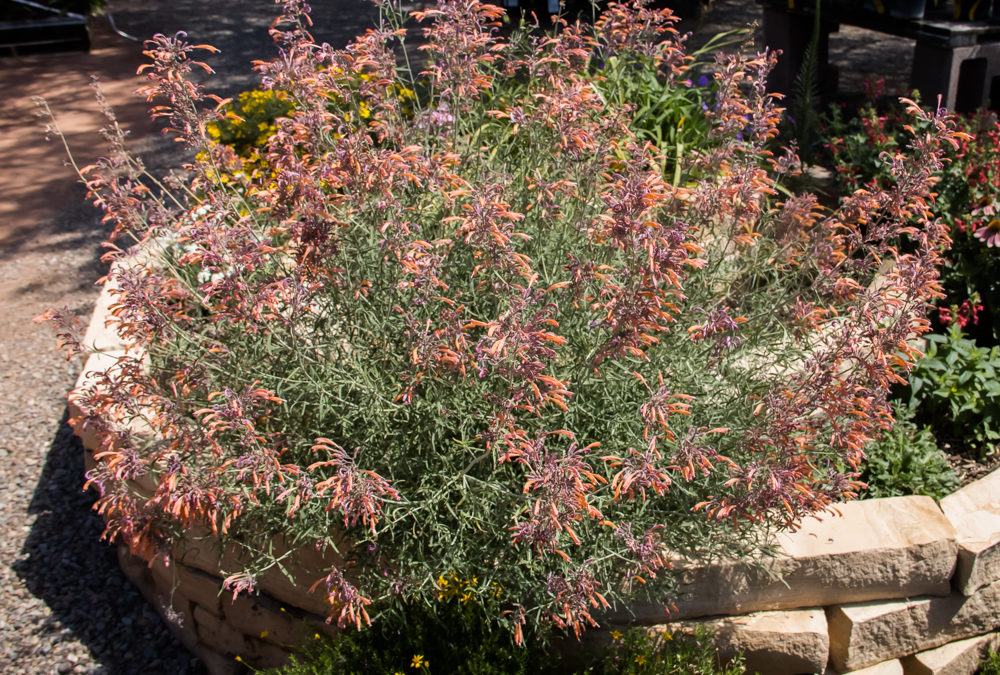
As its nickname “hummingbird mint” suggests, Agastache is a reliable perennial for attracting pollinators and hummingbirds to your garden. Soft masses of colorful tubular flowers tower above soft leaves, from mid-summer until frost. Members of the Agastache family give off an anise-like fragrance that delights the senses. Many cultivars are available in a wide selection of form and colors. Agastache will thrive in tough, dry conditions.
Everything in nature is
connected. Fostering the connections keeps ecosystems and gardens vital. And weaving
pollinator essentials together into a beautiful garden is a fun process. Start
by thinking about where you will view the garden from as well as how you’ll
move through the space to view pollinator activity without disrupting your
winged guests. Organize the largest and thirstiest plants around rainwater
harvesting opportunities such as gutters or canales, and use pathways to divide
larger spaces into smaller planting areas like herb gardens, wildflower beds
and native shrub borders. Include the essentials of food, shelter and water in
your garden and your pollinators will thrive.
Among the insects and
birds that pollinate plants, bees are the primary work force. There are 1000+ kinds
of native bees in New Mexico, as well as honey bees that assist plants in
producing seeds. Butterflies and moths are less efficient pollinators than
bees, and many have key relationships with specific plants: Monarchs
butterflies with milkweeds and hawkmoths with evening primroses. Beetles, bats
and hummingbirds are also nectar drinkers and pollinators.
Plants expend energy to
produce showy flowers to attract pollinators. In exchange for distributing the
pollen needed to fertilize the flowers so the plants can reproduce, the
pollinator feeds on the energy-rich nectar. The shapes and colors of flowers
determine who will pollinate them. Butterflies can’t hover to feed, so they
need open-faced flowers with places to land, like daisies and roses.
Hummingbirds and hawkmoths are able to hover while they probe tubular flowers
for their nectar and pollen. Plants with inconspicuous flowers are often
wind-pollinated, like native grasses, but are still part of the pollinator
support system. Their leaves feed many larval stage insects.
If you are new to the
neighborhood, survey plants nearby for pollinator activity and plant some of
the busiest ones. If you already have plants in your garden that are abuzz with
pollinators, think about replacing any plants that are shirking their habitat
role with ones that are better hosts. Choose plants that are rich in nectar and
well-adapted and watch your garden become a surprise party buzzing with energy.
Food sources include flower nectar for sugar and essential amino
acids, pollen for protein, and leaves as larval food. Native grasses are
especially valuable as caterpillar food. Plan to include food sources
throughout the seasons that pollinators are active.
Shelter includes layers of canopy from taller
trees, mid-height shrubs and groundcovers (knee high and shorter). Leave some
dead snags as hummingbird roosts and for bee nesting. Leave leaf litter in some
places and keep some open soil in out of the way areas for ground nesting
insect habitat. Cluster plants in masses of varied heights and densities as cover.
Plans for bee hotels and ready-made bee and bat nesting boxes are easy to find and
build. Check nature center gift shops and online for ready-made nesting boxes.
A
small, trickling water feature as a
source of drinking and bathing water for insects and birds should have shallow
edges to avoid drowning bees. An extra drip emitter in fine stone mulch or bare
ground is a good water source for bees and puddling place for butterflies.
Eliminate
pesticides and herbicides. You don’t wan to attract pollinators just to poison
them! Your health will benefit, too.
The greater the variety of plants, the greater diversity of pollinators will visit. Plant for a seasonal progression of blooms. It takes at least 100 sq. ft. of the same flower to consistently attract pollinators (think a 5-foot-tall and wide fernbush or butterfly bush or a 10-foot x 10-foot wildflower or herb bed space). So if your neighbor has a swath of red valerian, plant a few but use more of your space for sunflowers, mistflower, yarrow, beebalm, salvias, penstemon, oregano, fennel, whorled butterfly weed or native buckwheats. Pollinators don’t recognize property lines so the more neighbors who garden for pollinators, the richer your neighborhood will become in pollinators. Avoid hybrid flowers, especially varieties with double flowers since those plants may produce little or no nectar or pollen.
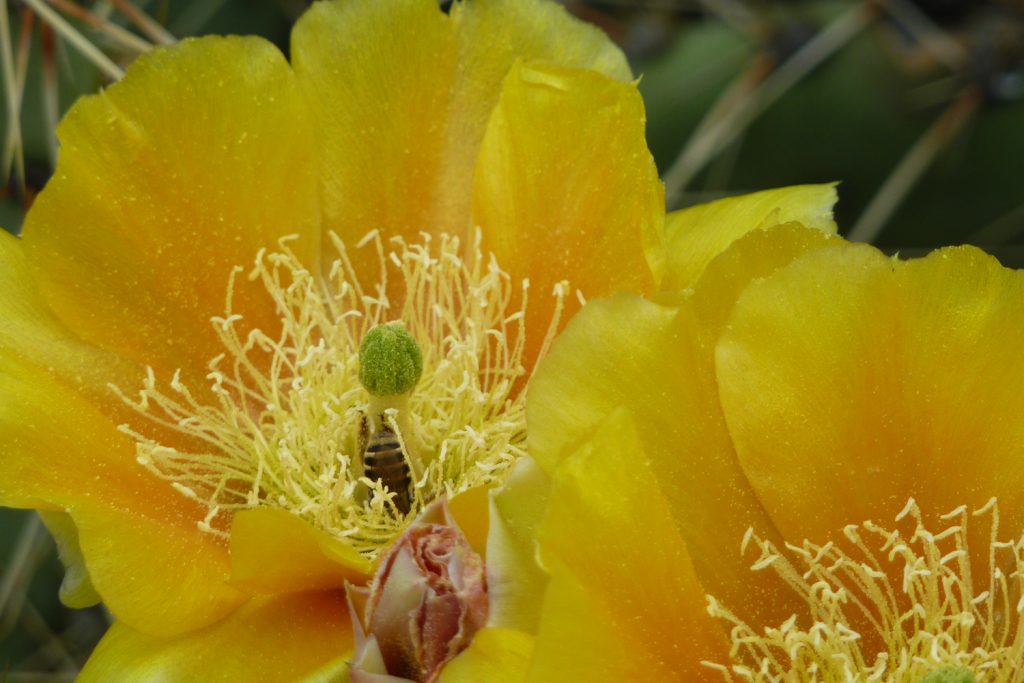
Opuntia englemannii with bee. Photo by Judith Phillips
There are
public pollinator gardens in Albuquerque:
Rio Grande Botanic Gardens on Central Ave at New York NW
El Oso Grande Pollinator Habitat at the east end of El Oso Grande Park on Osuna Road @ Morris NE
Albuquerque Garden Clubs Garden Center in Los Altos Park on Lomas just west of Eubank
Author: Judith Phillips, owner of Design Oasis, landscape designer and garden writer with 30 years experience designing arid-adapted and native gardens in the high desert.