Just as we take shelter when the weather turns colder, so does your yard. Below are our DIY tips for how to prepare your yard for winter.
WATERING
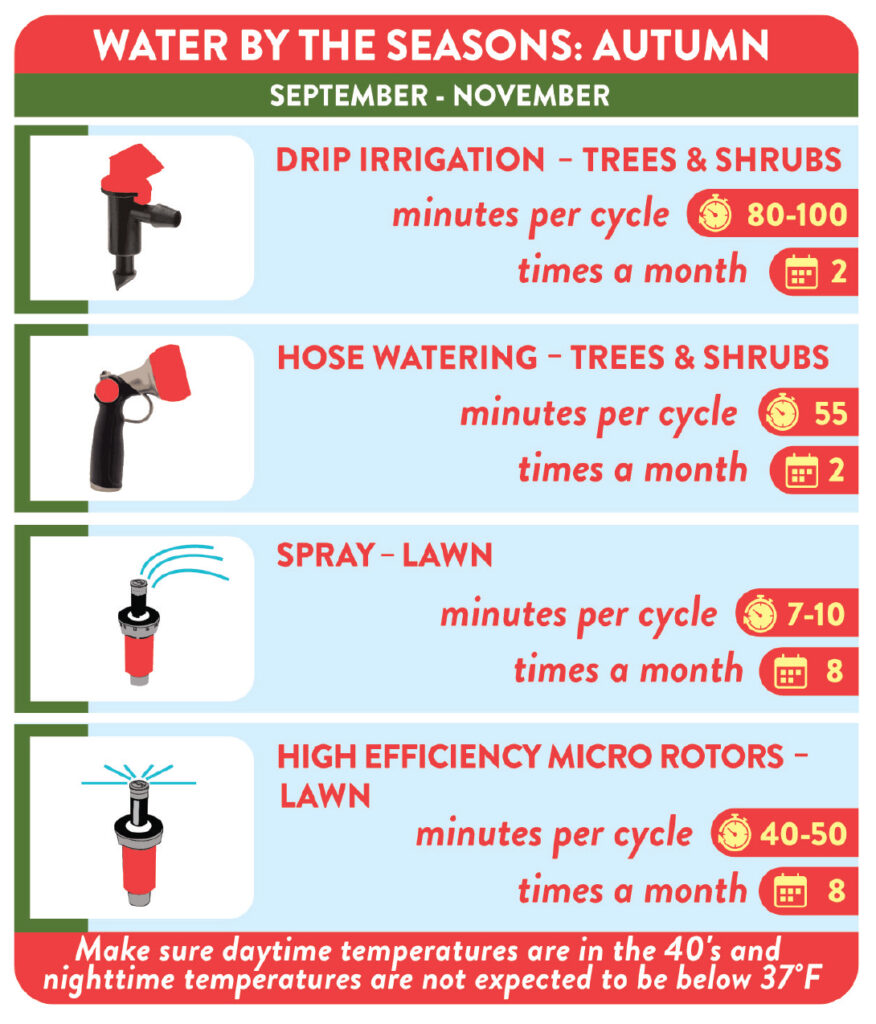
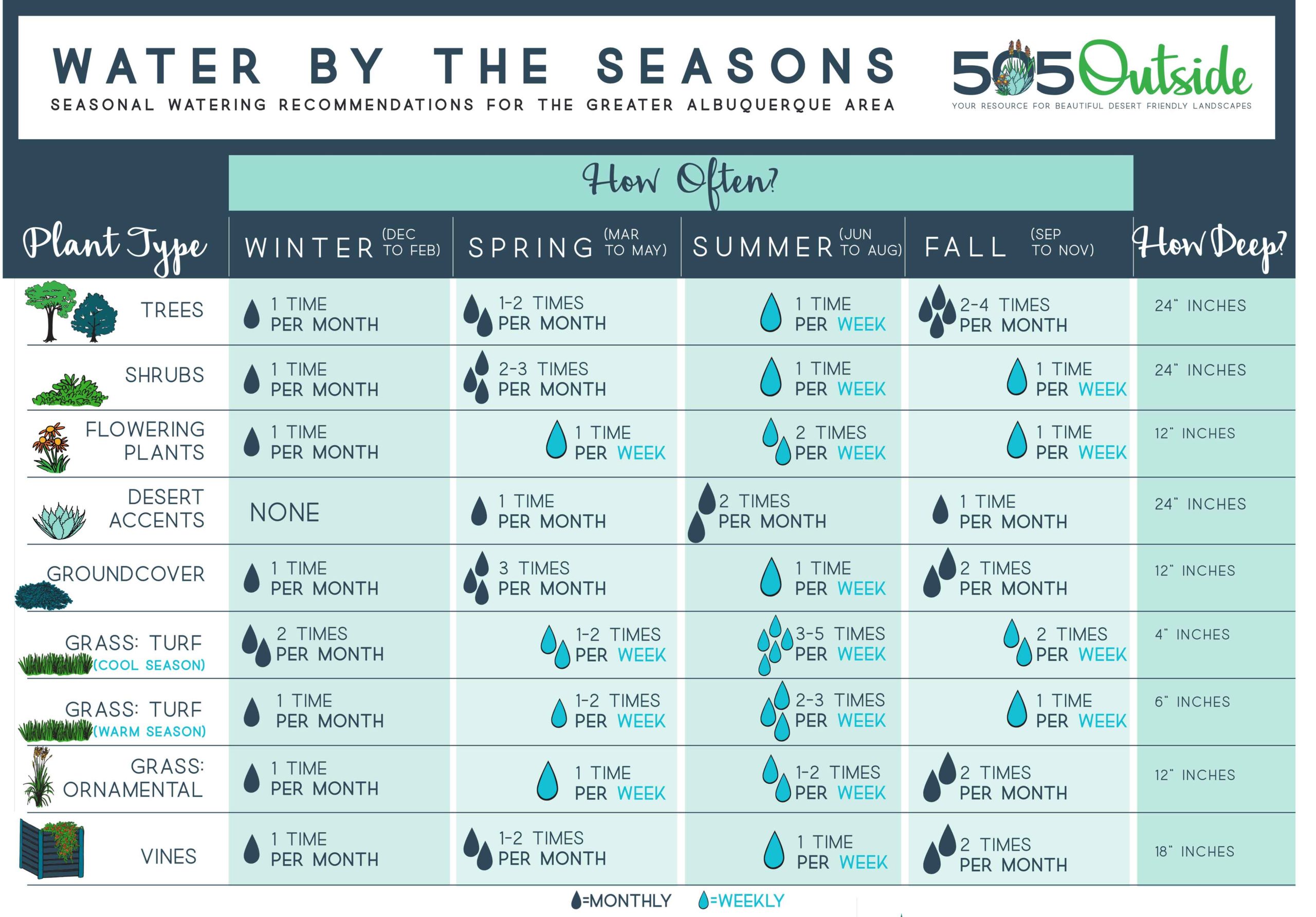
Water on warm days (daytime temperatures above 40 degrees and nighttime temperatures above 37 degrees).
For drip irrigation on trees and shrubs, water twice a month for 80-100 minutes per cycle.
For hose watering trees and shrubs, water twice a month for 55 minutes per cycle.
For spray watering a lawn, water eight times per month for 7-10 minutes per cycle.
For high efficiency micro rotors on a lawn, water eight times per month for 40-50 minutes per cycle.
Skip watering if it rains more than ½ an inch or snows more than 6 inches.
Special Exceptions
Newly installed plants (shrubs planted within one year) and trees (trees planted within three years) are more susceptible to damage from dry conditions and should be watered more frequently than established plants. Water new shrubs to a depth of 18” three times a month in the winter. Try watering trees to a depth of 24 inches twice a month in the winter.
Evergreen trees lose water through their needles in cold, dry winter winds faster than their roots can absorb it. They need more stored-up water going into the winter season to make up for that so, it is especially important to provide enough water in the fall and during dry, warm spells in the winter.
When watering any tree, remember to apply water out to the edge of the tree’s canopy drip line and beyond. Most established trees have a root spread equal to their height and beyond. Water deeply and avoid spraying foliage. Watering to the right depth depends on your specific soil, so you will want to measure how much time it takes water to reach 24 inches deep in your soil. Read this article for tips on measuring watering depth.
LAWNS
Cool Season Grass
Mow your lawn to 3-3.5 inches. Grass left too long over the winter can develop brown patches. Dethatch your lawn by raking it through to remove built up debris.
Rake or blow off leaves that have fallen on your lawn to avoid brown spots. Save those leaves to use as mulch around your garden and trees.
Aerate next time it is warm. Before aerating, run the irrigation and flag all your spray heads or rotors. This prevents inadvertently creating the need for sprinkler repairs! Aerate the whole lawn in one direction and then again perpendicular to the first pass.
Top dress with compost. Compost acts as a fertilizer, adds moisture retention capacity and improves overall soil and root health.
Warm Season Grass
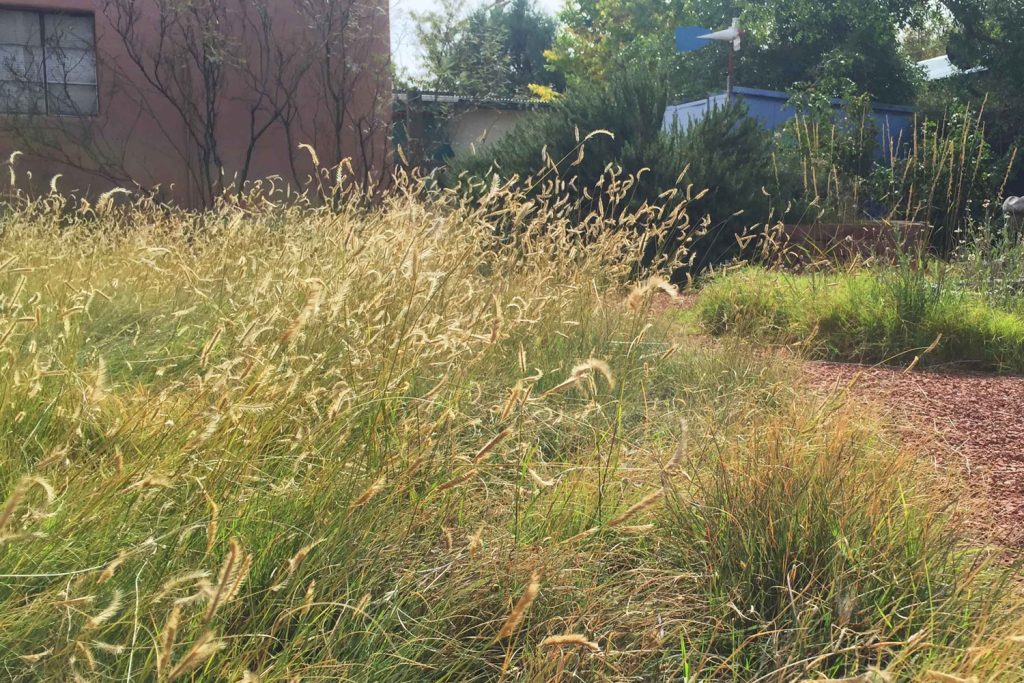
Grass can be left at full height during winter to provide habitat.
TREES
Apply a thin layer of compost, about ½ inch, to provide nutrients.
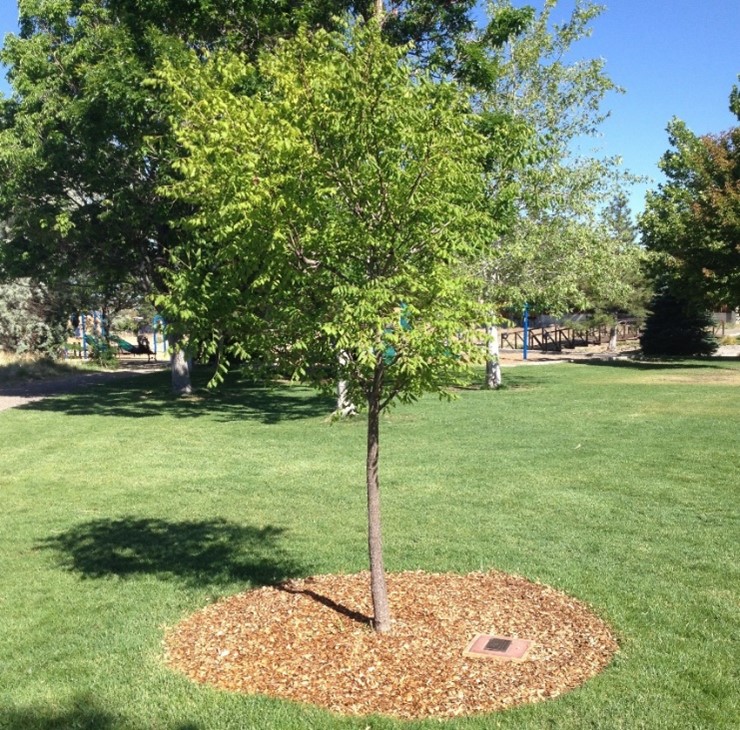
Add 3"-4" of shredded wood chip mulch around the trees drip line but keep away from the trunk base, about 6". Mulch helps insulate the soil from temperature extremes, retains soil moisture and keeps weeds out. Treebates for bulk organic mulch are available.
IRRIGATION
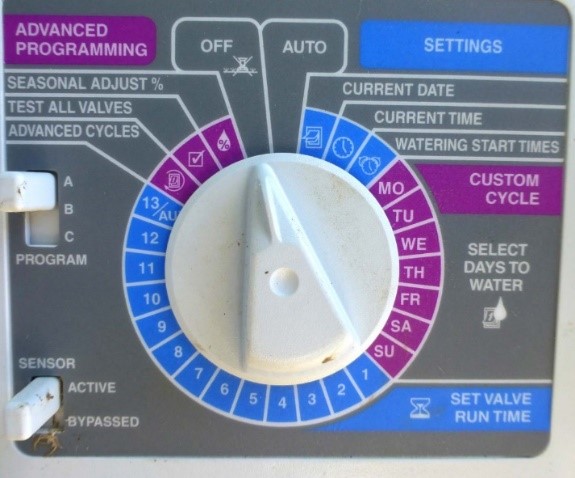
Turn off your irrigation system. Cold temperatures 40 degrees or lower mean it is time to give your irrigation system a rest. To avoid damage to your system, we recommend setting it to the OFF position. Since it is important to make sure your landscape stays healthy in the winter, find a warm day once a month to irrigate. After watering, set your system to the OFF position again. Skip watering if it rains more than ½ an inch or snows more than 6 inches.
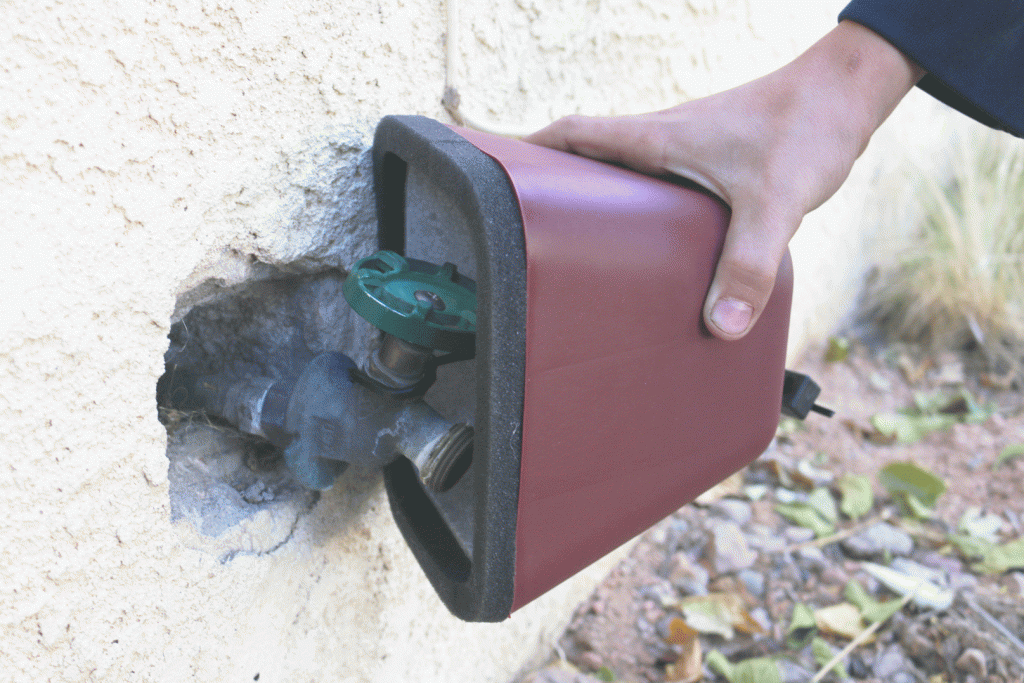
Insulate pipes and faucets in unheated areas. Wrap exposed water pipes in unheated areas (such as a garage, basement, crawl space or space beneath your mobile home) with insulation or heat tape. Be sure to follow the manufacturer’s instructions carefully.
So far this winter season precipitation has been 30% below normal for New Mexico. According to the National Weather Service statewide average day temperatures are 56.6 degrees, which is 2.1 degrees above the normal of 54.5.
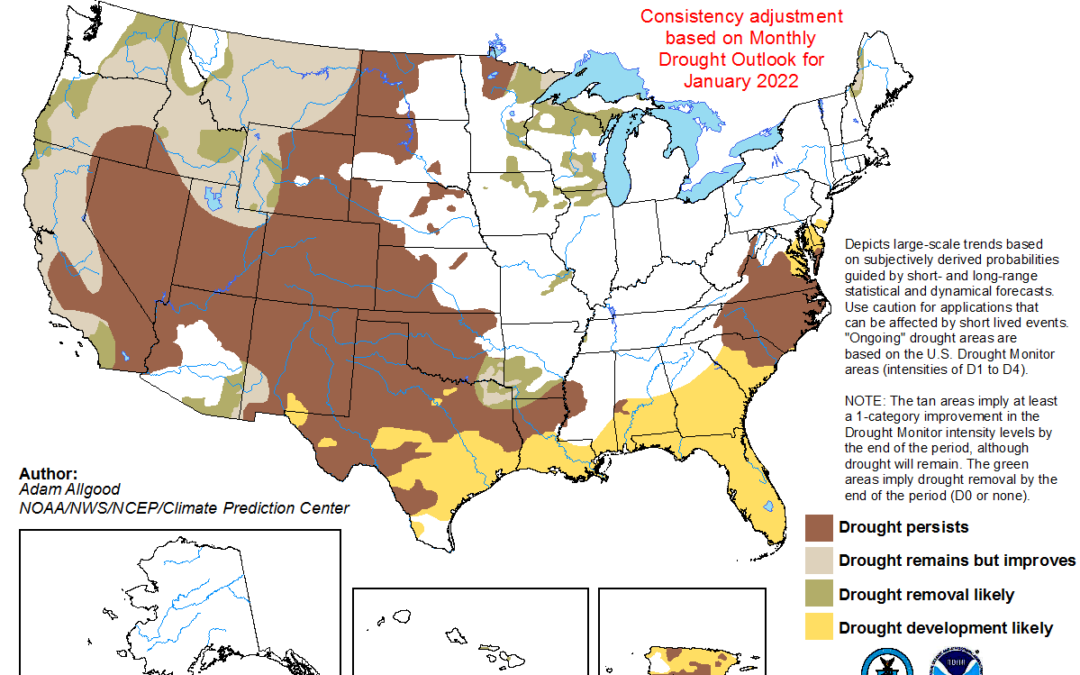
With that said, we are starting out the year with intensified drought conditions. Your landscape needs more care and attention when we are facing higher temperatures and low precipitation.
Here are a few suggestions for minimizing plant damage and mortality in times of drought:
Water mid-morning (around 10am) with a hose when it is above 40F. This way, water can soak into the ground and be absorbed by plants before the evening’s freezing temperature returns. Disconnect your hose and roll it up to drain after watering.
Don’t prune back shrubs and flowering plants yet. Let any additional plant material act as insulation that helps keep plants protected and, ultimately, healthier.
Top dress planters and beds, or around shrubs and trees, with your leaf litter or a 3” layer of shredded wood chip mulch. This will help insulate and regulate the root zone. By doing this, less water is needed to keep plants healthy.
Watering isn’t always needed in the winter when landscapes are dormant, but in times of drought follow this watering advice to keep plants healthy:
Trees and shrubs: Water plants deeply, trees especially, at least once this month unless we receive more than a half inch of rain or more than 6″ of snow.
Turfgrass: Water your lawn every other week this winter. NMSU conducted research on winter lawn watering and determined that in order to maintain optimal year-round health, your lawn needs to be watered twice a month in the winter.
Evergreens: Conifers are particularly susceptible to wind, which dries them out. Water them deeply a minimum of one time this month, but you’ll want to add about ¼ more water to evergreens than to other trees or shrubs.
Author: Carlos Bustos, Conservation Manager & Richard Perce, Irrigation Efficiency Specialist with the Water Resources Conservation Department for the Water Authority. Have a question about the article? AskAnExpert@abcwua.org
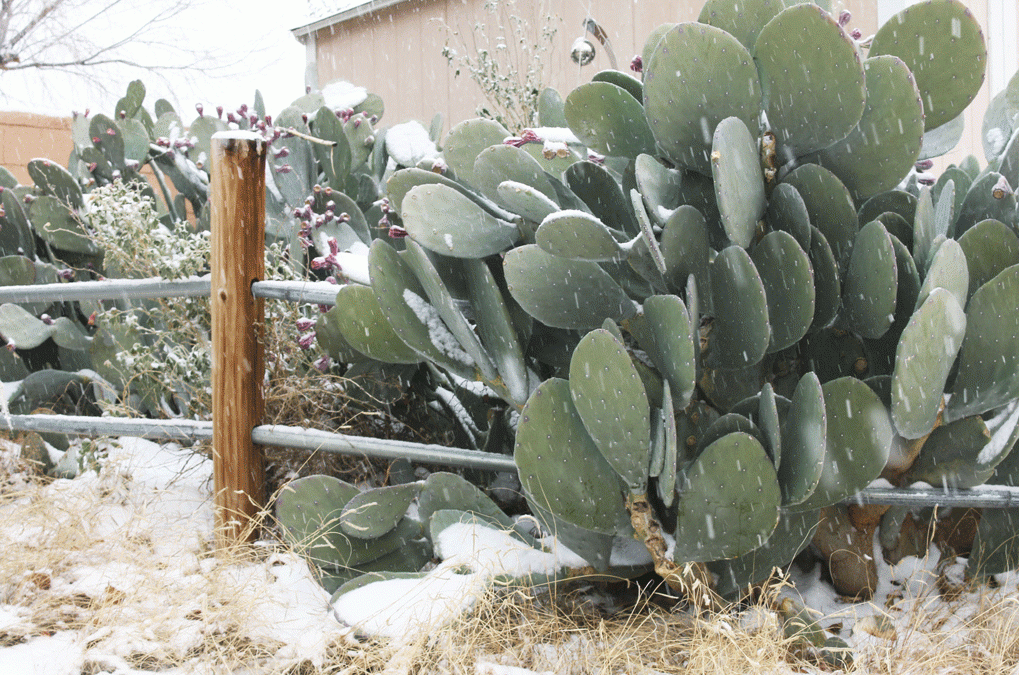
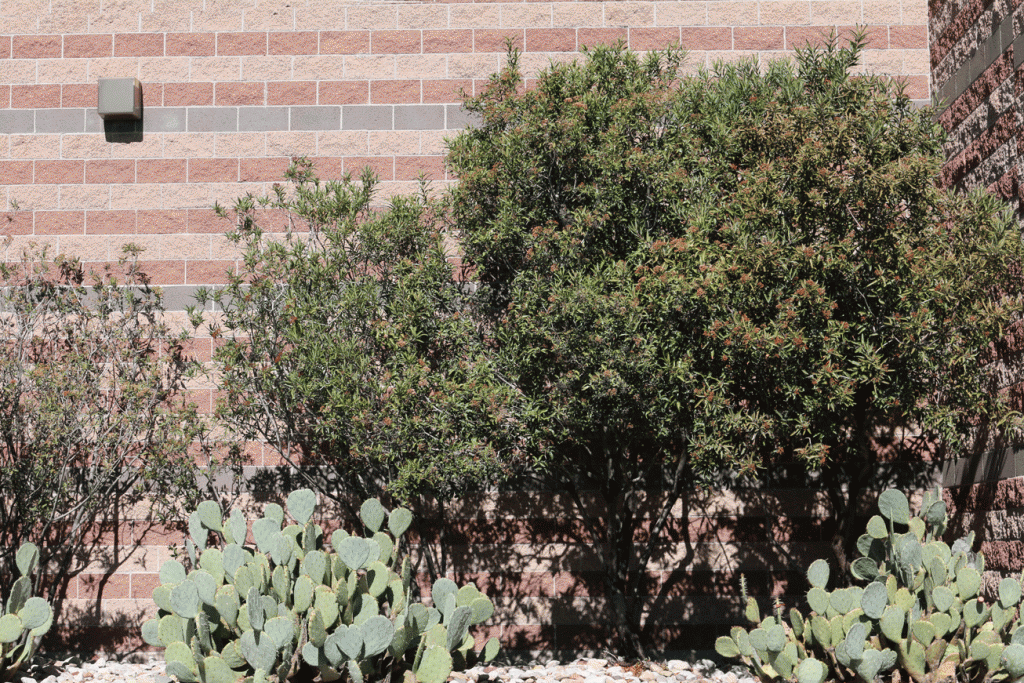
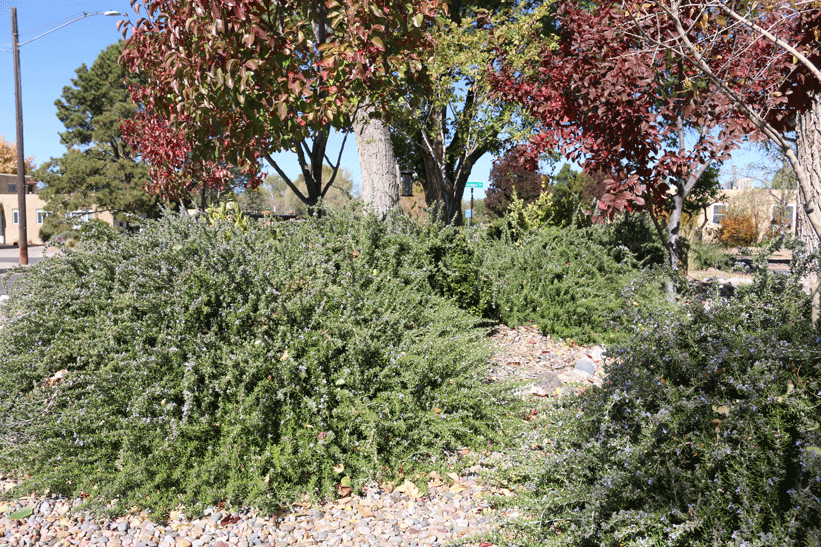
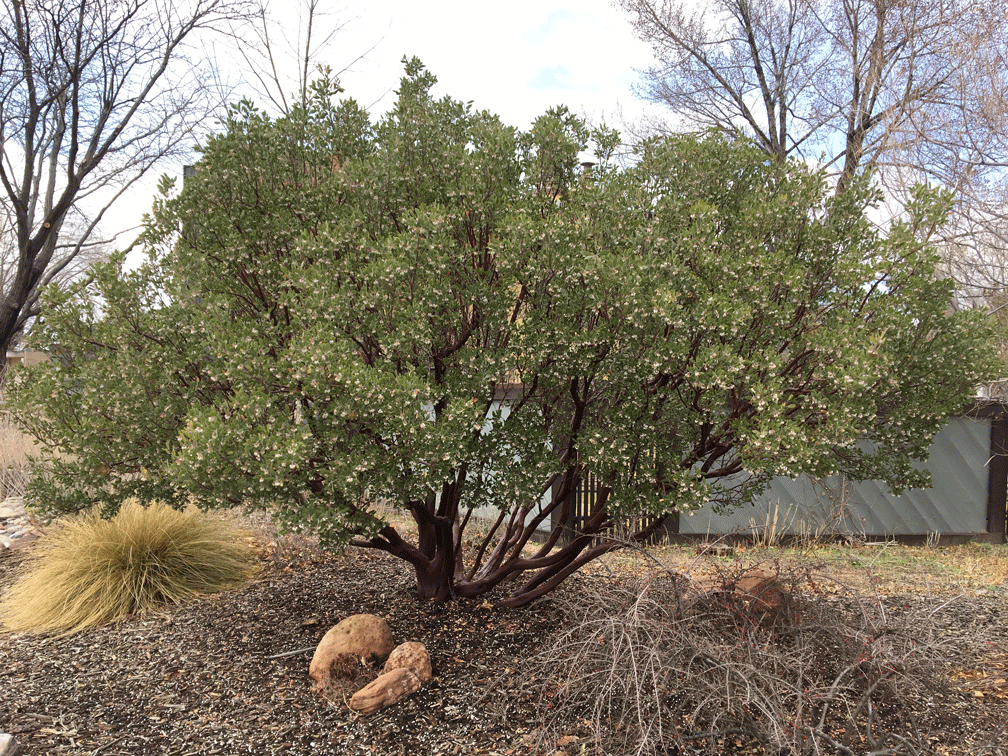
When we think of the word evergreen, many of us think about pine trees, cedars and junipers. However, an evergreen is simply any plant that remains green all year long. These plants are welcome fixtures in our winter landscapes, too. 505Outside highlights these essential elements of the greater Albuquerque area landscape by asking local plant experts which ones they love. Below are some of their favorites.
When the last of the yellow and purple perennial colors fade away in the fall, these (and other) evergreen plants provide the structure that holds landscapes together through the winter months. Don’t forget to include evergreen plants in your landscape for year-round interest.
The Water Authority’s rate structure serves two purposes:
1) To recover the operational costs associated with running a utility (e.g., delivering water to our customers, collecting and treating wastewater, and maintaining our infrastructure to ensure reliable service); and
2) To encourage all our customers to conserve.
In order to meet both of these goals, there are two components that determine your bill each month.
The fixed charge. This is determined by your meter size and stays the same every month. Larger meter sizes have a higher fixed charge.
The commodity charge. This is determined by how much water you use each month, so it changes. The commodity charge for each unit of water (1 unit = 748 gallons) is the same for all customers, so as you use more units the overall charge increases.
For most customers, their winter water bills are the lowest of the year. And yet, it is very important to be aware of your winter water use and how it relates to your water rates.
Based on your use during winter months of December-March, the Water Authority calculates your winter water average (WWA). Your winter water average is used in two rate calculations.
1) During the irrigation season (April – October), your WWA sets your conservation average which determines how much water you can use before conservation surcharges are assessed to your account. For example, if your WWA is 6 units (1 unit = 748 gallons), you can use up to 12 units per month before any conservation surcharges are assessed. This might make you think that using more water during the winter will help you save money on your bill during the summer. BUT….
2) The WWA serves a second purpose which is to determine your sewer rate for the entire following year. The Water Authority assumes that all the water you use during the winter (Dec – March) is going into the sewer system after use (rather than onto your landscape). So, your sewer charges are based on how much you used during the winter.
Use more during the winter and not only will you have to pay for the water you used and probably didn’t need, but you’ll also be driving your sewer rates up for the entire following year.
Some things you might be wondering about now that you know about the WWA and how it is calculated:
For customers with a very low winter water use, the Water Authority sets their WWA at 4 for the purpose of calculating their irrigation season surcharges, but they are charged for sewer usage based on their actual winter water use.
For customers with a very high winter water use, the Water Authority caps their conservation average at 15. This was established so that high water users could not avoid incurring irrigation surcharges.
You can find your WWA on your water bill under the heading “Winter Average”. For most customers their Winter Average and their Conservation Average are the same. But, for customers with a very low or high winter usage, their conservation average will be adjusted as described in the two bullets above.
There is a “low use” discount to reward customers who conserve all year long. During the billing months of April – October, if you use less than 150% of what all the other customers with your meter size used on average during the winter, you receive a 50% discount on the outdoor water use commodity charge portion of your bill.
If you have a leak during the winter, it is important to contact the Water Authority’s Customer Service Division at 842-WATR (9287), Option 0 and review your account with a Customer Account Representative for any applicable adjustments.
A second article on water rates and conservation surcharges will follow in the spring!
Author: Katherine Yuhas, Water Resources Manager with Albuquerque Bernalillo County Water Utility Authority