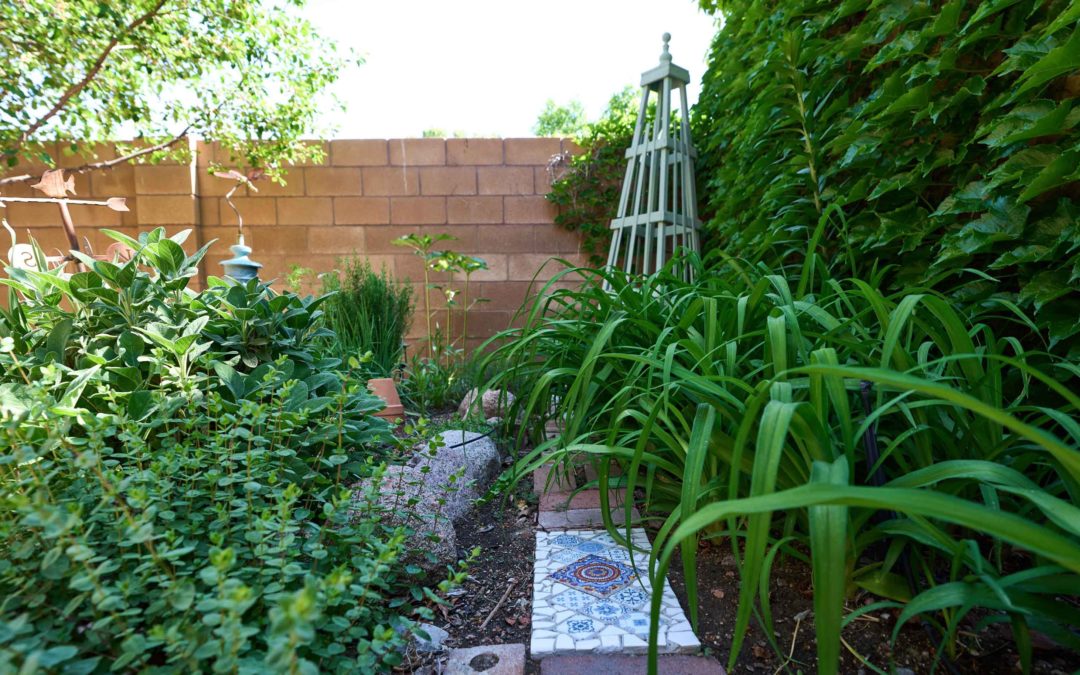
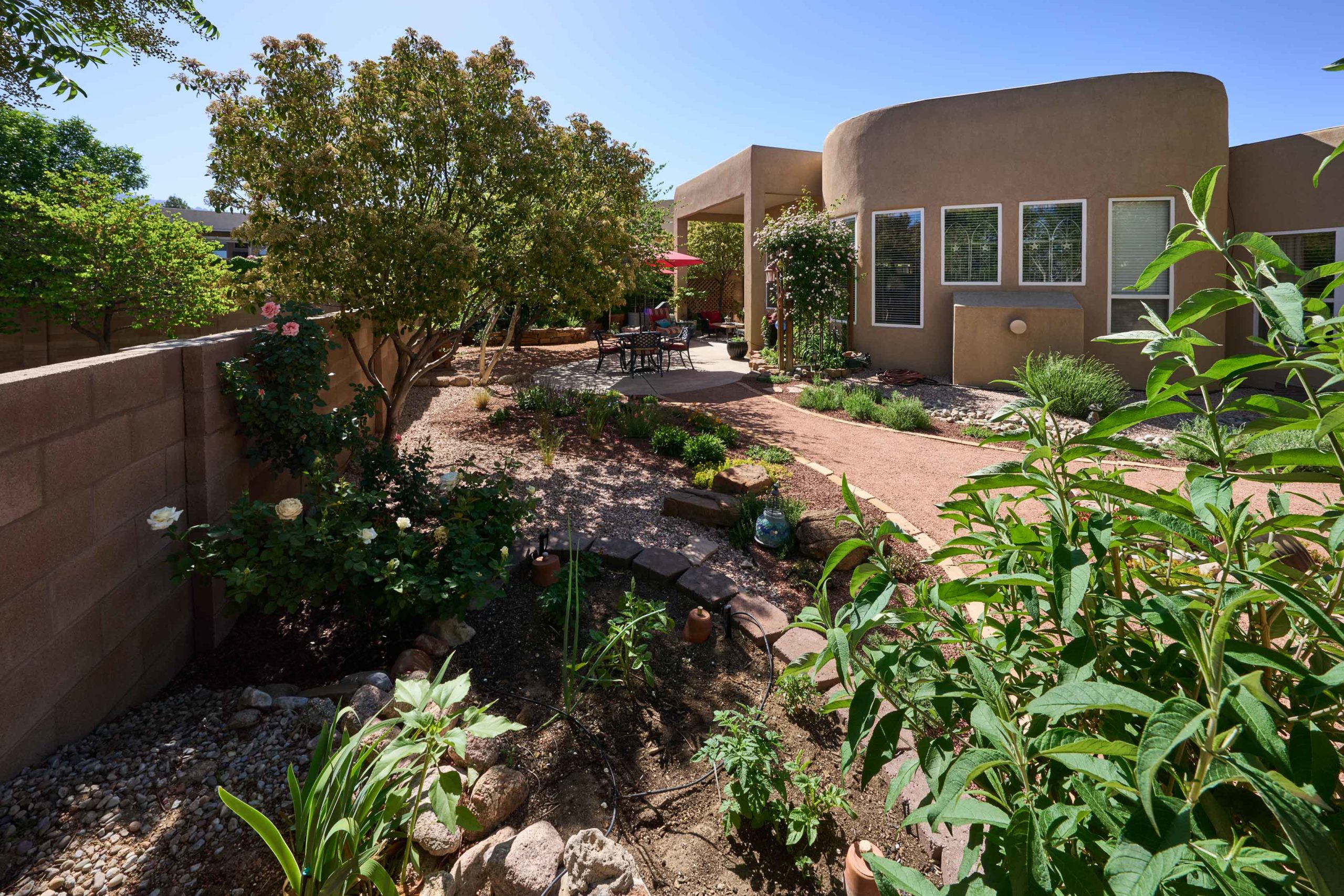
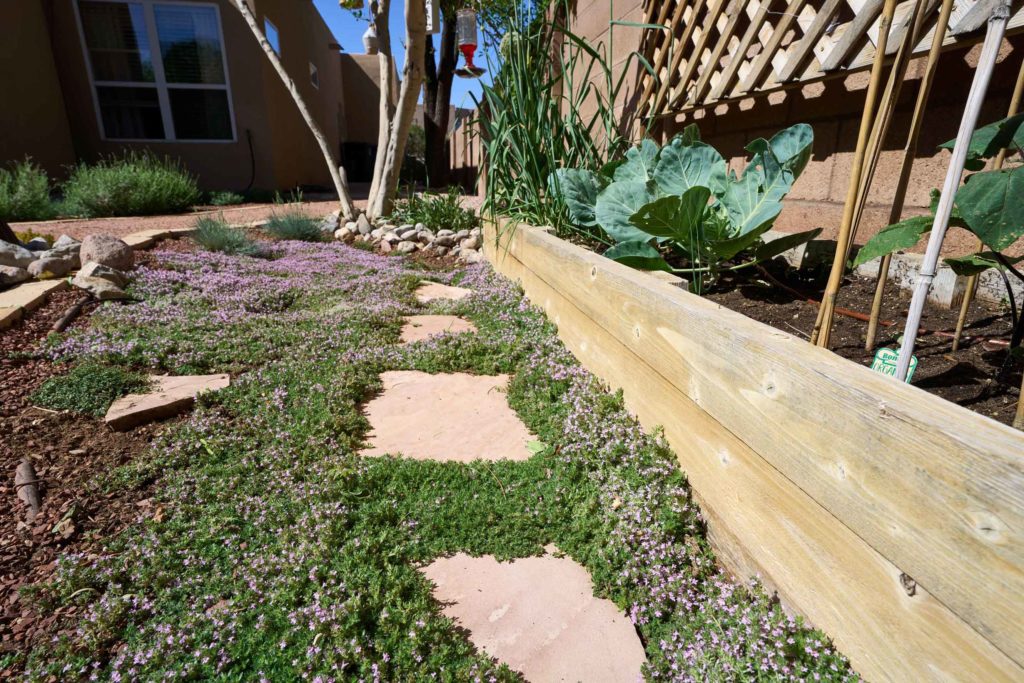
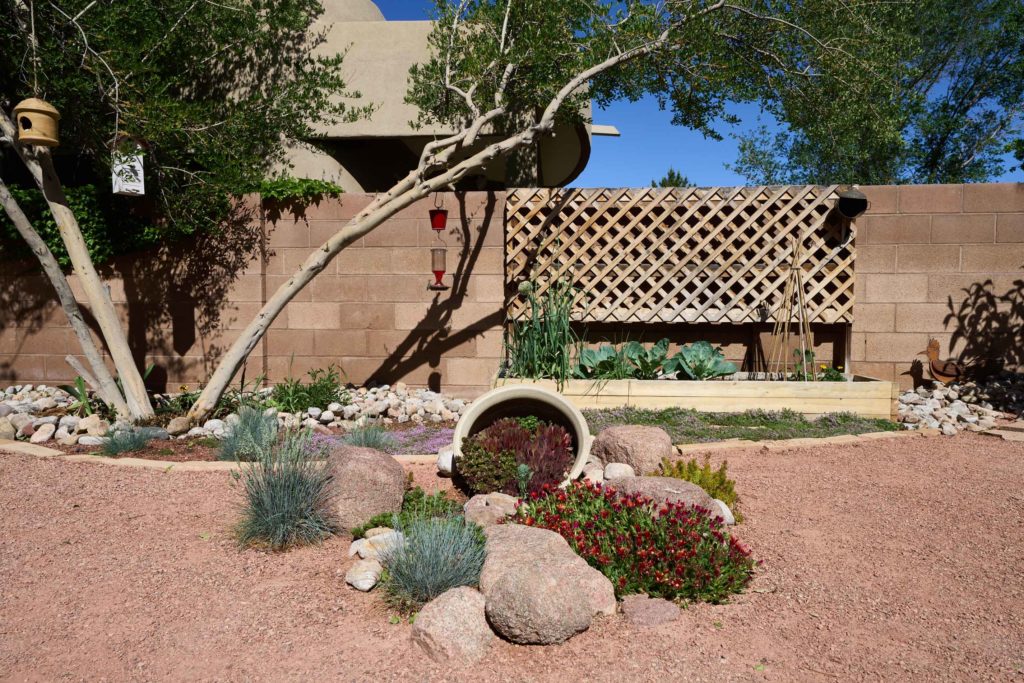
Congratulations to the ten winners of our first annual Water Authority Desert Friendly Landscape Contest! Thank you for sharing your beautiful gardens with us. They will be an inspiration for others to make the switch to desert-friendly landscapes.
Succulent Garden Wisdom
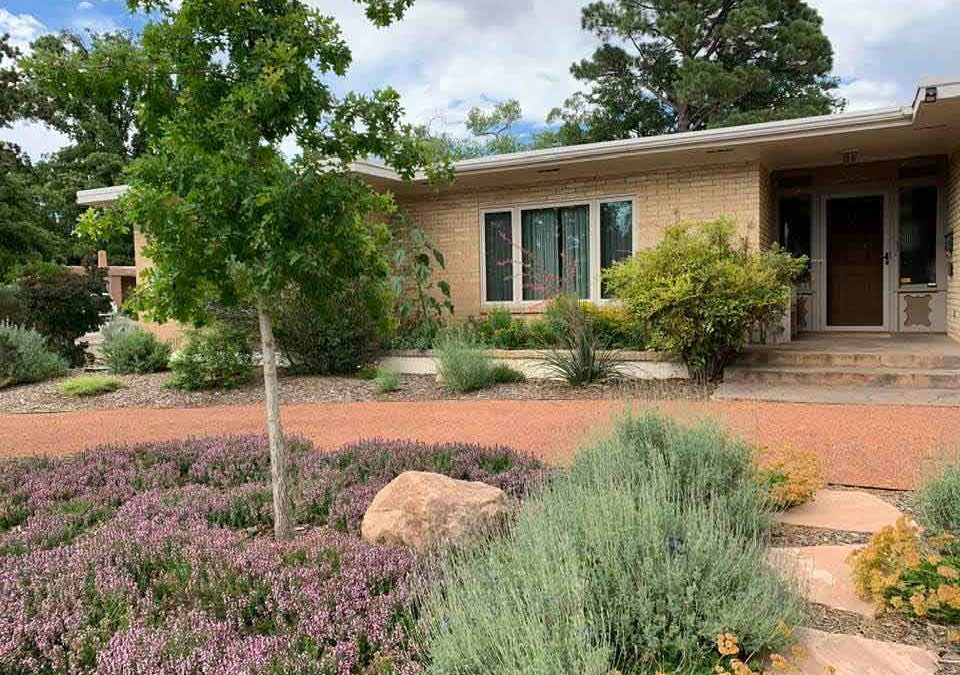
What once was a high-water use turfgrass lawn in the Northeast Heights is now a xeriscape garden with a focus on succulents. Janice transformed 550 square feet of turf into a diverse landscape complete with low-water use trees and shrubs and a beautiful succulent garden. She loves that there is, “No more mowing! No more trimming edges! No more feeding with nutrients! No more grass!”
When selecting plants, Janice turned to a variety of resources, including 505Outside, the Xeriscape guide and avid gardener friends. She hired a professional landscape company to install her new drip system. “The drip system is my go-to irrigation system as recommended by various professionals,” Janice said. “My plants and trees are happy following the 505Outside seasonal watering recommendations.”
Succulent beds are her favorites, and she looks forward to adding new succulent species each year. Janice enjoys the diversity of plants in her yard and how they change colors throughout the seasons.
What started as a way to reduce water usage has evolved into a renewed love of the outdoors. Janice keeps track of landscape seasonal transitions, rain events, plant changes and teachings in her “Garden Wisdom” journal. “A garden can teach a lot about flexibility, patience and calmness,” she added.
Unearthing Wildscape
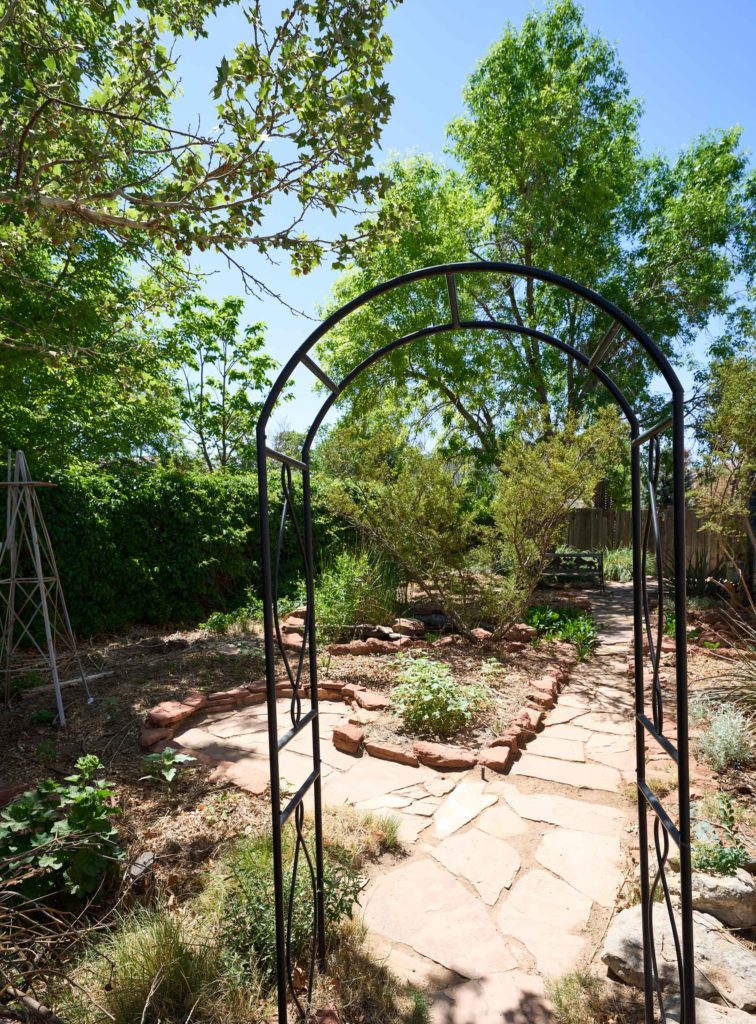
Local scientists Paul and Teri started with high-water use turfgrass and trees when they set out to make a wildlife habitat in their yard in the North Valley. They removed all the non-native grass and have been slowly replacing it with low-water native plants. Areas that haven’t yet been planted are covered with 3"-4” of organic mulch, which is an easy way to prep the soil before they’re ready to plant.
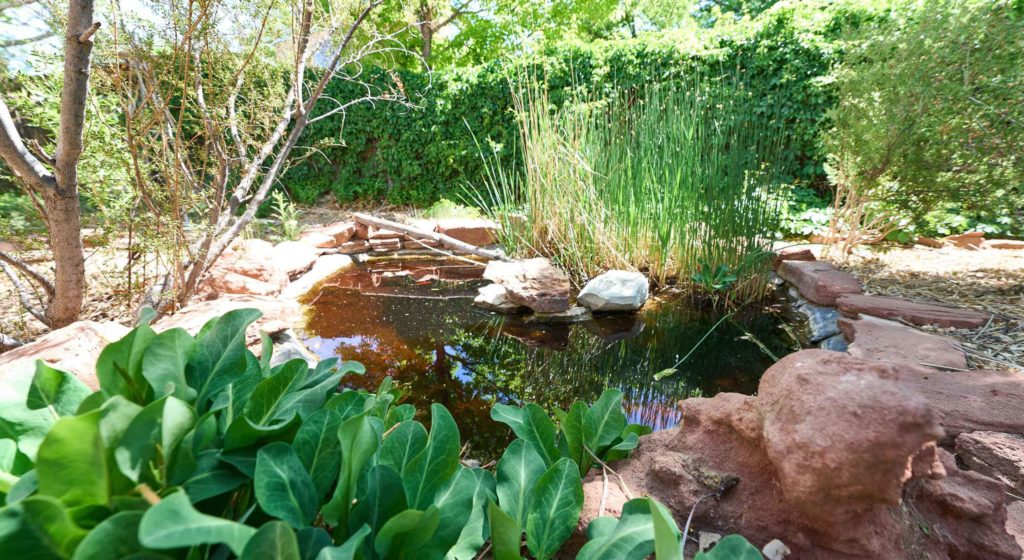
A pond was added to create a habitat for western toads. Other creatures have joined their landscape, and it is now a recognized Fish and Wildlife backyard refuge.
Part of the scientific work that Paul and Teri do involves mapping vegetation across the Southwest. Their extensive knowledge of local ecosystems has helped them select native plants that will thrive in different environments and through our changing climate, especially during times of drought. “Wild native plants can be very beautiful and add value to gardens because they remain resilient thru changes,” they said.
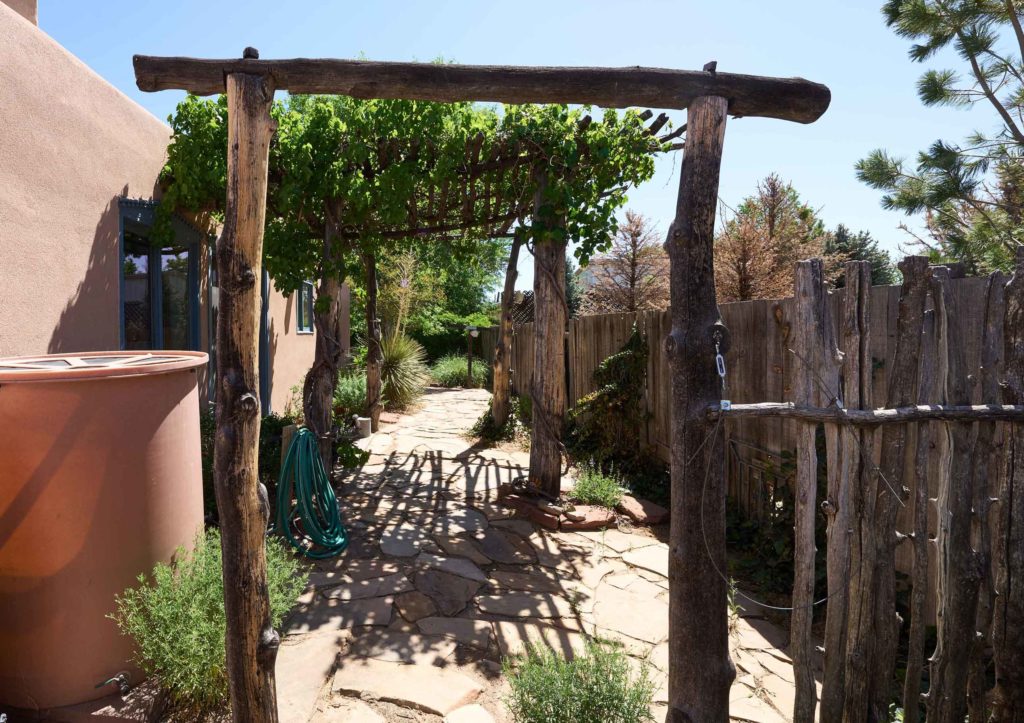
Their yard is set up with a drip irrigation system that waters as needed. During rainstorms rain barrels collect up to 1,500 gallons of water, which supplement their irrigation system.
“We are proud to minimize water use while maximizing pollinators, edibles and the abundance of plants,” they said.
The desert friendly xeriscape conversion incentive rebate has been around since the early ’90s and is still going strong. Millions of square feet of thirsty lawns have been converted to healthy xeriscapes that save billions of gallons of water. Although the xeriscape conversion rebate’s application process has a few more steps than our other rebates, our experts are here to help you every step of the way. Remember to contact our xeriscape inspector, Amos Arber, before you stop caring for your lawn or start tearing it up.
Below, Amos answers some of the most frequently-asked questions.
Q: I want to replace my lawn with gravel because I’m trying to save water. Why do I need to include new plants in order to be eligible for a rebate?
A: The xeriscape rebate is meant to incentivize our customers to add a 50% coverage (at maturity) of new plants, drip irrigation, and mulch (gravel, crusher fines, wood chips) to encourage healthy xeriscapes. Plants provide a range of benefits, such as shading the ground to help our city stay cooler, providing wildlife habitat and keeping our neighborhoods looking beautiful.
Q: Do I have to convert my entire lawn to get the rebate?
A: No. Projects can be done in phases or only part of the lawn can be converted as long as it is at least 500 square feet.
Q: Will I receive a check from the Water Authority when the project is complete?
A: We do not issue checks. All rebates are credits towards your account. Participants do not have to pay on their account until the rebate is used up, which may take more than one year.
Q: Can I include a patio or pathway in the project area?
A: Yes. Plants do not have to be spread evenly throughout the former lawn area. They can be denser in some areas to accommodate a small patio or pathways.
Q: I want to replace my lawn with artificial turf. Can I get a rebate?
A: If the area of fake grass is small and you can fit in the required amount of plants in the rest of the project area, you can get the rebate. If the area of plastic lawn is covering all or most of the former living lawn area, you will not be able to meet the rebate requirements.
Q: Do I have to hire a professional to do the design or installation work?
A: No. We encourage folks to do the designing and installation work themselves and have many helpful resources. Not only can DIY projects save money but they can empower homeowners and help them feel comfortable performing necessary landscape maintenance.
Q: I’d like to convert my lawn, but I have no idea how to get started. What do I do?
A: Check out the Resources and Landscape Tips tabs on our website. We have several great articles on everything you need to know to get started. Another option is to ask our xeriscape expert Amos Arber (505-208-2015) to meet you on-site. He will explain the rebate process, tell you about important site conditions to consider, offer plant and design ideas and help you put together a list of questions to ask a contractor.
Q: Is it okay to use plants I’ve grown myself?
A: Yes. A good way of saving money is to transplant or propagate your own plants.
Q: Do you have any tips for doing a project on the cheap?
A: We encourage folks to do the projects themselves since DIY projects can save at least 75% of the cost of hiring a contractor. Other ways of saving money include using free woodchip mulch that’s available from tree services (gravel and weed fabric can be expensive) and purchasing bulk organic mulch to receive an extra $100 rebate. When purchasing container plants, compare costs. For example, a five-gallon rosemary plant gets the same number of plant points as quart-sized rosemary but costs 80% less. Also consider using recycled materials, such as broken concrete pieces, instead of expensive flagstones.
Q: I’ve already completed a xeriscape project but did not apply for a rebate or get my lawn inspected before it was removed. Can I still get a rebate?
A: Unfortunately, no. We need to document the existing lawn before it is removed. This ensures that our customers’ funds are used only to convert thirsty lawns.
Q: I don’t have a lawn but want to fix up my yard with new xeric plants. Can I get a xeriscape rebate?
A: No, however, we have lots of rebates that might apply for other yard renovation projects such as the Treebate.
Q: Some of the plants I want to use are not on the master plant list. Can I use those plants in my project?
A: If the plants you want to use are cultivated varieties of plants on our master plant list (plant names are listed in quotes), you can use them. If not, you are welcome to install them in your yard, but they will not count towards the required plant total for your project. Our master plant list contains over 600 plants proven to thrive in our area for all landscape types and conditions.
Author: Amos Arber, Xeriscape Rebate Inspector with the Water Resources Conservation Department for the Water Authority. Have a question about the article? AskAnExpert@abcwua.org Want to start on your Xeriscape conversion project today? Click here to get started.