
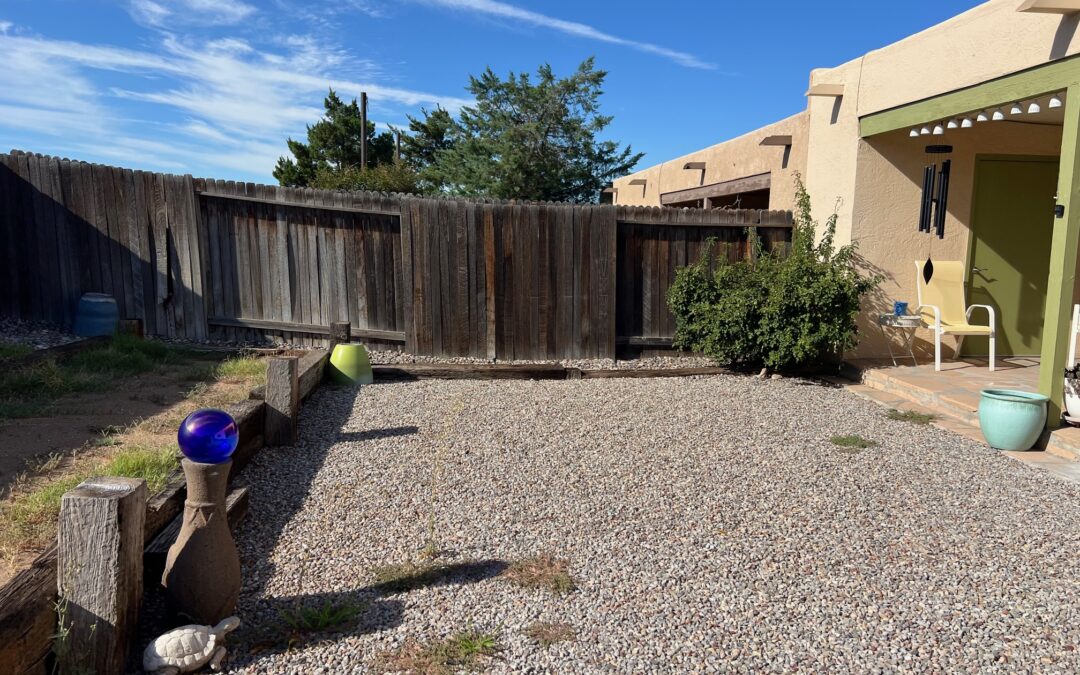
Maybe you recently moved into a house that has never been updated — think avocado tile in the bathroom and shag carpet in the sunken living room. You look outside and the theme continues — a sea of gravel and railroad ties. As with interiors, home exterior fashions and landscaping styles change over time. We once thought of gravel as low maintenance and tidy, but now are finding out isn’t the best choice as far as sustainability and community health. Thankfully, through the efforts of local designers, tree experts and Water Authority resources, there is a sea change in understanding the problems that gravel, weed fabric and plastic sheeting can cause in our neighborhoods.
Gravel soaks up heat and radiates it back into the neighborhood, warming up the city. We’ve also found out that gravel and weed fabric don’t discourage weeds, instead their seeds and dust settle on top, sprouting in no time. This leaves few options other than using herbicides, because pulling them can be difficult once they’re rooted in the weed fabric, and using a hoe is difficult in gravel larger than crusher fines. Additionally, tree and plant roots need two things: water and oxygen, neither of which permeate through old weed fabric clogged with silt. Wanting to install some flowering xeric plants near your new front door? That’s going to be a challenge — moving the rock out of the way, cutting the weed fabric and finding a way to install drip irrigation under the existing weed fabric and rock. Perhaps you’d like to invite pollinators to your new yard? Well, our native (and solitary) ground nesting bees won’t find a home in your yard because they can’t burrow through the weed fabric or rock to nest in the soil.
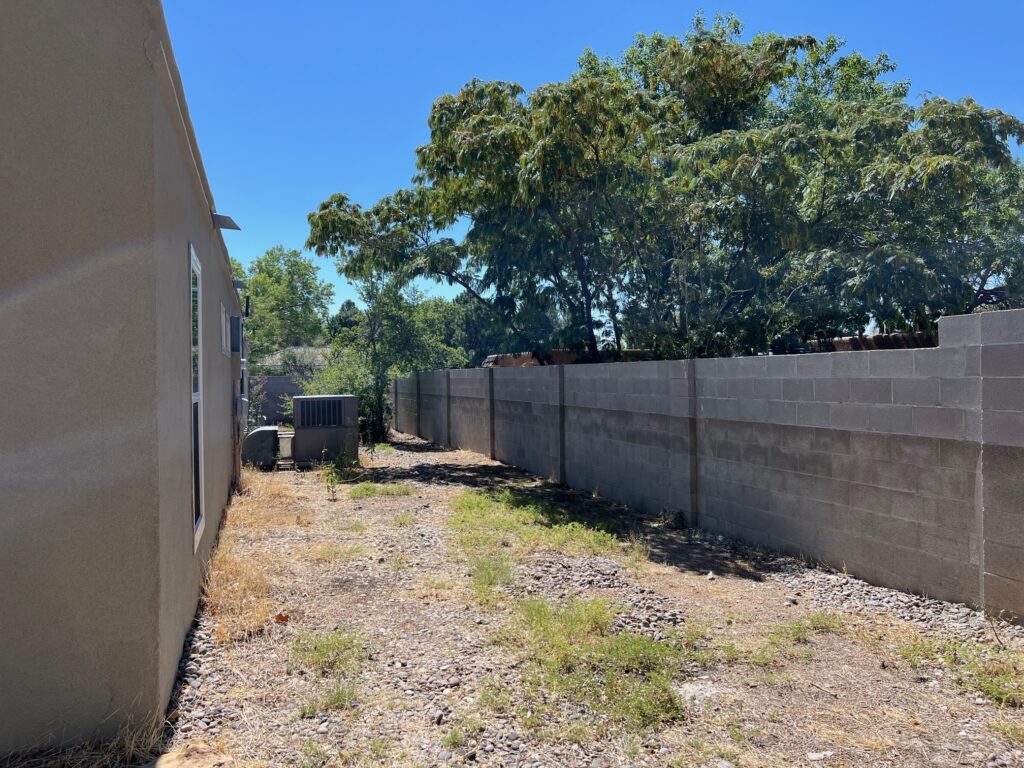
But all hope is not lost. Whether you’re aiming to remove all the gravel, just take out some around existing trees to improve their health or make your outdoor living space cooler and be sure water is soaking though the old weed fabric (or worse, plastic), there is help.
- If you have a limited budget and time but want to do some good, use a piece of rebar to poke holes in the weed fabric around your existing plants. This will ensure they can use some of our precious rainfall and allow for oxygen exchange.
- Have an existing tree that’s suffocating in heat absorbing rock? Time to grab the wheelbarrow and a shovel. If you’re removing small sections at a time, start with areas with the dripline of the tree. Here is where weed fabric is actually useful: In good condition it can make the gravel removal easier. Lift up the fabric carefully, using it to form the rock into piles that can be scooped up more easily. A square end shovel can be useful here because it’s less likely to rip the fabric underneath as you work. If you need to remove large rock like cobble, I recommend sitting on a protective pad and doing it by hand. Have a 5-gallon bucket or wheelbarrow right next to you to put it in. Some homeowners construct a basic wooden frame out of two-by-fours and wire mesh to make a screen to separate the gravel from dirt. Size it to fit over your wheelbarrow so you can transport the dirt more easily.
Albuquerque’s three convenience centers accept about two wheelbarrows full of rock (or dirt and concrete). Be sure not to take too much because you may be turned away. For larger amounts, you can try the Sandoval County Landfill in Rio Rancho or Southwest Landfill on Albuquerque’s southwest mesa; be sure to call first to confirm they will accept it. Alternatively, many homeowners are looking for gravel for erosion control under downspouts so try placing a FREE add on Craigslist, Facebook Marketplace or Nextdoor. It will most likely get picked up in no time.
- Now if your whole yard is full of gravel, you’ll probably need to call in someone who is better equipped, someone with a skid steer (Bobcat). Front yards are easier, but backyards can usually be done with a smaller machine if access is limited.
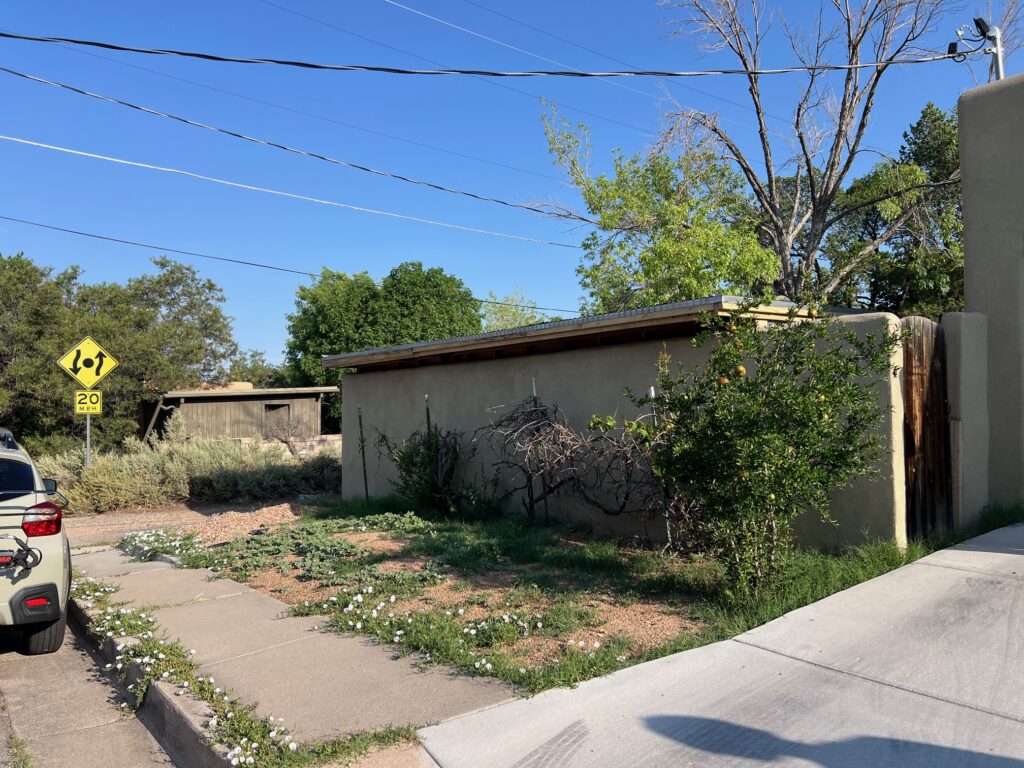
The obvious question to follow is, what’s next? We recommend wood chips spread to a depth of 4 inches. This mulch (without weed fabric) helps improve the soil over time and allows the tree and plant roots to breath. It also cools the environment a few degrees compared to rock. Several suppliers in the Albuquerque area sell mulch, and they all deliver. They’ll be happy to tell you how much you need if you know the dimensions. Additionally, several places offer free or discounted mulch. Call up large tree removal companies and see if they have any or head to the East Mountain Transfer Station in Tijeras and pick up a cubic yard for $5. There is also a great website called ChipDrop that connects tree service companies with homeowners who want mulch — you may have to wait a while for the stars to align but it’s totally free.

If you’d like to speak with our experts for more tips on removing gravel and having a healthy desert-friendly yard, reach out to us at AskanExpert@abcwua.org
As in most fields, change is slow. Older ways of thinking permeate the landscape industry, but some steps in the right direction (like wood chips instead of gravel) can make a difference over time.
Learn more here:
4 Common Myths about Organic Mulch,
Xeriscape Conversions that use Wood Chip Mulch
Tips to Keep Mature Trees Healthy
