
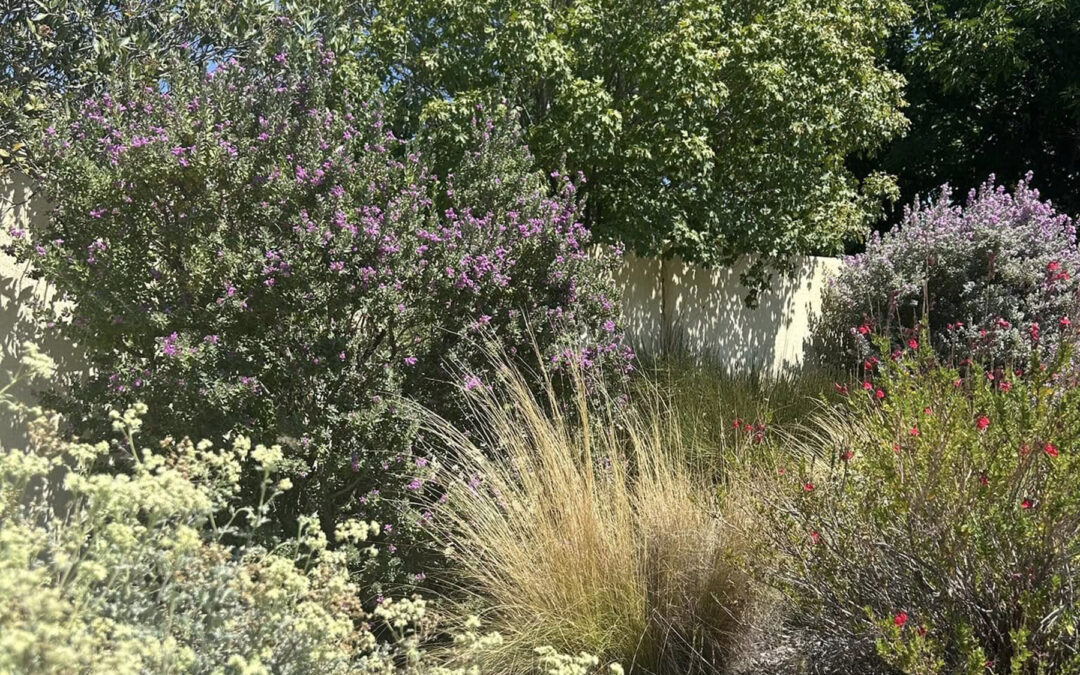
Who doesn’t love a good plant list to start off the year? Local nursery industry expert with over 50 years of experience Andrew Lisignoli shared with us his favorite new and underutilized plants.
COLORFUL SHRUBS
One group of plants Lisignoli recommends are a number of species (and cultivated varieties) of the genus leucophyllum. There are many different options that offer unique features but Leucophyllums generally love hot exposures (like next to a south facing wall) and there are two types: mostly evergreen and what some would call ‘ever-grey’ providing year-round interest in a sage green plant with blooms most vibrant after a rain. In fact, one of its common names is ‘barometer bush’ because it often blooms after a rain, when the relative humidity is high. Other common names are Texas Sage and cenizo. We are showcasing four cultivars; each offers a variety of different flower and leaf colors and sizes. All of these species ‘attract butterflies and bees, providing nectar for native pollinators.’ Additionally, after blooming these shrubs cover the ground with bright confetti of the spent flowers. It is low maintenance, plant it in a place where it has enough room and you won’t have to prune it.
Leucophyllum langmaniae, ‘Lynn’s Legacy’
5’ H x 5’ W, semi-evergreen, full sun, low water
Bloom color: Lavender
The most popular of the Leucophyllums, this evergreen shrub grows moderately fast, forming a dense, rounded mound of sage green foliage. Masses of lavender flowers are produced up to 3 or 4 times in the summer and fall. This selection is not as dependent on changes in relative humidity for flowering, compared to others in the genus, which means that it blooms more often during the dry months.
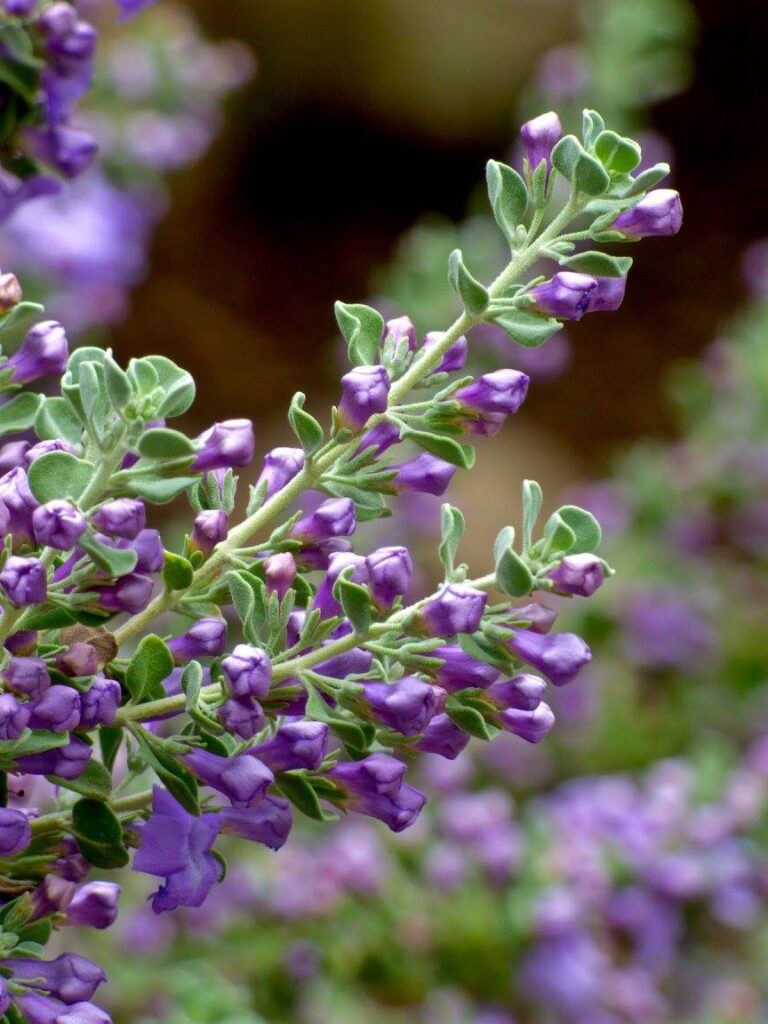
Leucophyllum frutescens ‘Compacta’ Compact Texas sage
3’ H x 4’ W, semi-evergreen, full sun, low water
Bloom color: Pink
This evergreen shrub forms a dense, rounded mound of light gray foliage. It produces masses of pink flowers after it rains and when the humidity rises in the summer and fall. Plant in full sun and reflected heat exposures. This selection is fairly tolerant of heavier clay soils.
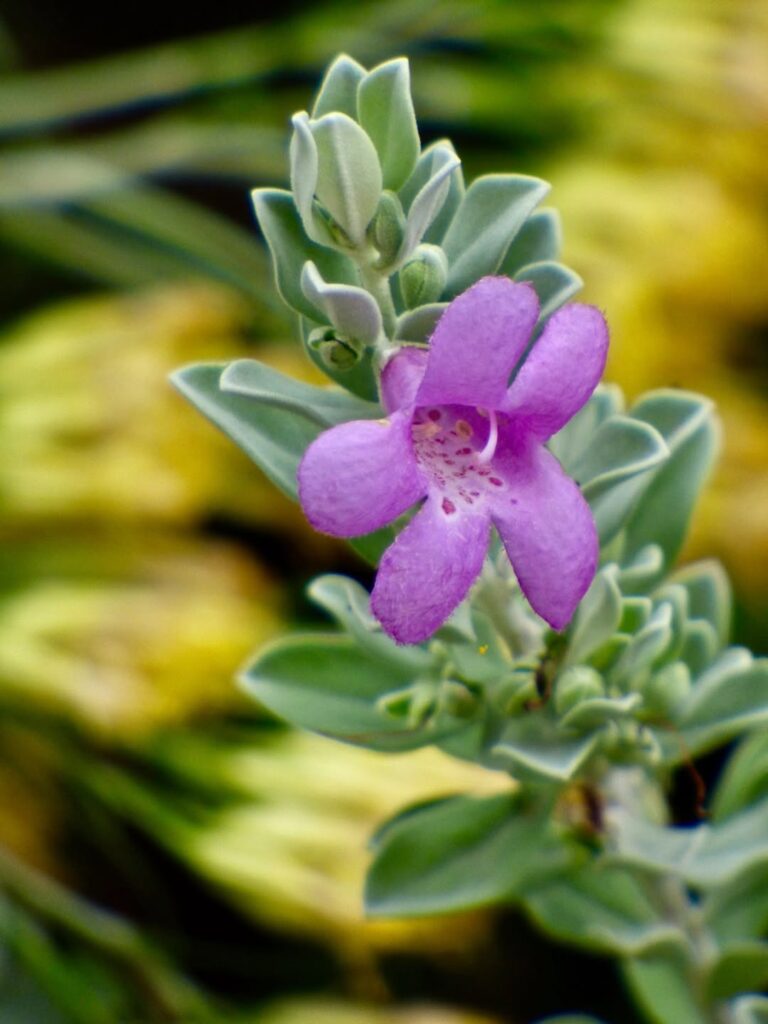
Leucophyllum frutescens San Antonio rose PP33454
5’ H x 5’ W, evergreen, full sun, low water
Bloom color: Rose pink
Drought resistant and heat loving, this compact variety was bred to thrive in the Southwest. Bright rose pink flowers bloom throughout the summer, especially when humidity spikes. Unique in that it has a tighter growth habit with small silvery leaves and larger flowers then other Leucophyllums.
WOODY SHRUBS
LIsignoli suggests homeowners take a second look at these great local plants that are often overlooked. The three of these shouldn’t need much care.
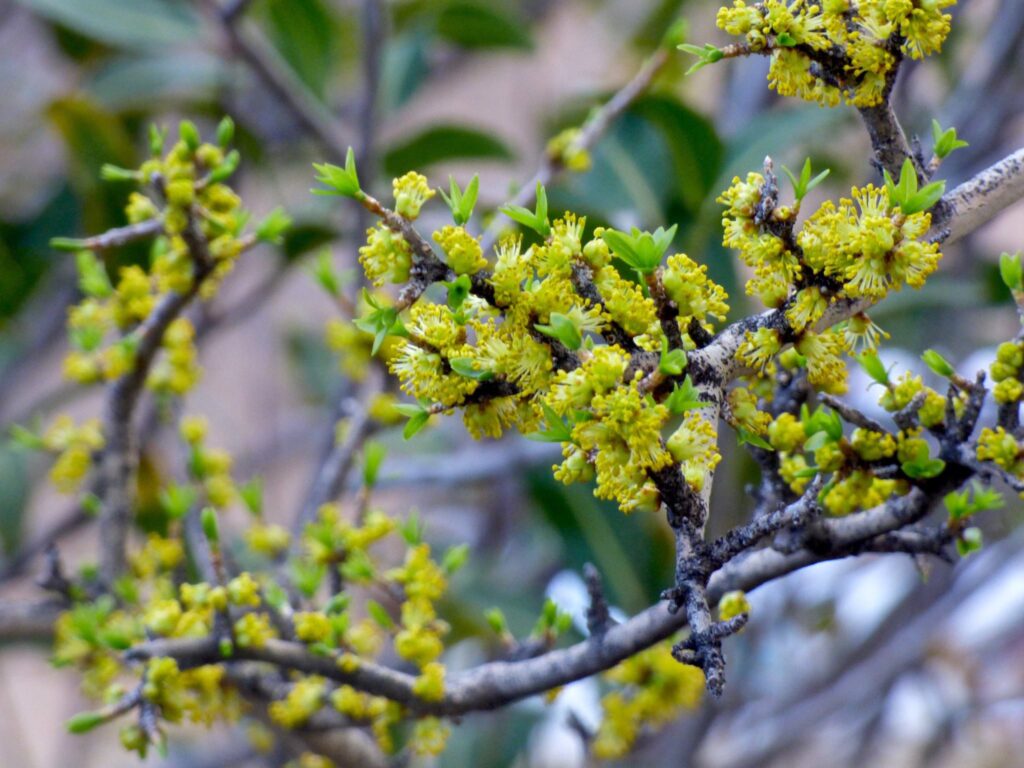
Forestiera neomexicana New Mexico olive/privet
6 ’H x 4’ W, deciduous, sun/shade, medium water, clay soil
Bloom color: Yellow
Traditionally found as an understory plant near the Rio Grande, it makes a great small tree in a courtyard, can be an effective natural hedge or windbreak or can be planted under large shade trees for wildlife and interest. This shrub features upright arching and finely twigged white branches with rounded bright celery green foliage and tiny yellow flowers in the early spring that provide nectar for bees. These plants are dioecious, meaning they are separate male and female plants, in late summer, females have small blue-black berries, which birds enjoy. Males are fruitless. Leaves change to golden yellow in the fall then drop to expose the sculpture of the pale white branches. New Mexico olive is very drought tolerant once established.
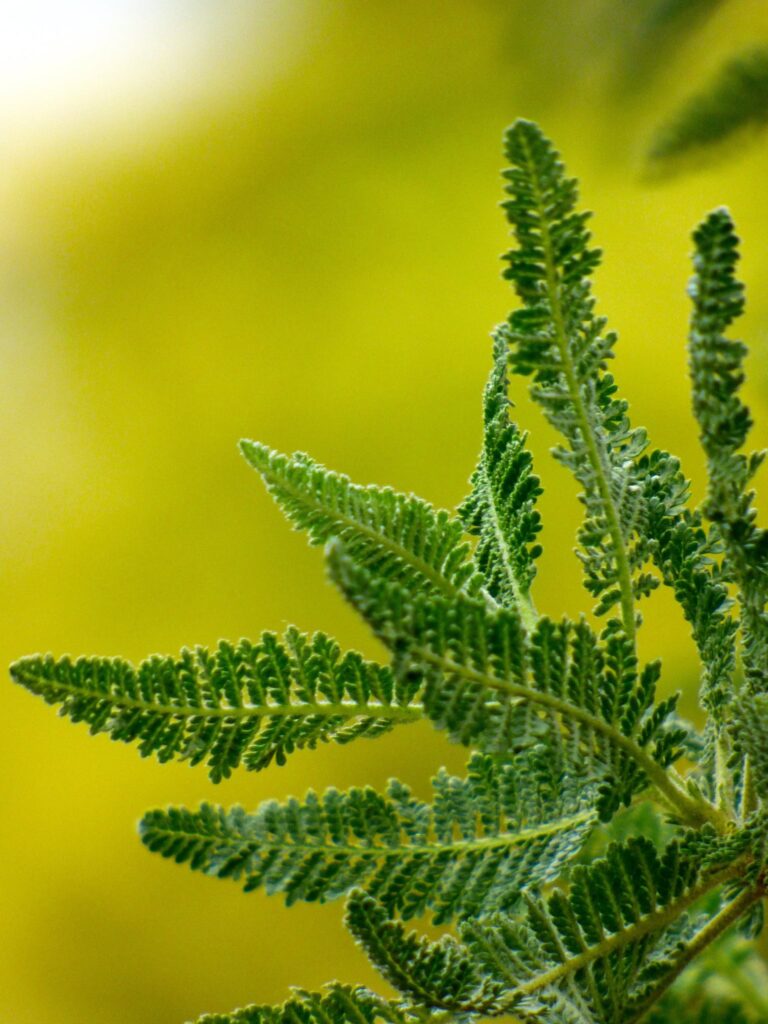
Chamaebatiaria millefolium, Fernbush
5’ H x 6’ W, semi-evergreen, full sun, low water
Bloom color: White
Fernbush is great used as a single specimen or clustered in groups or rows for visual screening and hedges. The showy flower spikes resemble those of white lilacs and attract butterflies all summer. Its aromatic olive-green foliage is soft and fernlike, and its upright stems with their peeling bronze bark create a pleasant, rounded silhouette without the need for much pruning This hardy plant loves south- and west-facing exposures and well-drained soil. It brings interest to the garden year-round.
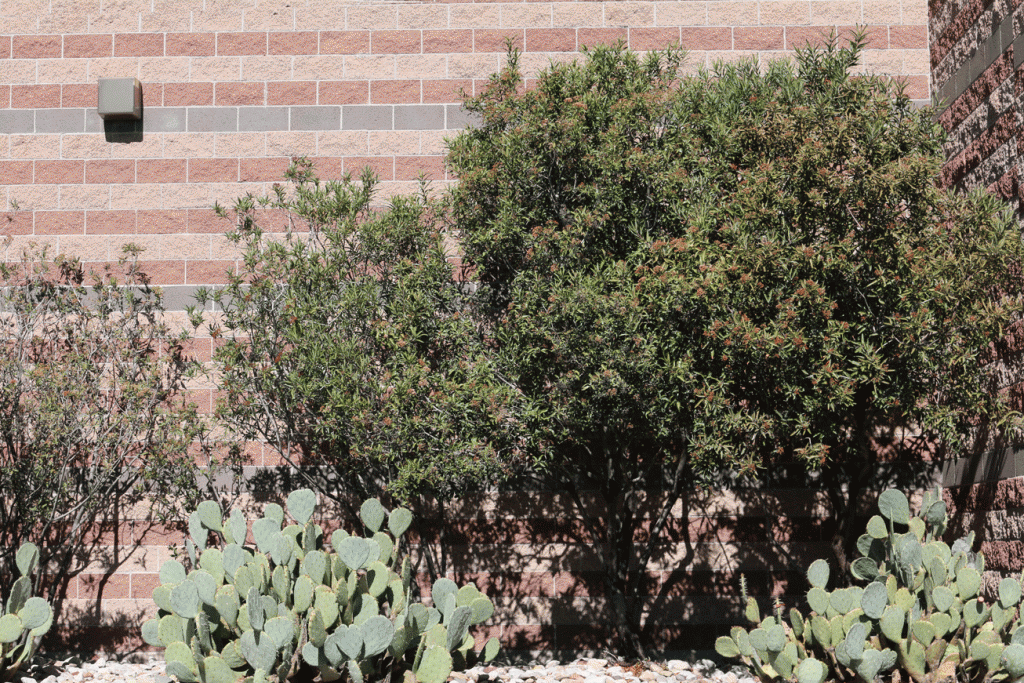
Vauquelinia californica, Arizona rosewood
12’ H x 10’ W, evergreen, full sun, low water
Bloom color: White
Arizona rosewood is a large, evergreen shrub or small tree. Leathery, dark-green foliage provides a backdrop for the umbrella shaped clusters of white, five-petaled flowers that crown rosewood in summer, turning a deep cocoa brown and persisting well into winter. At its best in open windy spaces where evergreen wind protection is especially welcome, it features stiff, mostly straight branches. Extreme exposures seem to increase its density, and, unlike most broadleaf evergreens, its glossy foliage stays crisp and attractive through heat and cold. It can be slow growing but it is very long lived. AZ Rosewood is a great replacement for photinia or euonymous shrubs.
GROUNDCOVERS
Manzanita is a plant genus that has many forms including trees, shrubs and groundcovers. It is one of the few true broad-leafed evergreens that can handle the challenges of our cold winters and hot summers. It’s native range is open pine forests and piñon-juniper woodlands, from 3000’ to 8000’ elevation. It thrives on sandy, rocky areas and slopes; is cold hardy (-20 F/-28 C); tolerates heat; and needs very little water. Smaller hybrid manzanitas, Lisignoli points out, have been found to provide similar features in a groundcover. Below are two species to try. Future iterations of our Xeriscape guide will include both of these great evergreen groundcovers.
Arctostaphylus x coloradoensis ‘Panchito’ Manzanita
2’ H x 5’ W, evergreen, sun/shade, medium water
A naturally occurring hybrid from the Uncompaghre Plateau in Colorado, this plant has small pink-white flowers in early spring followed by dry red berries in fall with evergreen leaves that turn a red-purplish color. Naturally dense and low-growing, it is a great, well-behaved evergreen shrub for the home landscape.
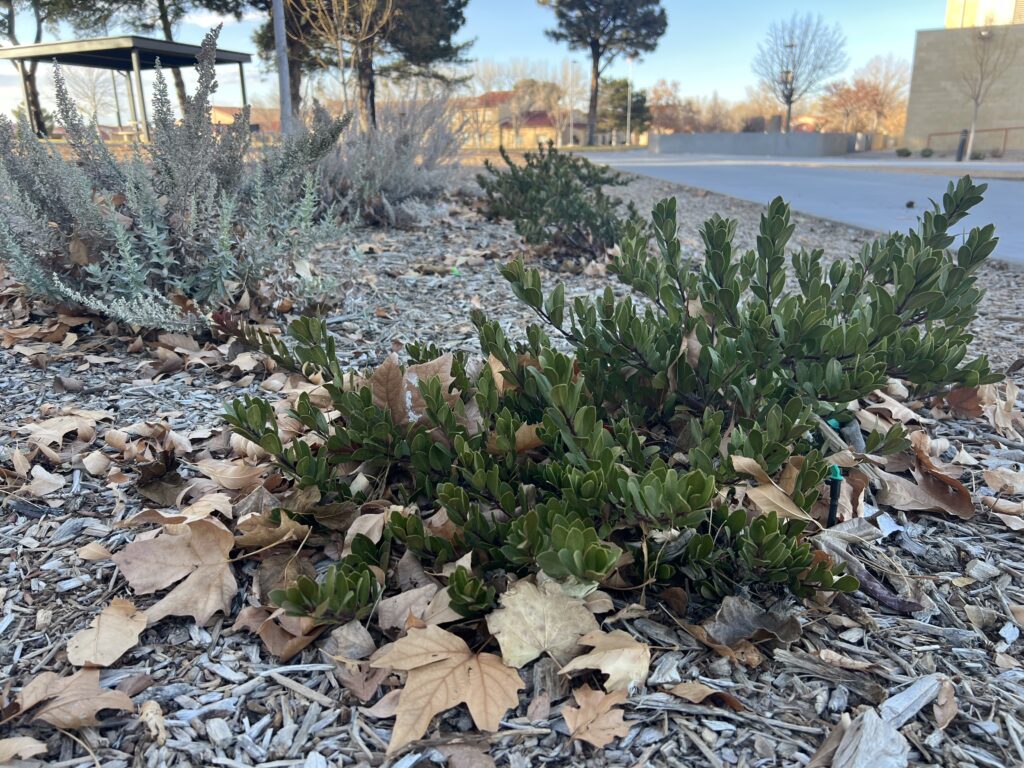
Arctostaphylus x coloradoensis ‘Chieftain’ Manzanita
2’ H x 6’ W, evergreen, sun/shade, medium water
Chieftan manzanita is a low, broadleaf evergreen that can become quite wide at maturity. Its large, round leaves make this plant very valuable as a backdrop in summer and a welcome evergreen shrub throughout fall and winter, with its bright green leaves holding their color longer into the winter. Small pinkish-white flowers grace the plant in early spring but are not very noticeable. It makes an excellent groundcover in flat areas but also cascades nicely over retaining walls and boulders. Chieftain manzanita has slightly larger leaves and is more vigorous than Panchito.
TREES
Some up and coming trees are very adaptable maples. People love Japanese maples but they don’t grow in our climate unless they are in full shade and are not always successful even then. Also up-and-coming are hybrid tree form Gambel oaks cultivated from the native shrub. Both these plants are still new but keep a lookout for them and start asking your local nursery about them.
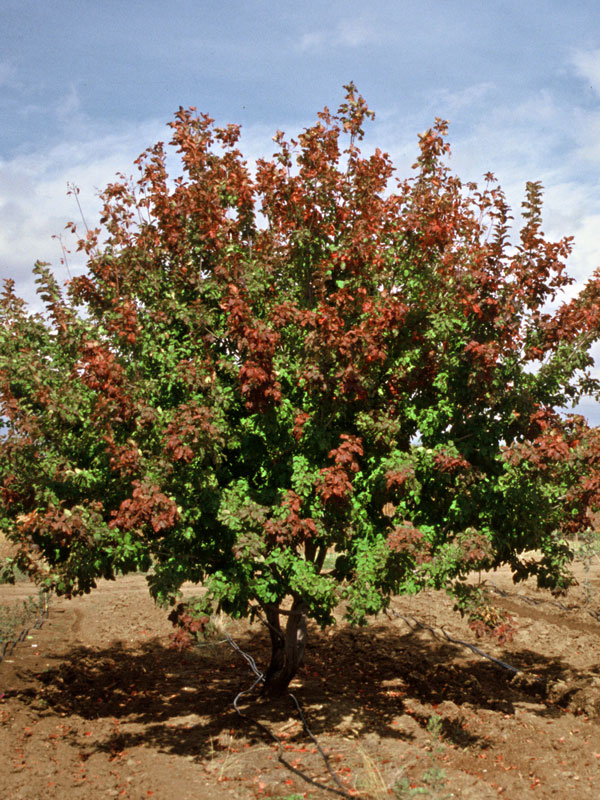
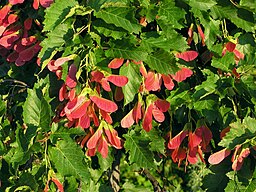
Acer tataricum, ‘GarAnn’ PP 15,023 Hot Wings® Tatarian maple
15’-18’ H x 15’-18’ W, deciduous, sun/shade, low water
Hot Wings Tatarian maple is a beautiful, small ornamental tree with slender branches forming an upright oval canopy. Although the flowers are not noticeable, by midsummer brilliant red seed capsules (samaras) cover the tree and provide a spectacular show, shining in bright contrast to the summer foliage and persisting for about a month. During the fall, the leaf colors range from yellow to orange-red. An excellent performer in rugged climates, it is tolerant of alkaline soils and light-adaptable. It puts on quite a show in July when the red samaras are present. It is a small, low-water-use tree worth considering. Broadly oval when young, its branches spread wider than tall, becoming rounded at maturity. It is best planted in lots of mulch, partially shaded with adequate irrigation
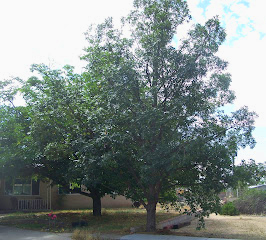
Quercus gambelii Gambel oak
15’-20’ H x 15’-20’ W, deciduous, full sun, medium water
The gambel oak can be found in two forms in the nurseries. One as a multi-trunk species and one as a single trunk species. Dark green foliage turns to yellow-orange and orange-red in the fall. Native to the dry mountainous interior West from Utah and Colorado to the Mexican border, Gambel oak is drought tolerant and hardy. It is an ideal tree for low maintenance landscapes in Albuquerque.
Learn more here:
Favorite Mediterranean Plants for the Albuquerque Area Landscapes
