Type: Deciduous
Exposure: Full Sun
Water Use: Medium
Mature Size: 6’ H x 6’ W
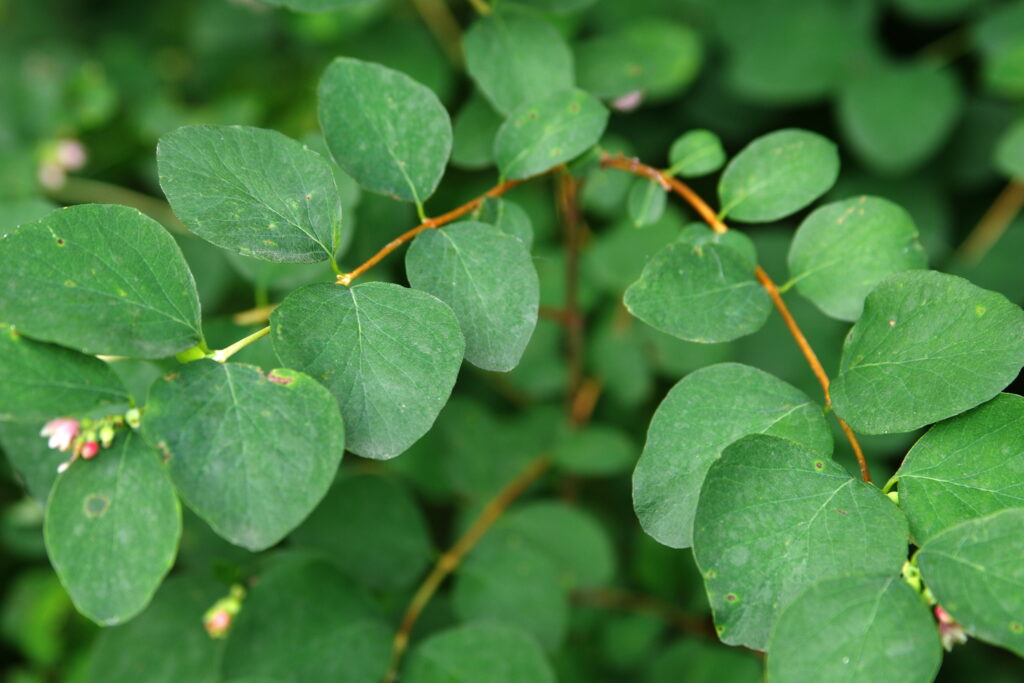
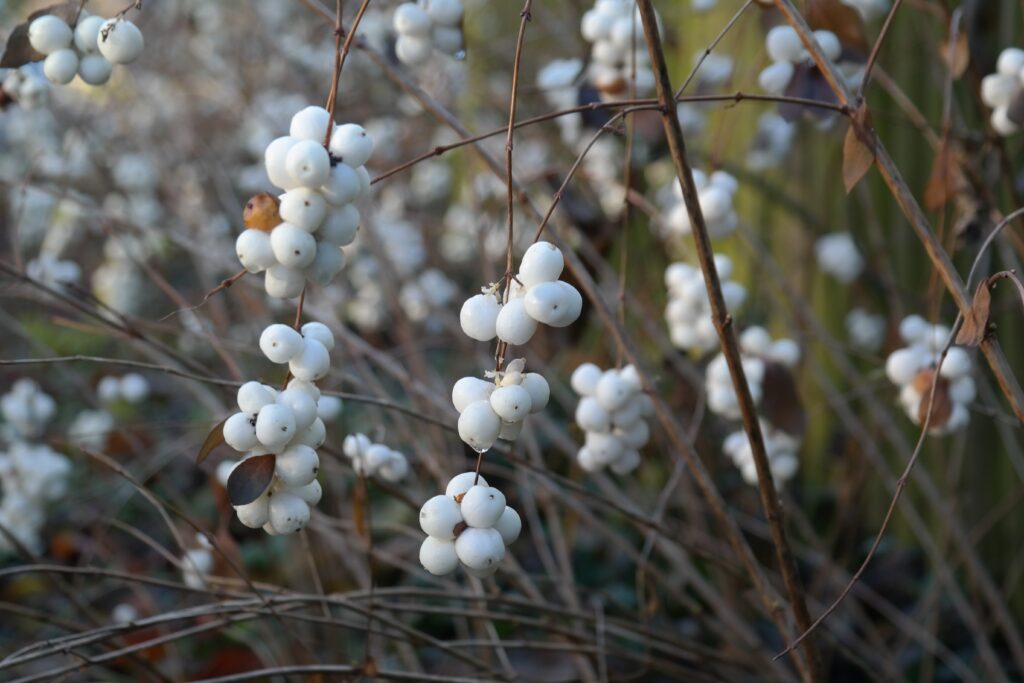
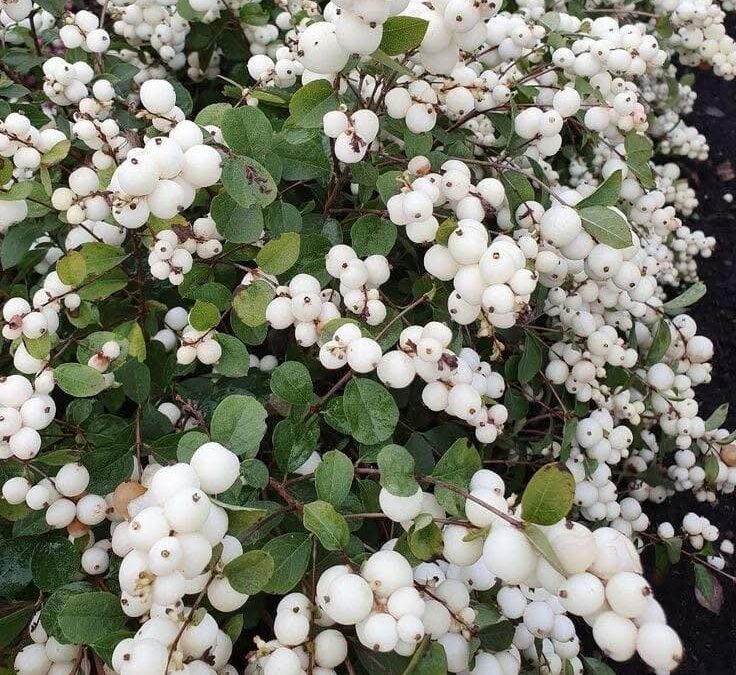
This shrub is sparsely branched, growing 2–5 feet tall and gradually forming a thicket 4–6 feet wide. Its slender, wiry twigs bear small, opposite leaves and pinkish white bell shaped tiny flower clusters, which are followed by large, snow-white berry-like fruit. It can be found along stream beds, making it a great plant for beneath the runoff of downspouts.
Related species include coralberry (S. orbiculatus), known for its purplish-green flowers and clusters of pink berries, and wolfberry (S. occidentalis), a dry prairie shrub with pale pink flowers, leathery oval leaves and greenish-white fruit.
This plant has many traditional and medicinal uses, according to the National Park Service, “Fresh berries can be crushed and rubbed on skin to cleanse and soothe; they also heal rashes and burns. Native Americans used the berries to clean their hair. Roots were soaked to make tea to treat stomach disorders, and tea made from twigs treated fevers. The spindly branches can be tied together to make brooms.”