
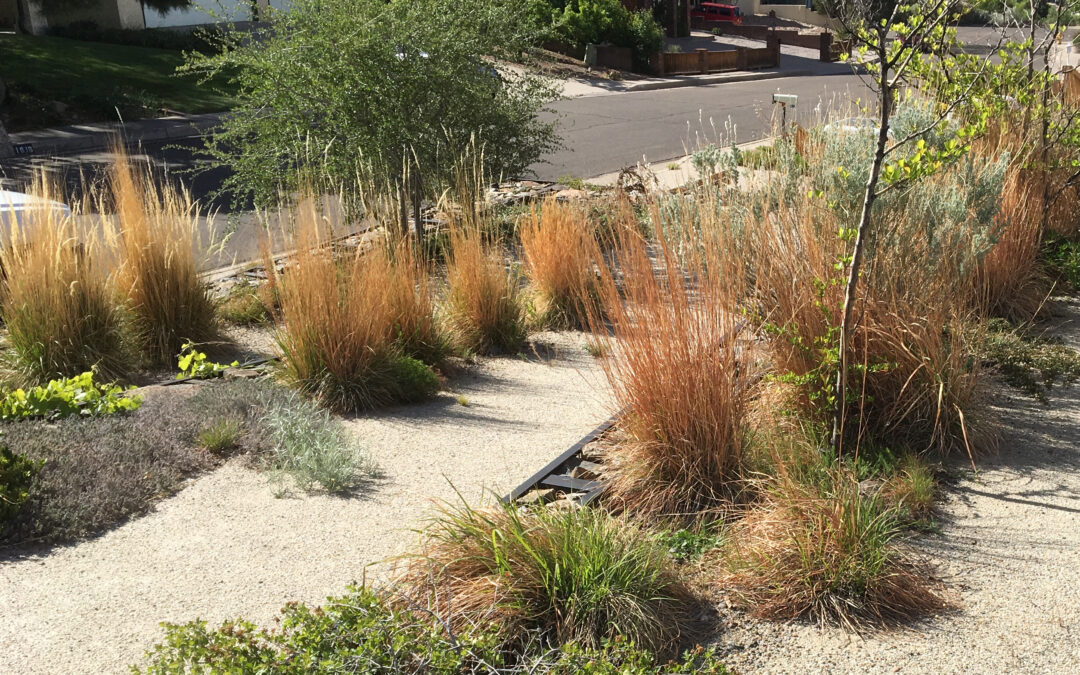
What is an ornamental grass? Most often, that term is used to describe cultivars of grasses that are used for specific visual appeal such as color, texture, form, movement, seed heads or other structural characteristics that give interest to our landscapes. Grass-like plants such as sedges and rushes are often included in this category. Most are clump-forming rather than spreading. They can be used as tall background screening, dramatic individual vertical forms or low clumping groundcovers. There is a grass or grass-like plant for virtually any spot in the landscape or garden.
Full sun, upright and mounding grasses
Little bluestem (Schizachyrium scoparium) is one of our most beautiful native grasses! Tall, growing 2-3 feet, this grass is narrow — just a foot or more wide — deep rooted and drought tolerant. This indispensable exclamation point stands upright in the landscape. It is medium green to icy blue in spring and summer months. When autumn and winter temperatures turn most grasses the color of dry straw, little bluestem shines subtly in shades of bronze, ochre and rust. Interspersed in a meadow with blue gramma and side oats grama, little bluestem punctuates the monochromatic tapestry. Standing alone, or in groupings, this grass produces autumn seed heads of silken silver fuzz that shine and shimmer when backlit by the rising or setting sun. Best in full sun and poor to moderate good draining soil. Reseeds easily. Cut once a year, to a low and rounded mound of about 3 inches in early spring, late February-mid March.
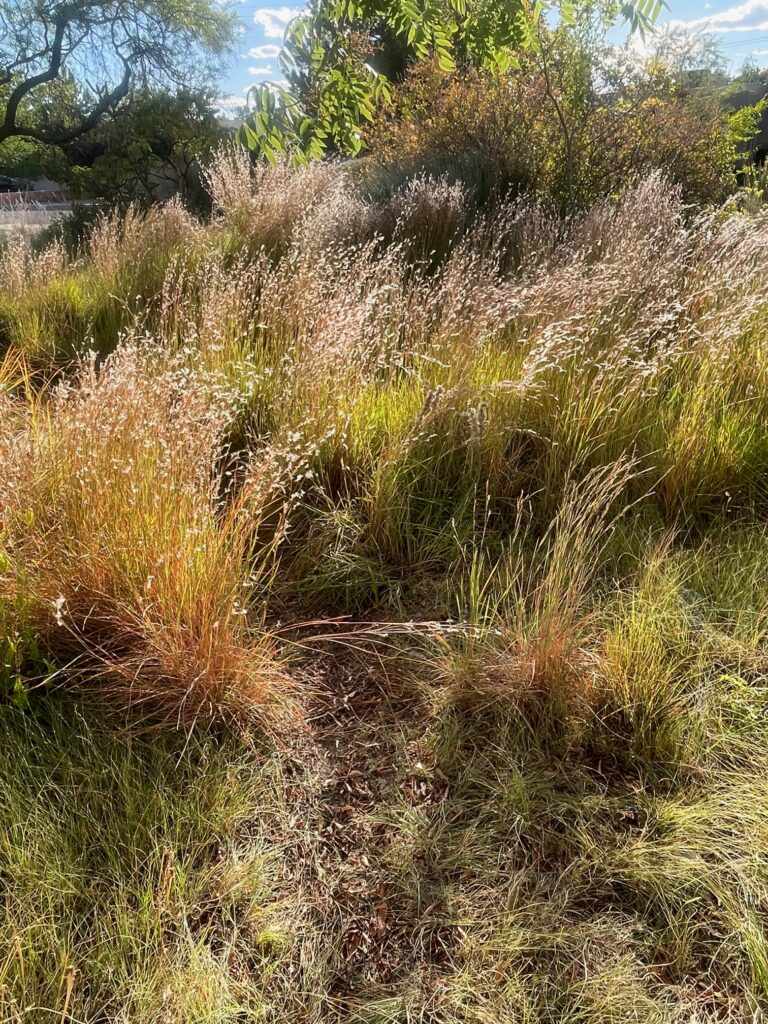
Sand lovegrass (Eragrostis trichoides) is a wiry, fine bladed native grass tolerant of sandy to poor soils, full sun, drought, wind and heat. It forms a wide (2-3 feet), rounded mound. From late summer to autumn, seed heads appear on burgundy tinged panicles floating above the foliage. Airy and elegant, the seed heads are distinctive and lovely in dried arrangements. An individual showpiece, this grass looks great when planted in masses, too. Another light catcher that reseeds well. Cut once a year in early spring, to about 2-3 inches high.
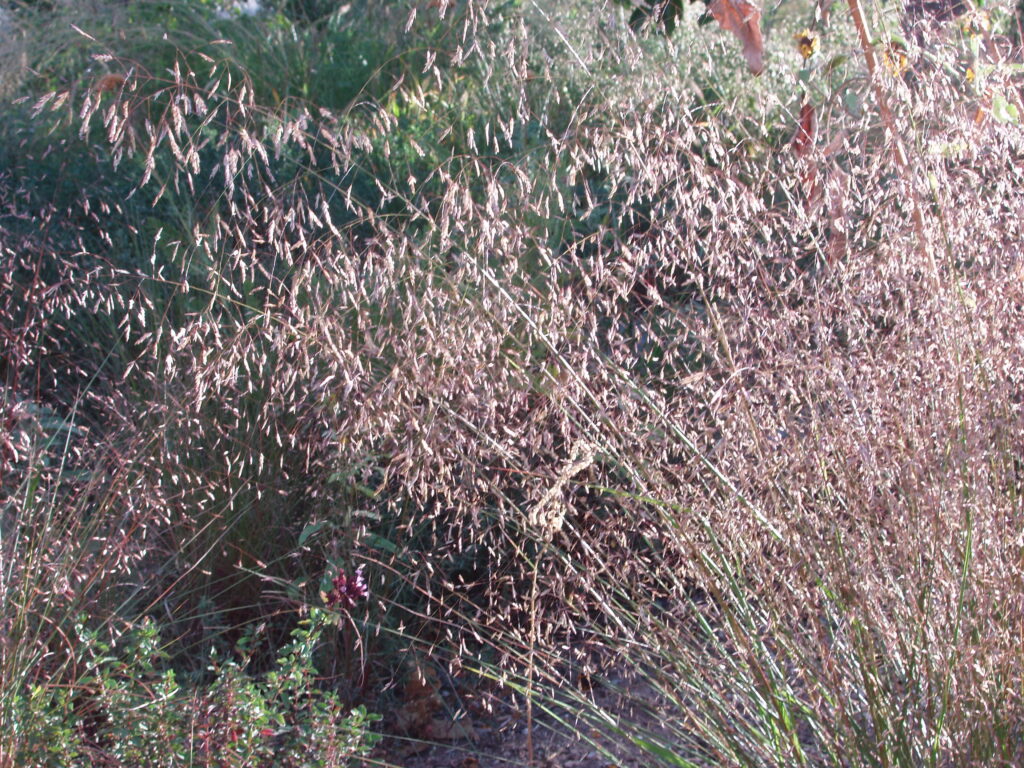
Maiden grass (Miscanthus sinensis) is a non-native thatgrows 4-5 feet tall. Dwarf varieties are available that are 2-3 feet tall. The form is upright with the top of the plant spreading wider than the base. This grass can be 3-plus feet wide at the top and 2 feet wide at the base. A specimen grass, it’s not for meadows except as an accent or background and works well in groupings. Seed heads form mid to late season, at first appearing like narrow fingers, sometimes with coloration from pink to burgundy, all eventually drying to a blond fluffy appearance like golden clouds over the straw-like blades curling up and out. When backlit by the sun, this can be stunning. Moderate water for this grass is better than low water. Maiden grass does not reseed successfully in our area now but can be thinned and transplanted by division. Cut back once a year in spring, when new green becomes visible at the base. A cut at around 6-8 inches of height can be good for this large grass.
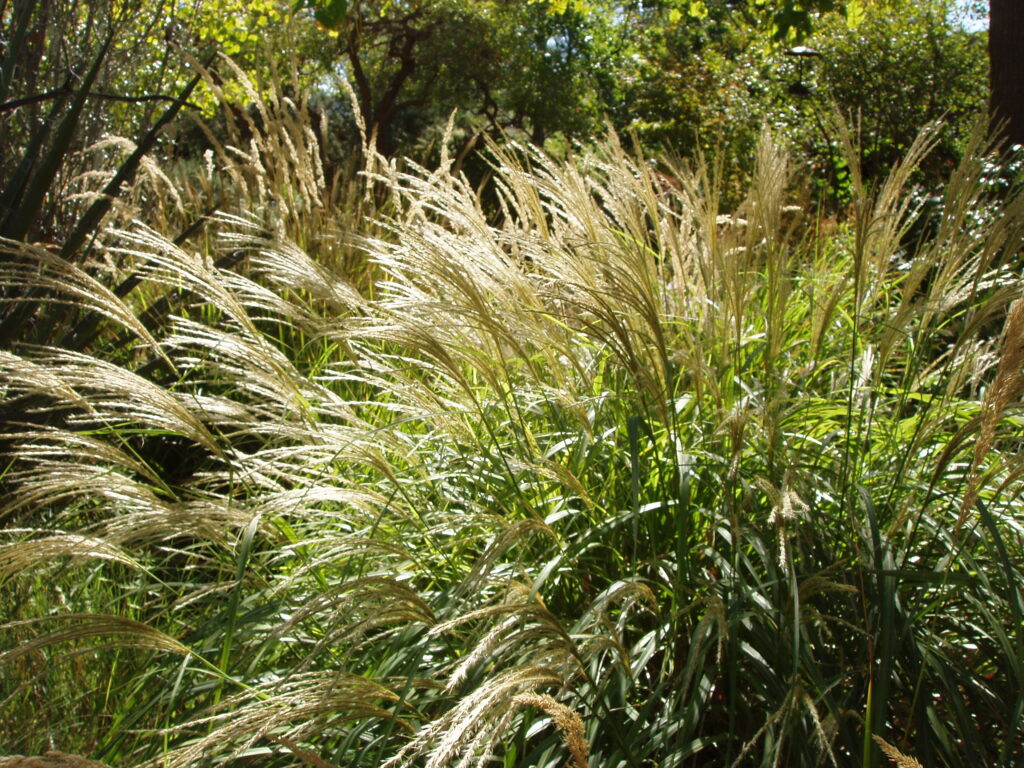
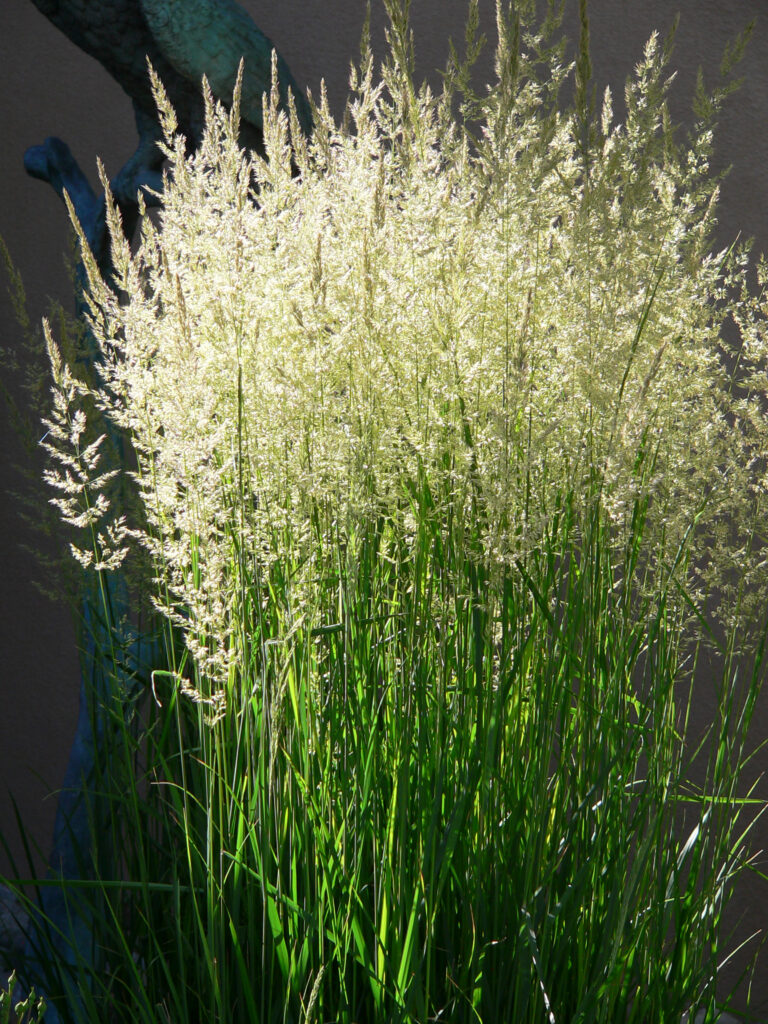
Karl Foerster or feather reed grass (Calamagrostis x acutiflora ‘Karl Foerster’) is a non-native, low maintenance vertical grass that produces seeds early, unlike most grasses which produce seed heads later in the season. Like Miscanthus, green and variegated (striped) cultivars are available. This grass likes full sun and moderate water and grows 3-4 feet tall and 1-2-plus feet wide. It makes a statement as a single plant and is great in groups or rows for a contemporary take on plant placement. Does not reseed. Cut back to a height of 3-5 inches once a year in early spring.
Full sun to part shade grasses
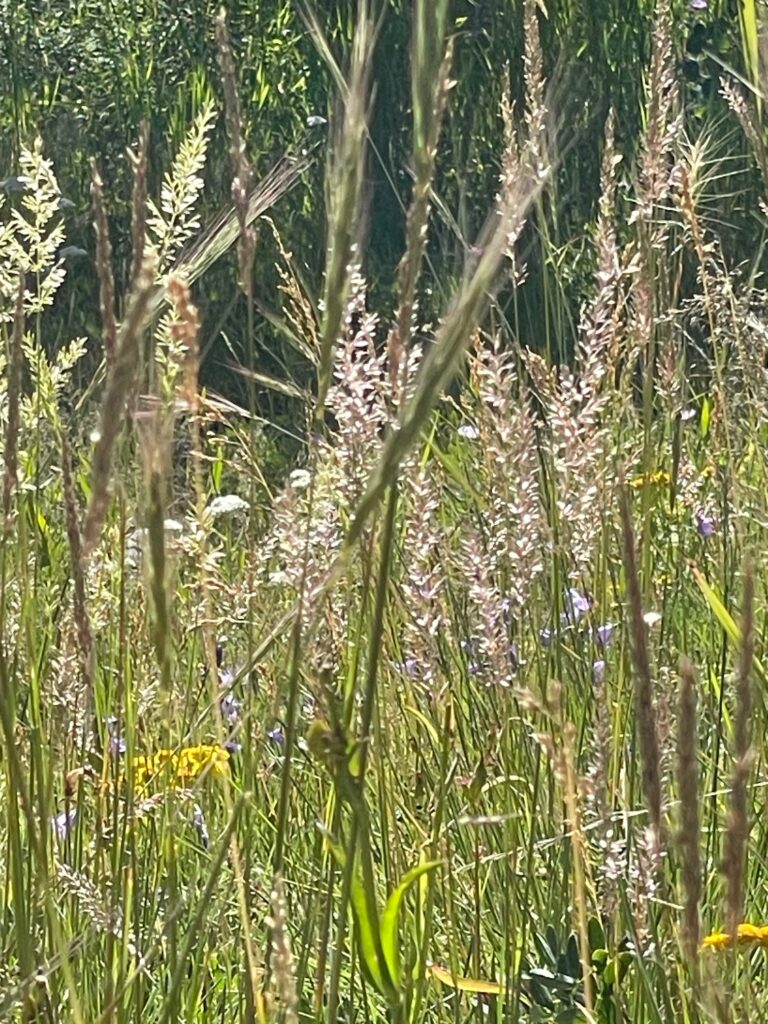
June grass (Koeleria macrantha) is a native that can be found growing in our mountains in full sun to part shade. Narrow blue green blades 12-18 inches tall push up in early spring, soon followed by spiky seed heads. The seed heads flush out into narrow, pointed silky bottle brush shapes, catching morning and afternoon light that makes them appear illuminated. Not fussy about soil, except when heavy and wet, this tough grass is drought tolerant and deer resistant. As a cool season grass, it may go dormant in hot dry summers, especially at lower elevations. So while appealing, this plant does not flourish in a hot and dry xeriscape.
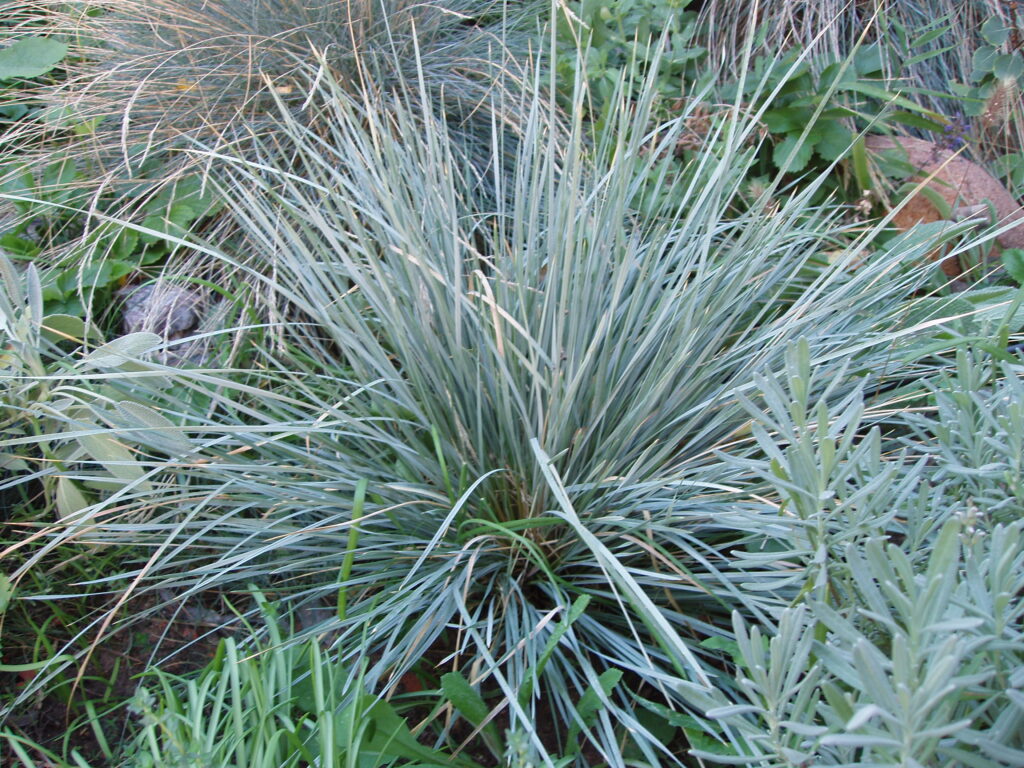
Blue avena (Helictotrichon sempervirens), also called blue oat grass, has wiry ice blue blades that form a low, rounded mound around 18-30 inches tall and wide. Narrow seed heads push up, and the seeds soon turn straw colored and give an oat like appearance. This cool season grass is not fussy about soil and is drought tolerant when established. Does not reseed. Cut back once a year in early spring to a rounded 2- to 4-inch mound.
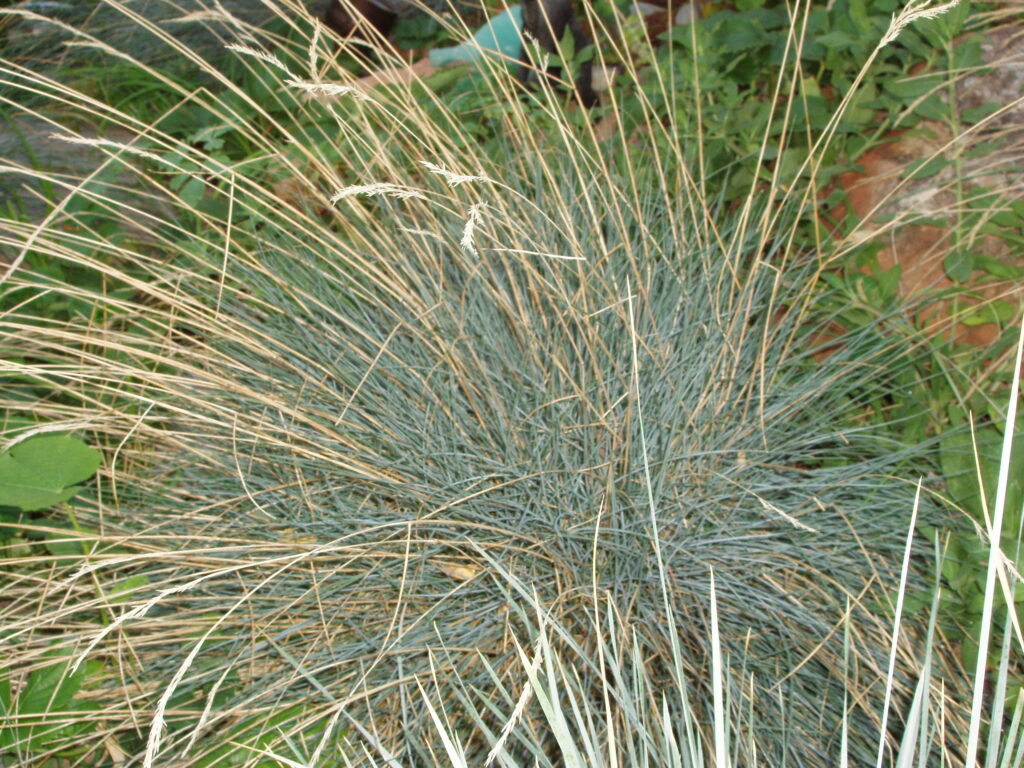
Blue fescue (Festuca ovina glauca) is a blue green form of native sheep’s fescue (Festuca ovina). Fine, needlelike blades and wiry, thin, straw colored seed heads make this small (6-8 inch) grass perfect for small areas, borders and rock gardens. Often keeping color through the winter, this grass is drought tolerant when established. Straight species can reseed while named cultivars like Elijah Blue do not reseed well. Cut back once a year to a height of 2 inches. Requires shade to do well.
Maintenance and selection tips:
Most grasses benefit from having old dry growth thinned out of the center every few years at the time they are cut back. Many grasses can be used in containers or large pots. Grass trimmings can be used as mulch in the landscape (careful with seeds if you don’t want seedlings) or added to your compost.
Some ornamental grasses like pampas grass and Ravenna grass have become invasive here, particularly in the Rio Grande Bosque, so are no longer recommended. Large native grasses like giant sacaton (Sporobolus wrightii) and switch grasses (Panicum species) are good substitutes. There are many species of native grasses that are tough, ornamental, easy to care for and beneficial to native insects, birds and other wildlife, thus being wise selections for our landscapes and gardens.
Learn more here:
New and Underutilized Plants for 2026!
