
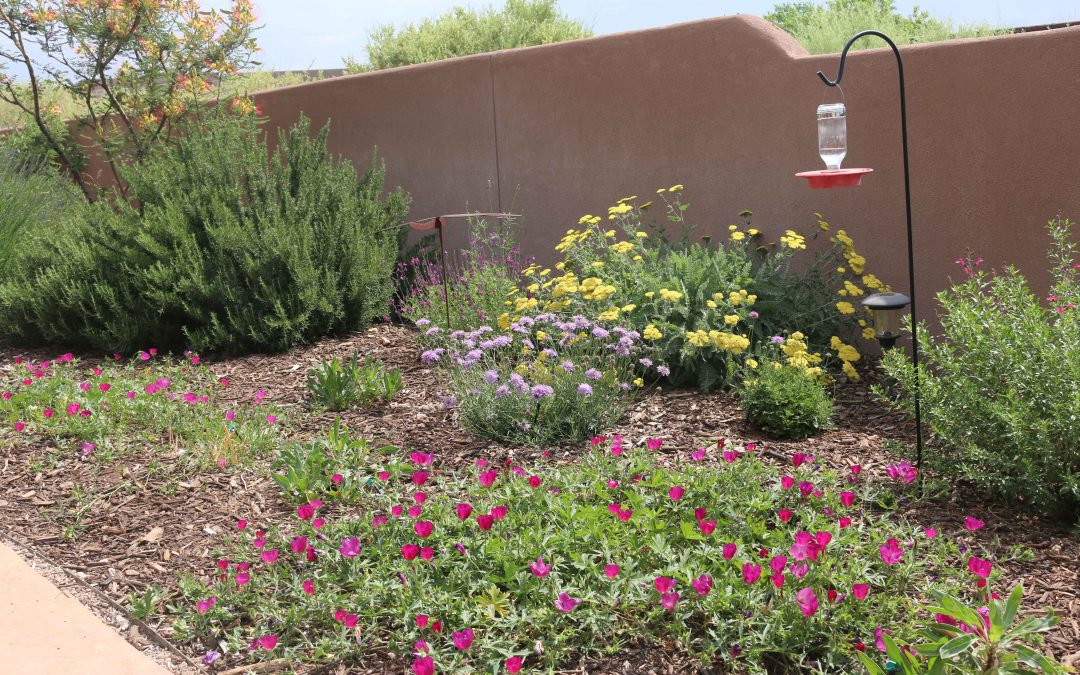
Experienced gardeners in New Mexico know that the key to
success is in the soil. Soils in our climate are highly erosive and without
care will blow away with spring winds or wash out during summer monsoons.
Covering bare soil with mulch is an essential gardening practice with benefits like
reducing moisture loss through evaporation, suppressing weeds, and giving
landscapes a finished appearance. When you use organic mulches (as opposed to a
gravel type mulch), there are even more benefits. Like keeping the soil cool, improving
soil structure, and feeding the soil microbiology that supports plant health.
Despite the benefits, organic mulches continue to be passed
over for gravel in our area. This is due in part to our tendency to mimic the
practices we see around us. But those are not always best practices! This is
also a consequence of several myths that we’d like to dispel.
Before digging into these myths, let’s take a moment to
define the term “organic mulch.” A mulch is a layer of material placed on top
of the soil. An organic mulch is
one that is derived from living matter. The term “organic” in this context has
no relationship to the standards followed to generate the material. Examples of
locally available organic mulches are wood mulch, bark mulch, pecan shell
mulch, and straw. Because organic mulches were once alive, they contain
essential nutrients, minerals, and energy that nourish the soil ecosystem as
they decompose. An important consideration when using organic mulches is to
skip the landscape fabric, which prevents the rich organic matter created by
decomposition from working its way back into the soil.
Myth #1: Organic
mulches rob your soil of nitrogen
This is a common misconception that is easily dispelled.
Organics decompose via microorganisms that use nitrogen as they undergo
explosive reproduction in response to a new food source. This is why we say
that nitrogen gets “tied up” in the soil when unaged composts are integrated.
But therein lies the key. Mulches are not integrated into the soil - they lie
on top of it! By definition, decomposition only occurs on the surface area of
the material being decomposed. Therefore, plant roots do not compete for
nutrients with the microorganisms that are slowly breaking down the organic
mulch to feed the soil below.
Myth #2: You’re going
to attract all kinds of insects and vermin
The cool, moist environment created by organic mulches is
ideal for promoting plant health. Gravel mulches increase the reflective heat
in a landscape and compact the soil, contributing to plant stress. Heat also creates
higher water demand. The cool, moist layer that is so good for plant health
also provides a hospitable environment for insects. But mulch itself is not a
beacon for the insects in the neighborhood to colonize your yard. It simply
provides a more favorable habitat for
what is already there. But this environment also benefits insects and
vertebrates that predate on the undesirable ones. This creates a healthier
ecosystem that supports your plantings. If you have concerns about termites,
rest assured that a mulch layer does not provide the necessary habitat for a
termite colony. A one-foot bare space between organic mulches and your house
will discourage insects from finding their way into your home.
Myth #3: It will all
wash or blow away
If you use the wrong kind of organic mulch in the wrong
place it can migrate. But with a little understanding of different mulch types, this can be avoided. Most wood mulches
available on the market are chipped flat and consistent in shape in size. These
are great in areas that will receive some foot traffic as they compact down to
a firm surface. However, in areas of higher wind exposure or periodic
inundation with water, use a mulch that is more irregularly shaped and sized as
the pieces will hold together better. Mulches made from recycled yard waste and
tree trimmings typically fit this description. Mulches made from bark tend to
be lighter and can have a tendency to migrate more readily. Above all, pay
attention to grades when using organic mulch. Design landscapes so that the finished
grade of mulched areas is below hard surfaces like sidewalks and patios. If you
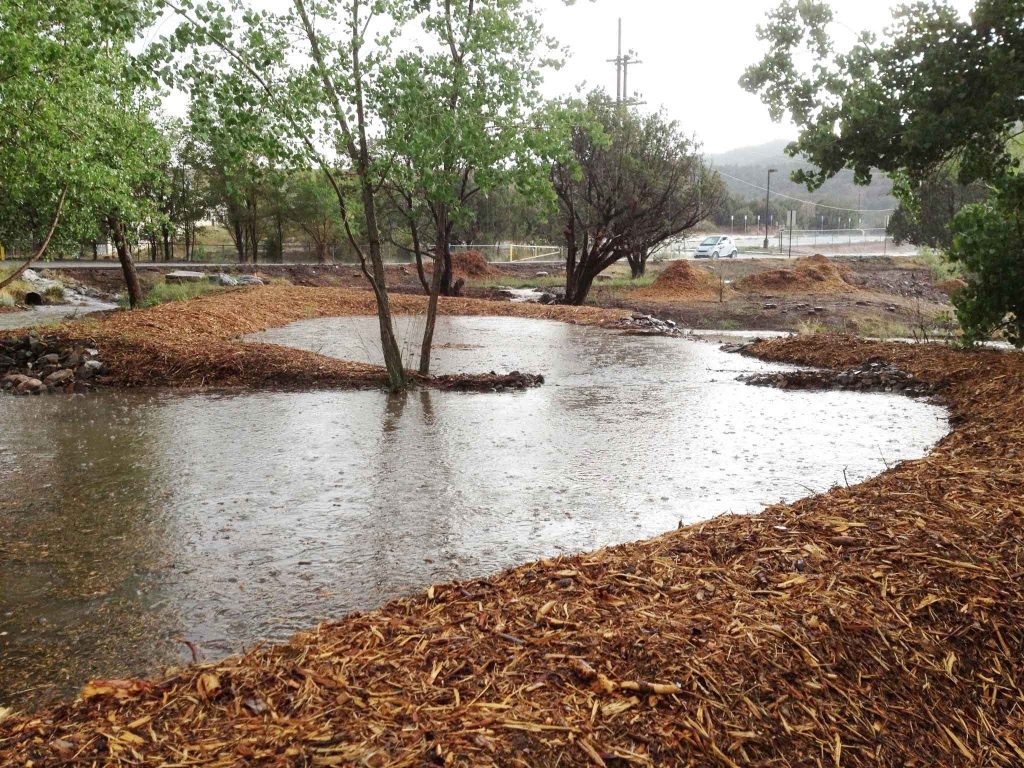
use organic mulch on a slope make a small berm on top of the slope and dig in
contour swales to prevent the mulch from washing down.
Myth #4: Organic
mulches are more difficult to maintain
Anyone who has wheelbarrowed out a graveled landscape,
sifted it to remove dirt and weeds, and shoveled it back in can tell you that
gravel is not inherently easier to maintain. Gravel landscapes with filter
fabric are designed to be maintained with a regime of consistent weed
management and treatment. If spraying chemicals in your landscape is not your thing, then invest in the right
tools to make weed
management simple. A 3-4” layer of organic mulch is effective in preventing
sunlight from reaching annual weed seeds, thereby preventing weed germination.
The beauty of organic mulches is that they can visually
accommodate a little bit of leaf litter, reducing the need for constant raking
and blowing. A thin top coat of mulch added every other year will keep your
landscape looking fresh and replace the material that has broken down to
sustain the soil. Organic mulches are light weight, too, making them easy to
wheelbarrow and rake around.
Organic mulches are available in bags from most local garden centers, and are available in bulk from several retailers in the Albuquerque area. When you buy from local bulk retailers, you are supporting the recycling of local organic materials that may otherwise end up wasting away in a landfill and contributing to greenhouse gas emissions. Buying bulk also means less plastic! Organic mulches are a renewable resource that will improve your landscape health and help you conserve water.

Author: Paulina Aguilera-Eaton, Water Conservation Specialist with Albuquerque Bernalillo Water Utility Authority.