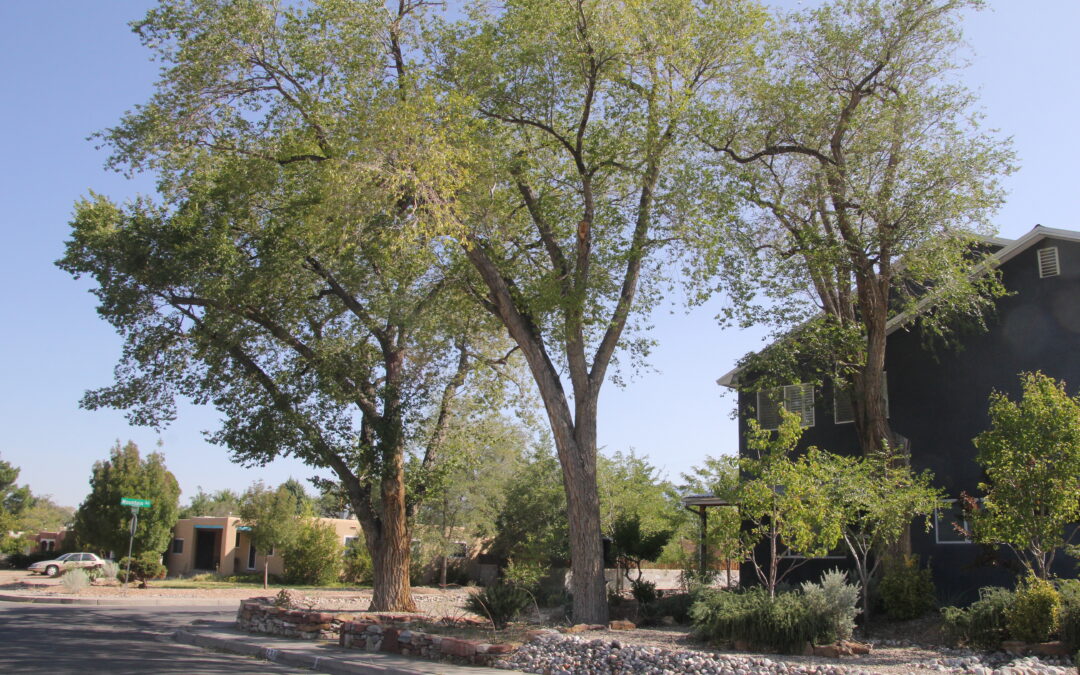
Nothing adds the same quality and value to a landscape as a healthy mature tree. The benefits include cooler outdoor spaces, cooler homes, aesthetic appeal, carbon capture, stormwater mitigation and more. There are some key things to think about when it comes to keeping your big old tree happy.

What are the key parts of the tree and what do they do? All the parts are important, many are redundant, and how they play together really matters. The redundant parts are leaves, small branches and small roots underground. While critical for tree health, the tree can lose some of any of these without suffering fatal damage; the tree will, with time and to the best of its ability, replace those lost parts with new growth.

The fine roots explore for water and minerals in the soil, hopefully with the help of symbiotic soil fungi. Only the youngest, smallest roots (those that haven’t even grown bark yet) take in water, like tiny sponges. These roots grow when and where soil moisture is available and die off when the soil gets too dry. Trees may have several flushes of absorbing roots growing and dying back over a season. Once in the roots, water moves up successively larger roots as it travels toward the stem.

There is one part of the tree that is not redundant. This is the root crown, or root flare, where the ropy wood of the root system changes into the blocky wood of the stem. The happiest, healthiest trees have a strong root flare visible above the soil line. These root shoulders act like buttress supports for the huge load of wood and foliage being acted on by gravity and wind.

As water moves up the trunk, it travels in sapwood (or xylem) — living wood just underneath the bark layers. Outside the sapwood is a thin ring called the cambium, cells that make new cells that make new cells … for as long as the tree lives. Outside that layer is the inner bark (or phloem), a green spongy layer with many functions, including moving sugars and other metabolites from the leaves to wherever they need to go. These three layers — xylem, cambium and phloem — constitute the “living rind” of the tree and are protected by the dead but intact outer bark layers. The central wood, or heartwood, is dead but intact as well.

Leaves out at the end of the small branches are busy converting sunlight energy into stored chemical energy in the form of sugars. These are then used as fuel and as building blocks for the tree to power its ongoing life functions and make the complex chemicals needed to do so.

What harms a tree? Things that harm the root system (soil compaction, drought, heat, chemicals), things that damage the root flare (stem girdling roots, mowers, construction), things that damage the living rind (wire girdling, kids with hatchets, vehicles) and things that damage leaves (over pruning, certain herbicides, heat). There are feedback loops, especially between the roots and the leaves. Root damage that reduces water uptake leads to leaves making less sugar which means less resource to grow new roots. Herbicide damage that deforms leaves leads to less sugar feeding root function as well as less pull on the water, both leading to less water and nutrient uptake going back to the leaves.

So, here’s what you do: Avoid those harmful things!

  • Protect roots by covering the soil with 3 or 4 inches of arborists’ wood chips. This cools soil, reduces soil water loss, cools air above, breaks down and feeds minerals into the soil, and promotes growth of beneficial soil fungi. Avoid cutting roots when possible; when necessary, cut as few as possible and cut as far from the trunk as possible. Don’t compact soil by dumping gravel all over it or parking on it. Don’t apply herbicides to the root zone, which is larger than the canopy above.
  • Protect the leaves by avoiding over pruning. Most mature trees don’t need regular pruning, and, in fact, that should be avoided. Pruning takes away energy sources (leaves) and creates energy sinks (wounds that must be dealt with). Excessive pruning can send a tree into a starvation spiral. Prune for specific goals. Avoid herbicides like those found in weed-n-feed fertilizers.
  • Protect the living rind by taking away Junior’s hatchet. More seriously, don’t tie wires or ropes around the trunk and branches unless you check them every year to make sure they aren’t girdling the tree. Lastly, don’t run into them with your car!
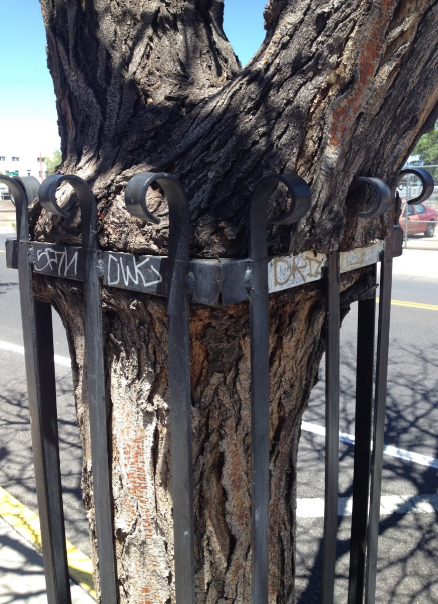
A tree-protection cage which has become a tree strangling cage.
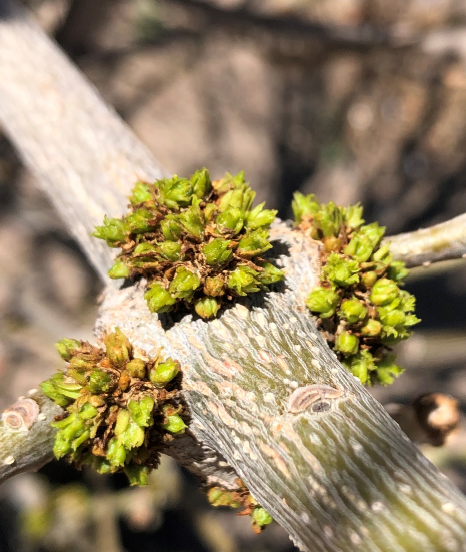
Severely stunted growth on an ash tree; imazapyr herbicide damage is likely cause.
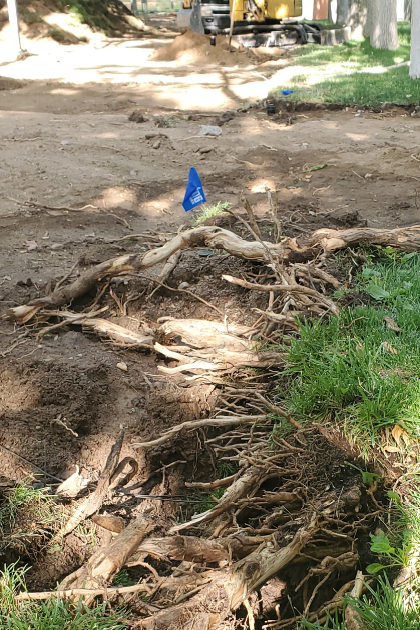
Construction damage, while often unavoidable, will lead to health decline in mature trees.

Other articles that might be of interest:

Why Trees Die

The Balancing Act of Watering Trees in the Fall and Winter

How to make a Tree Watering System for your established and mature trees

Tips to Keep Mature Trees Healthy

Author: Joran Viers is an arborist at Legacy Tree Company. Contact him at joranviers@legacytreecompany.com
Have a question about the article? AskAnExpert@abcwua.org

Water-Wise Vegetable Gardening

With our hot summers and low precipitation, growing vegetables in NM can be
challenging. This talk will provide strategies and recommendations for growers to
cultivate a thriving vegetable harvest in the region. Discussion will include irrigation and infrastructure suggestions, as well as selection of vegetable varieties that are well-adapted to the area.

Instructor: Stephanie Walker, PhD. Professor and Vegetable Specialist, New Mexico
State University, Extension Plant Sciences Department.

Maintaining Tree Health During Drought

Learn from Albuquerque’s leading tree expert how to identify drought stress in trees,
understand their responses to drought, and implement strategies to keep them alive and thriving in hot, dry weather.

Instructor: Joran Viers, Board Certified Master Arborist and Municipal Specialist,
International Society of Arboriculture (ISA). Senior Arborist, Legacy Tree Company,
Albuquerque. Former City Forester, City of Albuquerque

Creating a Drought-Tolerant Refuge for Yourself and Wildlife

Instructor: Laurel Ladwig, M.S. She is the ABQ Backyard Refuge Program Director for the Friends of Valle de Oro National Wildlife Refuge, a part-time faculty member in the Department of Geography and Environmental Studies, and Associate Director of the R.H. Mallory Center for Community Geography at the University of New Mexico and is enthusiastic about all opportunities to encourage people to develop a relationship with our wild neighbors.

Designing Resilient Landscapes: Plant Adaptations, Communities, and Selection for Arid Environments

Instructor: Maria Thomas is the Curator of Plants at the ABQ BioPark where she manages the botanical exhibits, plant collections, horticultural staff, and related programs for the 150-acre public park and garden. Additionally, Maria is an Adjunct Professor at the University of New Mexico in the Landscape Architecture department.

Climate-Ready Trees- Planting for a Warmer and (Hopefully) Shadier Future

Instructor: Marisa Y. Thompson, PhD Extension Urban Horticulture Specialist. New Mexico State University Department of Extension Plant Sciences, Los Lunas Agricultural Science Center, Think Trees NM, President of the Board (2023-current).

Plant Adaptations to Heat & Drought

Noticing the Ways Plants Thrive in our Yards and Natural Areas Learn how to Recognize Drought-Adapted Traits in Everyday Plants all Around Us.

Instructor: Marisa Y. Thompson, PhD Extension Urban Horticulture Specialist. New Mexico State University Department of Extension Plant Sciences, Los Lunas Agricultural Science Center, Think Trees NM, President of the Board (2023-current).

Hose Bib Tree Irrigation System for Your Trees: Simple Systems for Thriving Trees!

Instructor: Richard Perce has twenty years’ experience working with trees and irrigation here in New Mexico. He is a former certified arborist and currently holds the Irrigation Association’s Landscape Irrigation Auditor certification and is a certified QWEL irrigation instructor. He worked as a landscape contractor for more than a decade and is the Water Authority’s former Irrigation Efficiency Specialist. He also has a Masters of Community and Regional Planning from UNM and currently works at Anthropopulus Design + Planning.

Passive Rainwater Harvesting

This workshop introduces participants to the principles and practices of passive rainwater harvesting. Attendees will learn how to capture, slow, spread, and infiltrate rainwater into the landscape using simple, low-cost methods such as swales, berms, and basins. The workshop emphasizes working with the natural flow of water to reduce runoff, prevent erosion, and support healthy soil and plant life. By implementing passive rainwater harvesting, participants can conserve water, and create more resilient, self-sustaining landscapes.

Instructors: Anthony Luketich, Natural Resource Scientist, Anthony Luketich is a Natural Resources Scientist for Bernalillo County where he is focused on water conservation and water-wise landscape practices. He received a degree in Watershed Management and Ecohydrology from the University of Arizona where he studied the relationship between trees and water. Anthony has worked across the Southwest US as a research scientist as well as a water harvesting field technician where he became a certified water harvesting practitioner.

Bobby Mullin, Natural Resource Scientist, Bernalillo County Stormwater Quality Program Bobby Mullin is a Natural Resource Scientist for Bernalillo County in the Stormwater Quality Program. He focuses on improving stormwater quality in the Middle Rio Grande Watershed and promoting sustainable and resilient landscapes using Green Stormwater Infrastructure and rainwater harvesting. Bobby received his Bachelor of Science in Environmental Science from Bucknell University in 2011. Before joining Bernalillo County, he had worked as an environmental consultant remediating contaminated soil and groundwater and as a Research Scientist studying the impacts of climate change, drought and plant mortality in New Mexico ecosystems.

Xeriscape: The Desert Friendly Yard

Join us for learning all of the tips, and benefits of our Xeriscape program!

3 Steps to Landscape Success

Service, Settings, and Selection are the keys to landscape success!