
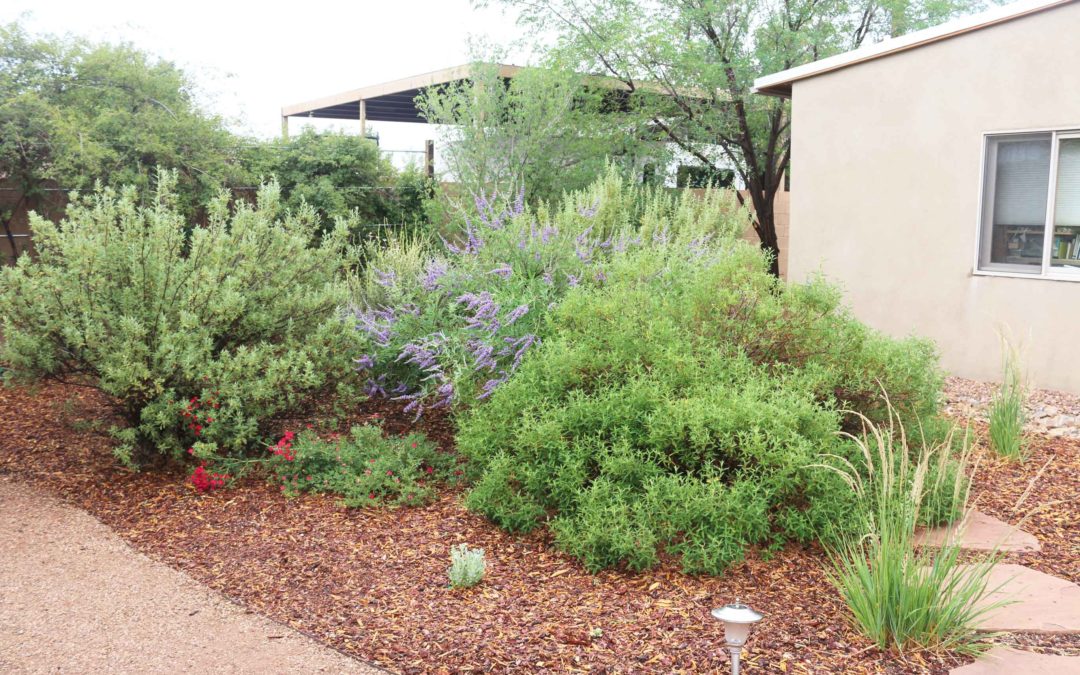
Mulch is any material laid on the surface of the soil to improve growing conditions. Mulch insulates plant roots from both heat and cold, reducing moisture loss from the soil by evaporation, feeding beneficial soil microorganisms that enhance plant growth, and improving soil health. Because organic mulches were once alive, they contain essential nutrients, minerals, and energy that nourish the soil ecosystem as they decompose. An important consideration when using mulches is to skip using landscape fabric, which prevents both the rich organic matter created by decomposition from working its way back into the soil and rainwater from soaking into the soil.

Below are the basic types of locally available organic mulches that we recommend. Remember to install to a depth of 3”-4” over bare dirt.   
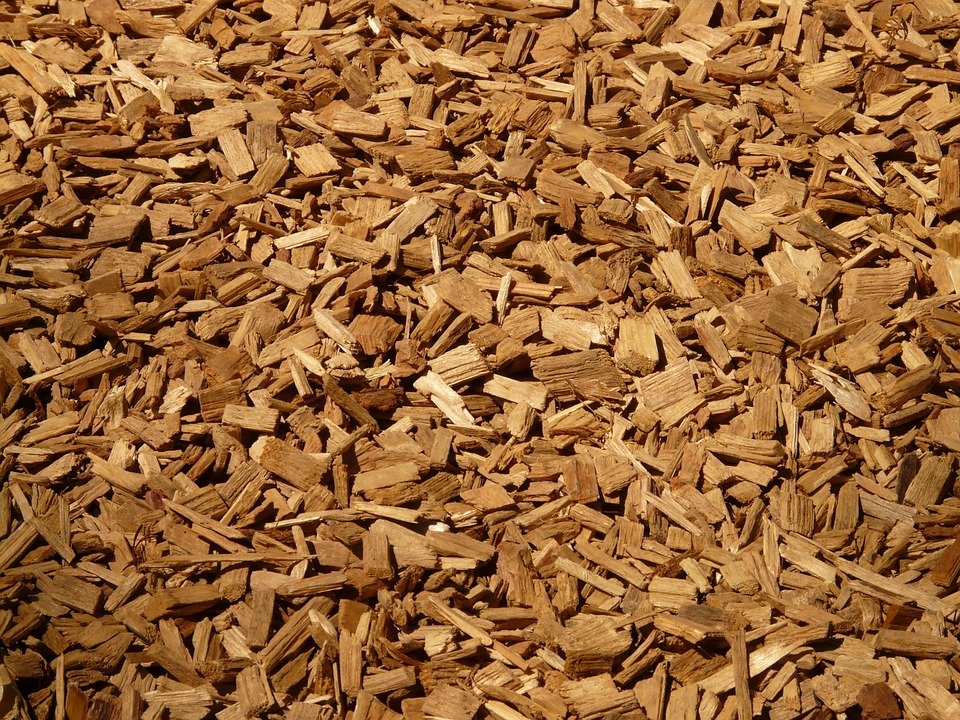
Wood chips: Wood chips are chipped pieces of trees. This is a long-lasting mulch that decomposes slowly over bare dirt, retains moisture, and prevents weeds. Most wood mulches available on the market are chipped flat and consistent in shape in size. These are great in areas that receive foot traffic as they compact down to a firm surface.

In areas of higher wind exposure or periodic inundation with water, use a shredded wood mulch that is more irregularly shaped and sized as the pieces will knit together better. This type of mulch can be recycled yard waste and tree trimmings as well as commercially available, locally processed wood products.
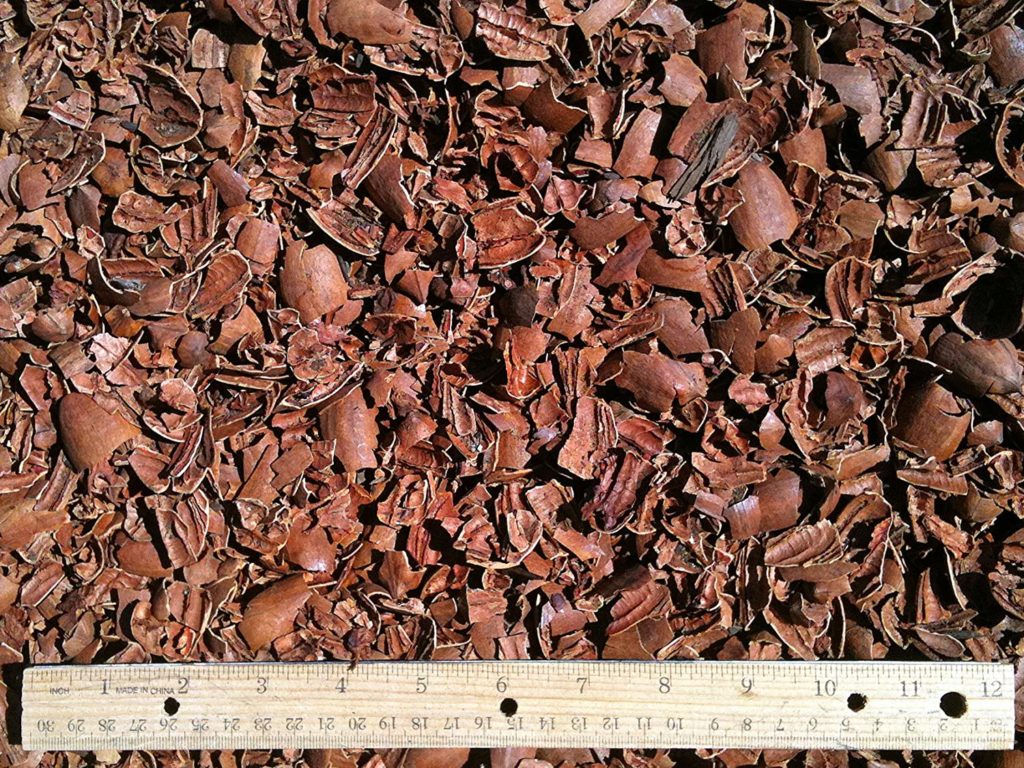
Pecan Shells: This long-lasting mulch has a nice color and good texture. It is very slow to break down into the soil. However, it attracts birds and rodents and blows in the wind unless partially cultivated into the soil. It also tends to mat together, creating a crust over the top of bare dirt.
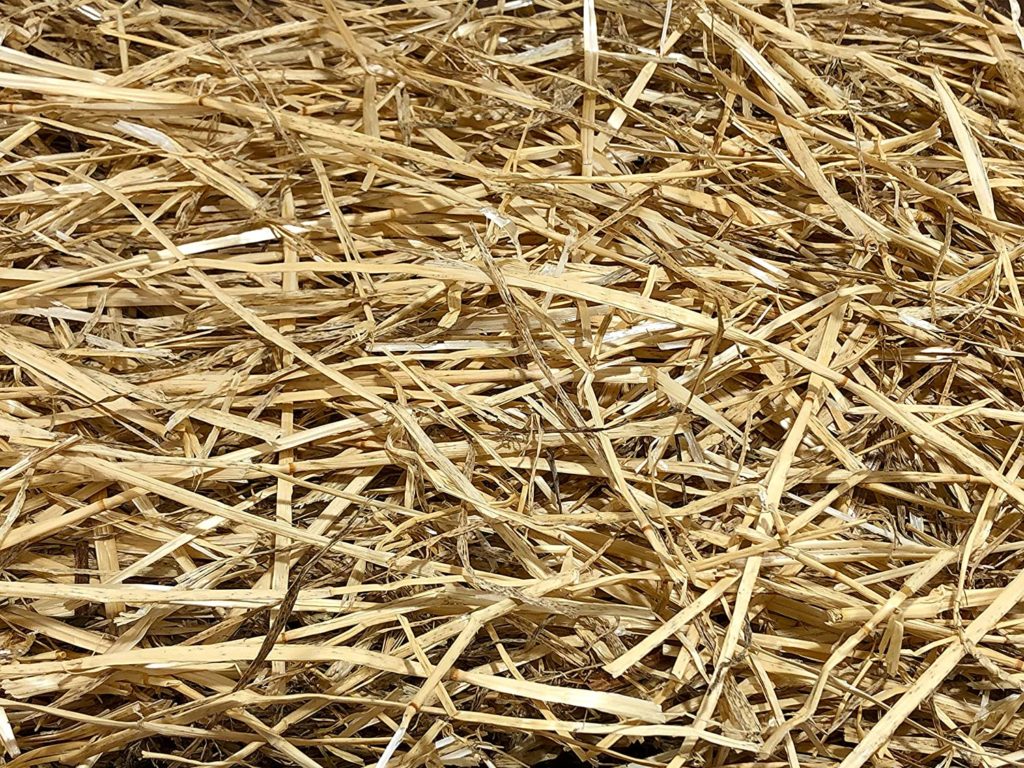
Straw: Straw breaks down quickly so it is most useful for mulching vegetable beds where it is renewed as crops are replanted. It is a good general mulch for winter protection and can be used on paths between vegetable rows. Keep in mind that it may carry weed seed.
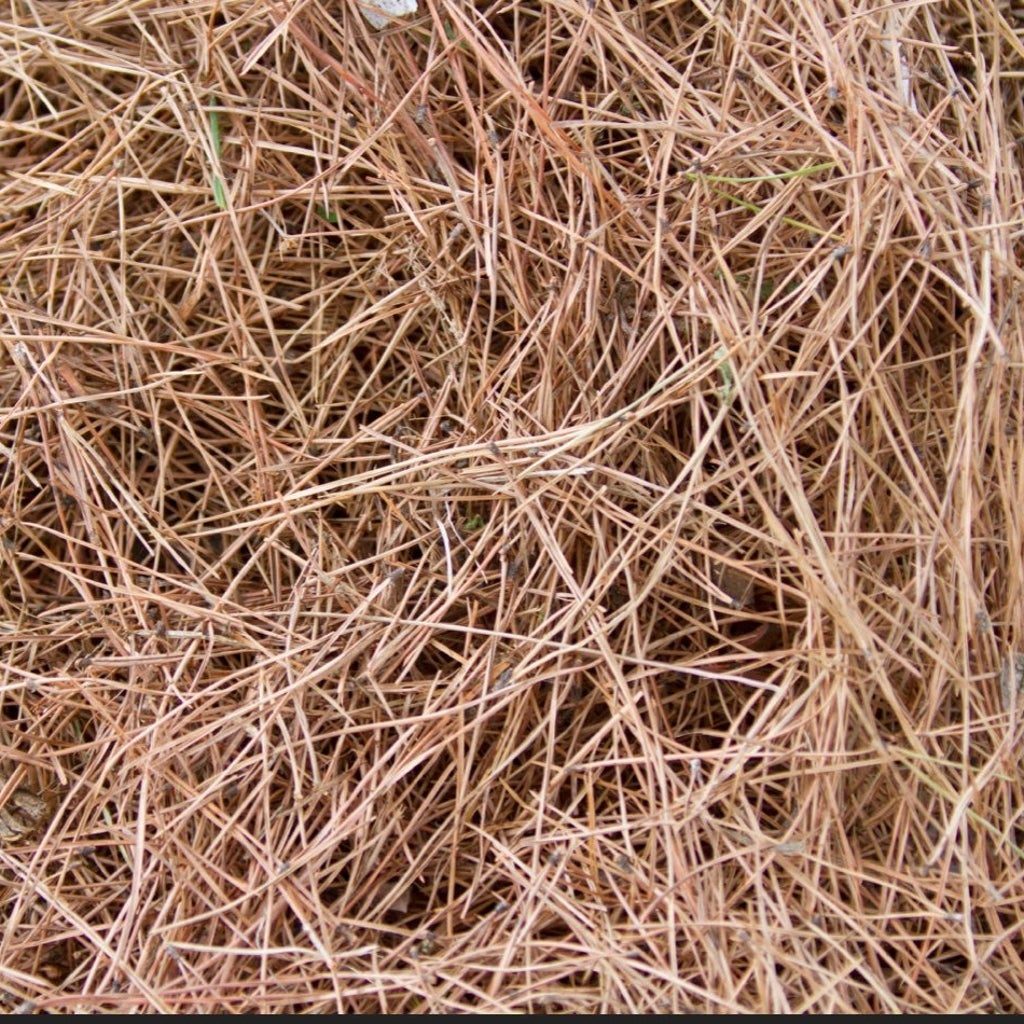
Pine Needles: Pine needles are a very good mulch. They are light, airy, and attractive but can be a fire hazard. These needles are safe to use as mulch around most plants, especially perennials, in your garden. Because pine needles contain high levels of resins, they repel water and decompose much more slowly than leaves from most deciduous trees. Because of their shape, they don’t become moist or compost rapidly. This makes them especially useful in areas where you will not be digging frequently. The fragrance of pine needles on sunny days is also an added benefit when they are used as garden mulch. No need to be concerned that pine needles are too acidic for use in our gardens. The added acidity, which happens slowly, is beneficial to our soils. They are very slow to compost, so they are often a better mulch than compostable material.

Other Mulches:

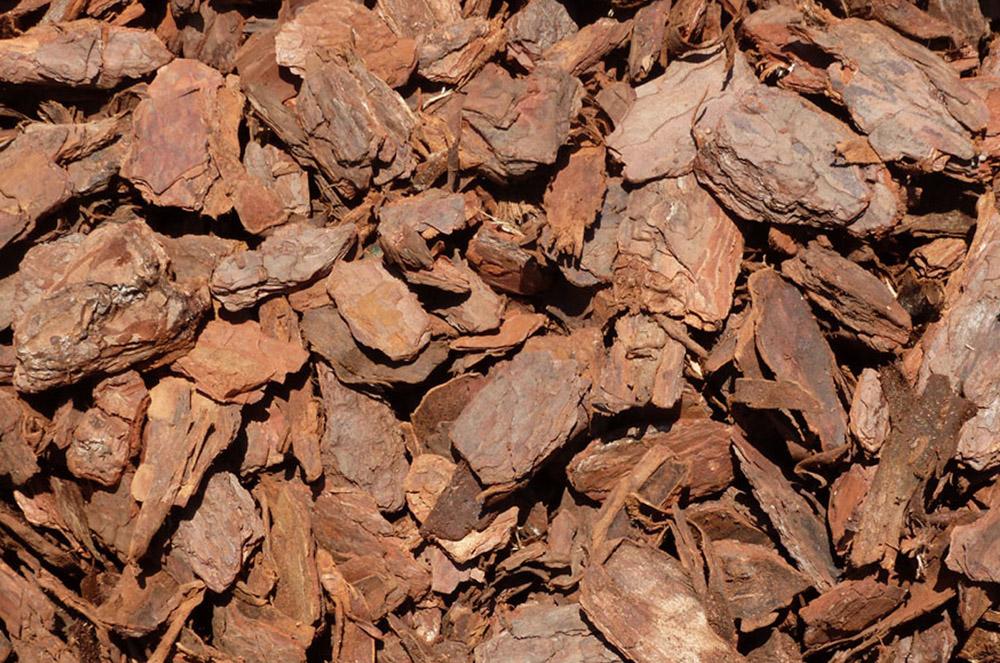
Bark: Large 2”-4” bark pieces are not recommended because they take too long to break down. The mulch made from bark tends to be lighter and can tend to migrate more easily. The bark is naturally water-resistant, so it has minimal value in feeding soil microorganisms and improving soil health.
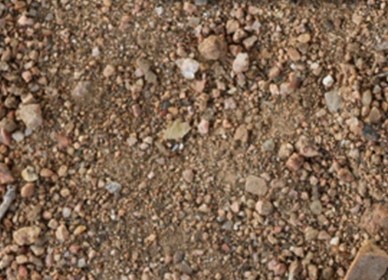
Crushed Stone, Crusher Fines, or Decomposed Granite: Crusher fines come in a variety of aggregate colors. They are recommended for use as pathways and patios or as mulch under plantings for heat-loving, desert-accent plants.
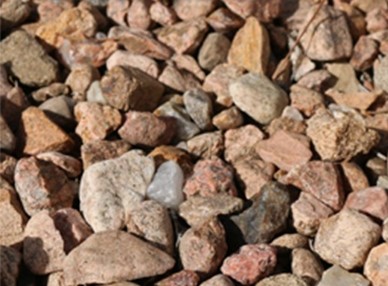
Gravel Rock and Cobble: While you see these used throughout the city in landscapes, they are best used to prevent erosion on steep slopes or in swale areas. They are difficult to maintain without regular weeding or pre-emergent treatments.
Useful tips: Mulch typically packs down over time. Use a 3”-4” layer of mulch, which is about one yard of mulch per 100 square feet. “Spend an hour deepening the organic mulch and save several hours of weeding.” By Judith Phillips

Author:  Jill Brown, ASLA. Landscape Architect and Owner of My Landscape Coach  Research collected from NMSU Desert Blooms and Soilutions, LLC

Water-Wise Vegetable Gardening

With our hot summers and low precipitation, growing vegetables in NM can be
challenging. This talk will provide strategies and recommendations for growers to
cultivate a thriving vegetable harvest in the region. Discussion will include irrigation and infrastructure suggestions, as well as selection of vegetable varieties that are well-adapted to the area.

Instructor: Stephanie Walker, PhD. Professor and Vegetable Specialist, New Mexico
State University, Extension Plant Sciences Department.

Maintaining Tree Health During Drought

Learn from Albuquerque’s leading tree expert how to identify drought stress in trees,
understand their responses to drought, and implement strategies to keep them alive and thriving in hot, dry weather.

Instructor: Joran Viers, Board Certified Master Arborist and Municipal Specialist,
International Society of Arboriculture (ISA). Senior Arborist, Legacy Tree Company,
Albuquerque. Former City Forester, City of Albuquerque

Creating a Drought-Tolerant Refuge for Yourself and Wildlife

Instructor: Laurel Ladwig, M.S. She is the ABQ Backyard Refuge Program Director for the Friends of Valle de Oro National Wildlife Refuge, a part-time faculty member in the Department of Geography and Environmental Studies, and Associate Director of the R.H. Mallory Center for Community Geography at the University of New Mexico and is enthusiastic about all opportunities to encourage people to develop a relationship with our wild neighbors.

Designing Resilient Landscapes: Plant Adaptations, Communities, and Selection for Arid Environments

Instructor: Maria Thomas is the Curator of Plants at the ABQ BioPark where she manages the botanical exhibits, plant collections, horticultural staff, and related programs for the 150-acre public park and garden. Additionally, Maria is an Adjunct Professor at the University of New Mexico in the Landscape Architecture department.

Climate-Ready Trees- Planting for a Warmer and (Hopefully) Shadier Future

Instructor: Marisa Y. Thompson, PhD Extension Urban Horticulture Specialist. New Mexico State University Department of Extension Plant Sciences, Los Lunas Agricultural Science Center, Think Trees NM, President of the Board (2023-current).

Plant Adaptations to Heat & Drought

Noticing the Ways Plants Thrive in our Yards and Natural Areas Learn how to Recognize Drought-Adapted Traits in Everyday Plants all Around Us.

Instructor: Marisa Y. Thompson, PhD Extension Urban Horticulture Specialist. New Mexico State University Department of Extension Plant Sciences, Los Lunas Agricultural Science Center, Think Trees NM, President of the Board (2023-current).

Hose Bib Tree Irrigation System for Your Trees: Simple Systems for Thriving Trees!

Instructor: Richard Perce has twenty years’ experience working with trees and irrigation here in New Mexico. He is a former certified arborist and currently holds the Irrigation Association’s Landscape Irrigation Auditor certification and is a certified QWEL irrigation instructor. He worked as a landscape contractor for more than a decade and is the Water Authority’s former Irrigation Efficiency Specialist. He also has a Masters of Community and Regional Planning from UNM and currently works at Anthropopulus Design + Planning.

Passive Rainwater Harvesting

This workshop introduces participants to the principles and practices of passive rainwater harvesting. Attendees will learn how to capture, slow, spread, and infiltrate rainwater into the landscape using simple, low-cost methods such as swales, berms, and basins. The workshop emphasizes working with the natural flow of water to reduce runoff, prevent erosion, and support healthy soil and plant life. By implementing passive rainwater harvesting, participants can conserve water, and create more resilient, self-sustaining landscapes.

Instructors: Anthony Luketich, Natural Resource Scientist, Anthony Luketich is a Natural Resources Scientist for Bernalillo County where he is focused on water conservation and water-wise landscape practices. He received a degree in Watershed Management and Ecohydrology from the University of Arizona where he studied the relationship between trees and water. Anthony has worked across the Southwest US as a research scientist as well as a water harvesting field technician where he became a certified water harvesting practitioner.

Bobby Mullin, Natural Resource Scientist, Bernalillo County Stormwater Quality Program Bobby Mullin is a Natural Resource Scientist for Bernalillo County in the Stormwater Quality Program. He focuses on improving stormwater quality in the Middle Rio Grande Watershed and promoting sustainable and resilient landscapes using Green Stormwater Infrastructure and rainwater harvesting. Bobby received his Bachelor of Science in Environmental Science from Bucknell University in 2011. Before joining Bernalillo County, he had worked as an environmental consultant remediating contaminated soil and groundwater and as a Research Scientist studying the impacts of climate change, drought and plant mortality in New Mexico ecosystems.

Xeriscape: The Desert Friendly Yard

Join us for learning all of the tips, and benefits of our Xeriscape program!

3 Steps to Landscape Success

Service, Settings, and Selection are the keys to landscape success!