
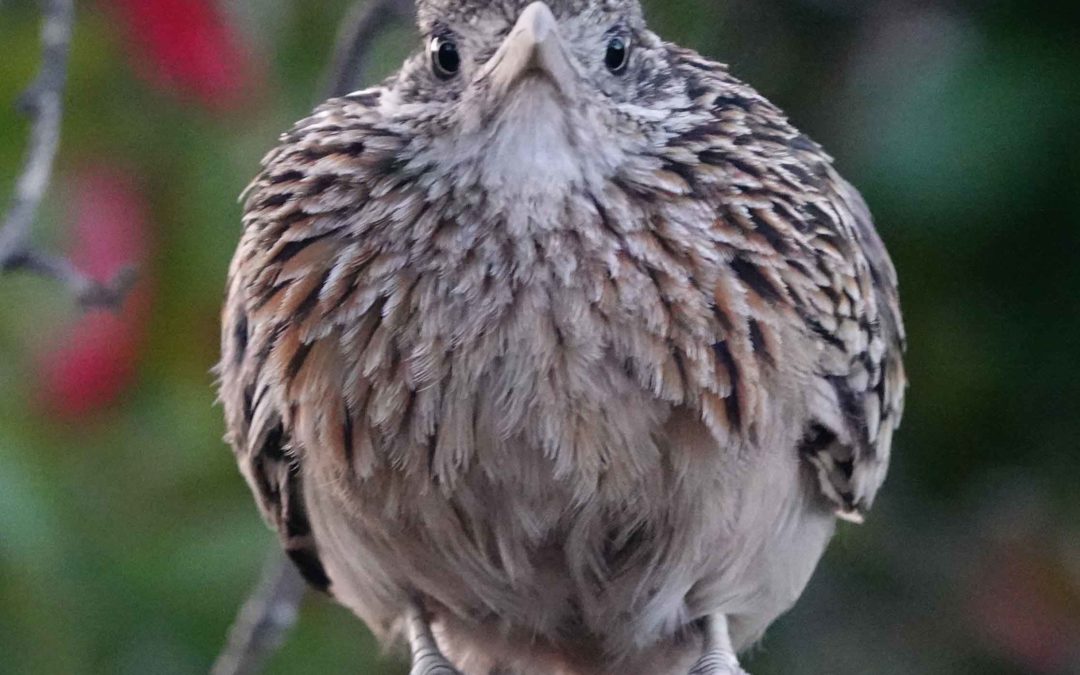
All species are in constant need of habitat in which to dwell that gives the next generation a chance to thrive. It is easy to share your space with wildlife and provide crucial habitat for birds. If you have a yard with non-native grass (or one full of gravel), you have a blank slate for making your yard a bird and pollinator paradise. By planting xeric and native plants and using natural mulch, you can make your yard cooler, reduce water usage and actively care for birds. 
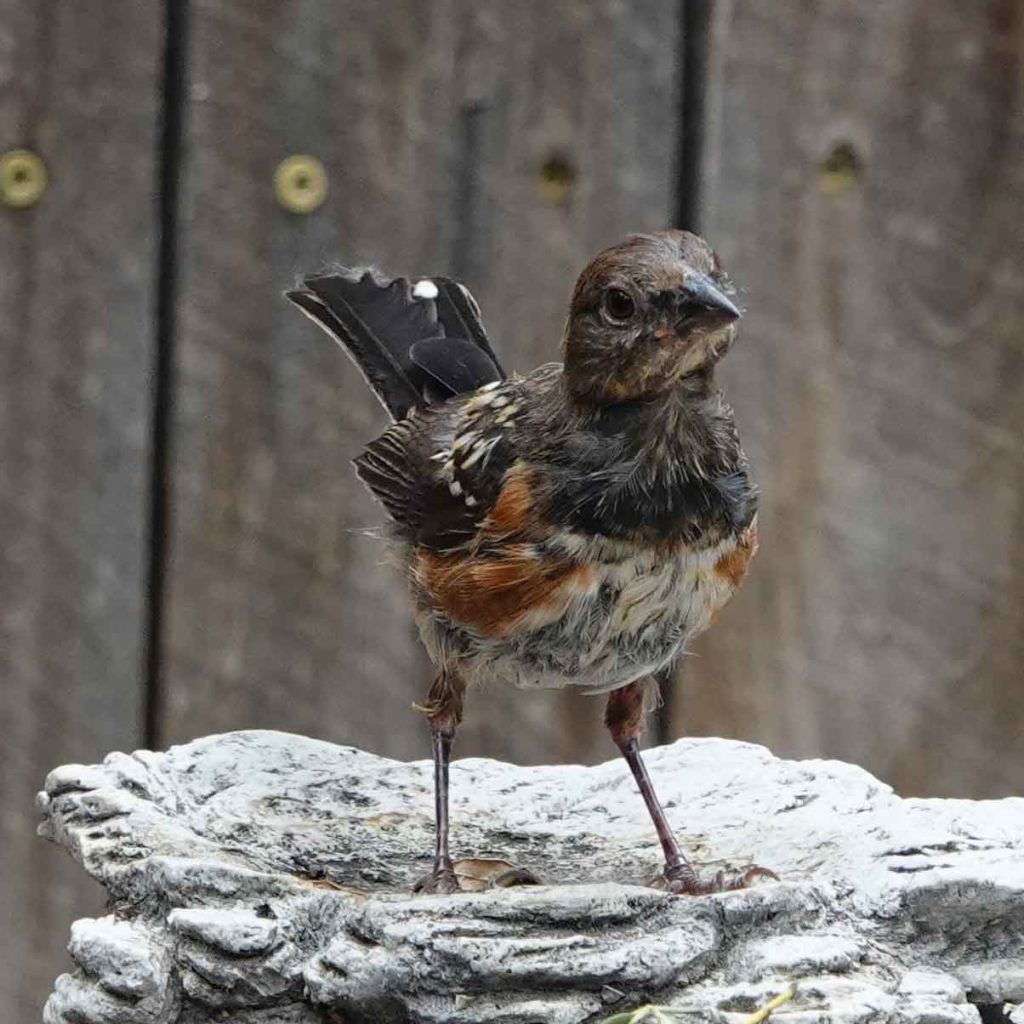
Spotted Towhee

If the thought of converting an entire yard seems daunting, dig out the grass (or pull back the rocks and weed cloth) from one section at a time. Adding pollinator plants to a sunny patch is a great way to start. Many pollinator plants produce fruits or seeds for birds.

Providing both food and cover is important for birds. If you already have mature shrubs and trees, you can focus on adding food sources. If your yard is bare, plan to add different levels of habitat with trees, shrubs, perennial flowering plants and native grasses. Plant wildflowers in clusters of three or more so that birds and pollinators will notice them when flying by and be able to have a hearty meal once they find the food source. For information about the size and needs of each plant you want to put in your yard as well as its habitat value, search for “bird” in The ABQ Backyard Refuge plant list.

In the desert, providing a clean water source is beneficial to birds. A dinner plate with fresh water will be as welcome as a fancy bird bath!

Another easy way to make a bird-friendly yard is by employing these simple practices:

  • Keep birds safe by trimming trees after nesting season ends in late September. Bird nests are inconspicuous by design and can be easily overlooked. Trees with dead or diseased branches also provide perches, food, shelter, and nesting sites. If they don’t pose a safety risk, consider leaving dead branches for the birds.

  • Plants that provide seeds for birds can only do so if you leave the dried seed heads over winter instead of cutting them off in autumn. Leave them standing until spring and then remove last year’s stalks to make room for new growth.

  • Leaving even just a small patch of leaves where they fall supports insects and the birds, like Spotted Towhees, that rely on them. 
  • Challenge yourself to develop a tolerance for “pests." Insects are the primary food source for many species of birds. Hummingbirds use spider webs to build nests that hold fast to branches and expand around their growing nestlings. Avoid using chemical controls so you do not harm the wildlife you’ve invited into your yard.

  • Love your dandelions! In addition to supporting pollinators, hummingbird mamas use aster fluff to build cozy nests.

  • Owls and other raptors keep rodent populations in check and die if they eat a poisoned rat or mouse. Never use rodenticides! If you have a suitable tree, consider installing an owl box as well.

  • Domestic cats are part of the ecosystem when outdoors. They are both predators and prey, killing millions of birds and mammals each year, and in danger of being eaten by a coyote or owl. Keeping your cat indoors, or in a catio, will protect your cat and wildlife at the same time.

The ABQ Backyard Refuge Program introductory guide, workbook and plant list can be very helpful in designing a habitat that includes all the necessary habitat elements (food, shelter, water), or you can simply begin by managing your yard in bird-friendly ways.
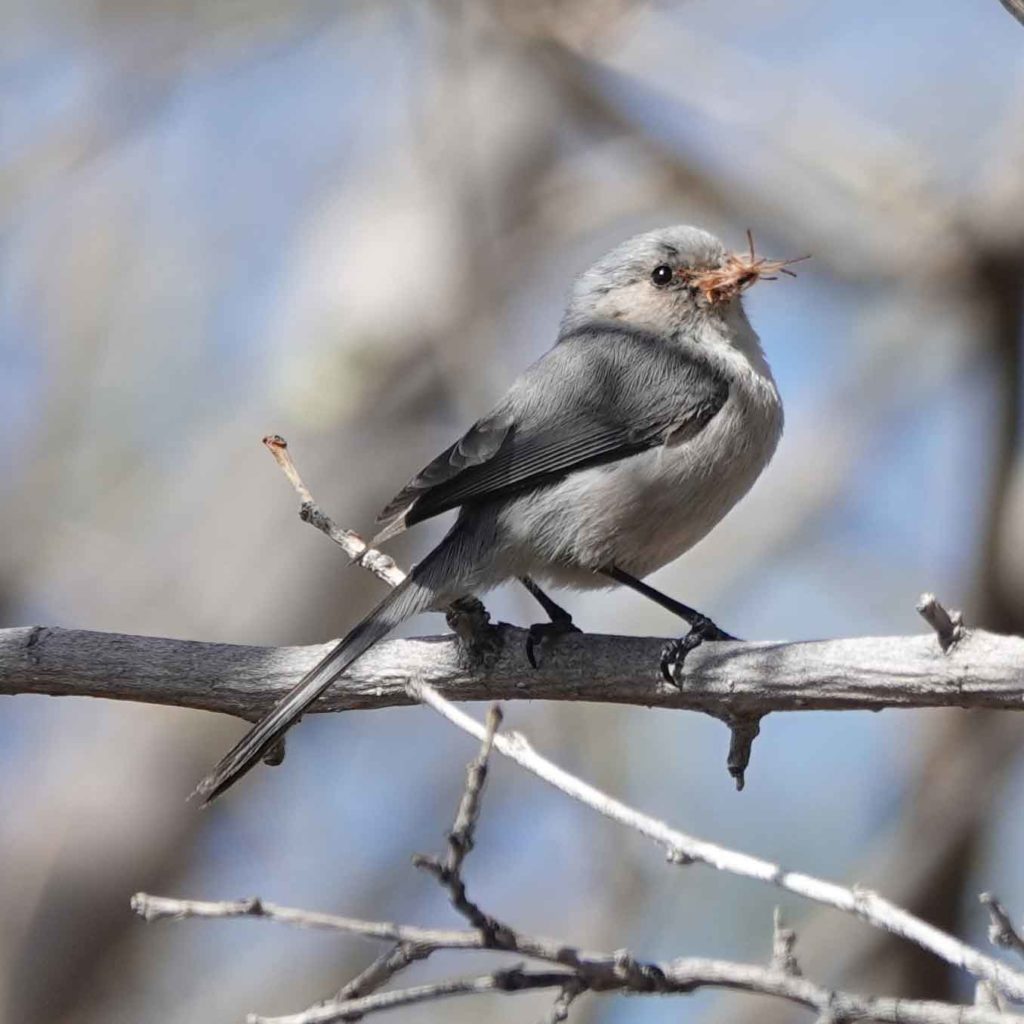
Bushtit

Supporting birds in our urban area starts with focusing care and attention on our wild neighbors and taking their well-being into consideration when managing our yards. By supporting birds you will have opportunities for observing how our wild neighbors live and discovering new ways of sharing your space. Sharing our resources and growing habitat that benefits both you and wildlife can make our city a better place for the entire living community.


Learn more about our attracting wildlife here:

Easy pollinator gardening

Backyard refuges for people and wildlife. 

ABQ Backyard Refuge Program

Author: Laurel Ladwig, ABQ Backyard Refuge Program Director. Find her at laurel@friendsofvalledeoro.org  Have a question about the article? AskAnExpert@abcwua.org

Water-Wise Vegetable Gardening

With our hot summers and low precipitation, growing vegetables in NM can be
challenging. This talk will provide strategies and recommendations for growers to
cultivate a thriving vegetable harvest in the region. Discussion will include irrigation and infrastructure suggestions, as well as selection of vegetable varieties that are well-adapted to the area.

Instructor: Stephanie Walker, PhD. Professor and Vegetable Specialist, New Mexico
State University, Extension Plant Sciences Department.

Maintaining Tree Health During Drought

Learn from Albuquerque’s leading tree expert how to identify drought stress in trees,
understand their responses to drought, and implement strategies to keep them alive and thriving in hot, dry weather.

Instructor: Joran Viers, Board Certified Master Arborist and Municipal Specialist,
International Society of Arboriculture (ISA). Senior Arborist, Legacy Tree Company,
Albuquerque. Former City Forester, City of Albuquerque

Creating a Drought-Tolerant Refuge for Yourself and Wildlife

Instructor: Laurel Ladwig, M.S. She is the ABQ Backyard Refuge Program Director for the Friends of Valle de Oro National Wildlife Refuge, a part-time faculty member in the Department of Geography and Environmental Studies, and Associate Director of the R.H. Mallory Center for Community Geography at the University of New Mexico and is enthusiastic about all opportunities to encourage people to develop a relationship with our wild neighbors.

Designing Resilient Landscapes: Plant Adaptations, Communities, and Selection for Arid Environments

Instructor: Maria Thomas is the Curator of Plants at the ABQ BioPark where she manages the botanical exhibits, plant collections, horticultural staff, and related programs for the 150-acre public park and garden. Additionally, Maria is an Adjunct Professor at the University of New Mexico in the Landscape Architecture department.

Climate-Ready Trees- Planting for a Warmer and (Hopefully) Shadier Future

Instructor: Marisa Y. Thompson, PhD Extension Urban Horticulture Specialist. New Mexico State University Department of Extension Plant Sciences, Los Lunas Agricultural Science Center, Think Trees NM, President of the Board (2023-current).

Plant Adaptations to Heat & Drought

Noticing the Ways Plants Thrive in our Yards and Natural Areas Learn how to Recognize Drought-Adapted Traits in Everyday Plants all Around Us.

Instructor: Marisa Y. Thompson, PhD Extension Urban Horticulture Specialist. New Mexico State University Department of Extension Plant Sciences, Los Lunas Agricultural Science Center, Think Trees NM, President of the Board (2023-current).

Hose Bib Tree Irrigation System for Your Trees: Simple Systems for Thriving Trees!

Instructor: Richard Perce has twenty years’ experience working with trees and irrigation here in New Mexico. He is a former certified arborist and currently holds the Irrigation Association’s Landscape Irrigation Auditor certification and is a certified QWEL irrigation instructor. He worked as a landscape contractor for more than a decade and is the Water Authority’s former Irrigation Efficiency Specialist. He also has a Masters of Community and Regional Planning from UNM and currently works at Anthropopulus Design + Planning.

Passive Rainwater Harvesting

This workshop introduces participants to the principles and practices of passive rainwater harvesting. Attendees will learn how to capture, slow, spread, and infiltrate rainwater into the landscape using simple, low-cost methods such as swales, berms, and basins. The workshop emphasizes working with the natural flow of water to reduce runoff, prevent erosion, and support healthy soil and plant life. By implementing passive rainwater harvesting, participants can conserve water, and create more resilient, self-sustaining landscapes.

Instructors: Anthony Luketich, Natural Resource Scientist, Anthony Luketich is a Natural Resources Scientist for Bernalillo County where he is focused on water conservation and water-wise landscape practices. He received a degree in Watershed Management and Ecohydrology from the University of Arizona where he studied the relationship between trees and water. Anthony has worked across the Southwest US as a research scientist as well as a water harvesting field technician where he became a certified water harvesting practitioner.

Bobby Mullin, Natural Resource Scientist, Bernalillo County Stormwater Quality Program Bobby Mullin is a Natural Resource Scientist for Bernalillo County in the Stormwater Quality Program. He focuses on improving stormwater quality in the Middle Rio Grande Watershed and promoting sustainable and resilient landscapes using Green Stormwater Infrastructure and rainwater harvesting. Bobby received his Bachelor of Science in Environmental Science from Bucknell University in 2011. Before joining Bernalillo County, he had worked as an environmental consultant remediating contaminated soil and groundwater and as a Research Scientist studying the impacts of climate change, drought and plant mortality in New Mexico ecosystems.

Xeriscape: The Desert Friendly Yard

Join us for learning all of the tips, and benefits of our Xeriscape program!

3 Steps to Landscape Success

Service, Settings, and Selection are the keys to landscape success!