
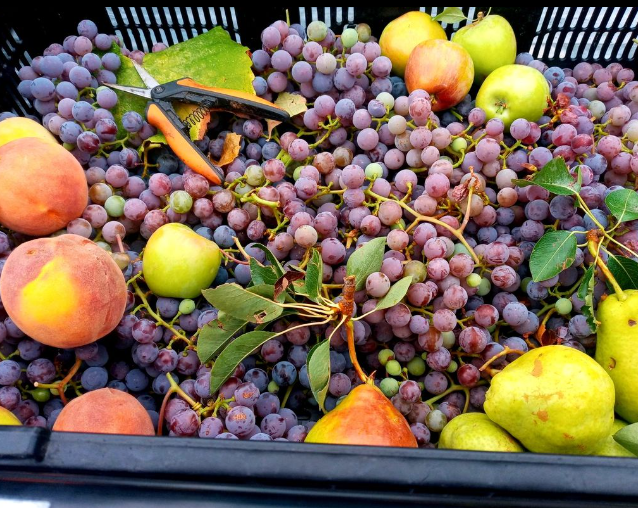
If you’ve walked around your neighborhood, you’ve probably noticed cherry trees being flocked by birds and buckets of fruit with “Free Organic Apricots” signs. Yes, it’s harvest season in Albuquerque. Have you ever wondered what becomes of all that fruit?

Back in 2014, avid canners and food preservers Erin and Trista noticed fruit trees around Albuquerque going unpicked. They placed an ad on Craigslist, asking for access to unused trees. The response was overwhelming, and this local chapter of the Food is Free Project, a global movement started in Austin, Texas, began.

Food is Free Albuquerque (FIFABQ) harnesses the abundance of fresh food within our community and connects it to people in need. The nonprofit considers fresh food a human right and aims to reduce food waste while fighting for food equity and access to fresh and nutritious food.

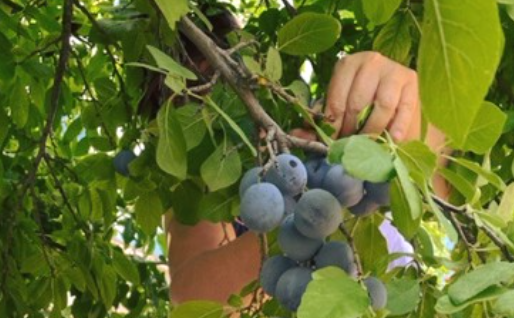
Volunteers help to harvest fresh food throughout Greater Albuquerque and Santa Fe. They then distribute the fresh food throughout the community in which it was gleaned to keep food as local as possible. Last year, 26,315 pounds were harvested.

FIFABQ fosters social empowerment through the growing and sharing of fresh food, striving to tap into the abundant private food resources within our community and redirecting millions of pounds to those overlooked by the existing food system. FIFABQ harvests everything aside from crab apples, mulberries and prickly pears.

The produce is predominantly distributed through collaborations with various organizations committed to feeding the community citywide. Explore the list of their partner organizations on the website.
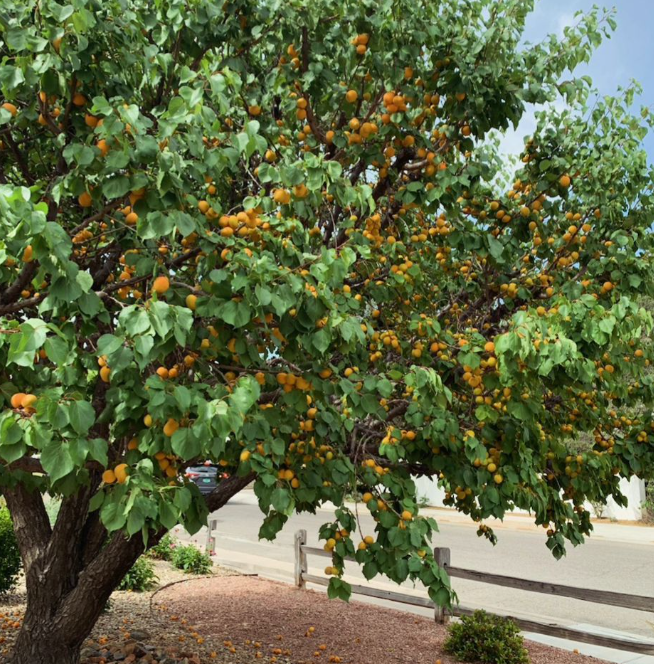
How can you help? If you have over 50 pieces of produce to harvest, you can harvest them yourself and schedule FIFABQ to come pick up and distribute the fruit. If you don’t have time to pick the fruit, you can schedule FIFABQ to harvest on-site.

For those with farms or orchards, you can schedule FIFABQ to harvest your farm or orchard. If you are interested in becoming a harvester, you can sign up as a volunteer.

Individuals and organizations who donate to Food is Free Albuquerque fall under the Emerson Good Samaritan Act.
Learn more about specific types of gardening here:

Food Forests a Prehistoric Agroecosystem for your Backyard

A Valuable Bosque Understory Shrub Clove Currants for the Birds, Bees and Butterfles

Fruit Trees for the Homeowner

Have a question about the article? AskAnExpert@abcwua.org

Water-Wise Vegetable Gardening

With our hot summers and low precipitation, growing vegetables in NM can be
challenging. This talk will provide strategies and recommendations for growers to
cultivate a thriving vegetable harvest in the region. Discussion will include irrigation and infrastructure suggestions, as well as selection of vegetable varieties that are well-adapted to the area.

Instructor: Stephanie Walker, PhD. Professor and Vegetable Specialist, New Mexico
State University, Extension Plant Sciences Department.

Maintaining Tree Health During Drought

Learn from Albuquerque’s leading tree expert how to identify drought stress in trees,
understand their responses to drought, and implement strategies to keep them alive and thriving in hot, dry weather.

Instructor: Joran Viers, Board Certified Master Arborist and Municipal Specialist,
International Society of Arboriculture (ISA). Senior Arborist, Legacy Tree Company,
Albuquerque. Former City Forester, City of Albuquerque

Creating a Drought-Tolerant Refuge for Yourself and Wildlife

Instructor: Laurel Ladwig, M.S. She is the ABQ Backyard Refuge Program Director for the Friends of Valle de Oro National Wildlife Refuge, a part-time faculty member in the Department of Geography and Environmental Studies, and Associate Director of the R.H. Mallory Center for Community Geography at the University of New Mexico and is enthusiastic about all opportunities to encourage people to develop a relationship with our wild neighbors.

Designing Resilient Landscapes: Plant Adaptations, Communities, and Selection for Arid Environments

Instructor: Maria Thomas is the Curator of Plants at the ABQ BioPark where she manages the botanical exhibits, plant collections, horticultural staff, and related programs for the 150-acre public park and garden. Additionally, Maria is an Adjunct Professor at the University of New Mexico in the Landscape Architecture department.

Climate-Ready Trees- Planting for a Warmer and (Hopefully) Shadier Future

Instructor: Marisa Y. Thompson, PhD Extension Urban Horticulture Specialist. New Mexico State University Department of Extension Plant Sciences, Los Lunas Agricultural Science Center, Think Trees NM, President of the Board (2023-current).

Plant Adaptations to Heat & Drought

Noticing the Ways Plants Thrive in our Yards and Natural Areas Learn how to Recognize Drought-Adapted Traits in Everyday Plants all Around Us.

Instructor: Marisa Y. Thompson, PhD Extension Urban Horticulture Specialist. New Mexico State University Department of Extension Plant Sciences, Los Lunas Agricultural Science Center, Think Trees NM, President of the Board (2023-current).

Hose Bib Tree Irrigation System for Your Trees: Simple Systems for Thriving Trees!

Instructor: Richard Perce has twenty years’ experience working with trees and irrigation here in New Mexico. He is a former certified arborist and currently holds the Irrigation Association’s Landscape Irrigation Auditor certification and is a certified QWEL irrigation instructor. He worked as a landscape contractor for more than a decade and is the Water Authority’s former Irrigation Efficiency Specialist. He also has a Masters of Community and Regional Planning from UNM and currently works at Anthropopulus Design + Planning.

Passive Rainwater Harvesting

This workshop introduces participants to the principles and practices of passive rainwater harvesting. Attendees will learn how to capture, slow, spread, and infiltrate rainwater into the landscape using simple, low-cost methods such as swales, berms, and basins. The workshop emphasizes working with the natural flow of water to reduce runoff, prevent erosion, and support healthy soil and plant life. By implementing passive rainwater harvesting, participants can conserve water, and create more resilient, self-sustaining landscapes.

Instructors: Anthony Luketich, Natural Resource Scientist, Anthony Luketich is a Natural Resources Scientist for Bernalillo County where he is focused on water conservation and water-wise landscape practices. He received a degree in Watershed Management and Ecohydrology from the University of Arizona where he studied the relationship between trees and water. Anthony has worked across the Southwest US as a research scientist as well as a water harvesting field technician where he became a certified water harvesting practitioner.

Bobby Mullin, Natural Resource Scientist, Bernalillo County Stormwater Quality Program Bobby Mullin is a Natural Resource Scientist for Bernalillo County in the Stormwater Quality Program. He focuses on improving stormwater quality in the Middle Rio Grande Watershed and promoting sustainable and resilient landscapes using Green Stormwater Infrastructure and rainwater harvesting. Bobby received his Bachelor of Science in Environmental Science from Bucknell University in 2011. Before joining Bernalillo County, he had worked as an environmental consultant remediating contaminated soil and groundwater and as a Research Scientist studying the impacts of climate change, drought and plant mortality in New Mexico ecosystems.

Xeriscape: The Desert Friendly Yard

Join us for learning all of the tips, and benefits of our Xeriscape program!

3 Steps to Landscape Success

Service, Settings, and Selection are the keys to landscape success!