
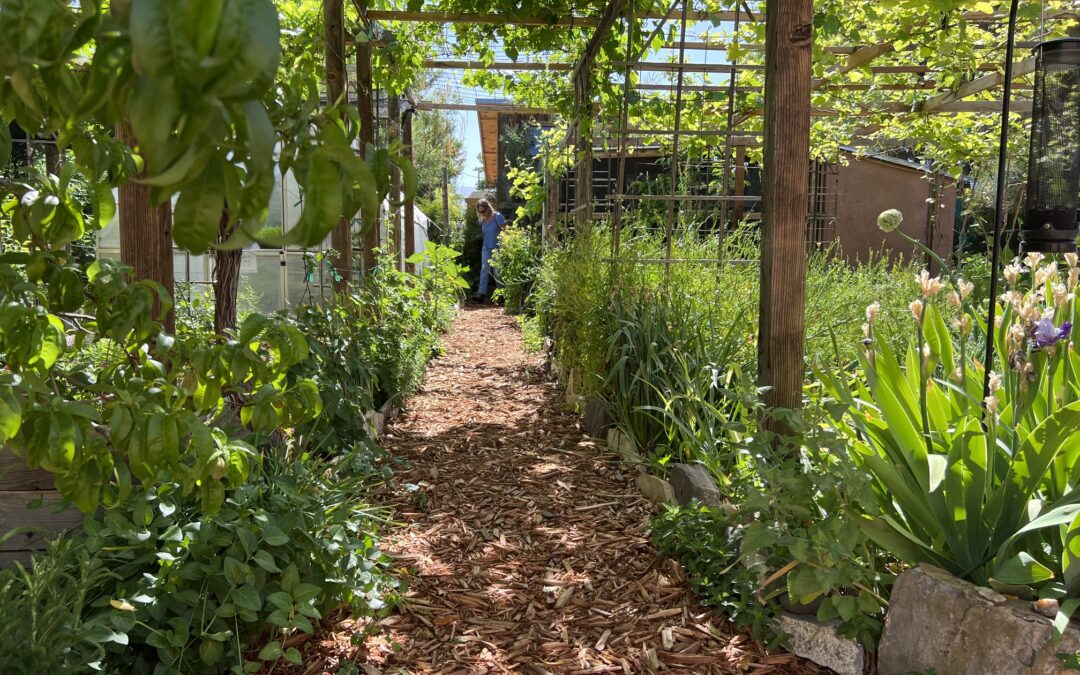
We recently spoke with Judith Phillips, a local garden writer and landscape designer, about why vines are so useful in Southwest landscapes and how homeowners can use them successfully.
Vines can feel intimidating because many grow quickly and can become large or unruly. But Phillips points out that they solve landscape challenges where other plant types may not work. Vines create fast shade, screen narrow spaces, add winter interest and provide food and habitat for pollinators.
Below are suggestions of vine species for each of these four landscape scenarios.
CREATE FAST SHADE
When you don’t have the time or space needed to grow shade trees, but you can’t live comfortably outdoors in the blistering sun, building an arbor and planting a vine to provide a cool leafy canopy may be the solution.
Phillips notes that vines can create shade faster than a tree. Once established, many vines, such as grapes, can have individual canes that grow as much as 10 feet a year, allowing them to quickly climb up and over a pergola or other structure. Because many vines are naturally riparian, an established large woody vine may use about as much water as a medium-sized tree. Their fast growth also means they require regular guidance and pruning, but the reward is a comfortable, inviting outdoor space.
Open lattice ramadas, arbors and pergolas all work well for vines. Wood is commonly used for structures because it is simple and easy to build with, but in Albuquerque’s climate, steel is often ideal because it is strong, long-lasting, low maintenance and resists UV damage.
Vines can be guided around structures, fences and trellises by gently weaving stems or attaching them with twist ties, string or twine through chain-link fencing or welded wire mesh, sometimes called “hog panel.” Remove ties once the vine has grown into place.
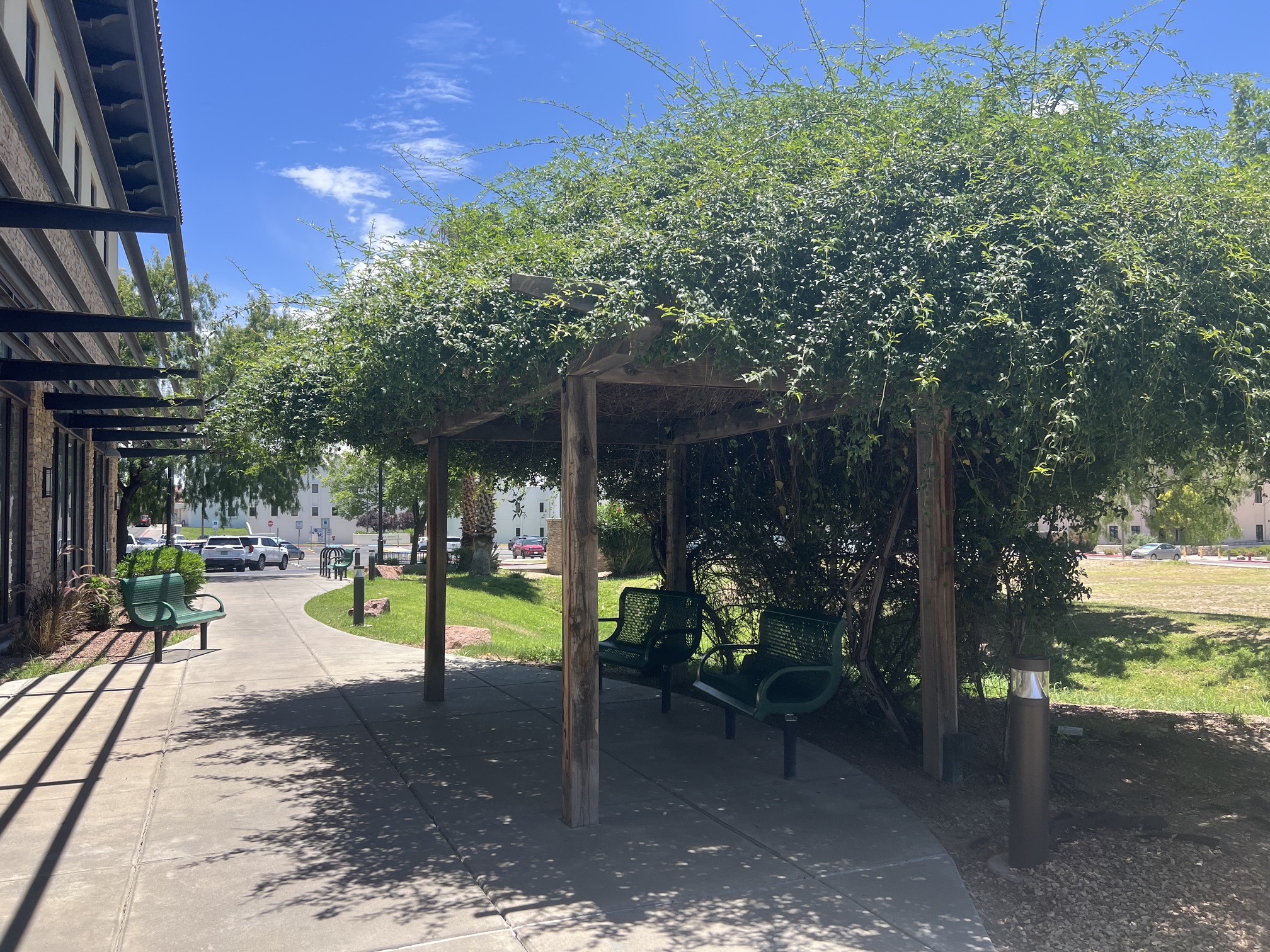
Lady Banks’ rose growing on pergola providing shade to seating area.
Some great species to create shade on an arbor are Lady Banks’ rose, wisteria and canyon grapevine.
Lady Banks’ rose (Rosa banksiae): Rarely do you find a plant that is fast growing, evergreen and long-lived. Lady Banks’ rose is all those things, and it produces a beautiful if brief show of flowers in spring. And it uses surprisingly little water and grows well in sun or shade. This plant becomes quite large and, unlike most roses, blooms on old wood. If it grows too large, guide it around the structure or prune away unwanted growth; it adapts well to heavy pruning. Lady Banks’ is thornless and has incredible show stopping spring blooms.
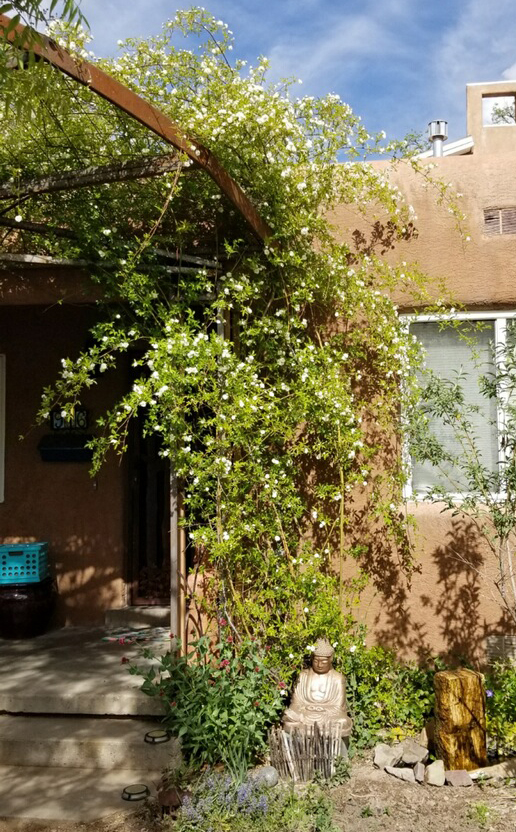
Lady Banks’ on metal trellis.
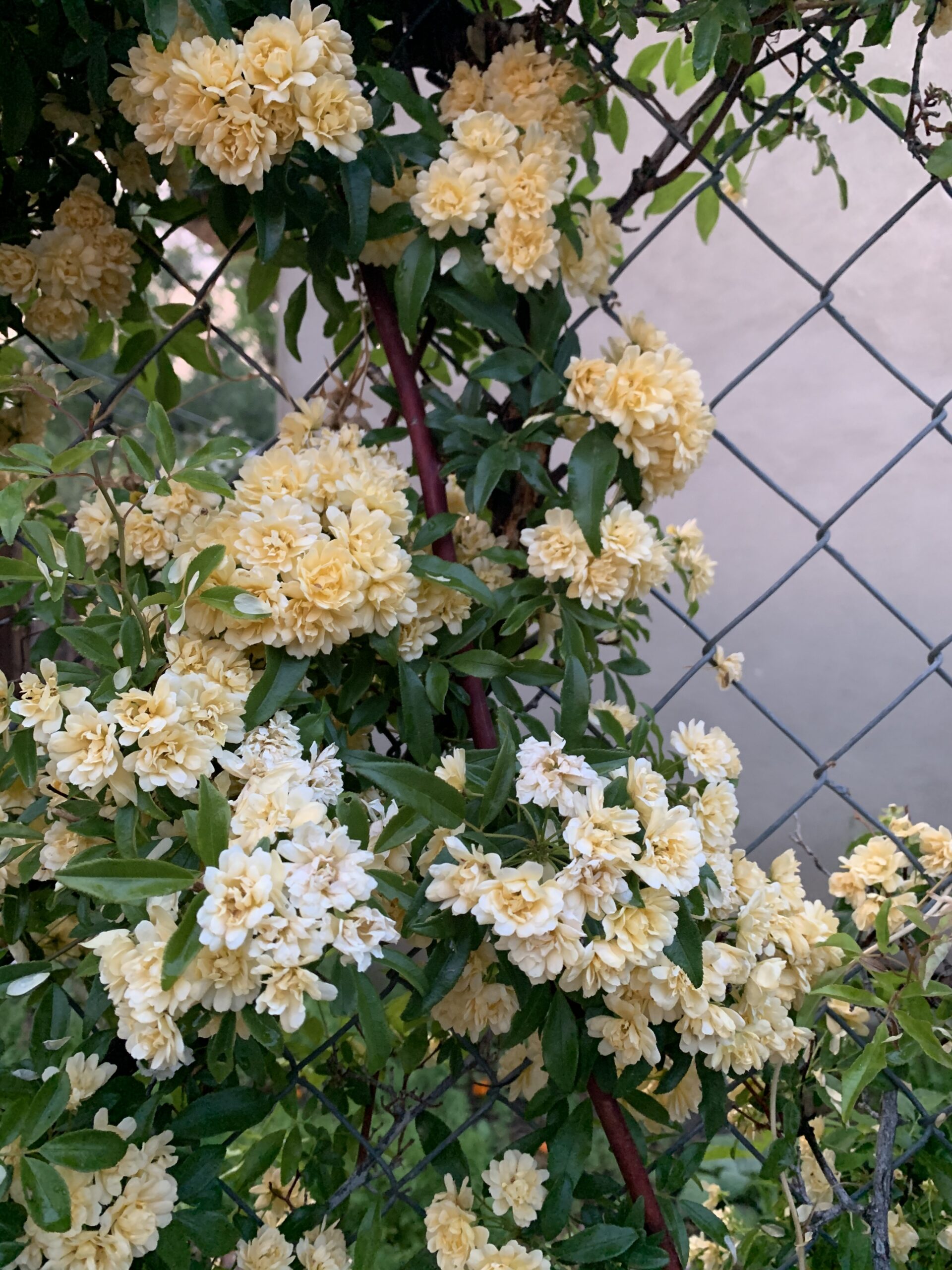
Lady Banks Rose blooming on chain link fence.
Wisteria (Wisteria sinensis): The pendulous, sweet-scented lavender flowers of this vine are some of the first to bloom in the spring. Bright green leaves follow shortly thereafter, filling the plant and creating lots of dappled shade below. Once the flowers fade, the leaves fill in to provide dense shade in the summer. Expect woody stems over time and train the vine strategically as it develops. Wisteria grows well in sun, shade and part shade.
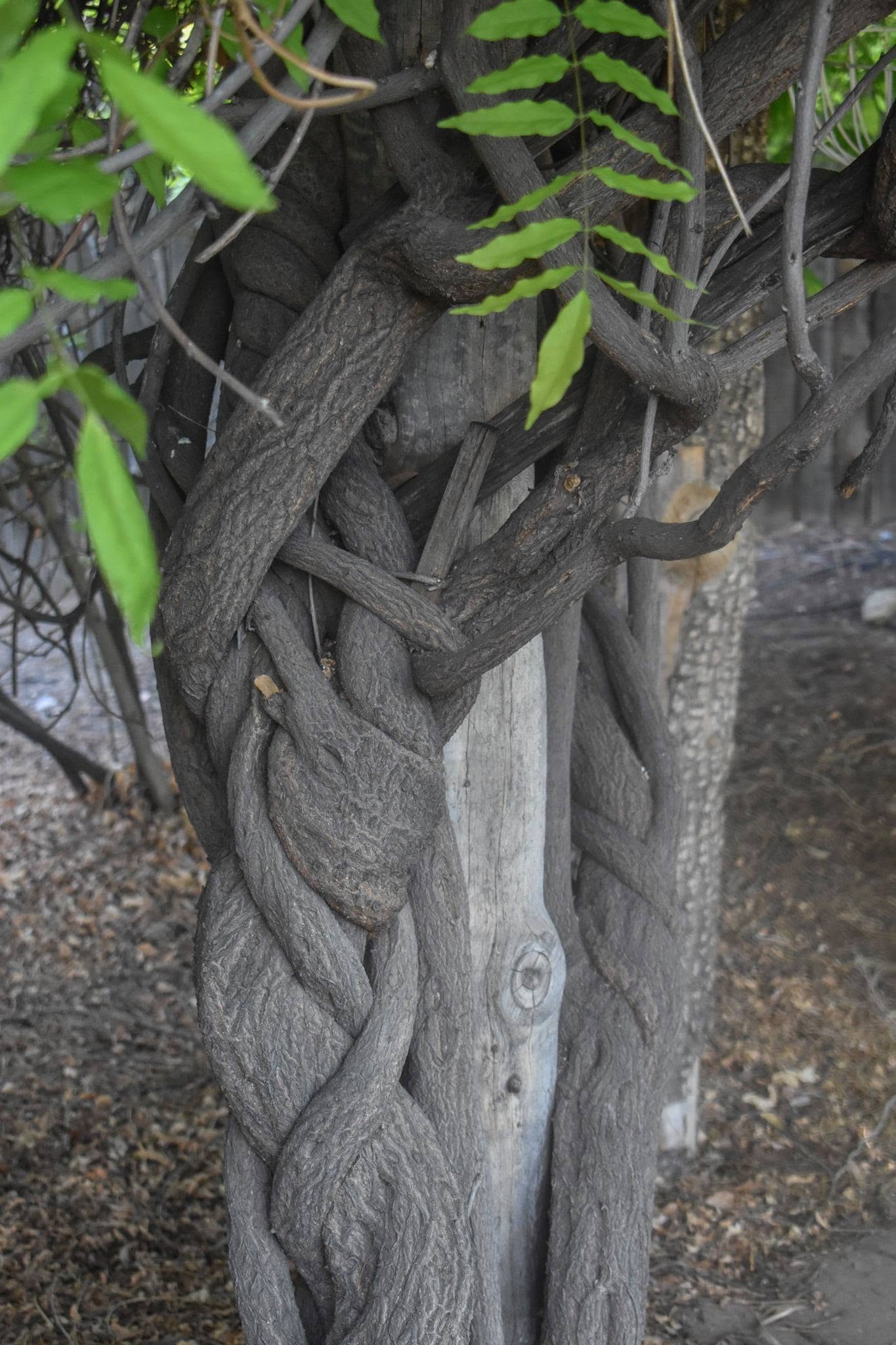
Close up of Wisteria Trunk by Hunter Ten Broeck
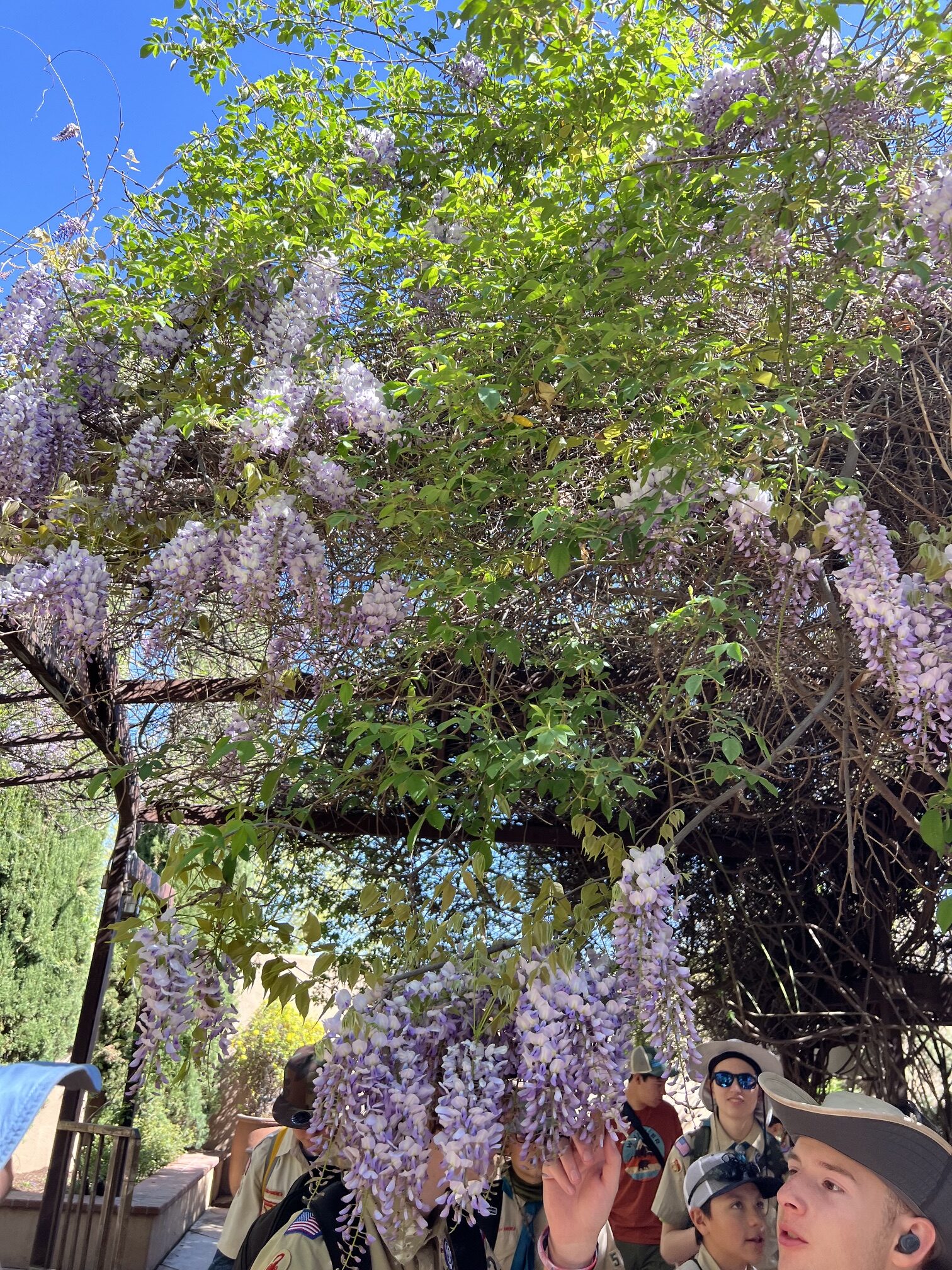
Wisteria blooms hanging from a pergola.
Grapes, multiple varieties: New Mexico is one of the oldest grape growing regions in North America, with plants brought to the state by Spanish colonialists and planting records dating back to 1652. Grapes prefer consistent moisture during their first year of establishment and grow best in full sun. The vines are fast growing and long-lived. Beautiful bright leaves create dense shade, and the fruit is delicious Grapes are deciduous so be prepared for a sculptural woody vista throughout the winter months. Late winter, before the last frost, is the best time to train and prune them. Some varieties to try are Himrod, an early ripening seedless white table grape; Red Flame, a seedless red table grape; Canadice, a cold hardy seedless red table grape known for disease resistance; and the unique Flambeau, a seedless pink table grape with strawberry sweetness. Another the Canyon grape, has beautiful fall color and grapes are loved by wildlife.
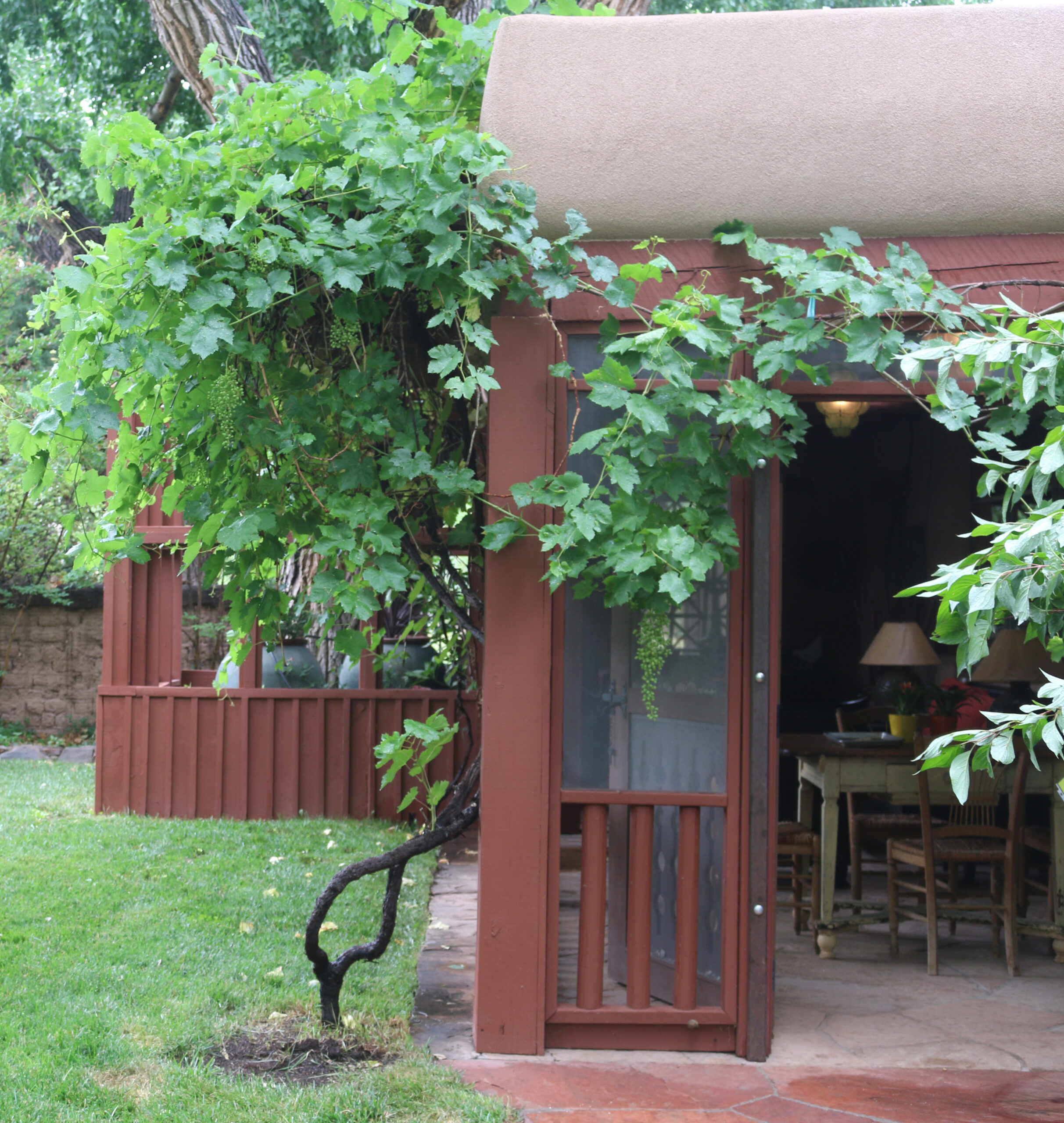
Grape vine growing on trellis at a home in the North Valley of Albuquerque.
SCREEN NARROW SPACES
Narrow spaces, such as side yards, can be difficult to plant because shrubs may become too wide before they provide enough height to provide screening. Vines trained on a trellis against a wall can fill vertical space without overwhelming the walkway and adjacent space.
Sun exposure in these narrow spaces affects which vines will do the best, explains Phillips. The west and south facing sides of the property receive the hottest afternoon sun, while the north facing side is typically cooler because of the shade, and the east facing side receives morning light.
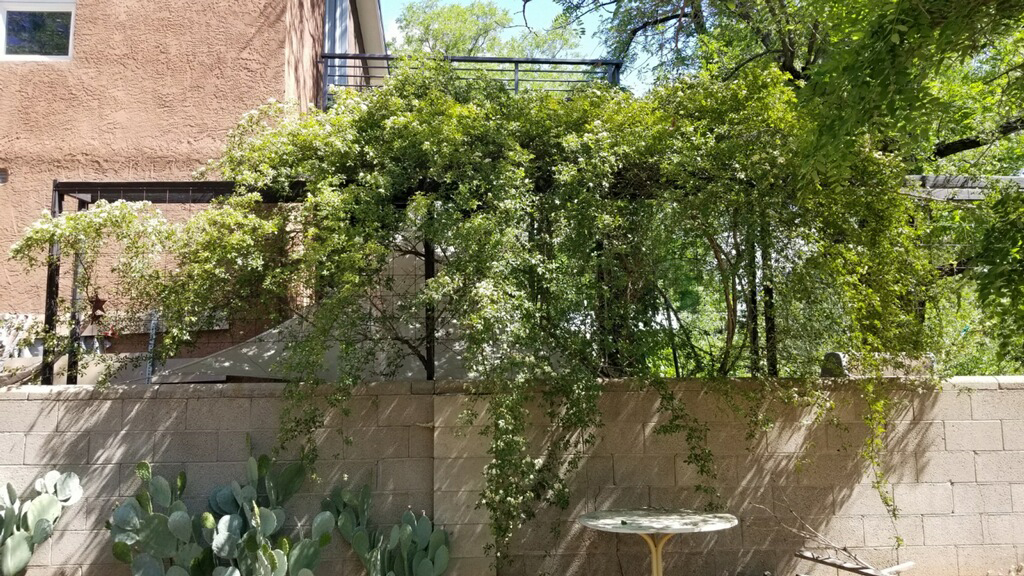
Lady Banks’ rose growing on metal trellis attached to block wall on side of the house.
For southern and western exposures, Phillips suggests using passionflower vine and silver lace vine.
Passionflower vine (Passiflora caerulea): Stunning dark blue and ivory flowers appear in the summer flocked with butterflies. This vine grows well in heat but will freeze to the ground in winter. It will regrow from root-sprouts in the spring and climb again using tendrils.
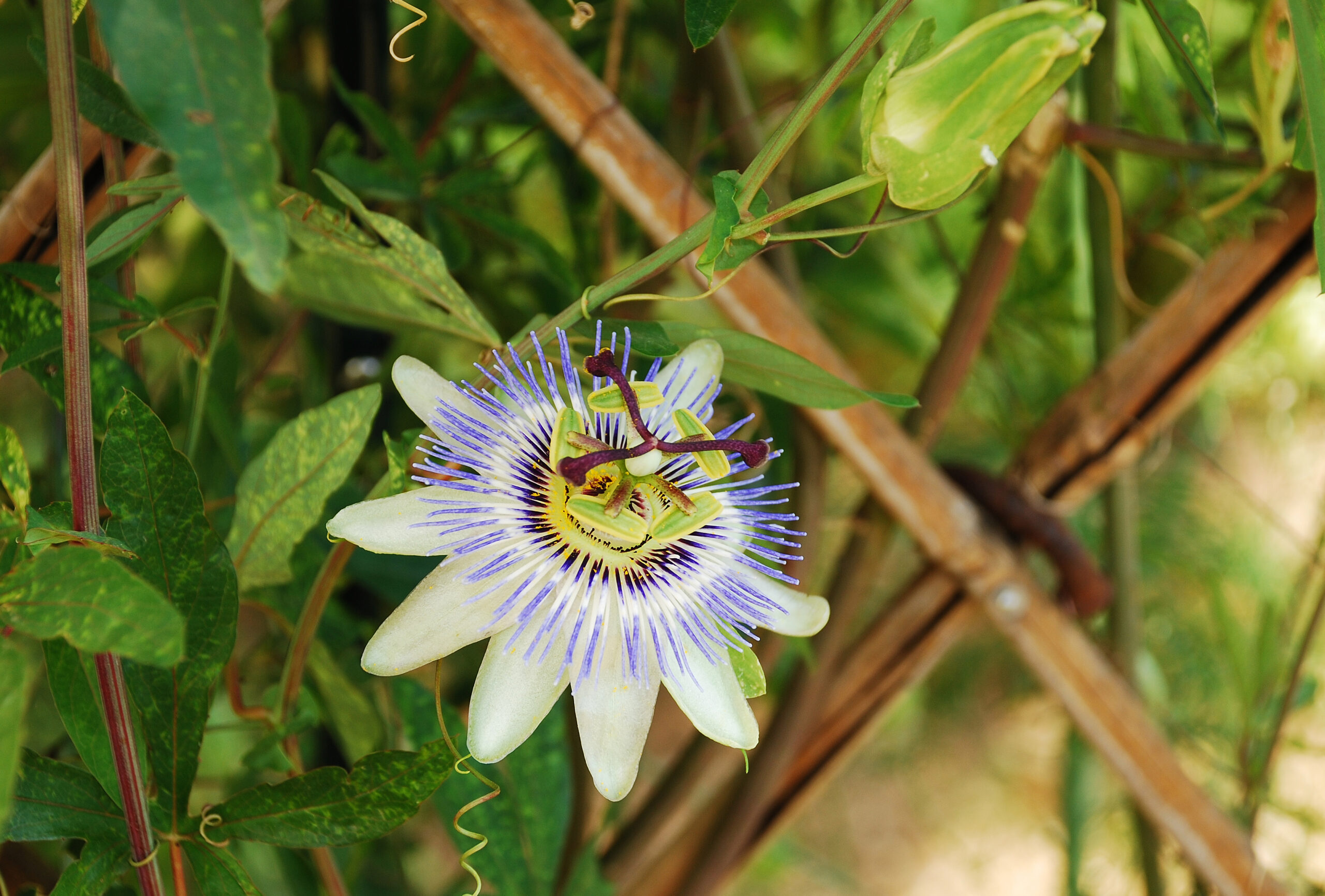
A single Bluecrown Passiflora flower, also known as Passilfora Caerulea, an evergreen tendril climbing vine.
Silver lace vine (Fallopia baldschuanica): This is one of the most xeric and heat tolerant of the vines as well as a good pollinator that can smell like lilacs when blooming. Because it can become a tangle of spaghetti-like twigs, Phillips recommends cutting it to the ground every few years so that it will return with great exuberance in the spring.
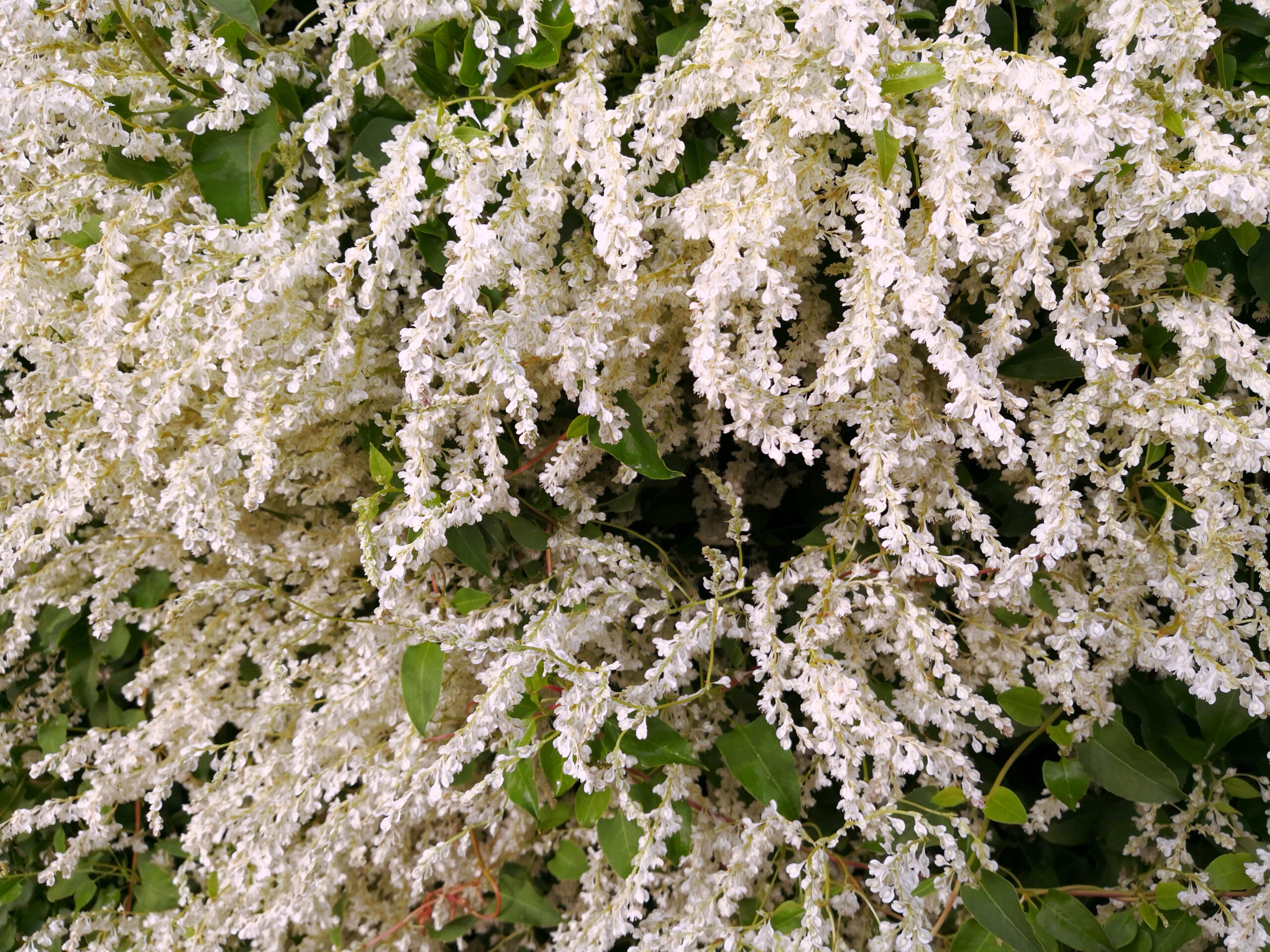
Silverlace vine in bloom.
For shadier locations, she recommends using Carolina jessamine and Algerian ivy.
Carolina Jessamine (Glesemium sempervirens): This vine performs best in shade. It is not particular about soil and produces beautiful yellow flowers in early spring while retaining winter color. Note that it is toxic to humans, pets and livestock if ingested, even in small amounts. Prune one fourth of the vine’s mass every three years to keep it from getting too woody and to encourage vigorous plant growth.
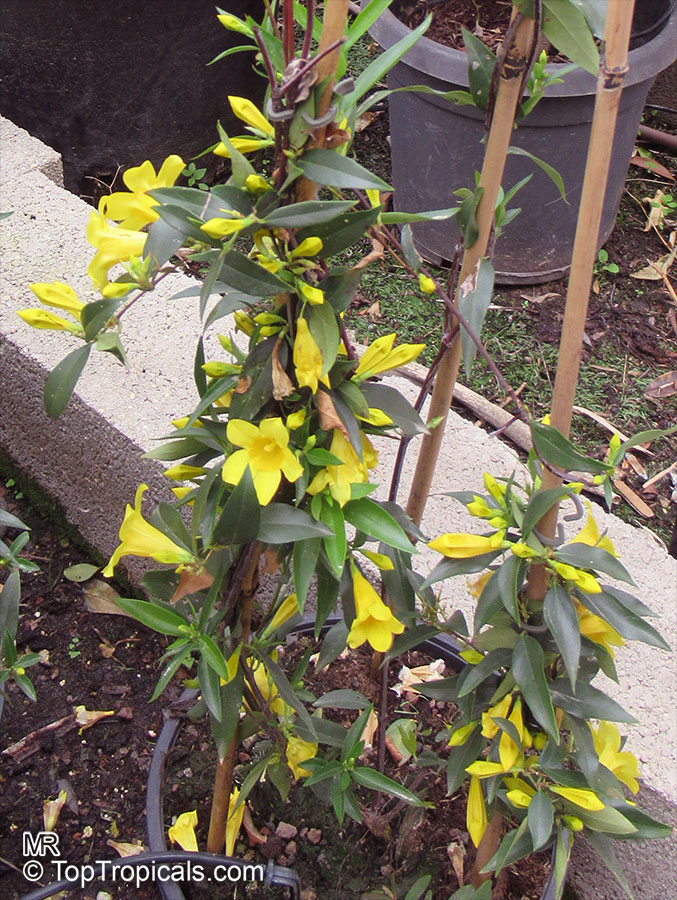
Carolina Jessamine
Carolina jessamine (from internet, not great)
Algerian ivy (Hedera canariensis): This ivy climbs walls with clasping roots and provides evergreen color. It does best on north or northeast facing walls. Its large, bright green leaves resemble English ivy. The needlepoint dwarf variety is a smaller option that also performs well.
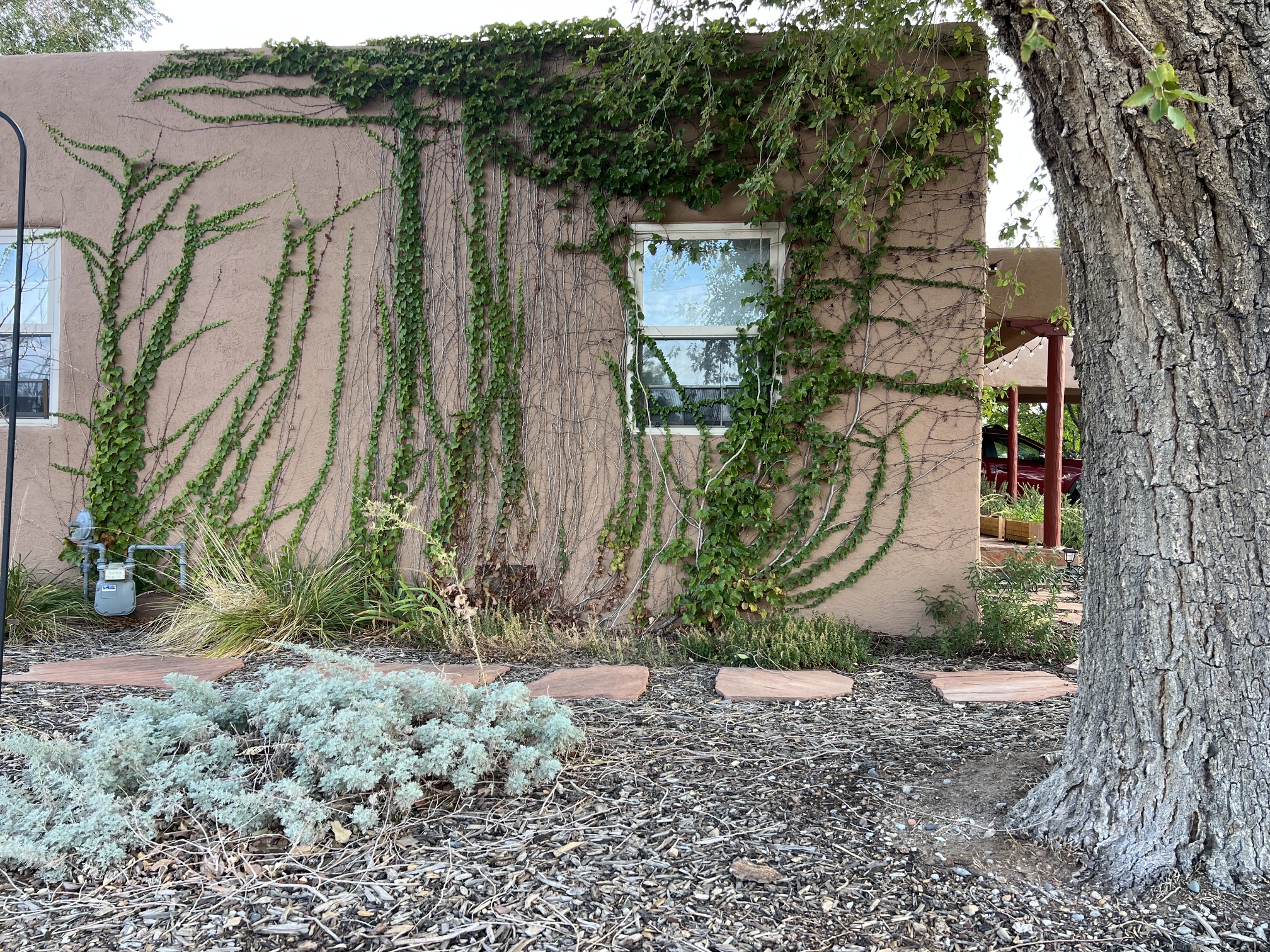
Ivy climbing up the side of a home.
ADD WINTER INTERST
Many vines fade or freeze back in winter, but some continue to add structure, color or texture. Phillips recommends Lady Banks’ rose and Algerian ivy for evergreen color along with wisteria for its sculptural woody branches.
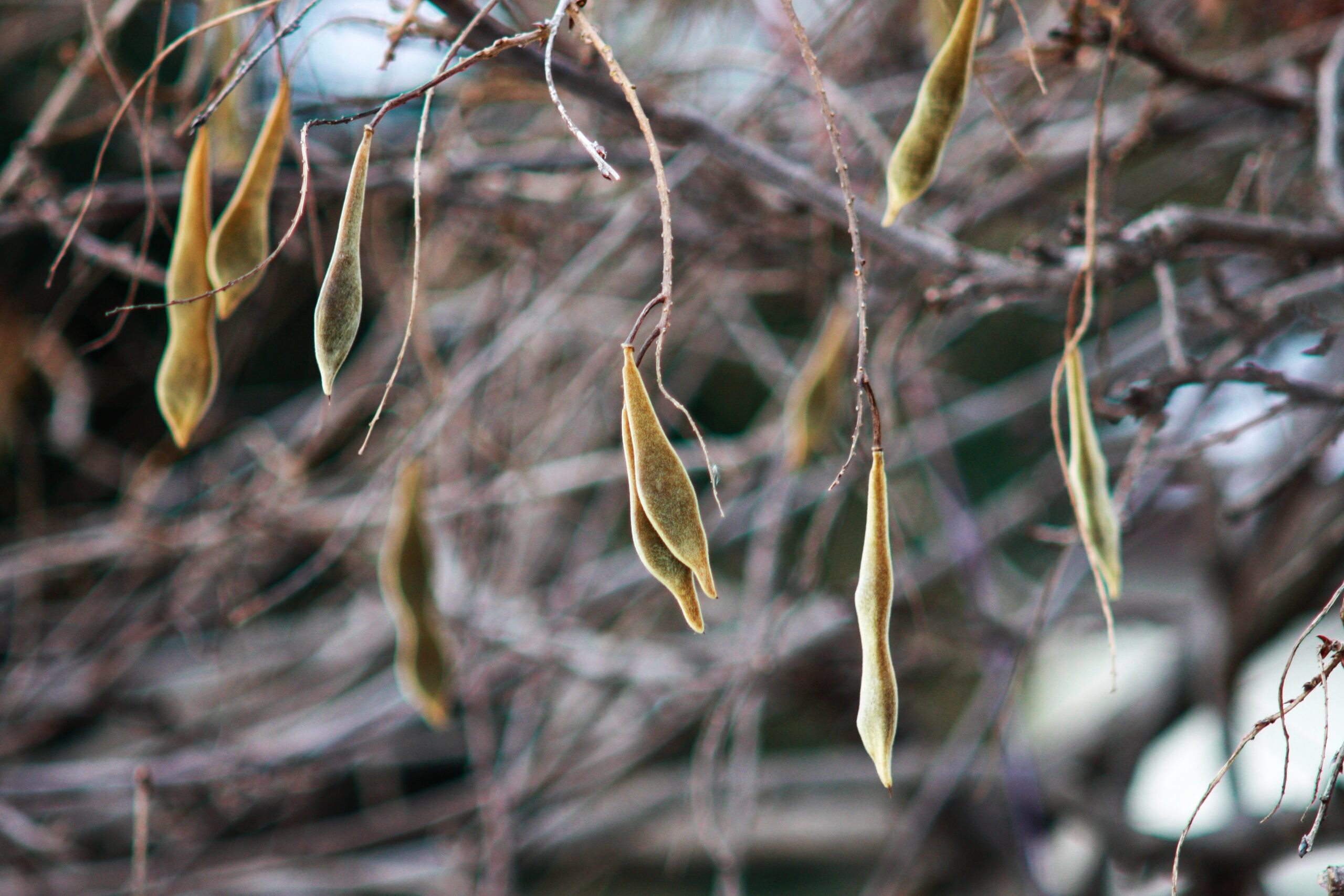
Wisteria seed pods in winter.
Star jasmine (Trachelospermum jasminoides): This vine has dark green foliage, fragrant spring flowers and smooth stems. When trained onto a trellis, it forms a dense cover. It grows well in partial shade, is a medium water user and is adapted to a wide range of soils. The sweet, pinwheel-shaped white flowers produce nectar for pollinators.
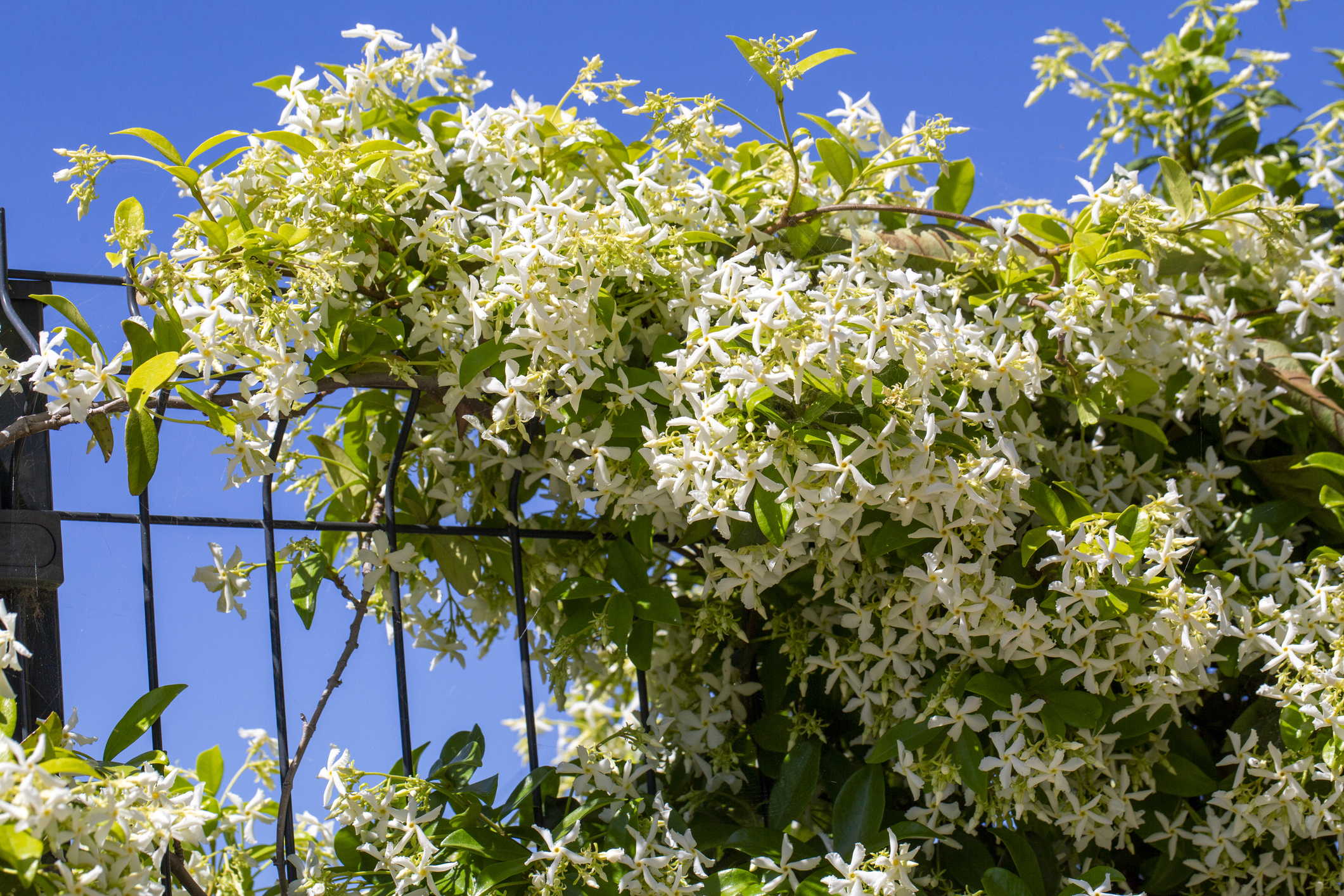
Star jasmine growing on a fence.
PROVIDE FOOD AND HABITAT FOR POLLINATORS
Several vines already mentioned — including wisteria, star jasmine, Carolina jessamine, silver lace vine and passionflower — support pollinators.
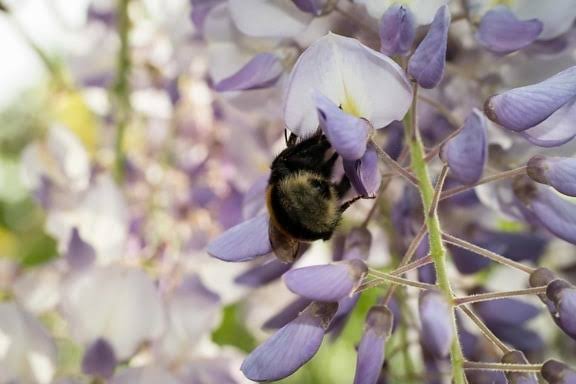
Wisteria blossom.
Climbing milkweed (Funastrum cynanchoides): This New Mexico native is one of Phillips new favorites. It dies back completely in winter but grows vigorously in spring, forming tangled curtains across fences, boulders and shrubs. It prefers heavier soils such as clay rather than
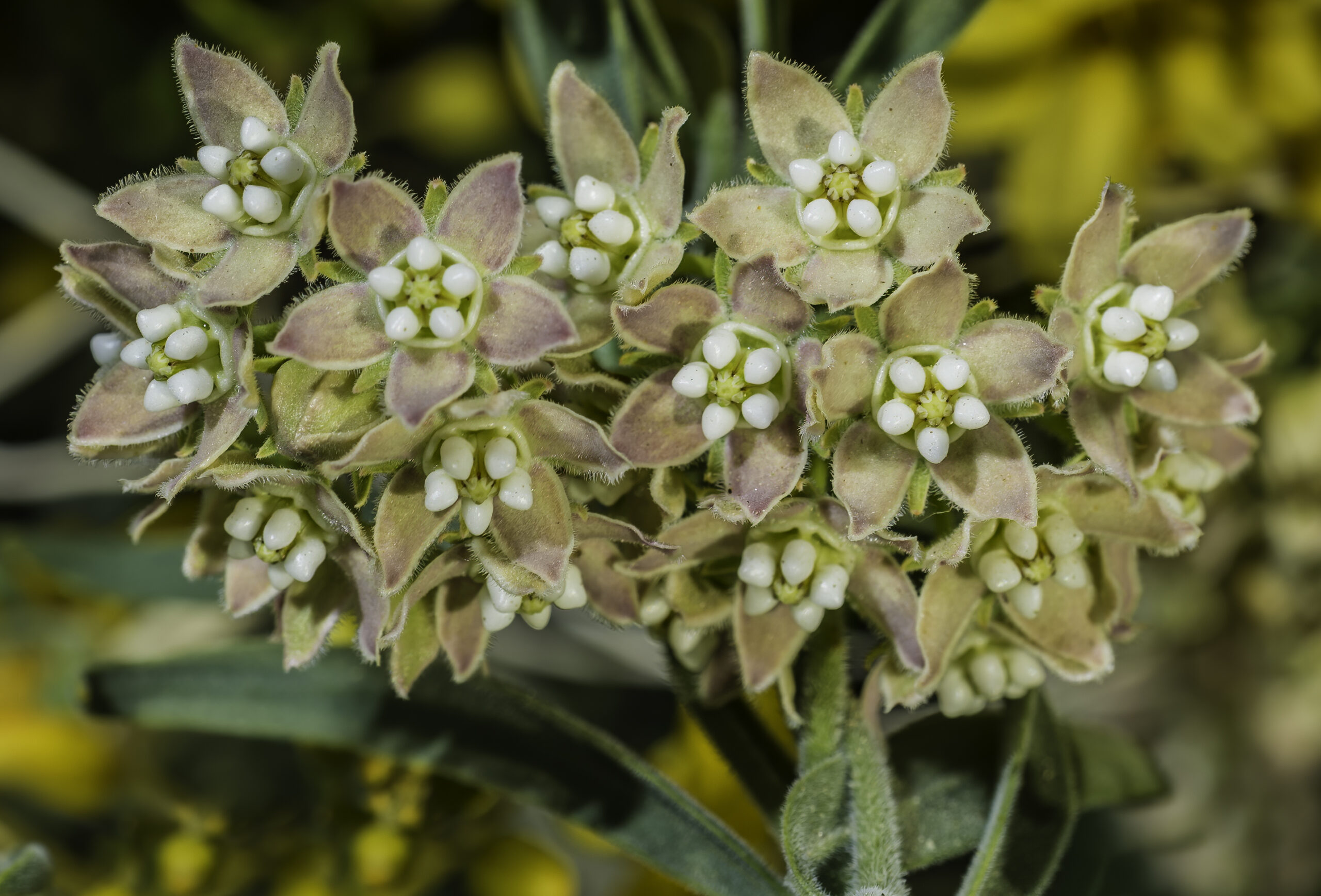
Climbing Milkweed, Funastrum cynanchoides var. hartwegii
Silkvine (Periploca graeca): This deciduous vine can grow three feet or more in a year and sports glossy dark green leaves and dark maroon spring flowers. It’s fast growing and loves to climb up ramadas, wire fencing and trellises. On a pergola, it provides dense shade in the summer then loses its leaves in winter, letting the sun penetrate through the sculptural coiled stems. It tolerates both clay and sandy soil. Brought here by the earliest colonizers from the Valencia region of Spain, it’s found along the historic stagecoach routes of the Camino de Real.
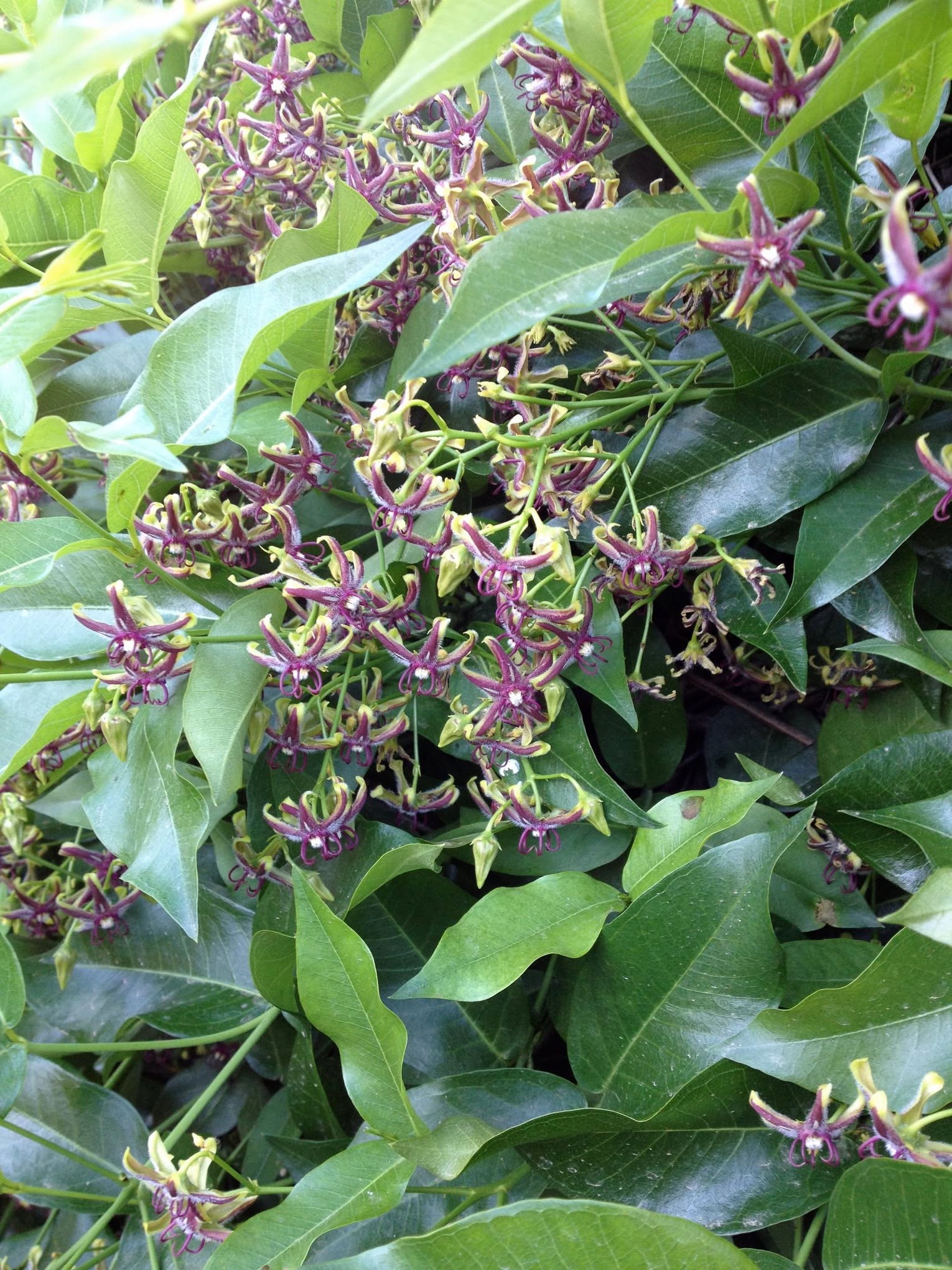
Silkvine flower by Hunter Ten Broeck
Western virgin’s bower (Clematis ligusticifolia): Also known as old man’s beard, this vine is fast growing where water is available and does well on north and east sides. Native to New Mexico, it can be found climbing over small trees and shrubs in the Jemez Mountains. Butterflies adore the fragrant white blooms, and attractive seed heads — one of the best parts of this plant — provide winter interest.
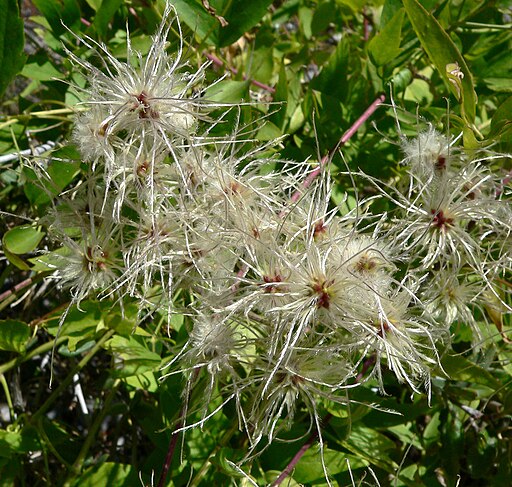
Clematis flower by Hunter Ten Broeck
Locally familiar trumpet vine and honeysuckle are not included here because Phillips is using them less often in home landscapes. Orange trumpet vine can root aggressively and become difficult to manage. Instead, Phillips has been using crossvine, a related species that she finds easier to live with and more evergreen, making it more attractive through winter. Honeysuckle (Lonicera sempervirens), including the Major Wheeler variety, can be temperamental, especially when it experiences leaf loss during late, hot summer months. Even so, both trumpet vine and honeysuckle are established local favorites and can still find homes in the right locations.
Whether used for shade, screening, winter structure or pollinator support, vines can bring beauty and function to places where other plants may struggle. With the right species, sturdy support, thoughtful placement and regular training, they can become some of the most versatile and rewarding plants in a Southwestern garden.
Learn More Here:
Creating Living Shade with Vines

Interview with Judith Phillips, owner of Design Oasis and a landscape designer and garden writer with 30 years of experience designing arid-adapted and native gardens in the high desert. Have a question about the article or anything else? [email protected]