
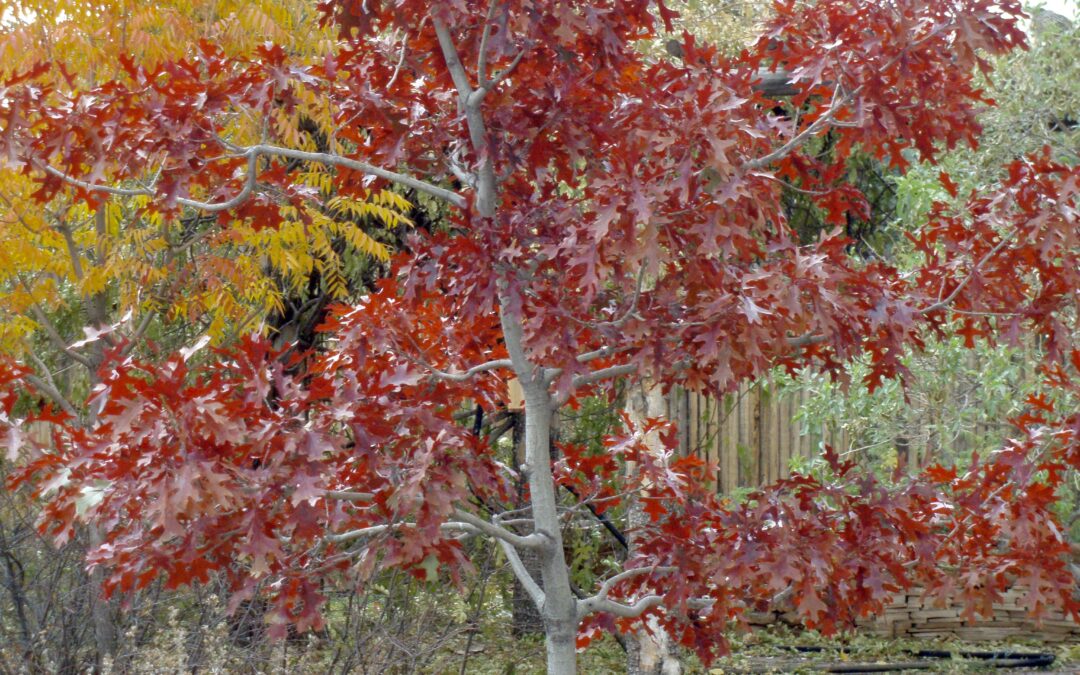
Trees play a vital role in the plant palette for Albuquerque gardens. They provide cooling shade, screening, and habitat for birds, pollinators and other wildlife. Trees take more time to establish than shrubs or smaller plants. They live longer but are more expensive than other plants, so it is vital to select a tree that will thrive and provide the most benefit over its lifespan.
Often people select trees based on what they see in their neighborhood or what is most readily available at the nurseries. Unfortunately, when too many of one species are planted, the possibility of pest issues rises greatly, and entire swaths of trees can die off at the same time. (For example, Dutch elm disease and emerald ash borers have killed millions of trees in other areas of the U.S.) Planting a diverse selection of trees minimizes the possibility of mass species extinction. Trees are generally resilient, and varying the species planted protects against a variety of harmful conditions.
Oaks
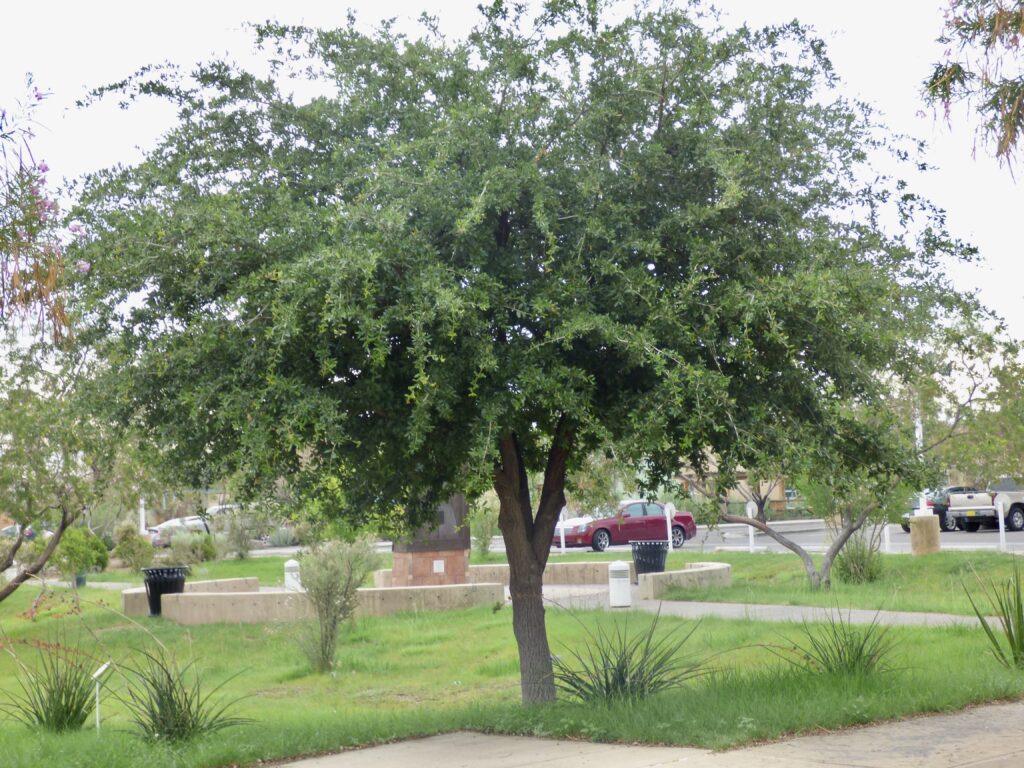
Oak trees (Quercus) tend to be very long-lived and tough trees, well adapted to the climate conditions in Albuquerque. There are about 30 species of oaks native to New Mexico. They vary greatly in size, form, foliage and growth rate. Some are deciduous while others are evergreen. There is an oak suitable for almost any place in your landscape.
Chinkapin (aka Chinquapin) oak — Quercus muehlenbergii — is a faster growing, larger oak for our area. They can grow from 25’ to 50’ tall . It produces large acorns which wildlife relish and were an important food source for Native Americans. They are an excellent shade tree with subtle color in the fall. This tree is both very heat and cold tolerant and prefers well-drained soil. Water to 24" depth twice a month once established at around three years. Tree establishment rule of thumb is the first year the tree sleeps, second year the tree creeps and the third year it is established and ready to leap.
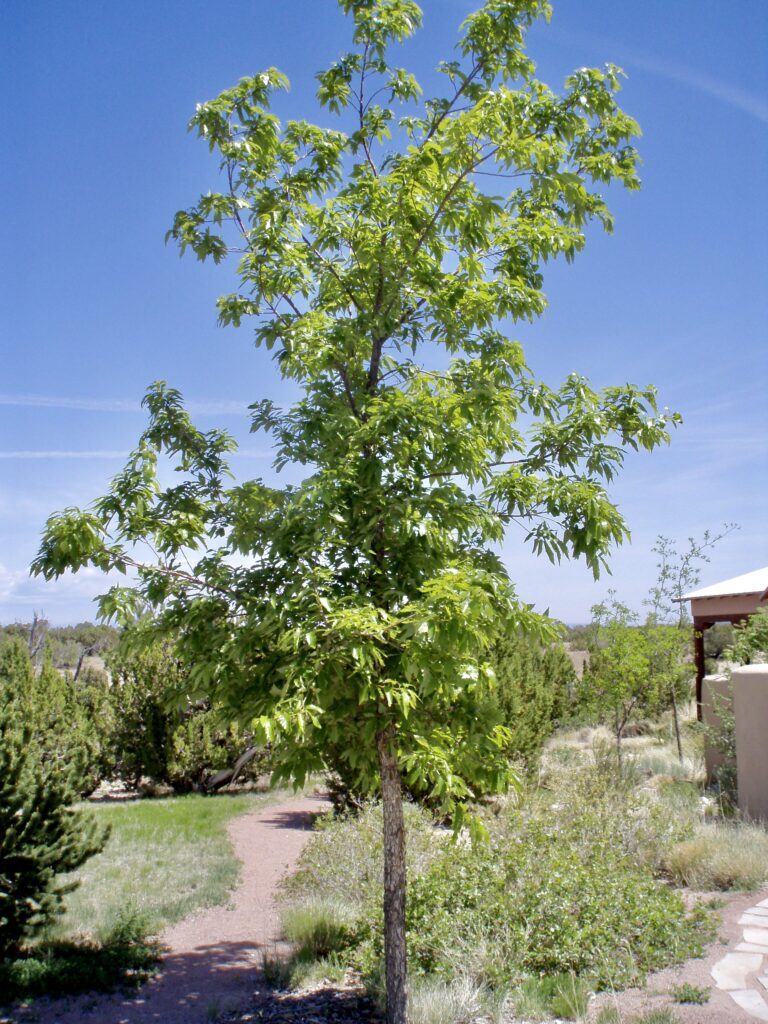
Texas red oak — Quercus texana — is another large deciduous shade tree, growing to about 35’ in Albuquerque. This beauty has long-lasting, spectacular red to maroon fall foliage that will become a focal point in your garden. This tree prefers to be planted in cooler areas surrounded by wood chip mulch.
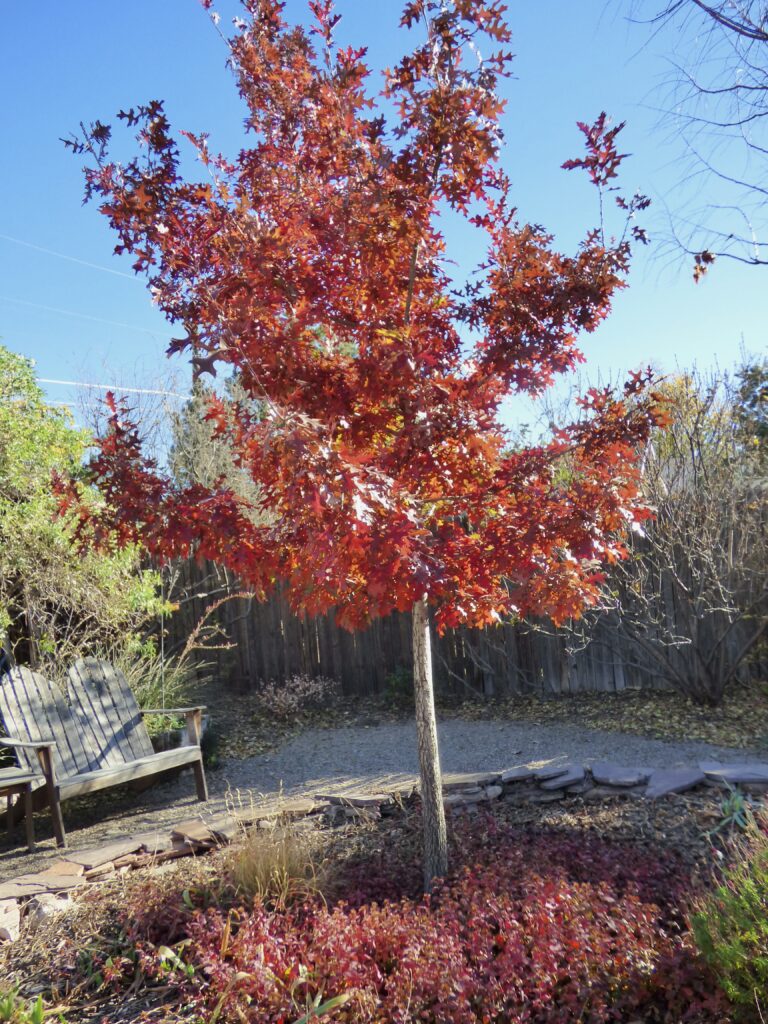
Gambel oak — Quercus gambelii — is an adaptable, native deciduous tree whose shape can vary from a large shrubby cluster to a single-trunk tree. It grows 10’ to 30’ tall in groups and is found at both higher and lower elevations of our local mountains. It provides food and shelter to many wildlife species. Depending on its form and how it’s pruned, Gambel oak can be used as a informal hedge or as an individual shade tree. The red to maroon fall foliage gradually turns brown and persists well into winter, which can provide extended screening.
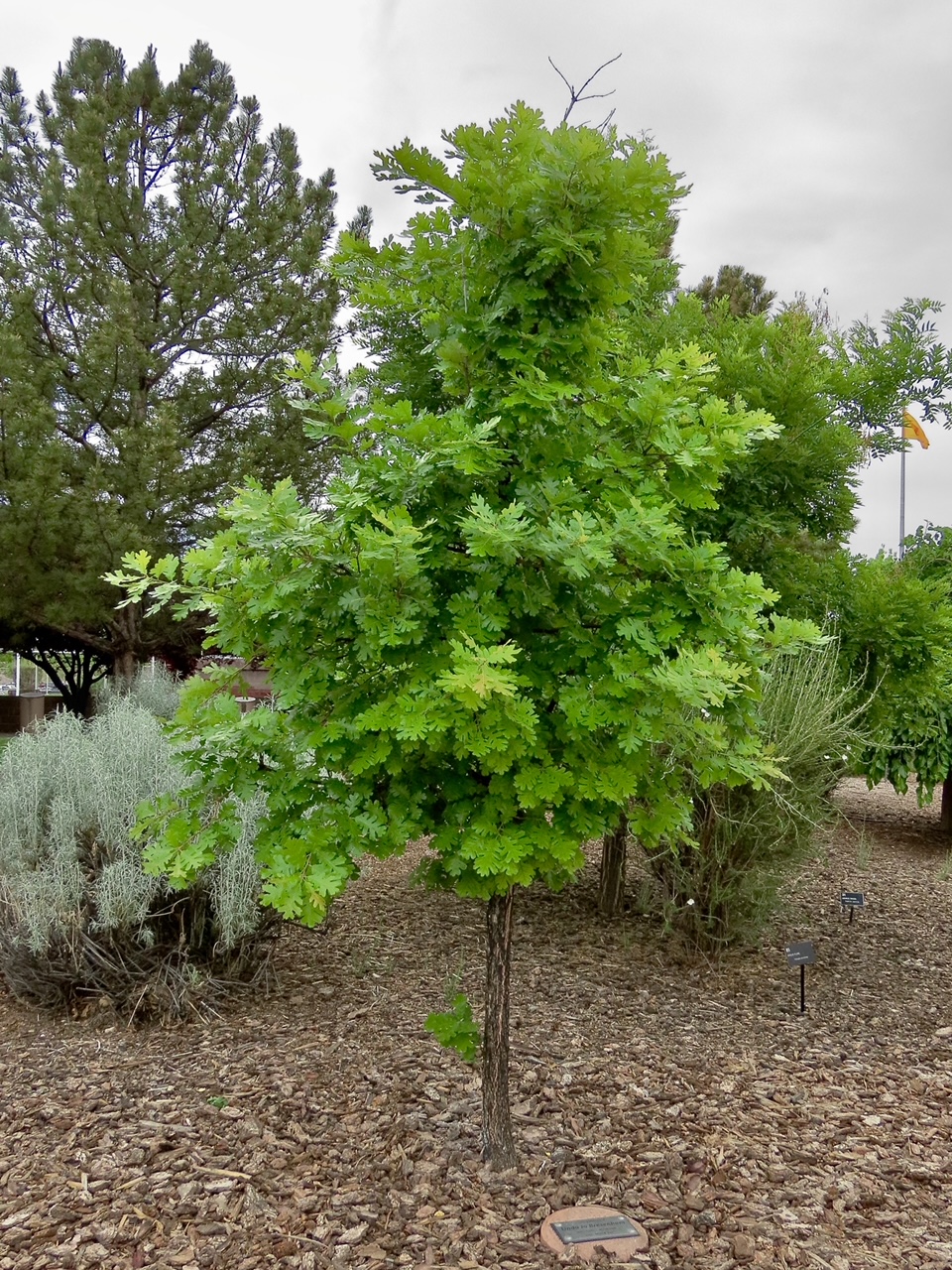
Another native, shrub live oak — Quercus turbinella — has small, holly-like silvery green leaves. This slow grower should be considered more of a shrub and is found locally in the foothills. It is very long-lived (hundreds of years) and grows into a thick trunked form when fully mature.
Escarpment live oak — Quercus fusiformus — is a regionally native tree that can grow 25’ to 30’ tall and 25’ wide in Albuquerque. Its oblong evergreen leaves provide both shade and year-round screening with the benefit of minimal fall cleanup. Make sure to plant the escarpment and the shrub live oak from late spring to the end of summer as cold season planting tends to stunt their establishment and growth.
Mesquites
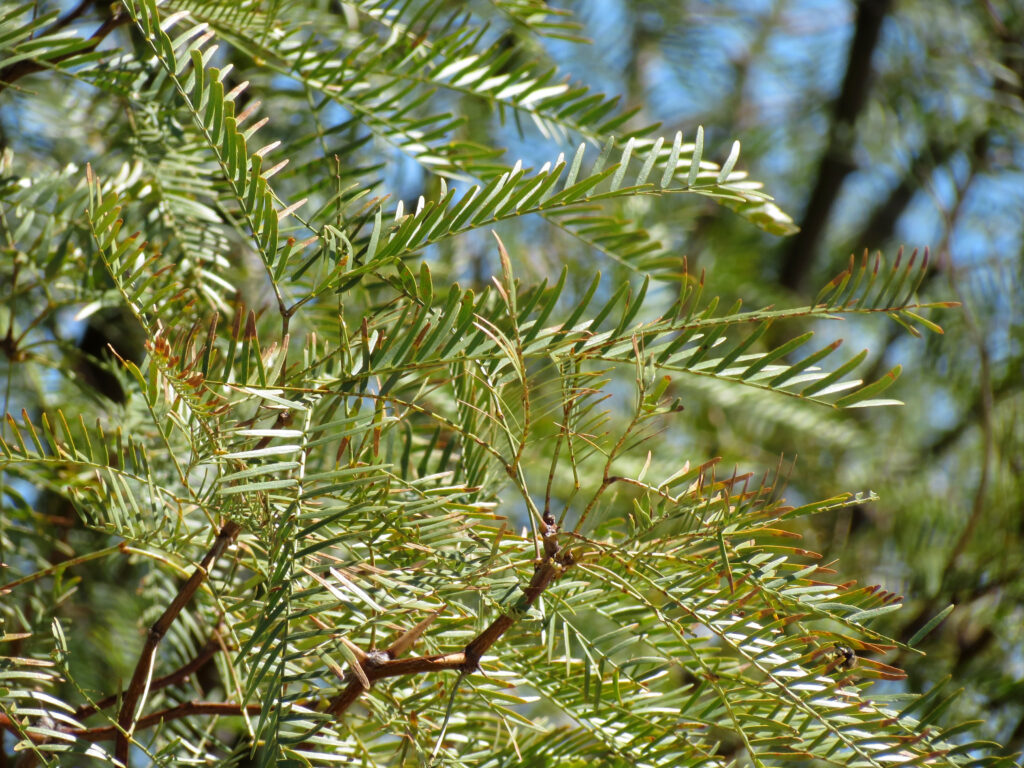
Mesquites are native trees well adapted to extreme heat and drought conditions. Some are not very cold hardy so are best planted in warm or protected microclimates (courtyards or against south or west facing walls). Their spring flowers provide a great resource for pollinators, and their beans can be ground into a sweet flour for baking.
Honey mesquite — Prosopis glandulosa — is a great, tough, small to medium sized tree that can eventually be completely removed from irrigation. 'Maverick' mesquite is a thornless cultivar that is more user friendly in an urban landscape but is not as cold hardy. 'Maverick' can accommodate heavily trafficked courtyards and along pathways. Unlike the regular honey mesquite the 'Maverick' cultivar may need continued watering over its lifetime. Both these trees do better in warmer areas south of Albuquerque.
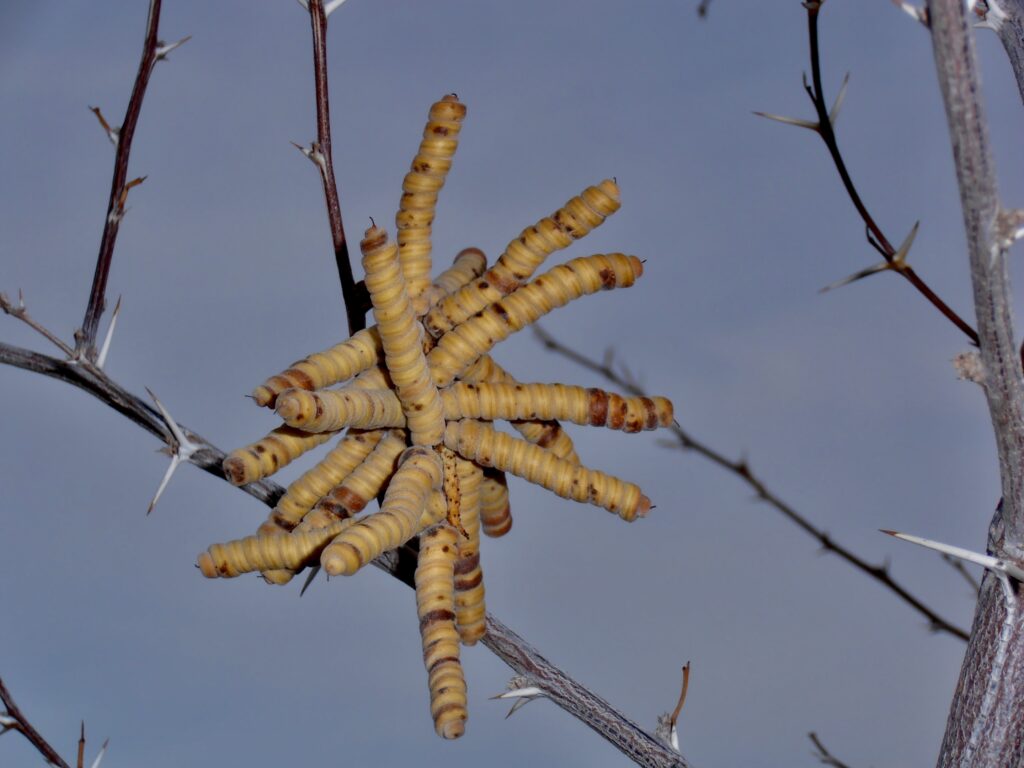
Screwbean mesquite — Prosopis pubescens — is a very drought tolerant multi-trunk tree. It grows up to 20’ tall. As it can handle periods of extra water (flooding), it works well in a rainwater harvesting basin. Locally you will find it growing in the bosque near Socorro. Its unique seed pods look like wonderful mini sculptures. This tree may take some work to find in nurseries, but it is well worth the search.
Fundamentally, when selecting trees for your landscape, it’s crucial to find a tree that will thrive in the space and micro-climate where you want to plant it. Oaks and mesquites can provide a variety of options in an Albuquerque garden.
Learn more here:
Tips for Keeping Mature Trees Healthy
Keep Your Trees Happy: Build a Tree Irrigation Watering System
