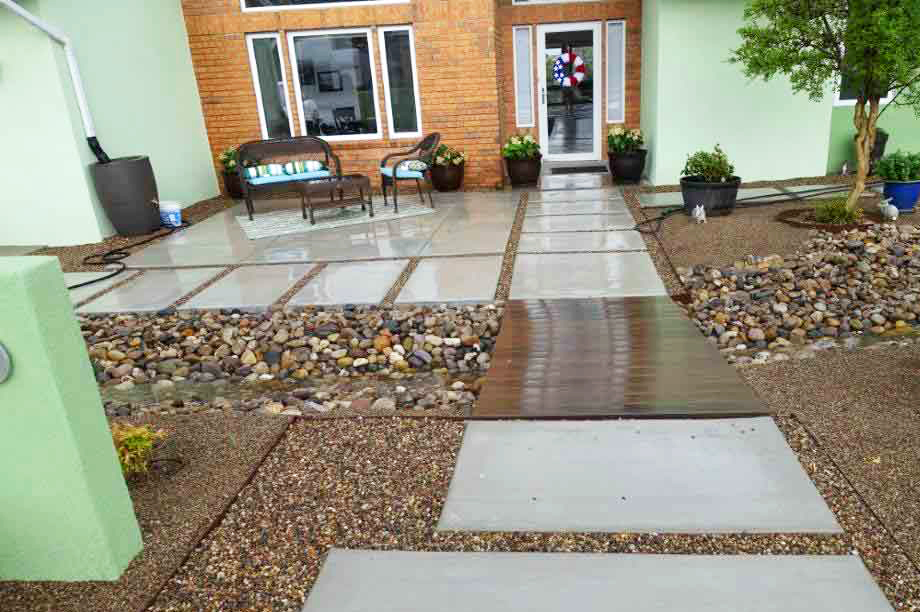
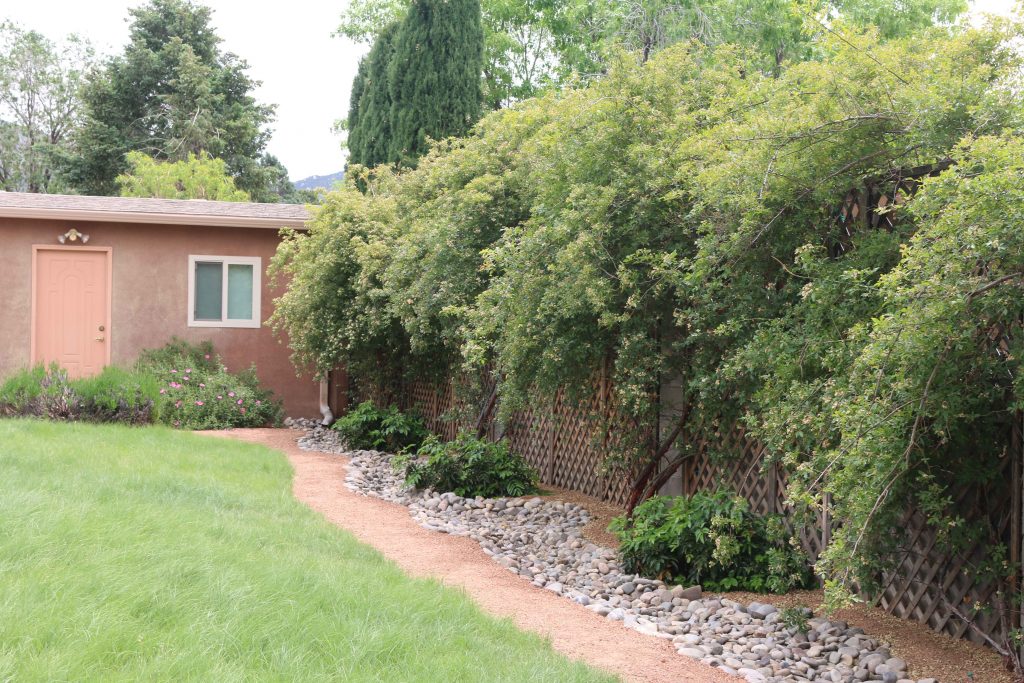
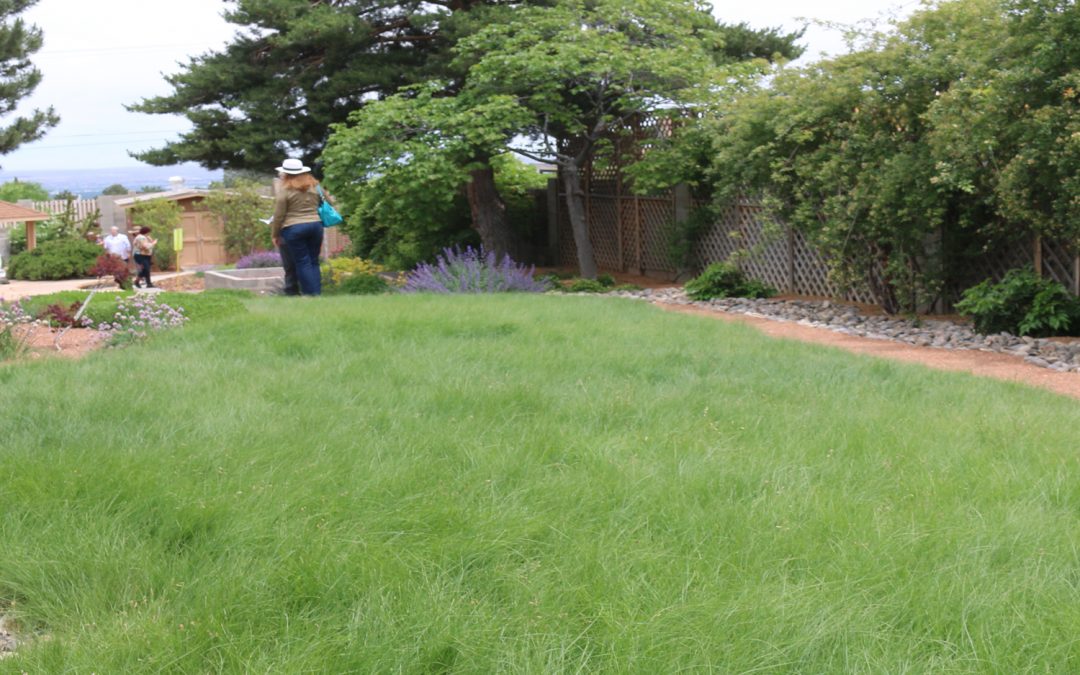
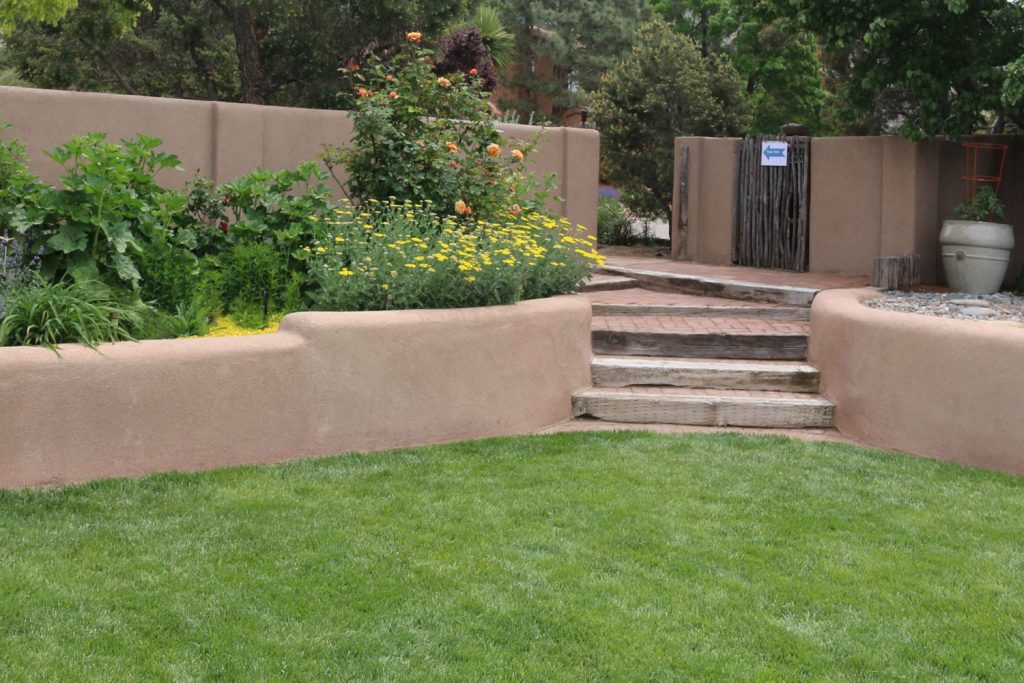
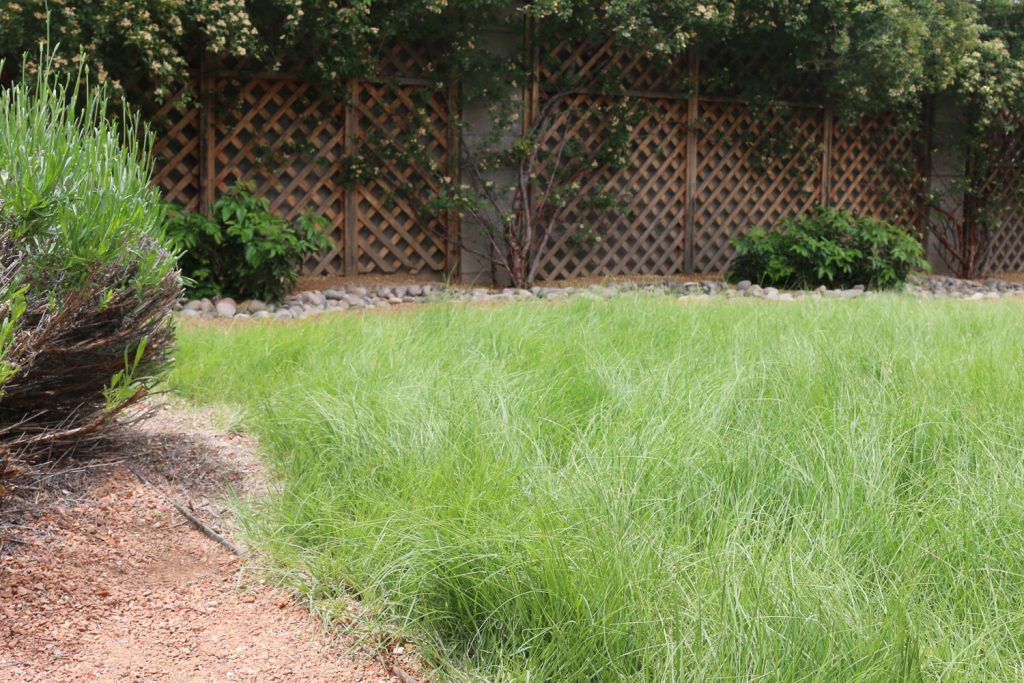
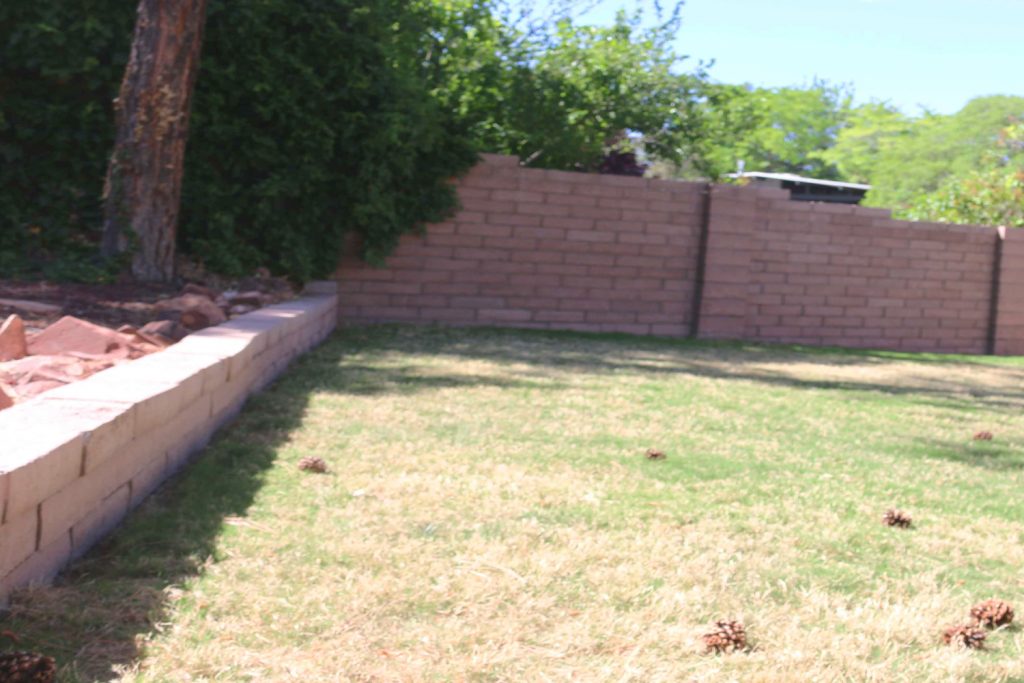
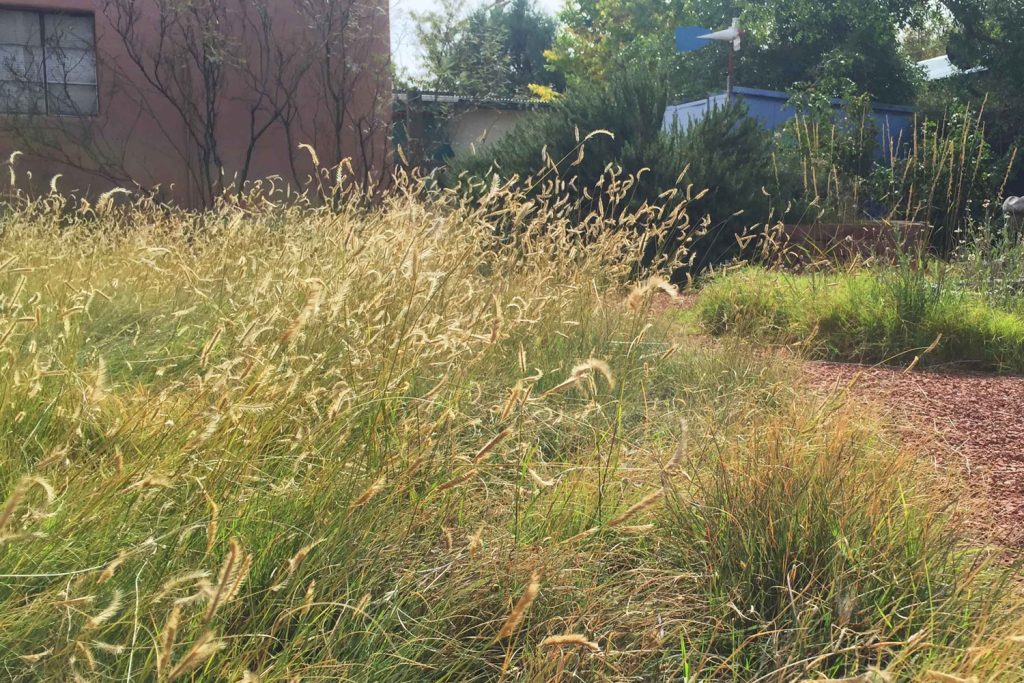
The Water Authority encourages efficient outdoor water use for beautiful landscapes. With some 40 percent of our drinking water going to landscaping, improving outdoor water use efficiency is now the main focus of the Water Authority’s conservation efforts. But irrigation efficiency doesn't mean you can't have a beautiful, desert friendly yard. Below is your three-step plan for a beautiful, desert friendly yard.
1. Service your irrigation system by checking for leaks and malfunctions.
Low-maintenance landscapes are great, but there’s no such thing as a “no-maintenance” irrigation system. A single broken sprinkler head flowing at 15 gallons per minute will waste 900 gallons in one hour of use. Service your system regularly, and check it often for leaks and malfunctions.
2. Set your turf irrigation timer to water by the numbers.
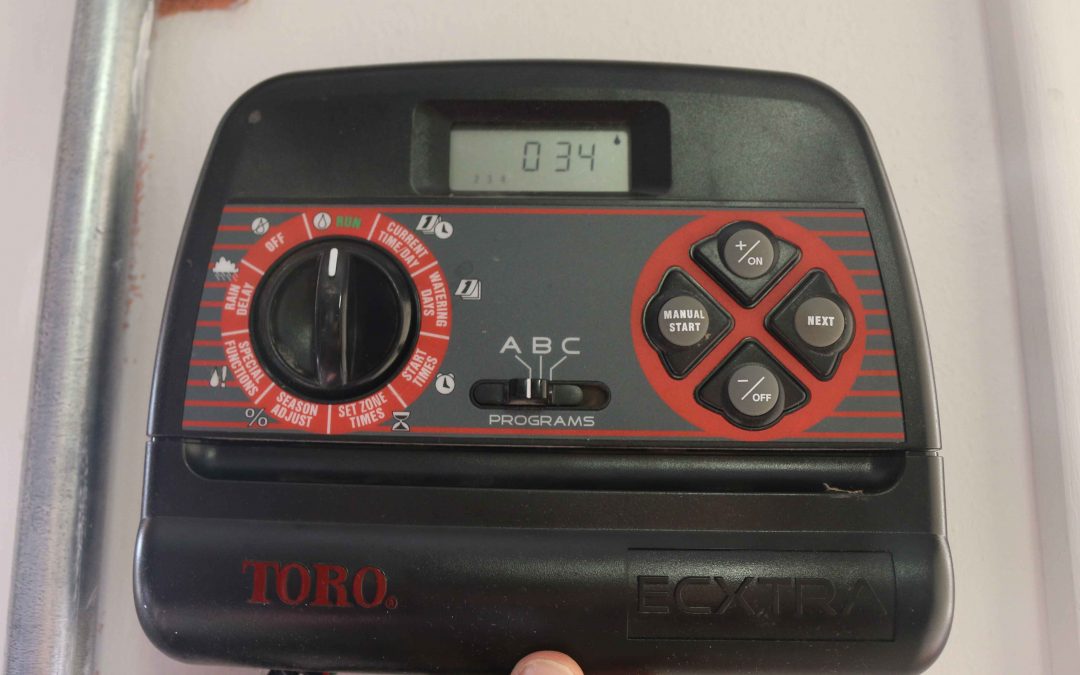
Adjust your irrigation timer according to the season. For turf, water by the numbers: One day per week in March, two days per week in April and May, three days per week in the summer, and ramp down in the Fall. For other landscapes, follow the Seasonal watering recommendations. Call today for a free irrigation consultation.
3. Select desert friendly plants that thrive in our dry climate.
There are literally hundreds of plant options to choose
from that will thrive in our desert climate. And there are rebates available for
replacing turf with a desert friendly landscape.
If you follow this three-step plan, you’re sure to have
landscape success.
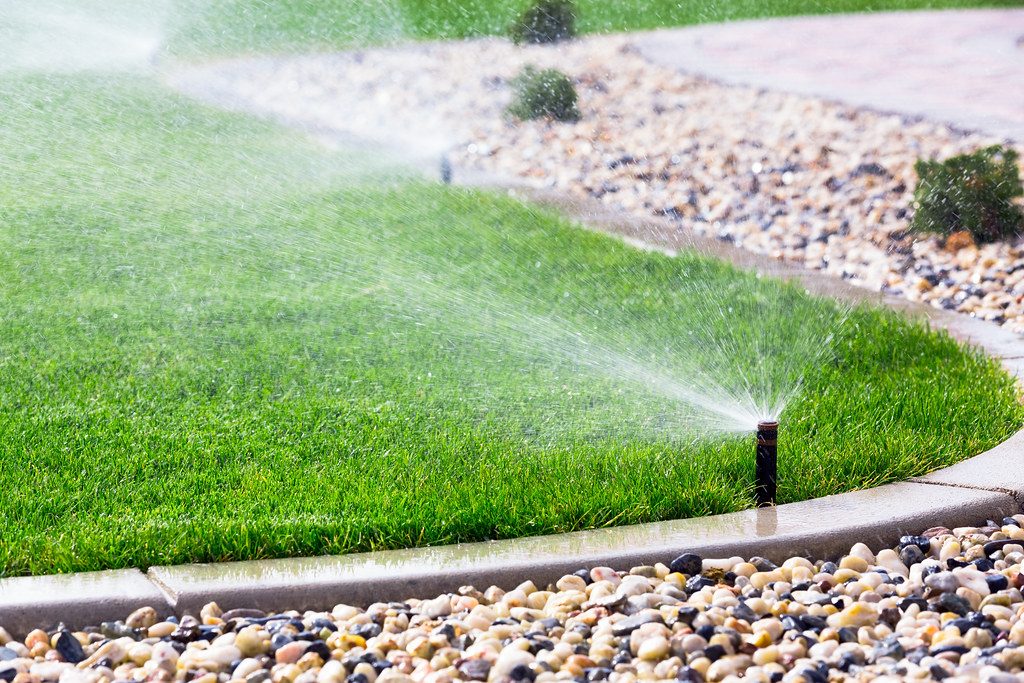
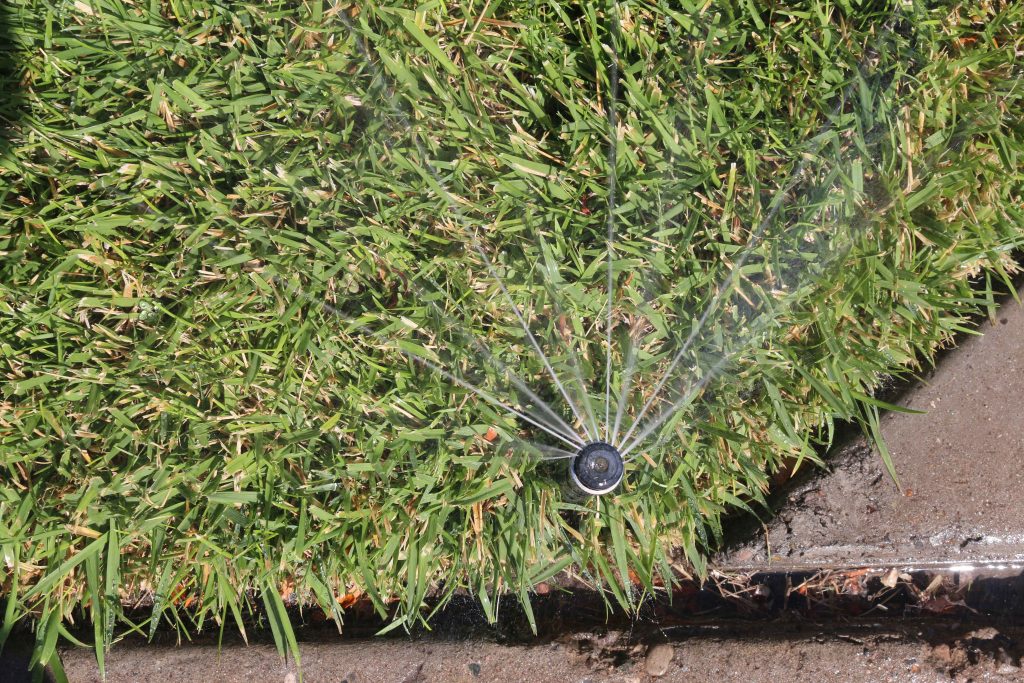
Grass lawns in the greater Albuquerque area require supplemental irrigation in order to survive our high desert climate. Most residential landscapes are watered by pop up spray heads with conventional nozzles, as pictured below.
Pop up spray head
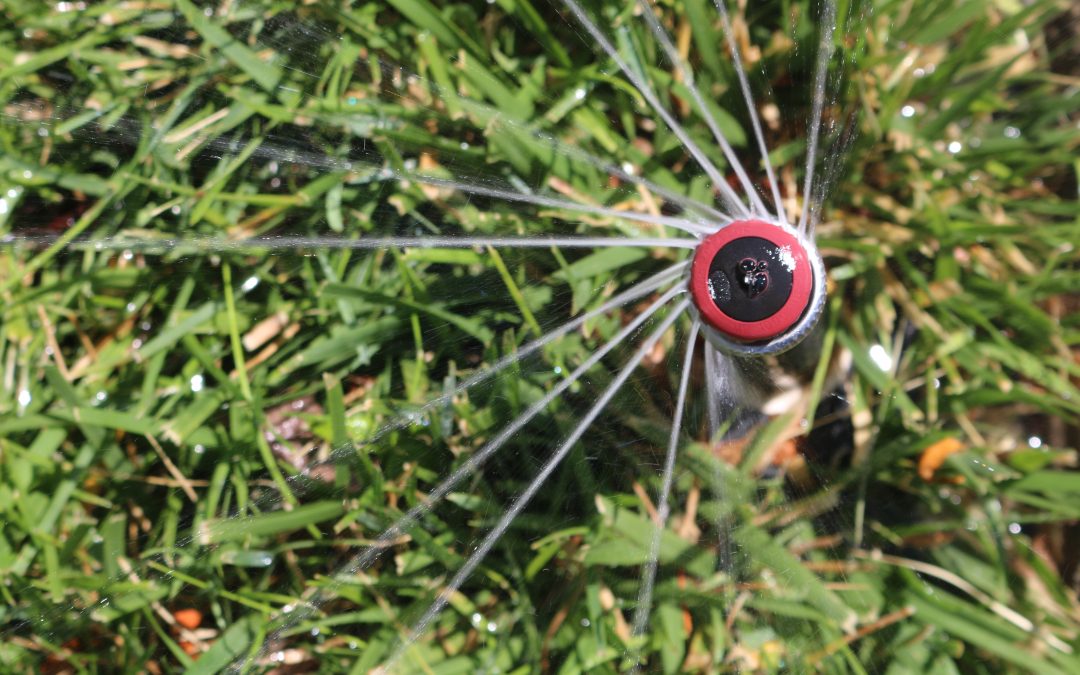
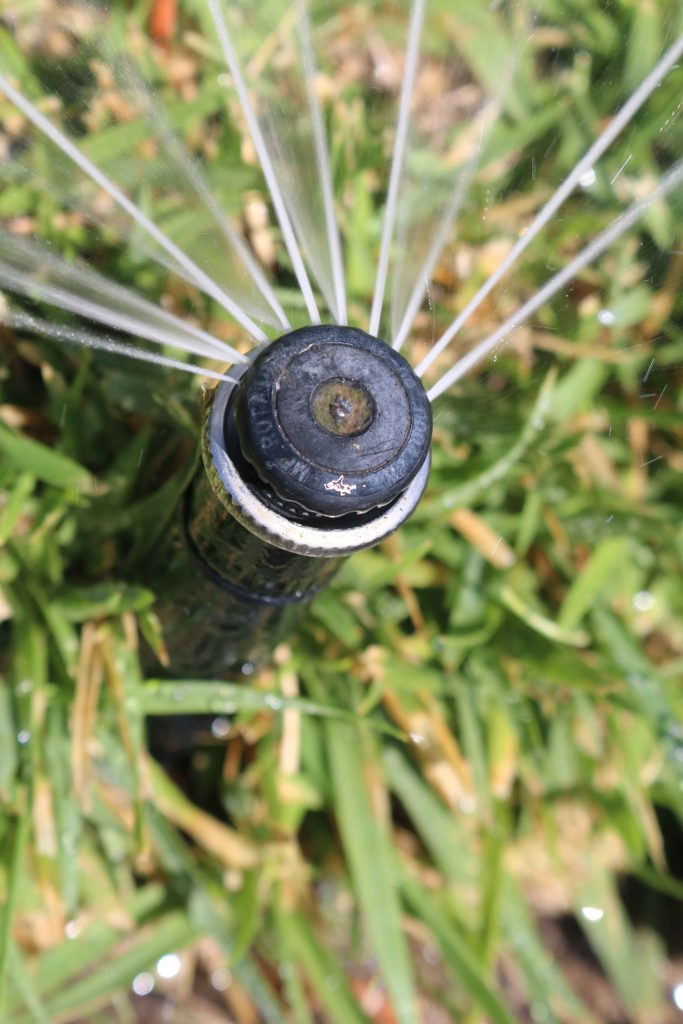
But did you know that water waste from these conventional spray nozzles can be reduced by simply swapping the nozzle out for high efficiency rotary nozzles? And for just a few dollars per head. Rotary nozzles improve irrigation efficiency by delivering water more slowly. That prevents runoff by giving soil time to absorb the water and allows the water to reach the root zone of the plant. These nozzles also deliver water in a larger droplet size, making the spray less susceptible to being carried off by the wind. This is all accomplished via their distinctive multiple rotating streams of water, pictured below.
High efficiency rotary nozzle
505Outside visited local irrigation supply stores to find out their most
frequently asked questions about these nozzles.
Can I replace my existing spray nozzles with these high efficiency rotary nozzles?
Yes. In most cases it’s as simple as unscrewing the existing nozzle and
dropping in the rotary nozzle and filter basket. These are available at any
local irrigation supply store. If you bring in your existing spray head, the
staff can recommend the best solution for you. Water Authority has rebates
available for the purchase of rotary nozzles, too. Visit the link here.
Sounds too good to be true. Are there any negatives?
They tend to clog with the hard water typically found in Albuquerque.
Make sure the brand you select comes with an inline filter basket, so you can
easily flush out and unclog your spray head.
What else should I know about high efficiency rotary nozzles?
They require longer run times. This is where most homeowners get confused. Wouldn’t
a longer run time mean I’m using more water? The answer is no, because rotary
nozzles deliver water at a slower rate than typical spray nozzles. Therein lies
the efficiency: water saturates deep into the root zone rather than running off
and evaporating. This can also help reduce the frequency of runs, thereby
saving water.
They work best at 30-40 psi. If the pressure running through your irrigation
system is too high, the rotary nozzle will spin out of control and break. The
average pounds per inch (psi) in Albuquerque ranges between 40 and 70 psi, so
you may need a pressure regulator on your system to avoid damage. Check with
your local supplier to figure out if you need to regulate the pressure on your
system, and how.
They are adjustable. Most rotary nozzle brands provide matched precipitation rates across radius, arcs, and pattern types, making it easy to install a system with even distribution. Nozzles can be easily adjusted by tool or by hand while the heads are running, to avoid water waste through overspray.
Stop by your local irrigation supplier and learn all about these high efficiency rotary nozzles.
High efficiency rotary nozzle watering a 135 degree angle.
505Outside sat down with local landscape contractor Hunter Ten Broeck, owner of WaterWise Landscapes Incorporated, to chat about Water Harvesting in Albuquerque.
There are two categories of water harvesting techniques: passive water harvesting and active water harvesting. Passive water harvesting is the practice of slowing water down and encouraging it to soak into the ground. Water is collected from the source (roof, canale, downspout, or sloped earth) and directed to the landscape where the water can be immediately used by the plants. Active water harvesting uses rain barrels, cisterns, and other types of containers to store rainwater for later distribution. These typically hold as few as 200 gallons of water up to 10,000 gallons. A good calculation to remember is 1” of rain on a 1000 sq. ft. roof equals about 600 gallons of water.
Hunter
says the key to any type of water harvesting system, whether active or passive,
is to incorporate it into the landscape design. Thinking through how the rain
water will interact with your landscape and designing for that should be first
and foremost.
When asked what a homeowner could easily do to start water harvesting in their yard, Hunter recommended starting small and trying passive water harvesting. Passive systems can be as simple as a swale, a French drain (or rock burrito, as nicknamed by his staff), or more complicated systems that include building an underground soil sponge area. He says to start by finding the roof’s downspouts and canals, then provide a catch area underneath them. A catch area could be a concrete splash block or cobbles. Then direct that water away from the home via a cobble swale that runs into a planting area. This can be done easily by digging down a few inches and creating a slope away from the house into the planting area. Once the swale is dug, add cobble on top to stabilize the soil and prevent erosion.
Cobble swale located at downspout next to house.
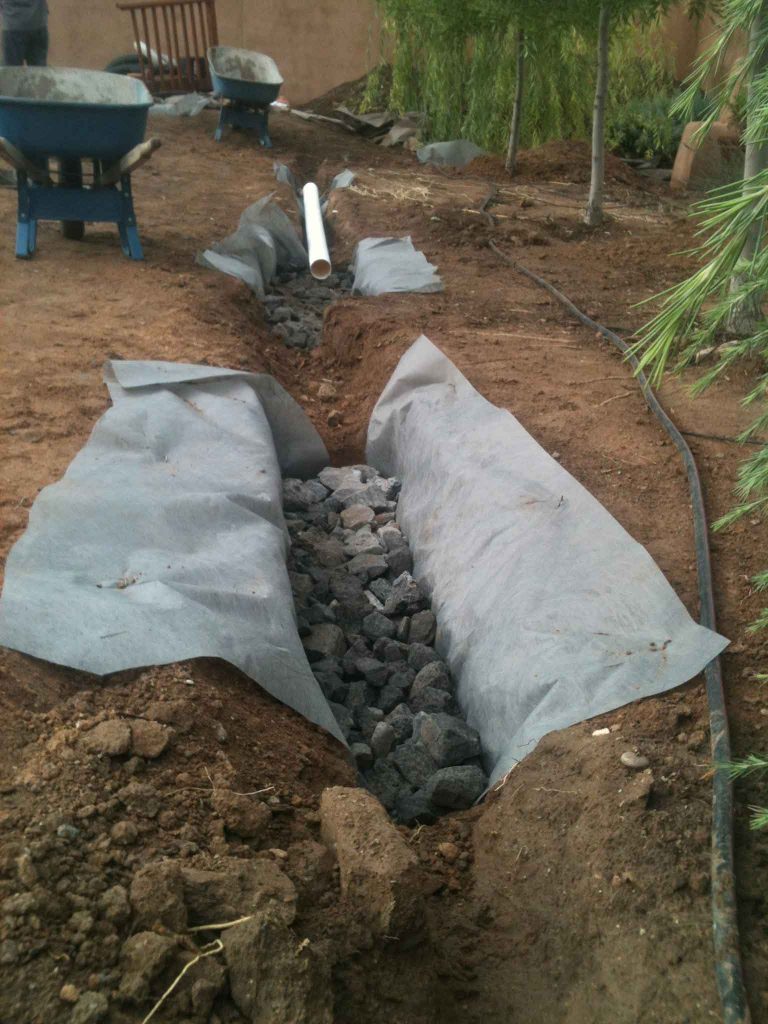
To make Hunter’s “rock burrito” simply dig an 8” wide trench at least 12” deep and as long as necessary for the space. Slope the bottom of the trench toward the drainage area. Layer the trench with filter fabric followed by cobble or rocks. Roll the fabric over the rocks then backfill with soil. This will provide an underground collection area for water. Water will slowly soak into the ground providing moisture to adjacent planting areas.
"Rock Burrito" French drain under construction in an Albuquerque landscape.
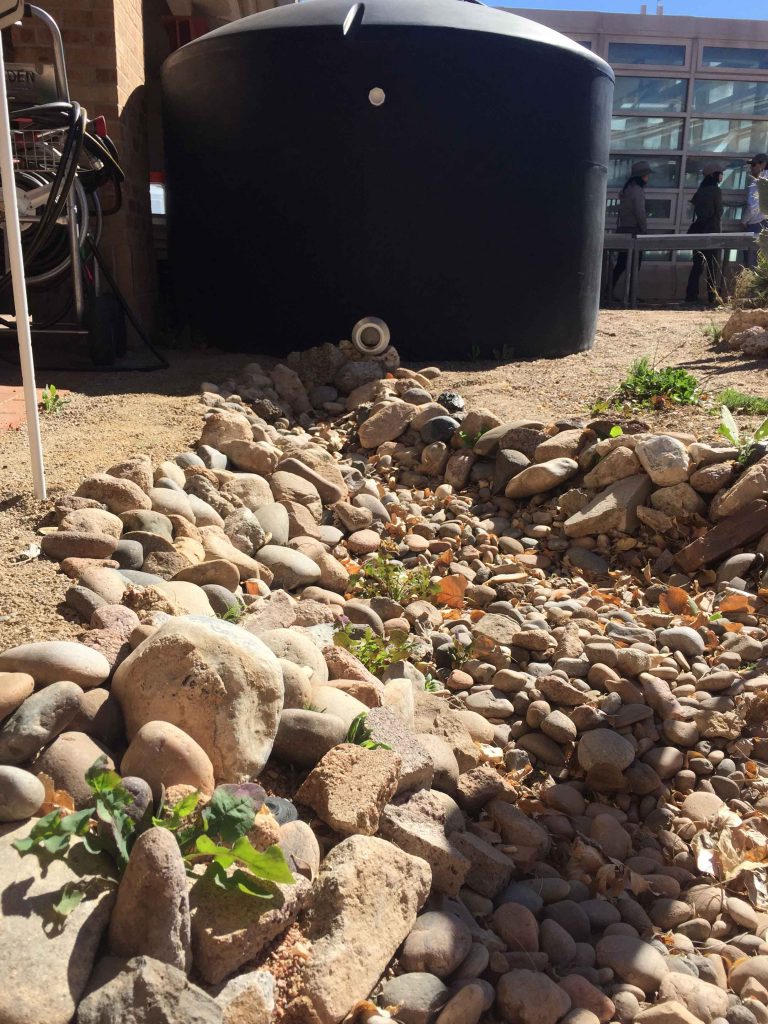
For homeowners who are ready to tackle an active water harvesting system like a rain barrel or cistern, Hunter recommends adding a passive water harvesting system next to the active one for when the container overflows.
Passive water harvesting swale next to active water harvesting cistern.
Using every drop of water through water harvesting is an important feature Hunter incorporates into all his landscape designs.
Local Expert: Hunter Ten Broeck, Landscape Contractor and owner of WaterWise Landscapes Incorporated in Albuquerque, NM. Author: Jill Brown, ASLA Landscape Architect and owner of My Landscape Coach in Albuquerque, NM.
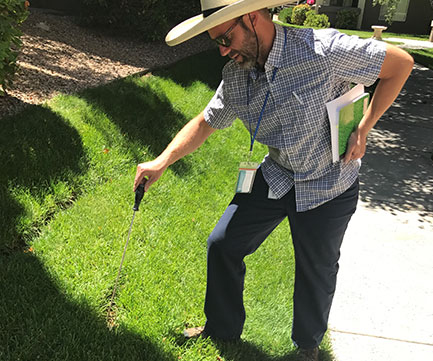
Testing the soil moisture with a long screwdriver.
Use a soil probe or a long screwdriver to test soil moisture. Push the screwdriver into the soil 24 hours after you’ve watered your plants. It will go easily into moist soil. Mark and measure how far it went into the ground. That will tell you how deep you have watered that plant. Every yard is different, but once you figure out how long it takes your watering system to water to certain depths, you’ll be set.
Many homeowners would like a turf grass lawn, but might feel
irresponsible watering a lawn in the arid Southwest. The key to choosing a turf
grass is to determine the one most suited to the specific needs of your
landscape.
There are two different categories of turf grasses: cool season and warm season. Cool season grasses are Kentucky bluegrass, perennial ryegrass and tall fescue. These are cold tolerant, green most of the year, and hold up to extensive amounts of foot traffic. But they use a lot of water. Warm season grasses are Bermuda grass, blue grama, and buffalo grass. Warm season grasses have a shorter growing season. This means they green up in mid Spring, are low maintenance, and require less water than cool season grasses. But blue grama and buffalo grass can’t take extensive foot traffic.
Grasses should not be selected solely on perceived water use. Depending on the purpose and function of the turf area, traffic tolerance, recuperative ability, maintenance and aesthetic appearance should also be considered.
Four Turf Grasses for Albuquerque
Park Blend grass, a combination of Kentucky bluegrass, perennial ryegrass, and tall fescue
PARK BLEND: The most popular turf grass lawn here, used by the City of Albuquerque and homeowners alike, is Park Blend. Park Blend combines all the cool season grasses into a blend of Kentucky bluegrass, ryegrass and tall fescue, taking advantage of the positive attributes of all three grasses in one turf. Park Blend performs beautifully through warm summers and is especially well-suited to New Mexico's growing conditions. While it does need about 37"- 41" inches of water a year, this is a great choice for a lawn that will receive a lot of traffic. It does require regular mowing and weed control.
Buffalo grass, Bouteloua dactyloides
BUFFALO GRASS: Choose warm season buffalo grass for a beautiful low growing, low water and low maintenance grass. It will handle light traffic, rarely requires mowing and uses around 24" - 28" inches of water a year.
Bermuda grass, Cynodon ‘PWIN04S’ Dog Tuff
BERMUDA GRASS: Bermuda grass is a great choice for a low water, low maintenance grass with medium foot traffic. The downside is that it does spread prolifically via runners. It is best to surround this grass with an 8-inch-wide and deep edger to keep it in check. Bermuda grass uses about 22 - 26 inches of water a year and requires a few mowings a year.
Blue grama grass, Bouteloua gracilis
BLUE GRAMA GRASS: Choose blue grama grass for a stunning native meadow look. It can be seeded with wildflowers for a beautiful spring and summer appearance. Keep the eyelash like seed heads on the grass through the fall and winter for both aesthetics and wildlife appeal. This grass uses about 18 - 20 inches of water a year. Trim and dethatch once in late winter for best appearance.
PRO TIPS: prepare the soil well before planting turf grasses, water early in the morning or late evening, keep grasses to a mow height of 3-4" so the soil stays cooler, service the irrigation system regularly to check for efficiency.
Author: Jill Brown, ASLA Landscape Architect and owner of My Landscape Coach in Albuquerque, NM. Resources: Turfgrass irrigation Circular 660 Bernd Leinauer, Professor and Extension Turfgrass Specialist NM State University, Growing the Southwest Garden by Judith Phillips, High Country Gardens, Plants of the Southwest. Even more resources about turfgrasses can be found over at NMSU.
What should every home owner know about simple irrigation maintenance?
The most important thing is to visually inspect your system periodically. Usually, irrigation runs during the middle of the night and we’re unaware of how well (or how poorly) it’s working. Turn on each zone and observe its operation. Look for leaks in your valve boxes – if there’s water in the box, you probably have a leak.
With sprinklers:
Look for broken or tilted heads and nozzles that should be adjusted to address overspray. If water continues to drain from one of your sprinklers after the zone has shut down, you may have a low head drainage problem. To fix this, install a simple check valve, which typically screws into the lower part of the sprinkler head. Ask your local irrigation supplier for a check valve recommended for your situation.
With drip irrigation:
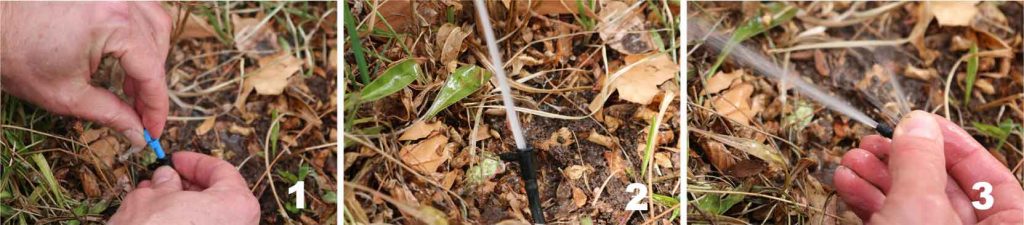
How to unclog your button or flag emitters.
Button emitters are not easy to unclog. Often, it’s easiest to simply remove a clogged button emitter and replace it.
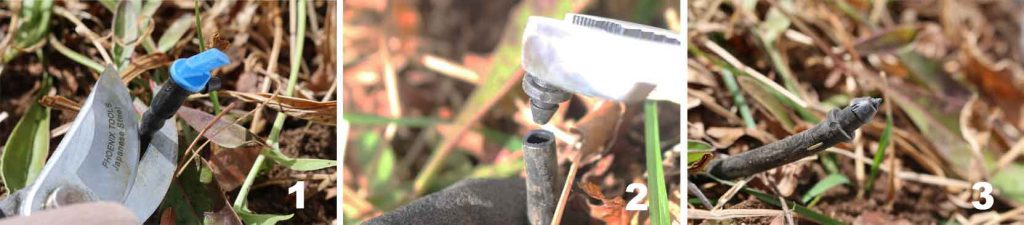
Flag emitters can be unclogged as follows:
While water is flowing through the emitter, twist the colored flag piece located on top of the emitter so that it can be removed.
Allow water to flow out the top of the emitter for 10-15 seconds with the flag piece removed.
Block flow from the top of the emitter to send water through the side orifice for 10-15 seconds.
Twist the flag piece back into place to resume typical irrigation (not pictured).
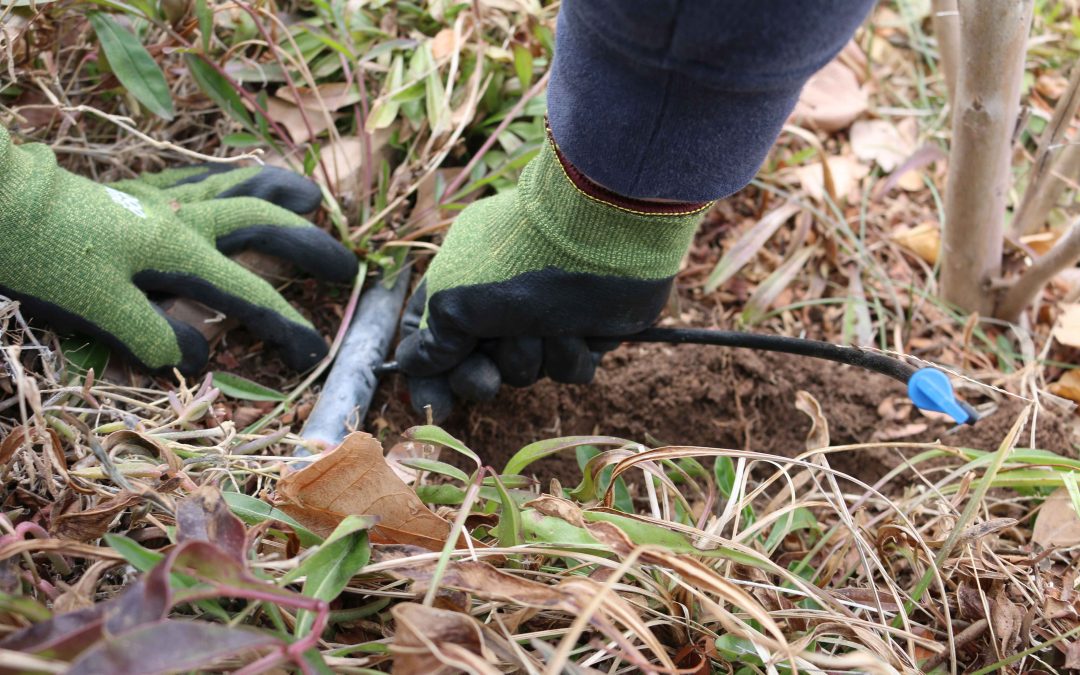
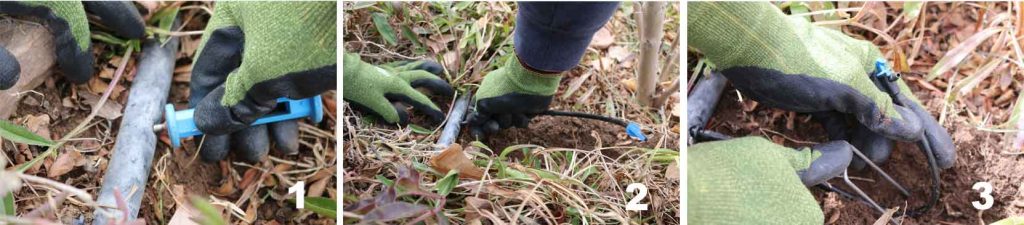
How to add an emitter?
Using a punch tool, make a hole where you will connect the spaghetti tubing
Attach the spaghetti tubing to the lateral line using a barbed connector
Run the spaghetti tubing through a small trench to where you want the emitter to apply water – at the dripline of the plant is usually best
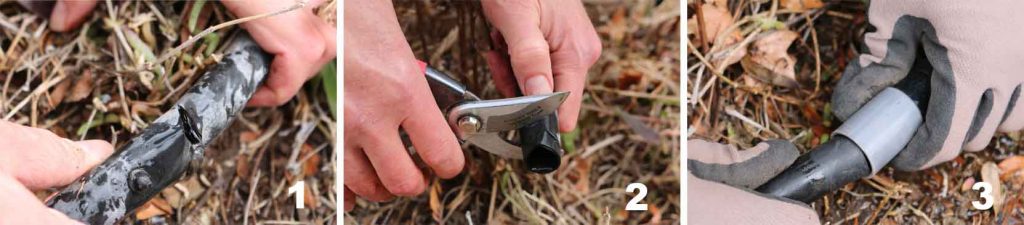
How to repair a poly tube if it's been punctured?
Locate the damaged section of poly
Cut out the damaged section
Use a fitting – there are many types that will work – to join the ends
What is a goof plug and how to install it?
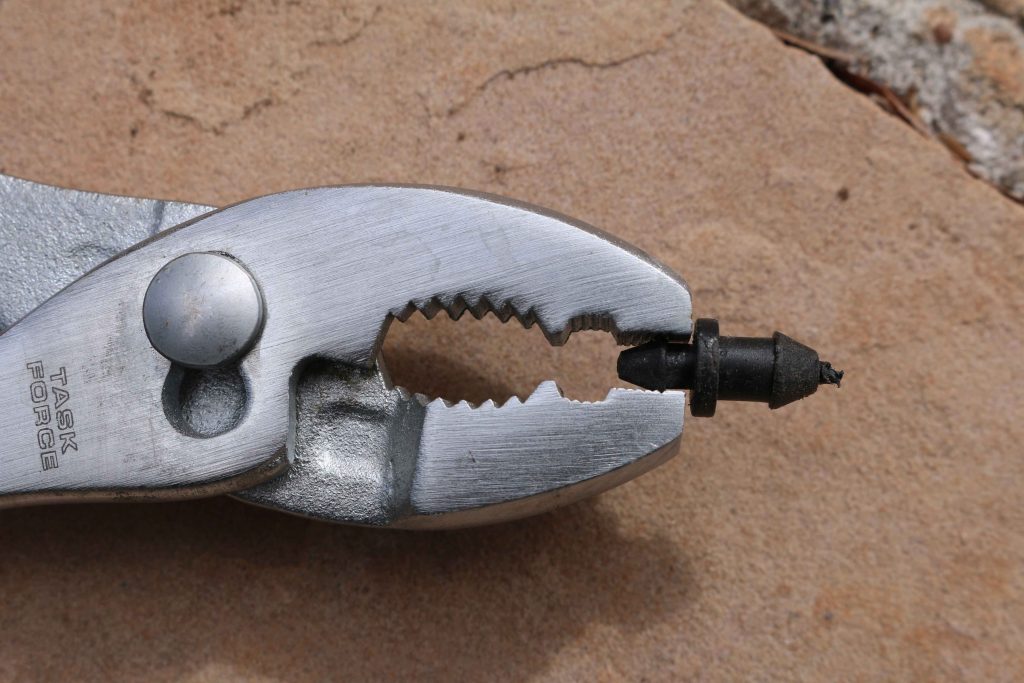
It’s a simple, 2-sided plastic piece used to plug a small opening in drip irrigation lines
Goof plugs can be used to stop water flow through spaghetti tubing, as follows:
Locate tubing to plug (cut off emitter if necessary)
Twist small end of goof plug into spaghetti tubing opening
Enjoy your water conservation!
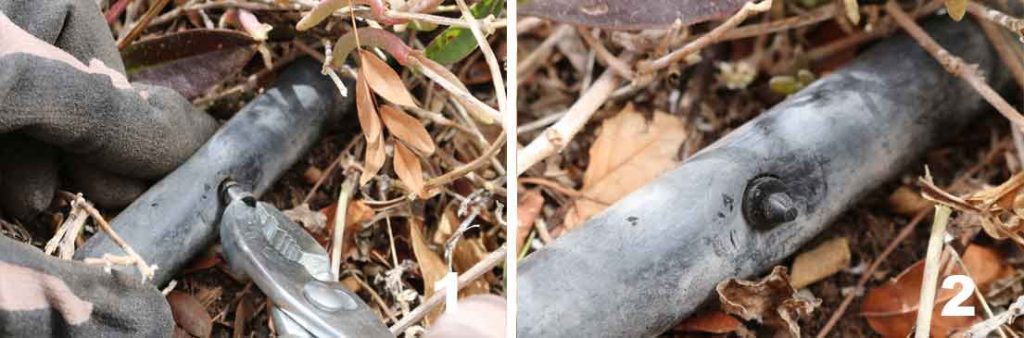
Goof plugs can be used to stop water flow through distribution line, as follows:
Locate tubing to plug
Twist large end of goof plug into distribution line
Using these few simple tricks, you can easily manipulate water flow in your landscape for maximum system efficiency.
Author: Laura Ferenchak, Irrigation Efficiency Specialist with Albuquerque Bernalillo County Water Utility Authority