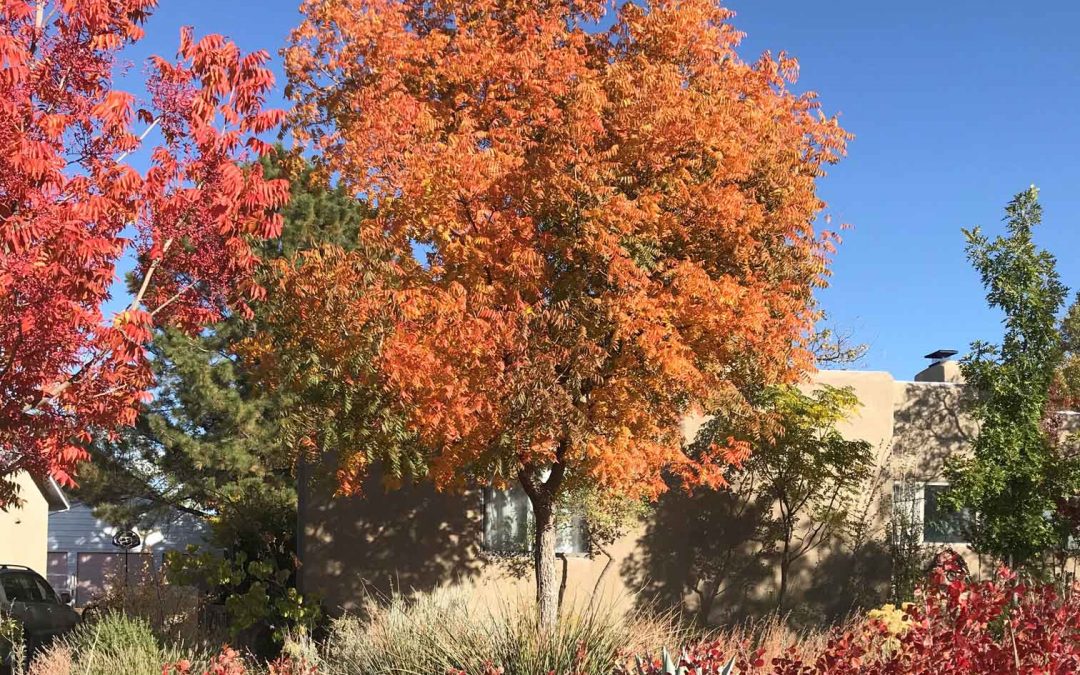
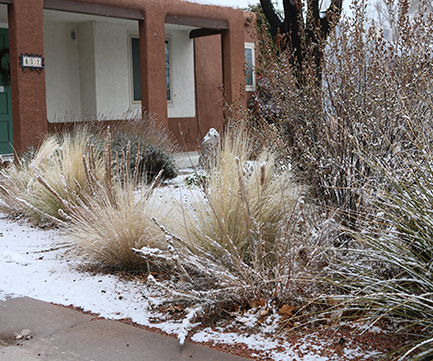
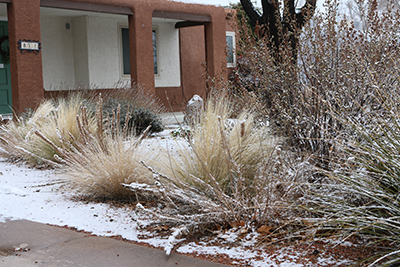
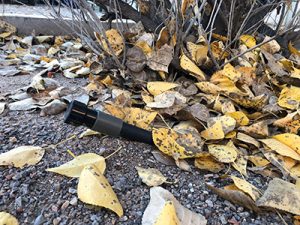
The balancing act of watering your trees in the fall and winter is important. Established trees should be watered two to three times a month in the fall season and once a month in the winter season. If not watered properly, trees that get too dry during this time can suffer stress and drought injury. This often does not show up until the heat of the following summer, which then makes trees more susceptible to pests and disease. Fall is the time to set your trees up for winter success.
Other important factors to consider when watering trees:
Newly planted trees (trees planted within 1-3 years), are more susceptible to damage from dry conditions and should be watered more frequently than established trees. Try watering them to a depth of 24 inches three times a month in the fall and twice a month in the winter.
Evergreen trees lose water through their needles in the dry winter air. They need more stored-up water going into the winter season to make up for that. Cold, dry winds can strip water from evergreens faster than their roots can absorb it, too. That is why it is especially important to provide enough water in the fall and during dry, warm spells in the winter.
Even though they lose their leaves, deciduous trees should also not get too dry in the fall and winter. Water acts as an insulator for both the tree and soil. Soil that stays moist will be warmer. Likewise, plant cells that are plump with water will be less susceptible to damage from the cold. Water deciduous trees to a depth of 24 inches twice a month during the fall and once a month in the winter.
When watering any tree, remember to apply water out to the edge of the tree’s canopy drip line. Most established trees have a root spread equal to their height and beyond. Water deeply and avoid spraying foliage. Watering to the right depth depends on your specific soils, so you will want to measure how much water it takes your soils to reach 24 inches deep. Read this article for tips on measuring watering depth.
One of the best things you can do for your trees in the coming months is to add mulch. Layering three to four inches of organic mulch protects the soil from moisture loss and helps regulate soil temperature throughout the winter. Treebates for bulk organic mulch is available.
Pro Tip: "Watering to the right depth and managing the frequency of watering are both very important aspects of keeping our plants healthy throughout the year, but especially in the fall and winter months,” says Patrick Chavez, Trees of Corrales Wholesale Nursery.
Author: Amos Arber, Xeriscape Incentive Inspector, and Certified Arborist with the Water Resources Division for the Water Authority. Photography: Wes Brittenham Pro tip:Trees of Corrales Have a question about the article? [email protected]
To avoid damage to your irrigation system from
freezing temperatures, it is important to “winterize” it by protecting exposed outdoor
fixtures. If your hose bib is left exposed or standing water is left in pipes, valves
or sprinkler heads during freezing temperatures, that water may expand and damage your
system fixtures. That
could result in costly but avoidable repairs. Each irrigation system may be different,
but the general idea is the same: protect your irrigation system now to save
time and expense later. Here are a few tips you should take to prepare your irrigation
system for winter.
1. Disconnect the water supply to your irrigation system
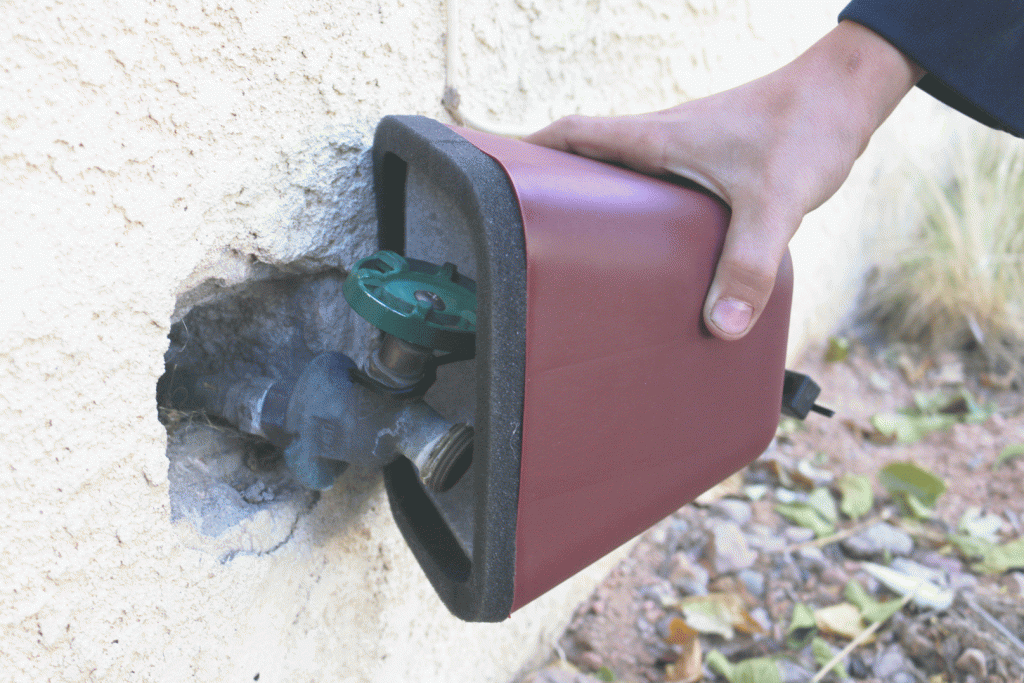
a. If you manually water using a hose or if the irrigation system is attached to an outdoor spigot, you should disconnect it and cover your hose bib using a faucet cover. A faucet cover is easy to install and is usually made from durable hard plastic. It protects your outdoor faucet from freezing temperatures. This in an easy, inexpensive fix that will provide you peace of mind when the temperatures drop.
Pro Tip #1
Faucet cover to protect hose bib from frost.
Disconnecting your hose and covering your hose bib is very important in winter. If you leave the hose connected, water can freeze in the hose all the way into the hose bib and the pipe that goes inside your home. If the house pipe breaks, you will have water flooding inside, and potential major water damage inside your home. It’s definitely worth the $10-$15 on these insulated covers to prevent potentially thousands of dollars in plumbing repairs and water damage to your home. Don’t assume that if the hose bib freezes it will drip and freeze only outside your home. Sometimes the damage is a whole lot worse.
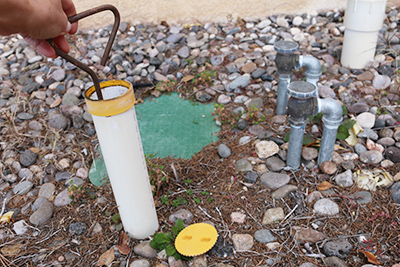
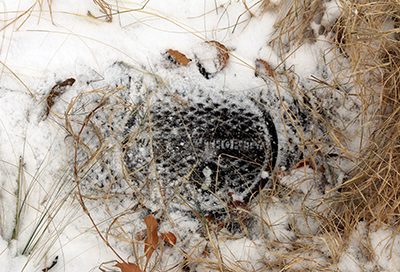
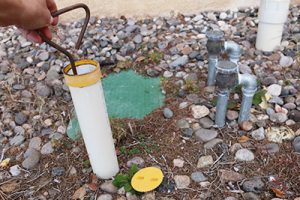
b. If you have a below ground irrigation system, locate your shut-off valve (often hidden in a 3” PVC pipe; often with a white or yellow cap, as shown in the photo). Turn it to the right to shut it off. Be careful when turning so you don’t break the valve. Your shut off valve may look like this:
Irrigation shut-off valve.
Pro
Tip #2
Sometimes the water shutoff for your sprinkler
system is in the green box shown in the picture. If so, we recommend adding some
heat tape and/or insulation in the box because it will be exposed to freezing temperatures.
If you can insulate it and protect it you can avoid potential frozen pipes at the
shut off and potential repairs in spring. Watch out for spiders, though,
because the shutoff box is a warm wet place.
2. Turn off the irrigation system controller (if you have one)
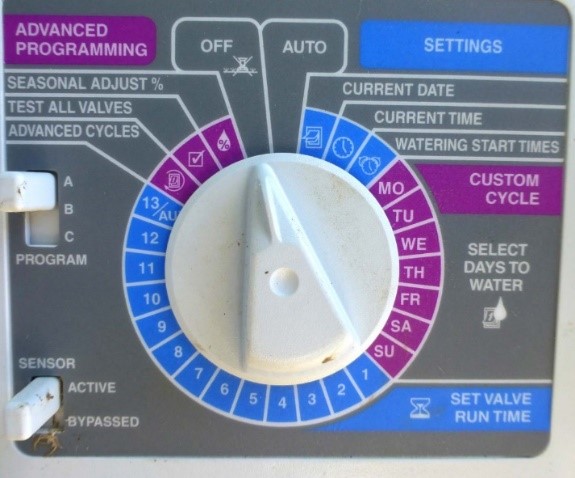
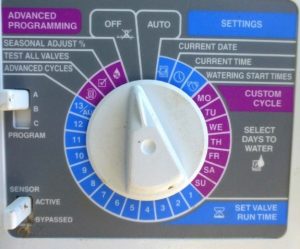
Irrigation controller set to off.
Pro Tip #3
If you forget to shut off your irrigation system during winter you can potentially have your automated sprinklers running in freezing temperatures. That can freeze and damage your sprinkler heads. Make sure you turn off all automatic cycles for your system. If you have a drip system for trees and other plants that need to be watered periodically throughout winter run the system manually when you are home, and only in above freezing temperatures. Don’t just assume that setting it to run during the day will be okay, either. There are days in winter when the temperature doesn’t get above freezing. It’s best to just turn it on when you’re home and then watch it. If your sprinkler heads do crack or break and you don’t notice, you will likely flood your yard in spring when you turn your system back to automatic settings.
3. Drain the water from all pipes, valves, and sprinkler heads.
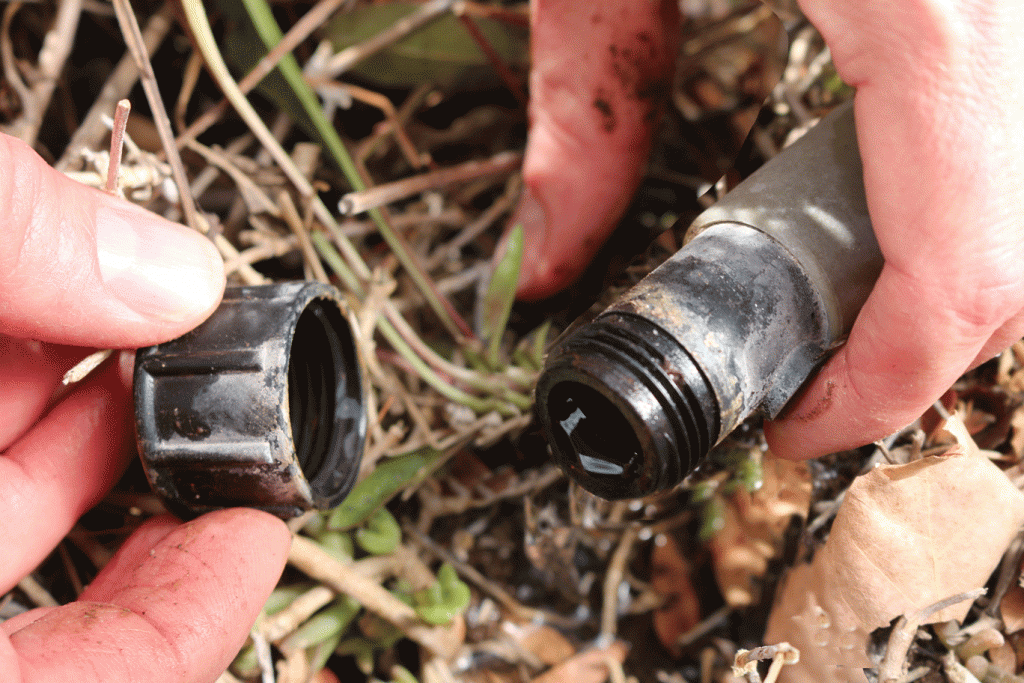
Drain cap at the end of a drip system.
There
are several ways to drain your system.
Manual
drain valves and automatic drain valves can be blown out with compressed air. Local
irrigation specialists can help.
If you
have an irrigation system with drip hoses, we recommend you locate the end cap (drain
cap) of the drip hose and drain out the water.
Pro Tip #4
Sometimes irrigation systems don’t have drain
valves. If you don’t have these, simply make sure you’ve turned off your sprinkler
system prior to winter and freezing temps. Then you can have a professional inspect
the system in spring before you turn it back on. A professional will inspect your
system for leaks and make any repairs so you don’t flood your yard. So avoid the
headache and have an inspection. If you consistently have problems year after year,
drain valves can be installed to help clear the lines each winter.
Reminder: If you need to water in the winter season use your hose and remember to cover it when finished.
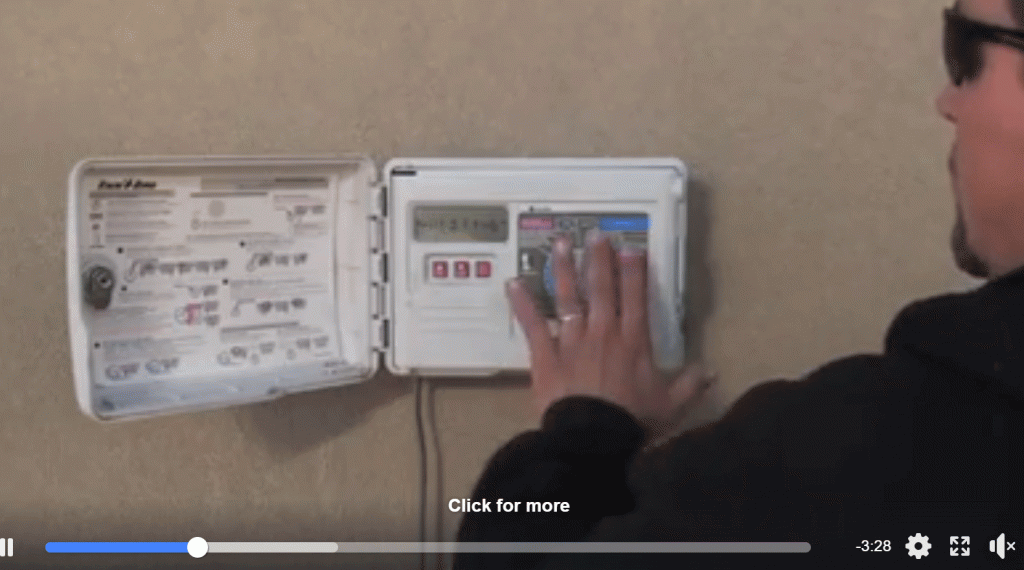
How to shut off your irrigation system for winter.
The Water Authority’s rate structure serves two purposes:
1) To recover the operational costs associated with running a utility (e.g., delivering water to our customers, collecting and treating wastewater, and maintaining our infrastructure to ensure reliable service); and
2) To encourage all our customers to conserve.
In order to meet both of these goals, there are two components that determine your bill each month.
The fixed charge. This is determined by your meter size and stays the same every month. Larger meter sizes have a higher fixed charge.
The commodity charge. This is determined by how much water you use each month, so it changes. The commodity charge for each unit of water (1 unit = 748 gallons) is the same for all customers, so as you use more units the overall charge increases.
For most customers, their winter water bills are the lowest of the year. And yet, it is very important to be aware of your winter water use and how it relates to your water rates.
Based on your use during winter months of December-March, the Water Authority calculates your winter water average (WWA). Your winter water average is used in two rate calculations.
1) During the irrigation season (April – October), your WWA sets your conservation average which determines how much water you can use before conservation surcharges are assessed to your account. For example, if your WWA is 6 units (1 unit = 748 gallons), you can use up to 12 units per month before any conservation surcharges are assessed. This might make you think that using more water during the winter will help you save money on your bill during the summer. BUT….
2) The WWA serves a second purpose which is to determine your sewer rate for the entire following year. The Water Authority assumes that all the water you use during the winter (Dec – March) is going into the sewer system after use (rather than onto your landscape). So, your sewer charges are based on how much you used during the winter.
Use more during the winter and not only will you have to pay for the water you used and probably didn’t need, but you’ll also be driving your sewer rates up for the entire following year.
Some things you might be wondering about now that you know about the WWA and how it is calculated:
For customers with a very low winter water use, the Water Authority sets their WWA at 4 for the purpose of calculating their irrigation season surcharges, but they are charged for sewer usage based on their actual winter water use.
For customers with a very high winter water use, the Water Authority caps their conservation average at 15. This was established so that high water users could not avoid incurring irrigation surcharges.
You can find your WWA on your water bill under the heading “Winter Average”. For most customers their Winter Average and their Conservation Average are the same. But, for customers with a very low or high winter usage, their conservation average will be adjusted as described in the two bullets above.
There is a “low use” discount to reward customers who conserve all year long. During the billing months of April – October, if you use less than 150% of what all the other customers with your meter size used on average during the winter, you receive a 50% discount on the outdoor water use commodity charge portion of your bill.
If you have a leak during the winter, it is important to contact the Water Authority’s Customer Service Division at 842-WATR (9287), Option 0 and review your account with a Customer Account Representative for any applicable adjustments.
A second article on water rates and conservation surcharges will follow in the spring!
Author: Katherine Yuhas, Water Resources Manager with Albuquerque Bernalillo County Water Utility Authority
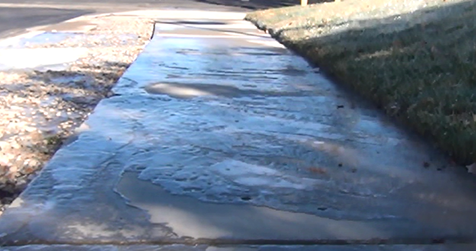
Icy sidewalks and streets pose a serious danger to the safety of those who use them. Water Authority customers are subject to fines when water causes ice formation on adjacent property, or the public right-of-way, including sidewalks or other impervious surfaces.
Ice violations issued by the Water Authority can range from $20 for a first violation and up to $2,000 for multiple violations. These violations generally occur as a result of irrigation overflow, overspray, and/or malfunctions. If you choose to use your automatic irrigation system during the winter months, please check for the following to avoid ice formation:
Low head drainage
This generally happens on sloped areas and can be fixed by installing a sprinkler head with a built-in check valve. Many major brands of heads can be retrofitted with a check valve.
Misaligned sprinkler
A misaligned sprinkler may cause water to flow into the public right of way. Turn on your irrigation system to check each sprinkler head’s angle and the distance it sprays. Make sure your water use is beneficial to your landscape and not wasted.
Overflow
Cut back your watering time. If your landscape needs more water than what is applied before overflow occurs, practice the cycle and soak method. Break up the total watering time in order to allow water to soak in better. For example, instead of running your system one time for 10 minutes in the winter, try running it two times for 5 minutes each with an hour or more between cycles. This allows time in between for the grass to soak up the water.
Unrepaired malfunctions
Visually inspect all the components of your irrigation system and repair any issues that may be causing a problem.
Watering time
Watering too early or too late can both cause the formation of ice. Mid-day is the best time to apply landscape irrigation in the winter so that water will have time to evaporate before freezing.
Ultimately, winterizing your irrigation system for the winter is the best way to avoid ice violations. Click here to learn how to winterize your system. We are happy to assist you with your landscape water needs or to answer your scheduling questions. Call 505.289.3003 to schedule an Outdoor Irrigation Efficiency Consultation today!
November is the time to prepare your landscape for winter. By following the simple recommendations outlined below, you can get your yard ready to endure the coming winter months so it can flourish next spring.
How do I prepare my plants for the winter season?
Turf grass:
Mow your lawn to a height of 1-2 inches. Grass left too long over the winter can develop brown patches.
Aerate the ground before it freezes. Aerating involves penetrating the lawn with small holes to allow air, water and nutrients to reach the roots over winter. Power aerators are available to rent at your local home and garden center, or you can try a strap-on shoe aerator.
Remove fallen leaves from the lawn. These may cause damage to the grass if left over the winter.
All other plants:
Add mulch to existing plants. Mulch helps retain moisture and keeps the soil a more consistent temperature in the winter. When mulching trees, be sure to leave space around the trunk.
Do I need to water my plants in the winter?
Yes! In our area we recommend you continue to water your plants over the winter. But you won’t need to water as often. During the winter, soil retains water for longer periods because of the colder nights and shorter days.
You’ll want to pay attention to how much rain and snow you get in your yard each month. If it has rained more than ½ inch (or snowed more than 6 inches) in the last 4 weeks, then no need to water. If we are having a dry winter (less than ½ inch of precipitation in a month), then your yard is thirsty! Give it a drink.
When watering during the winter, we recommend you water during the warmest part of the day. Below is a chart with watering recommendations.
How much do I water my plants during the winter?
Plant Type
How often?
How deep?
Trees
1 time a month
24 inches
Shrubs
1 time a month
18 inches
Flowering plants
1 time a month
12 inches
Desert accents
none
none
Groundcover
1 time a month
12 inches
Grass: turf
2 times a month
6 inches
Grass: ornamental
1 time a month
12 inches
Vines
1 time a month
18 inches
How do I know how deeply I’m watering my plants?
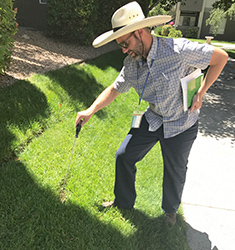
Testing soil moisture with a long screwdriver.
Use a soil probe or a long screwdriver to test soil moisture. Push the screwdriver into the soil about an hour after you’ve watered your plants. It will go easily into moist soil. Mark and measure how far it went into the ground. That will tell you how deep you have watered that plant. Every yard is different, but once you figure out how long it takes your watering system to water to certain depths, you’ll be set.
Winterize your irrigation system
In a climate where winter temperatures can get below freezing, it may be advisable to “winterize” your irrigation system in order to avoid damage. If water is left in pipes, valves and sprinkler heads during freezing temperatures, that water may expand. You can imagine the results.
The steps you should take to prepare your irrigation system for winter depend on a lot of factors, but the overall goals for winterizing are the same for most systems:
Shut-off valve with sprinkler valve key.
Shut off the water supply to your irrigation system
Locate your shut-off valve (often hidden in a 3” PVC pipe; sometimes this pipe has a white or yellow cap on it as shown in the photo) and turn it to the right to shut it off
Controller set to the "off"position.
2. Turn off the irrigation system controller (if you have one)
Leave your controller plugged in to save programming information for next year
Turn the controller dial to OFF.
Flush Cap at the end of a drip system.
3. Drain the water from all pipes, valves, and sprinkler heads
There are several ways to drain your system. Manual drain valves, automatic drain valves, are blown out with compressed air. This should be left to trained professionals.
Local irrigation specialists can be hired to help.
If you have an irrigation system with drip hoses, we recommend you locate the end cap (flush cap) of the drip hose and drain out the water.
Don’t forget – hose bibs (or faucets located on the outside of your house) can also freeze. Make sure that water to your hose bibs is shut off. Remove any hoses that are connected to hose bibs, and turn on the faucet to allow any trapped water to drain out. On warm winter days, you may want to turn the water back ON in order to water with a hose.