by 505 Outside | Aug 2, 2018 | Blog, Maintenance, Maintenance Tips, Xeriscape
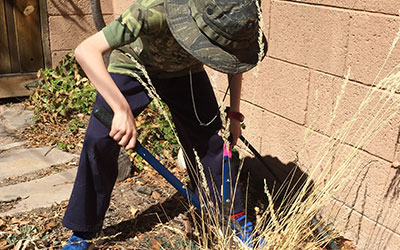
Xeriscapes can be designed to require very little maintenance, to be healthy and attractive with seasonal cleanup and pruning rather than weekly mowing, but no garden is completely maintenance-free. To ensure that your landscape looks its best and stays water-wise, you may need to:
- remove fallen leaves
- trim off old flower stems
- pull a few weeds
- observe insect activity and decide when intervention is warranted and what the least invasive and most effective approach might be,
- monitor watering
- fertilize plants that need supplementing
While this may seem like a long list of tasks, in real time most of these may amount to a few hours every two or three months. The preventative pest patrol and irrigation check can be done in the evening every week or two with a cool drink in your hand a relaxing reminder to stop and smell the roses.
by 505 Outside | Aug 2, 2018 | Blog, Maintenance, Maintenance Tips, Xeriscape
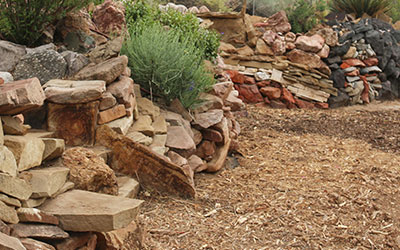
Mulches are blankets of loose material that cover the soil to minimize evaporation, keep roots cool in summer, suppress weed growth and slow erosion. Mulches can also provide visual interest and make the landscape more cohesive until young plants mature to fill the space.
Fibrous mulches such as pecan shells, shredded bark and composted cotton burrs are commonly used in planting beds, especially where plants prefer organic matter.
Stone mulches such as crusher fines and gravel of various sizes and colors, can be used as pathways, lining rainwa- ter catchment, streambeds and basins, and to add texture to planting areas where desert plants prefer improved drainage.
Never use impervious plastic sheeting under mulches as it blocks air movement needed for healthy root growth and results in shallowly rooted plants more vulnerable to wind throw. Many types of pervious landscape fabrics are available where such material is needed for weed suppression or erosion control.
by 505 Outside | Aug 2, 2018 | Blog, Planting, Planting Tips, Water Conservation, Xeriscape
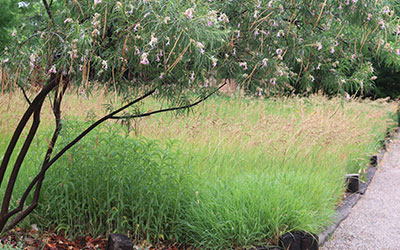
Choose native and low-water-use plants whenever possible. From the low desert of southern New Mexico to the foothills of the northern mountains, there is an amazing diversity of water-wise plants that we can use in our gardens. Whether you want to have year-round green, blazing flowers or a subtle blend of texture and color that changes through the seasons, there are well-adapted plants that can fill the space on a modest water budget. Grouping plants of like requirements also makes zoning irrigation easier and more efficient.