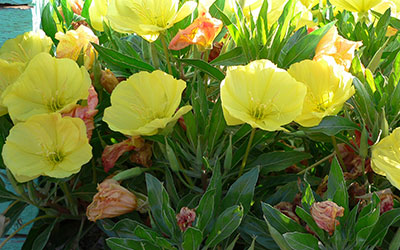
Yellow Evening Primrose, Oenothera macrocarpa syn missouriensis

Yellow Evening Primrose, Oenothera macrocarpa syn missouriensis

Full Sun, Part Shade
Medium Water

Mature Size: 1’X 2’
Blooming Season: Late spring
Flower Color: Yellow

Yellow Evening Primrose is a prairie wildflower that looks anything but wild. Its 4 inch-wide clear yellow flowers are nestled among shiny green leaves growing in a compact cultivated-looking mound. In addition to the species, there are interesting varieties including Comanche Campfire with silver leaves and red stems for added contrast. Deeply rooted and long-lived, Yellow Evening Primrose pairs nicely with Leadplant or Lavender.

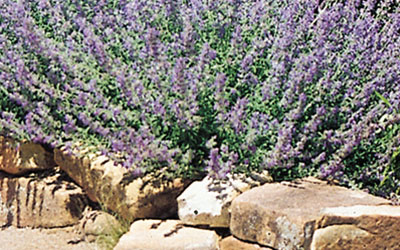
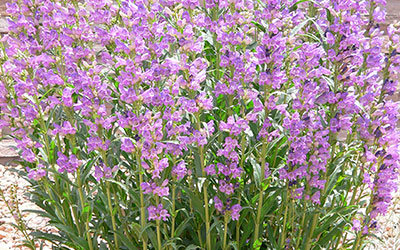
Catmint, Nepeta x fassenii

Catmint, Nepeta x fassenii

Full Sun, Part Shade
Medium Water

Mature Size: 8”X 24”
Blooming Season: May-August
Flower Color: Blue

Catmint has become a cornerstone in many xeriscapes because of its hardiness and long period of bloom. The first flush of blue flowers comes in late spring. When deadheaded promptly, a second flush blooms in late summer. Out of flower, the neat mound of gray-green foliage has a pleasing fragrance and texture. Adaptable to any well-drained soil, Catmint can handle a range of light from full sun to light shade. Trim back in late winter for prolific blooms the following spring.

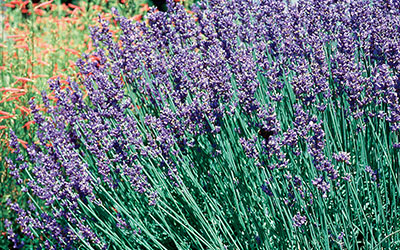
English Lavender, Lavandula angustifolia

English Lavender, Lavandula angustifolia

Full Sun, Part Shade
Medium Water

Mature Size: 36”X 36”
Blooming Season: Summer
Flower Color: Lavender

An old favorite, Lavender is a dependable performer blooming with pleasing purple flower spikes. In fact, this is the kind of plant that quickly becomes a favorite of everyone who grows it. Its compact silver-green leaves and gorgeous flowers combine well with many xeric and hardy garden perennials. A superb plant for edging walks and paths and wherever the aromatic flowers and foliage can be enjoyed.

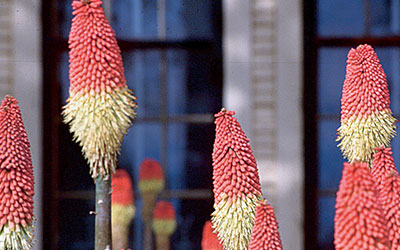
Red Hot Poker, Kniphofia uvaria

Red Hot Poker, Kniphofia uvaria

Full Sun
Low Water

Mature Size: 36”X 36”
Blooming Season: Summer
Flower Color: Orange

A sturdy South African native known for its tough, easy-to-grow nature. It has long grasslike foliage and unusual bicolor flower spikes in shades of orange and yellow. A substantial plant that looks great alone or in long beds lining driveways or entrances where dryness and alkaline soils might defeat even a daylily. Particularly attractive with Yarrow.

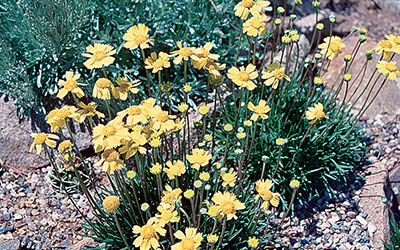
Perky Sue, Tetraneuris syn hymenoxysis

Perky Sue, Tetraneuris syn hymenoxysis

Full Sun
Low Water

Mature Size: 12”X 12”
Blooming Season: April-August
Flower Color: Yellow

A wonderful everblooming yellow daisy that is both heat-loving and drought-tolerant. The narrow, silver-green foliage is evergreen and supports short stems of yellow daisies starting in spring. A vigorous reseeder, it quickly colonizes harsh areas of the garden. Use it to interplant with cold hardy cacti. Provide lean, well- drained soil. Once established H. scaposa is very xeric and needs little extra water.

Maximilian Sunflower, Helianthus maximilianii

Maximilian Sunflower, Helianthus maximilianii

Full Sun
Medium Water

Mature Size: Up to 120”X 120”
Blooming Season: September-October
Flower Color: Yellow

Maximilian Sunflower produces one of the most spectacular late-season bursts of color. The tall flowering spikes, up to 20 or 30 in a mature clump, are covered with up to 30 or more yellow, closely spaced daisies. Place Helianthus against walls or fences or make a hedge with  it, but don’t put it in the middle of your most fertile flower beds, as it will crowd out weaker neighbors. The more water it receives, the taller it gets. (Growing Tip: put it in a tomato cage early in the season and let the tall stems grow up through it so they don’t flop over with the weight of their flowers later in the fall.)