by 505 Outside | Oct 1, 2022 | Deciduous Trees
Type: Deciduous tree
Exposure: Full Sun
Water Use: Low
Mature Size: 25’ x 25’
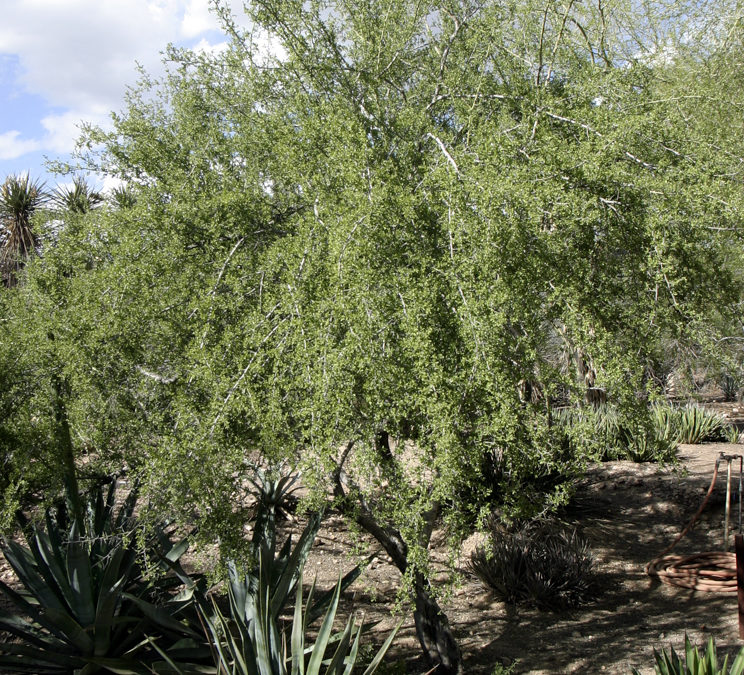
A young Netfleaf Hackberry passes through a rather ungainly adolescence, but with a little pruning, like a butterfly from a chrysalis, it emerges as a sculptural small shade tree that provides habitat for butterflies and songbirds as well as cooling our patios and decks on a very modest water budget. Because it has deep roots, it can be planted close to walls and paving without risk.
by 505 Outside | Jun 29, 2020 | Deciduous Trees, Trees
Exposure: Full Sun
Water: Low
Height and Spread: H 15-35’ X W 10-30’
Blooming Season: Flowers in Summer. Fruit in Fall
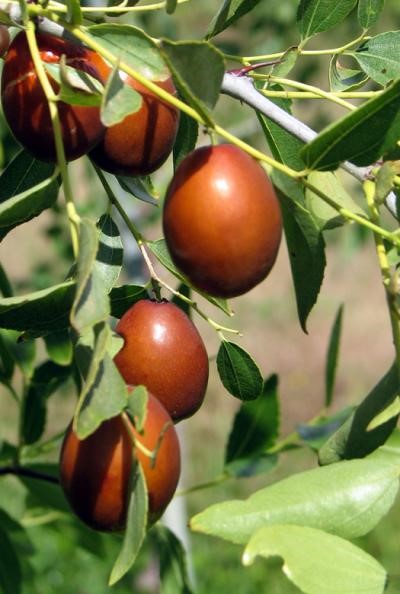
One of the easiest fruit crops to grow, jujube trees are tolerant of a wide range of temperatures and rainfall. The oval shaped leaves are dark green with a gleaming, wax like appearance. This tree grows upright, making it a good tree for screening in narrow spaces or even used in groupings. The fruit will change color from dark green to a reddish-brown color when fully matured. Jujubes can be an extraordinary substitute for apples in recipes.
by 505 Outside | Mar 1, 2020 | Deciduous Trees
Exposure: Full Sun
Water: Medium
Height and Spread: H 25’
x W 15’
Blooming Season: Spring
Region: All
areas
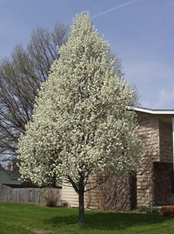
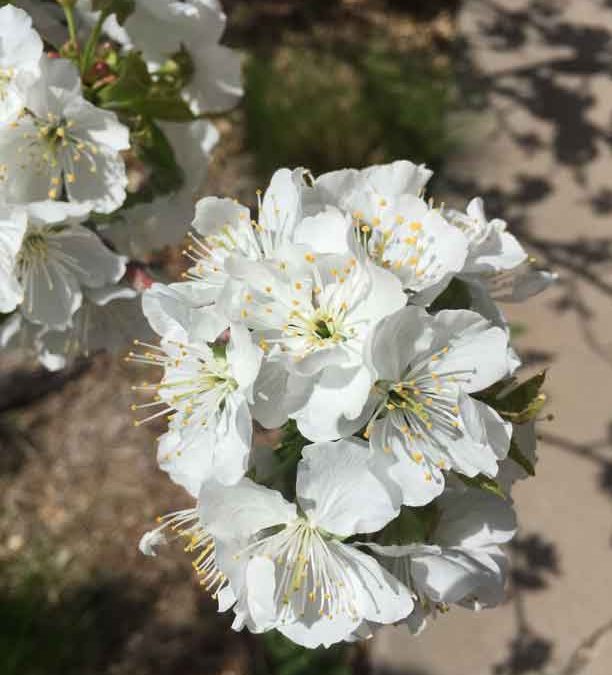
The Chanticleer Pear is a deciduous flowering tree that
produces profuse clusters of white flowers in early spring followed by small
round, hard, bitter fruits that can last into winter. Its shallow roots and
pyramidal form make it a great choice for a landscape with limited space. Other
advantages of the Chanticleer Pear are that it is favored by birds because of
its dense branch structure and that it provides food throughout the year for
birds, insects and bees.
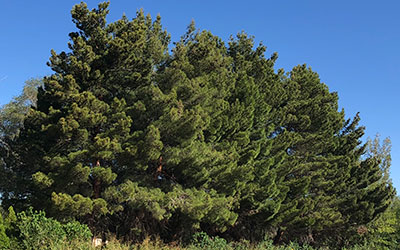
by 505 Outside | Dec 12, 2018 | Blog, Planting, Planting Tips, Tree Care, Xeriscape
There are so many types of trees to choose from. We don’t blame you for being confused. Here are some of our favorites, just a small list of the many trees available here in New Mexico. Before you head out to buy your tree, though, let’s chat a little bit about them.
As you look around town, you’ll notice trees come in all shapes and sizes. The key to choosing the perfect tree for your yard is picking the right tree for the right place. In fact, this phrase is popular among arborists.
When deciding what tree to plant, think about the tree size now and at maturity. It may look small now, but how big will it grow once it’s mature? Make sure you provide enough room for future growth. No one wants branches growing into power lines, roots disrupting your foundation or leaves blocking the solar panels on your neighbor’s house.
Learn about the rate of growth of the tree, too, so you know how long it will take to get to mature height. Other key factors in choosing the perfect tree are understanding what sun exposure the tree likes. Does it like full sun all day? If so, plant it on the south side of the house or in a location where buildings will not block its access to sunlight. Cold hardiness, heat tolerance, soil preference and irrigation needs should all be considered when choosing a tree species.
Trees are also a long-term investment. Take the time now to choose the right tree for the right place and you’ll save money in the long run.
This list of recommended trees is broken into deciduous and evergreen trees.

A deciduous tree loses its leaves annually in the fall.
Evergreen trees shed their leaves or needles periodically, but usually remain green throughout the year.
Large Deciduous Trees
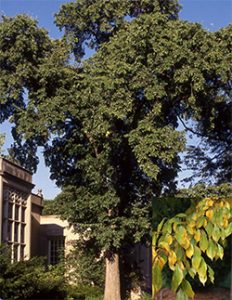
‘Accolade’ Elm, Ulmus japonica x wilsoniana ‘Morton’
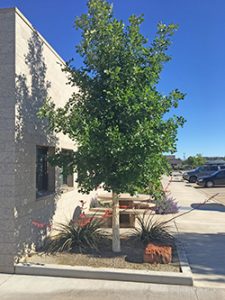
Burr Oak, Quercus marcrocarpa
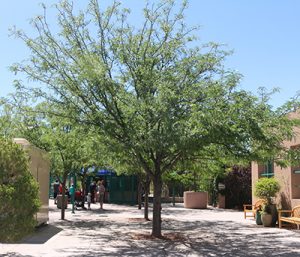
‘Shademaster’ Honeylocust, Glenditsia triacanthos ‘Shademaster’
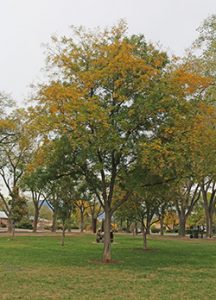
Japanese Pagoda Tree, Sophora japonica
Medium Deciduous Trees
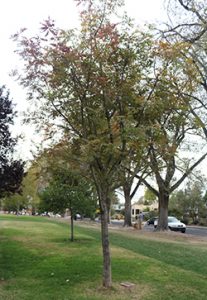
Chinese Pistache, Pistacia chinensis
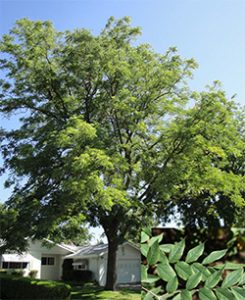
‘Expresso’ Kentucky Coffee Tree, Gymnocladus ‘Espresso-JFS’
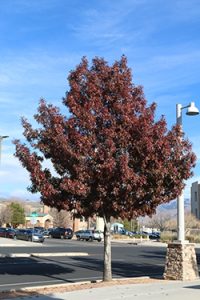
Texas Red Oak, Quercus buckleyi
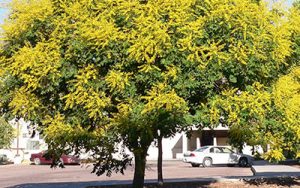
Goldenrain Tree, Koelreuteria paniculata
Small Deciduous Trees
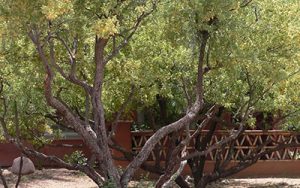
Mesquite, Prosopis pubescens
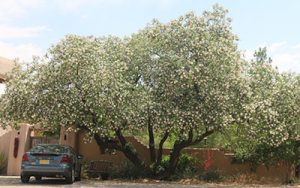
Desert Willow, Chilopsis linearis
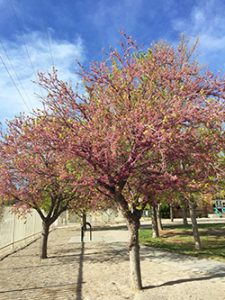
Oklahoma Redbud, Cercis candensis var. Texansis ‘Oklahoma’
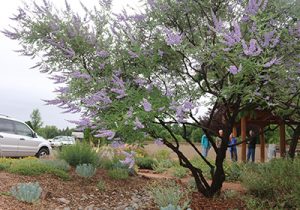
Purple Chastetree, Vitex agnus-castus
Evergreen Trees
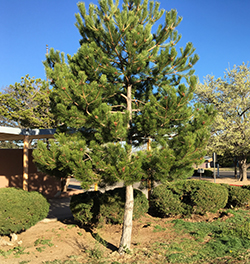
Austrian Pine, Pinus nigra
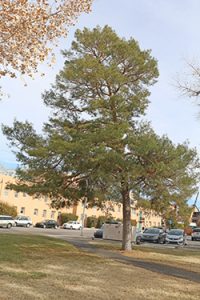
Scotch Pine, Pinus sylvestris
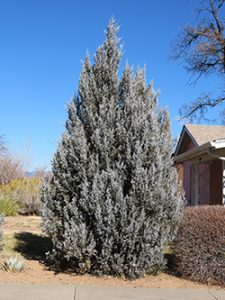
Whichita Blue Juniper, Juniperus scopulorum ‘Wichita Blue’
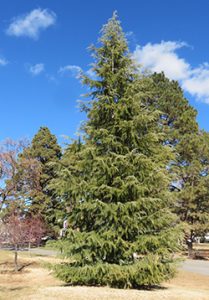
Deodor Cedor, Cedrus deodara

Photography Courtesy of: Trees of Corrales, Waterwise Landscapes, My Landscape Coach, and The University of Minnesota