
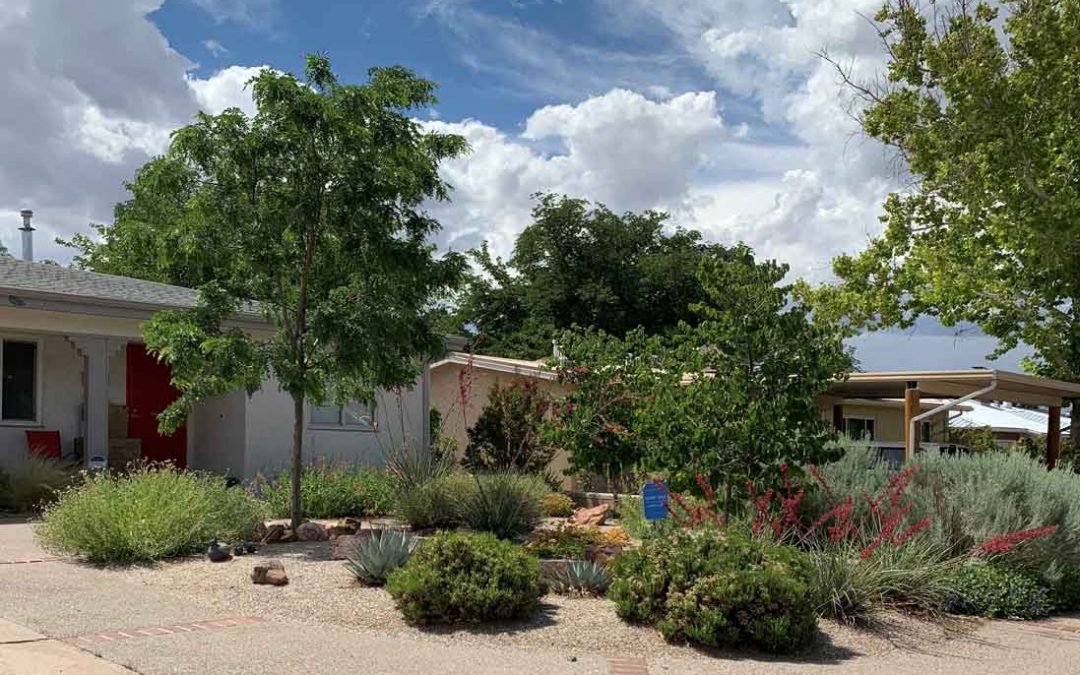
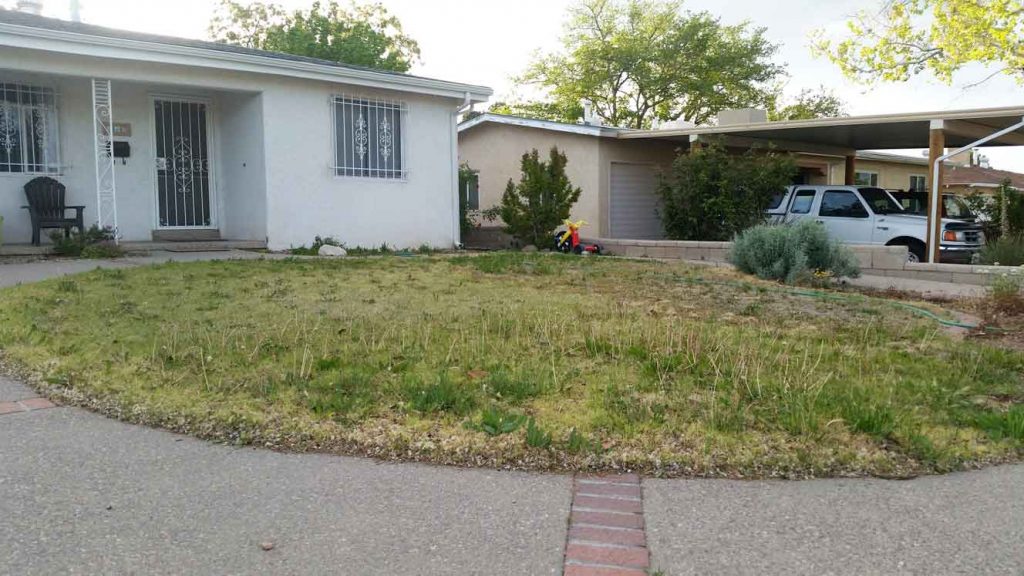
Are you ready to remove your lawn and create a desert-friendly landscape but worried about the cost? Below are cost-savings tips for transforming your yard.
Plant price tags: For homeowners wanting to transform their yards, it’s easy to feel sticker shock when adding up the cost of buying new plants. Keep in mind that the plants you buy from nurseries started as seedlings and have been nurtured for years before they are ready to sell. Most trees have been growing for 10 years before reaching stores. And remember that these same plants will enhance your yard for decades to come. To save money, buy plants in smaller pot sizes. For example, instead of buying a 5-gallon plant, buy a 1-gallon or 4” pot. Instead of buying a 2” caliper tree, buy a 24” box tree or a 15-gallon tree. Reducing the size of the plant you purchase will save money.
Irrigation woes: Fear of the unknown cost is what usually worries homeowners about installing an irrigation system. No need to worry if you are transitioning from a grass lawn with spray irrigation to drip irrigation when you already have valves in the ground. We recommend spending the money to hire a local irrigation professional to check your valves and convert your valve from spray to drip. Once you’ve done that you can save money by installing the drip polyline yourself.
Mulch madness: Choose organic shredded wood chip mulch over gravel to save money, enrich the health of your soil, eliminate weeds and greatly reduce maintenance. Shredded wood chip mulch can be up to $1 a square foot less expensive than installing gravel. Tree maintenance companies, like Baca’s Trees on Edith Blvd NE, offer mulch free to the local community. You can also visit the East Mountain Transfer station to buy inexpensive loads of mixed-sized organic mulch. This material is perfect to put over bare dirt areas of your yard that need to be covered to eliminate weed growth.
Materials stockpiled: Think outside the box and get creative when sourcing materials so you can save money and resources. Check out re-stores, thrift stores, Facebook Marketplace, Craigslist and even your neighbors, who are a valuable resource. They may have landscaping materials available for free or at a small cost. Your neighbors’ properties may have stockpiles of materials sitting around that may not be useful to them but could be put to great use in your yard. When in doubt, ask for what you are looking for. Pop onto your neighborhood’s text thread, knock on doors or even utilize the app Nextdoor.com. Someone’s trash is another person’s treasure.
Water Authority’s Rebates: Did you know you get $2.00 back for every square foot of lawn you convert? Water Authority residential customers who convert their landscapes to desert-friendly xeriscapes and use drip irrigation can qualify for a $2.00 per square foot rebate. The rebate area of your new landscape must have 50 percent coverage (at maturity) of qualifying low to medium water use plants, and the soil between and beneath all plants must be covered with at least three inches of mulch (organic mulch, gravel, etc.). If you are interested in participating in the Desert Friendly Xeriscape Conversion Rebate, be sure you don’t start your turf removal project until you have applied online to the program and received an official notice to proceed. Several conditions must be met in order to qualify for the desert-friendly xeriscape rebate.
With our hot summers and low precipitation, growing vegetables in NM can be challenging. This talk will provide strategies and recommendations for growers to cultivate a thriving vegetable harvest in the region. Discussion will include irrigation and infrastructure suggestions, as well as selection of vegetable varieties that are well-adapted to the area.
Instructor:Stephanie Walker, PhD. Professor and Vegetable Specialist, New Mexico State University, Extension Plant Sciences Department.
Maintaining Tree Health During Drought
Learn from Albuquerque’s leading tree expert how to identify drought stress in trees, understand their responses to drought, and implement strategies to keep them alive and thriving in hot, dry weather.
Instructor:Joran Viers, Board Certified Master Arborist and Municipal Specialist, International Society of Arboriculture (ISA). Senior Arborist, Legacy Tree Company, Albuquerque. Former City Forester, City of Albuquerque
Creating a Drought-Tolerant Refuge for Yourself and Wildlife
Instructor:Laurel Ladwig, M.S. She is the ABQ Backyard Refuge Program Director for the Friends of Valle de Oro National Wildlife Refuge, a part-time faculty member in the Department of Geography and Environmental Studies, and Associate Director of the R.H. Mallory Center for Community Geography at the University of New Mexico and is enthusiastic about all opportunities to encourage people to develop a relationship with our wild neighbors.
Designing Resilient Landscapes: Plant Adaptations, Communities, and Selection for Arid Environments
Instructor:Maria Thomas is the Curator of Plants at the ABQ BioPark where she manages the botanical exhibits, plant collections, horticultural staff, and related programs for the 150-acre public park and garden. Additionally, Maria is an Adjunct Professor at the University of New Mexico in the Landscape Architecture department.
Climate-Ready Trees- Planting for a Warmer and (Hopefully) Shadier Future
Instructor:Marisa Y. Thompson, PhD Extension Urban Horticulture Specialist. New Mexico State University Department of Extension Plant Sciences, Los Lunas Agricultural Science Center, Think Trees NM, President of the Board (2023-current).
Plant Adaptations to Heat & Drought
Noticing the Ways Plants Thrive in our Yards and Natural Areas Learn how to Recognize Drought-Adapted Traits in Everyday Plants all Around Us.
Instructor:Marisa Y. Thompson, PhD Extension Urban Horticulture Specialist. New Mexico State University Department of Extension Plant Sciences, Los Lunas Agricultural Science Center, Think Trees NM, President of the Board (2023-current).
Hose Bib Tree Irrigation System for Your Trees: Simple Systems for Thriving Trees!
Instructor:Richard Perce has twenty years’ experience working with trees and irrigation here in New Mexico. He is a former certified arborist and currently holds the Irrigation Association’s Landscape Irrigation Auditor certification and is a certified QWEL irrigation instructor. He worked as a landscape contractor for more than a decade and is the Water Authority’s former Irrigation Efficiency Specialist. He also has a Masters of Community and Regional Planning from UNM and currently works at Anthropopulus Design + Planning.
Passive Rainwater Harvesting
This workshop introduces participants to the principles and practices of passive rainwater harvesting. Attendees will learn how to capture, slow, spread, and infiltrate rainwater into the landscape using simple, low-cost methods such as swales, berms, and basins. The workshop emphasizes working with the natural flow of water to reduce runoff, prevent erosion, and support healthy soil and plant life. By implementing passive rainwater harvesting, participants can conserve water, and create more resilient, self-sustaining landscapes.
Instructors:Anthony Luketich, Natural Resource Scientist, Anthony Luketich is a Natural Resources Scientist for Bernalillo County where he is focused on water conservation and water-wise landscape practices. He received a degree in Watershed Management and Ecohydrology from the University of Arizona where he studied the relationship between trees and water. Anthony has worked across the Southwest US as a research scientist as well as a water harvesting field technician where he became a certified water harvesting practitioner.
Bobby Mullin, Natural Resource Scientist, Bernalillo County Stormwater Quality Program Bobby Mullin is a Natural Resource Scientist for Bernalillo County in the Stormwater Quality Program. He focuses on improving stormwater quality in the Middle Rio Grande Watershed and promoting sustainable and resilient landscapes using Green Stormwater Infrastructure and rainwater harvesting. Bobby received his Bachelor of Science in Environmental Science from Bucknell University in 2011. Before joining Bernalillo County, he had worked as an environmental consultant remediating contaminated soil and groundwater and as a Research Scientist studying the impacts of climate change, drought and plant mortality in New Mexico ecosystems.
Xeriscape: The Desert Friendly Yard
Join us for learning all of the tips, and benefits of our Xeriscape program!
3 Steps to Landscape Success
Service, Settings, and Selection are the keys to landscape success!
