
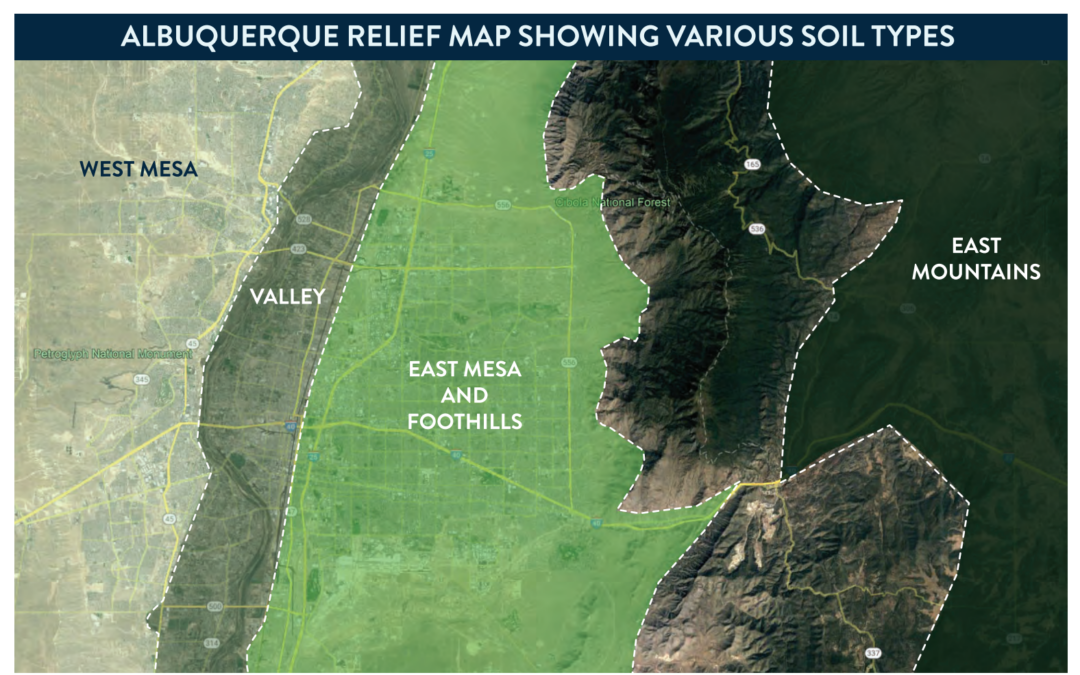
Albuquerque has a variety of soil types. Learning what type of soil is in your yard is a critical step to understanding how water will infiltrate the soil and how long specific plants need to be watered to get the water to the correct depth.
VALLEY SOILS
Valley soils vary from dense clay to grainy sand. They are layered and braided through the area because of the historic flooding of the Rio Grande. The valley also is where acequias weave through the community, providing many essential benefits. They provide water for creating foodsheds and are culturally significant for our community. They also help create and maintain our tree canopy and provide much needed pollinator habitat. This remains particularly important in our changing climate.
EAST MESA AND FOOTHILLS SOILS
The soils in the foothills are usually coarse, whereas the decomposed granite soils on the mesa are generally finer and prone to compaction. These soils have a broad range of organic material along with the base of decomposed granite, making for a huge diversity, even within a building site. Groundwater is deep — only shallow enough to be occasionally accessible to plants in unpaved arroyos near the foothills and stormwater basins fed by urban pavement.
WEST MESA SOILS
West Mesa soils, which vary from silty clay loam to finer sands, are sometimes deposited in a shallow layer above volcanic basalt. Groundwater is too deep to be accessible to most plants except in large stormwater collecting basins.
EAST MOUNTAIN SOILS
East Mountain soils tend to be a mix of moisture-retaining clay loams with some fast-draining gravelly deposits. The density and type of plant cover reflect the relative soil moisture. In upslope areas, where temperatures are consistently cooler and rain and snow more abundant, shrubland transitions to mixed conifer forest. Slopes tend to be drier than depressions, which accumulate moisture.
HOW WATER MOVES THROUGH DIFFERENT SOILS
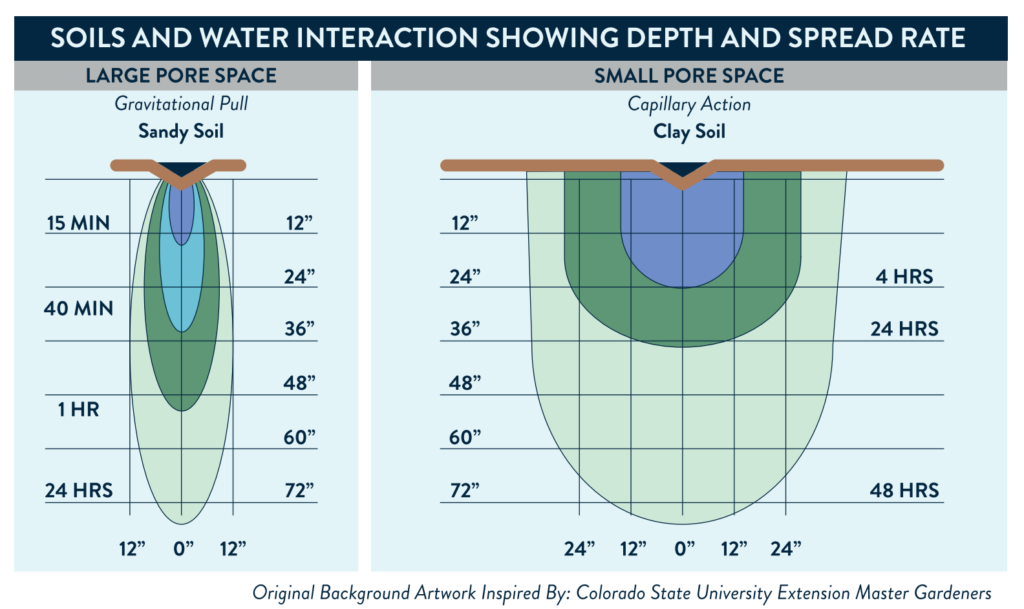
Water soaks into sandy soils much more quickly than in clay soils, but it travels downward in a narrow pattern. In clay soils, the water travels much more slowly and spreads out in a much wider pattern.
Pro Tips:
• Plants in sandy soils generally need additional emitters to distribute water more evenly in a root zone. They also may need to be watered more frequently but for shorter amounts of time.
• Plants in clay soils generally need fewer emitters because the water spreads out. They will probably need to be watered less frequently but for longer periods.
• All soils need to drain between waterings to allow oxygen back into the soil pores.
A struggling plant may be receiving too much water. If soil stays saturated, plants will drown. Since there is a lot of clay in our soils, it is very easy to drown plants. A drowning plant often has similar symptoms to one not receiving enough water: wilted leaves and poor color. Always check soil moisture with a moisture meter before adding more water.
PERFORMING A JAR TEST TO DETERMINE SOIL TYPE
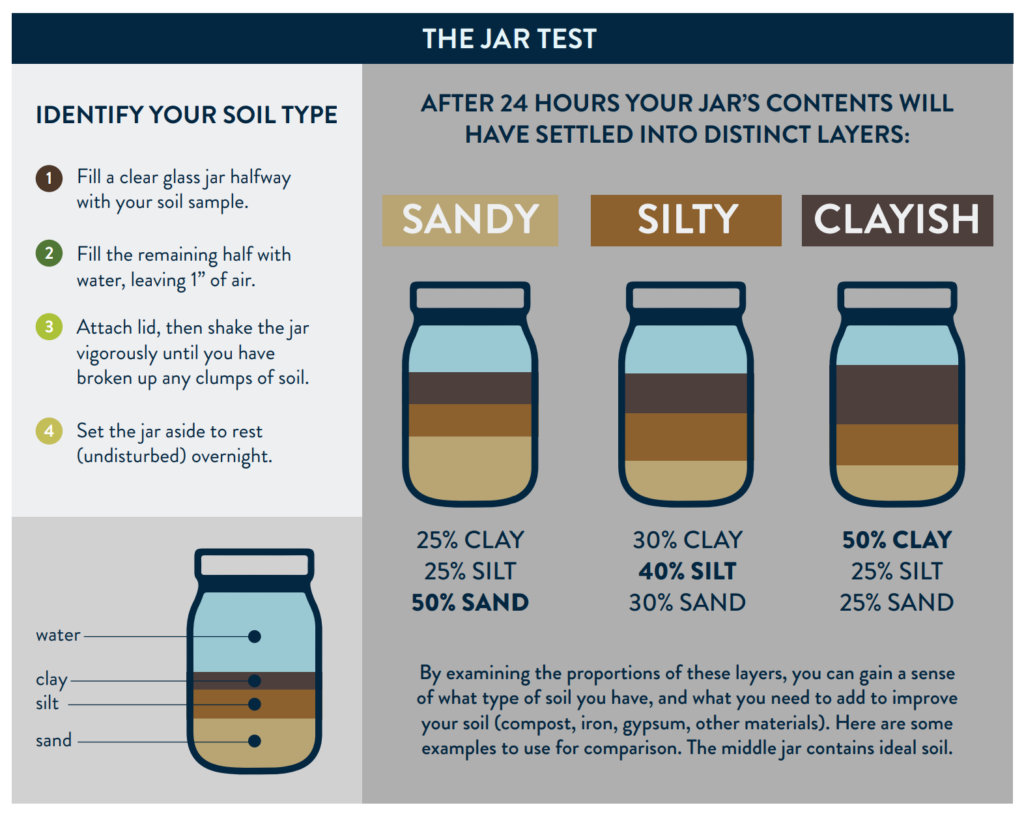
An easy way to get a better idea of what type of soil you are working with is to conduct a jar test. A jar test will separate the three main components of soil: sand, silt and clay. These determine the soil texture that contributes to drainage and overall plant health.
If you would like a more detailed analysis of the makeup of your soil, you can send samples to Colorado State University’s Soil, Water and Plant Testing Laboratory (agsci.colostate.edu/soiltestinglab). Please note that there is a fee for soil analysis.
HOW SOIL COMPACTION AFFECTS PLANTS
Most building sites, including home sites and the land directly surrounding them, have areas of heavy compaction. When soil is compacted, pore space that allows oxygen and water to get to the root zone is reduced, building an impermeable layer in the soil.
Soil compaction adversely affects percolation rates (the movement of water through the pores) and makes it much harder for roots to expand within the soil and thrive.
HOW TO TEST THE PERCOLATION RATE IN SOIL
If you do a jar test you will have a pretty good idea what percentage of sand, silt and clay make up your soil. Performing a percolation test will allow you to see how your soil interacts with water.
TOOLS NEEDED:
Shovel, yardstick, timer/watch, pen, paper and hose
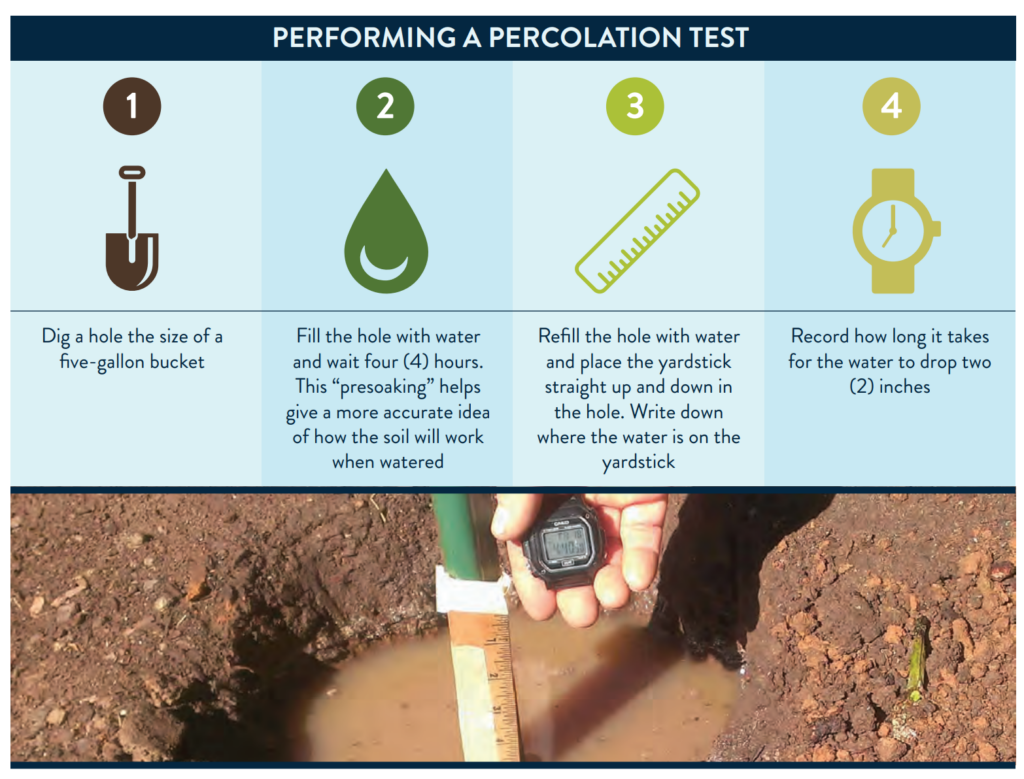
To get your hourly percolation rate, divide how long it takes the water to drop 2 inches by 120. A soil percolation rate between 1 and 3 inches per hour is adequate for plants with average drainage needs. If the rate is less than 1 inch per hour, drainage is too slow, and the soil will either need to be improved by adding compost or planted with plants that tolerate wet soils. Watering should be less frequent but longer.
If the drainage is more than 4 inches per hour, it is too fast. Soil will need to be amended with compost and other organic matter either by digging it in or using it as a top dressing. Watering should be more frequent and for shorter time periods.
WHY IS MY SOIL COMPACTED?
Many things — including construction, heavy equipment or vehicles, or a lack of organic matter — can create compacted soil that won’t allow water to drain. One way to prevent further compaction is to park your vehicles and store heavy items only in your driveway or on soil devoid of trees or landscaping.
HOW DO I IMPROVE MY SOIL?
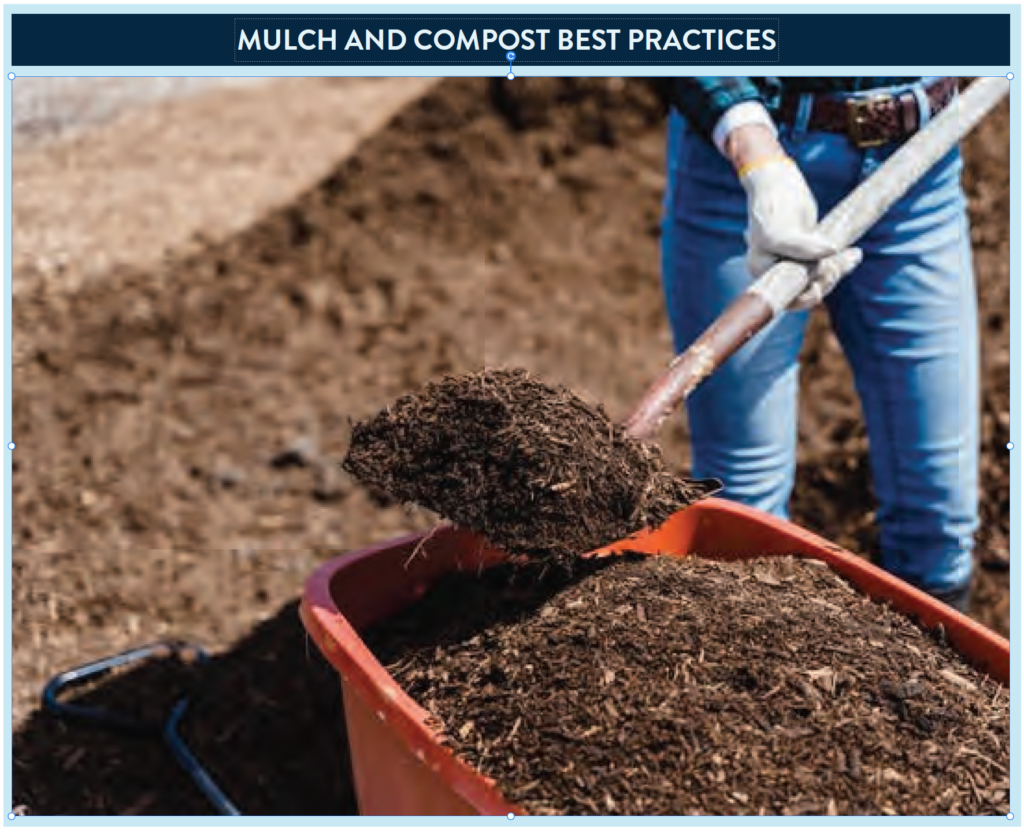
Add organic matter (compost) to clay to make it more permeable and add compost to sand to improve its water-holding capacity.
Add a deep (3”-4”) layer of organic mulch to help all soil types retain moisture better, suppress weeds and feed soil microorganisms.
Native and low water use, desert friendly plants do not need compost. Although they will grow slowly in uncompacted native soil, they thrive best there.
Learn how to tackle other DIY projects here:
Simple Irrigation Maintenance Techniques
How to Make a Tree Watering System for Your Established and Mature Trees
How to Convert your Existing Spray Irrigation System to Drip
