
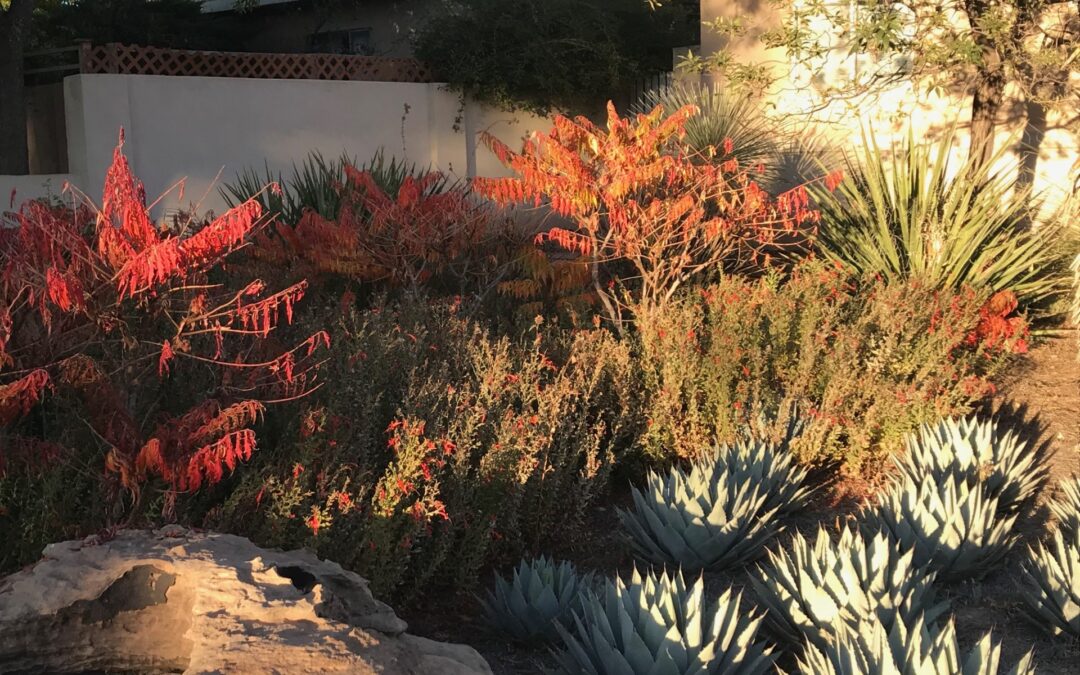
Fall blooming plants and changing leaves can be just as exciting as the bright colors of spring and summer flowers. Fall is also an excellent time for planting: Temperatures begin dropping, making it easier for young plants to become established, and the cooler weather creates a more enjoyable time for gardeners to work outside.
Here are five great flowering options that offer a range of colors:
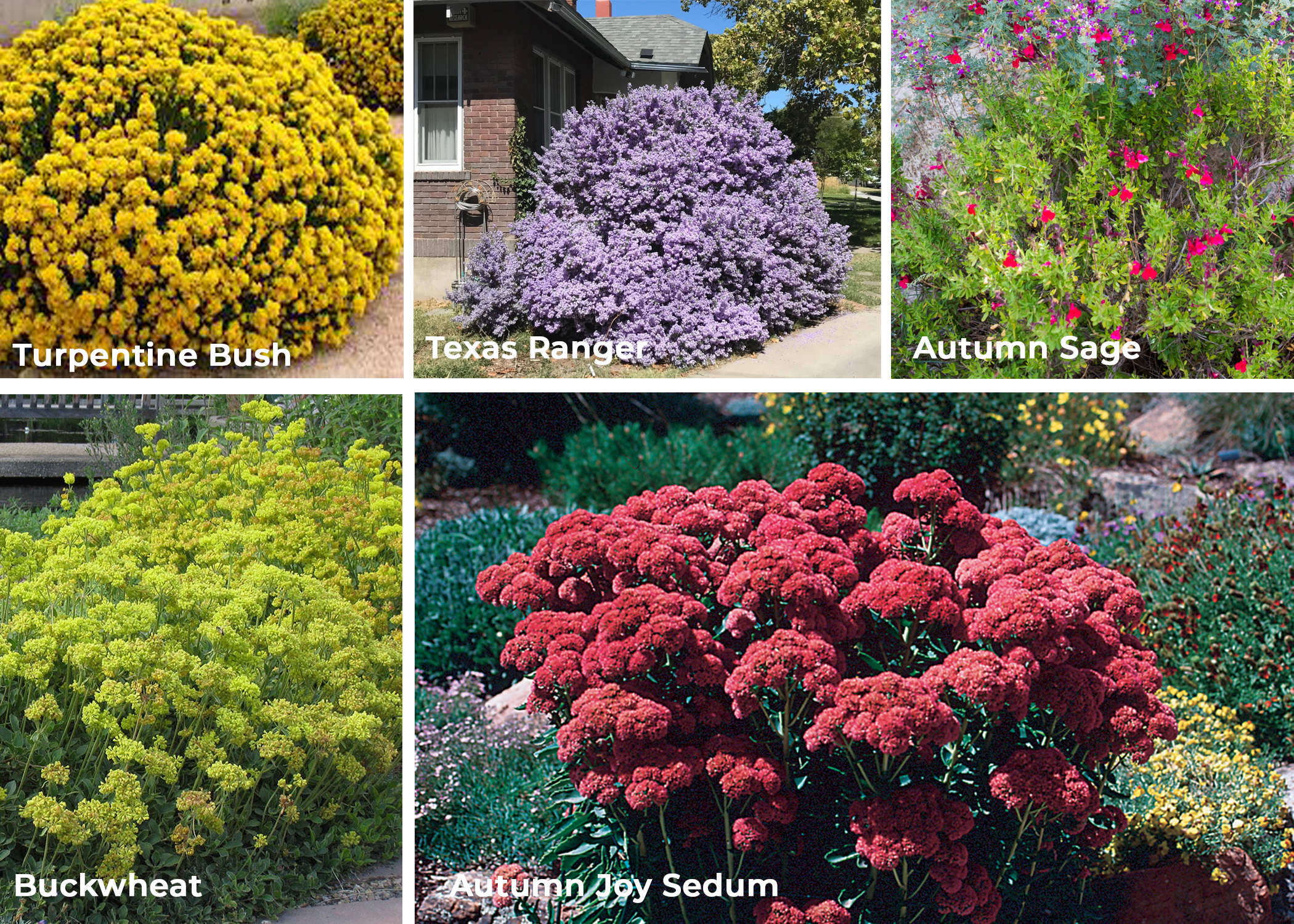
- Turpentine bush (Ericameria laricifolia) is a compact evergreen shrub covered with bright yellow blooms in fall. Be sure to plant Texas Ranger in a protected location as it is not very cold hardy.
- Autumn sage (Salvia greggii) is another versatile shrub with low water use that blooms, usually in shades of dark pink, for three seasons, including fall.
- Some Buckwheat species (Eriogonum spp.) bloom in fall, but even those that bloom in summer contribute to fall color as their white flowers turn a striking rust in fall.
- Autumn joy sedum (Sedum spectabile ‘Autumn Joy’) also blooms in late summer and fall, and if the pink flowers are left on the plant to dry, they age to a beautiful copper.
You don’t have to choose between blooms and red leaf color. Dwarf plumbago (Ceratostigma plumbaginoides) is a groundcover with bright blue summer and fall blossoms, spectacular red leaf color in late fall, interesting seedheads and excellent shade tolerance.
Many ornamental grasses have interesting seed heads in fall bringing soft colors and beautiful texture to autumn landscapes.
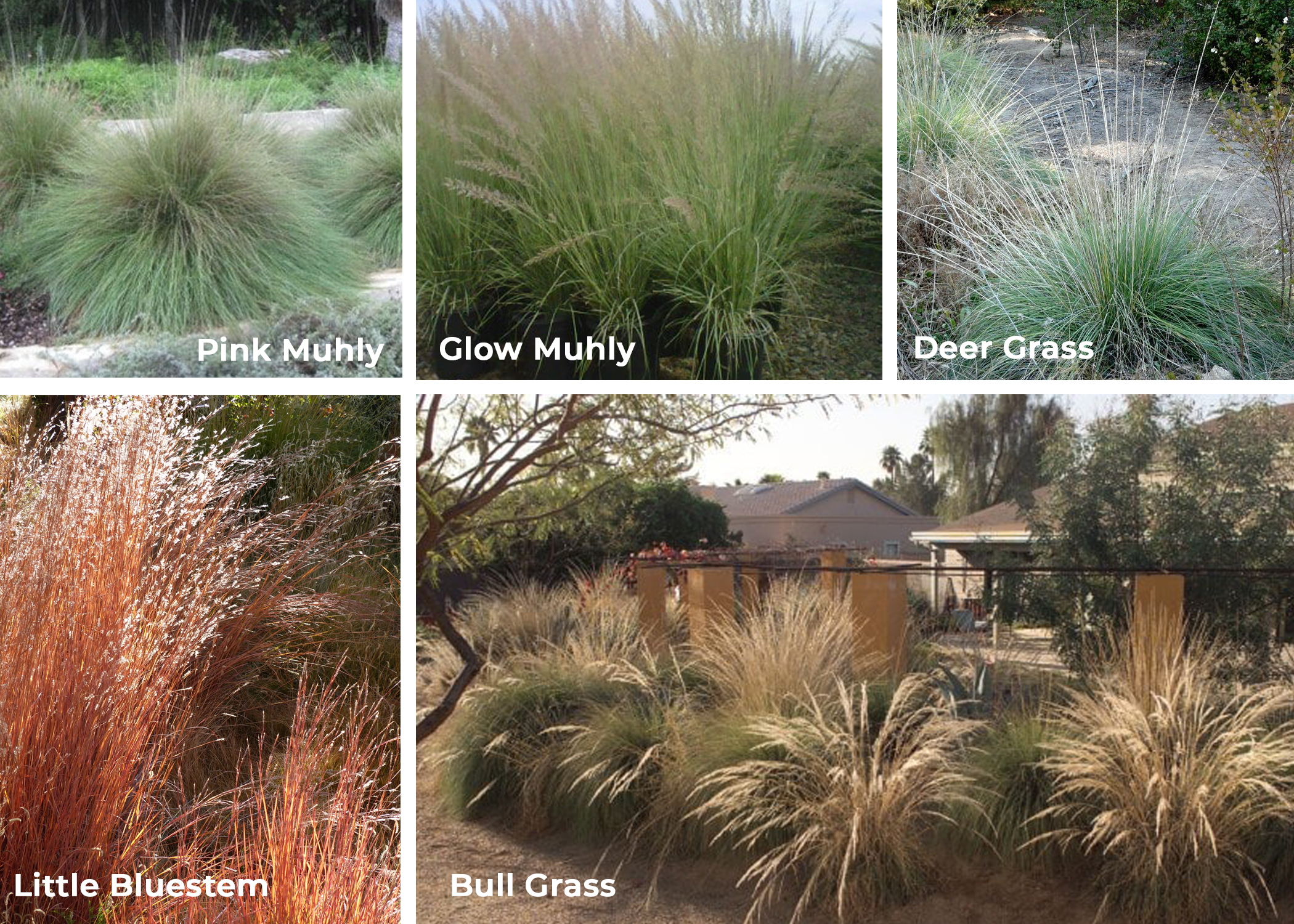
- The many species of muhly grasses (Muhlenbergia spp.) are especially easy to grow and have lovely seed heads. You really can’t go wrong with a muhly grass: They are tough and add amazing texture and contrast to any landscape.
- Pink muhly (M. capillaris) tolerates heat and drought and is covered in mounds of stunning delicate pink seed heads in fall.
- Autumn glow muhly (M. lindheimeri) is a larger grass with spikes of tan flowers in fall.
- Bull grass (M. emersleyi) and deer grass (M. rigens) are medium sized ornamental grasses with spikes of white or light tan flowers.
- The blades of little bluestem (Schizachyrium scoparium), a locally native grass, turn a beautiful copper color in fall.
If you’re looking for classic autumn leaf color, several deciduous trees and shrubs offer reliably impressive fall color.
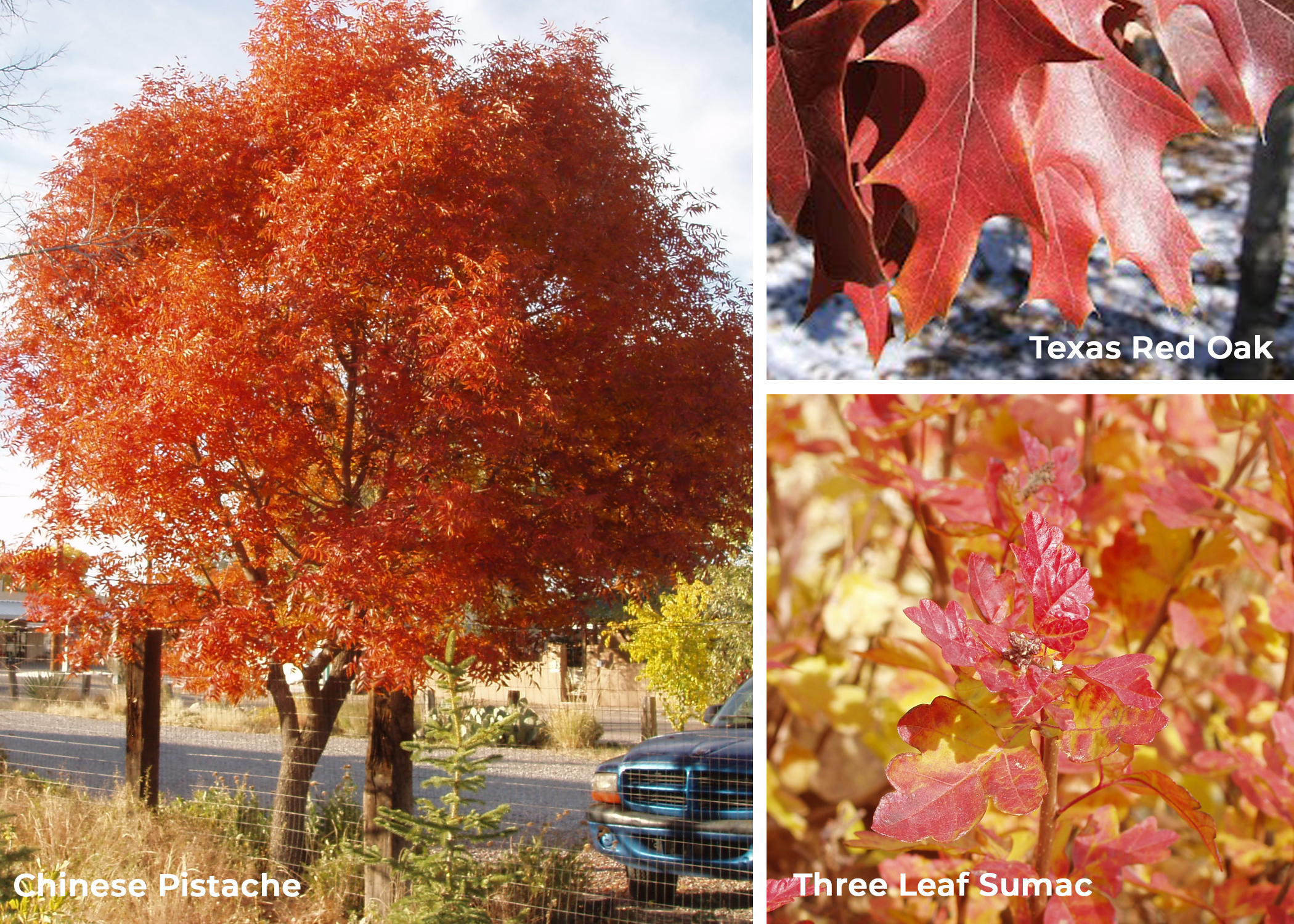
- Many oak trees do well in Albuquerque, including bur oak (Quercus macrocarpa), Texas red oak (Quercus buckleyi) and Chisos red oak (Quercus gravesii). Oak trees also provide excellent habitat for birds and butterflies; in fact, the caterpillars of many butterflies rely on oak trees.
- Red push pistache (Pistacia × ‘Red Push’) is a hybrid tree selected for its almost neon fall color. You can also plant standard Chinese pistache (Pistacia chinensis), which is a bit more cold hardy, though fall color can vary greatly from tree to tree. Visit a nursery in fall, when pistache leaves are turning color, to see the color of a particular tree before selecting one to bring home.
- Three leaf sumac (Rhus trilobata) is a medium to large sized shrub. It is locally native, grows in all soil types and does well in sun or shade. In fall, its leaves turn beautiful shades of yellow, orange and red. Autumn amber sumac is a groundcover cultivar of three leaf sumac and rarely grows taller than six inches and spreads up to ten feet. Gro low sumac (Rhus aromatica ‘Gro Low’) is a Midwestern sumac that grows up to 3 feet tall and spreads up to 6 feet wide. Like three leaf sumac, its leaves turn fiery shades in fall.
And don’t forget an evergreen backdrop for all this fall color. The warm oranges and reds of sumacs, buckwheat, oaks and little bluestem are especially striking when paired with the silvery blue gray plants that do so well in Albuquerque, such as agave, artemisia, chamisa and Rocky Mountain juniper.
Selecting a mix of colorful blossoms, autumn leaf color, soft textures and contrasting blues and grays for your garden this fall will make your landscape a highlight of the season.
Learn More Here:
Ornamental Grasses and How and When to Use Them
New and Underutilized Plants for 2026

Author: Tess Houle, ASLA Landscape Architect with Pland Collaborative. Photos by Wes Brittenham, and Tess Houle Have a question about the article or anything else? [email protected]