
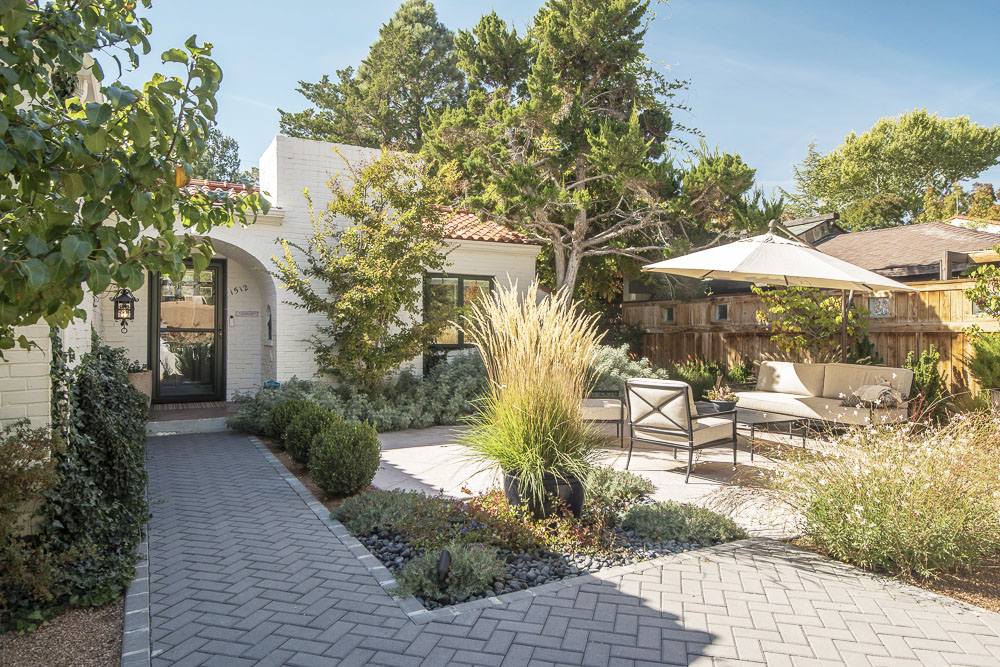
Local landscape architect Sara Zahm shares what she sees as trends coming to residential landscapes in Albuquerque.
As we move into 2026, I’m seeing a meaningful shift in how homeowners are approaching their outdoor spaces. Many previously popular landscape elements are still in demand, including raised garden beds, comfortable seating areas, fire pits, outdoor dining spaces and fully equipped kitchens, but the purpose behind these features is transforming. Today’s outdoor spaces go beyond aesthetics, focusing on creating environments that promote relaxation, restoration and well-being.
More than ever, people want their yards to function as personal sanctuaries. In a world that often feels noisy and unpredictable, home has become a place to reset and recuperate. Outdoor spaces in particular are being designed intentionally as environments where families can decompress, recharge and reconnect.
The strongest trend I’m seeing this year centers around wellness. This isn’t a surprise as more and more studies are showing the profound benefits nature has on both physical and mental health. In Japan, physicians are writing prescriptions for “forest bathing” and “nature therapy.” Dr. Kathleen L. Wolf from the University of Washington has learned from her research that “exposure to trees and forests can have profound benefits for psychological health. Whether climbing a majestic old-growth tree or simply walking through a foliage-filled park, people who spend time in nature often report they feel less stressed, are better able to concentrate and generally experience a lift in mood. Some even say it helps heal trauma.” *
Homeowners are incorporating outdoor saunas, cold plunges and hot tubs into their landscapes — not simply as luxury additions, but as tools for physical and mental well-being. These elements create a spa-like experience at home, offering daily opportunities to relax, improve circulation, reduce stress and recover from busy schedules. When thoughtfully integrated into the design, they feel cohesive and purposeful rather than over-the-top.
I’m also designing more dedicated spaces for mindfulness and quiet reflection. Sometimes that looks like a tucked-away seating area framed by lush plantings. Or it’s a shaded pergola with comfortable furniture positioned to catch the morning light. These spaces don’t have to be elaborate to be effective. What matters most is how they feel. I pay close attention to texture, sound, scent and movement, like the rustle of ornamental grasses, the fragrance of blooming plants and the grounding feel of natural stone underfoot. These subtle details shape an experience that encourages people to slow down and reconnect with nature.
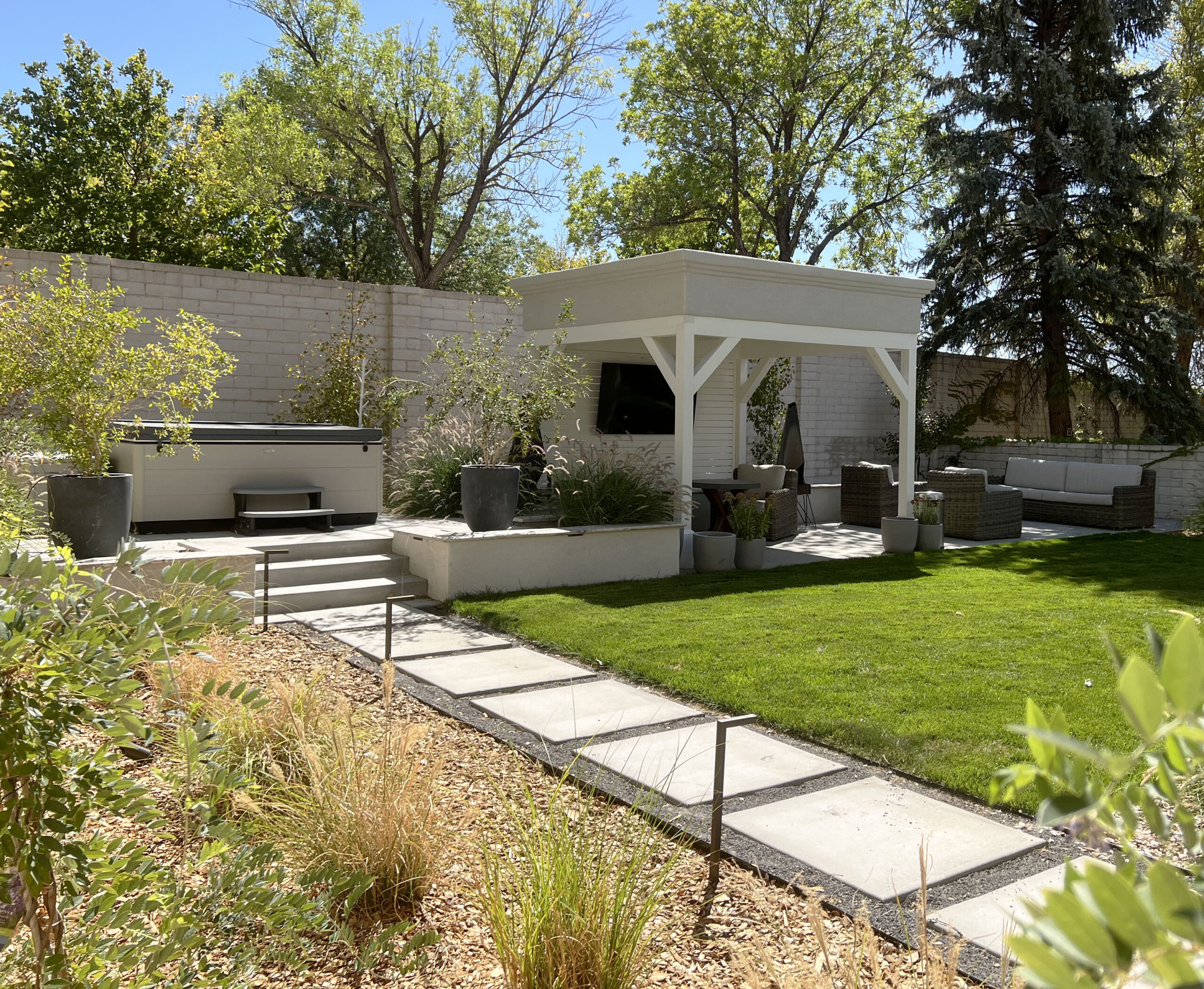
Backyard hot tub, outdoor entertainment and lounge area.
Water features continue to play a significant role in designs as well. Beyond their visual beauty, they serve a practical function, especially for homes near busy streets or close neighbors. The sound of moving water helps mask unwanted noise and creates a sense of privacy. There’s something inherently calming about the steady rhythm of a fountain. Having a source of water is important for supporting and attracting wildlife in yards and they can be very modest and water-efficient.
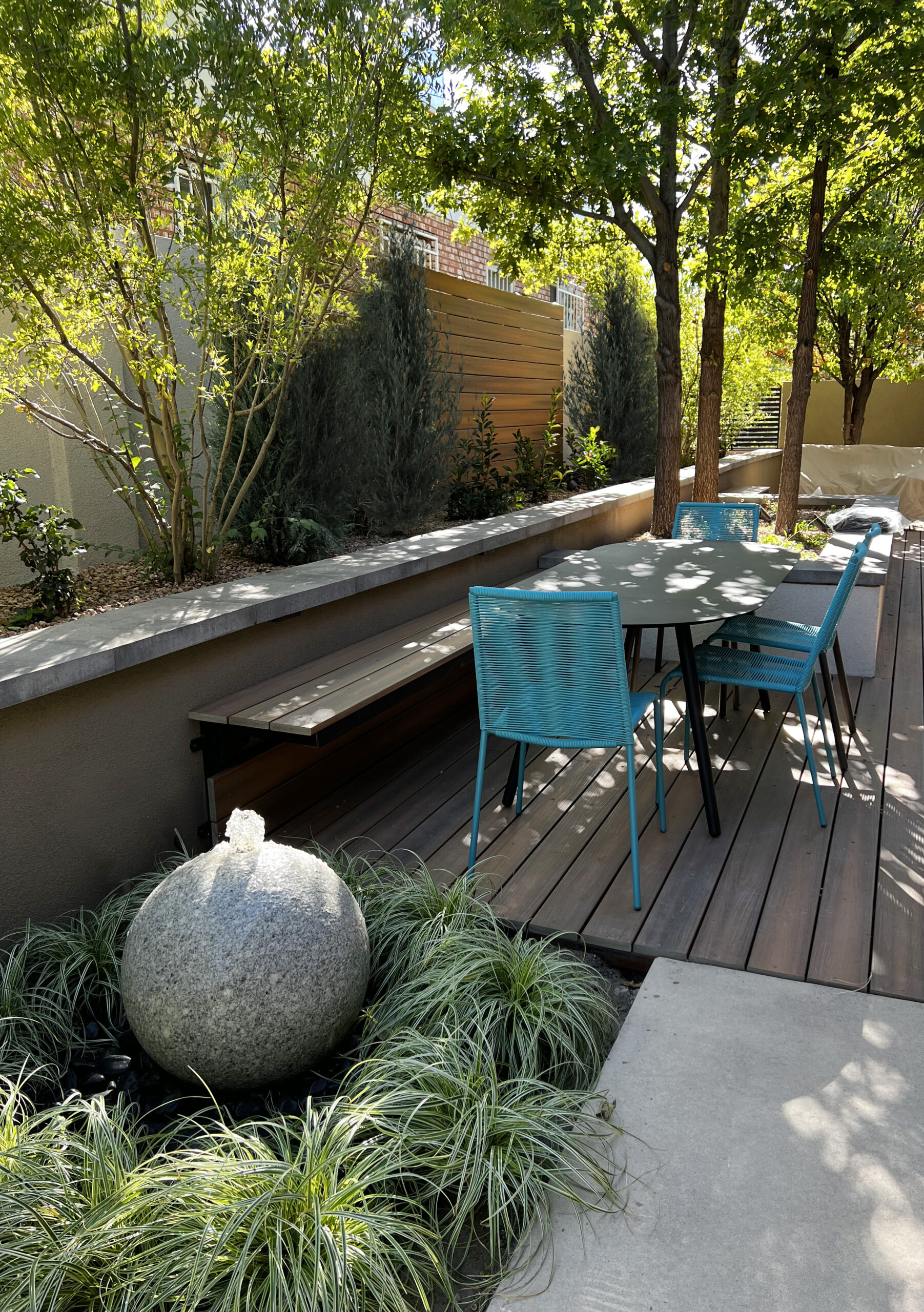
Water Feature in side yard.
Sustainability is also front and center in the conversations I’m having with clients. Many homeowners are choosing native plantings, drought-tolerant landscapes and pollinator-friendly gardens that support the local environment and our wild neighbors. Raised garden beds are especially popular, giving families the opportunity to grow their own herbs and vegetables while maintaining a tidy and intentional look. I love incorporating edible gardens into designs because they encourage people to engage with their space regularly — to plant, cultivate, harvest and spend time outdoors in a meaningful way.
Lighting design is another area where I’m seeing a shift. Clients are gravitating toward layered, ambient lighting that creates warmth and depth. Subtle pathway lights, gentle uplighting on trees and soft illumination around gathering areas make a yard feel inviting long after the sun sets. The goal isn’t to flood the space with light, but to enhance the atmosphere and extend its usability.
Even traditional gathering spaces are being approached more intentionally. Fire pits are arranged to encourage conversation. Dining areas are designed for lingering meals rather than quick get-togethers. Outdoor kitchens are integrated so hosts can cook and connect at the same time. These spaces aren’t just about entertaining; they’re about fostering genuine connection between people and nature.
If there’s one defining theme I see shaping outdoor design in 2026, it’s intentional living. Backyards are becoming immersive retreats, places designed not just to look beautiful, but to support how we want to live. They give us space to unplug, reflect, gather and restore. As a landscape architect, that’s what excites me most. Incorporating elements in your yard that allow you to connect with nature and slow down. The escape from the unrelenting digital world of screens doesn’t have to be expensive or time consuming and can have significant health benefits. Creating outdoor environments that truly enhance daily life isn’t just a trend, it’s a lasting shift, and I believe it’s one that will continue to shape the way we design our homes for years to come.
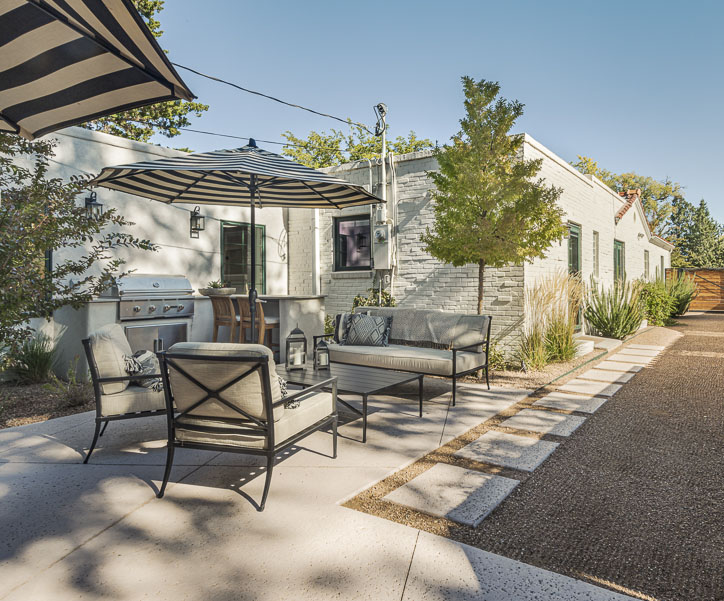
Outdoor kitchen, grill and dining area.
*Catherine Arnold https://www.americanforests.org/article/tree-think/
Learn more here:
Common Planting Design Mistakes
High Desert Landscape Design Template
Simple Steps to Get Started Designing Your Yard
Nature and Health – Research to Practice
See below for plants shown in the photos:

Author: Sara Zahm, Owner of Sara Zahm Landscape Architect. Have a question about the article or anything else? [email protected]