by 505 Outside | Aug 2, 2018 | Blog, Water Conservation, Waterwise Tips
We encourage our customers to follow these outdoor water-saving recommendations.
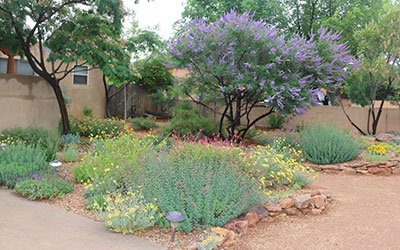
- Plant drought-resistant landscapes
Click here for information on xeriscaping.
- Put your irrigation system on an automatic timer
A lot of water can be wasted in a short period of time if you forget to turn your sprinklers off. Rebates for sprinkler timers are available.
- Don’t water when it rains
An automatic rain sensor can shut down your sprinkler system for you. Rebates are available.
- Use a cistern or rain barrel to collect rainwater
1,000 square feet of roof or pavement can collect 420 gallons of water from 1 inch of rain. Rooftops or any sloping surface such as a driveway are prime “catchment” areas for rainwater. Store the collected water in a cistern or rain barrel, then siphon it off to water your garden or wash your car. Rebates for rainwater harvesting are available.
- Spot water
Drier areas require more water than areas where water settles. If necessary, water dry areas by hand.
- Use a soil probe to test soil moisture
Water only when a soil probe shows dry soil or a screwdriver is difficult to push into the soil.
- Water the lawn only when needed
Step on the grass; if it springs back up when you move your foot, it does not need water. The Water Authority recommends watering just one day per week in March, two days per week in April and May, three days per week in the summer, two days per week in September and October, and one day per week in November. Click here for more information on the Water by the Numbers program.
- Don’t water the pavement
Position sprinklers so that water lands on the lawn or garden, not in areas where it is not needed. Also avoid watering when it is windy. Wind causes water to evaporate quickly and blows water onto areas where it is not needed. Remember, if it doesn’t grow, don’t water it!
- Water without waste
Interrupt watering when puddles or runoff occur. This allows the water to penetrate into the soil before resuming irrigation.
- Consider drip irrigation systems around trees and shrubs
Drip systems permit water to flow slowly to roots, encouraging strong root systems. These systems will also cut down evaporation.
- Keep lawns free of weeds
Weeds are water thieves and will rob your plants of water and nutrients. Spot spray or remove weeds as they appear.
- Accept a less-than-lush lawn
Grass will naturally go dormant during periods of drought, but will readily regenerate when water becomes available. Reduce traffic on stressed turf areas if possible.
- Match fertilizer to the plant requirement
Fertilizer applications require additional water. Excess fertilizer stimulates top growth, often to the detriment of the root system. Learn to accept turf grasses with low water needs.
- Mow as infrequently as possible
Mowing puts the grass under additional stress that requires more water.
- Mow higher than normal
Longer leaf surfaces promote deeper rooting and shade the root zone. Never remove more than 1/3 of the leaf blade in one mowing. Return mulched clippings to the lawn.
- Use a broom to clean the driveway and sidewalk
Sweeping the driveway and sidewalk will get them clean enough without wasting gallons of water.
- Use a commercial car wash
They’re more efficient than watering by hand, and some of them recycle their water.
- Don’t use the sprinklers just to cool off or for play
Running through water from a hose or sprinkler is fun but wastes gallons of water.
- Check for leaks in pipes, hoses, and faucets
All leaks cause water to be wasted. Repair or replace any equipment leaking water.
- Cover your swimming pool
Covering a swimming pool will help reduce evaporation. An average sized pool can use about 1,000 gallons of water per month if left uncovered. A pool cover can cut the loss by up to 90%.
- Recycle your pool water
Use your pool water to irrigate your lawn, plants, trees, and shrubs. Once you have recycled as much water as possible, drain pool water into the sanitary sewer clean-out—NOT into the street.
- Use shut-off nozzles on hoses
Shut-off nozzles completely turn off the water when you are not using it.
Move sprinkler heads away from curbs or sidewalks.
- Design for savings
A mulch, bark, or rock area at least 8 inches wide adjacent to sidewalks and curbs will help eliminate water waste.
by 505 Outside | Aug 2, 2018 | Ornamental Grasses

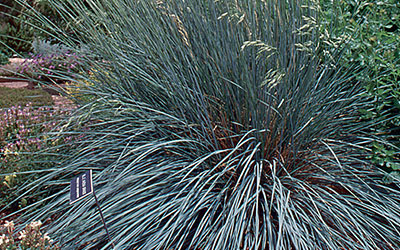
Full Sun, Part Shade

Medium Water
Mature Size: 24”X 24”
This evergreen plant adds texture and color over the entire growing season. The stiff grayblue leaves are very striking and provide the foundation for the ornamental 4-foot-tall flower spikes that shoot up and ripen to a soft brown by mid-summer. Cut back in April to encourage vigorous new growth.
by 505 Outside | Aug 2, 2018 | Ornamental Grasses
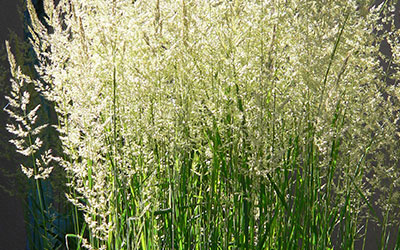
Full Sun, Part Shade
Medium Water
Mature Size: 30”X 2’
Blooming Season: Spring
Seed Head Color: Pale tan
Surprisingly heat and drought tolerant for a cool season grass, the dark green color of ‘Karl Foerster’ leaves topped with its pale straw colored seed heads is a large part of the appeal of this cool season bunchgrass. Its vertical form adds exclamation points in the midst of cool, low slung flowers such as Catmint and Winecups, or amplifies the upright lines of Penstemons and Salvias.
by 505 Outside | Aug 2, 2018 | Ornamental Grasses

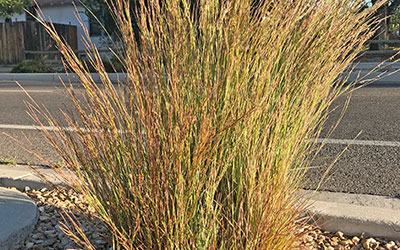
Full Sun

Low Water
Mature Size: 2’X 2’
Blooming Season: Fall
Color: Pink to red
Little bluestem is a key component of much of the prairie grassland throughout the West, where it goes unnoticed until late in the year when its strong color contrast of scarlet or pink leaves among the blond seed heads of other native grasses gives it the impact of a wash of wildflowers long after the growing season has ended. Easily grown from seed or plants, the slender upright clumps sway in the breeze.
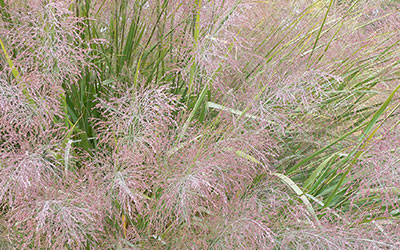
by 505 Outside | Aug 2, 2018 | Ornamental Grasses
Full Sun, Part Shade
Medium Water
Mature Size: 4’X 3’
Blooming Season: Summer
Flower Color: Hazy pink-purple
There are many named cultivars of Switchgrass, all variations on the theme of tall upright leaf blades crowned in late summer with a haze of lacy seed heads. The leaves may be green or blue green in summer, changing to a range of pinks and reds as temperatures cool and the days get shorter at the end of the growing season. Switchgrass can be grouped between evergreens or stand alone as an accent. Songbirds will love you for adding it to your garden.