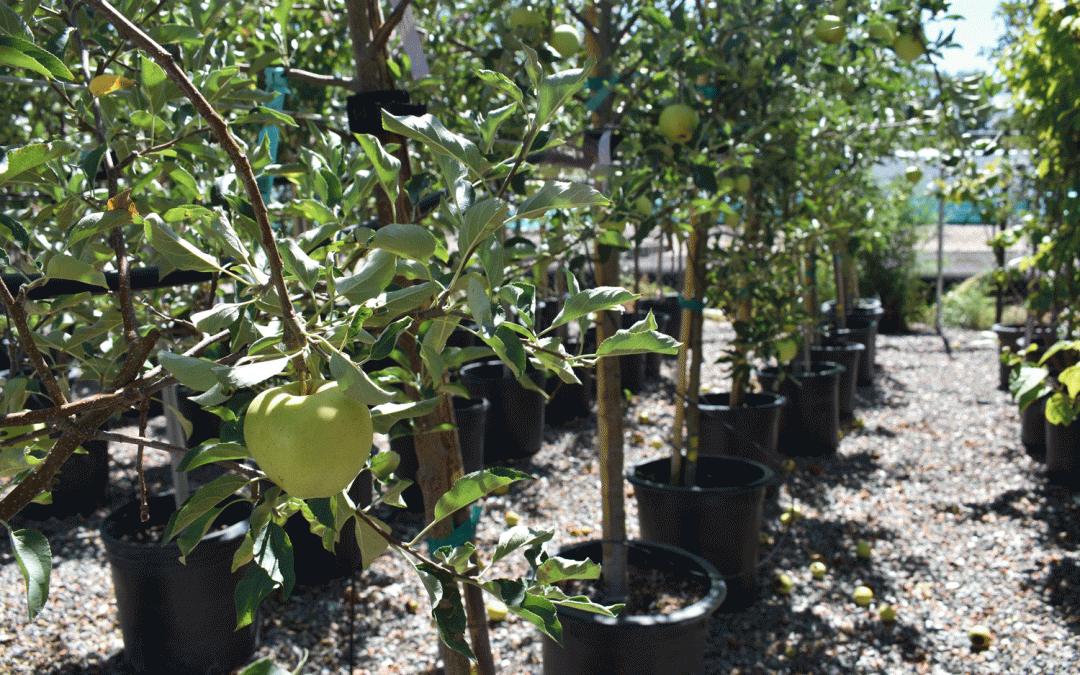
Everyone should consider planting fruit trees in their yard.
Because of our climate, fruit trees grow really well in our area. Besides the
joy they bring when we harvest delicious fruit, they put on a beautiful show
with spring flowers, create shade, and provide shelter and food for wildlife
and pollinators. The Water Authority encourages the planting of fruit and shade
trees by providing a generous annual rebate (click here
for more information). Thinking of planting a new fruit tree? Check out our
blog post about the proper way to plant trees here.
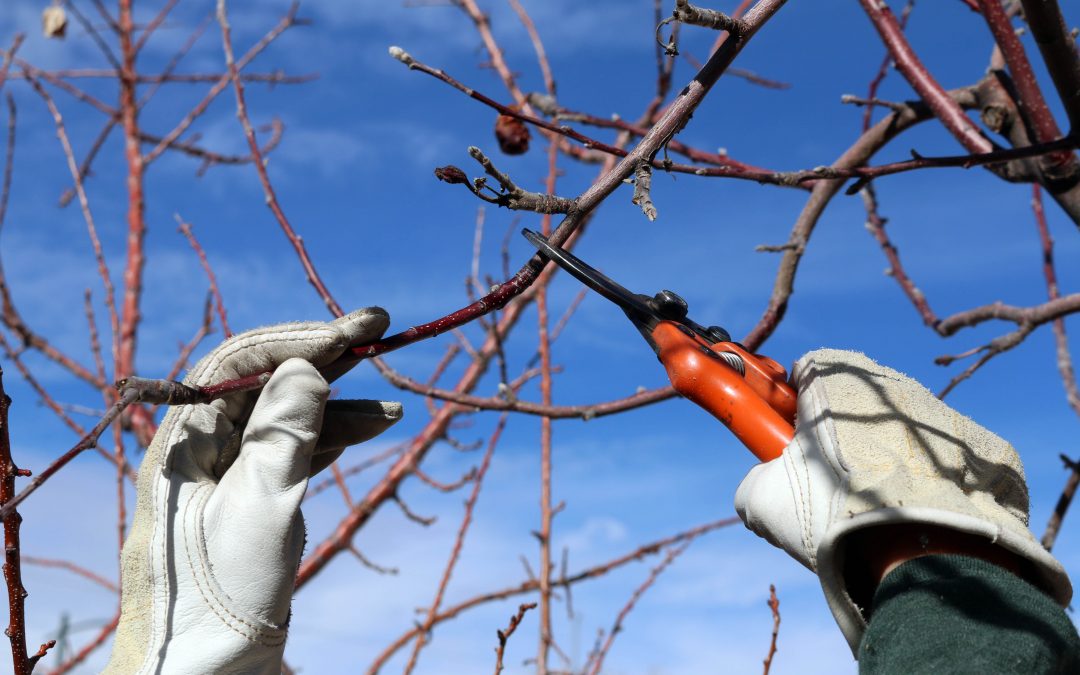
All trees require some amount of pruning, especially when
young, in order to set up good structure. Fruit trees have a few special
considerations related to our intense sunlight, specific pests, and where on
the tree the fruit is produced.
Pruning has been called “one of the best, worst practices
for trees,” because removing branches and leaves limits the tree’s ability to
produce energy. Pruning wounds also create a place for decay to enter the tree.
You should always have a reason for pruning a tree and understand why you are
making specific cuts – not just because it’s a nice day and you remember
reading somewhere that you should prune your fruit tree. Pruning is good
because it reduces the length of branches to prevent breakage from heavy fruit
years; removes dead or diseased branches; and/or reduces limbs to keep them
from rubbing against a wall.
There is a ton of great information available online and in books about how to prune specific types of fruit trees. Below are a few resources. But remember that the way you care for your fruit tree will be a bit different than that of a commercial orchard. Besides producing fruit, the tree in your yard will also provide shade and beauty, so keep this in mind when studying resources about fruit trees and deciding which cuts to make.
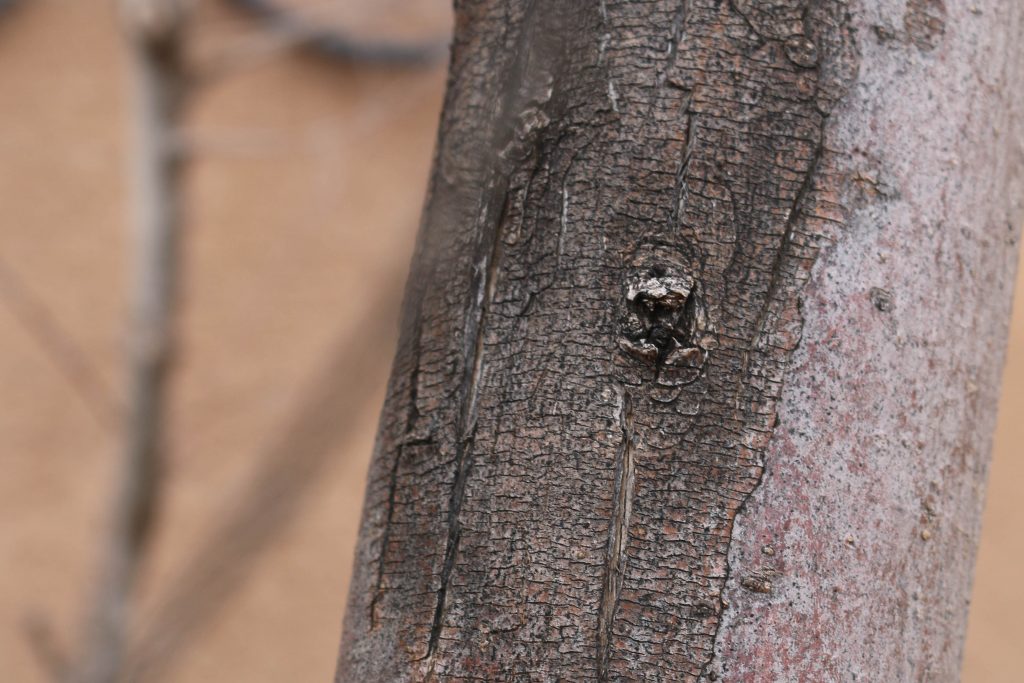
Unlike in many other climates, our intense sunlight means that over-pruning can to lead to sunscald. This occurs when a branch is suddenly exposed to bright sunlight, causing areas of the bark to become burned and crack, exposing them to disease and rot. In order to avoid this, be careful about removing too many branches from the top, south and west sides of the tree. This exposes remaining branches to intense sunlight, causing sunscald.
Darkening on tree on the south side is a sign of sunscald.
Stone fruit trees such as apricots, peaches, and cherries thrive
in our area and can be really rewarding to grow. Unfortunately, there is also a
pest called a borer (often referred to as a peach borer) that loves other fruit
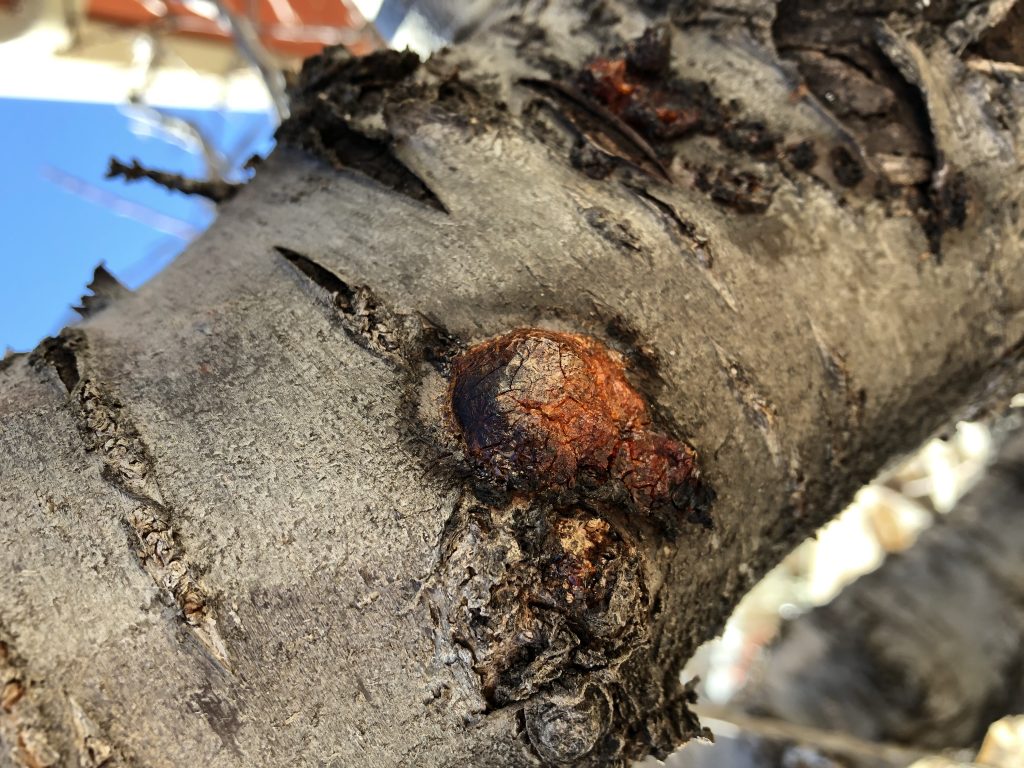
trees, too. This pest is very common and many feel that it is not a matter of if but when your stone fruit tree will
get borers. Luckily a healthy tree can resist this pest on its own through
natural defenses.
You can support and keep your tree healthy by doing the following three things:
Selecting an appropriate irrigation system ensuring that it is properly watered (see our seasonal plant watering guide here)
Adding mulch (see information about treebates for irrigation improvements and mulch)
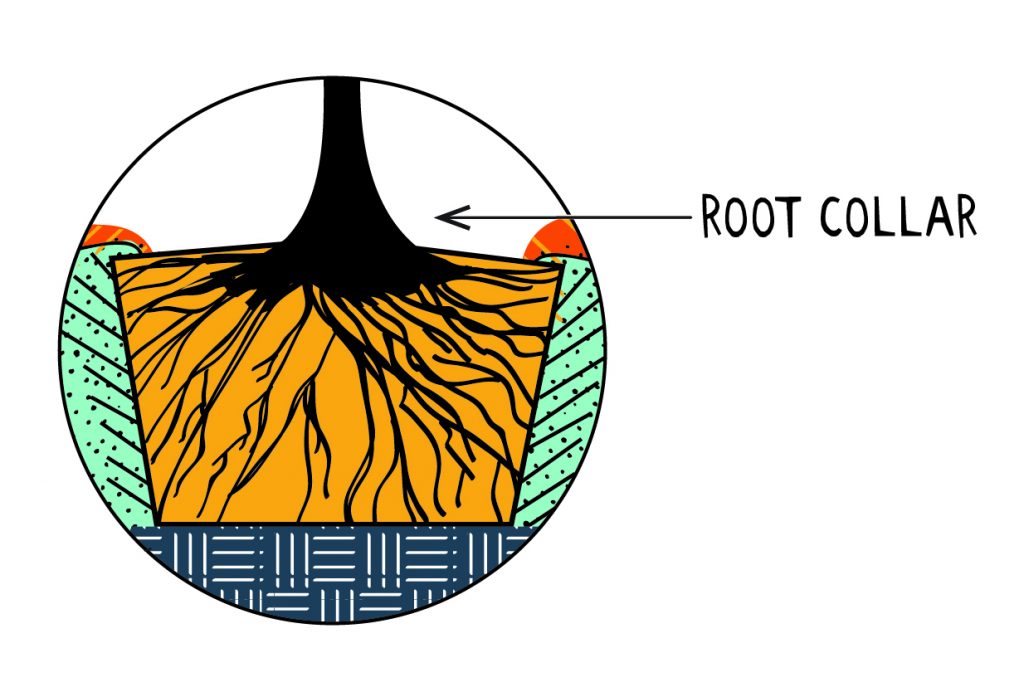
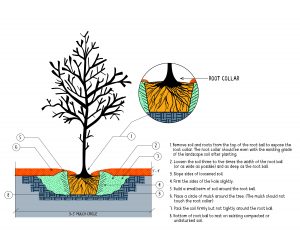
Keeping the root collar of the tree exposed. (see tree detail)
Even trees that have borers can continue to live and produce fruit for more than a decade if they are well taken care of. Drought-stressed trees which have borers, on the other hand, often die within a few years.
If you think that you have borers in your stone fruit tree, there are several treatment options. These range from predatory soil nematodes to plant-derived and chemical pesticides that are sprayed, injected, or applied as a root drench. As with any plant pest treatment, the timing is critical. This is especially true with borers. If done at the incorrect time during the borer’s lifecycle, your effort will be completely wasted and you may kill beneficial insects that help your fruit tree. Resources or more information about borers here.
Fruit Tree Borer Infection
Fruit trees are usually pruned in late winter (February –
early March) to adjust the tree’s structure. Summer pruning can also be done,
but this is typically used to control or slow down growth. Removing dead,
diseased, or dying branches can be done at any time of the year. It is
important to remove dead branches so you can determine later if more branches
are dying, and thus judge the general health and vigor of the tree. For young
trees, it is especially important to leave as many small branches as possible. These
help to produce energy for the tree as it is getting established, and can be
removed later if they are not desirable for the mature tree structure. It is
extremely important to never prune living branches if the tree is stressed by
drought conditions.
Most fruit trees bear flower buds, then fruit, on
specialized branch structures called fruit spurs. Fruit spurs will look
different depending on the type of tree. Although variable, these usually occur
on parts of the branch that are at least two years old, and individual fruit
spurs can last for up to 10 years. In general, flower buds located on fruit
spurs are fat, fuzzy and plump, as opposed to leaf buds which are pointed and
flat. It’s important to know how to recognize these so you don’t prune off the
coming year’s fruit harvest.
Because of how damaging bad pruning can be, and how valuable trees are, it may be worthwhile to hire an expert. Be sure that they have experience with fruit tree pruning in our area and are certified arborists by the International Society of Arboriculture (ISA). To find a local certified arborist, visit this site.
Author: Amos Arber, ASLA, ISA Xeriscape Incentive Inspector for Albuquerque Bernalillo County Water Utility Authority
A correctly planted tree will grow more quickly, will be healthier and more attractive, and will live longer than an incorrectly planted one. A healthy tree will also have a stronger and larger root system better able to draw moisture from the soil. This allows it to better withstand the periodic droughts of arid New Mexico.
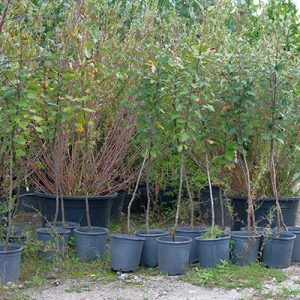
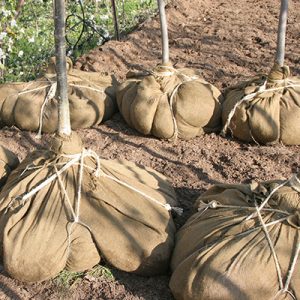
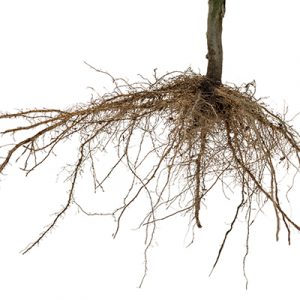
When you purchase a new tree from a nursery, it will come one of three ways: As a container tree, a ball and burlapped tree, or a bare-root tree. A containerized tree is simply a tree in a container (usually a plastic pot). Balled-and-burlapped trees are usually larger specimens that have been dug out of the field. After the tree is dug up, its root ball is wrapped in burlap fabric and covered with a wire cage. A bare-root tree, as the name implies, has no covering on the roots at all. This is often the case with fruit trees.
Container tree
Balled-and-burlapped tree
Bare-root tree
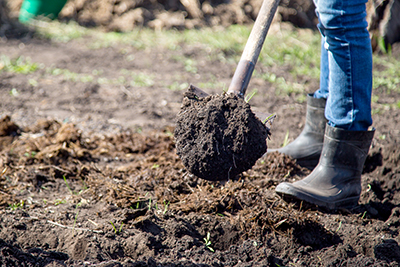
To plant a containerized tree, follow the steps below:
Remove soil and roots from the top of the root ball to expose the root collar. Carefully remove the root ball from the container and set the tree on undisturbed soil in the center of the hole. The root collar should be even with the existing grade of the landscape soil after planting. (see sketch for more information.)
Loosen the soil three to five times the width of the root ball (or as wide as possible) and as deep as the root ball. Tree roots grow best in loosened soil that has pore spaces for water and oxygen. The walls of the hole should be tapered away from the hole.
Trim back roots that have begun to circle the root ball.
Partially fill the hole with soil and firm it slightly. Water thoroughly and finish backfilling the hole with soil. Pack the soil firmly but not tightly around the root ball.
Build a small berm of soil around the root ball. Fill the berm with water two or three times to make sure the soil is completely moist. Thereafter, begin a regular watering schedule.
Place a protective circle of mulch, three feet wide or wider, around the tree. The mulch should not touch the root collar and should be installed at a depth of 3 to 4 inches for best results.
To plant a balled-and-burlapped (B&B) tree, follow the steps below:
Remove soil and roots from the top of the root ball to expose the root collar. Carefully set the tree on undisturbed soil in the center of the hole. The root collar should be even with the existing grade of the landscape soil after planting. (see sketch for more information.)
Loosen the soil three to five times the width of the root ball (or as wide as possible) and as deep as the root ball. Tree roots grow best in loosened soil that has pore spaces for water and oxygen. The walls of the hole should be tapered away from the hole.
Carefully place the root ball in the center of the hole. The top of the root ball or bottom of the root collar (see photo) should be even with the soil level. Take note of the tree flair in the sketch.
Remove twine or string, burlap, and if the root ball is surrounded by a wire basket, cut and remove the wire basket. Be careful to avoid breaking up the root ball.
Partially fill the hole with soil and firm it slightly. Water thoroughly and finish backfilling the hole with soil. Pack the soil firmly but not tightly around the root ball.
Build a small berm of soil around the root ball. Fill the berm with water two or three times to make sure the soil is completely moist. Thereafter, begin a regular watering schedule.
Place a protective circle of mulch, three feet wide or wider, around the tree. The mulch should not touch the root collar and should be installed at a depth of 3 to 4 inches for best results.
PRO TIP: If possible, plant trees in valleys and depressions in the landscape so rainwater will naturally collect and give the tree a good soaking. Direct roof downspouts and canals towards trees.
Newly planted trees do, however, need water. Do a thorough watering at planting. Water again about 3 days after the first planting. Then water once a week for the next four weeks. Continue watering once a month for the rest of the winter. Every time you water, make sure it is a deep soak. That means watering to a depth of 24 inches. See how deep am I watering for instructions on how to measure watering depth.
Be sure to add mulch around your new trees. We recommend using an organic mulch installed to a depth of 3 inches around the tree, keeping mulch a few inches away from the trunk of the tree.
Staking a tree is not necessary unless your tree is located in a super windy spot. If you do stake the tree be sure the tie is not too tight. Promptly remove it one year after planting the tree.
Soil amendments are not necessary if you choose the right tree for the native soil conditions in your yard.
There are so many types of trees to choose from. We don’t blame you for being confused. Here are some of our favorites, just a small list of the many trees available here in New Mexico. Before you head out to buy your tree, though, let’s chat a little bit about them.
As you look around town, you’ll notice trees come in all shapes and sizes. The key to choosing the perfect tree for your yard is picking the right tree for the right place. In fact, this phrase is popular among arborists.
When deciding what tree to plant, think about the tree size now and at maturity. It may look small now, but how big will it grow once it’s mature? Make sure you provide enough room for future growth. No one wants branches growing into power lines, roots disrupting your foundation or leaves blocking the solar panels on your neighbor’s house.
Learn about the rate of growth of the tree, too, so you know how long it will take to get to mature height. Other key factors in choosing the perfect tree are understanding what sun exposure the tree likes. Does it like full sun all day? If so, plant it on the south side of the house or in a location where buildings will not block its access to sunlight. Cold hardiness, heat tolerance, soil preference and irrigation needs should all be considered when choosing a tree species.
Trees are also a long-term investment. Take the time now to choose the right tree for the right place and you’ll save money in the long run.
This list of recommended trees is broken into deciduous and evergreen trees.
A deciduous tree loses its leaves annually in the fall.
Evergreen trees shed their leaves or needles periodically, but usually remain green throughout the year.
Large Deciduous Trees
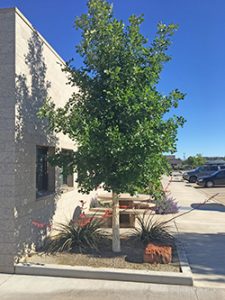
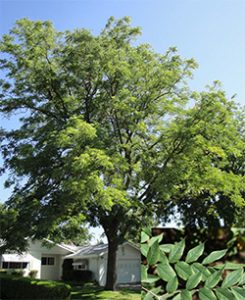
‘Accolade’ Elm, Ulmus japonica x wilsoniana ‘Morton’
Three reasons why fall is a great time to plant trees:
Trees planted in the fall perform better come spring, compared to those planted in the summer, because tree roots are still active over the winter. This winter root development of newly planted trees, prepares it for spring, allowing its roots to spread out and then help the tree become established faster when temperatures begin to warm again.
If planting a large ‘ball and burlap’ tree, fall offers the best choice for getting the tree species you want. This is when local tree nurseries dig up their trees from the fields and get them ready for sale. If planting a smaller containerized tree (nursery pot), be careful about selecting a tree that has been drought stressed all summer or has been in a container for too long and is too root bound. See this handy cue card for more information about selecting a good quality tree from your local nursery. https://www.urbantree.org/pdf/treequalityonsheet.pdf
Less watering is required in the fall because the soil retains more moisture than in the summer, due to lower temperature, shorter days, and the fact that plants are not transpiring as much water. For tips on watering and caring for a newly planted fall tree, check out our other articles on trees.
Take advantage of our TREEBATES! The Water Authority offers money back on the purchase of new trees and for the care of existing trees such as professional pruning or mulch. Learn more here.