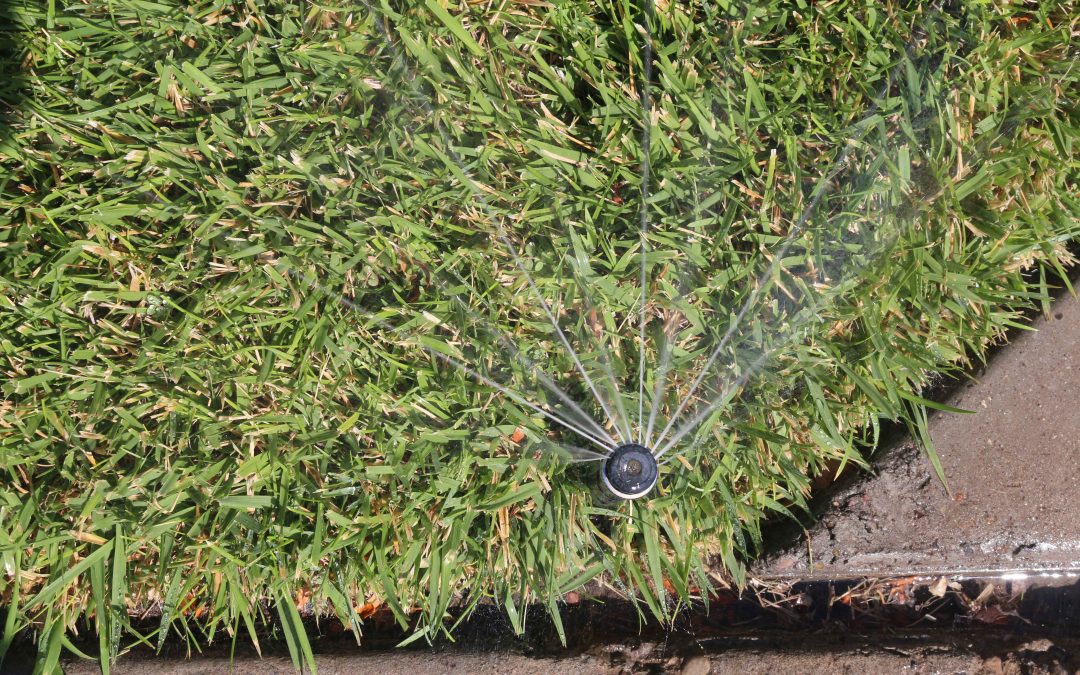
A lot of things have changed since last spring, but at least one thing is the same: April 1 is still the date on which time-of-day watering rules go into effect for Water Authority customers in Albuquerque and Bernalillo County. That means sprinkler and spray irrigation is not allowed between 11 a.m. and 7 p.m. from now until Oct. 31 in order to minimize losses to wind and evaporation.
Using spray irrigation during the hottest, windiest part of
the day is not efficient. Instead, water in the early morning or in the evening
when it’s cooler. Another good way to avoid water waste is by troubleshooting
your irrigation system on a regular basis to identify leaks and make sure water
is directed properly to the plants. Follow these tips for a desert friendly
yard:
For turf, follow the Water by the Numbers program and adjust your watering schedule as the season changes: Two days per week in April and May, three days per week in the summer, and ramp down again in the fall.
Irrigate only when your plants need it, and water them deeply rather than too frequently. Use a long screwdriver or soil probe to check soil moisture.
Add compost to your soil to increase moisture retention and boost soil fertility.
Mulch around plants to help retain moisture and reduce weeds.
Grow strong and healthy trees by watering infrequently, to a depth of at least 24,” in a wide area around the tree’s canopy. Many of our trees only need deep watering 1 -2 times per month (depending on the species and conditions).
If you suspect
you have an indoor leak, or if you have questions about your landscape and
irrigation system, call our experienced staff for a free one-hour educational phone
consultation. To sign up, visit https://rebates.abcwua.org/ or call 505-842-9287 and press option 4.
Our staff will respond to your
request and schedule a one-hour call between the hours of 9:00 a.m. - 3:00 p.m. Monday - Friday.
We will offer
two types of educational phone calls:
Indoor Leak Consultations consist of a full walk through, via telephone, on how to
identify and repair leaks. We aim to educate you on the most effective method
to check for leaks in your home. Topics include, but are not limited to:
How to read your meter
Identify and repair malfunctioning fixtures (tubs, faucets, toilets)
Identify and repair malfunctioning equipment (swamp coolers, water softeners, hot water heaters)
Finding underground leaks
Historical water use
Landscape and Irrigation
Consultations will answer many of your landscape and
irrigation questions. We will also be able to troubleshoot specific situations
and walk you through projects and offer advice and guidance where we can.
Topics include, but are not limited to:
Irrigation scheduling and start-up
Maintaining and repairing broken irrigation systems (it’s easier than you might think!)
Plant identification and basic plant suggestions
Planting and irrigating edible landscapes, including vegetable gardens
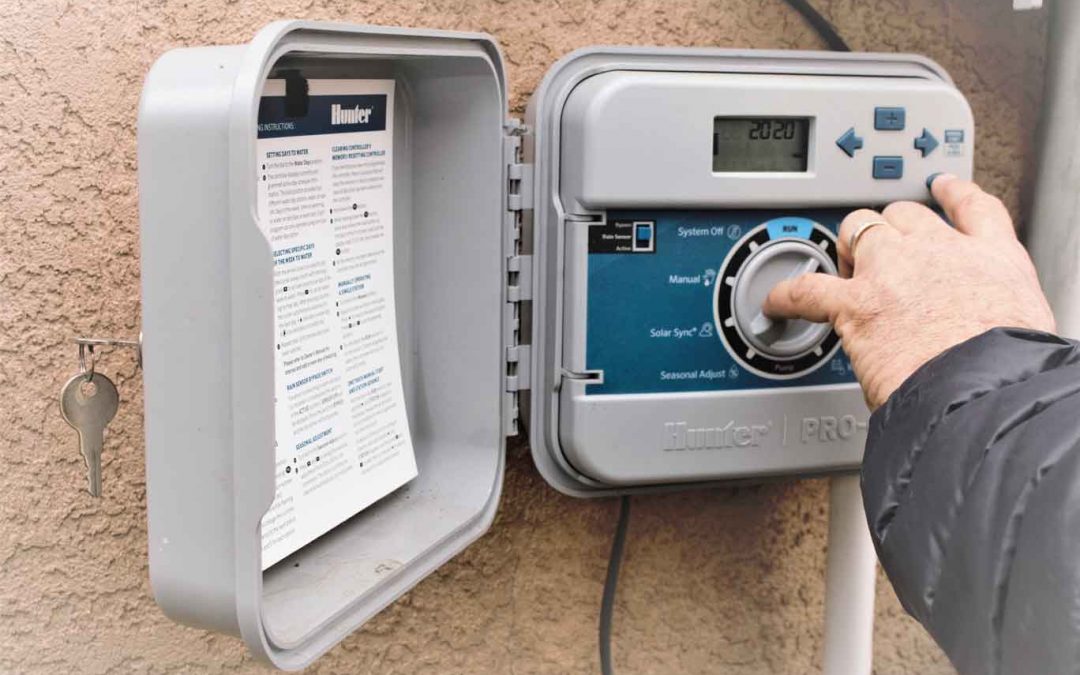
As the landscape irrigation season gets under way, inspect your irrigation system for leaks and clogged, broken or missing sprinkler heads and emitters.
Use a pressure gauge to verify that sprinkler heads are operating at recommended pressures, and check and clean all system filters.
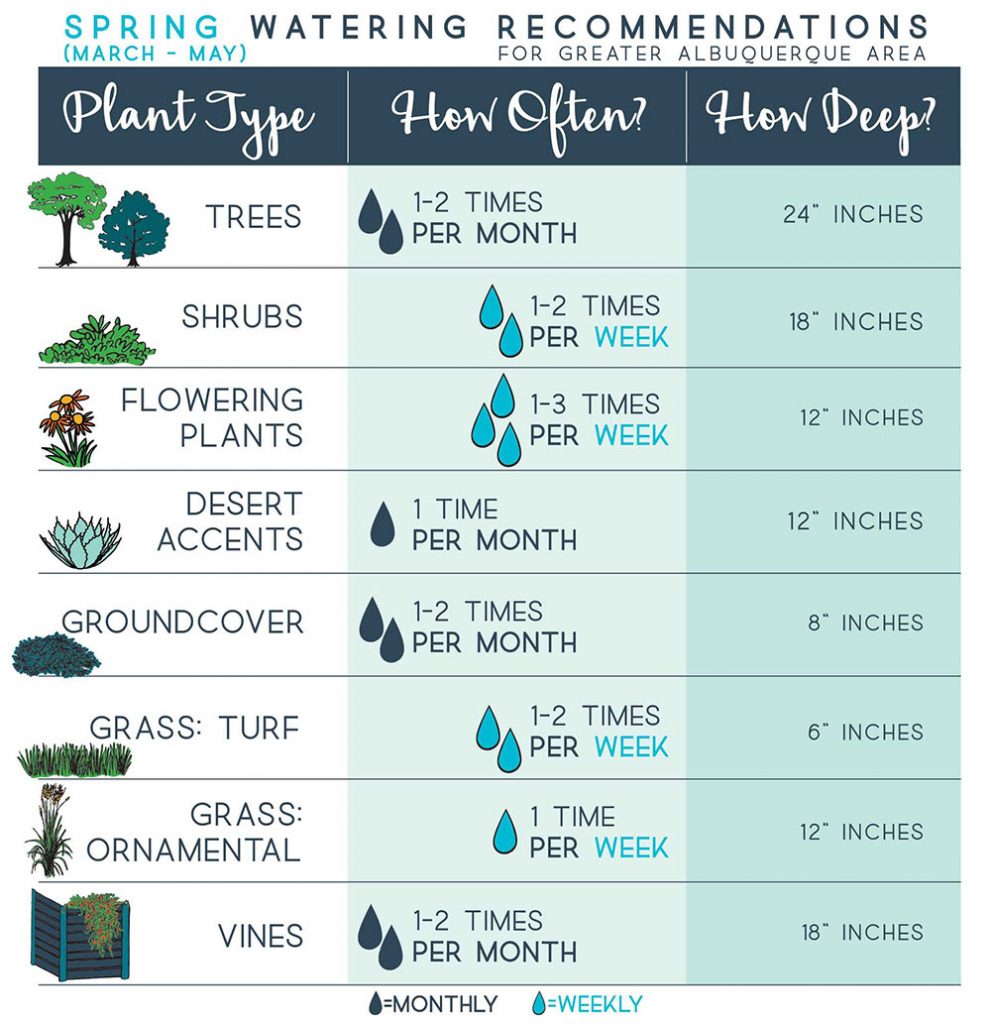
Time to follow our Spring Watering Recommendations.
Time to follow our spring watering recommendations. Remember, if it rains more than a half inch you can skip your next scheduled watering time as there is no need for supplemental irrigation.
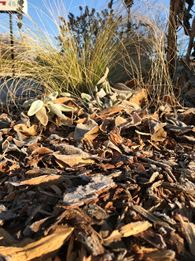
Shredded woodchip mulch helps soil hold moisture and insulates plant roots on a frosty November morning. Photo credit M. Thompson.
One of the most frequent questions we get at NMSU Extension is, “Should I add fertilizer or amendments to the soil when planting?” The short answer is no. And the long-term answer is an even stronger no.
Soil amendments are materials that are
worked into the soil with the intention of improving soil physical qualities. But
it’s just not that simple. As City of Las Cruces Community Forester Jimmy
Zabriskie said when I asked if he ever recommends using soil amendments when
planting a tree, “Save your money for mulch.” Organic
mulch is
material that sits on top of the soil, providing an insulation layer that helps
control soil temperature, retain moisture, and suppress weeds.
When planting ornamental plants, the
recommended species are the ones with roots that are well adapted to our native
soils. They’re more likely to live long, sustainable lives in our native soils
without amendments. The bottom line: Always put the same soil you dug up right
back into the hole with the new plant, and top dress with a thick layer of
mulch.
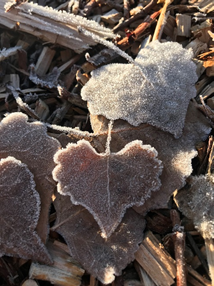
Frosty cottonwood leaves add a nice layer on top of several inches of shredded woodchip mulch. Photo credit M. Thompson
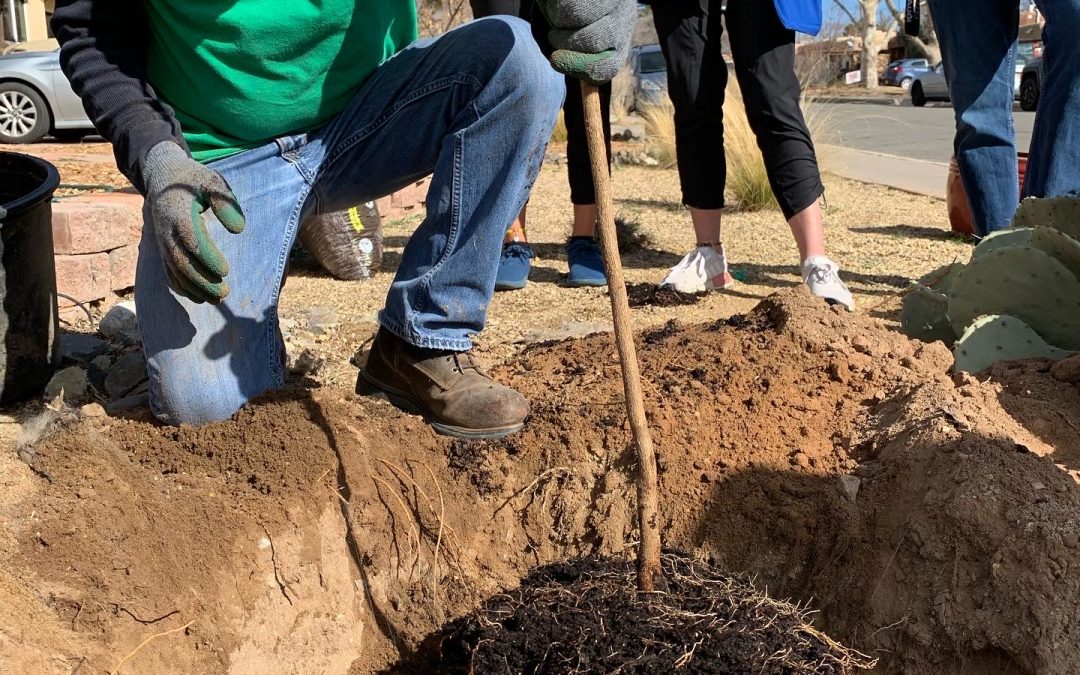
As for fertilizers, slow and steady wins this race. As Albuquerque City Forester Joran Viers said recently at a tree planting demo put on by Tree New Mexico and The Nature Conservancy, it helps to think of our trees (and other plants) as marathoners, not sprinters. When fertilizer is applied to trees, they can grow too fast for their own good and are more likely to develop structural problems and other issues. Fertilizers are not recommended at the time of planting perennial plants, either, because we want the plant’s energy to go into root establishment at a healthy rate to support the aboveground growth. The growth hormones necessary for healthy root development are found in the root tips and are made by the plant itself, so adding root stimulator to living roots is not necessary or even helpful. (Side note: Rooting hormone is potentially useful when you’re trying to get roots to grow quickly from cuttings where the roots have been removed completely.) So hold off on fertilizing for at least a few years while your plants are setting down roots.
Research on all sorts of landscape plants has shown that by adding amendments (like organic matter or perlite) to your soil backfill, the initial, short-term results are good. But the interface between the amended soil and the native soil is bad news. Water doesn’t move well across the interface, and neither do roots. With time, the roots may be inclined to stay in the original planting hole and spiral around, so you end up with essentially a potted tree or plant with reduced growth rate, constant water and nutrient stress (because lateral roots never fully developed), heightened vulnerability to pests and diseases, and even an increased falling hazard (think root ball in socket).
Author: Marisa Thompson, PhD, is the Extension Horticulture Specialist for New Mexico State University and is based at the Agricultural Science Center at Los Lunas. For more gardening information, including decades of archived Southwest Yard & Garden weekly columns, visit the NMSU Extension Horticulture page (https://desertblooms.nmsu.edu/), , follow us on social media (@NMDesertBlooms), or contact your County Cooperative Extension office (https://aces.nmsu.edu/county).
To avoid damage to your irrigation system from
freezing temperatures, it is important to “winterize” it by protecting exposed outdoor
fixtures. If your hose bib is left exposed or standing water is left in pipes, valves
or sprinkler heads during freezing temperatures, that water may expand and damage your
system fixtures. That
could result in costly but avoidable repairs. Each irrigation system may be different,
but the general idea is the same: protect your irrigation system now to save
time and expense later. Here are a few tips you should take to prepare your irrigation
system for winter.
1. Disconnect the water supply to your irrigation system
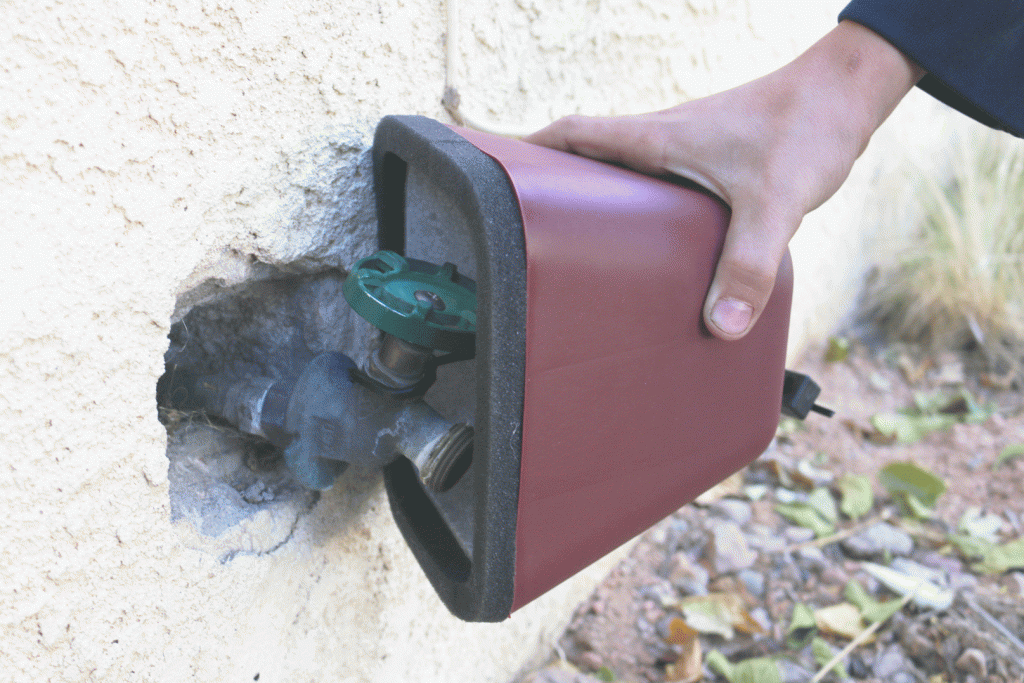
a. If you manually water using a hose or if the irrigation system is attached to an outdoor spigot, you should disconnect it and cover your hose bib using a faucet cover. A faucet cover is easy to install and is usually made from durable hard plastic. It protects your outdoor faucet from freezing temperatures. This in an easy, inexpensive fix that will provide you peace of mind when the temperatures drop.
Pro Tip #1
Faucet cover to protect hose bib from frost.
Disconnecting your hose and covering your hose bib is very important in winter. If you leave the hose connected, water can freeze in the hose all the way into the hose bib and the pipe that goes inside your home. If the house pipe breaks, you will have water flooding inside, and potential major water damage inside your home. It’s definitely worth the $10-$15 on these insulated covers to prevent potentially thousands of dollars in plumbing repairs and water damage to your home. Don’t assume that if the hose bib freezes it will drip and freeze only outside your home. Sometimes the damage is a whole lot worse.
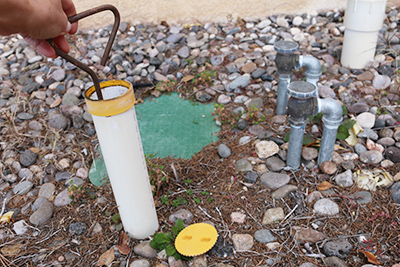
b. If you have a below ground irrigation system, locate your shut-off valve (often hidden in a 3” PVC pipe; often with a white or yellow cap, as shown in the photo). Turn it to the right to shut it off. Be careful when turning so you don’t break the valve. Your shut off valve may look like this:
Irrigation shut-off valve.
Pro
Tip #2
Sometimes the water shutoff for your sprinkler
system is in the green box shown in the picture. If so, we recommend adding some
heat tape and/or insulation in the box because it will be exposed to freezing temperatures.
If you can insulate it and protect it you can avoid potential frozen pipes at the
shut off and potential repairs in spring. Watch out for spiders, though,
because the shutoff box is a warm wet place.
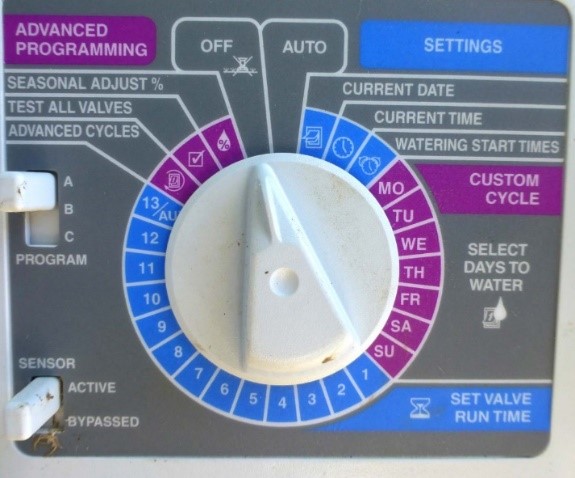
2. Turn off the irrigation system controller (if you have one)
Irrigation controller set to off.
Pro Tip #3
If you forget to shut off your irrigation system during winter you can potentially have your automated sprinklers running in freezing temperatures. That can freeze and damage your sprinkler heads. Make sure you turn off all automatic cycles for your system. If you have a drip system for trees and other plants that need to be watered periodically throughout winter run the system manually when you are home, and only in above freezing temperatures. Don’t just assume that setting it to run during the day will be okay, either. There are days in winter when the temperature doesn’t get above freezing. It’s best to just turn it on when you’re home and then watch it. If your sprinkler heads do crack or break and you don’t notice, you will likely flood your yard in spring when you turn your system back to automatic settings.
3. Drain the water from all pipes, valves, and sprinkler heads.
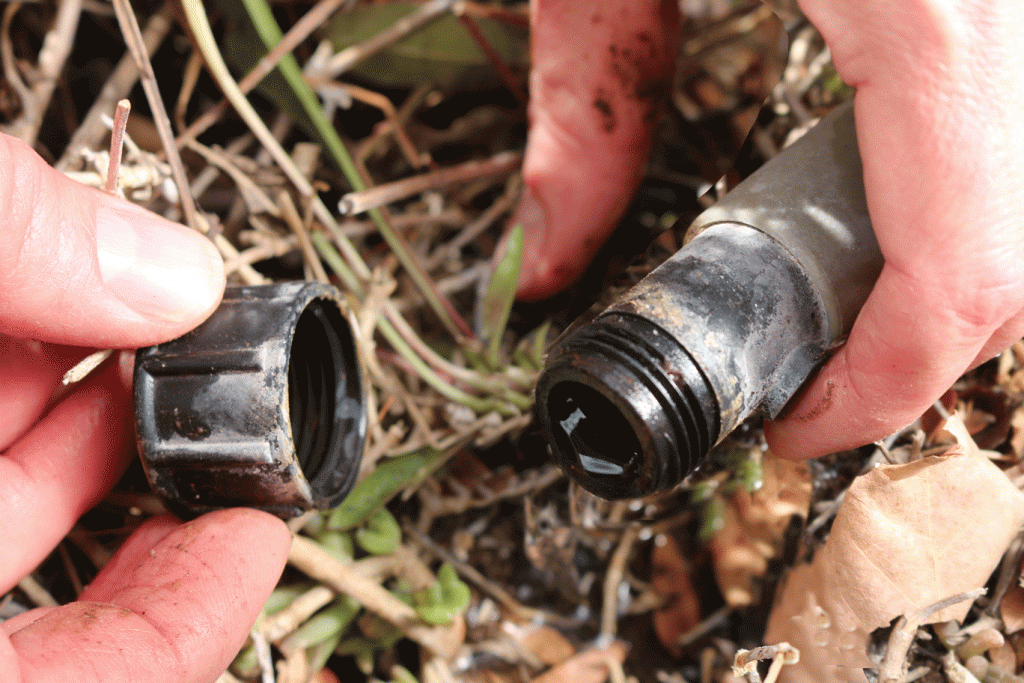
Drain cap at the end of a drip system.
There
are several ways to drain your system.
Manual
drain valves and automatic drain valves can be blown out with compressed air. Local
irrigation specialists can help.
If you
have an irrigation system with drip hoses, we recommend you locate the end cap (drain
cap) of the drip hose and drain out the water.
Pro Tip #4
Sometimes irrigation systems don’t have drain
valves. If you don’t have these, simply make sure you’ve turned off your sprinkler
system prior to winter and freezing temps. Then you can have a professional inspect
the system in spring before you turn it back on. A professional will inspect your
system for leaks and make any repairs so you don’t flood your yard. So avoid the
headache and have an inspection. If you consistently have problems year after year,
drain valves can be installed to help clear the lines each winter.
Reminder: If you need to water in the winter season use your hose and remember to cover it when finished.
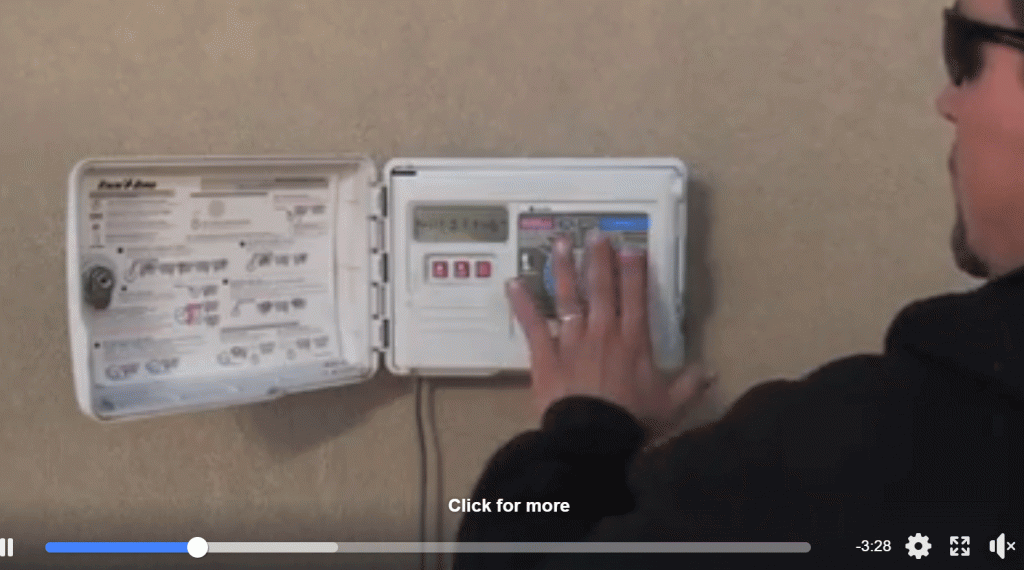
How to shut off your irrigation system for winter.
Some of our best landscaping practices can be learned from Mother
Nature. Every autumn, leaves fall to the ground, sheltering the soil and beneficial
organisms, returning organic matter back to the ground, and perpetuating the nutrient
cycling essential for good plant health. This year we want you to think about leaving
those leaves in your garden. When we allow leaves to follow their natural life cycle,
we can enjoy a colorful tapestry on our landscape as well as all the benefits provided
by an organic mulch.
With these tips, you can spend less time raking leaves into plastic
bags and enjoy more fall fun:
When designing your landscape, make your pathways
and hardscapes above the level of your planting areas. The wind will naturally blow
leaves into the low spots where they will support soil and plant health. This also
happens to be a great water harvesting strategy.
Use organic mulches instead of gravel. Organic mulches
such as wood mulch are visually accommodating to leaf litter (meaning you won’t
notice them as much), allow for the leaves to decompose into the porous spaces and
build soil. Leaves break down to virtually nothing in this environment. If you prefer
a tidy look, follow up with a light topdressing of mulch for a finished appearance.
If the leaf load is too much to manage directly under
your trees, rake the leaves a little off the top and distribute them throughout
your yard – ideally to a compost heap where the leaf litter will become an excellent
soil amendment for your spring garden. Note: if you have chickens, they will turn
your leaves into next to nothing in a matter of days.
If you have a lawn, run your lawn mower over the
leaves and let the crumbled litter work its way back into the soil. The addition
of organic material to your lawn in the fall will give a boost to your lawn when
it wakes up in the spring.
There are a few instances when you should remove fall
leaf litter. Leaves from diseased plants – particularly fruit trees and roses -
should be taken to a compost facility to be recycled. While you can try to compost
them yourself, be advised that most backyard compost piles do not reach a high enough
temperature to kill pathogens. Also, xeric plants that grow naturally in rocky terrain
will be susceptible to crown rot if organic material is piled up around their bases.
Leaving fall leaves has another great benefit – it is carbon neutral. Carbon is sequestered in the soil, leaf blowers and plastic bags are removed from the equation, leaves don’t end up in a landfill or produce methane gas, and no transport to the landfill is required. It’s a win-win when we let Mother Nature be our guide.
Author: Paulina Aguilera-Eaton, Water Conservation Specialist with Albuquerque Bernalillo Water Utility Authority