Region:
All parts
of the Greater Albuquerque area except the East Mountains
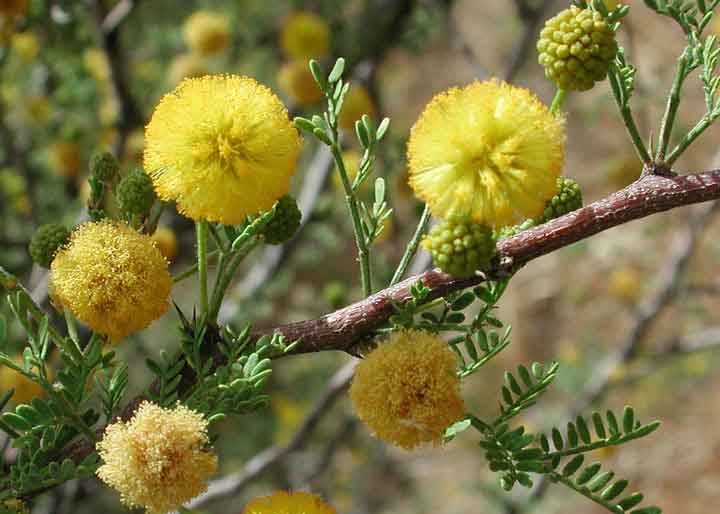
A member of the pea family, the Whitethorn
Acacia is long-lived and able to survive only on rainwater in the Albuquerque
area. It becomes either a large shrub or small tree. Naturally occurring on
rocky slopes and drainage washes from Arizona to Texas at elevations from 1,500
to 6,000 feet, Whitethorn Acacia produces fragrant, yellow puffball flowers
from April through June that develop into 2”-5” long
capsules with clear constrictions between the beans (thus the Latin name).
Branches range from dark grey to reddish-brown, with a distinctive zigzag shape
and deciduous, fern-like foliage. Whitethorn Acacia is hardy to -10 degrees.
Site this plant with an
understanding of mature size, and a realization that pruning will require
interaction with numerous slender, white spines. With diligence, it can be
pruned into a small tree that casts filtered shade. Well-adapted to life in an
arid location, the Whitethorn Acacia will not produce leaves or flowers during
drought. It’s a great plant for wildlife, as the flowers
attract butterflies and bees and the seed pods are favored by quail.
This versatile plant,
whether trained as a small tree or allowed to grow naturally as part of a
low-maintenance buffer, asks for little and gives much. Select it for any of
its numerous positive qualities, including its showy flowers, whimsical form,
and excellent drought tolerance.
As
the seasons begin to change and the signs of Spring appear in the landscape, be
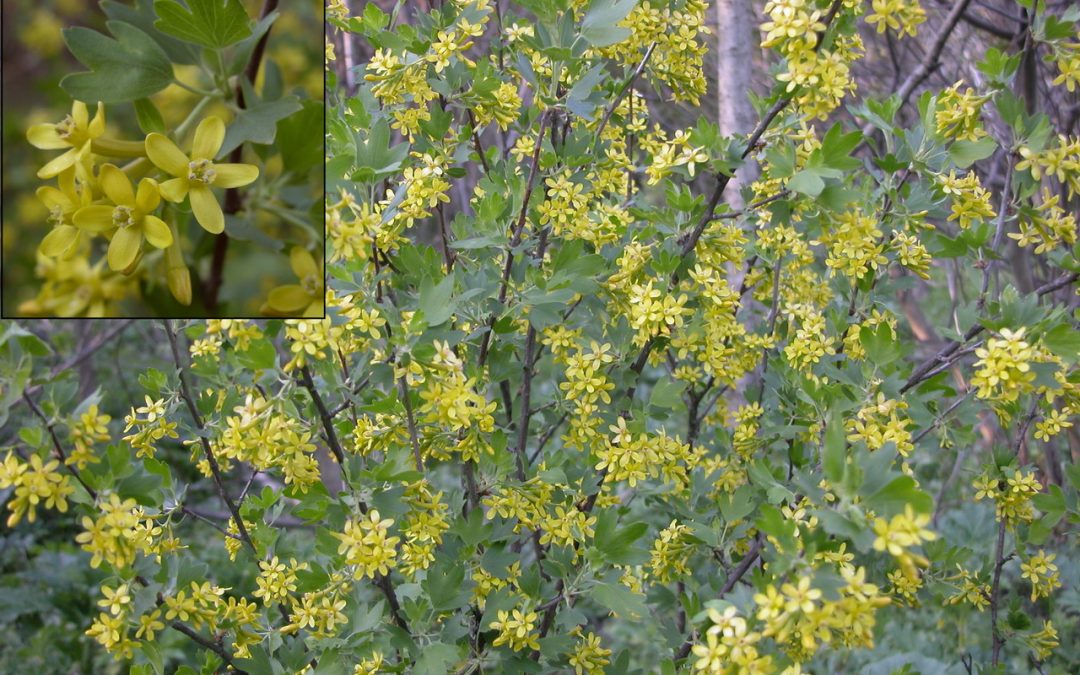
on the lookout for a remarkable shrub with small, fragrant yellow flowers: the Golden
Currant. A native to New Mexico moisture catchments at elevations from 2,500 to
8,000 feet, this plant is suitable for many Albuquerque landscape situations if
sited and cared for properly.
A
standout in terms of multi-season interest, fragrance and wildlife garden value,
Ribes aureum has few botanical peers. In late
Spring, five-petaled flowers - with a scent said to resemble the aroma of cloves
or vanilla - attracts hummingbirds and monarch butterflies. The flowers develop
into edible currants, a favorite of birds, which by June will mature from a red
color to deep blue. Small green leaves turn a bright red in autumn before falling.
Tips for success: Golden
Current may succeed in sunny or shaded locations, but will require less irrigation
(link to new Efficient Irrigation Consultation tab) in lower elevations if sited
in at least partial shade. However, it is likely to fruit most heavily in sunnier
locations. Golden Current is adaptable to a wide range of soil types, but is not
tolerant of salt. It also benefits from a substantial layer of organic mulch for
moisture retention. Water every few weeks in summer. It may try to spread via suckers
so be careful when choosing a location.
A
useful specimen in any edible or wildlife garden, Ribes
aureum is also suitable for the edge of a rain garden or beneath a shade tree.
Grow it for its ornamental properties or simply for the fruit, which can be eaten
raw or used in juices, jams or pies.
Mature Size (H x W): 3-6’X 3-6’ Blooming Season: Early Spring Flower Color: White
Region: New Mexico
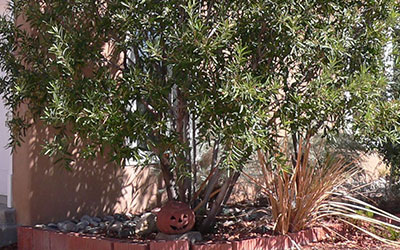
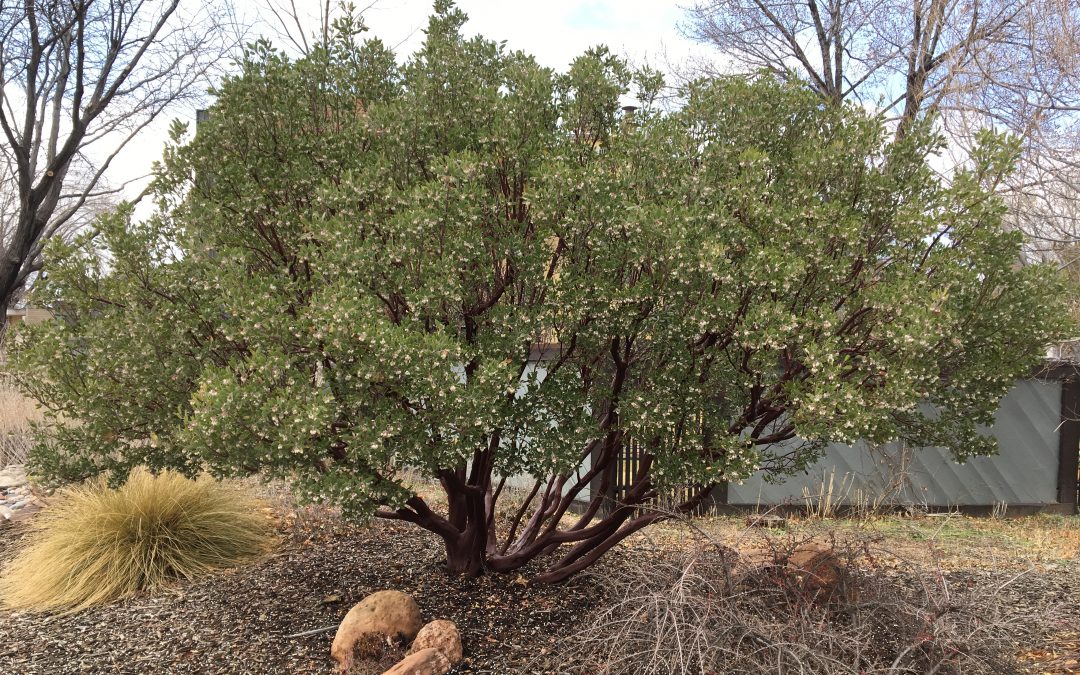
A dramatic member of the Heath family native to New Mexico, the Pointleaf Manzanita is one of the few true broad-leafed evergreens that can handle the challenges of our cold, dry climate. It’s found in open pine forests and piñon-juniper woodlands, from 3000’ to 8000’ elevation, with a native range from California to Nevada to Texas. Hardy to at least -20 degrees. Tolerant of some alkalinity, and of soils ranging from sand to clay. Birds love the summer display of pea-sized bronze-colored fruits, which follow clusters of urn-shaped soft pink flowers. This eye-catching native also attracts hummingbirds, butterflies and bees. This plant can stand alone as a specimen or be clustered with other evergreens as part of a hedge or screen. Its exfoliating mahogany-colored bark and matte green leaves lend contrast when planted near sage or blue juniper foliage.
Tips for success with this sometimes-challenging plant: Start with small plants, and make sure to choose a good long-term location, as Manzanitas don’t like to be transplanted. If you plan to highlight the Pointleaf Manzanita’s sinewy structure, begin pruning up at a young age to develop an open structure, since they tolerate pruning of mature branches poorly. This plant should be watered deeply every 2 weeks in summer and monthly for the rest of the year.
The only thing missing with this wonderful shrub may be easy availability, so be sure to mention to your local garden center that you’re interested! North America boasts around 60 plants in the Arctostaphylos genus, and numerous cultivars are available, so also keep an eye open for the Pointleaf Manzanita’s botanical relatives during your travels!
Mature Size: 12’X 10’ Blooming Season: Summer Flower Color: White
Arizona Rosewood is a handsome large shrub at its best in open windy spaces where evergreen wind protection is especially welcome. Extreme exposures seem to increase its density and, unlike most broadleaf evergreens, its foliage stays crisp and attractive through heat and cold. Lacy umbels of small white flowers crown Rosewood in summer, turning a deep cocoa brown and persisting well into winter. This is a useful native rose with no off season.
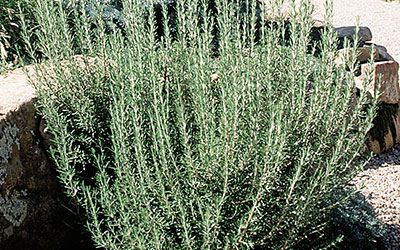
Known primarily as an evergreen shrub, Rosemary is a bushy plant featuring stiff upright stems and soft blue flowers in summer. Rosemary officinalis “Arp” has proven itself to be a cold hardy selection, extending its use into New Mexico’s higher elevations. A great choice for hot walls and corners and other areas that get intense reflected heat. Plant in combination with other heat-loving plants like Zauschneria californica (Hummingbird Plant), Lavandula and Calylophus (Sundrops).
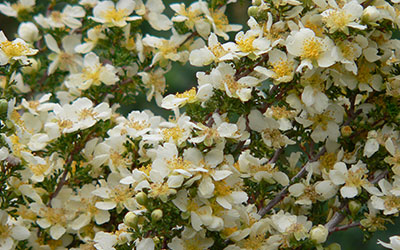
Cliffrose makes an excellent companion for perennials because its open-branched form casts light shade. Its irregular shape lends a native touch to landscapes which is appropriate since this plant is a New Mexico native. Fragrant flowers cover the branches in early summer, a few of which remain virtually all summer long. Feathery plumes form in mid-summer and persist into winter (consequently, Cliffrose is often mistaken for Apache Plume). It can handle the hottest south- and west-facing garden locations.



 Full Sun, Part Shade
 Low Water