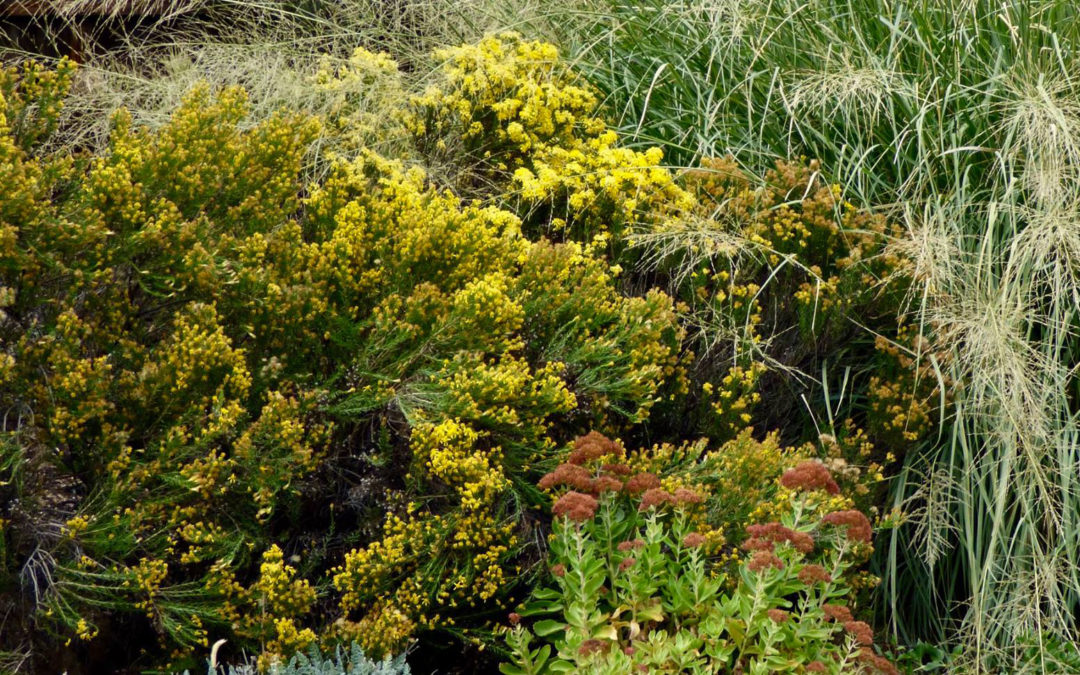
by 505 Outside | Sep 1, 2021 | Evergreen Shrubs, Shrubs, Uncategorized
Exposure: Full Sun
Water: Low
Height and Spread: H 3' X W 4'
Blooming Season: Fall
Description:
This evergreen shrub is a win-win in our high desert gardens. It has a lovely dark green color year-round, and in the fall, it has beautiful yellow blooms to brighten up the garden. There is no pruning needed due to its predictable rounded shape.
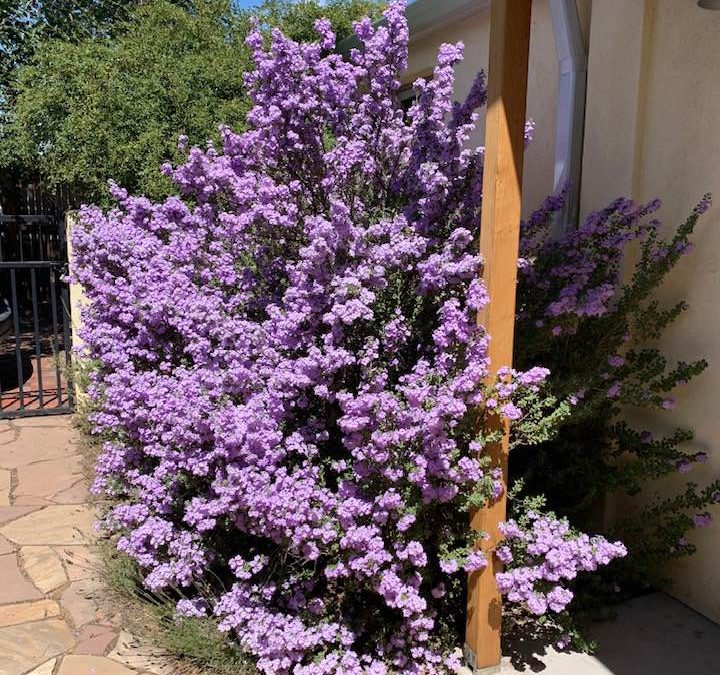
by 505 Outside | Aug 2, 2021 | Evergreen Shrubs, Shrubs
Exposure: Full Sun
Water: Low
Height and Spread: 4' x 4'
Blooming Season: Late Summer and Fall
Description: This blue-green evergreen shrub likes western and southern exposures. Its predictable shape and form works well as an informal hedge in the garden. It is a welcome pop of purple during the heat of the summer when all the spring blooms have faded away. Be careful where you place it because it can freeze if located on northern protected exposures.
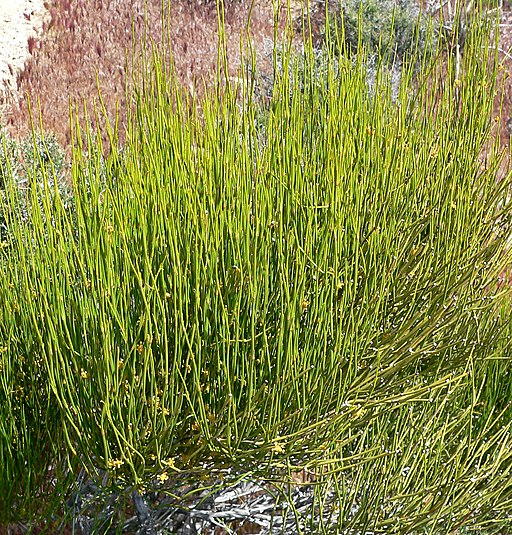
by 505 Outside | Jan 12, 2021 | Evergreen Shrubs, Shrubs
Exposure: Full sun
Water: Rainwater
Height and Spread: H 2’ X W 5'
Blooming Season: NA
Description:
Mormon Tea is a desert adapted evergreen shrub that has been around since before the dinosaurs roamed the planet. It is an ideal native plant for your full sun landscape and does well in well-drained soil. Ephedra, also known as Joint Fir, can be used successfully as a ground cover, erosion control and does well in rock gardens. This perennial lacks leaves but relies on photosynthesis occurring in its green, jointed stems and is very easy to grow once started.
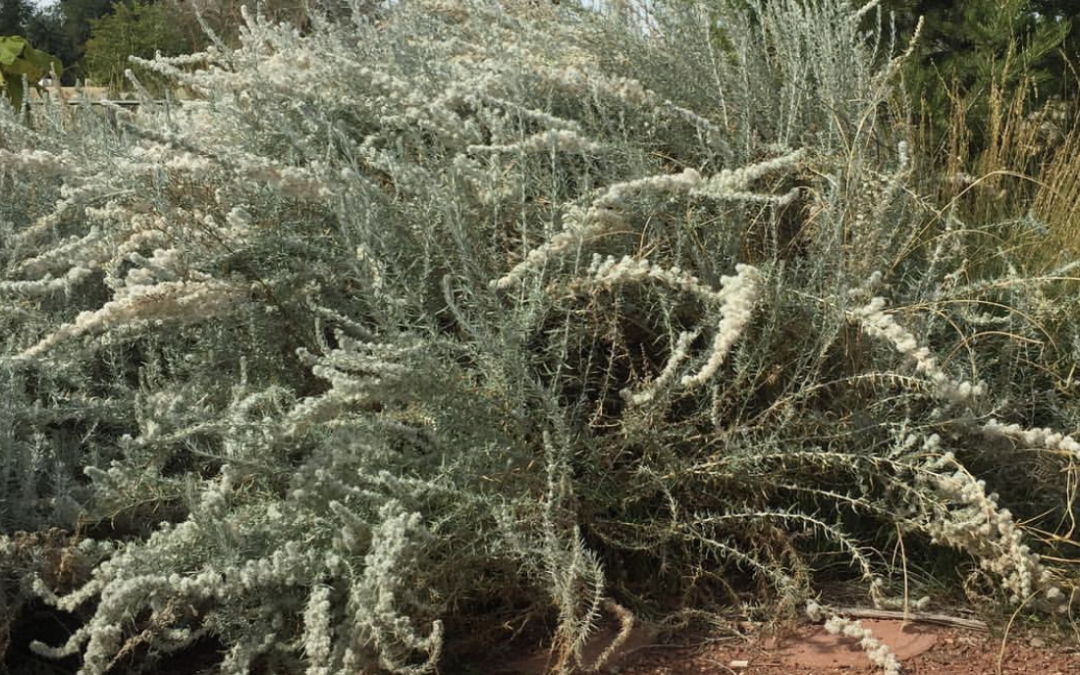
by 505 Outside | Feb 1, 2020 | Evergreen Shrubs, Shrubs
Hardiness Zone: 4-10
Tree Type: Evergreen
Mature Size: Height 1-3’ and Width 1-3’
Growth Rate: Moderate
Sun Preference: Sun
Water Use: Low
This native,
evergreen shrub has a fibrous root system with a deep penetrating taproot which
makes it a good choice for erosion control. Winterfat attracts birds and its
ornamental seed heads are a point of interest in dried arrangements. Male and
female flowers grow on the same plant but are arranged separately and bloom
from mid-spring to summer.
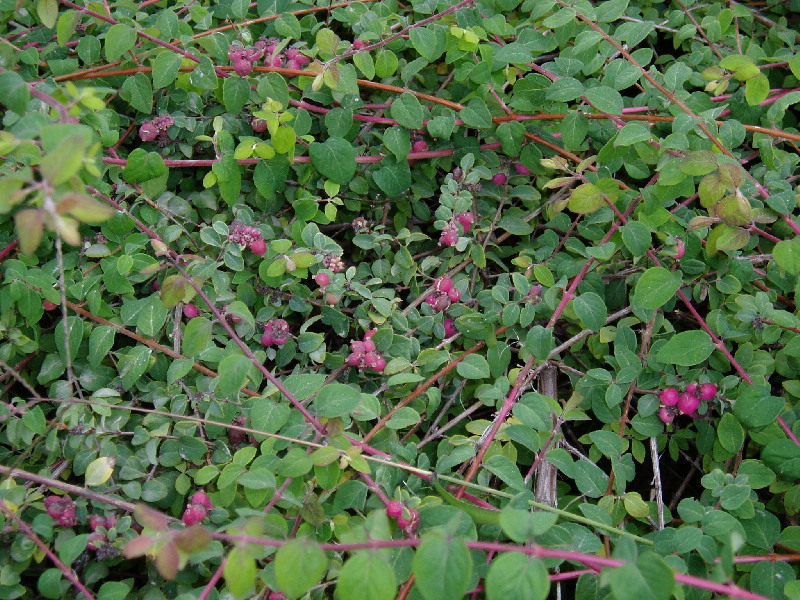
by 505 Outside | Nov 2, 2019 | Deciduous Shrubs, Shrubs
Exposure: Full shade in the Albuquerque area
Water: Medium
Height and Spread: 2’ x 6’
Blooming Season: Spring
Region: All Areas
A great shade loving plant for the Fall and
Winter months, Coralberry is best planted where water collects in the yard. It can
be found along stream beds, making it a great plant for beneath the runoff of down
spouts. Lined with pink flowers in the summer and pink berries in the winter, Coralberry
is a great used underneath trees. Their foliage keeps the soil cooler for tree roots.
The stems of this plant arch when loaded with berries and will root where they touch
the ground, making more plants. Deep water established plants twice a month for
vigorous growth in drier gardens.
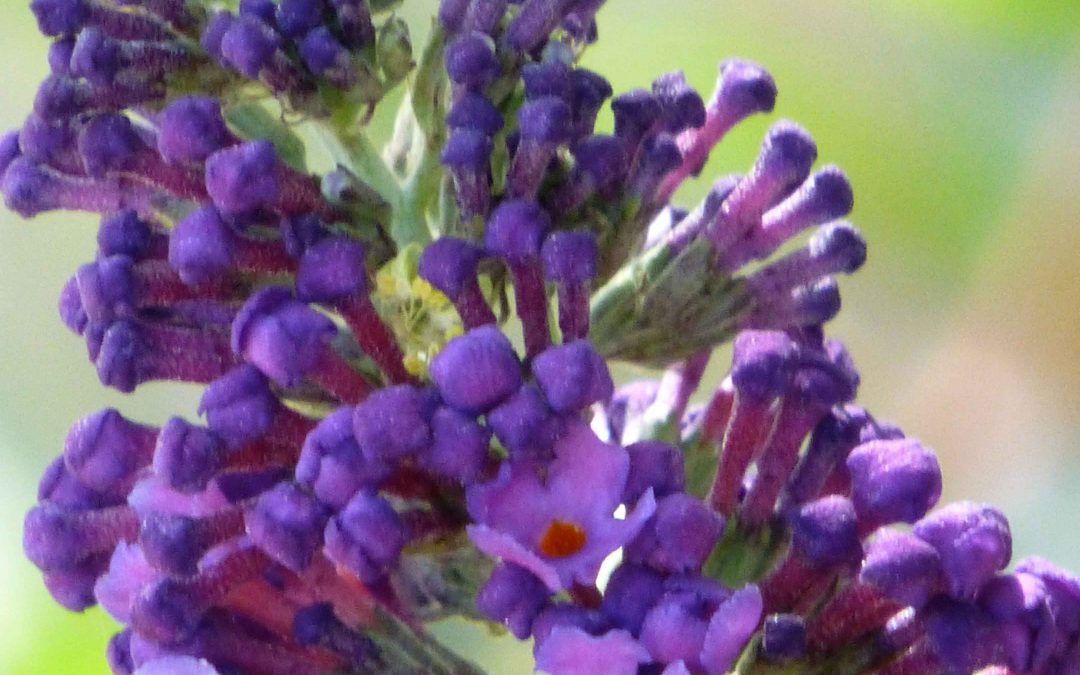
by 505 Outside | May 1, 2019 | Deciduous Shrubs, Shrubs
Exposure:
Sun
/ Shade
Water:
Medium
Mature
Size (H x W): 5’
x 5’
Blooming
Season: June
- September
Flower
Color:
Purple
Region:
All
areas of Greater Albuquerque
Noted
for its ability to handle alkaline soils, the Dwarf Butterfly Bush is a magnet
for its namesake garden visitors, including the majestic Monarch. Some
gardeners consider these the absolute best plants for attracting butterflies (though
Asclepias is a strong contender for that award), as they are known to
attract as many as 25 North American butterfly species. Panicles nearly 6” long
emit a light fragrance vaguely reminiscent of honey, and produce a nectar that
attracts not only butterflies, but hummingbirds!
Like
most plants, the Dwarf Butterfly Bush is most susceptible to pests and disease
if stressed by drought. Irrigate these plants according to our Watering
Guidelines (look to the middle of the range recommended for shrub irrigation
frequency). Tolerant of urban pollution, this plant prefers well-drained soils.
To best take advantage of the fragrant flowers, locate these in groups along a
path or near a window or porch, or in the front of a bed where their petite
size can be appreciated. And take heart, these will not require pruning like
the standard Butterfly Bush.
In recent years, breeders have produced plants with a variety of flower colors and mature sizes. Look for cultivars including “Nanho Blue,” which has mauve-blue flowers, and “Nanho Purple,” which has a more traditional, distinctively purple flower. Enjoy a cascade of flowers from June to September.
Photo Courtesy of Hunter Ten Broeck with WaterWise Landscapes Inc.