by 505 Outside | Feb 5, 2019 | Evergreen Trees, Trees
Full Sun, Part Shade
Medium Water
Mature Size (H x W): 35’ x 40’
Blooming Season: Spring
Region: Thrives in all part of the greater Albuquerque area
Closely
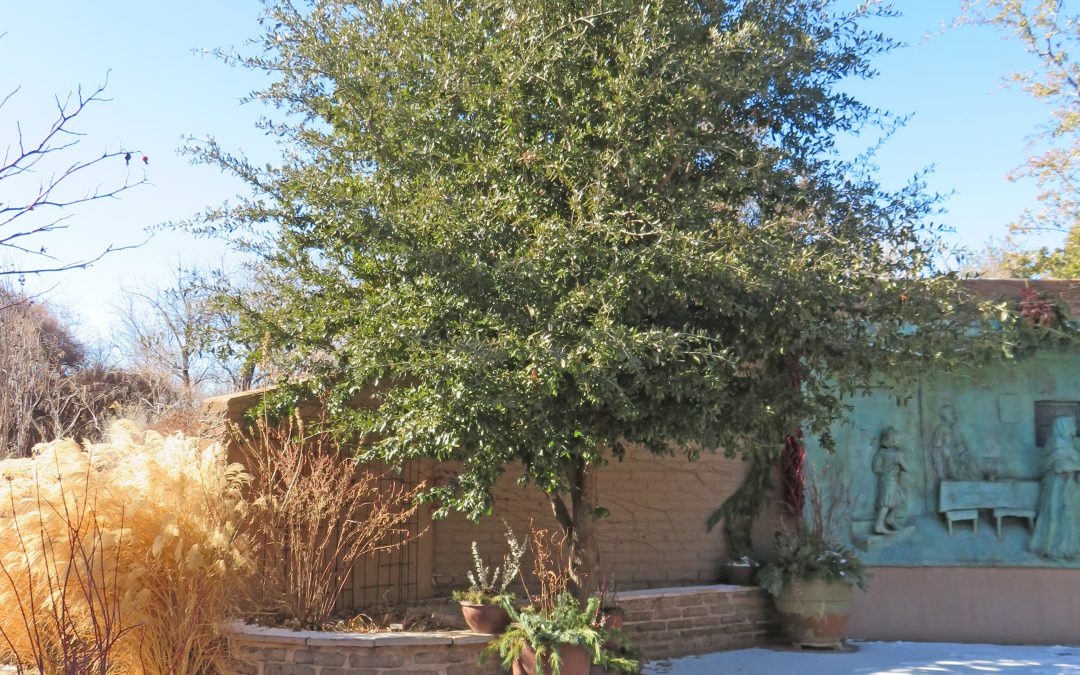
related to the iconic oak tree of the Old South, the Escarpment Live Oak is
surprisingly well-adapted to life in the Albuquerque area. Native from Texas, Oklahoma
and into the mountains of northern Mexico, this long-lived tree is among the
few broad-leafed evergreens we see in our area. Quercus virginiana var. fusiformis
(also known as Quercus fusiformis) is an excellent choice for a focal point
in a small space or as part of a mixed planting for privacy or wind protection.
Rough, dark brown bark and a gnarled form add to the character of this plant.
Tips for success: When drought stressed, this tree is more susceptible to oak wilt and rot – be sure it gets watered deeply according to our watering recommendations. Best in alkaline, well-drained soils, but tolerant of clay. Don’t be alarmed during the 2-4 week period in spring when the leaves turn yellow and drop – this is to be expected. In the wild, the tree is multi-trunked and shrubby, naturally tending to form thickets, but it can be pruned into and grown as a single-stem tree.
Its
sturdy canopy provides cover and nesting sites for birds and mammals, and its
elongated acorns offer a food source for a variety of wildlife. Branches can be
selectively pruned for use in holiday arrangements and wreaths. Check out a
beautiful example of this stunning tree near the copper relief in the Curandera
Garden at the Albuquerque Botanic Garden and in the parking lot of Explora.
by 505 Outside | Aug 1, 2018 | Evergreen Trees, Trees

Full Sun

Medium Water
Mature Size: 60’X 50’
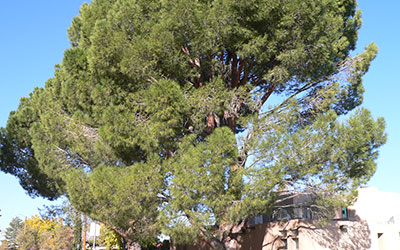
This majestic round-crowned conifer is found growing along the Mediterranean coast in hot, dry places subject to salty sea breezes. Ponderosa Pines, native to the mountains of the Southwest, are moving higher upslope as bark beetles cull those too stressed to thrive in increasingly hot environments, but Stone Pines seem perfectly content as the urban temperatures creep to new highs.
by 505 Outside | Aug 1, 2018 | Evergreen Trees, Trees
Full Sun
Medium Water
Mature Size: 40’X 18”
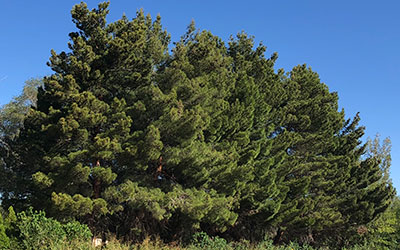
Pine trees provide visual interest in a landscape and much-needed greenery in the coldest, most barren months. Afghan Pine is one of the best desert pines. It thrives in heat, wind, poor soil and it is relatively drought tolerant. However, it cannot tolerate temperatures below 0 degrees F. Its evergreen leaves (needles) grow in pairs and reach 5-6 inches long. This relatively fast-growing tree is great for windbreaks and for creating a “visual screen” between properties.
by 505 Outside | Aug 1, 2018 | Evergreen Trees, Trees
Full Sun
Medium Water
Mature Size: 30’X 20’
Blooming Season: Early Spring
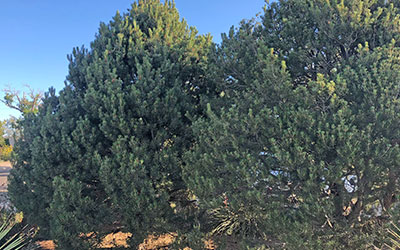
Pinon Pines are one of New Mexico’s most recognizable native trees. Horizontal branches make for a bushy, domed shape when mature. Its needles, which grow in pairs, are short, stiff and dark green. Its spherical cones produce seeds (also known as Pinon Nuts) that are prized by wildlife and humans as well. Pinons are often used as accent plants, and specimens with gnarled trunks are especially prized. It grows best in foothill elevations, but can stand up to the heat and cold of most New Mexico locations
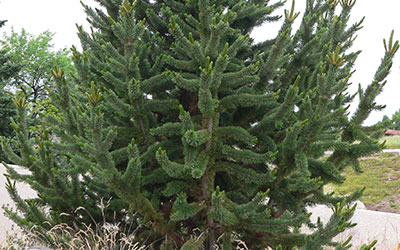
by 505 Outside | Aug 1, 2018 | Evergreen Trees, Trees
Full Sun
Medium Water
Mature Size: 30’X 20’
This is one of the oldest known trees on earth, and this resilience and adaptability might explain how a tree normally found in the high mountains of the West grows so well thousands of feet lower in elevation and many degrees hotter in temperature. Short- needled and slow-growing, the resinous aroma of Bristlecone Pine fits smaller garden spaces with grace and limited water.
by 505 Outside | Aug 1, 2018 | Evergreen Trees, Trees
Full Sun
Medium Water
Mature Size: 25-60’X 10-40’depending on variety
Blooming Season: Spring
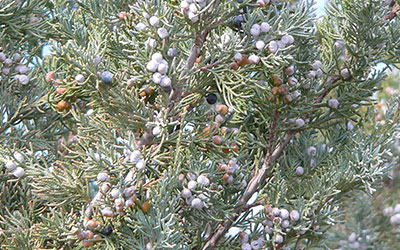
Fruit: All female varieties have blue- or copper-colored berries
Although some may argue that there are already enough Junipers in New Mexico gardens, it is important to note that these adaptable conifers are the survivors of the transition from water-soaked landscapes to more sustainable ones. We are lucky to have many new xeric options, but the pollenless female forms of Juniper provide food and cover for songbirds as well as interesting foliage color and texture.