by 505 Outside | Aug 27, 2018 | Lawn Care, Water Conservation, Watering and Irrigation, Waterwise Tips
- Water the lawn only when needed
Step on the grass; if it springs back up when you move your foot, it does not need water. The Water Authority recommends watering just one day per week in March, two days per week in April and May, three days per week in the summer, two days per week in September and October, and one day per week in November.
- Accept a less-than-lush lawn
Grass will naturally go dormant during periods of drought but will readily regenerate when water becomes available. Reduce traffic on stressed turf areas if possible.
- Mow as infrequently as possible
Mowing puts the grass under additional stress that requires more water.
- Mow higher than normal
Longer leaf surfaces promote deeper rooting and shade the root zone. Never remove more than 1/3 of the leaf blade in one mowing. Return mulched clippings to the lawn.
- Match fertilizer to the plant requirement
Fertilizer applications require additional water. Excess fertilizer stimulates top growth, often to the detriment of the root system. Learn to accept turf grasses with low water needs.
- Keep lawns free of weeds
Weeds are water thieves and will rob your plants of water and nutrients. Spot spray or remove weeds as they appear.
- Don’t water the pavement
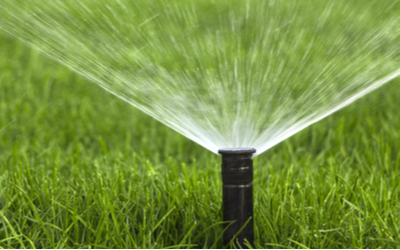
- Move sprinkler heads away from curbs or sidewalks. 12” or more away from a paved service is a good rule of thumb.
Signs of under watering your grass:
- Turns bluish-grey
- Grass doesn’t spring back after being stepped on
- It is difficult to push a screwdriver into the soil
- Turf still feels warm after the sun has gone down
Signs of over watering your grass:
- Water is constantly pooled in areas
- Turf has a musty odor
- Soil is extremely soft and mushy
- Algae or mushrooms are present
by 505 Outside | Aug 27, 2018 | Do It Yourself (DIY), Water Conservation, Watering and Irrigation, Waterwise Tips
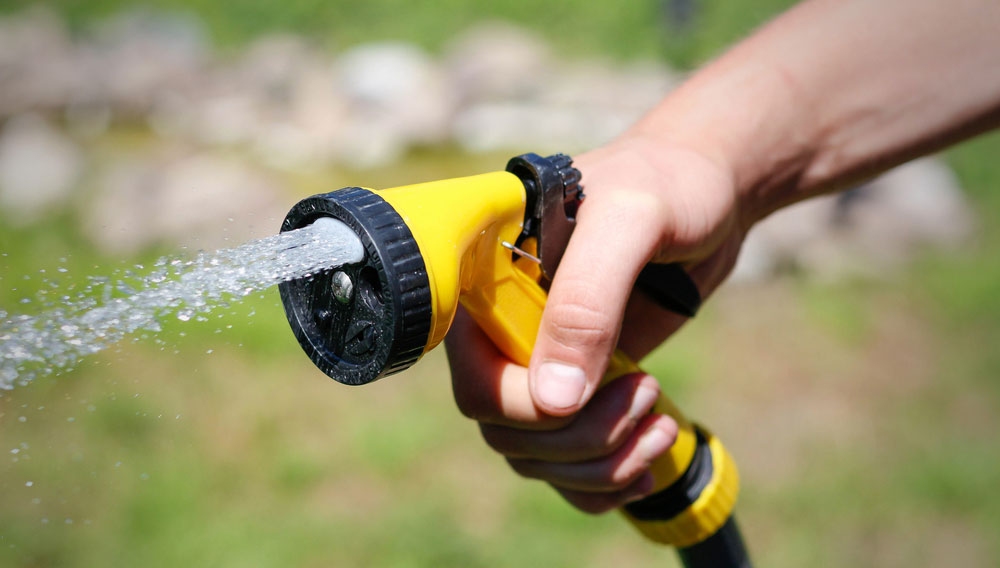
- Use shut-off nozzles on hoses
Shut-off nozzles completely turn off the water when you are not using it.
- Install a hose watering system
If you are not ready to invest in an inground irrigation system there are automatic hose systems available. Instead of dragging your hose around the yard, this system allows you to set up your hose with appropriate watering system and water your yard at a set time and for a set length of time. Basically, it is a timer attached to your hose. You can even build a hose watering system that has multiple valves. Each valve can be set to water at various times throughout the day. For example, you could set one valve to water your vegetable garden for 10 minutes daily and another valve to water your perennials two times a week for 20 minutes.
by 505 Outside | Aug 2, 2018 | Blog, Water Conservation, Watering and Irrigation, Waterwise Tips
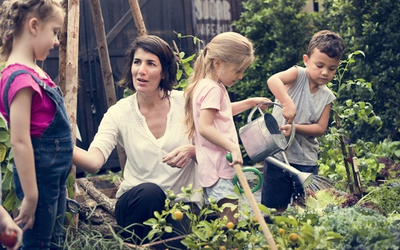
Efficient irrigation saves water. When plants are grouped by their water needs, plants that need water more often in summer, such as vegetable gardens, fruit trees or turf, can be accommodated while desert natives with the lowest water needs can be watered less often or not at all once they are well-rooted.
Choose lawn sprinklers that spray droplets, not high-pressure mist. They should have a low spray angle and be operated at the coolest, least windy times of day to minimize evaporative loss.
Most other plants should be watered with low-flow or drip irrigation equipment, applying water only where plant roots can access it, and only as often and as deeply as the plants require. Such careful application of water has the added advantage of minimizing weeds and preventing pest problems.
Plants use the least amount of water when they are dormant during the coldest winter months and the most water when they are actively growing, blooming and producing fruit in summer. In spring as temperatures rise and in autumn as temperatures fall, watering times should be adjusted to keep plants healthy without waste. Plants pushed with extra water in spring may leaf out or flower earlier, making them more vulnerable to late spring frosts. Likewise, watering too much in autumn can keep plants soft going into cold weather and make them more vulnerable to frost damage.
An automatic irrigation controller is only as efficient as the program that runs it – and the programmer who sets the run times – so program for wise water use, and water only as much as the landscape needs.
Remember, too, that even the best-designed irrigation system must be main- tained to retain its optimum efficiency. Fix leaks and make sure water lines are clean and unobstructed for peak performance.
by 505 Outside | Aug 2, 2018 | Blog, Water Conservation, Waterwise Tips
We encourage our customers to follow these outdoor water-saving recommendations.
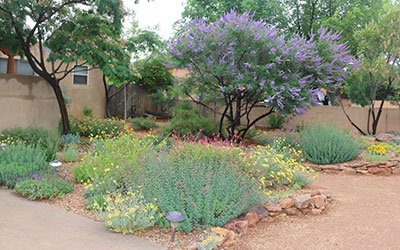
- Plant drought-resistant landscapes
Click here for information on xeriscaping.
- Put your irrigation system on an automatic timer
A lot of water can be wasted in a short period of time if you forget to turn your sprinklers off. Rebates for sprinkler timers are available.
- Don’t water when it rains
An automatic rain sensor can shut down your sprinkler system for you. Rebates are available.
- Use a cistern or rain barrel to collect rainwater
1,000 square feet of roof or pavement can collect 420 gallons of water from 1 inch of rain. Rooftops or any sloping surface such as a driveway are prime “catchment” areas for rainwater. Store the collected water in a cistern or rain barrel, then siphon it off to water your garden or wash your car. Rebates for rainwater harvesting are available.
- Spot water
Drier areas require more water than areas where water settles. If necessary, water dry areas by hand.
- Use a soil probe to test soil moisture
Water only when a soil probe shows dry soil or a screwdriver is difficult to push into the soil.
- Water the lawn only when needed
Step on the grass; if it springs back up when you move your foot, it does not need water. The Water Authority recommends watering just one day per week in March, two days per week in April and May, three days per week in the summer, two days per week in September and October, and one day per week in November. Click here for more information on the Water by the Numbers program.
- Don’t water the pavement
Position sprinklers so that water lands on the lawn or garden, not in areas where it is not needed. Also avoid watering when it is windy. Wind causes water to evaporate quickly and blows water onto areas where it is not needed. Remember, if it doesn’t grow, don’t water it!
- Water without waste
Interrupt watering when puddles or runoff occur. This allows the water to penetrate into the soil before resuming irrigation.
- Consider drip irrigation systems around trees and shrubs
Drip systems permit water to flow slowly to roots, encouraging strong root systems. These systems will also cut down evaporation.
- Keep lawns free of weeds
Weeds are water thieves and will rob your plants of water and nutrients. Spot spray or remove weeds as they appear.
- Accept a less-than-lush lawn
Grass will naturally go dormant during periods of drought, but will readily regenerate when water becomes available. Reduce traffic on stressed turf areas if possible.
- Match fertilizer to the plant requirement
Fertilizer applications require additional water. Excess fertilizer stimulates top growth, often to the detriment of the root system. Learn to accept turf grasses with low water needs.
- Mow as infrequently as possible
Mowing puts the grass under additional stress that requires more water.
- Mow higher than normal
Longer leaf surfaces promote deeper rooting and shade the root zone. Never remove more than 1/3 of the leaf blade in one mowing. Return mulched clippings to the lawn.
- Use a broom to clean the driveway and sidewalk
Sweeping the driveway and sidewalk will get them clean enough without wasting gallons of water.
- Use a commercial car wash
They’re more efficient than watering by hand, and some of them recycle their water.
- Don’t use the sprinklers just to cool off or for play
Running through water from a hose or sprinkler is fun but wastes gallons of water.
- Check for leaks in pipes, hoses, and faucets
All leaks cause water to be wasted. Repair or replace any equipment leaking water.
- Cover your swimming pool
Covering a swimming pool will help reduce evaporation. An average sized pool can use about 1,000 gallons of water per month if left uncovered. A pool cover can cut the loss by up to 90%.
- Recycle your pool water
Use your pool water to irrigate your lawn, plants, trees, and shrubs. Once you have recycled as much water as possible, drain pool water into the sanitary sewer clean-out—NOT into the street.
- Use shut-off nozzles on hoses
Shut-off nozzles completely turn off the water when you are not using it.
Move sprinkler heads away from curbs or sidewalks.
- Design for savings
A mulch, bark, or rock area at least 8 inches wide adjacent to sidewalks and curbs will help eliminate water waste.